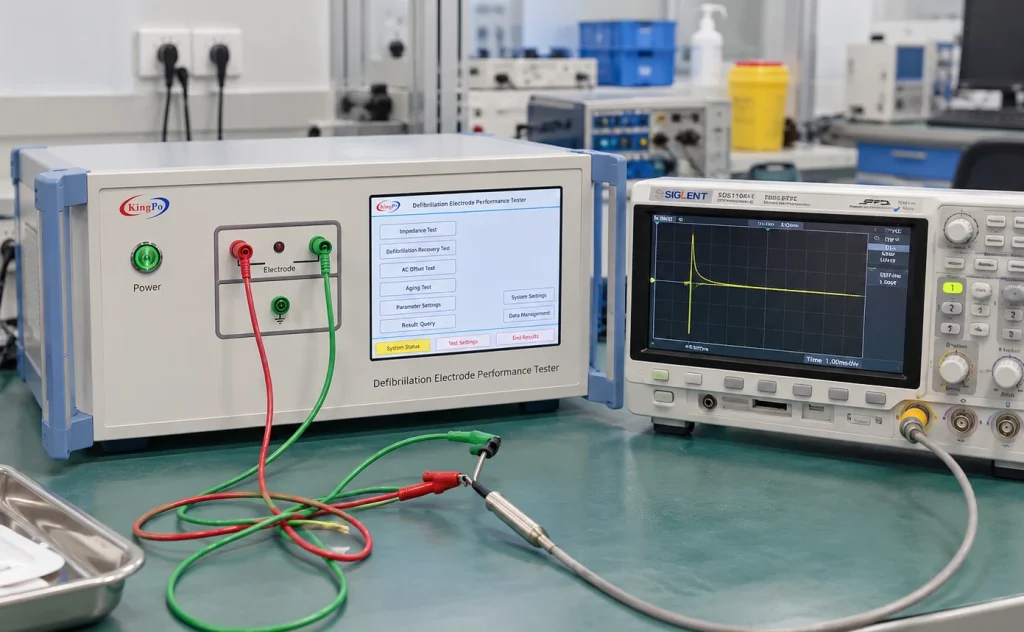
The International Electrotechnical Commission (IEC) published Amendment 2 to IEC 60601-2-4 on September 28, 2026. The amendment concerns the particular requirements for the basic safety and essential performance of cardiac defibrillators.
The publication is relevant to manufacturers, medical device testing laboratories and conformity assessment teams working with external defibrillators, automated external defibrillators (AEDs) and their associated test programs.
For laboratories already testing against an earlier edition, the immediate question is not necessarily whether new equipment is required. It is whether existing procedures, test configurations and technical records remain aligned with the applicable edition.
IEC 60601-2-4:2026 — Publication Status and Edition History
The latest amendment is formally identified as IEC 60601-2-4:2010/AMD2:2026.
The IEC also provides a consolidated version incorporating the original 2010 edition, Amendment 1 from 2018 and Amendment 2 from 2026. This consolidated publication is designated Edition 3.2.
The distinction matters when maintaining laboratory documentation. A test report referencing the 2018 consolidated edition is not automatically a report against Edition 3.2, even if the test equipment and procedures remain unchanged.
The official IEC publication information confirms the new amendment and consolidated edition. However, the publicly available description does not establish which individual technical requirements have changed.
A clause-by-clause comparison is therefore necessary before concluding that a particular test procedure, acceptance limit or instrument configuration requires modification.
Official publication: IEC 60601-2-4:2010/AMD2:2026 — IEC Webstore
Why Laboratories Should Review Existing Test Methods
When an international standard is amended, laboratories need to distinguish changes to the normative requirements from existing test methods that remain applicable.
A useful starting point is the laboratory’s requirement-to-test traceability matrix. Each test method should identify the applicable standard edition, clause reference, test object, test conditions, acceptance criteria and associated measuring equipment.
For defibrillator testing, particular attention should be given to how electrical measurements are made and documented.
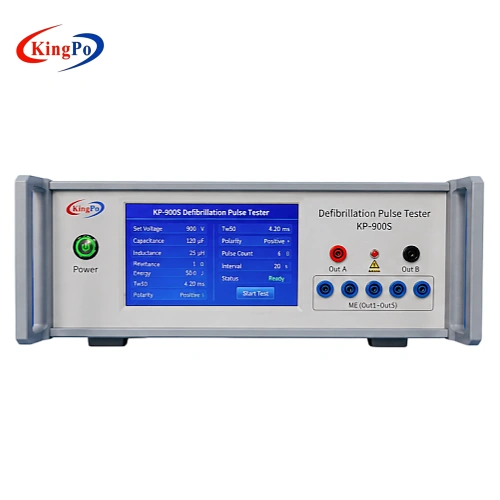
A typical defibrillator output verification setup may involve delivered-energy measurement, waveform acquisition, test-load selection, charging-time measurement and synchronization assessment.
These are established areas of defibrillator performance testing. They should not be described as newly introduced by Amendment 2 without confirmation from the amendment text.
Before deciding whether an existing procedure can be retained, the laboratory should examine the measurement arrangement as a whole. A calibrated instrument alone does not establish that the selected load, acquisition bandwidth, sampling method or device operating condition is appropriate for the required test.
Defibrillator Output and Electrode Testing Are Different Tasks
One source of confusion in medical electrical testing is the use of similar terminology for different devices under test.
A cardiac defibrillator generates a therapeutic electrical pulse. An output analyzer receives that pulse and measures its electrical characteristics.
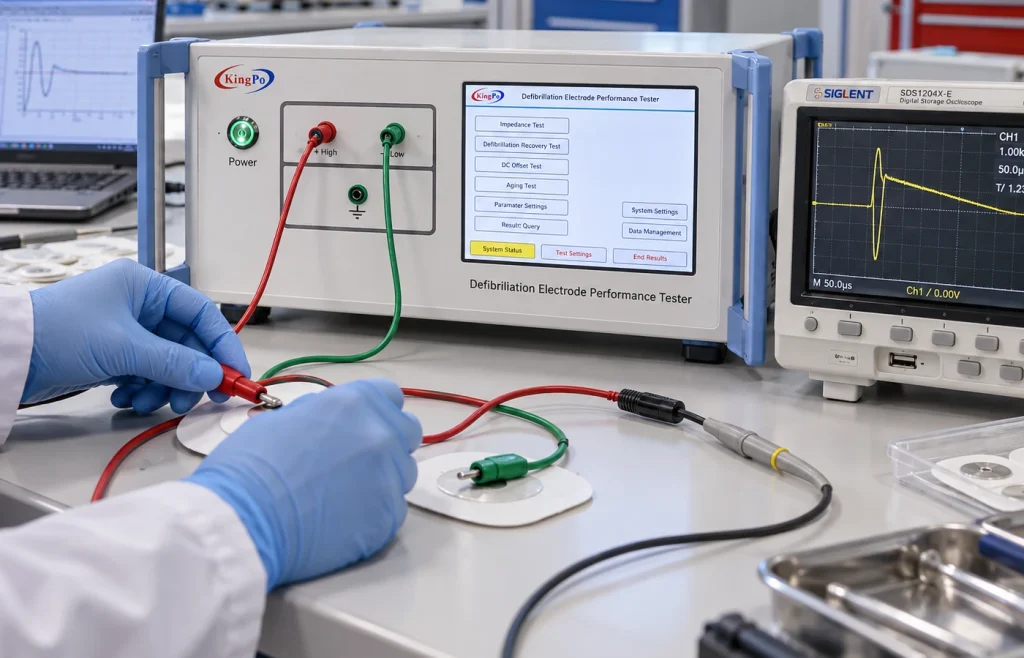
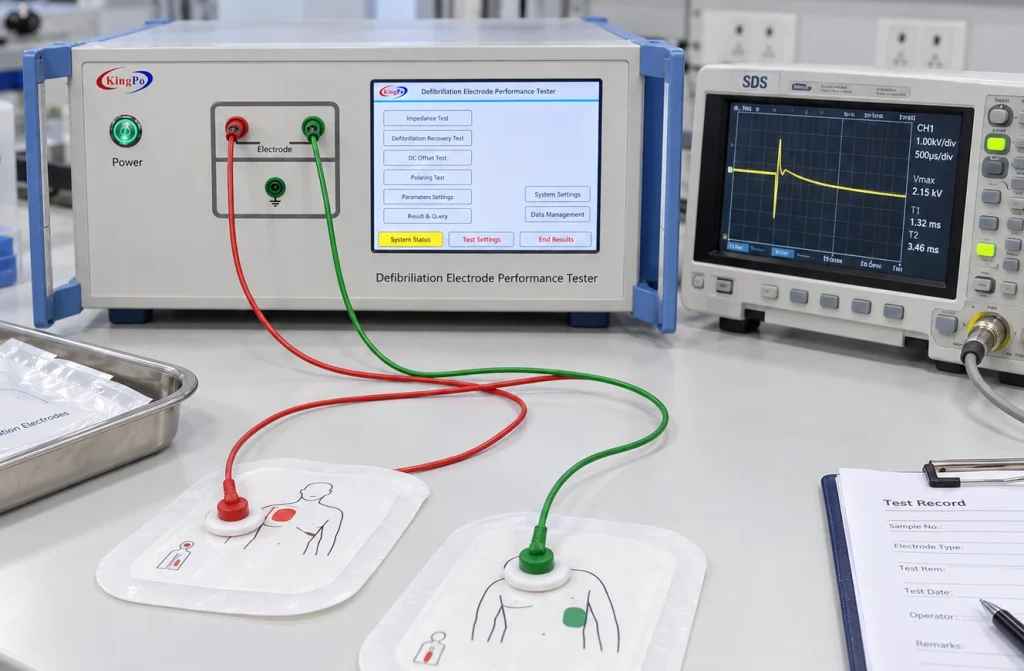
A disposable defibrillation electrode, by contrast, provides the electrical interface through which the pulse is delivered. Electrode performance requires a different measurement arrangement.
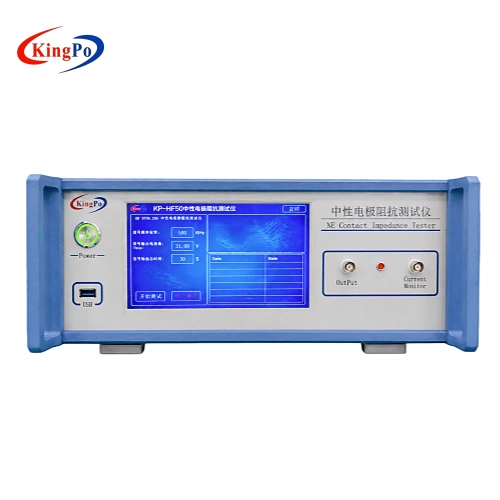
Depending on the applicable electrode test procedure, electrical evaluation may include small-signal impedance, large-signal behavior, recovery after high-energy exposure, DC offset voltage and pacing-related performance for multifunction electrodes.
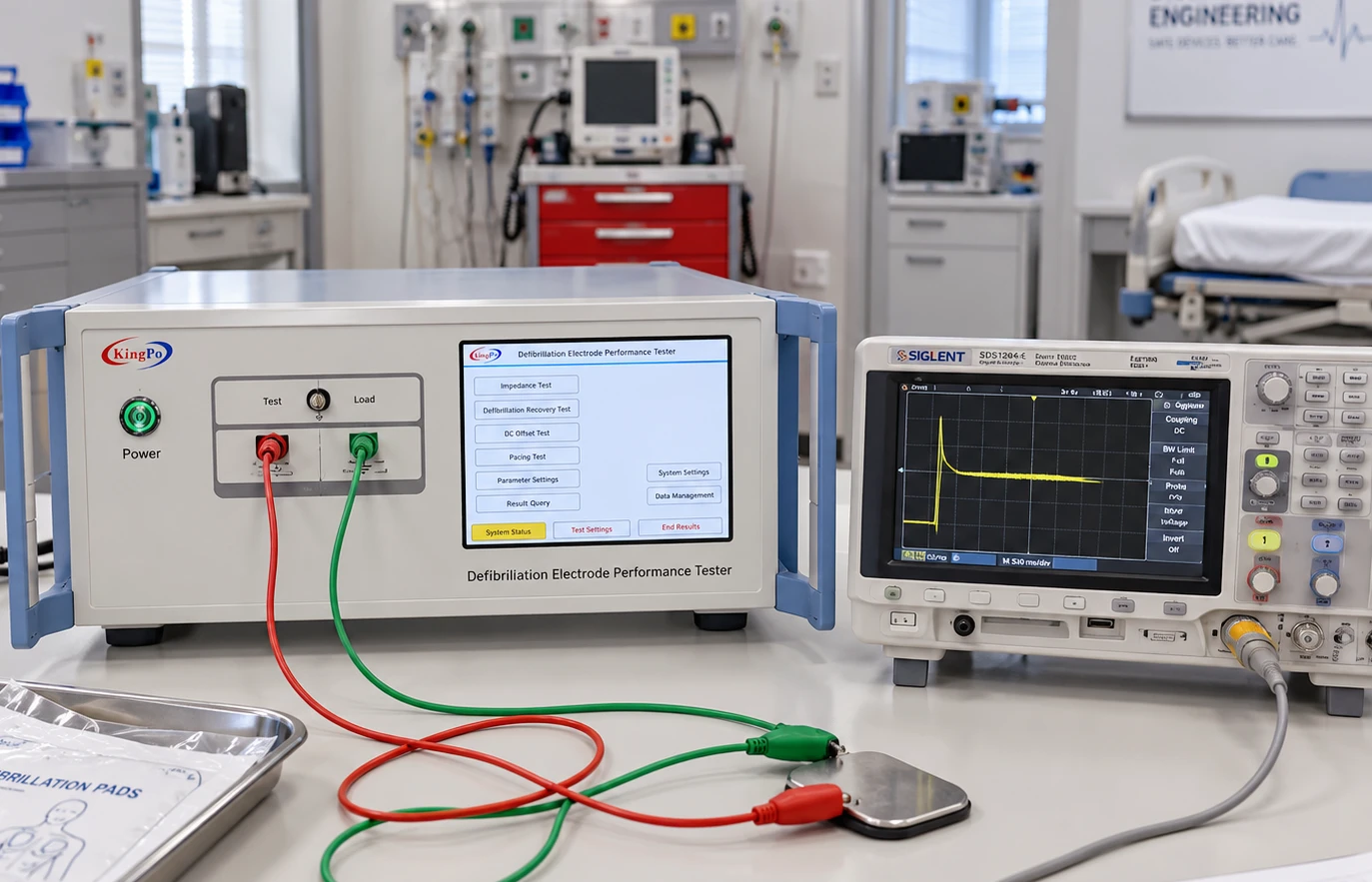
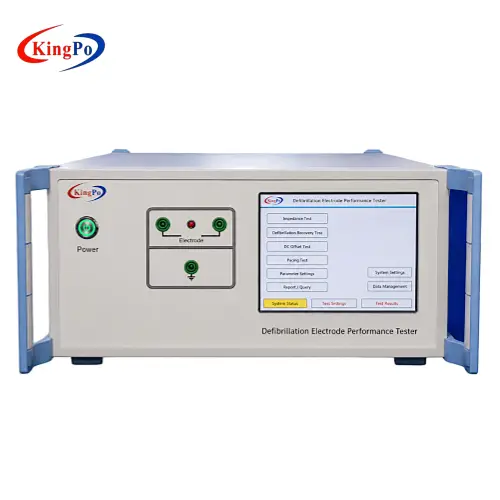
For this work, the KP-DFT100E Defibrillation Electrode Performance Tester provides dedicated test functions for disposable and multifunction defibrillation electrodes.
Its documented functions include AC impedance testing, 360 J defibrillation recovery, DC offset measurement and pacing signal testing.
These capabilities relate to electrode performance, not direct measurement of the output of an external defibrillator.
The equipment’s existing technical documentation references the earlier IEC 60601-2-4 test framework. Any claim concerning the 2026 amendment must be established by checking the updated requirements against the instrument’s test circuits and procedures.
Defibrillation Protection Is a Separate Test Application
Another distinction concerns medical electrical equipment that may be exposed to a defibrillation pulse without being the source of that pulse.
Electrocardiographs, patient monitors and other patient-connected equipment may require verification of protection against the effects of defibrillation.
In these applications, a controlled test pulse is applied to the equipment under test, and the relevant electrical or functional response is evaluated.
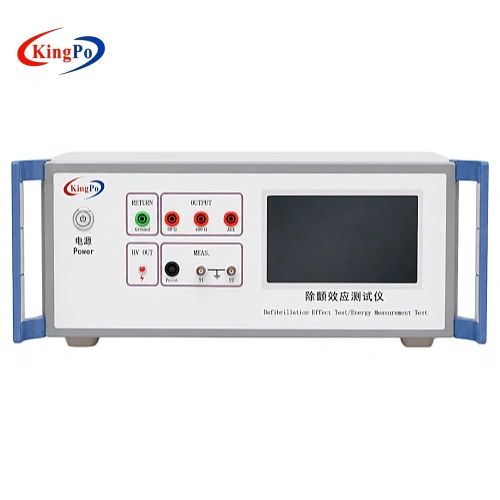
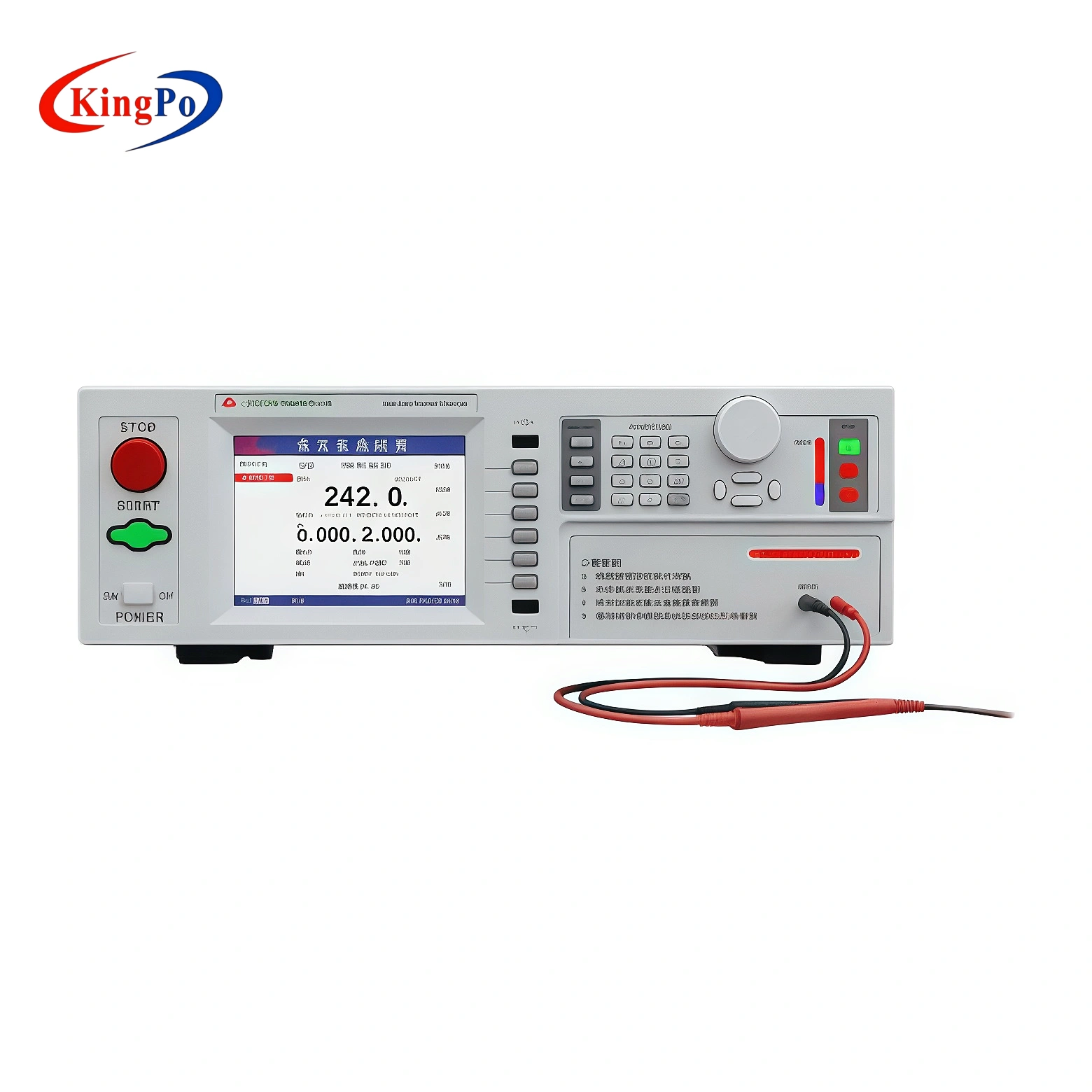
The KP3301 Defibrillation-Proof and Energy Reduction Tester is intended for this type of patient-connected medical equipment evaluation under applicable IEC 60601-1 requirements.
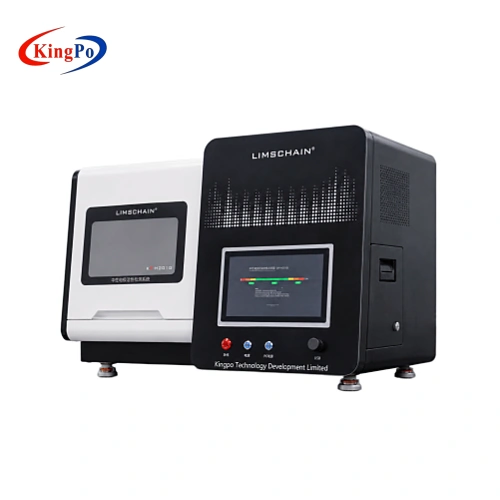
Active implantable medical devices introduce another distinct testing context. The KP-1050S Defibrillation Test Pulse Generator supports defined defibrillation-related immunity test conditions associated with standards such as ISO 14117 and ISO 14708-1.
Although these test systems involve defibrillation-related electrical pulses, their intended applications, measurement objectives and governing requirements are not interchangeable.
This distinction is important when laboratories review an equipment inventory following a standards update. A shared term in two test descriptions does not establish that the same instrument can perform both tests.
A Practical Revision Review for Testing Laboratories
Rather than immediately replacing equipment or rewriting procedures, laboratories can begin with a controlled technical review.
| Review Area | Engineering Question |
|---|---|
| Standard identification | Is the procedure based on the 2010 edition, the 2018 consolidated edition or the 2026 consolidated edition? |
| Clause comparison | Does the amendment change any requirement covered by the laboratory’s accredited or internal test scope? |
| Test configuration | Are the specified loads, measurement connections and operating conditions still appropriate? |
| Instrument suitability | Do the existing equipment functions, ranges and measurement characteristics cover the verified requirements? |
| Test records | Do reports, worksheets and method references correctly identify the edition and conditions used? |
The outcome should be recorded in a revision assessment that identifies any necessary changes to test methods, equipment verification or reporting.
Where the amendment affects a particular procedure, the laboratory may need to update its controlled documents, assess measurement uncertainty or verify the revised method before use.
Where the amendment has no impact on an established test, that conclusion should also be documented and supported by the comparison.
The publication of an international amendment does not, by itself, establish the date on which every national or regional conformity assessment program must adopt it. The applicable regulatory and accreditation requirements must be checked separately.
What Comes Next?
IEC 60601-2-4 Amendment 2:2026 provides a reason for laboratories and manufacturers to revisit their standards register and test-method documentation.
The priority is to determine which requirements have changed, whether those changes affect the relevant product and whether existing test arrangements can provide the required evidence.
For testing equipment suppliers, the same principle applies: instrument capability should be established against defined test methods rather than inferred from a standard number appearing in a product description.
KINGPO’s medical electrical testing portfolio covers several distinct defibrillation-related applications, including electrode performance, patient-connected equipment protection and active implantable device immunity testing.
Keeping those applications clearly separated helps engineering teams select appropriate test methods, interpret results and maintain reliable technical documentation as international standards evolve.