General Electrical Enclosures
Classification and verification of protection provided by electrical equipment enclosures against access, solid objects, dust and water.
Primary general standard
Configure access probes, dust chambers, drip systems, spray nozzles, water-jet rigs, immersion tanks and IPX9K chambers for IEC 60529 or automotive ISO 20653 verification.
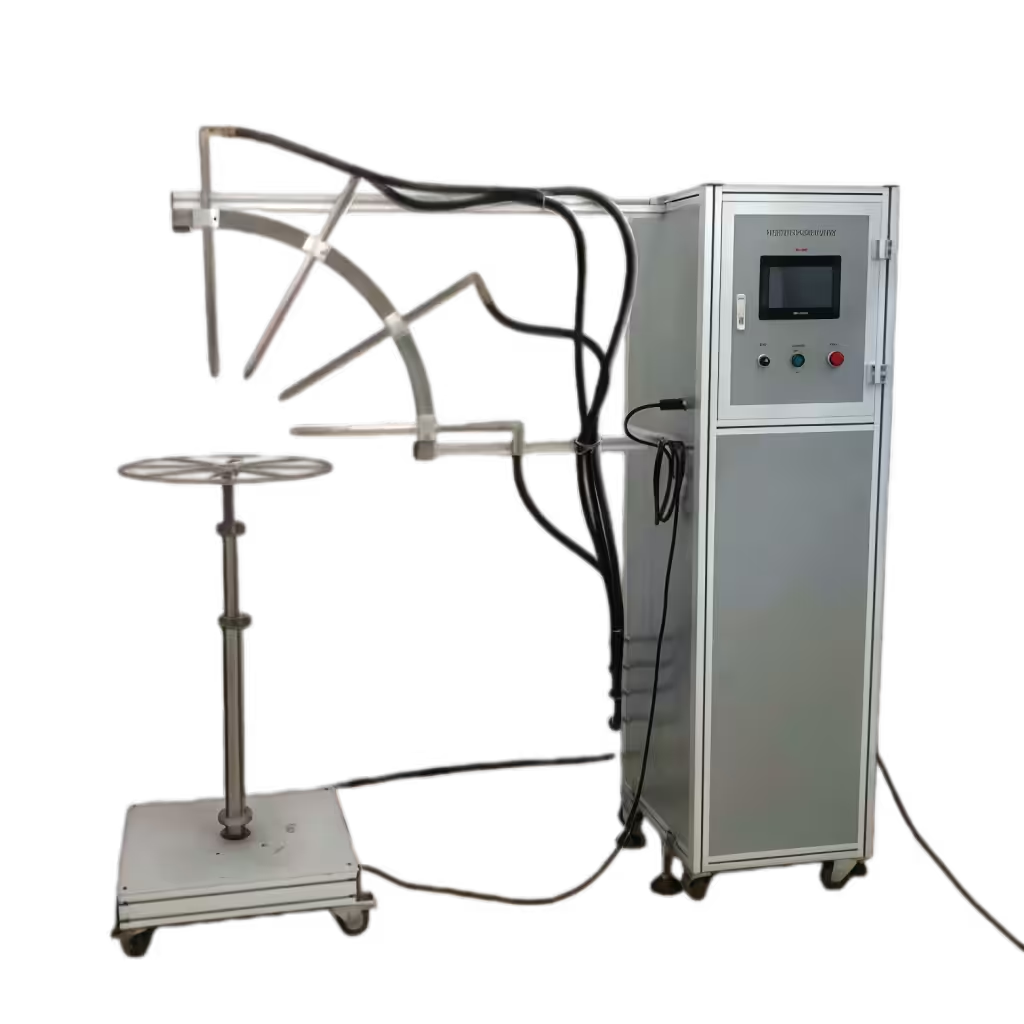
IP Testing Equipment verifies how an enclosure protects people from hazardous parts and protects equipment from solid foreign objects, dust and water ingress.
The required apparatus follows the claimed IP code: access probes and dust chambers address the first numeral, while drip, spray, jet and immersion systems address the second numeral.
IEC 60529 is the general enclosure standard. ISO 20653:2023 applies specifically to electrical equipment in road vehicles and includes automotive-oriented code variants and test conditions.
Do not select equipment from the IP number alone. First freeze the governing publication, product standard, target code and test conditions; similar code labels can have different apparatus or procedures.
Classification and verification of protection provided by electrical equipment enclosures against access, solid objects, dust and water.
Primary general standardApplication-specific IP codes and test requirements for enclosures of electrical equipment used in road vehicles.
Automotive scopeLighting, vehicle, aerospace and other product standards may reference or modify ingress tests. Confirm their exact clauses before purchase.
Clause review requiredAuthoritative references: IEC IP ratings explanation · IEC 60529 publication · ISO 20653:2023.
A complete laboratory usually separates solid-ingress equipment from water systems to prevent contamination. Choose the modules needed for the target code rather than assuming that one chamber performs every test.
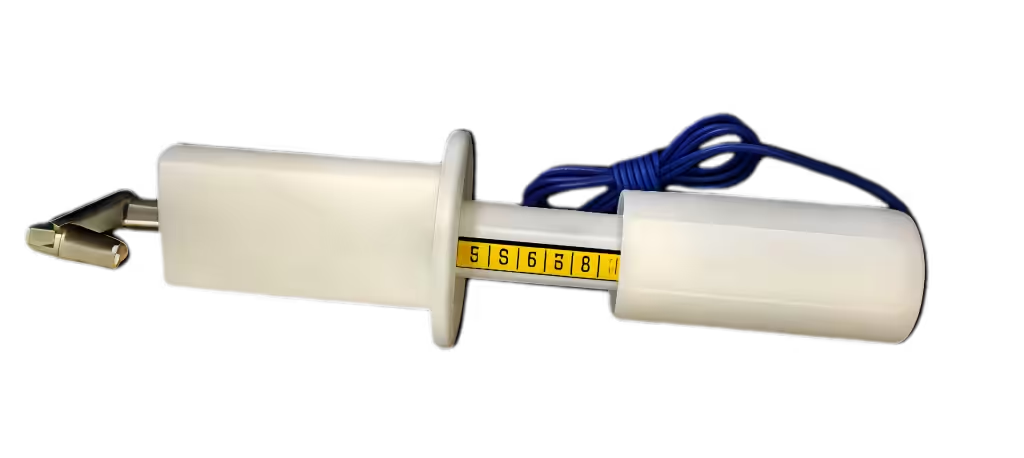
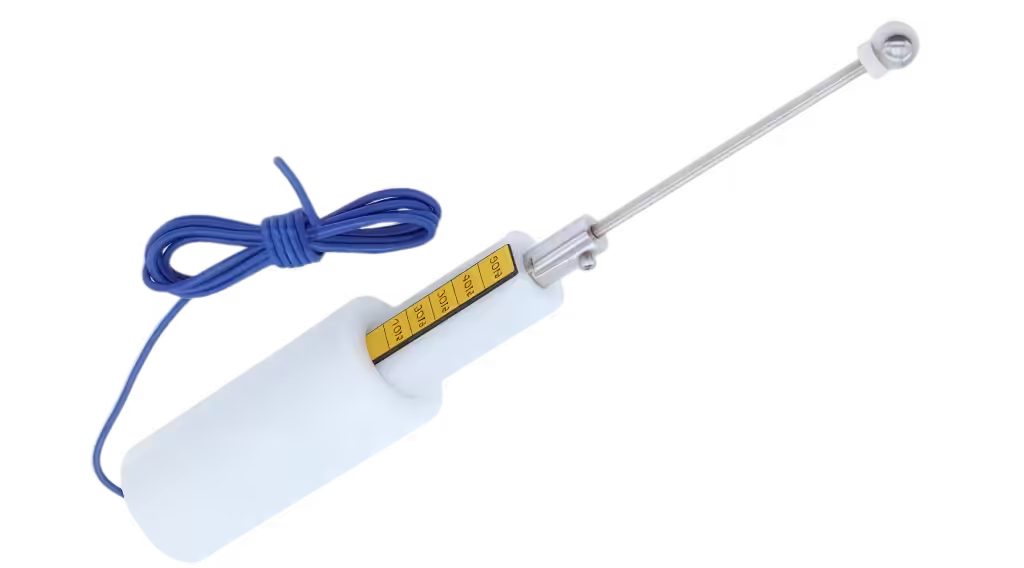
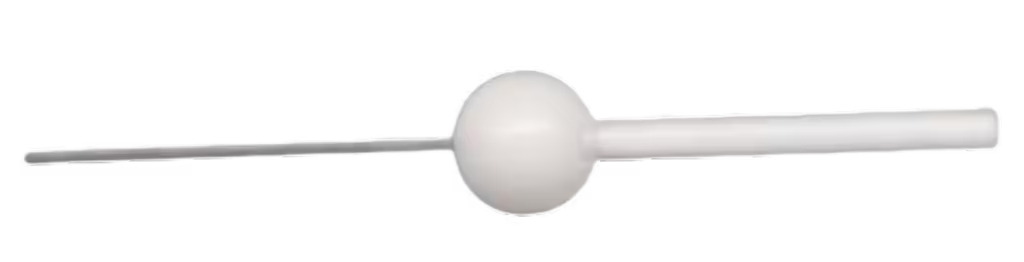
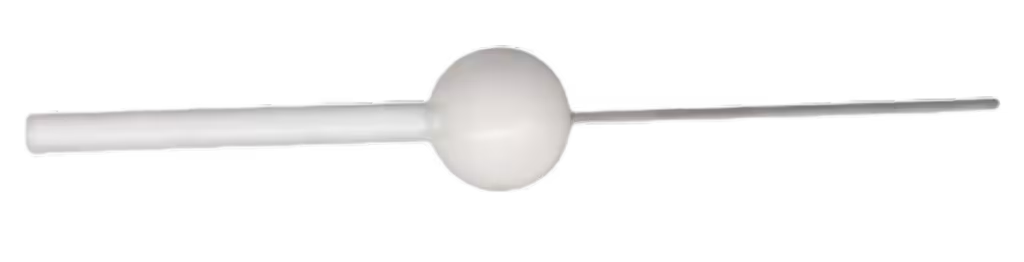
Test spheres, jointed fingers, rods and wires evaluate access to hazardous parts and entry of solid foreign objects.
Controlled dust circulation, optional specimen vacuum and chamber monitoring support dust-protected and dust-tight enclosure tests.
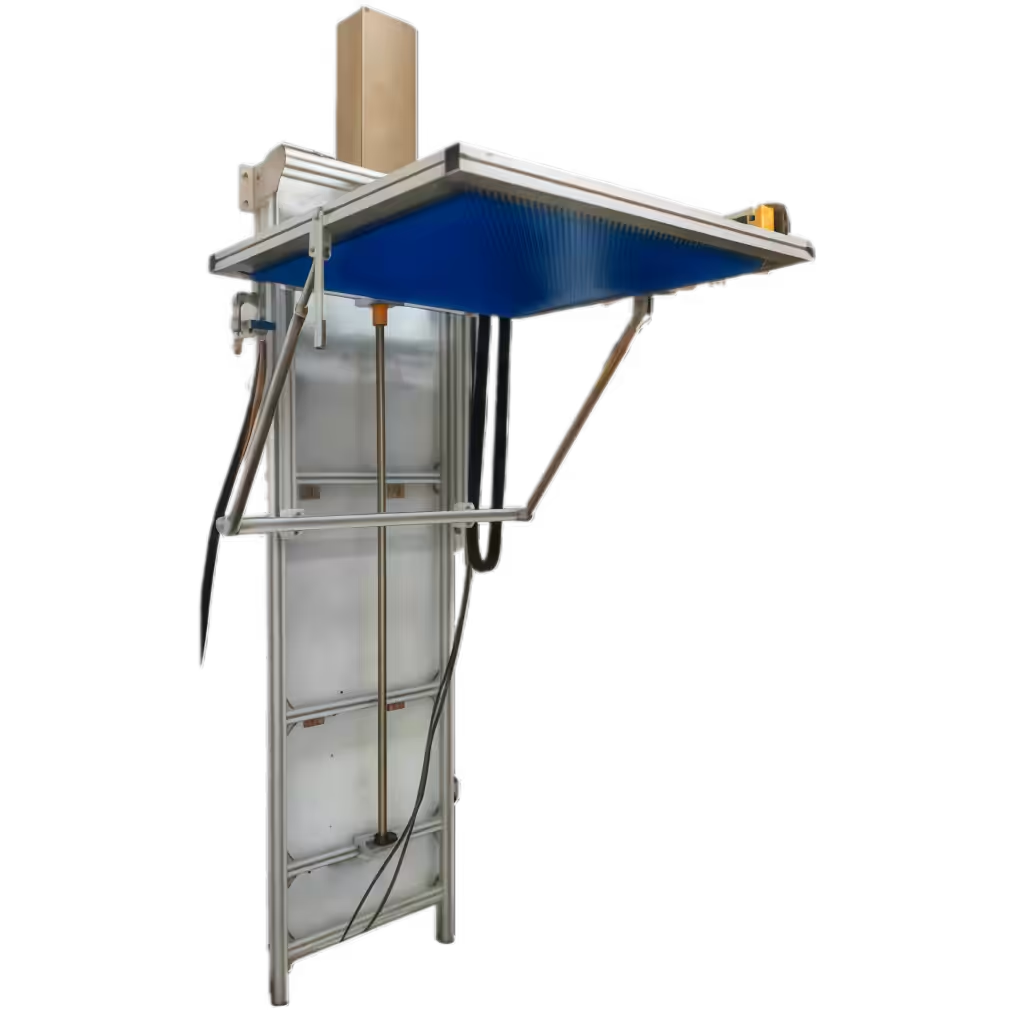
Drip boxes simulate vertically falling drops and inclined-enclosure exposure with controlled water delivery and specimen positioning.
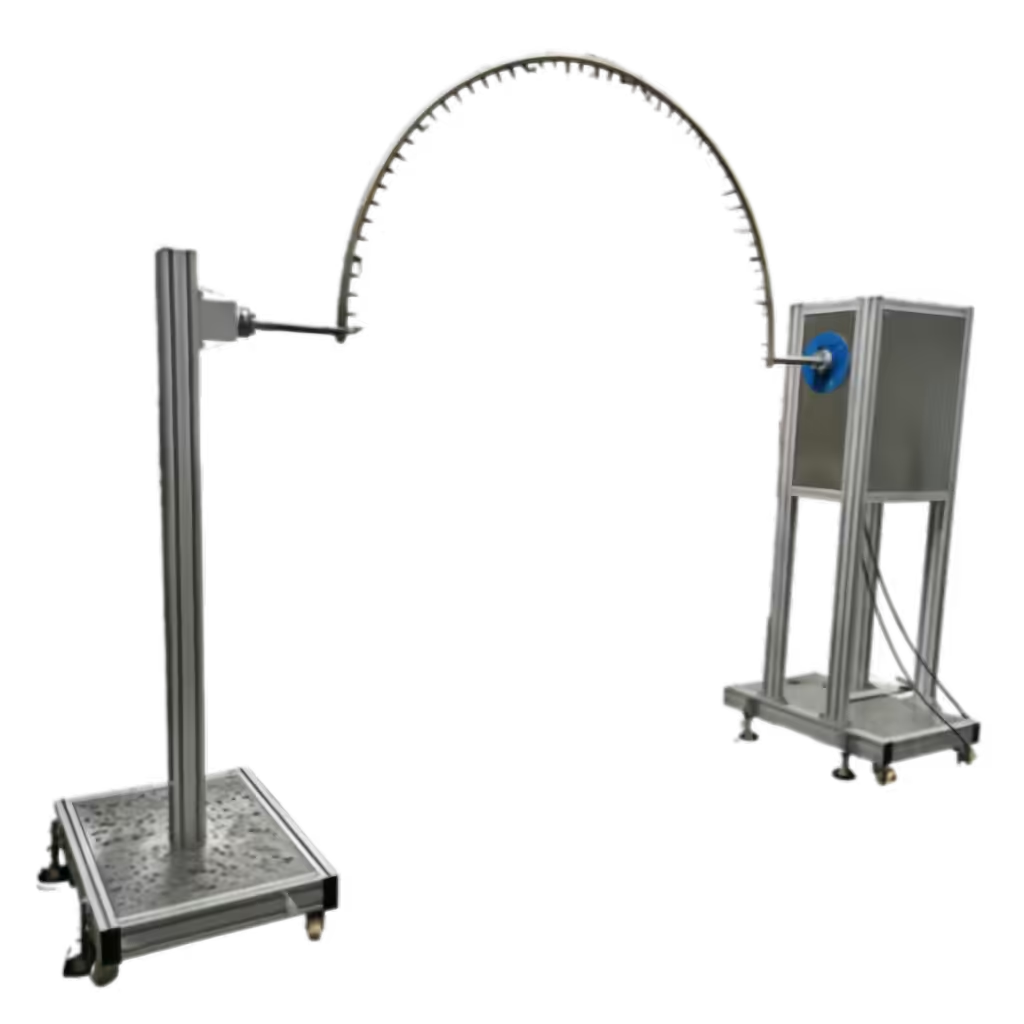
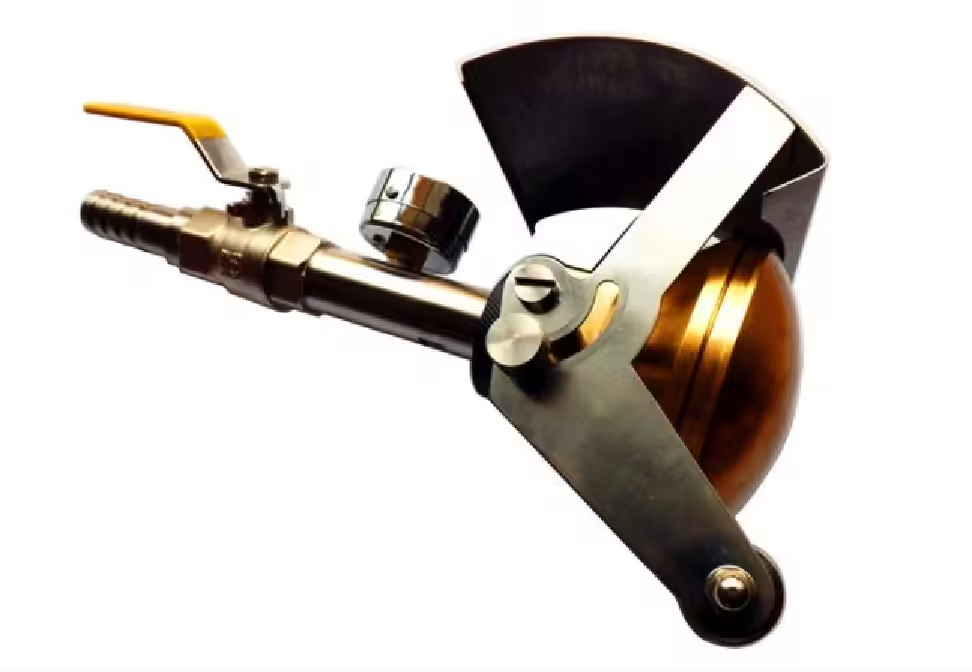
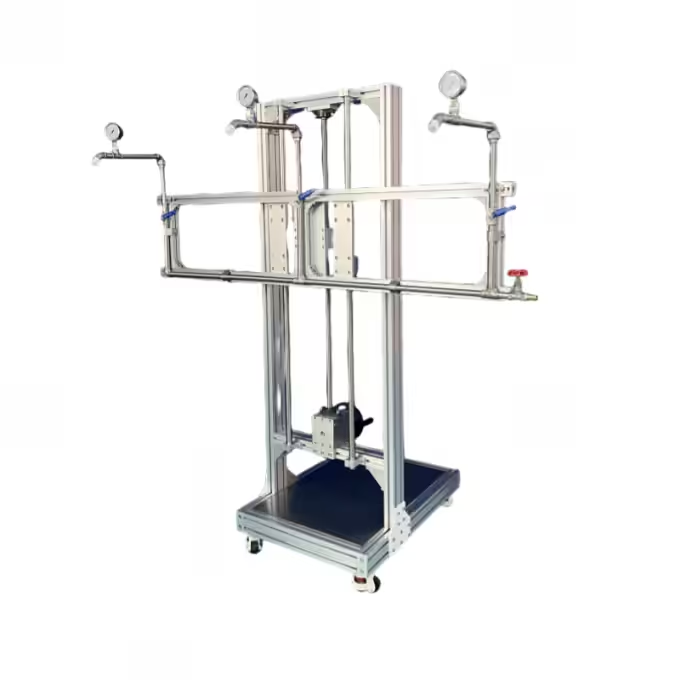
Oscillating tubes or handheld spray nozzles test spraying and splashing water according to DUT size and access constraints.
Calibrated jet nozzles and controlled flow systems evaluate resistance to water jets and powerful water jets.
Immersion tanks and pressurized vessels address temporary or continuous immersion under the conditions defined by the applicable standard or agreement.
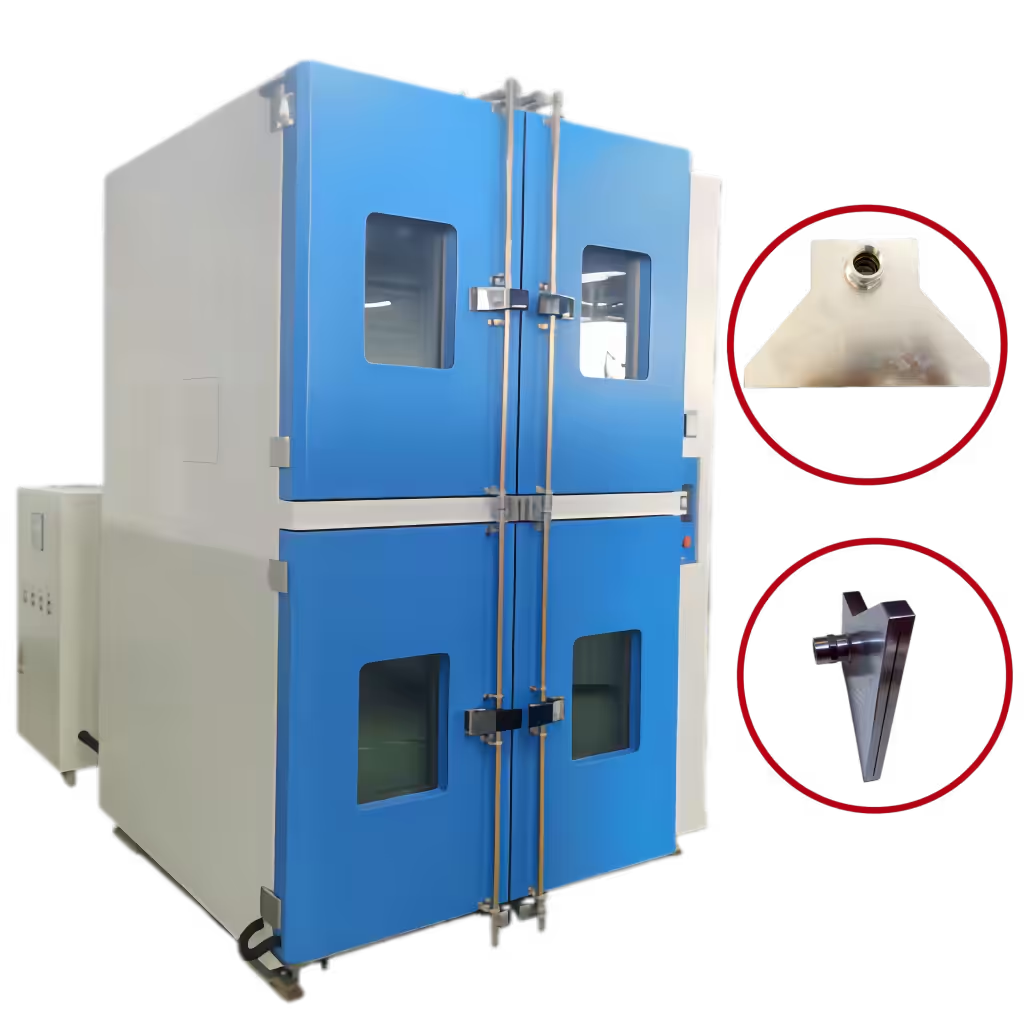
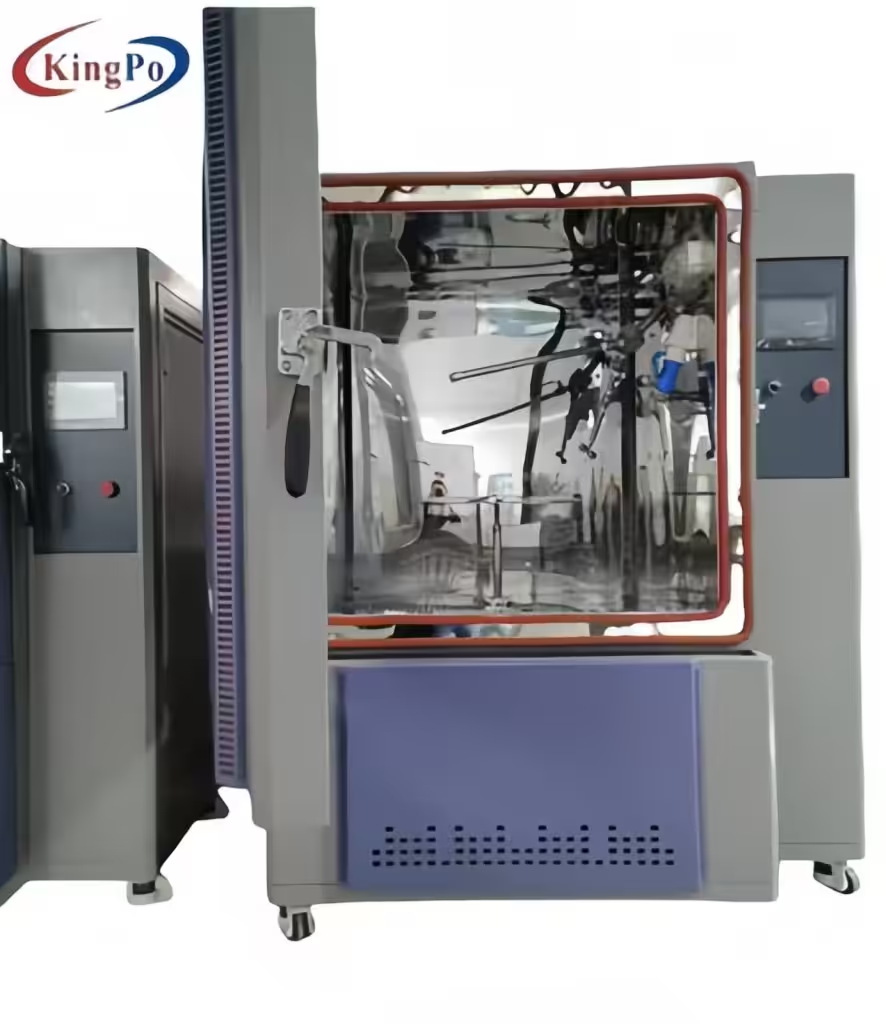
High-pressure, high-temperature spray systems use controlled fan jets, specimen rotation and defined angular positions.
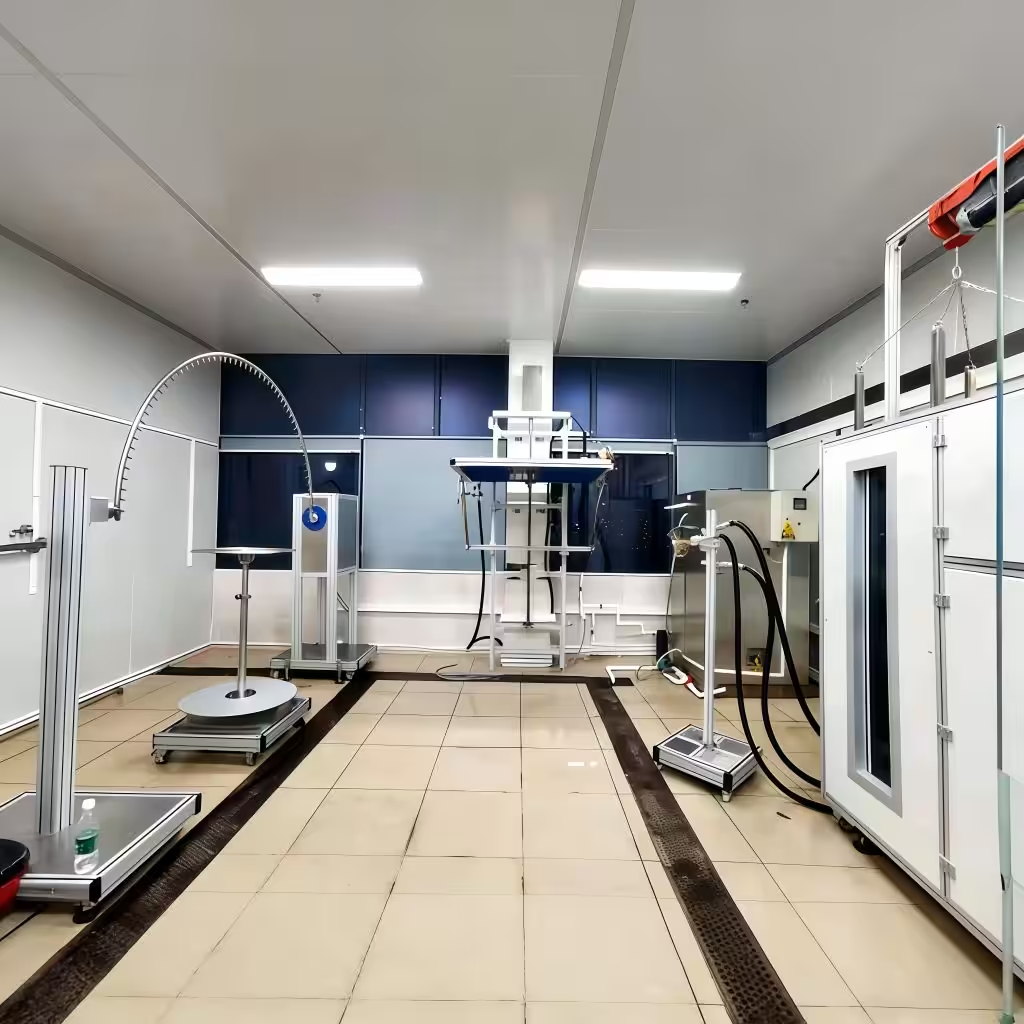
Integrated platforms can share water treatment, controls and specimen handling while retaining the correct apparatus for each IPX method.
ISO 20653, ISO 16750-4, JIS D 0203 and customer methods may require dedicated spray, splash or thermal-shock arrangements.
Use this matrix to match each IP test level with the typical apparatus, related KingPo product page and practical selection notes for laboratory procurement.
| Test level / method | Typical equipment | Best KingPo product link | When to choose it |
|---|---|---|---|
| IP1X–IP4X | Access probes, object probes, jointed test finger, rod and wire probes | View IP access probes | Use when the project focuses on protection against access to hazardous parts or solid foreign object entry. |
| IP5X / IP6X | Sand and dust test chamber with dust circulation and optional specimen vacuum | IEC 60529 IP5X/IP6X Sand and Dust Test Chamber | Use for dust-protected and dust-tight enclosure verification under IEC 60529 or related product standards. |
| IPX1 / IPX2 | Drip box, turntable, inclinable specimen support and flow-control system | IEC 60529 IPX1/IPX2 Drip Tester | Use for vertically falling water drops and inclined dripping-water tests. |
| IPX3 / IPX4 | Oscillating tube system or handheld spray nozzle | IPX3/IPX4 Rain Spray Test Chamber | Use for spraying and splashing-water tests where tube radius, spray arc and DUT size must be matched. |
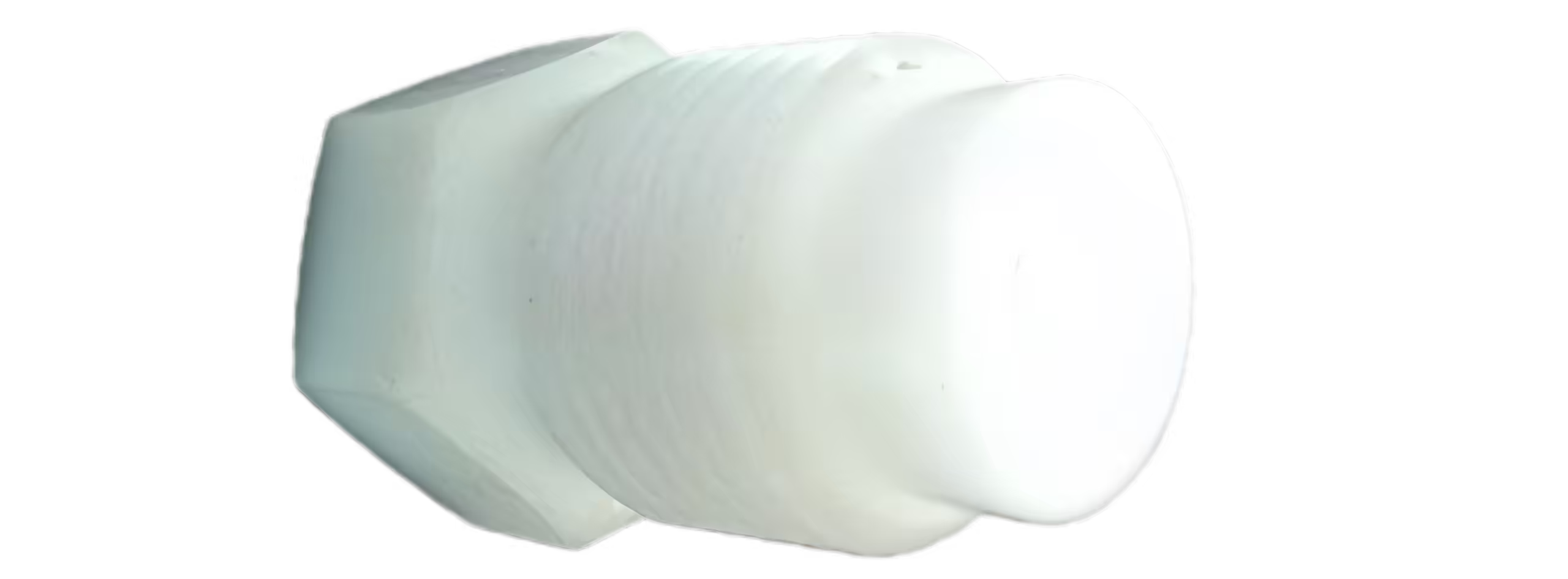
| IPX3 / IPX4 nozzle option | Handheld spray nozzle with shield and controlled flow | IEC 60529 IPX3/IPX4 Water Spray Nozzle | Use when the applicable method permits a spray nozzle instead of an oscillating tube. |
| IPX5 / IPX6 | Water-jet nozzle, flow-control system, specimen platform and enclosure or open rig | IPX5/IPX6 Water-Jet Test Chamber | Use for water-jet and powerful-water-jet enclosure testing. |
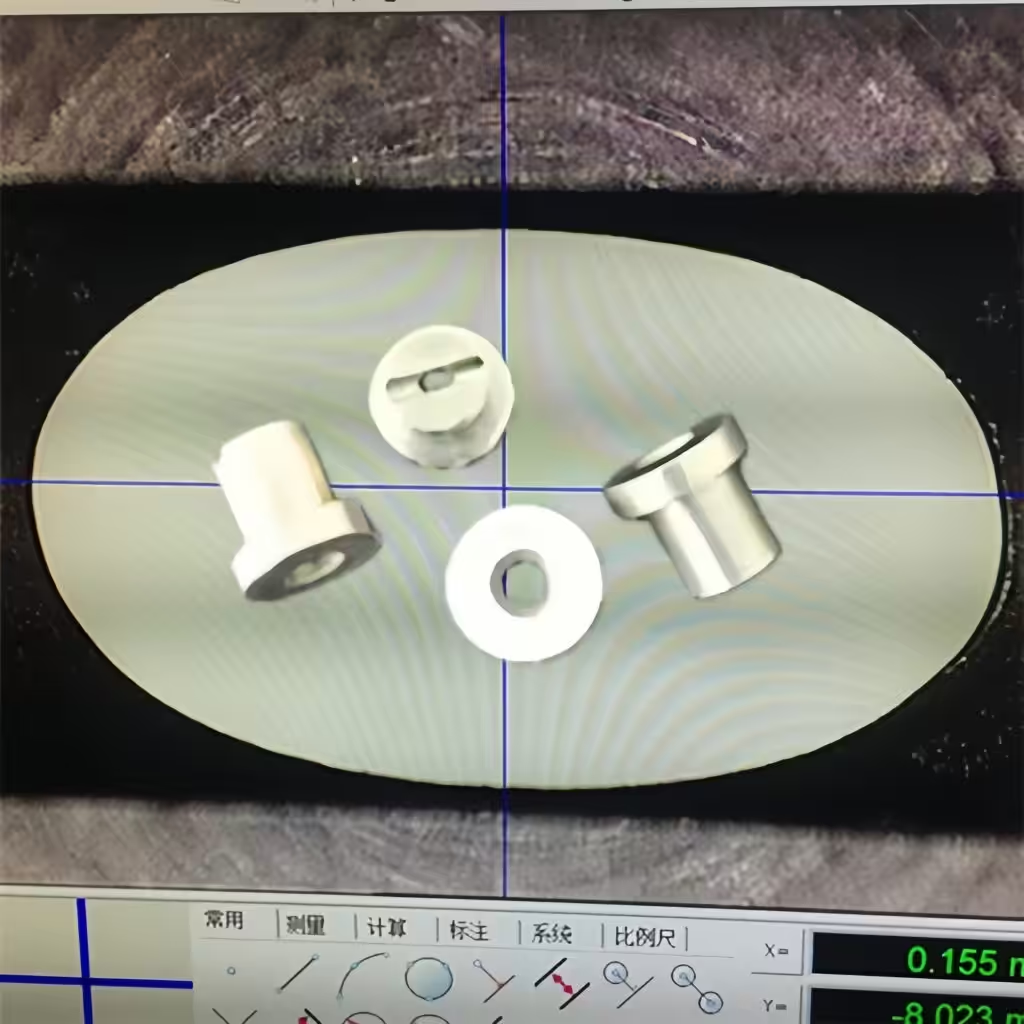
| IPX5 / IPX6 nozzle option | Precision test nozzles for calibrated jet testing | IPX5/IPX6 Precision Test Nozzles | Use when the laboratory already has a suitable water supply and only requires nozzles or verification tools. |
| IPX7 / IPX8 | Immersion tank, specimen support, pressure vessel and safety controls | IPX7/IPX8 Water Immersion Test Chamber | Use for temporary immersion or continuous immersion where the depth, pressure and duration must be confirmed. |
| IPX1–IPX8 combined system | Integrated waterproof test platform with shared controls and water management | IPX1–IPX8 Multi-Function Waterproof Test System | Use when a laboratory wants one platform to support multiple IEC 60529 water-ingress methods. |
| IPX9 / IPX9K | Hot-water high-pressure fan-jet chamber, rotating table, angle control and nozzle verification | IPX9K High-Pressure Hot-Water Spray Chamber | Use for high-pressure, high-temperature water-spray verification under IEC 60529, ISO 20653 or customer requirements. |
| IPX9K verification | Impact-force measurement and nozzle verification support | IPX9K Impact-Force Measurement Unit | Use when the laboratory needs to verify spray impact force or support calibration and acceptance checks. |
| Automotive IPX4K / IPX6K | Road-vehicle rain and high-pressure water-jet test equipment | ISO 20653 IPX6K Water-Jet Equipment | Use when the governing standard is ISO 20653 instead of general IEC 60529 enclosure testing. |
| UL / JIS / customer methods | Rain-test apparatus, UL spray nozzles and automotive rain-test systems | UL 1598 Rain Test Apparatus | Use when the product standard modifies or replaces general IEC 60529 test conditions. |
| Complete category | All IP probes, dust chambers, spray systems, immersion systems and IPX9K systems | Browse all IP Testing Equipment Products | Use when the buyer still needs to compare multiple apparatus options before configuration. |
Watch KINGPO waterproof and ingress-protection systems in operation. Use these demonstrations to understand equipment format and workflow; final apparatus, parameters and acceptance criteria must follow the applicable standard and project specification.
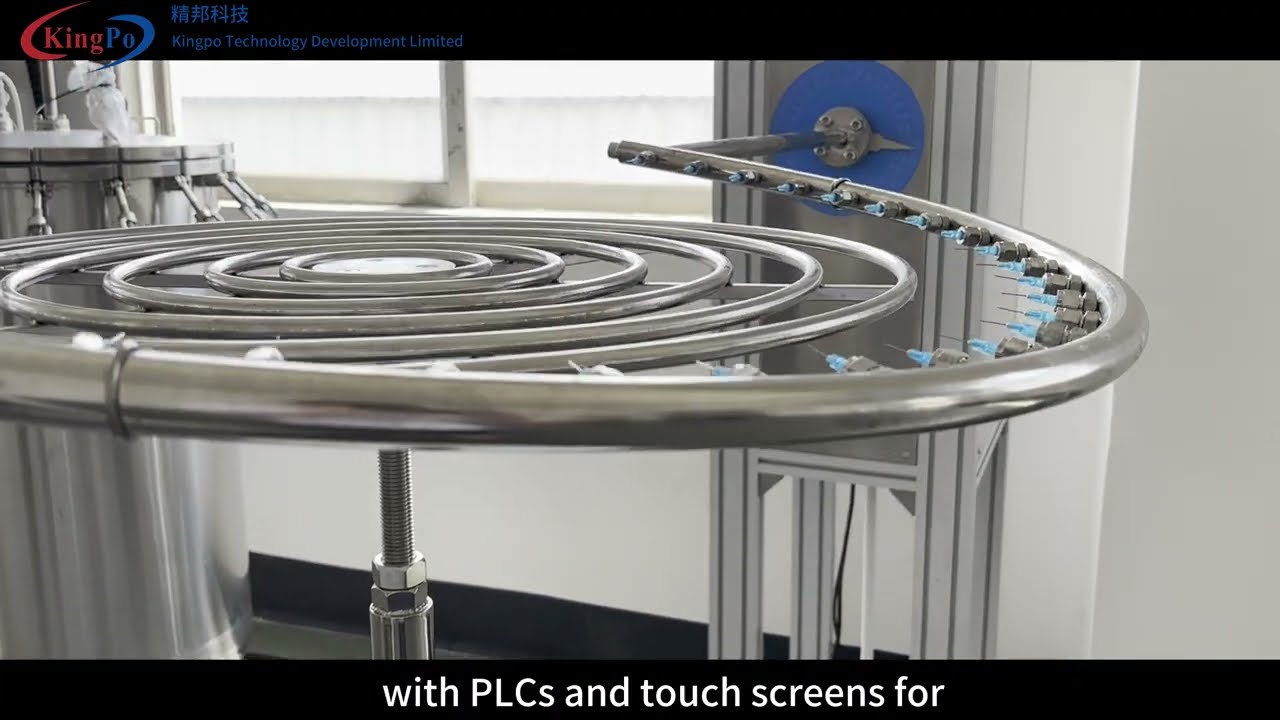
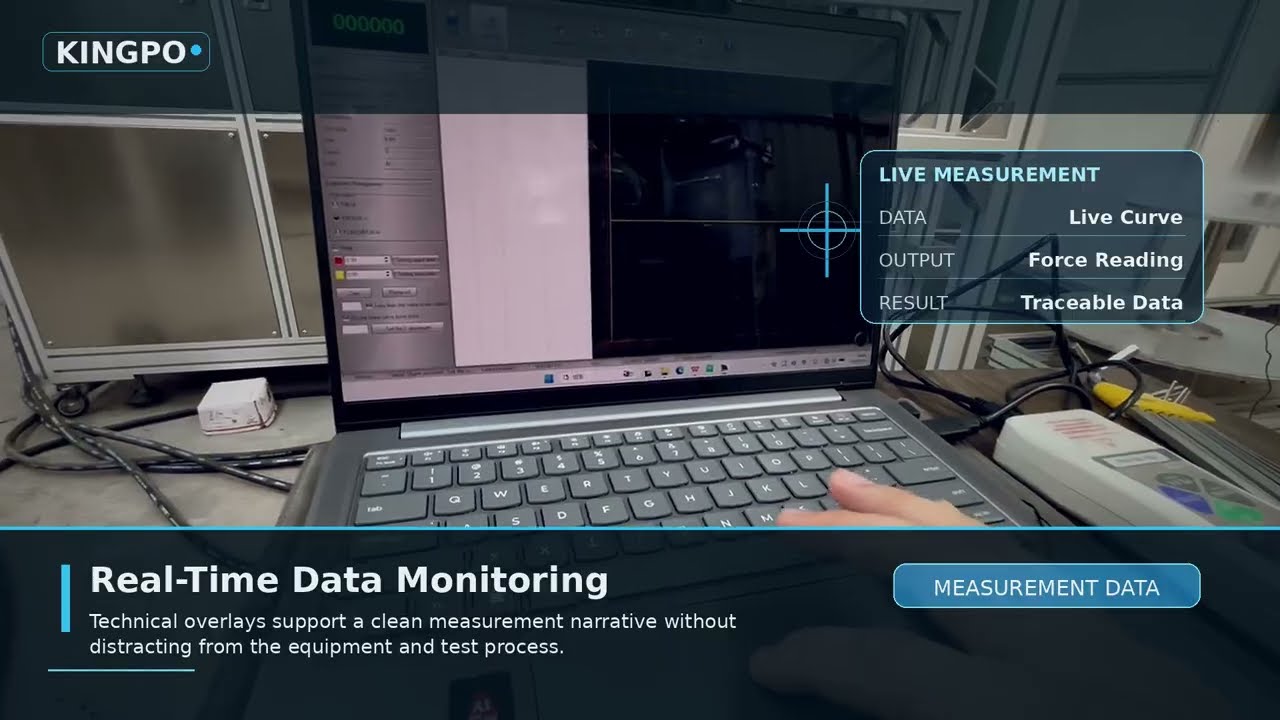
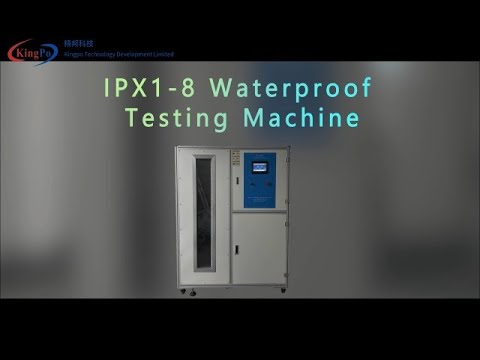
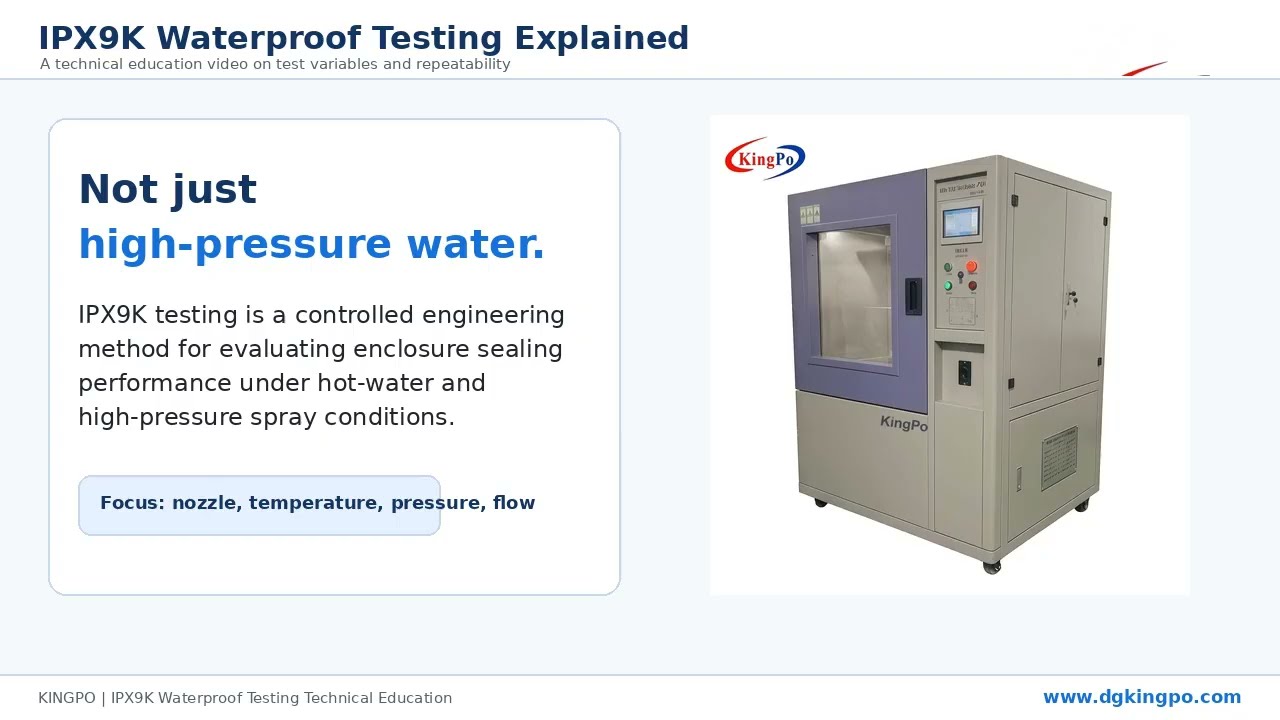
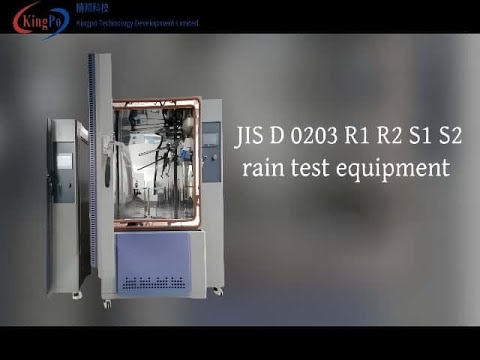
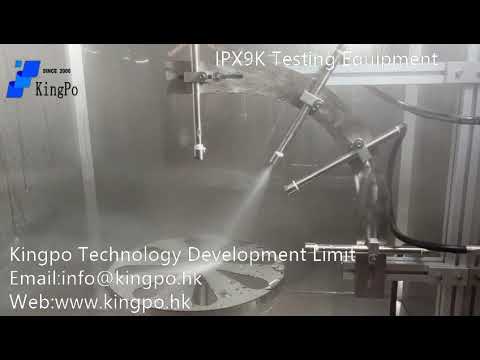

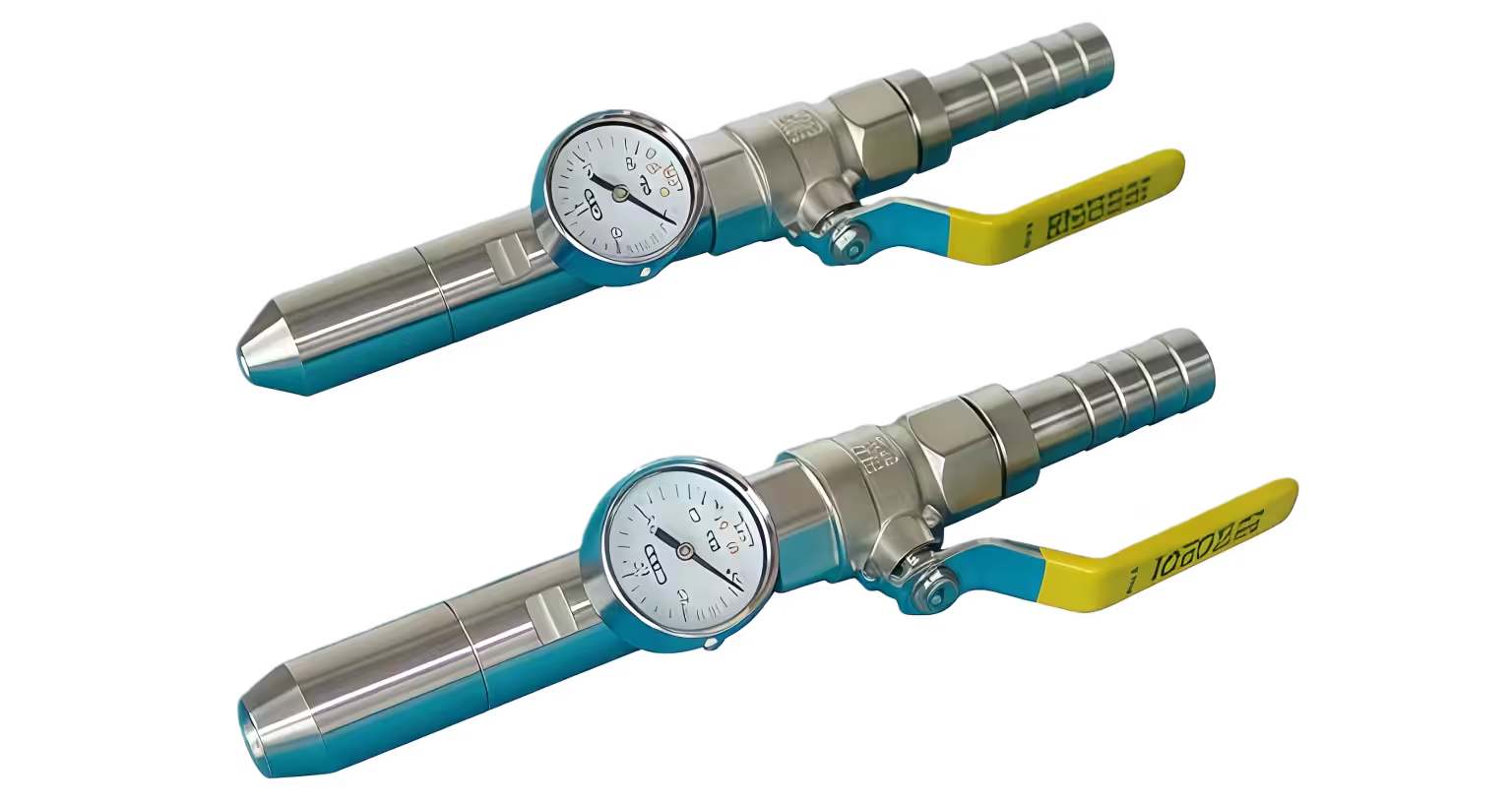
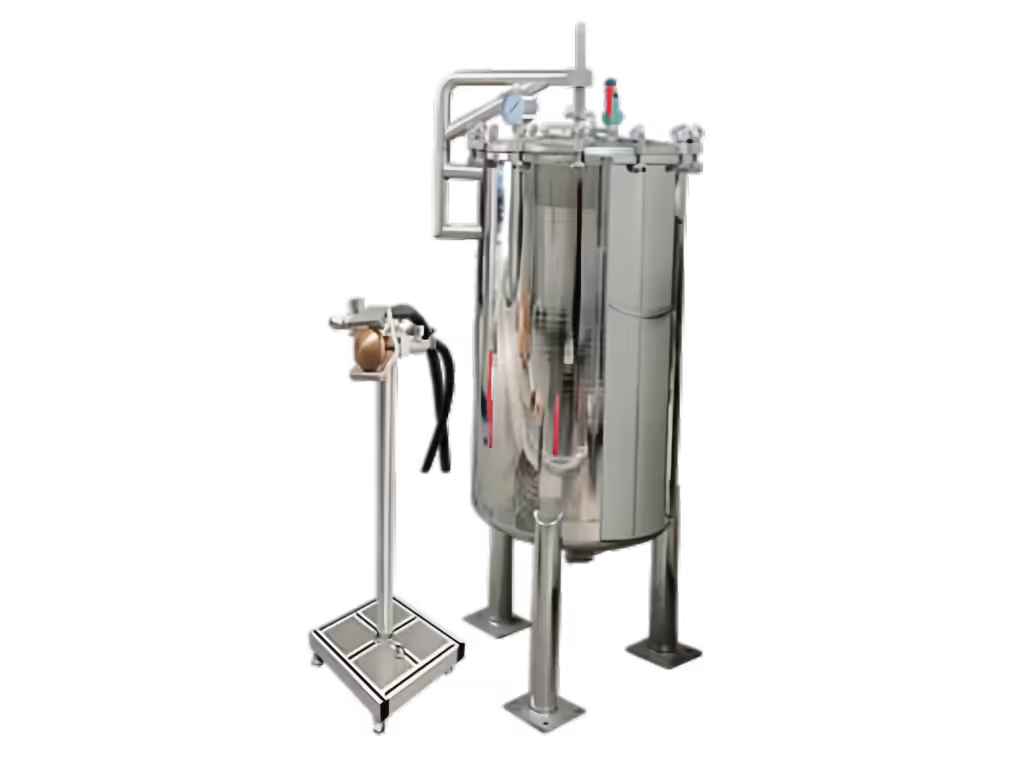
This gallery shows common IP test probes, drip systems, spray nozzles, rain test apparatus and automotive water ingress test equipment used for enclosure protection verification.

| Code | Exposure concept | Typical apparatus | Selection controls |
|---|---|---|---|
| IPX1 | Vertically falling drops | Drip box and level turntable | DUT area, drip field, flow and exposure time |
| IPX2 | Drops with enclosure inclined | Drip box with inclinable support | Inclination, four orientations and turntable capacity |
| IPX3 | Spraying water | Oscillating tube or spray nozzle | Tube radius, angle, flow, pressure and DUT geometry |
| IPX4 | Splashing water | Oscillating tube or handheld nozzle | Complete wetting, shield condition and exposure coverage |
| IPX5 | Water jets | Calibrated jet nozzle and flow system | Nozzle, flow, distance, duration and drainage |
| IPX6 | Powerful water jets | Higher-flow jet nozzle system | Flow capacity, fixture stability and laboratory water supply |
| IPX7 | Temporary immersion | Immersion tank and specimen handling | Water depth, time, DUT location and post-test inspection |
| IPX8 | Continuous immersion | Tank or pressurized vessel | Conditions agreed or specified for depth, pressure and duration |
| IPX9 / IPX9K | High-pressure, high-temperature jets | Hot-water fan-jet chamber | Governing standard, angles, distance, temperature, flow and pressure |
Phones, cameras, speakers, wearables and portable electronics requiring controlled dust, splash or immersion verification.
Lights, sensors, connectors, ECUs, charging interfaces and battery enclosures assessed under vehicle-specific conditions.
Streetlights, floodlights, junction boxes and controls exposed to rain, dust and maintenance water jets.
Control panels, HMIs, sensors and production equipment used in dusty or wash-down environments.
EV chargers, solar inverters, battery-storage enclosures and outdoor power-conversion equipment.
Type testing, design verification, supplier qualification and recurring quality-control programs.
Use these resources to compare related IP testing equipment, review applicable standards and check KingPo project experience before selecting a laboratory configuration.
It classifies protection provided by an enclosure. The first numeral addresses access and solid foreign objects, including dust; the second numeral addresses water ingress. Additional letters may convey other defined information.
No. IEC 60529 is the general IP-code standard for electrical enclosures within its scope. ISO 20653:2023 applies to enclosures of electrical equipment in road vehicles and includes automotive-specific requirements and code variants.
Usually not. Dust and water equipment should generally remain separate to control contamination. Multiple water modules can share utilities and controls, but each method still needs the specified apparatus and test conditions.
IPX7 addresses temporary immersion under defined conditions. IPX8 addresses continuous immersion under conditions specified by the applicable standard or agreed between relevant parties. The required tank or pressure vessel must match those conditions.
Do not assume so. Jet and immersion tests represent different exposures. Required claims and combinations depend on the governing standard, product standard and certification plan.
A compliant hot-water high-pressure spray system, verified fan-jet nozzles, controlled angles and distance, specimen rotation or positioning, and calibrated temperature, pressure and flow measurement. Confirm whether IEC 60529 or ISO 20653 governs the project.
Provide the DUT envelope, mass, mounting orientation, required nozzle distance or tube radius, cable routing and operator access. Allow space for water management, maintenance and safe specimen handling.
Send the standard and edition, target IP code, clauses, DUT drawing and mass, test orientation, operating-state requirements, available utilities, laboratory dimensions and calibration or reporting expectations.
