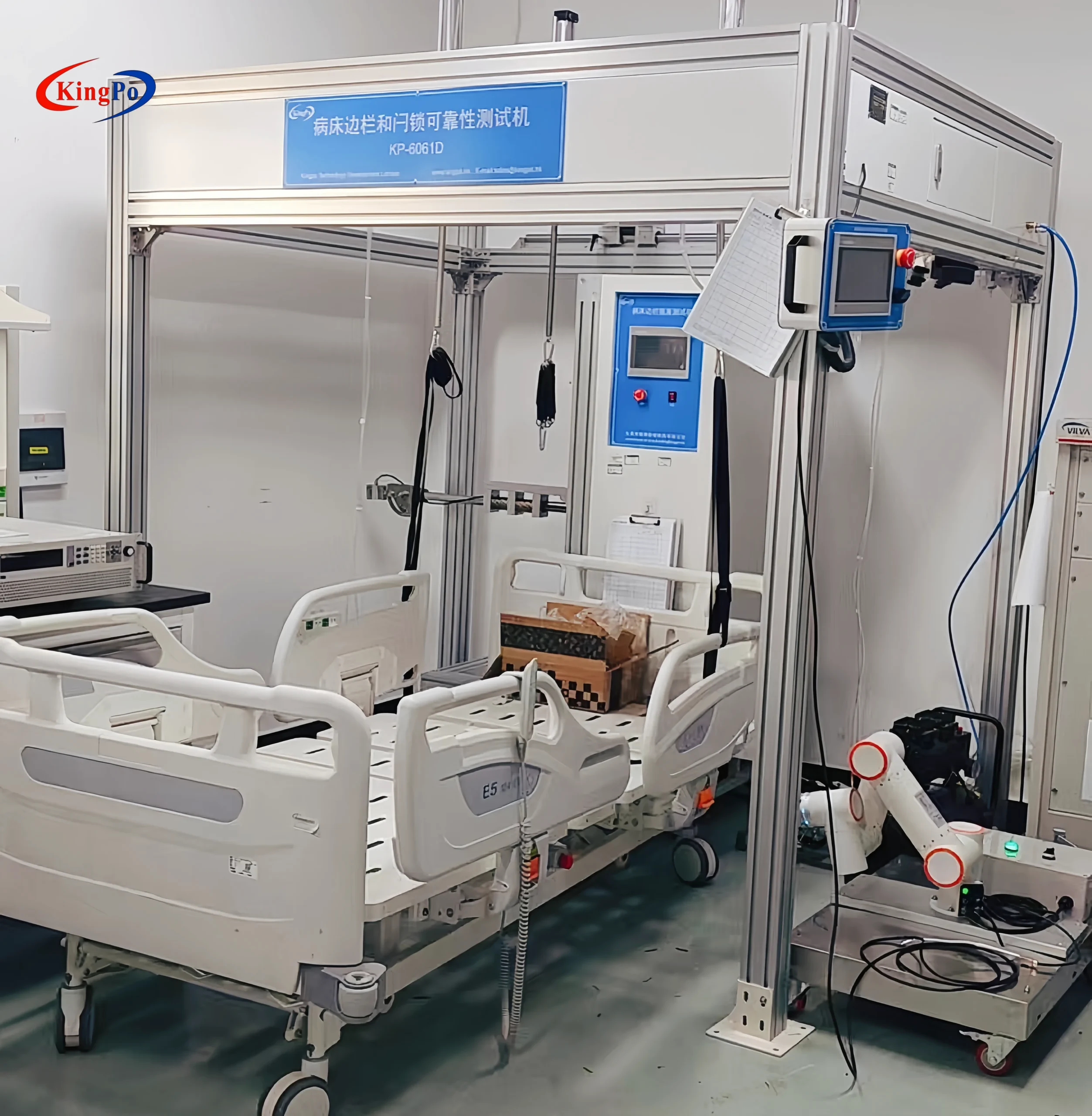
6-axis robotic arm simulating repeated side rail operation for medical bed reliability testing
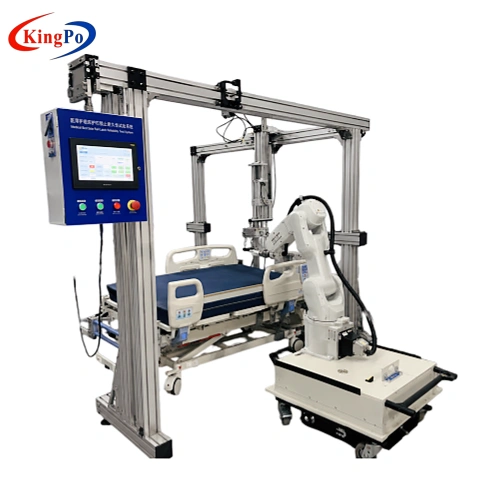
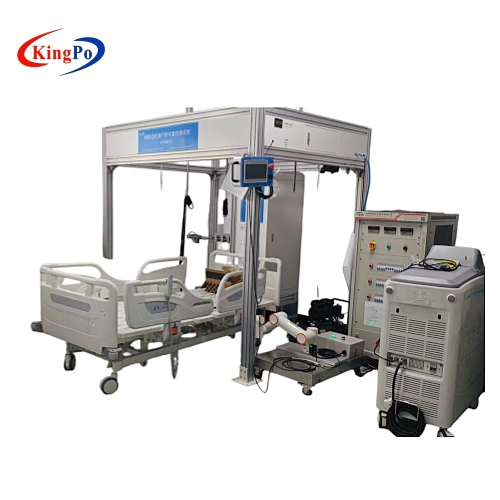
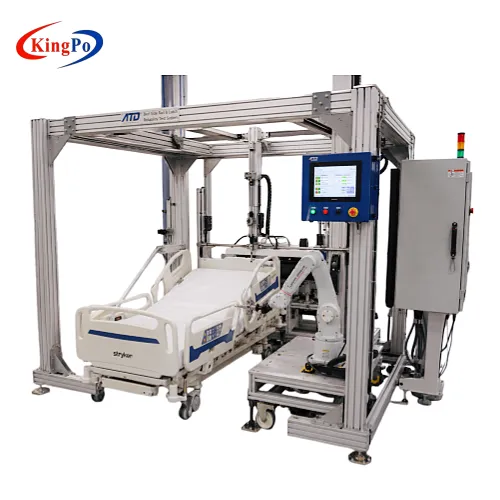
Medical Bed Side Rail and Latch Reliability Test System KP-RB50 for IEC 60601-2-52 testing
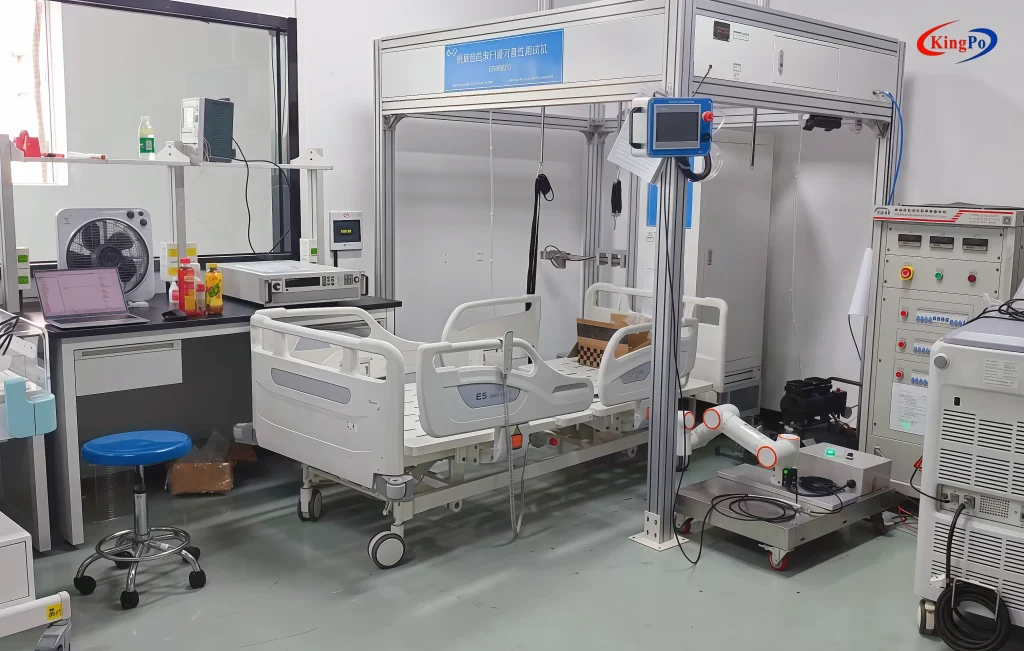
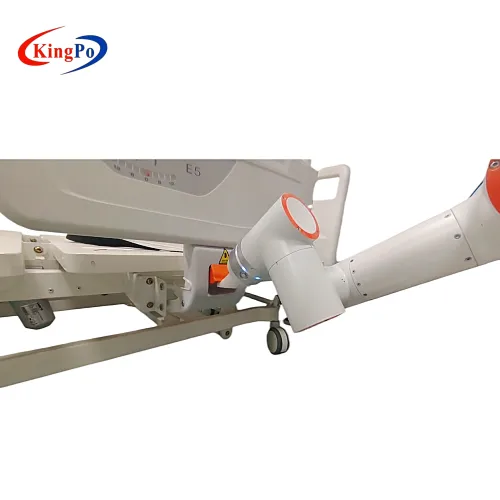
Close-up view of hospital bed latch reliability testing with the KP-RB50 system
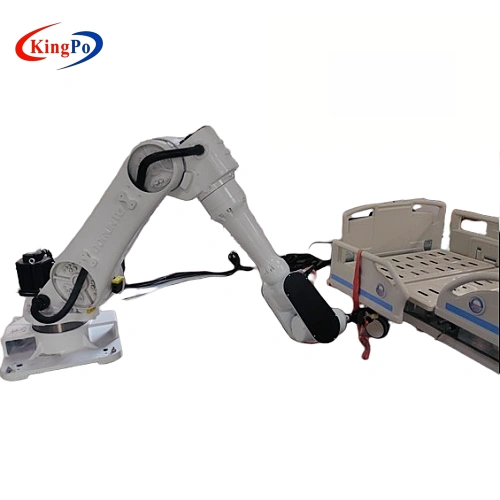
Robotic arm positioned for medical bed side rail and latch operation testing
Teach pendant used to configure the KP-RB50 robotic side rail test path
6-axis robotic arm simulating repeated side rail operation for medical bed reliability testing
Medical Bed Side Rail and Latch Reliability Test System KP-RB50 for IEC 60601-2-52 testing
Close-up view of hospital bed latch reliability testing with the KP-RB50 system
Robotic arm positioned for medical bed side rail and latch operation testing
Teach pendant used to configure the KP-RB50 robotic side rail test path

Medical Bed Side Rail and Latch Reliability Test System | IEC 60601-2-52

The Medical Bed Side Rail and Latch Reliability Test System, model KP-RB50, is designed for repeated operation and reliability testing of medical bed side rails and latch mechanisms.

It uses a 6-axis robotic arm to simulate manual side rail operation, helping laboratories evaluate side rail cycling, latch reliability and repeated-use durability for medical beds, hospital beds, nursing beds and rehabilitation beds.

  • Model: KP-RB50
  • Related standards: IEC 60601-2-52, YY 9706.252-2021
  • Main test item: Side rail and latch reliability test
  • Operation method: 6-axis robotic arm simulation
  • Maximum load: 16 kg
  • Working radius: 1034 mm
  • Repeatability: ±0.03 mm
  • Human-machine interface: 10.1-inch teach pendant
  • Applications: Medical beds, hospital beds, nursing beds, rehabilitation beds

Medical Bed Side Rail and Latch Reliability Test System Overview

Standards and Test Method Support

The Medical Bed Side Rail and Latch Reliability Test System is designed to support selected test methods related to medical bed side rail and latch reliability according to IEC 60601-2-52 and YY 9706.252-2021.

The main test application is repeated side rail operation using a 6-axis robotic arm to simulate manual opening, closing, pushing, pulling or latch actuation. This helps laboratories evaluate whether side rail and latch mechanisms can maintain reliable function after repeated use under controlled test conditions.

For projects involving updated international standard transition, IEC 80601-2-52:2026 may be reviewed as a future reference. Clause-by-clause confirmation is recommended before applying new-standard requirements to an existing test program or equipment configuration.

System Configuration

The KP-RB50 integrates a 6-axis robotic arm, control system, 10.1-inch teach pendant and operation tooling for medical bed side rail and latch reliability testing.

The robotic arm is used to simulate repeated manual interaction with the side rail or latch mechanism. Operators can set the robot position and operation path according to the side rail structure, latch location and selected test method. Compared with manual cycling, robotic operation helps improve test consistency and reduce operator-dependent variation.

For different medical bed designs, the robot working position, contact tooling and test setup can be configured according to the customer’s side rail structure and latch mechanism.

Laboratory application of a medical bed side rail reliability test system for repeated-use evaluation

Medical Bed Side Rail and Latch Reliability Test System Specifications

Key Specifications

Item Specification
Model KP-RB50
Product Type Medical bed side rail and latch reliability test system
Related Standards IEC 60601-2-52, YY 9706.252-2021
Main Test Item Side rail and latch reliability test
Operation Method 6-axis robotic arm simulation
Human-Machine Interface 10.1-inch teach pendant
Typical Samples Medical beds, hospital beds, nursing beds, rehabilitation beds
Power Supply AC 220 V, 50 Hz

Robotic Operation Parameters

The following robotic operation parameters are based on the KP-RB50 product specification. Final configuration can be reviewed according to the customer’s medical bed structure, side rail position and latch operation requirements.

Parameter Specification Related Function
Maximum Load 16 kg Robotic operation capacity
Working Radius 1034 mm Robot reach for side rail operation
Degrees of Freedom 6 rotating joints Simulated manual operation
Repeatability ±0.03 mm Repeated position accuracy
Protection Rating IPX54 Robot protection level
Stroke / Travel 0–200 mm Side rail or latch operation range
Noise Level <65 dB Laboratory operation environment
Base Diameter 190 mm Robot base configuration
Power 410 W Robot power rating
Power Supply AC 220 V, 50 Hz Electrical configuration

Standards and Test Item Mapping

The table below shows how the KP-RB50 relates to medical bed side rail and latch reliability testing requirements. The system is designed to support selected test methods, while final compliance evaluation should follow the complete applicable standard and laboratory test procedure.

Related Standard / Clause Test Item KP-RB50 Function
IEC 60601-2-52 Medical bed basic safety and essential performance related side rail evaluation Robotic side rail reliability testing
YY 9706.252-2021 Medical bed basic safety and essential performance requirements Medical bed side rail test reference
YY 9706.252-2021 201.9.8.3.3.3 Side rail strength and latch reliability Repeated side rail and latch operation simulation
Customer Test Program Side rail opening, closing or latch actuation test Programmable robotic operation path
IEC 80601-2-52:2026 Updated adult medical bed standard reference For future standard transition review

Testing Principle

The KP-RB50 simulates repeated manual operation of medical bed side rails and latch mechanisms through a 6-axis robotic arm.

During testing, the robotic arm is positioned according to the bed side rail structure and latch location. The operator can teach or configure the operation path so that the robot repeatedly performs side rail movement, latch engagement or latch release according to the selected test method.

This automated approach helps improve operation consistency compared with manual cycle testing. It is especially suitable for laboratories that need repeatable side rail reliability testing, long-duration operation checks or controlled movement paths for different medical bed rail designs.

Test Workflow

The workflow below is a typical reference process for robotic side rail and latch reliability testing. Actual test steps may be adjusted according to the side rail design, latch mechanism and selected test procedure.

  1. Position the medical bed sample in the test area and confirm that the side rail and latch mechanism are accessible.
  2. Set the robotic arm working position according to the side rail structure and latch location.
  3. Configure or teach the operation path using the 10.1-inch teach pendant.
  4. Confirm that the robot movement does not interfere with the bed frame, side rail, cables or surrounding fixtures.
  5. Start the repeated operation test according to the selected test method or customer test procedure.
  6. Observe side rail movement, latch engagement, latch release and any abnormal resistance during testing.
  7. Record the test result, sample condition and any side rail or latch failure after the test.
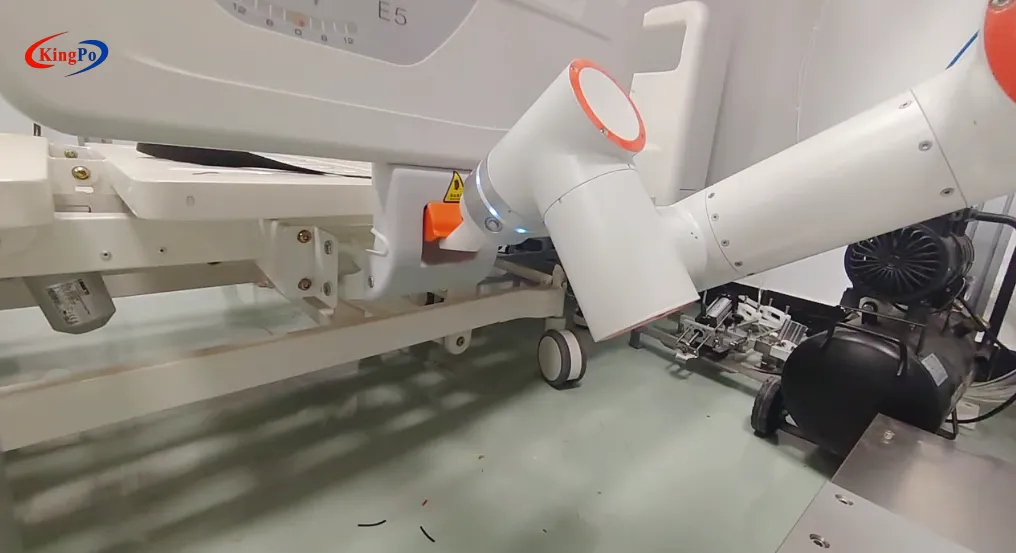
6-axis robotic arm simulating repeated side rail operation for medical bed latch reliability testing

Operation Notes for Robotic Side Rail Testing

To maintain stable and repeatable test results, the following practices are recommended:

  • Confirm the side rail, latch position and robot operation path before each test series.
  • Ensure the medical bed sample is properly positioned and secured before robotic operation.
  • Check that the robotic arm movement does not contact unintended bed frame parts or safety guards.
  • Set the operation position and contact point according to the side rail design and selected test method.
  • Inspect the end tooling, contact pad or operation fixture regularly during repeated operation tests.
  • Stop the test and inspect the sample if abnormal resistance, latch failure, rail deformation or unusual noise occurs.

Applications and Laboratory Use

The KP-RB50 is suitable for reliability testing of:

  • Medical bed side rails
  • Hospital bed guardrails
  • Nursing bed side rails
  • Rehabilitation bed side rails
  • Side rail latch mechanisms
  • Side rail opening and closing mechanisms
  • Repeated-use bed rail components

Typical use cases include product development, latch durability testing, side rail repeated-use verification, production quality control, type testing support and laboratory evaluation for medical bed manufacturers and testing organizations.

Metrological Integrity and Validation

Before delivery, KingPo performs factory verification of key robotic motion, control and safety functions to confirm baseline operation.

Regular verification of robot positioning, operation path, contact tooling and safety settings is recommended to maintain repeatable side rail and latch reliability test results. For projects requiring documented traceability, calibration or verification support can be discussed according to measurement items, laboratory requirements and local regulations.

Fixture customization, robotic operation path setup and test report format adaptation are available according to the customer’s medical bed type, side rail structure, latch mechanism and laboratory workflow.
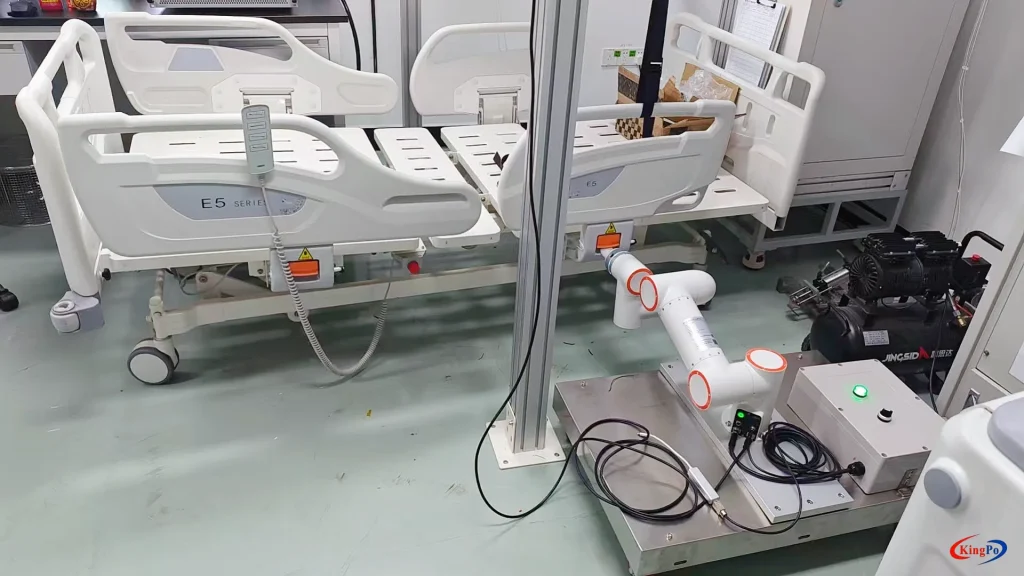
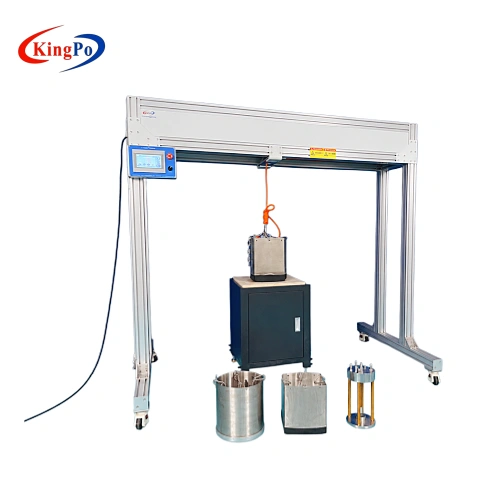
Robotic arm setup for IEC 60601-2-52 related medical bed side rail and latch reliability testing

Technical Inquiry and Expert Support

KingPo offers the KP-RB50 Medical Bed Side Rail and Latch Reliability Test System for medical bed side rail cycling and latch reliability evaluation.

Our engineering team can provide support for test setup, robotic path configuration, fixture customization, side rail operation tooling, laboratory layout planning and standard clause interpretation.

For technical specifications, quotation or customization, please contact us with your medical bed type, side rail design, latch structure, required test items, maximum sample dimensions and target standard.

Download Product Documentation

Download the product document for the KP-RB50 Medical Bed Side Rail and Latch Reliability Test System,
including product overview, related standards, robotic operation parameters and technical specifications.

Information Required for Quotation

To recommend the correct configuration, please provide the following information when sending an inquiry:

  • Medical bed type and side rail structure
  • Latch mechanism photos or drawings
  • Maximum bed size and working height
  • Required standard or test procedure
  • Required side rail operation direction
  • Target test items and expected test workflow
  • Available laboratory space and power supply
  • Whether customized tooling or report format is required

Referenced Standards

* IEC 60601-2-52 — Medical electrical equipment — Particular requirements for the basic safety and essential performance of medical beds

* YY 9706.252-2021 — Medical electrical equipment — Part 2-52: Particular requirements for the basic safety and essential performance of medical beds

* IEC 80601-2-52:2026 — Updated international standard context for adult medical beds

Related Videos

Medical Bed Side Rail and Latch Reliability Test System Detail Display

FAQ

What is the KP-RB50 used for?
The KP-RB50 Medical Bed Side Rail and Latch Reliability Test System is used to simulate repeated side rail operation and latch actuation for medical beds. It uses a 6-axis robotic arm to perform controlled operation of the bed side rail or latch mechanism, helping laboratories evaluate repeated-use reliability, side rail cycling and latch durability.
Which standards are related to this system?
The KP-RB50 is designed to support selected test methods related to IEC 60601-2-52 and YY 9706.252-2021. The related clause in the provided specification is YY 9706.252-2021 201.9.8.3.3.3, covering side rail strength and latch reliability. Final compliance should be evaluated according to the complete standard, product design and laboratory procedure.
Is this the same as a medical bed side rail strength tester?
No. The KP-RB50 is mainly used for side rail and latch reliability testing through repeated robotic operation. A side rail strength tester usually applies controlled force to evaluate push-pull or load strength. The KP-RB50 focuses on repeated-use reliability, latch operation and side rail cycling simulation using a 6-axis robotic arm.
Can the robot be adapted to different side rail structures?
Yes. The robotic working position, contact tooling and operation path can be configured according to the side rail design and latch location. Since medical bed side rails can vary in structure, customers should provide photos, drawings, bed dimensions and target test requirements before quotation so that the correct fixture and operating approach can be recommended.
Does the system include a fixed cycle count?
The provided specification does not state a fixed cycle count, so it should not be assumed. The actual repeated operation program should be confirmed according to the customer’s test procedure, standard interpretation and laboratory requirements. KingPo can discuss robotic operation path setup and test workflow based on the required side rail or latch reliability test.
What information is needed before quotation?
Customers should provide the medical bed type, side rail structure, latch mechanism design, maximum bed size, target standard, required test item and available laboratory space. Photos or drawings of the side rail and latch mechanism are especially helpful. This information allows KingPo to recommend suitable robotic positioning, contact tooling and test configuration.
Can the KP-RB50 be used for nursing beds or rehabilitation beds?
Yes. The KP-RB50 can be used for medical beds, nursing beds, rehabilitation beds and similar bed structures with side rails and latch mechanisms. The key requirement is that the side rail operation and latch position can be accessed by the robotic arm. The final setup should be confirmed based on the sample size and rail structure.
What are the main advantages of robotic side rail testing?
Robotic operation provides more consistent movement than manual cycling and helps reduce operator-dependent variation. It is useful for repeated side rail operation, latch actuation and long-duration reliability evaluation. The robot can follow a configured motion path, which helps laboratories maintain a more controlled and repeatable test process for different medical bed side rail designs.
Can calibration or verification documents be provided?
Before delivery, KingPo performs factory verification of key robotic motion, control and safety functions. For projects that require documented traceability, calibration or verification support can be discussed according to measurement items and local laboratory requirements. Regular verification of robot positioning, contact tooling and operating path is recommended for repeatable reliability testing.
Can this system be customized?
Yes. The KP-RB50 can be discussed with customized operation tooling, robotic path setup and laboratory layout planning according to the customer’s medical bed structure. Since side rail and latch mechanisms differ by product design, customized fixtures or contact tools may be required to match the side rail operation position and reliability test procedure.

Related Products

Related News

Compare KP8850 ESU Analyzer and BC Biomedical ESU Analyzer for lab precision, clinical speed, compliance, and workflow. Find the right ESU analyzer for you.
Comparing IEC 60601-2-34 and IEC 60601-2-25: A Technical Guide details device scope, testing, and compliance differences for medical device standards.
Choose the right IPX8 water immersion test chamber by focusing on compliance, reliability, and features that match your product’s water resistance requirements.
KINGPO’s Electrosurgical Unit analyzer ensures ESU safety and IEC 60601-2-2 compliance with precise testing, supporting patient protection and regulatory needs.
IP ratings and IEC 60529 standard define equipment protection against dust and water, ensuring safety, compliance, and suitability for diverse environments.

The Ultimate Guide to Desktop Temperature Humidity Chamber in 2026: Precision High-Low Cycling, Environmental Adaptability, and Reliability Verification – A […]

I see the glow wire test as a critical step in ensuring electrical product safety. When I use the glow […]

Essential equipment for residual voltage testing under IEC 60601-1, IEC 60335-1, IEC 61010-1, IEC 62368-1 and similar safety standards. 1. […]

Scroll to Top

Get A Free Quote Now !

Contact Form
If you have any questions, please do not hesitate to contact us.