Medical Bed Test Equipment for a German Testing Company – IEC 60601-2-52 & IEC 80601-2-52:2026
A testing company in Germany purchased a coordinated set of medical bed test equipment covering dimensional checks, entrapment-related evaluation, structural loading, impact testing and side-rail mechanical testing. The configuration includes dedicated tools associated with both IEC 60601-2-52 and IEC 80601-2-52:2026.
Rather than treating medical-bed compliance as one universal test, the project was configured around the individual test figures and mechanical functions required by the laboratory.
Project Overview
IEC 80601-2-52:2026
| Main Test Areas | Dimensional evaluation, entrapment-related checks, structural loading, impact and side-rail mechanical testing |
| Equipment Type | Standard-defined tools, loading interfaces and controlled mechanical test equipment |
| Typical Use | Laboratory evaluation of medical-bed mechanical safety and standard-related test requirements |
Customer Testing Requirement
Medical-bed testing involves several fundamentally different physical test methods. A laboratory may need defined geometrical tools for openings and entrapment evaluation, separate interfaces for applying structural loads, impact tools for mechanical resistance tests and controlled force equipment for side-rail evaluation.
In this project, the German customer selected equipment covering both established IEC 60601-2-52 test configurations and test tools identified for IEC 80601-2-52:2026. Laboratories reviewing a similar scope can refer to KingPo’s IEC 80601-2-52:2026 medical bed testing equipment guide for a broader clause-to-equipment overview.
Equipment should be selected by the exact standard edition, clause, figure and required test function. Searching only for a general “IEC 60601-2-52 tester” can leave important tools or fixtures outside the laboratory’s actual test scope.
Delivered Equipment Configuration
The project includes eight dedicated tools or systems. Each item serves a different standard-related mechanical or dimensional test function.
| No. | Equipment | Standard / Figure | Main Function |
|---|---|---|---|
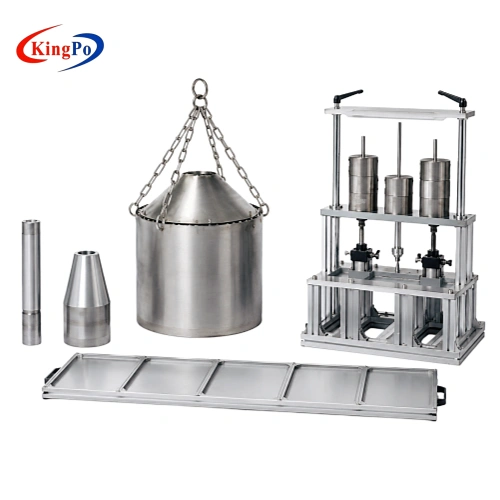
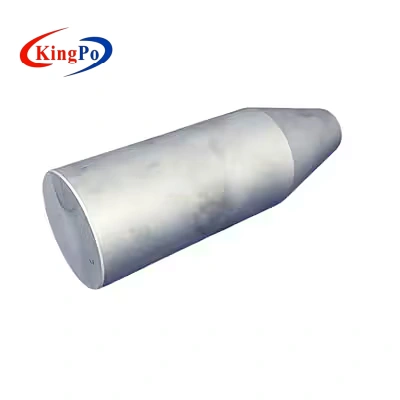
| 1 | Cone Tool | IEC 60601-2-52 Figure 201.103 a) | Defined geometry / dimensional evaluation |
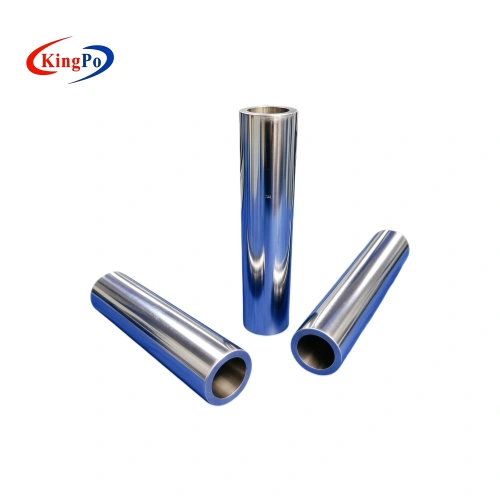
| 2 | Cylinder Tool | IEC 60601-2-52 Figure 201.103 b) | Defined geometry / dimensional evaluation |
| 3 | Loading Pad | IEC 60601-2-52 Figure 201.104 | Mechanical load application interface |
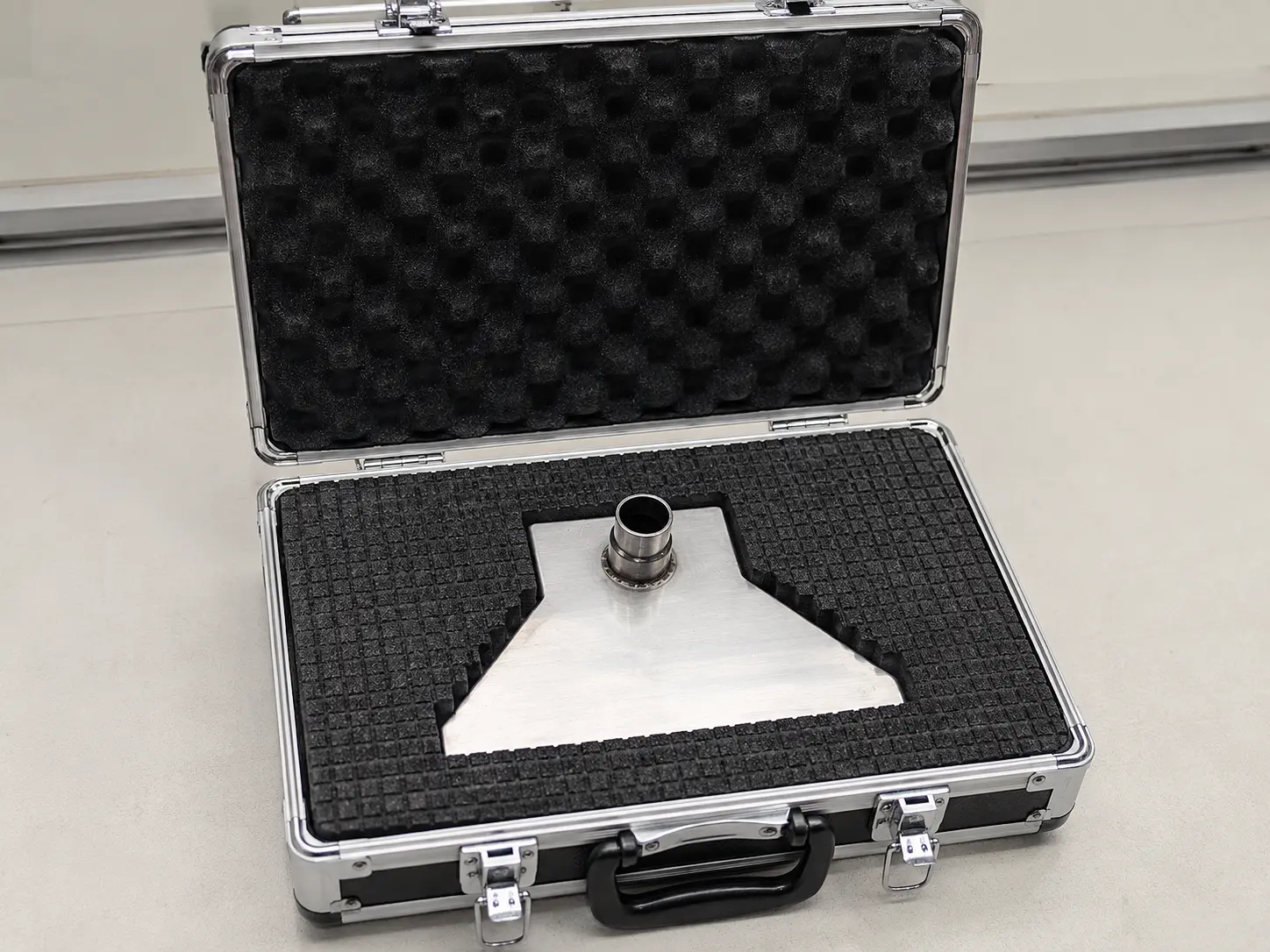
| 4 | Wedge Tool | IEC 60601-2-52 Figure CC.1 | Entrapment-related geometry; aluminium; approx. 3.34 kg |
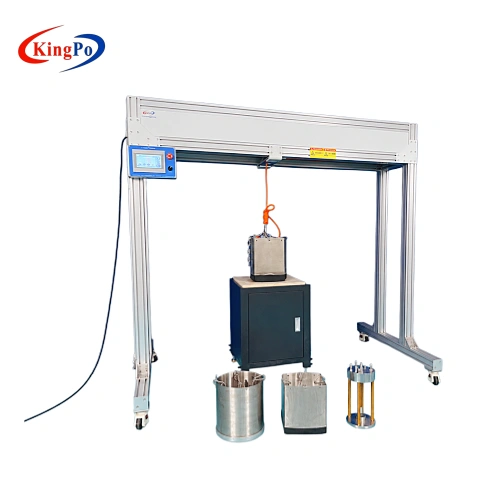
| 5 | Impactor | IEC 60601-2-52 Figure BB.2 | Defined mechanical impact evaluation |
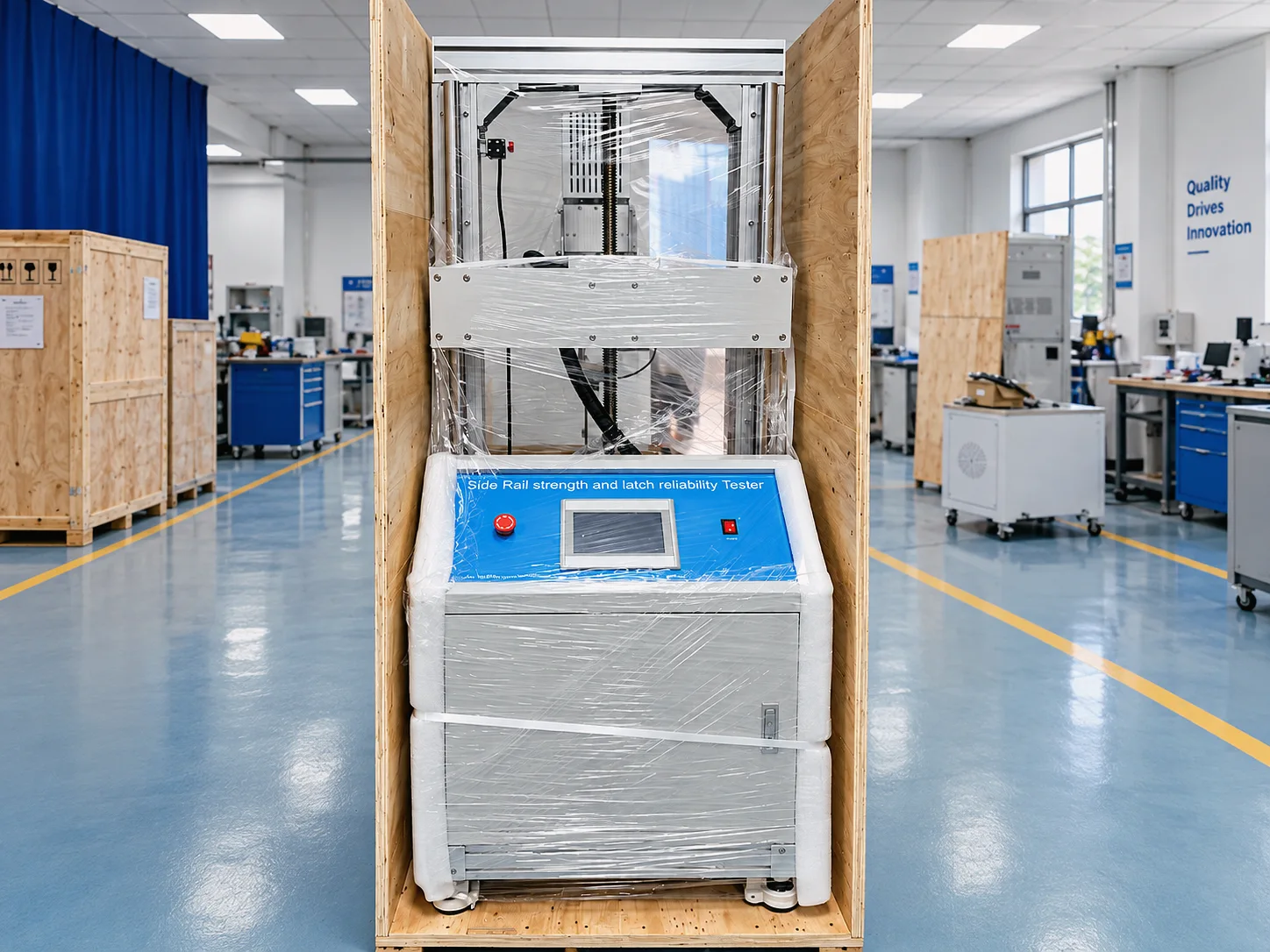
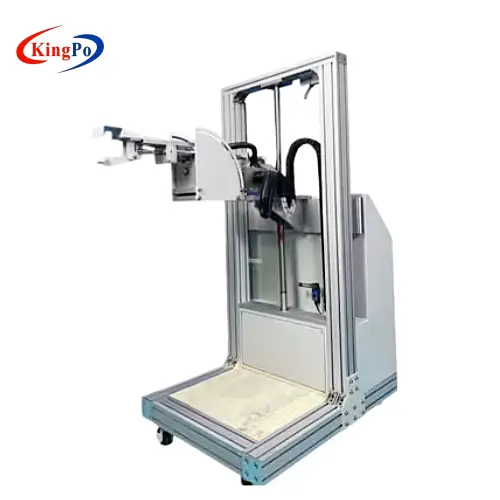
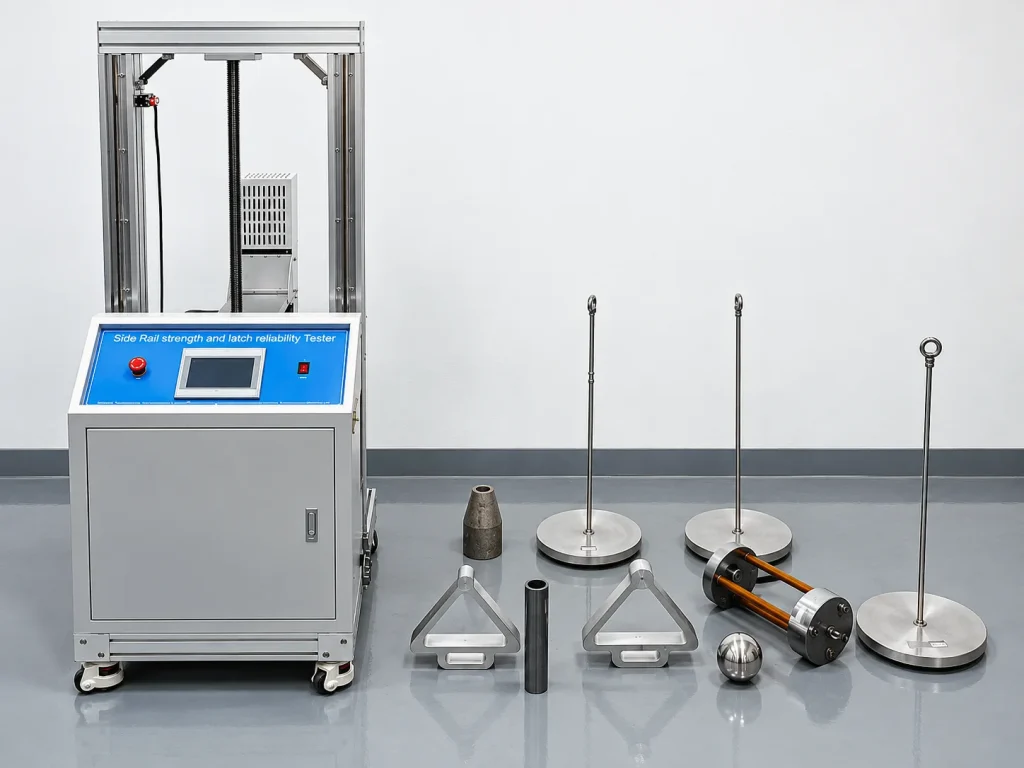
| 6 | KP-6061B Side Rail Strength Tester | IEC 60601-2-52 related side-rail mechanical requirements | Controlled side-rail force application and strength evaluation |
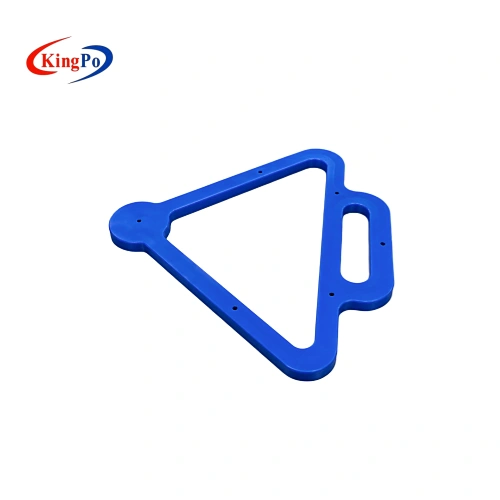
| 7 | 75° Wedge Tool | IEC 80601-2-52:2026 Figure CC.1 b) | Specified 75° wedge geometry |
| 8 | Ball Chain Loop and Spherical Mass | IEC 80601-2-52:2026 Figure 201.107 | Defined test arrangement for the applicable 2026 requirement |
How the Configuration Covers Different Test Functions
Dimensional and Entrapment-Related Evaluation
The cone tool, cylinder tool and wedge tools provide standard-defined geometries rather than general-purpose measuring functions. Their role is to reproduce the geometry specified by the relevant figure so that openings, spaces or other defined areas of the medical bed can be evaluated consistently.
Structural Loading
The loading pad associated with Figure 201.104 defines the interface through which a specified mechanical load is applied. The loading tool and the force-generating equipment should therefore be considered separately: the pad defines the contact geometry, while the loading system provides controlled force, movement or repeated loading where required.
Impact Testing
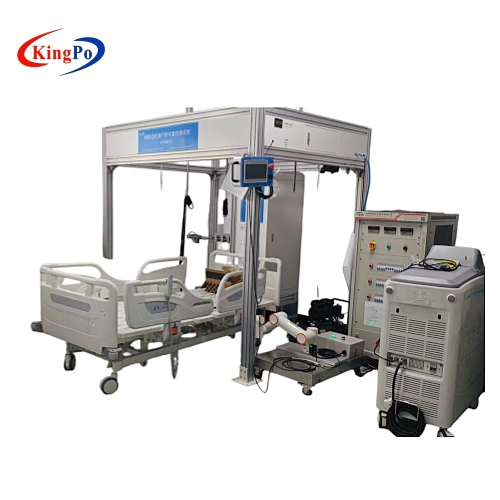
The supplied impactor corresponds to Figure BB.2 and is used where the selected medical-bed test procedure requires a defined impact interface or impact condition. For laboratories that also need integrated dynamic loading and impact functions, the related KP-6061C Medical Bed Load and Impact Test System can be reviewed separately; it should not be assumed to be part of this customer order.
Side-Rail Mechanical Testing
For controlled side-rail loading, the project includes the KP-6061B Medical Bed Side Rail Strength Tester. The system is intended for force-based side-rail evaluation, including controlled vertical and lateral loading according to the selected test procedure.
Side-rail force application and repeated opening, closing or latch-actuation cycling are not necessarily the same test function. If a project requires long-duration latch reliability cycling, the exact clause and required operating sequence should be confirmed separately before equipment selection.
IEC 60601-2-52 and IEC 80601-2-52:2026 Test Coverage
One notable feature of this order is that the equipment list contains tools associated with both IEC 60601-2-52 test configurations and IEC 80601-2-52:2026 requirements, including the 75° wedge tool and the ball chain loop with spherical mass.
For laboratories updating an existing medical-bed test capability, the practical task is not simply to replace every existing fixture. Existing tools should be reviewed clause by clause to determine which remain applicable, which require dimensional confirmation and which additional fixtures or procedures are required for the target edition.
Engineering Notes for Similar Laboratories
Do not select a fixture only because its description contains “IEC 60601-2-52”. Confirm the edition and the actual figure or clause used by the laboratory.
A loading pad, wedge or impactor defines a test interface or geometry. It does not automatically provide the controlled force, movement, impact energy or cycle sequence required by the test method.
Laboratories already operating an IEC 60601-2-52 setup should compare existing fixtures against the target 2026 requirements before deciding which tools actually need to be added or replaced.
For an efficient equipment review, provide the target clauses and figures, medical-bed dimensions, side-rail structure and any existing test equipment already available in the laboratory.
Project Value
The value of this configuration is not the number of tools supplied, but the mapping between each test requirement and the correct physical test interface or mechanical system. The laboratory can use dedicated standard-defined geometries where required and controlled mechanical equipment where force or movement must be applied.
KingPo has also supplied medical-bed testing equipment for other laboratory projects; another example can be found in the CTI Shenzhen medical bed testing equipment case. Laboratories working on broader IEC 60601 programmes can also review KingPo’s medical test equipment range.
FAQ
Planning a Medical Bed Testing Project?
Send KingPo the applicable standard edition, required clauses and figures, medical-bed dimensions and your existing laboratory equipment list. We can review the scope and map the required test methods to the corresponding tools and systems.