KP-1050S Defibrillation Test Pulse Generator Delivered to SGS Shanghai Laboratory
KingPo delivered one KP-1050S Defibrillation Test Pulse Generator to SGS Shanghai Laboratory for controlled defibrillation pulse simulation in medical device safety testing.
The supplied system supports Test 1 damped sinusoidal defibrillation waveforms and Test 2 truncated exponential waveforms, with oscilloscope waveform observation, operation documents, matched accessories and calibration documentation prepared for the project.
Project Overview
| Supplier | KingPo Technology Development Limited |
| Delivered Equipment | KP-1050S Defibrillation Test Pulse Generator |
| Main Test Purpose | Controlled Test 1 and Test 2 defibrillation pulse simulation for AIMD-related medical device safety testing |
| Related Standards | GB 16174.1-2024 20.2, ISO 14117:2012, ISO 14708-1:2003, EN 45502-1:2015, EN 45502-2-2:2008 |
| Project Support | Matched accessories, operation documents, setup support, oscilloscope waveform observation and calibration documentation |
Project Background
Active implantable medical devices, such as pacemakers and implantable cardioverter defibrillators, may be exposed to external defibrillation pulses during clinical use. For this reason, laboratories need controlled defibrillation pulse simulation equipment to evaluate whether the device under test can maintain its defined safety and functional condition after specified pulse exposure.
The KP-1050S was supplied for a laboratory workflow where waveform type, output voltage level, polarity, test sequence, DUT connection and waveform observation all need to be clearly defined. Compared with a simple high-voltage pulse source, this type of medical device test system must support repeatable pulse generation, documented operation and safe setup control.
Customer Testing Requirement
For defibrillation immunity testing, the pulse generator is only one part of the complete setup. Before routine use, laboratories normally need to confirm the applicable standard, DUT category, waveform requirement, output polarity, load condition, connection method, pulse duration, waveform observation method, operator protection and documentation requirements.
Damped sinusoidal defibrillation waveform with 140 V / 380 V voltage levels.
Truncated exponential defibrillation waveform with 140 V / 270 V voltage levels and single-phase or dual-phase selection.
Use a digital oscilloscope or suitable measuring setup to observe output waveform behavior during setup.
Laboratory Setup and Waveform Observation
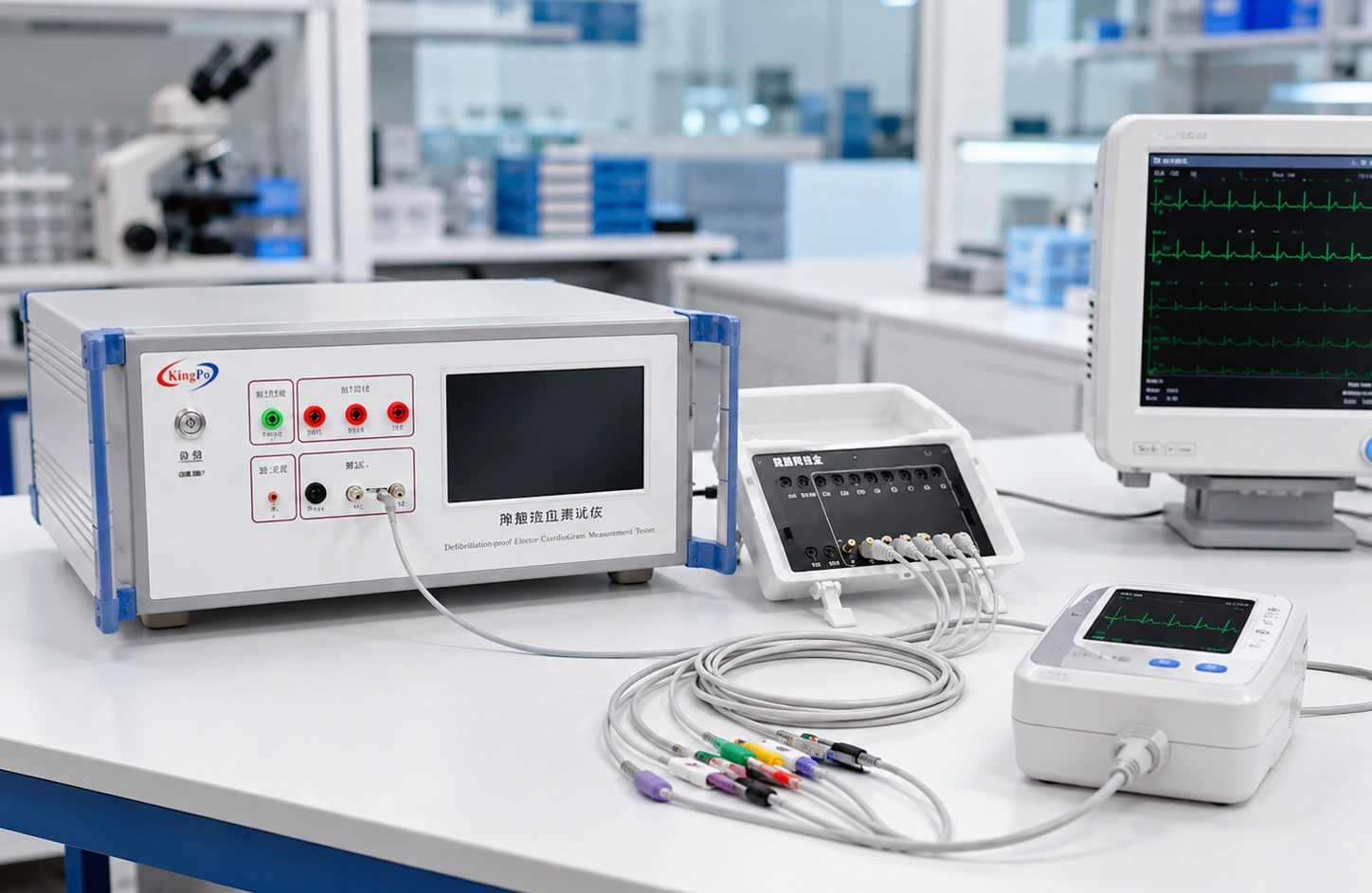
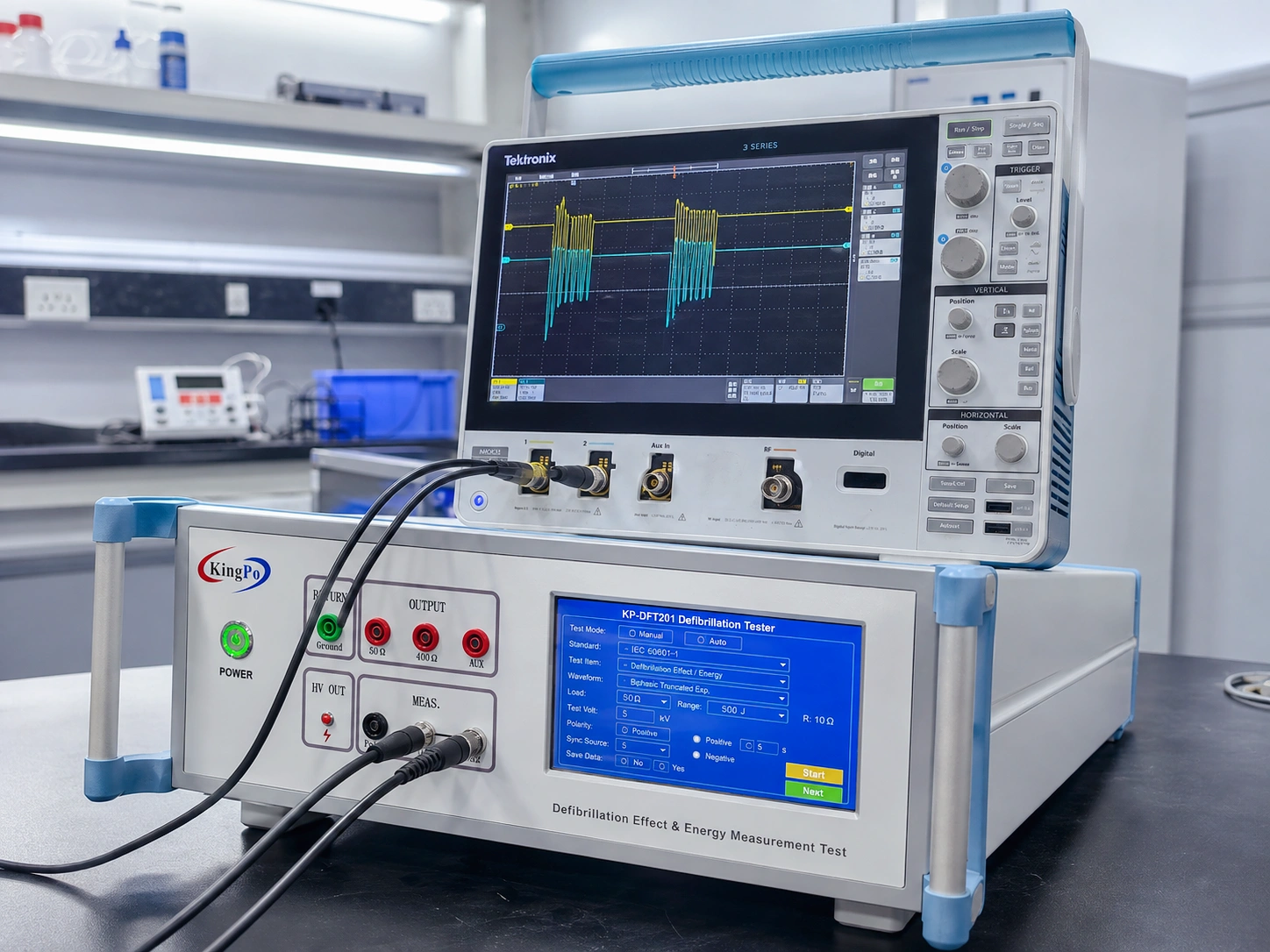
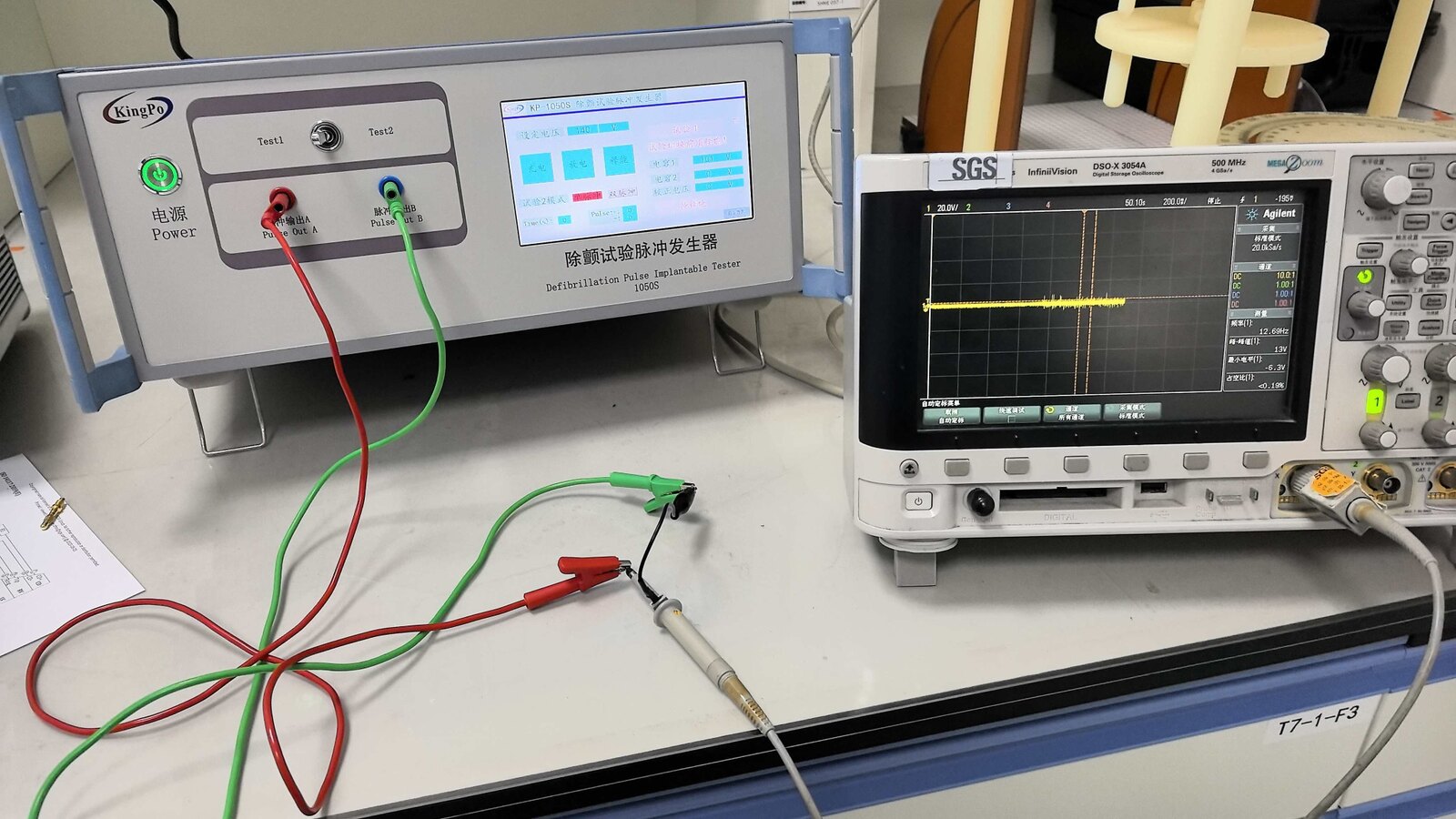
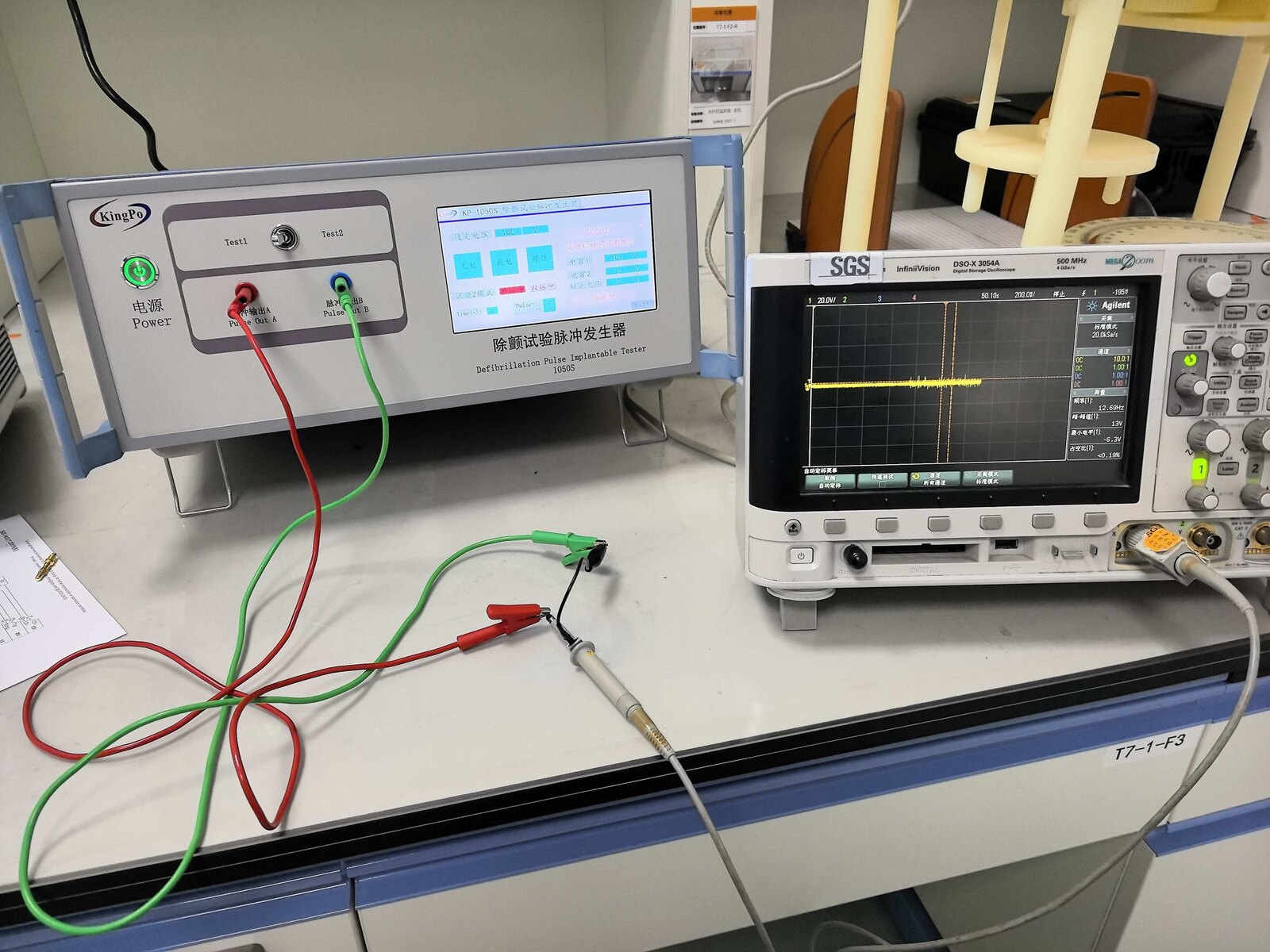
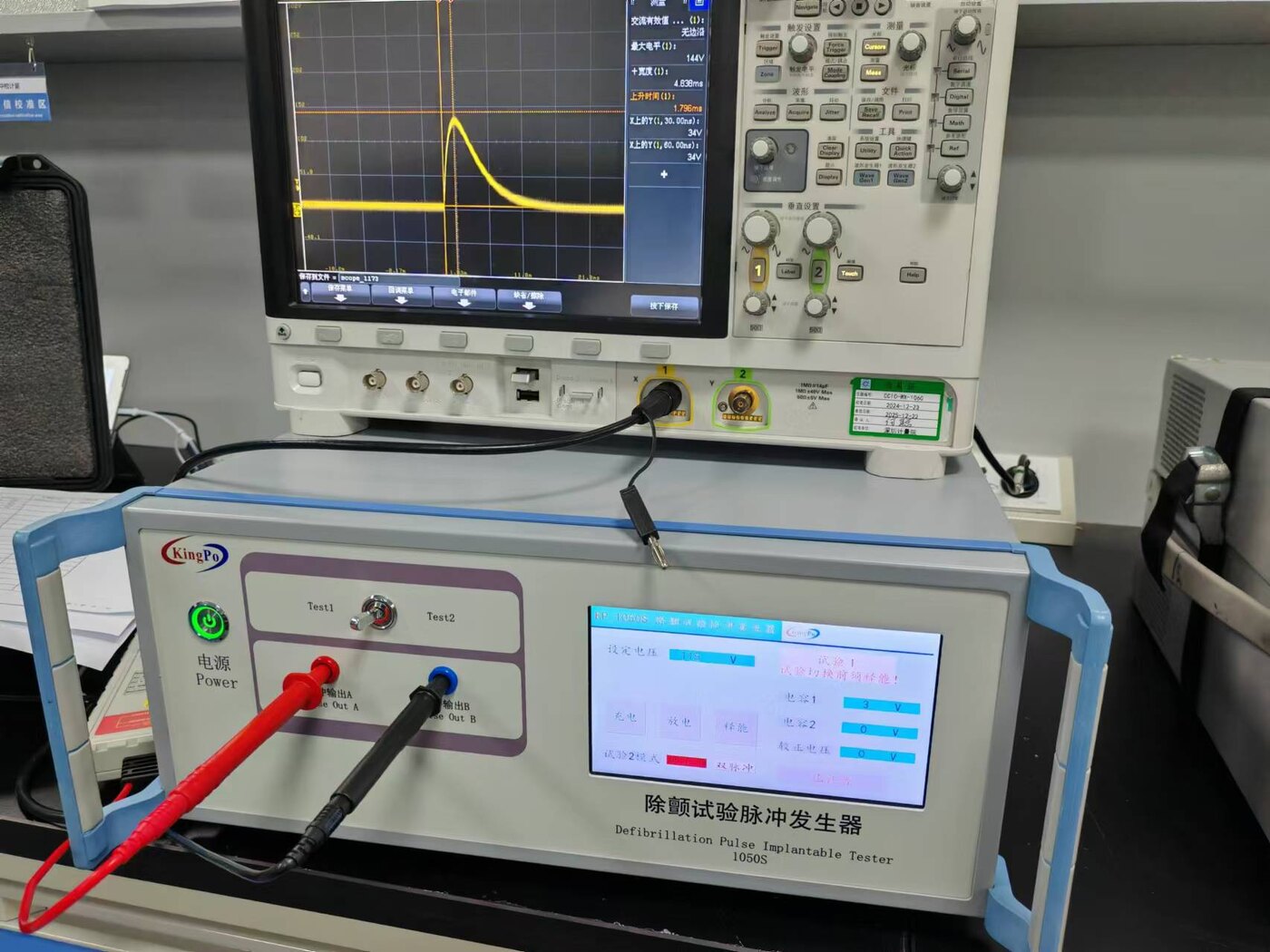
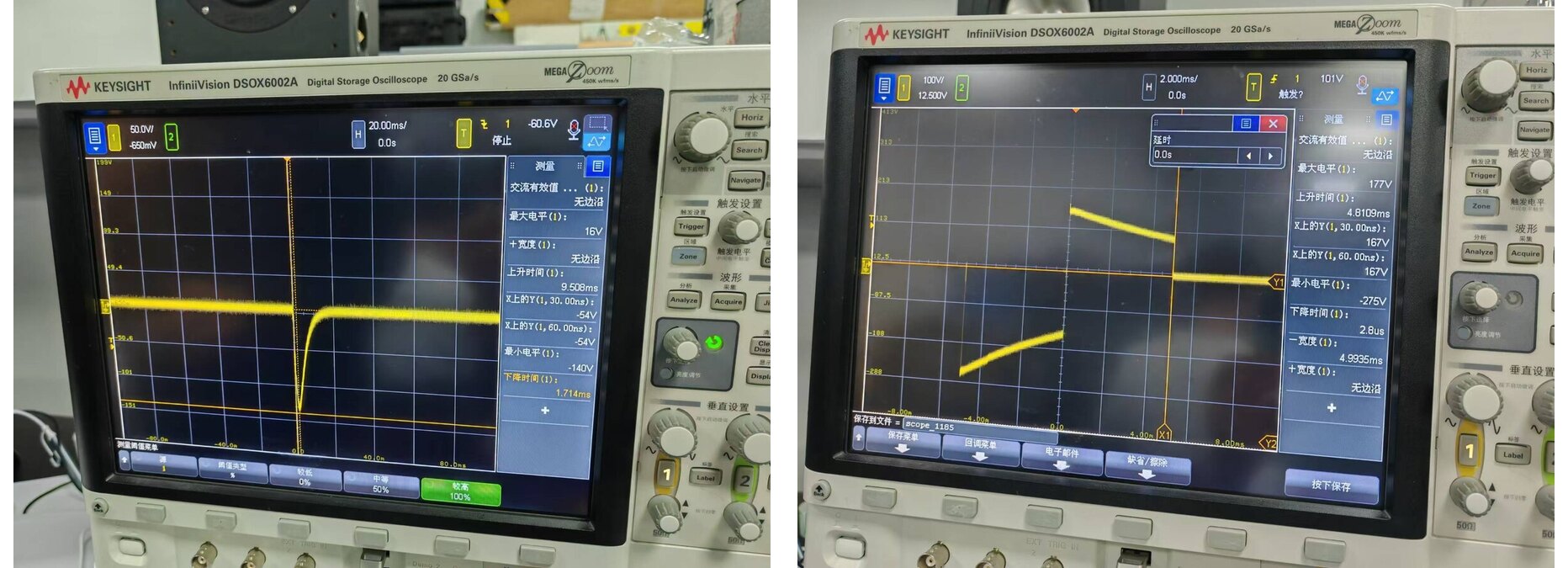
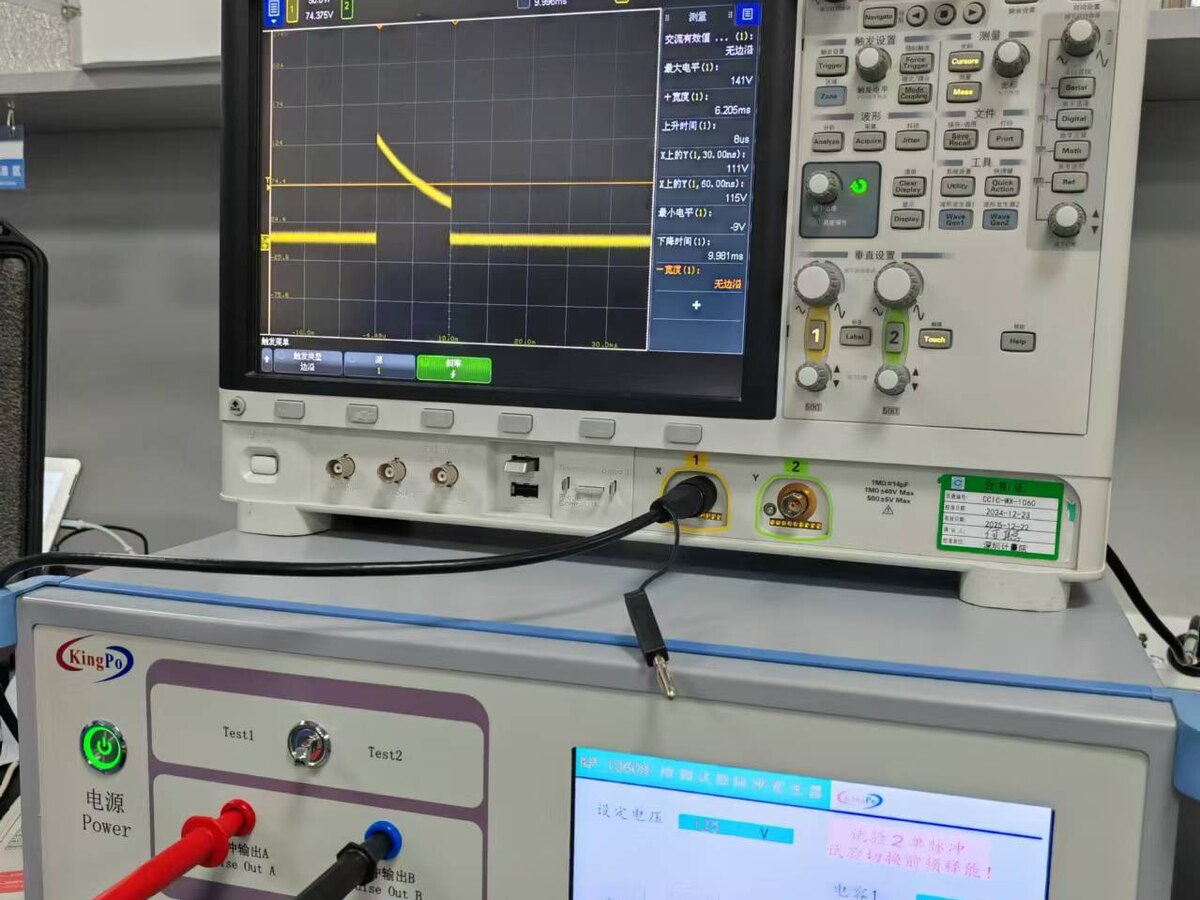
During the setup support process, the KP-1050S was connected with a digital oscilloscope for waveform observation. The setup images show the practical connection between the pulse generator and measuring equipment, helping technical buyers understand how output behavior can be reviewed before routine testing.
KP-1050S Product Capability Used in This Project
The KP-1050S integrates two defibrillation pulse test modes into one instrument. It is designed for AIMD-related defibrillation immunity testing where laboratories need to switch between damped sinusoidal and truncated exponential waveform applications, manage polarity, observe capacitor voltage and record pulse operation in a controlled workflow.
| Capability Area | KP-1050S Configuration |
|---|---|
| Test 1 Waveform | Damped sinusoidal defibrillation waveform, 140 V / 380 V |
| Test 2 Waveform | Truncated exponential defibrillation waveform, 140 V / 270 V, single-phase or dual-phase selectable |
| Polarity Control | Positive and negative polarity can be selected according to the test sequence |
| Automated Sequence | Typical sequence includes three positive pulses, a 60 s pause and one negative pulse |
| Programmable Cycles | 1–999 programmable test counts |
| Operation Interface | Touchscreen interface for voltage setting, charge/discharge control, polarity selection, pulse count, timer and status monitoring |
| External Network | KP-1050-1 resistor network box for the related test setup |
| Calibration Support | Calibration interface with positive and negative voltage compensation functions |
Technical Specification Reference
| Applicable Standards | GB 16174.1-2024 20.2, ISO 14117:2012, ISO 14708-1:2003, EN 45502-1:2015, EN 45502-2-2:2008 |
| Test 1 Voltage | 140 V / 380 V, tolerance +5% / -0% |
| Test 1 Waveform Timing | 1.5 ms < Tp < 2.5 ms; 3 ms < Tw50 < 5.5 ms |
| Test 2 Voltage | 140 V / 270 V, tolerance +5% / -0% |
| Test 2 Waveform Timing | 9.5 ms < Td < 10.5 ms; 1 μs < tr < 5 μs; 1 μs < tf < 5 μs |
| Test Count | 1–999 times |
| Input Power | AC 220 / 110 V ±10%, 50 / 60 Hz, max power approx. 300 W |
| Dimensions | 480 × 460 × 200 mm |
| Weight | Approx. 10 kg |
Final configuration should be confirmed according to the approved technical specification, calibration record and laboratory test plan for the supplied system.
Test Setup Workflow for Similar Projects
A defibrillation pulse generator project usually requires more than equipment delivery. The laboratory needs to confirm the test objective, connect the DUT safely, verify the waveform and prepare operating records before routine testing.
- Confirm applicable standard, DUT category and required pulse mode.
- Prepare connection accessories, load condition and safety spacing.
- Connect the KP-1050S with the measurement setup for waveform observation.
- Check output waveform behavior, polarity and pulse sequence.
- Record setup photos, operation records and calibration documentation.
Calibration Documentation
The project includes calibration documentation to support laboratory equipment records, internal review, traceability management and medical device safety testing workflows. The KP-1050S also provides calibration interface functions for voltage compensation during equipment management.
Applicable Standards and Test Context
The KP-1050S is designed for defibrillation pulse testing applications related to active implantable medical device safety evaluation. The related test method depends on the DUT category, standard edition, laboratory procedure and project scope.
| Standard | Relationship to the KP-1050S Application |
|---|---|
| GB 16174.1-2024 20.2 | Application context for active implantable medical device defibrillation-related testing. |
| ISO 14117:2012 | Defibrillation immunity testing for active implantable medical devices. |
| ISO 14708-1:2003 | General safety requirements context for active implantable medical devices. |
| EN 45502-1:2015 | Safety requirements context for active implantable medical devices. |
| EN 45502-2-2:2008 | Application context related to implantable cardioverter defibrillator testing. |
Engineering Notes for Similar Test Setups
For defibrillation-related testing, laboratories should not select equipment only by product name. The complete setup should be reviewed according to the DUT type, standard, intended test method, waveform requirement, connection method and documentation requirements.
Confirm applicable standard, DUT type, Test 1 or Test 2 requirement, voltage level, accessories and calibration requirement.
Verify waveform behavior, connection method, load condition, polarity, safety spacing and operation sequence.
Prepare operation records, setup photos, waveform records, calibration documents and internal laboratory procedures.
Project Value
The delivered KP-1050S setup is intended to support controlled, repeatable and documented defibrillation pulse simulation in laboratory testing workflows. The integration of Test 1 and Test 2 waveforms, touchscreen operation, polarity control, oscilloscope waveform observation and calibration documentation helps engineers prepare a clearer and more traceable test process.
- One system for Test 1 and Test 2 defibrillation pulse applications
- Touchscreen operation for voltage setting and charge/discharge control
- Oscilloscope waveform observation during setup support
- Calibration documentation for equipment records
Related Product and Technical Pages
KP-1050S Defibrillation Test Pulse Generator
Main product page for the delivered equipment.
ISO 14708-1 Clause 20.1 Test 1/2 Defibrillation Test Pulse Generator
Detailed KP-1050S application and specification page for AIMD testing.
Medical Test Equipment
Broader KingPo medical device safety testing equipment category.
ISO 14117 Defibrillation Test Pulse Generator Guide
Technical article explaining pulse testing for active implantable medical devices.
FAQ
KingPo can help confirm the applicable standard, DUT type, Test 1 / Test 2 waveform requirement, accessories, documentation, calibration report needs and operation guidance requirements before quotation.