The Defibrillation Immunity Testing Requirements for Active Implantable Medical Devices (AIMDs): Standards Breakdown, Visual Insights, and Recommendation for the KP-1050S Tester (February 2026)
Active implantable medical devices (AIMDs) such as pacemakers, implantable cardioverter defibrillators (ICDs), and cardiac resynchronization therapy devices are critical for managing life-threatening heart rhythm disorders. These devices must remain fully functional after exposure to high-energy external defibrillation shocks, which can deliver hundreds of joules in milliseconds during cardiac emergencies.
Without proper defibrillation immunity, an AIMD risks permanent damage, loss of programmability, unintended therapy delivery, or complete failure—potentially requiring invasive replacement surgery. Global regulatory standards mandate rigorous testing to verify this immunity, ensuring patient safety and compliance for market approval.
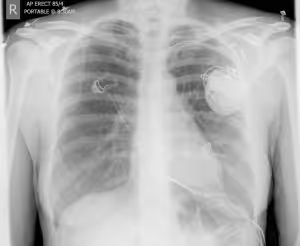
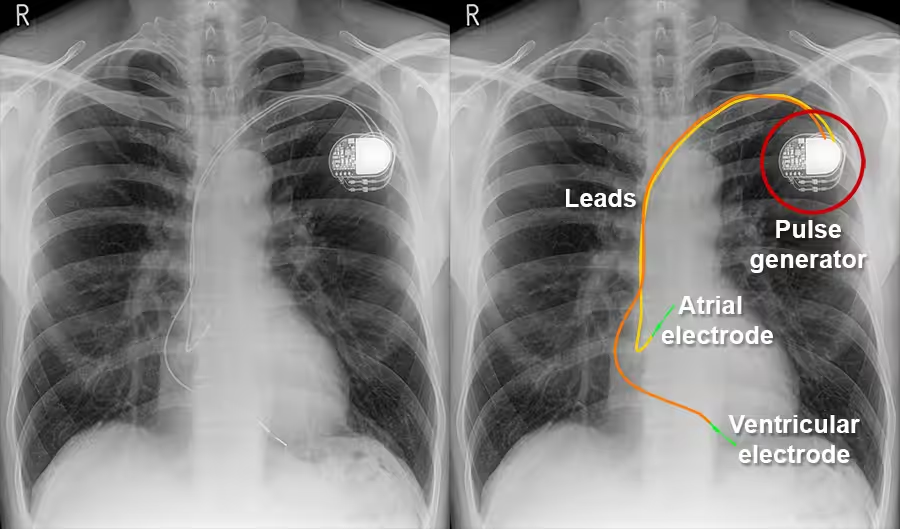
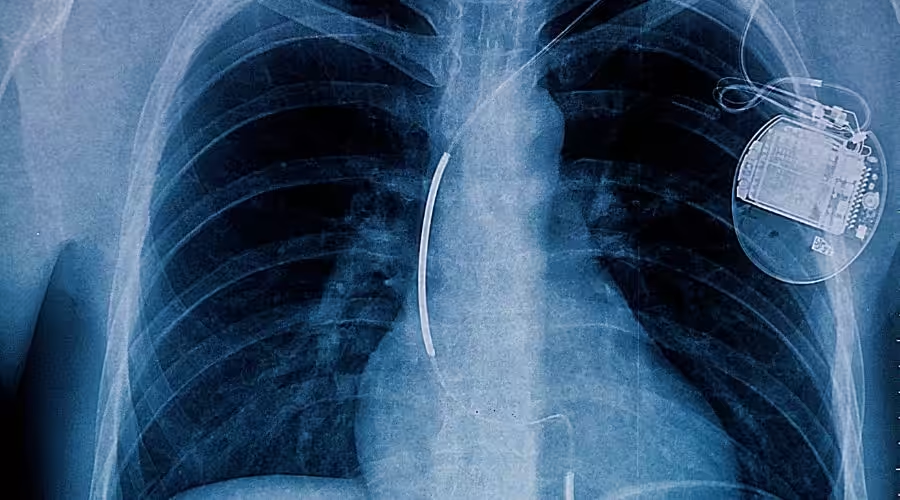
These chest X-ray images illustrate typical pacemaker and ICD implant configurations, with the pulse generator placed subcutaneously in the pectoral region and leads routed to the heart chambers (atrial and/or ventricular electrodes). Such implants must withstand external defibrillation without adverse effects on circuitry or function.
Key Standards and Their Defibrillation Test Requirements
The primary standards defining defibrillation protection include:
- ISO 14708-1:2014 (and related parts like ISO 14708-2 for pacemakers, ISO 14708-6 for ICDs): General safety requirements for AIMDs. Clause 20 requires no permanent performance changes or loss of settings after simulated defibrillation pulses.
- ISO 14117:2012 (updated 2019 edition for EMC in cardiovascular AIMDs): Clause 6.2.2 specifies protection from external defibrillators using two test waveforms.
- EN 45502 series (European harmonized standards, aligned with ISO 14708): Includes specific waveform envelopes and voltages.
- GB 16174.1-2024 (China’s updated national standard): Clause 20.2 mandates both Test 1 and Test 2 with precise parameters.
These standards require testing with two distinct waveforms to simulate historical and modern external defibrillators:
- Test 1: Damped sinusoidal (monophasic, older technology).
- Test 2: Truncated exponential (modern biphasic/single-phase capability).
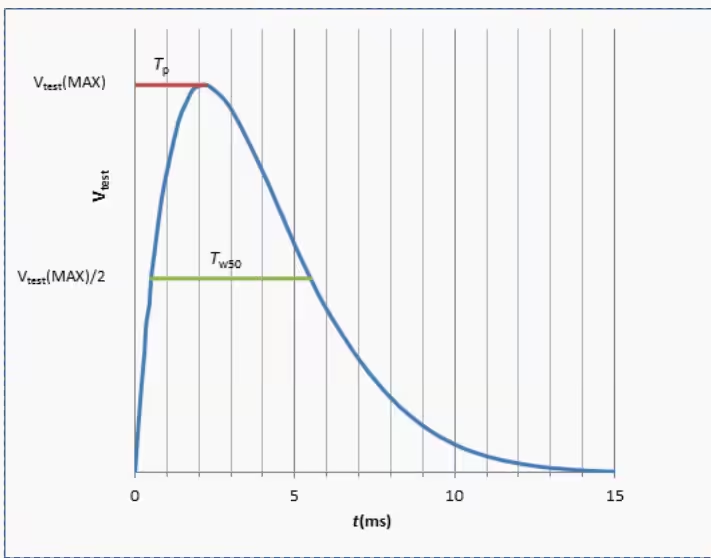
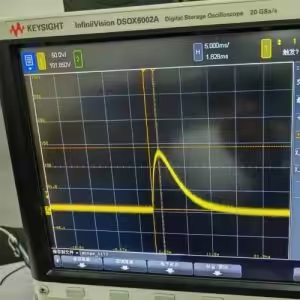
This graph depicts the damped sinusoidal waveform (Test 1) per ISO 14117 and related standards. Key parameters include:
- Peak time (Tp): 1.5 ms < Tp < 2.5 ms
- Time to 50% decay (Tw50): 3 ms < Tw50 < 5.5 ms
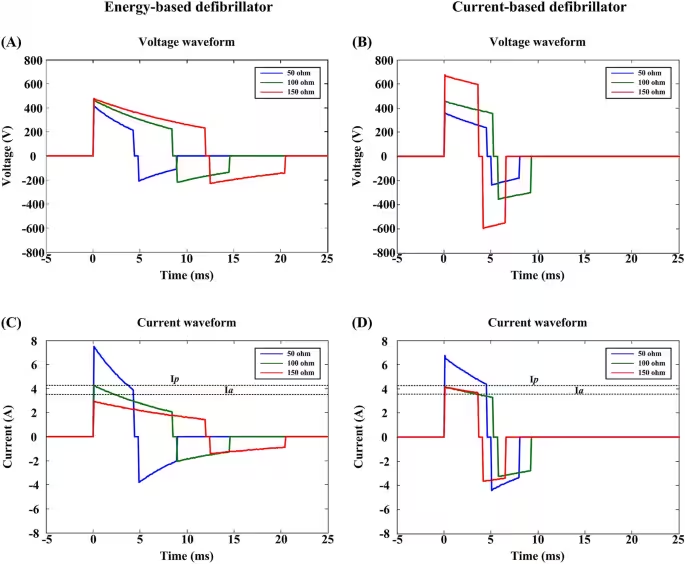
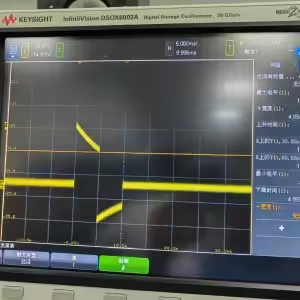
Example voltage and current waveforms for truncated exponential shocks (similar to Test 2 concepts), showing biphasic delivery across different impedances.
The standard test protocol is consistent:
- Deliver 3 positive-polarity pulses at 20 ± 2 s intervals.
- Pause for 60 ± 2 s.
- Deliver 1 negative-polarity pulse.
- Repeat cycles (often programmable) as required.
- Use a tissue-equivalent resistor network to simulate body impedance.
- Post-test: Verify no irreversible changes; device must reprogram to original settings.
Comparative Table: Key Waveform Parameters Across Standards
| Test Type | Waveform | Voltage Levels | Key Time Parameters | Polarity/Phase Options | Primary Standards Referenced |
|---|---|---|---|---|---|
| Test 1 | Damped Sinusoidal (RLC) | 140 V / 380 V (±5% / -0%) | Tp: 1.5–2.5 ms Tw50: 3–5.5 ms | Positive & Negative | ISO 14117:2012, GB 16174.1-2024 20.2, ISO 14708-1, EN 45502 |
| Test 2 | Truncated Exponential | 140 V / 270 V (±5% / -0%) | Td: 9.5–10.5 ms tr/tf: 1–5 μs | Single-phase or Dual-phase (Biphasic) | ISO 14117:2012, GB 16174.1-2024 20.2, EN 45502-2-2 |
These parameters ensure realistic simulation of real-world defibrillation events, covering both monophasic damped sine and biphasic truncated exponential shocks common in clinical defibrillators.
Introducing the KP-1050S Defibrillation Test Pulse Generator
To meet these exacting requirements efficiently, the KP-1050S Defibrillation Test Pulse Generator from KingPo Technology provides an all-in-one, standards-compliant solution.
This compact instrument integrates both Test 1 and Test 2 modes into a single unit—no need for separate generators or frequent reconfiguration.
Core Advantages and Specifications
- Dual-Mode Integration: Front-panel switch between damped sinusoidal (Test 1) and truncated exponential (Test 2, single/dual-phase).
- Automated Sequences: Executes full protocol (3 positive → 60 s pause → 1 negative) with 1–999 programmable cycles.
- Intuitive Interface: 7-inch color touchscreen shows real-time capacitor voltage, charge/discharge status, polarity, pulse counter, and timer.
- Safety Features: High-voltage warnings (>1000 V), IEC Class I grounding, safe discharge circuitry.
- Compatibility: Pairs with optional KP-1050-1 resistor network box (per ISO 14117 impedance parameters).
- Practical Specs:
- Dimensions: 480 × 460 × 200 mm
- Weight: ≈10 kg
- Power: AC 220/110 V ±10%, 50/60 Hz (~300 W max)
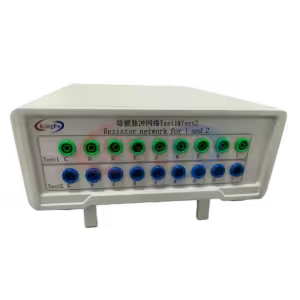
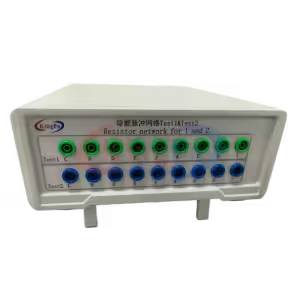
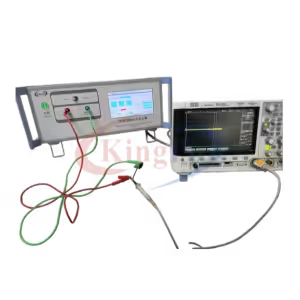
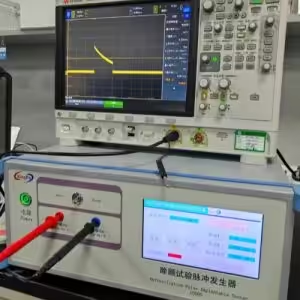
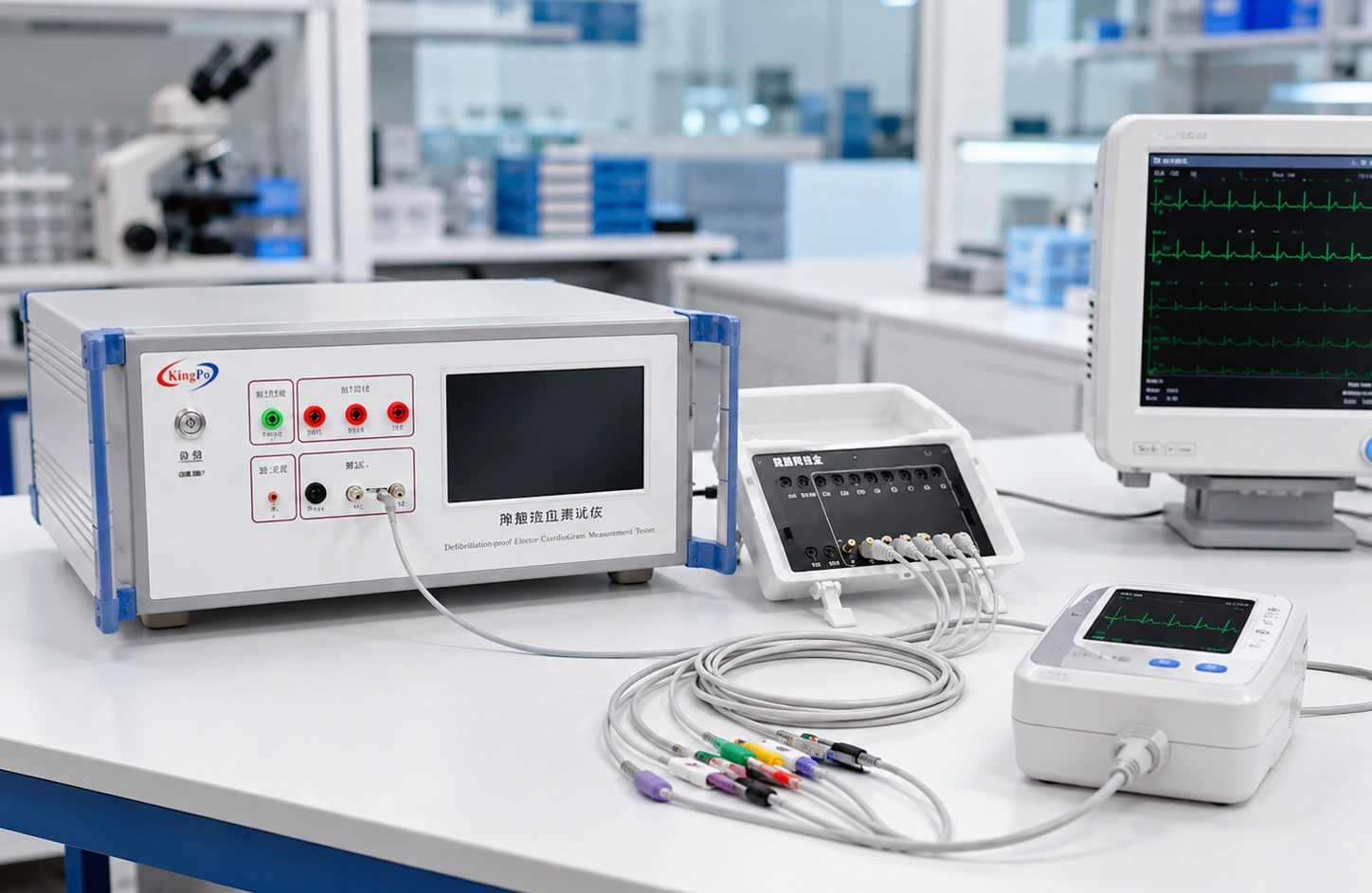
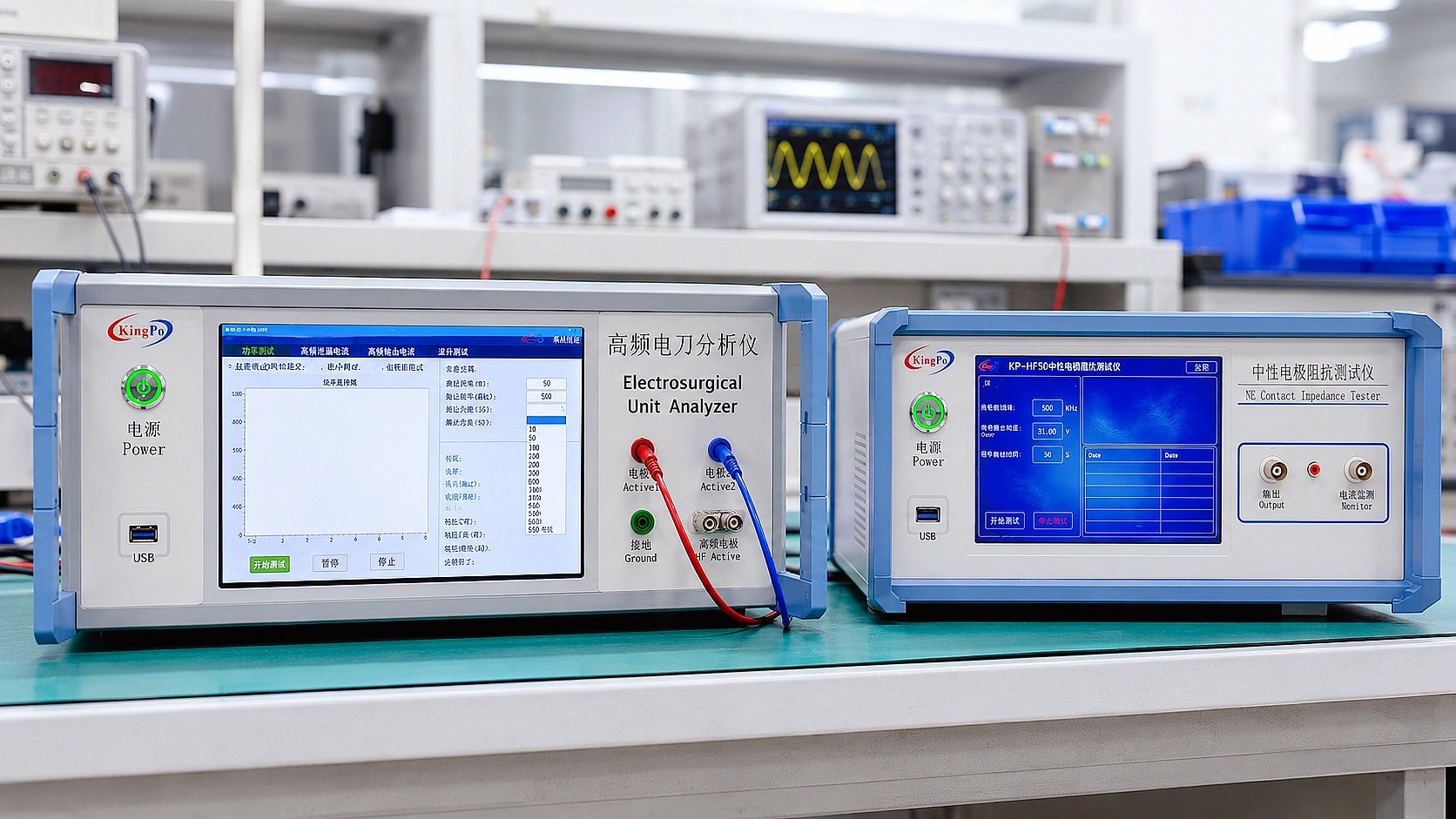
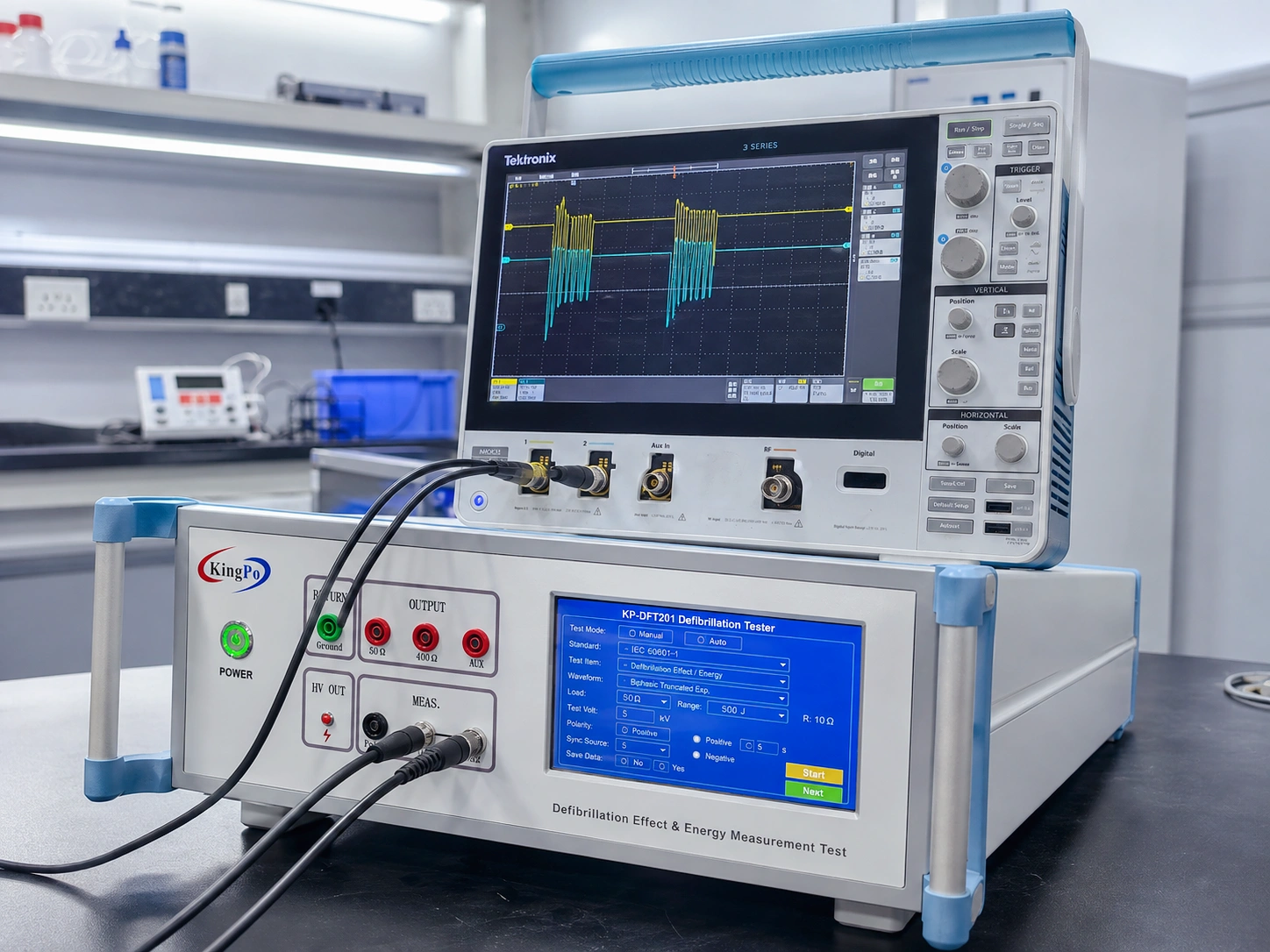
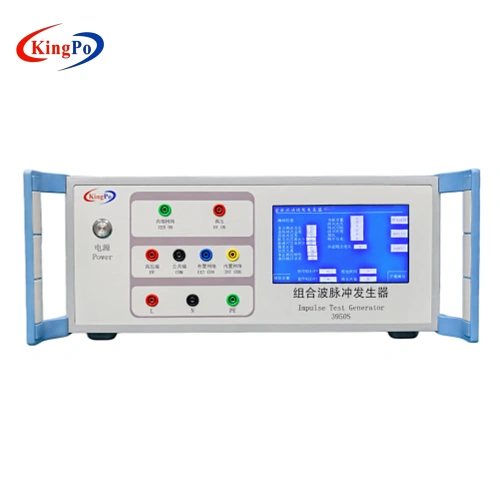
These images showcase examples of modern defibrillation test pulse generators, including touchscreen interfaces, control panels, and compact rack-mount designs similar to the KP-1050S. The intuitive display and safety indicators (e.g., high-voltage ports, status LEDs) emphasize user-friendly operation in laboratory or certification settings.
The KP-1050S matches or exceeds the waveform tolerances in the table above, delivering precise, repeatable pulses for design verification, type testing, and regulatory submissions.
Who Should Choose the KP-1050S?
- AIMD manufacturers for R&D and batch compliance.
- Quality/regulatory teams preparing FDA, EU Notified Body, or NMPA dossiers.
- Independent test labs seeking cost-effective, multi-standard capability.
- Engineers developing next-generation pacemakers/ICDs.
In 2026’s landscape—with ongoing harmonization of ISO, EN, and GB standards—the KP-1050S reduces setup time, calibration needs, and equipment footprint while ensuring full compliance and traceability.
Patient safety hinges on reliable AIMD performance under extreme conditions. The KP-1050S empowers manufacturers to verify this immunity confidently and efficiently.
For detailed datasheets, quotes, or demos, visit:KP1050S