Quick Answer
KINGPO safety testing equipment covers electrical safety testing, mechanical safety testing, fire hazard testing, IP waterproof and dustproof testing, environmental reliability testing, medical device testing, battery testing, plug and socket testing, and cable testing. A complete safety test program helps manufacturers verify product compliance with IEC, ISO, UL, EN and related standards before certification and mass production.
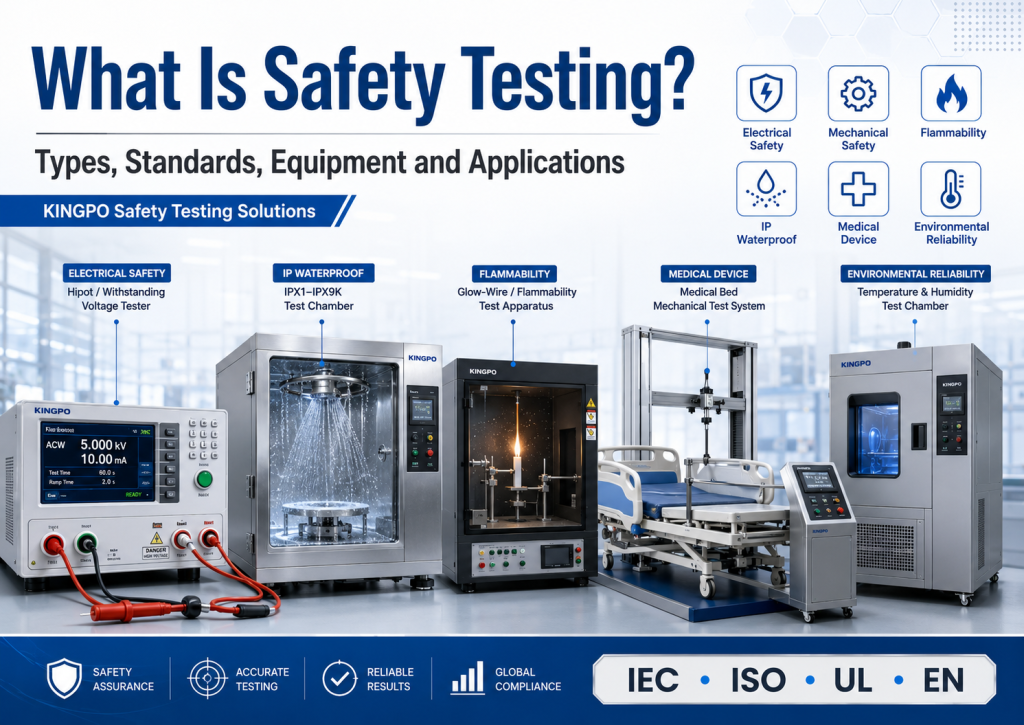
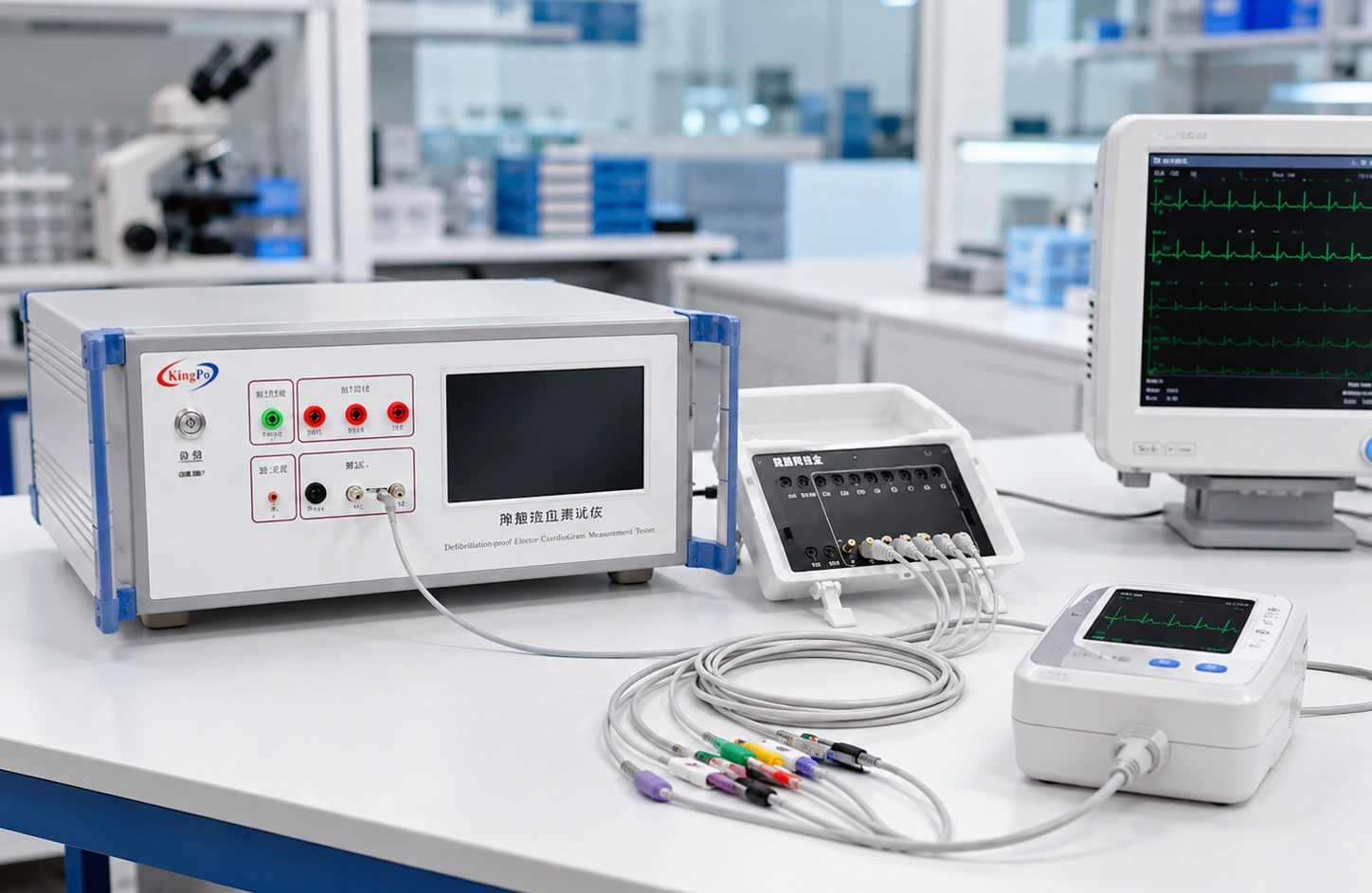
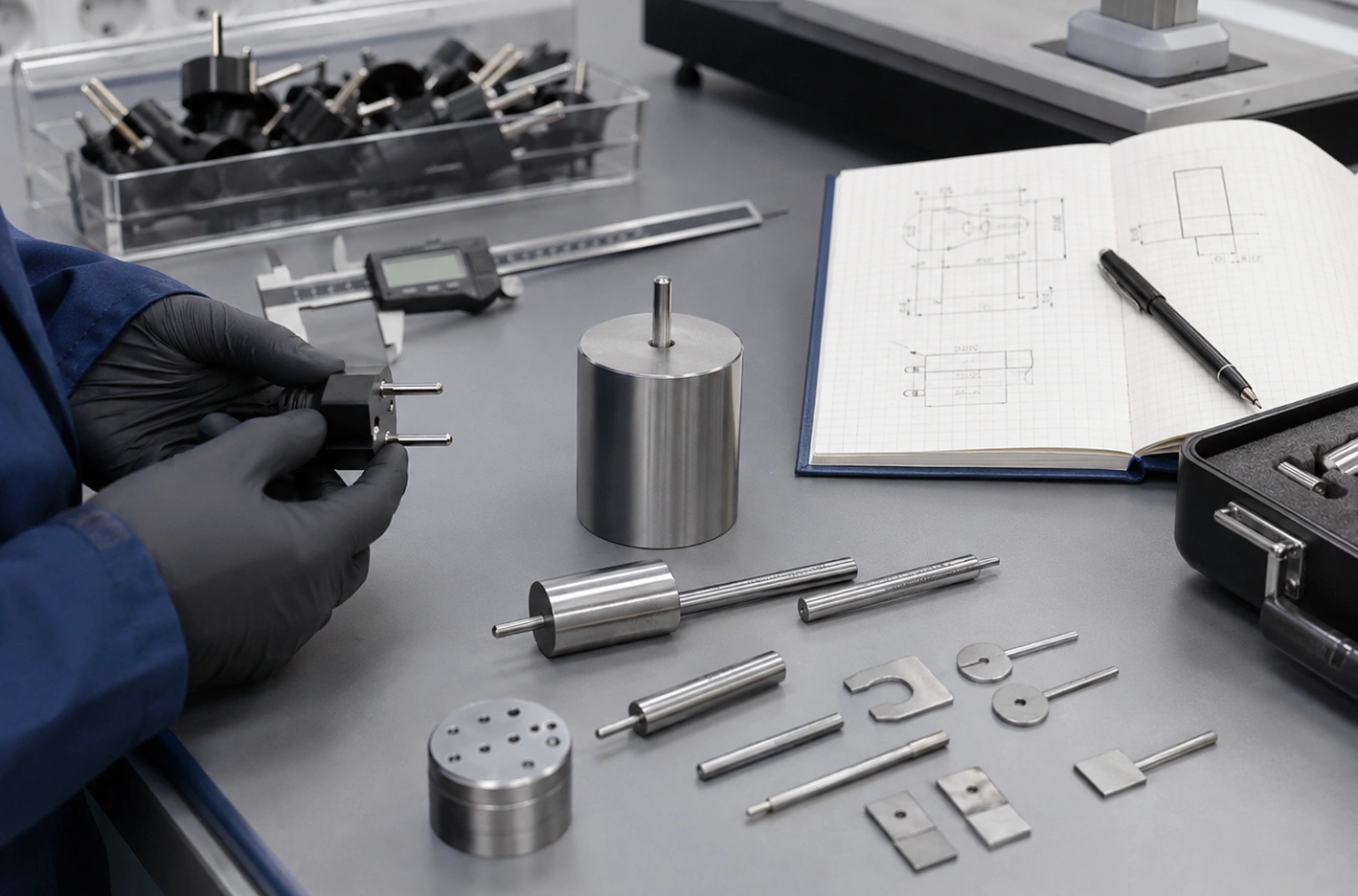
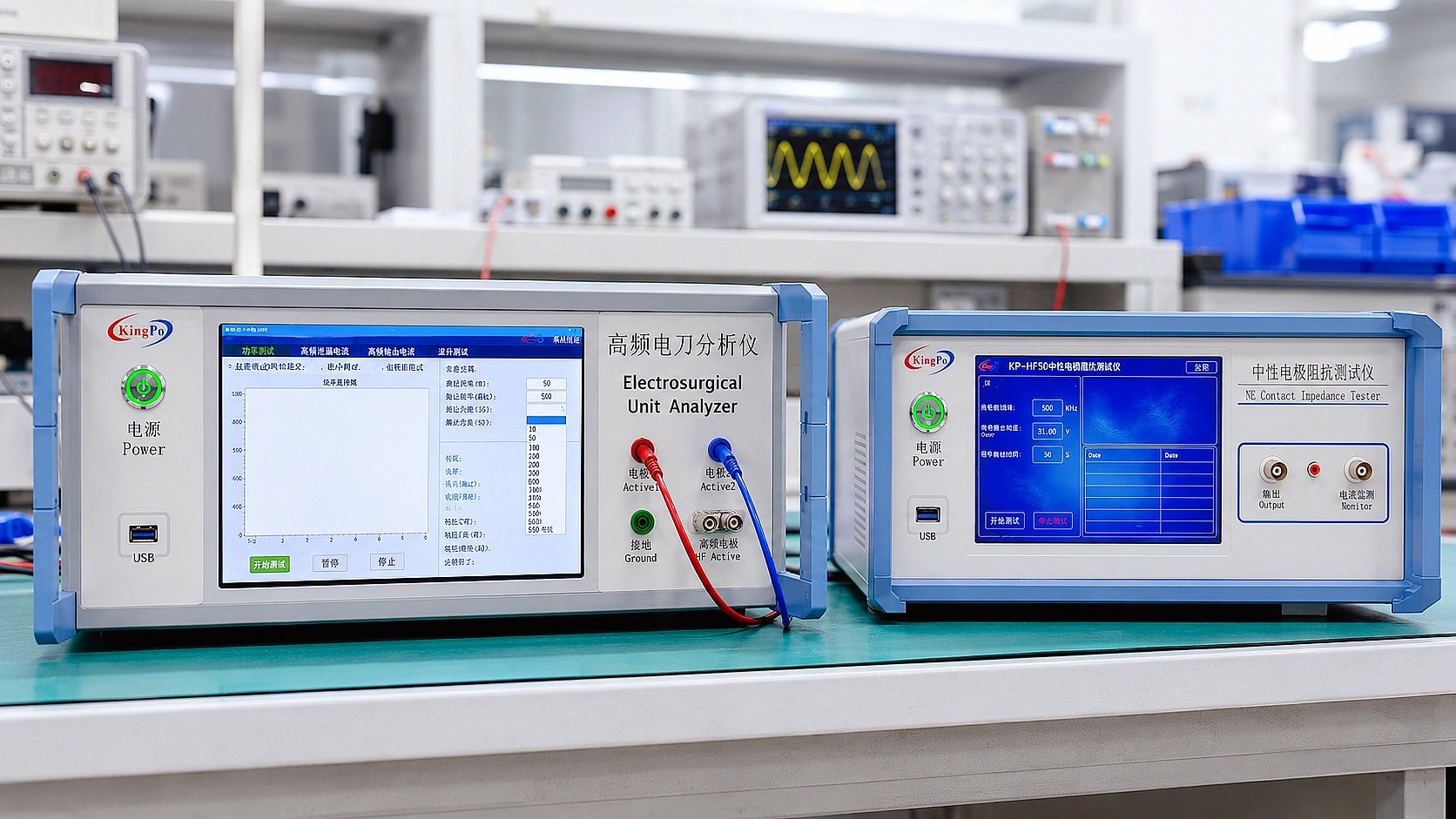
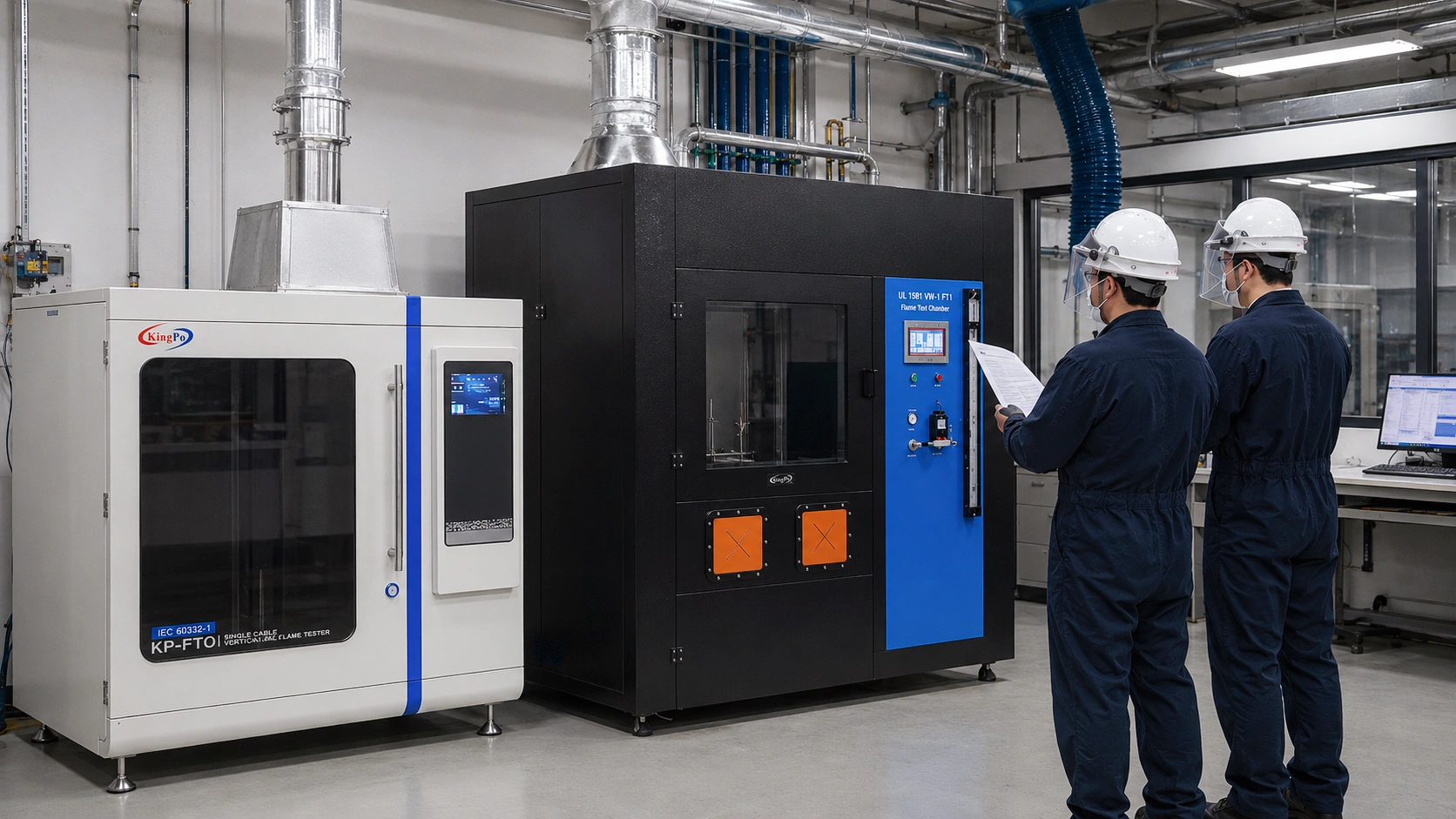
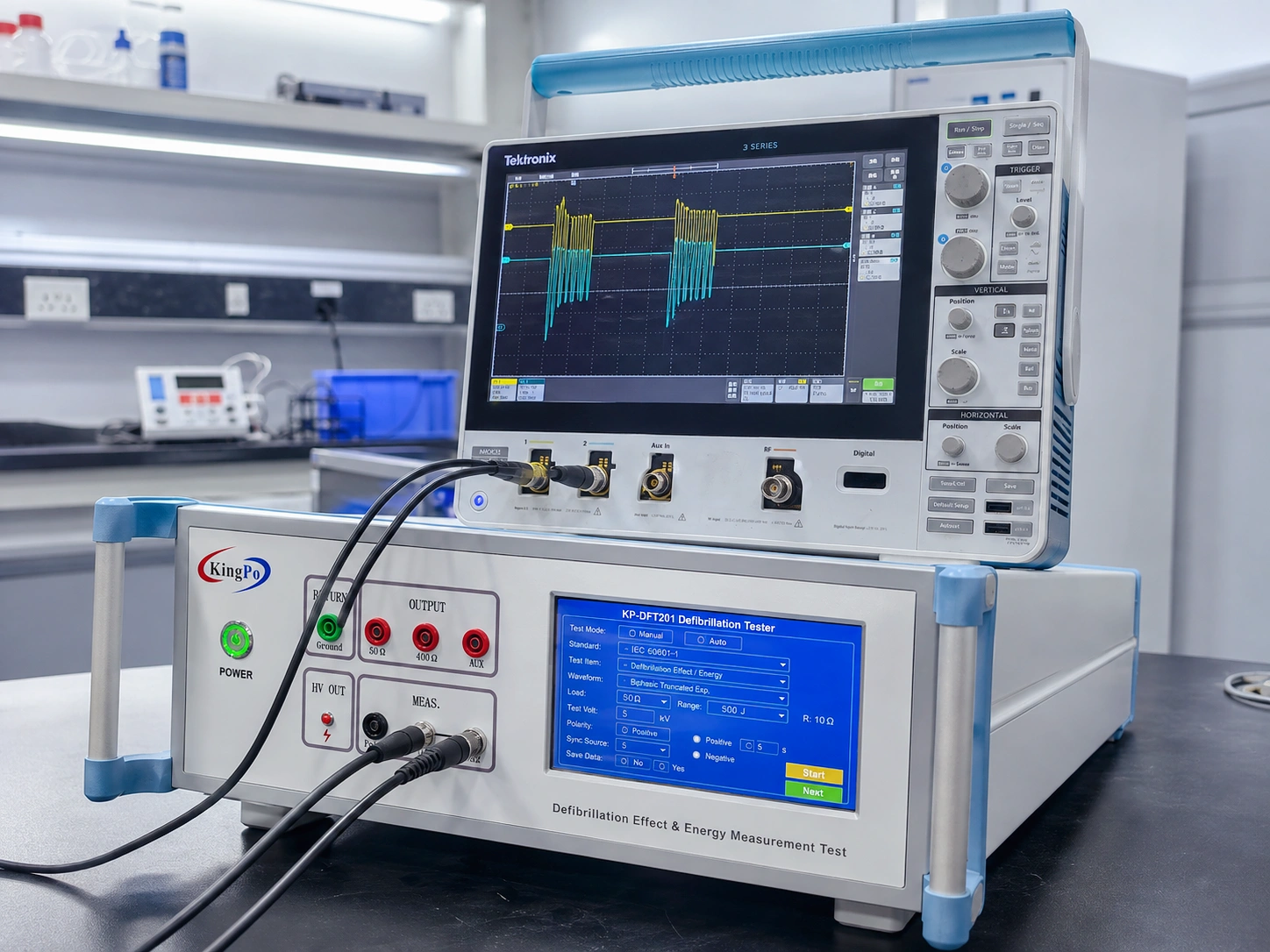
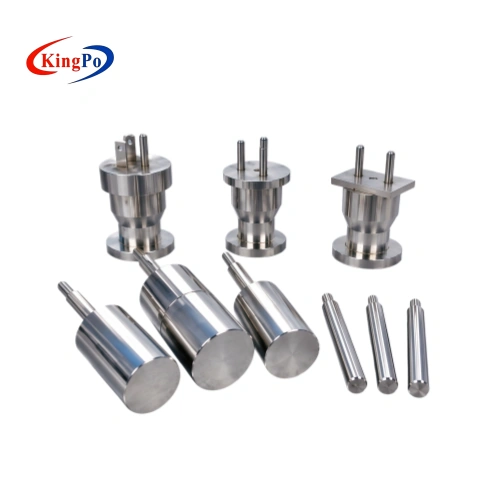
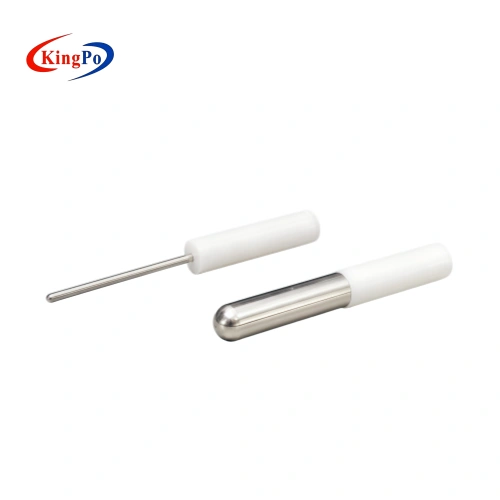
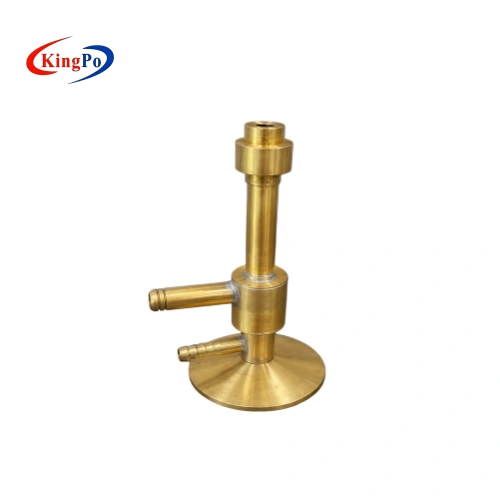
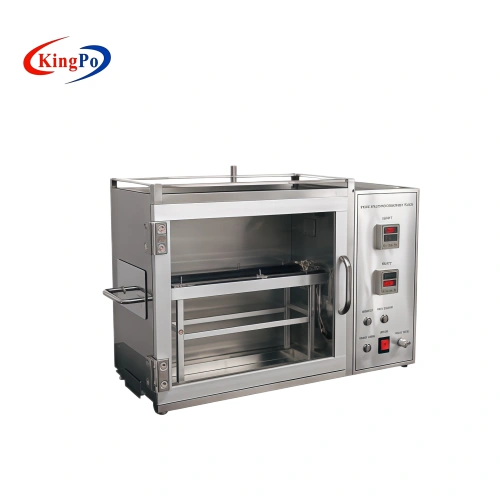
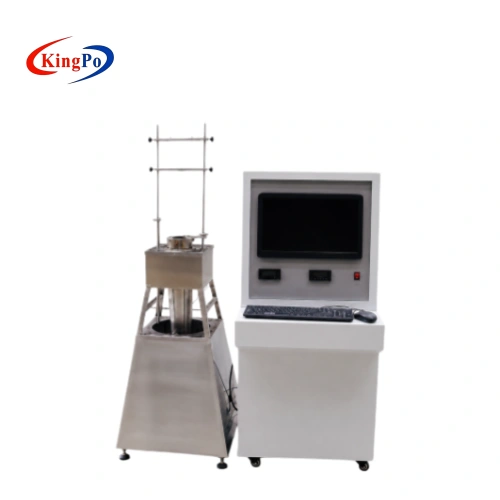
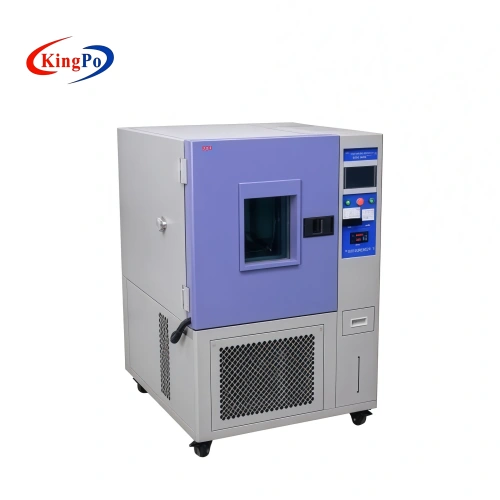
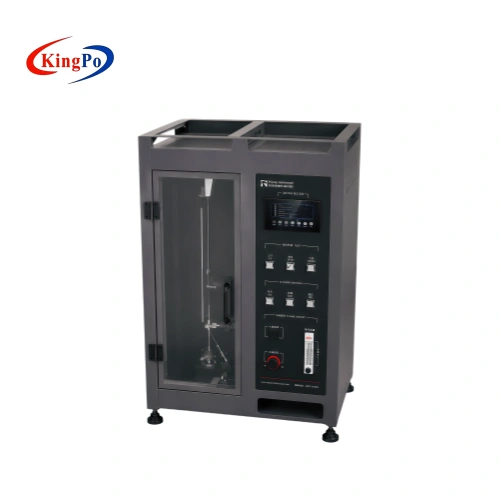
Figure 1. KINGPO safety testing solutions cover electrical safety, mechanical safety, flammability, IP waterproof testing, medical device testing and environmental reliability.
Safety testing is the systematic evaluation of a product, component, material or system to verify that it can be used without creating unacceptable risks to users, operators, patients, property or the environment. A complete safety test program may include electrical safety testing, mechanical strength testing, fire hazard testing, ingress protection testing, environmental reliability testing, battery safety testing, medical electrical safety testing and material compliance testing.
For manufacturers and laboratories, safety testing is not only a final inspection step. It is part of product design validation, regulatory compliance, quality control, certification preparation and risk management.
KINGPO provides safety compliance testing equipment and laboratory solutions covering battery testing machines, environmental test chambers, IP testing equipment, medical electrical testing equipment, plug and socket testing equipment, wire and cable testing equipment, material combustibility testing equipment and laboratory software. According to KINGPO’s official company profile, the company has developed more than 160 specialized products for ISO, IEC, UL and related testing applications.
Source: KINGPO About Us
Why Safety Testing Matters
Modern products are increasingly complex. A single product may combine electrical circuits, batteries, software, wireless modules, moving parts, plastic enclosures, insulation materials and environmental sealing structures. Each part can create a different type of hazard.
A poorly designed product may cause electric shock, fire, overheating, mechanical injury, battery thermal runaway, water ingress, patient entrapment, material ignition or functional failure under transport and environmental stress. Safety testing helps manufacturers identify these risks before products enter the market.
| Product Area | Main Safety Risks | Typical Testing Focus |
| Electrical and electronic products | Electric shock, leakage current, insulation failure | Hipot, insulation resistance, grounding, leakage current |
| Medical electrical equipment | Patient safety, essential performance, mechanical risk | IEC 60601-related electrical and mechanical safety checks |
| Batteries and energy storage products | Thermal runaway, fire, explosion, crushing, impact | Battery abuse, charging/discharging safety, environmental stress |
| Consumer appliances | Fire, electric shock, overheating, moving part injury | Electrical safety, temperature rise, glow wire, needle flame, durability |
| Outdoor and industrial products | Dust, rain, water jets, corrosion, humidity | IP code testing, salt spray, temperature and humidity chambers |
| Materials and components | Ignition, flame spread, heat deformation | Glow wire, needle flame, horizontal/vertical burning, ball pressure |
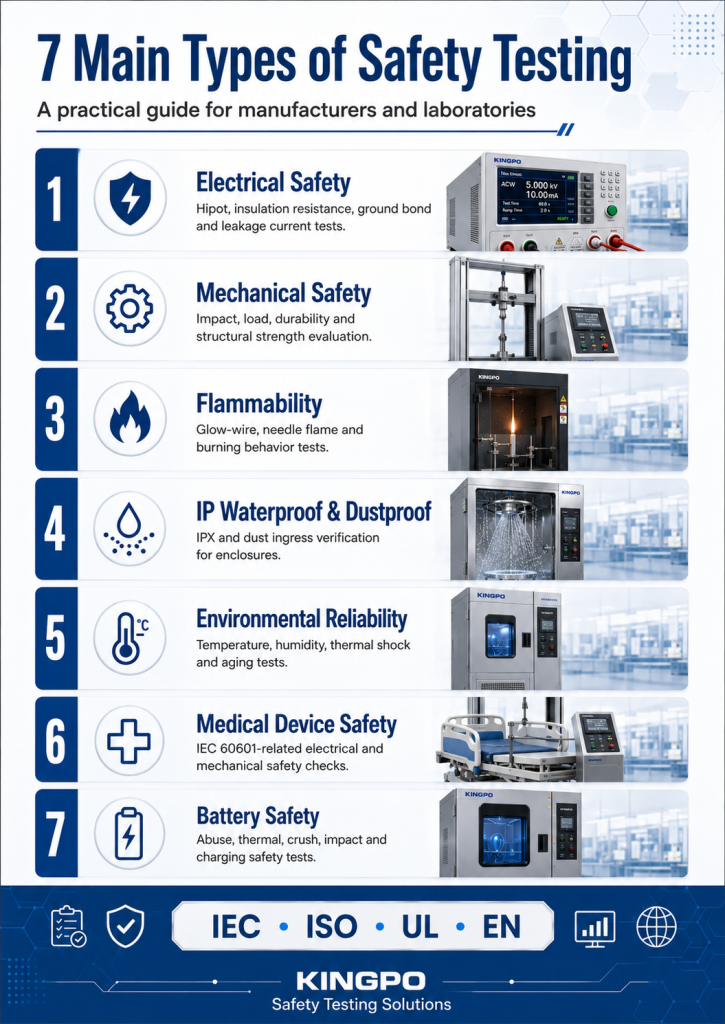
Main Types of Safety Testing
Electrical Safety Testing
Electrical safety testing verifies whether a product can operate without creating electric shock, insulation breakdown, grounding failure or leakage current hazards. Common test items include hipot testing, insulation resistance testing, ground bond testing, leakage current testing and temperature rise testing. For electrical and medical electrical products, these tests are important because insulation failure or excessive leakage current may directly create shock hazards.
Mechanical Safety Testing
Mechanical safety testing evaluates whether a product can withstand normal use, foreseeable misuse, transport, repeated operation, impact or load without causing injury or functional failure. Typical test items include impact testing, drop testing, static load testing, dynamic load testing, push-pull testing, durability cycle testing and rough handling testing.
Fire Hazard and Flammability Testing
Fire safety testing evaluates whether materials, components or finished products may ignite, spread flame, drip burning material, deform under heat or create fire hazards during abnormal operation. Common tests include glow wire testing, needle flame testing, horizontal and vertical burning tests, hot wire ignition testing, ball pressure testing and tracking resistance testing.
IP Waterproof and Dustproof Testing
Ingress protection testing evaluates whether an enclosure can protect internal components against dust, water spray, water jets, immersion or high-pressure water exposure. KINGPO describes its IP testing equipment as systems for IEC 60529, ISO 20653 and GB/T 4208, supporting automated testing from IPX1 drip testing up to IPX9K high-pressure, high-temperature jet testing.
Environmental Reliability Testing
Environmental reliability testing checks whether a product can maintain safety and function under temperature, humidity, thermal shock, aging, salt spray, vibration or altitude conditions. These tests are especially important for outdoor electronics, automotive components, batteries, industrial devices and medical equipment.
Medical Device Safety Testing
Medical device safety testing focuses on patient safety, operator safety and essential performance. For medical beds, safety testing may include side rail strength, latch reliability, loading durability, impact resistance, entrapment risk and rough handling tests.
Battery Safety Testing
Battery safety testing evaluates whether cells, modules or packs can withstand abuse conditions such as overcharge, short circuit, crush, impact, thermal exposure, vibration and altitude simulation. This is important for electric vehicles, energy storage systems, consumer electronics, power tools and portable medical devices.
Source: KINGPO IP Testing Equipment: IEC 60529, ISO 20653, GB/T 4208 and IPX1–IPX9K information
Safety Testing Projects by Industry
Medical Device and Medical Bed Safety Testing
Medical electrical equipment requires a higher level of safety validation because the user may be a patient, caregiver, nurse or technician. Risks may include electric shock, mechanical instability, patient entrapment, leakage current, rough handling failure and loss of essential performance.
For medical beds, safety verification should connect each risk to a specific physical test. This makes the testing plan more traceable and easier for laboratories, manufacturers and certification teams to audit.
| Medical Bed Area | Safety Risk | Recommended Test |
| Mattress support platform | Impact, deformation, fatigue | Load and impact test |
| Side rail | Bending, loosening, collapse | Side rail strength test |
| Latch / lock | Wear, accidental unlocking | Latch reliability cycle test |
| Gaps and openings | Patient entrapment | Cone tool, cylinder tool, wedge tool, finger probe |
| Transport condition | Threshold, obstacle, door-frame impact | Rough handling test |
| Accessories and footboard | Local deformation or breakage | Static and dynamic force testing |
Battery and Energy Storage Safety Testing
Battery safety testing is used to evaluate whether cells, modules or packs can withstand electrical abuse, mechanical abuse, thermal stress and environmental conditions. A robust program normally combines electrical, mechanical and environmental abuse tests rather than relying on one test method.
| Test Item | Safety Purpose |
| Overcharge test | Evaluates charging abuse risk |
| Short-circuit test | Checks thermal and electrical hazard |
| Crush test | Simulates mechanical compression |
| Impact test | Evaluates mechanical abuse resistance |
| Thermal chamber test | Checks performance under high and low temperature |
| Altitude simulation | Evaluates pressure-related safety risk |
| Fire exposure test | Assesses response to flame or heat |
Electrical Appliance and Consumer Product Testing
Consumer products require safety validation before mass production because they are used by non-professional users in homes, offices, schools and public environments. A complete test plan should include electrical safety, thermal safety, fire safety, mechanical safety and environmental safety where applicable.
| Test Category | Examples |
| Electrical safety | Hipot, insulation resistance, leakage current, grounding |
| Thermal safety | Temperature rise, abnormal operation, heat resistance |
| Fire safety | Glow wire, needle flame, flammability |
| Mechanical safety | Drop, impact, cord bending, switch life |
| Environmental safety | Humidity, dust, water, corrosion |
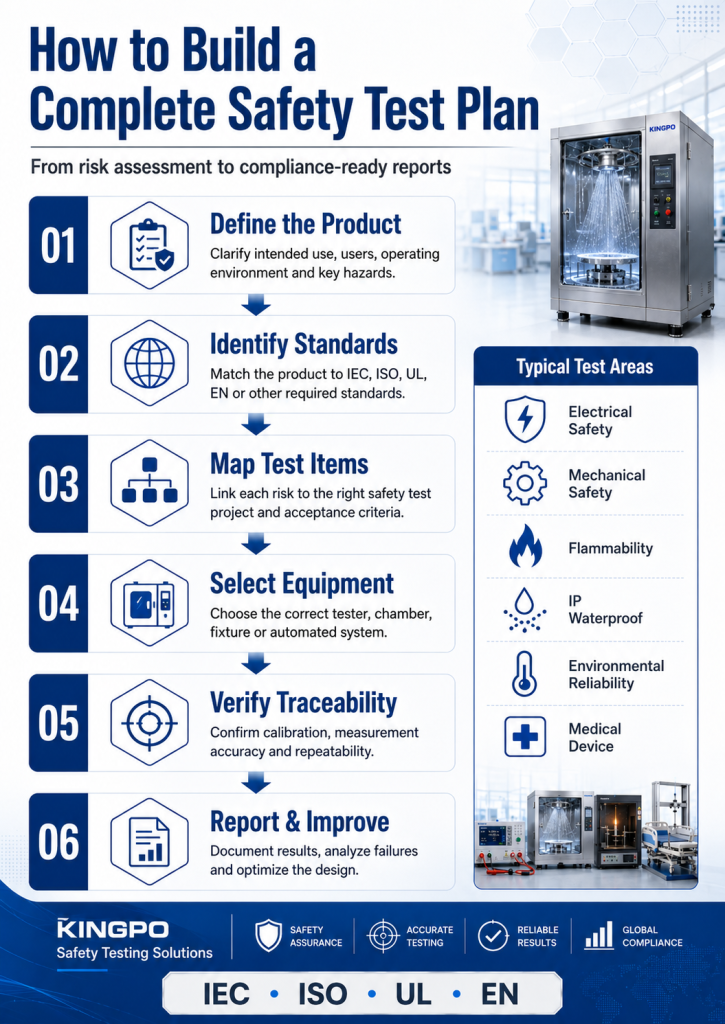
How to Build a Complete Safety Test Plan
A complete safety test program should not start from equipment selection. It should start from risk and standard analysis, then move toward equipment configuration, traceable measurement and reporting.
Step 1: Define the Product
Identify the product type, intended use, user group, operating environment, power supply, materials, enclosure design, moving parts and foreseeable misuse.
Step 2: Identify Applicable Standards
Select the correct IEC, ISO, UL, EN, ASTM or national standards according to the product category and target market.
Step 3: Map Hazards to Test Items
Each safety risk should be connected to a measurable test item. For example, electric shock risk connects to leakage current and dielectric strength testing; rain exposure connects to IPX testing; plastic ignition risk connects to glow wire or needle flame testing.
Step 4: Select Test Equipment and Fixtures
Choose equipment that matches the required voltage, current, force, temperature, water pressure, flow rate, sample size and data recording requirements.
Step 5: Verify Measurement Traceability
Safety test results should be repeatable and traceable. Calibration, fixture validation, sensor accuracy and test report format should be confirmed before formal testing.
Step 6: Record, Analyze and Improve
A strong safety testing process should generate clear pass/fail results, quantitative data, photos, abnormal observations and corrective action recommendations.
KINGPO Safety Testing Equipment Solutions
KINGPO focuses on high-precision testing equipment for laboratories, manufacturers, certification-oriented testing departments and quality control teams. Its official product categories include IP testing equipment, environmental test chambers, IEC 62368 test equipment, flame test equipment, medical test equipment, electrical safety test equipment, battery test equipment, cable testing equipment, plug socket testers, electric motor testing systems and audio analyzers.
The advantage of a complete KINGPO solution is not limited to a single instrument. For complex testing scenarios, equipment configuration, fixture customization, laboratory layout, software data handling, calibration planning and after-sales technical support all affect repeatability and long-term laboratory efficiency.
| KINGPO Solution Area | Typical Applications |
| Electrical safety test equipment | Hipot, leakage current, grounding, insulation resistance |
| IP waterproof and dustproof test equipment | IEC 60529, ISO 20653, IPX1 to IPX9K |
| Environmental test chambers | Temperature, humidity, thermal shock, altitude, reliability testing |
| Flame test equipment | Glow wire, needle flame, burning tests, material fire hazard evaluation |
| Medical test equipment | IEC 60601-related safety testing, medical bed testing, medical device fixtures |
| Battery test equipment | Abuse testing, performance testing, thermal and mechanical safety validation |
| Plug and socket testers | Durability, mechanical strength, insertion and withdrawal force |
| Cable and wire testing equipment | Flexing, tensile, flame propagation, electrical performance |
Source: KINGPO About Us: product categories and company profile
How to Choose Safety Testing Equipment
Before purchasing safety testing equipment, manufacturers and laboratories should confirm the product category, standard edition, test range, sample size, automation requirement, calibration plan and reporting format. The goal is to select equipment that supports both compliance and repeatable engineering validation.
| Selection Factor | Why It Matters |
| Applicable standard edition | Different editions may change test conditions or acceptance criteria |
| Test range | Voltage, force, temperature, water pressure, flow rate or load must match the standard |
| Sample size | Fixtures and chambers must fit the actual product |
| Automation level | Automated testing improves repeatability and reduces operator error |
| Data recording | Digital reports support audits and certification preparation |
| Calibration support | Traceability improves test credibility |
| Fixture customization | Many products require dedicated fixtures for accurate testing |
| After-sales service | Installation, training and maintenance affect long-term laboratory efficiency |
FAQ: Safety Testing
What is a safety test?
A safety test is a technical evaluation used to confirm that a product, component or material does not create unacceptable hazards during normal use, foreseeable misuse or specified abnormal conditions.
What are the main types of safety testing?
The main types include electrical safety testing, mechanical safety testing, fire hazard testing, IP waterproof and dustproof testing, environmental reliability testing, battery safety testing, medical device safety testing and material compliance testing.
What equipment is used for safety testing?
Common equipment includes hipot testers, insulation resistance testers, leakage current testers, ground bond testers, glow wire testers, needle flame testers, IP waterproof test chambers, dust chambers, temperature humidity chambers, impact testers, load testers and customized fixtures.
Is safety testing required before certification?
Pre-compliance safety testing helps manufacturers identify design problems before formal certification testing, reducing the risk of failure, redesign cost and project delay.
What standards are used for safety testing?
Common standards include IEC, ISO, UL, EN, ASTM and national standards. The exact standard depends on the product category, target market and intended use.
What is the difference between electrical safety testing and mechanical safety testing?
Electrical safety testing focuses on electric shock, insulation, grounding and leakage current risks. Mechanical safety testing focuses on impact, load, deformation, moving parts, stability, durability and physical injury risks.
Can one safety tester cover all safety test projects?
No. A complete safety test program usually requires several instruments and fixtures because different hazards require different test methods.
Why is calibration important in safety testing?
Calibration helps ensure that measured values such as voltage, current, force, temperature, flow rate, pressure and displacement are accurate and traceable.
Does KINGPO provide customized safety testing equipment?
KINGPO provides customized fixtures and testing solutions for different product structures, laboratory workflows and standard requirements.
Which industries use KINGPO safety testing equipment?
KINGPO equipment is used for electrical products, medical devices, batteries, household appliances, lighting products, plugs and sockets, cables, IT products, automotive components, environmental reliability testing and laboratory compliance testing.
Conclusion
Safety testing is the foundation of product compliance, risk control and market access. A complete safety test program should evaluate electrical hazards, mechanical hazards, fire risks, environmental exposure, ingress protection, material performance, battery abuse conditions and industry-specific risks such as medical device safety.
Compared with a single-function tester, a complete laboratory safety testing solution requires standard analysis, test planning, appropriate equipment selection, fixture customization, calibration support and reliable data recording.
KINGPO provides safety testing equipment and customized laboratory solutions for manufacturers, laboratories and certification-oriented testing teams that need accurate, repeatable and standard-aligned safety test results.