IEC 80601-2-52:2026 is the current IEC particular standard for adult medical beds.
A medical bed test programme normally requires several systems because load, impact, side-rail strength,
repeated latch operation, entrapment and rough-handling evaluations use different methods, tools and fixtures.
- Current IEC reference: IEC 80601-2-52:2026
- Legacy reference: IEC 60601-2-52:2009, now replaced
- Primary test objects: adult electrical and non-electrical medical beds
- Configuration rule: match each item to the target edition and clause
- Important boundary: no single machine establishes conformity with the complete standard
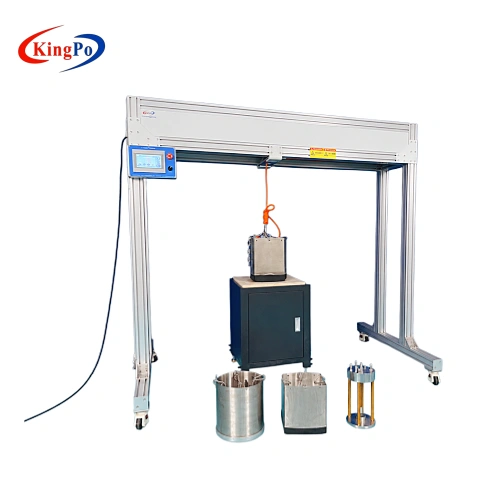
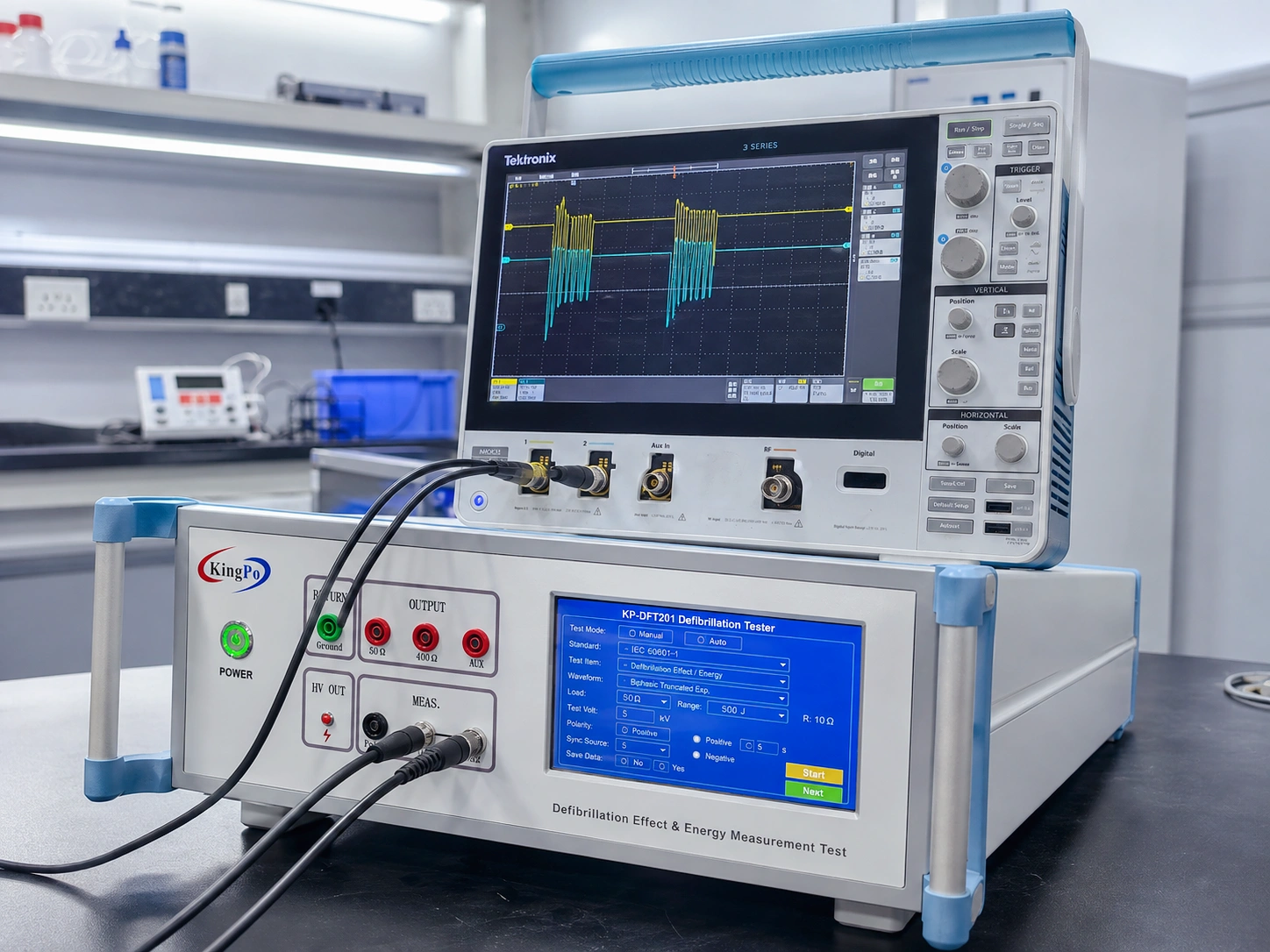
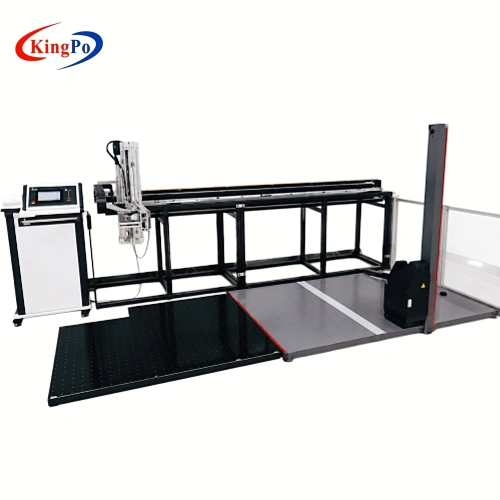
KP-6061C load and impact system. The final equipment package depends on the applicable test methods.
Key Information
IEC 80601-2-52:2026 for adult medical beds; legacy projects may still cite IEC 60601-2-52:2009.
Electrical and manual adult medical beds, subject to the definitions and exclusions of the applicable edition.
Mechanical strength, load, impact, side-rail, latch, dimensional tool and movement-related evaluations.
Equipment, tools and fixtures are selected against a clause matrix; this page is not a complete compliance checklist.
Start with the target market, standard edition, bed type and required clauses. Then separate the test plan into
load/impact, side-rail force, repeated latch operation, dimensional or entrapment tools, and rough handling.
Do not buy a machine based only on a general “IEC 60601-2-52 compliant” label.
1. Which Medical Bed Standard Applies?
IEC lists IEC 60601-2-52:2009 as replaced and identifies IEC 80601-2-52:2026 as its replacement. The 2026 publication applies to the basic safety and essential performance of medical beds intended for adults. It published scope includes both electrical and non-electrical medical beds, with or without adjustable functions.
The number change matters. A test system originally configured around the 2009 edition may still support individual mechanical methods, but that does not prove that the same tools, forces, cycles, fixtures or acceptance criteria cover the 2026 edition. Existing equipment should be reviewed clause by clause before a new-edition claimis made.
| Product or population | Relevant standard context | Page guidance |
|---|---|---|
| Adult electrical medical bed | IEC 80601-2-52:2026 | Use the 2026 edition as the current IEC reference for new projects. |
| Adult manual medical bed | Included in the published scope of IEC 80601-2-52:2026 | Do not assume the standard covers only powered beds. |
| Children or adults with atypical anatomies | IEC 80601-2-89 | Keep the tool list and test claims separate from the adult-bed page. |
| Speciality mattress | ISO 20342 series context | Do not present a bed-frame equipment package as complete mattress coverage. |
| Stretcher or examination table | Outside the published general scope of IEC 80601-2-52:2026 | Confirm the actual intended use and applicable product standard. |
2. Why Medical Bed Testing Requires More Than One Machine
A medical bed is a mechanical and, where applicable, electrical system with several independent risk areas. The mattress support platform must withstand defined loads and impacts. Side rails must resist specified forces. Latches must continue to operate after repeated use. Openings require tools with defined geometry. Wheeled beds may also need movement and rough-handling evaluations. These are different test problems, not interchangeable “functions” of one universal tester.
| Medical bed area | Typical engineering concern | Typical KingPo equipment category |
|---|---|---|
| Mattress support platform and bed frame | Dynamic loading, impact, fatigue or deformation | KP-6061C load and impact test system |
| Side rail structure | Vertical or lateral force response and structural strength | KP-6061B side rail strength tester |
| Side rail movement and latch | Wear, incomplete locking or failure after repeated operation | KP-RB50 robotic side rail and latch reliability system |
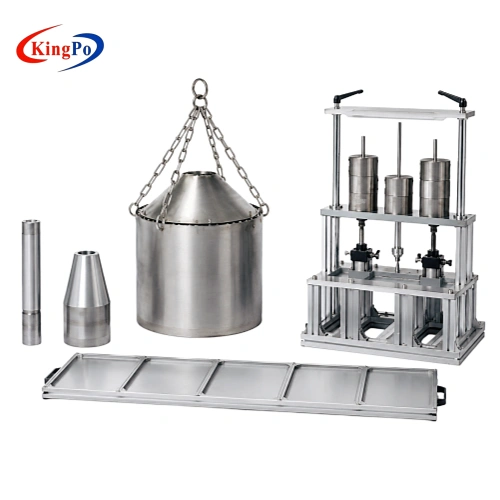
| Openings and defined test locations | Dimensional, gap, accessibility or load-transfer evaluation | Cone, cylinder, loading pad, impactor and clause-specific tools |
| Wheels, base and transport path | Threshold crossing, obstacle impact and rough handling | ME equipment threshold and rough handling tester |
3. Core Medical Bed Testing Equipment Matrix
The matrix below combines the equipment role, currently published KingPo specifications and an explicit coverage boundary. It is a selection aid, not a substitute for the purchased standard or the laboratory’s test plan.
| Equipment | Primary role | Published configuration highlights | Does not replace |
|---|---|---|---|
| KP-6061C Load and Impact Test System | Dynamic loading, mattress-support-platform impact, body-weight load simulation and stability-related pressure loading | Dynamic loading force 0–1500 N; impact height 180 mm with 0–300 mm adjustment; maximum stated sample size 3000 × 1800 × 1500 mm; PLC and 7-inch touchscreen | Measured side-rail strength, repeated latch operation or dimensional tools |
| KP-6061B Side Rail Strength Tester | Vertical force loading, lateral push-pull force and tensile-rod dynamic testing | Vertical force 0–750 N; lateral force 0–500 N; 1000 N force sensor with stated 0.3% accuracy; PLC and 7-inch touchscreen | Full robotic opening, closing and latch-actuation cycling |
| KP-RB50 Side Rail and Latch Reliability System | Repeated side-rail movement and latch operation using a programmable 6-axis robotic arm | Maximum stated robot load 16 kg; working radius 1034 mm; repeatability ±0.03 mm; 10.1-inch teach pendant | Force-sensor-based quantitative side-rail strength loading |
| Medical Bed Test Tools and Fixtures | Defined geometry, accessibility, gap, load-transfer or impact interfaces selected by clause | Cone and cylinder tools, loading pads, impactors and other figure-specific fixtures | Automatic data acquisition, automatic pass/fail judgement or structural durability systems |
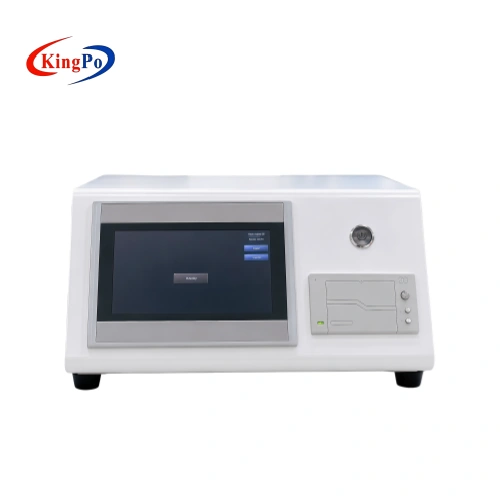
| ME Equipment Rough Handling Tester | Threshold crossing, fixed-obstacle movement, step shock, door-frame impact and rough-handling simulation | Force range 0–1000 N; stated force accuracy ±1%; test speed 0.8 m/s ±0.1 m/s with 0–2 m/s adjustment; PLC and 7-inch touchscreen | Medical-bed-specific load, rail, latch or dimensional evaluations |
4. KP-6061C, KP-6061B and KP-RB50: Do Not Confuse Their Roles
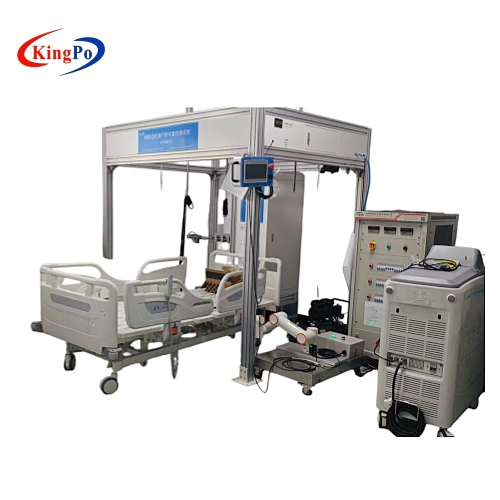
KP-6061C Medical Bed Load and Impact Test System
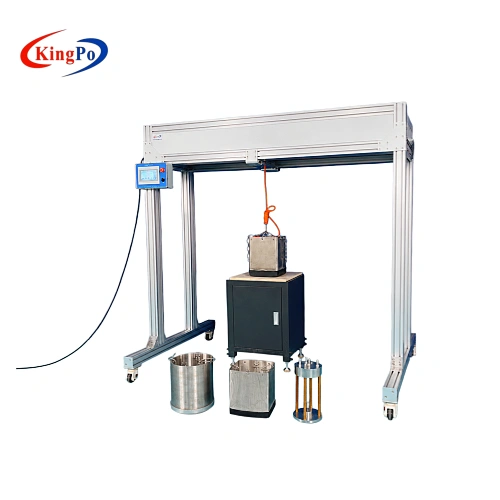
KP-6061C combines servo-driven loading, an impact arrangement, loading accessories, PLC control and atouchscreen interface. Its published product page identifies four principal modules: dynamic loading from persons, mattress support platform impact, body-weight dynamic load simulation and stability-related pressure
loading.
- Dynamic loading force: 0–1500 N
- Impact height: 180 mm; adjustable from 0–300 mm
- Maximum stated sample size: 3000 × 1800 × 1500 mm
- Drive: servo motor and ball screw
- Control: PLC and 7-inch touchscreen
Coverage boundary: KP-6061C does not replace the KP-6061B side-rail force test, the KP-RB50
latch-operation cycle, or clause-specific dimensional tools.
KP-6061B Medical Bed Side Rail Strength Tester
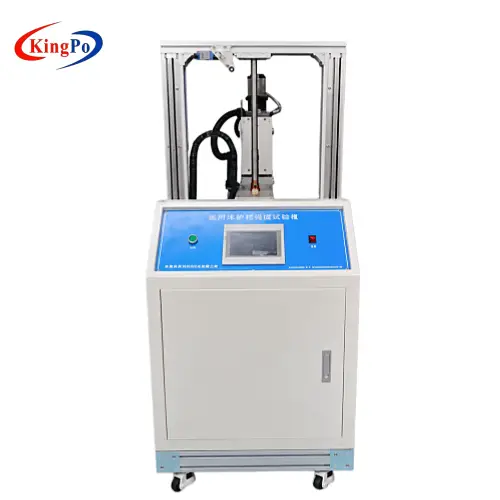
KP-6061B is the measured-force system in this equipment group. It applies controlled vertical and lateral forces to a side rail, guardrail or related support structure. The force sensor collects the applied force, while the operator sets force, loading time, stroke, hold condition and cycle count through the control system.
- Vertical force: 0–750 N
- Lateral force: 0–500 N
- Force sensor: 1000 N, stated accuracy 0.3%
- Stroke: 0–200 mm; cycle setting: 0–9999
- Control: PLC and 7-inch TFT touchscreen
Coverage boundary: force application and repeated opening/closing are not the same test. Use KP-RB50 when a programme requires repeated robotic latch actuation.
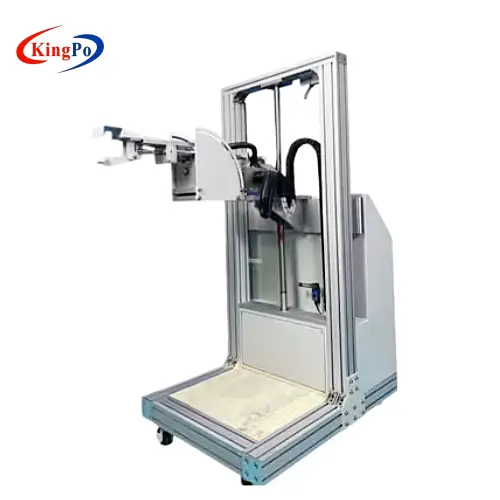
KP-6061B force-sensor and servo-loading mechanism.
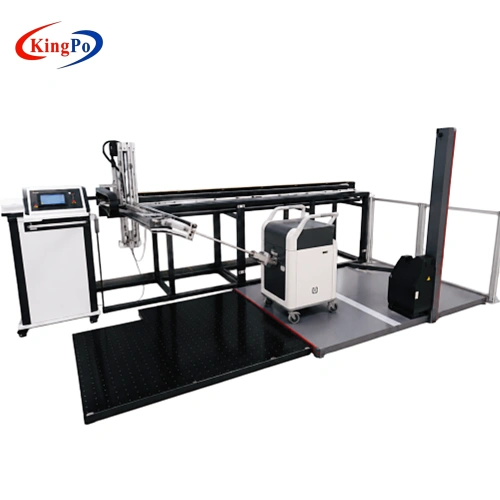
KP-RB50 Medical Bed Side Rail and Latch Reliability System
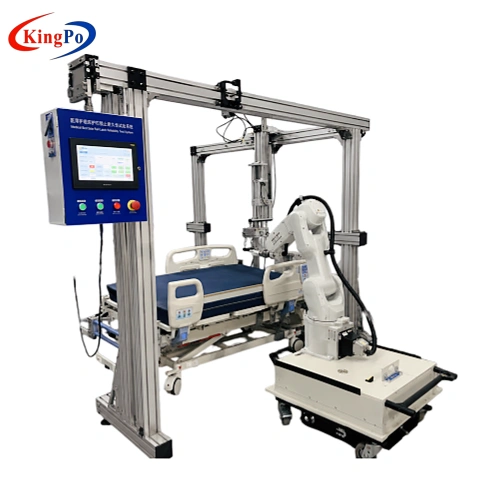
KP-RB50 uses a six-axis robotic arm to reproduce a configured side-rail or latch movement path. The operator positions the medical bed, teaches or configures the path, checks for interference, and then runs the required repeated operation. This reduces operator-dependent variation during long-duration cycling.
- Maximum stated robot load: 16 kg
- Working radius: 1034 mm
- Degrees of freedom: six rotating joints
- Repeatability: ±0.03 mm
- Human-machine interface: 10.1-inch teach pendant
Coverage boundary: robotic repeatability is not a side-rail strength measurement. KP-RB50
complements KP-6061B; it does not make KP-6061B redundant.
5. Medical Bed Test Tools and Fixtures
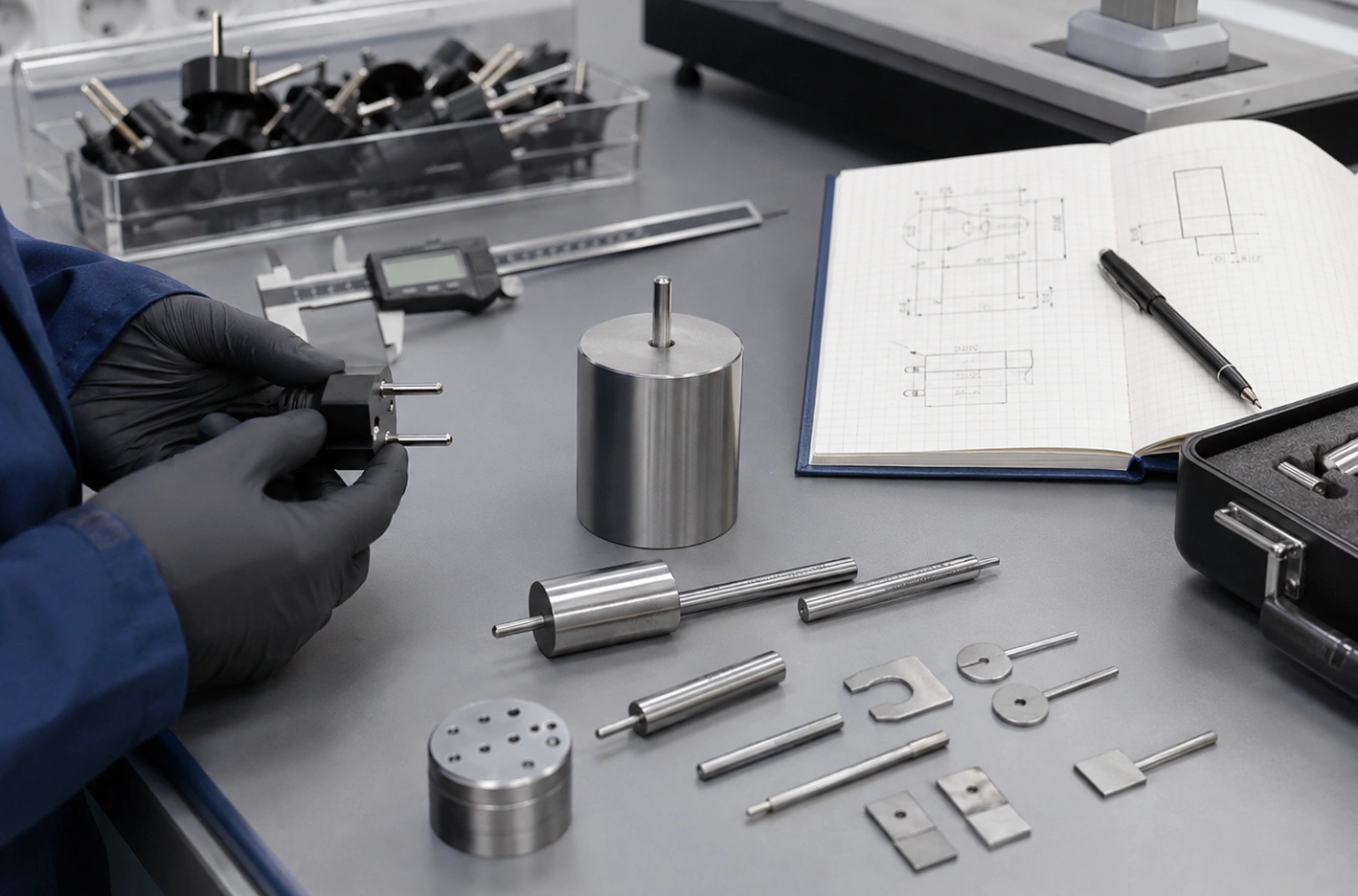
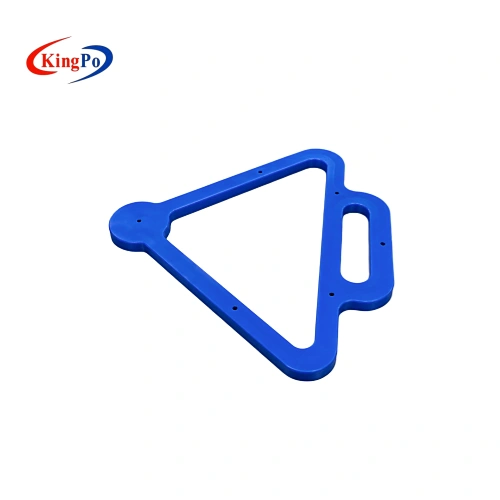
A test tool provides a defined geometry, contact surface, load-transfer interface or impact body. It does not independently produce a conformity decision. Before ordering, confirm the standard edition, figure or clause, dimensions, material, applied force, test location and acceptance criterion.
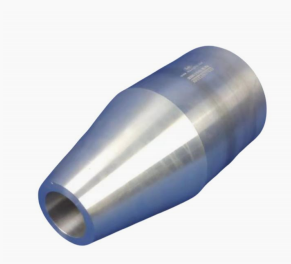
Cone Tool
Defined geometry for selected opening, gap or entrapment-related assessments.
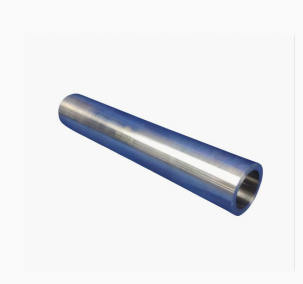
Cylinder Tool
Defined cylindrical geometry for selected gap and opening checks.
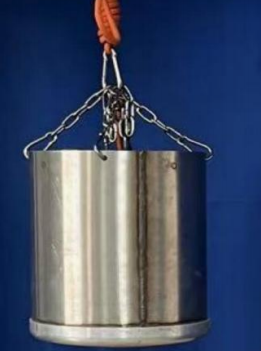
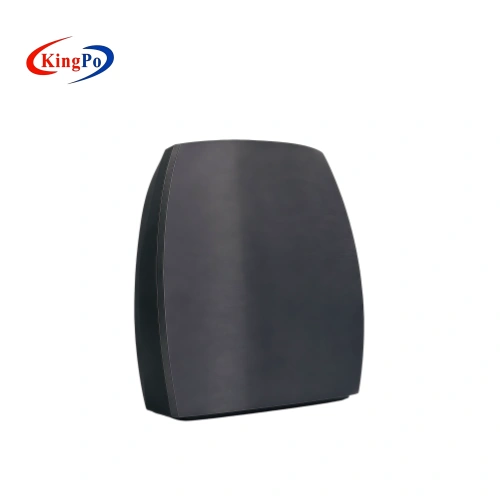
Loading Pad
Standardised contact interface for applying a defined load to the bed structure.
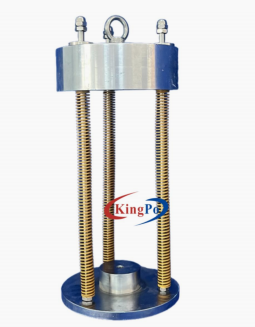
Impactor
Controlled impact component for the applicable support-platform or structural test method.
| Tool category | Primary function | What must be confirmed |
|---|---|---|
| Cone or cylinder tool | Defined opening or gap assessment | Edition, figure, geometry, applied force and test zone |
| Loading pad or pressure plate | Transfers a defined load over a specified contact area | Diameter or area, material, load, duration and position |
| Impactor | Applies a defined impact to a selected structure | Mass, geometry, impact height, energy and target location |
| Finger or accessibility probe | Checks accessibility or a defined small opening | Probe specification, force, articulated condition and relevant hazard |
The IEC 80601-2-89 Figure CC.1 wedge tool and related tools for children or adults with atypical anatomies should be placed on a separate IEC 80601-2-89 page or clearly isolated section. They should not be labelled as general IEC 80601-2-52:2026 adult-bed tools without clause-level evidence.
6. ME Equipment Threshold and Rough Handling Testing
Mobile medical electrical equipment can encounter thresholds, door frames, steps, fixed obstacles and uneven floor transitions. The rough handling system reproduces selected movement-related mechanical stresses under controlled conditions. For a medical bed, applicability must still be confirmed against the relevant general and particular-standard clauses.
- Threshold or fixed-obstacle crossing
- Ascending and descending step shock
- Door-frame impact
- Repeated horizontal pushing movement
- Transport-related mechanical stress simulation
The published KingPo configuration uses servo-driven horizontal motion, a force sensor, PLC control, a 7-inch touchscreen and replaceable obstacle arrangements. Published values include a 0–1000 N force range, stated ±1% force accuracy, a nominal test speed of 0.8 m/s ±0.1 m/s and an adjustable 0–2 m/s range. Sample compatibility, wheelbase, obstacle type, path length and laboratory space must be confirmed before quotation.
7. Recommended Laboratory Configuration
“Complete equipment package” should mean a documented package for the customer’s defined scope—not a universal claim. A defensible configuration begins with a clause matrix and identifies the equipment, tool, fixture, measurement, calibration requirement and acceptance criterion for each selected item.
| Laboratory layer | Typical items | Configuration question |
|---|---|---|
| Primary mechanical systems | KP-6061C, KP-6061B and, where required, KP-RB50 | Which defined load, impact, strength or reliability method is required? |
| Clause-specific tools | Cone, cylinder, loading pad, impactor, probe and other fixtures | Are the edition, figure, dimensions, material and applied force correct? |
| Movement and transport | Threshold and rough handling tester with selected obstacle modules | Does the product scope and test plan require the selected IEC 60601-1 movement method? |
| Sample interfaces | Custom loading heads, rail fixtures, latch tooling and bed-positioning supports | Can the tool reach the worst-case test location without interference? |
| Traceability and safety | Sensor verification, calibration scope, pre-test checks, guards and emergency stop planning | What values must be measured and what evidence must the laboratory retain? |
8. Information Required Before Equipment Selection
A quotation based only on the phrase “IEC 60601-2-52 test equipment” is under-specified. Send the following information before the equipment and fixture configuration is frozen:
Standard and test scope
- Target standard and exact edition
- Required clauses, figures and test items
- Target market and laboratory procedure
Medical bed and interfaces
- Bed type, intended user population and intended use
- Maximum length, width, height and mass
- Side-rail, latch and loading-point drawings or photographs
Test parameters
- Force, stroke, speed, hold time and cycles
- Impact height, mass and contact geometry
- Required tools, fixtures and worst-case positions
Laboratory deliverables
- Power supply, room size and safe operating clearance
- Measurement, calibration and data-recording needs
- Installation, training and report-format expectations
9. Where Automation Helps—and Where It Does Not
Automation can improve repeatability when force, stroke, speed, position or cycle count must be controlled over a long sequence. It can also reduce operator variation and improve the consistency of recorded values. These benefits are only meaningful when the fixture, loading point, sample positioning and programmed sequence match the applicable method.
| Automation benefit | Required control |
|---|---|
| Repeatable force or motion | Verify the sensor, actuator, contact point and sample restraint before the test series. |
| Long-duration cycle testing | Define stop conditions and inspect for wear, deformation, interference or abnormal resistance. |
| Data recording | Confirm which values must be measured, their units, sampling method and traceability. |
| Automatic stop or alarm | Treat this as a machine-safety feature, not proof that the sample passed the product standard. |
Critical distinction: equipment can control a test sequence or display measured values. It does not automatically establish conformity unless the correct procedure, acceptance criteria and result evaluation have been defined by the responsible manufacturer or laboratory.
10. Medical Bed Testing Equipment Video
The video provides a visual reference for the equipment concept. Use the product specifications and agreed project configuration—not the video alone—to define the final test system.
11. What This Guide Does—and Does Not—Establish
This guide helps medical bed manufacturers, testing laboratories and quality teams understand the role of the main KingPo mechanical test systems and tools. It supports early equipment planning, prevents KP-6061B and KP-RB50 from being confused, and highlights the transition from IEC 60601-2-52:2009 to IEC 80601-2-52:2026.
It does not reproduce the full standard, list every electrical or mechanical requirement, issue a certification decision, or prove that a listed package covers every applicable clause. Final conformity depends on the exact medical bed design, intended use, market, applicable editions, risk-management documentation, calibrated measurements, laboratory procedure and evaluated test results.
Bruce Zhang, KingPo senior engineer and participant in Chinese standardisation technical committee work (SAC/TC118, TC338 and TC526). Review scope: public standard status, equipment differentiation and published KingPo product specifications. This review is not product certification and does not replace the purchased standard.
Related KingPo Medical Bed Testing Equipment
Load, impact and selected stability-related modules
KP-6061B Side Rail Strength Tester
Measured vertical and lateral force application
KP-RB50 Latch Reliability System
Robotic side-rail and latch operation cycling
Medical Bed Tools & Fixtures
Clause- and figure-specific tools
Rough Handling Tester
Threshold, obstacle, step and door-frame tests
Frequently Asked Questions
What is the current IEC standard for adult medical beds?
Does IEC 80601-2-52:2026 include manual medical beds?
Can one machine cover every medical bed test?
What is the difference between KP-6061B and KP-RB50?
KP-RB50 uses a six-axis robotic arm to repeat opening, closing and latch-actuation movements. They address complementary test needs.
Can equipment built for IEC 60601-2-52:2009 be claimed to cover the 2026 edition?
Are IEC 80601-2-89 tools part of the adult medical bed package?
Do the test tools automatically generate pass/fail results?
What should be sent to KingPo before requesting a quotation?
Technical Inquiry and Configuration Support
Send KingPo the target standard edition, clause list, bed dimensions, side-rail and latch drawings, required forces and cycle conditions. The engineering team can then review the equipment boundary, fixture needs, measurement requirements and laboratory layout before quotation.