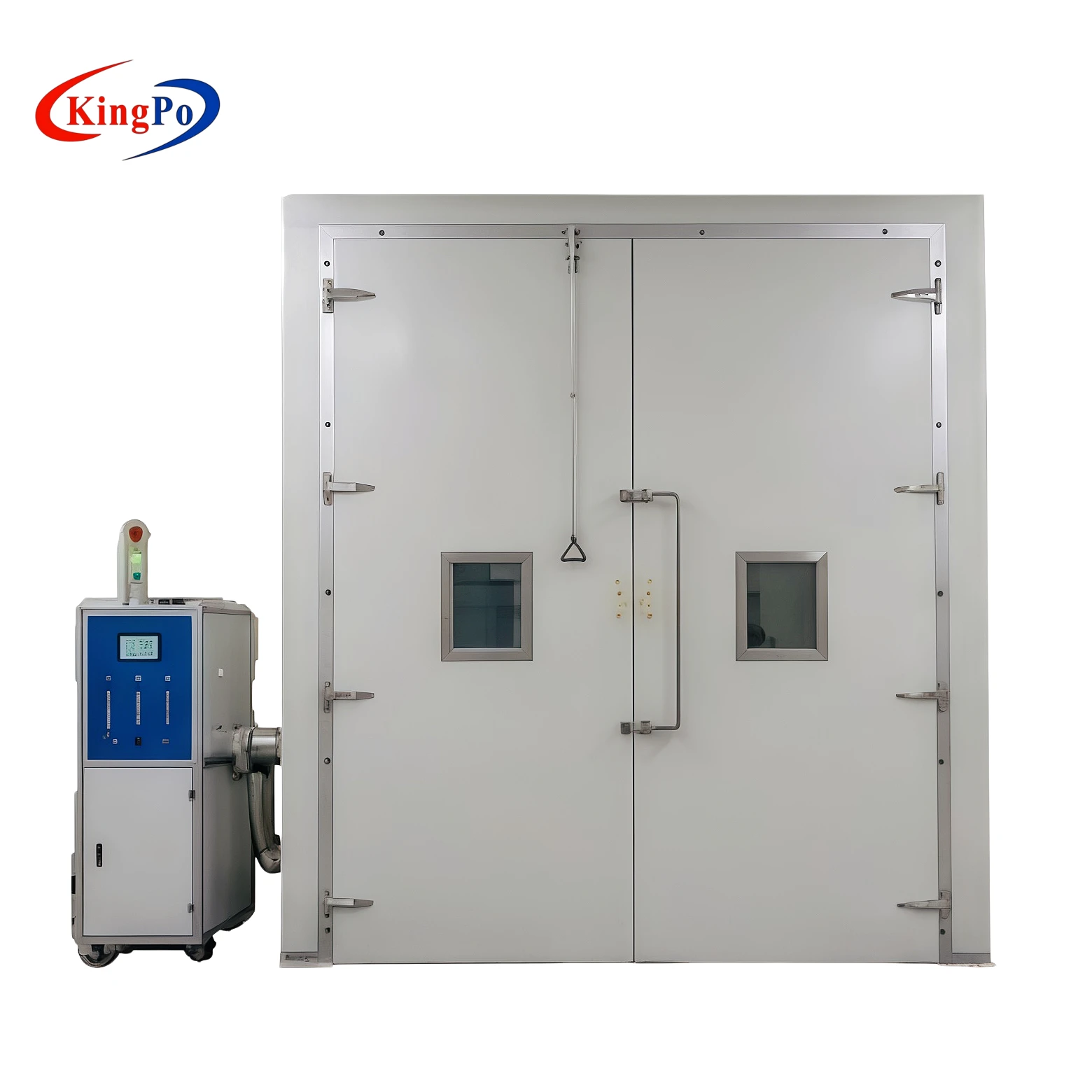
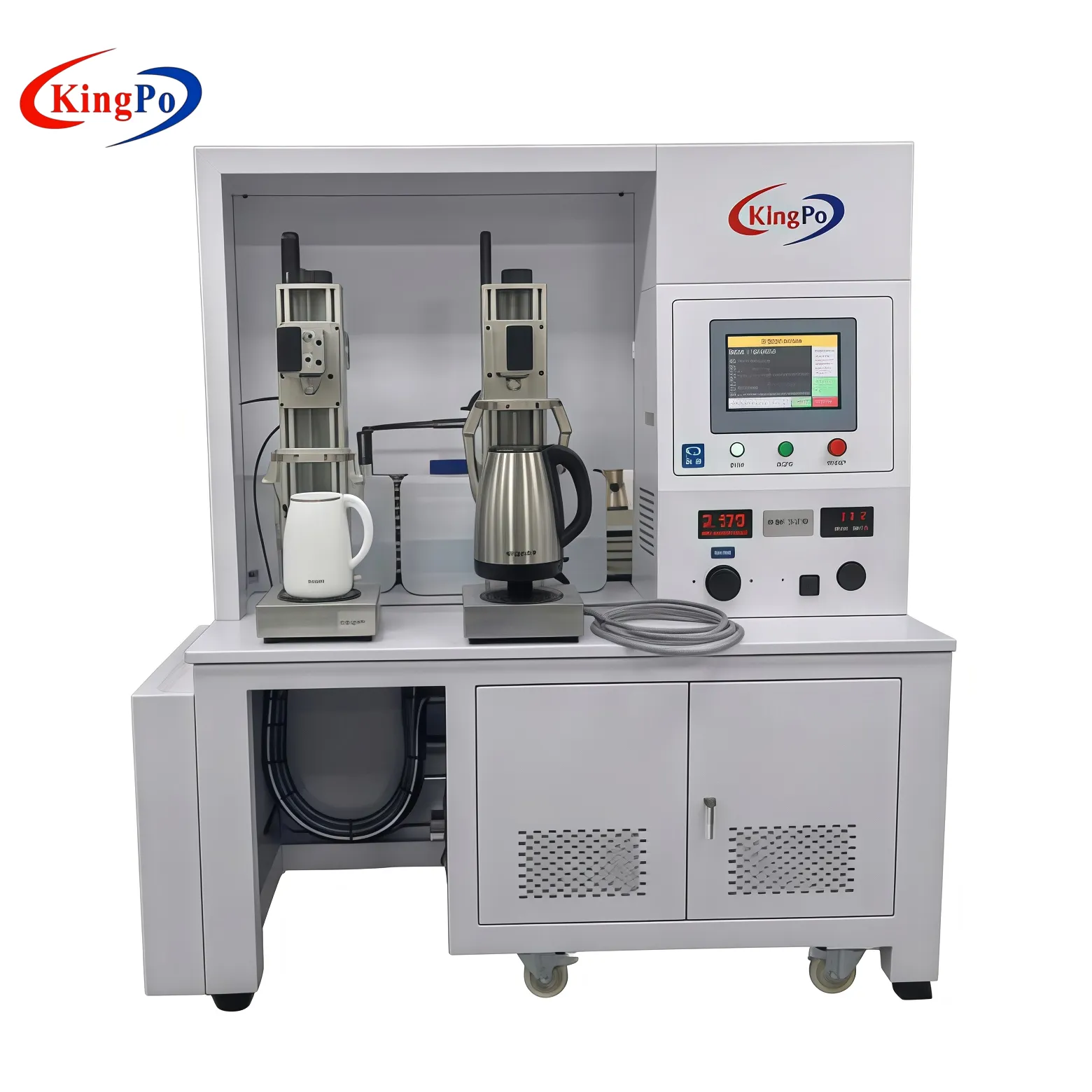
IP (Ingress Protection) ratings are enclosure protection standards developed by the International Electrotechnical Commission (IEC), primarily assessing the ability of electrical equipment enclosures to protect against solid foreign objects (such as dust) and liquids (such as water). The core document of this standard is IEC 60529, “Degrees of protection provided by enclosures (IP codes),” which has been adopted by most countries worldwide, including China’s GB/T 4208 standard. An IP code consists of “IP” followed by two digits; the first digit indicates the protection against solid foreign objects (including dust), and the second digit indicates the protection against water.
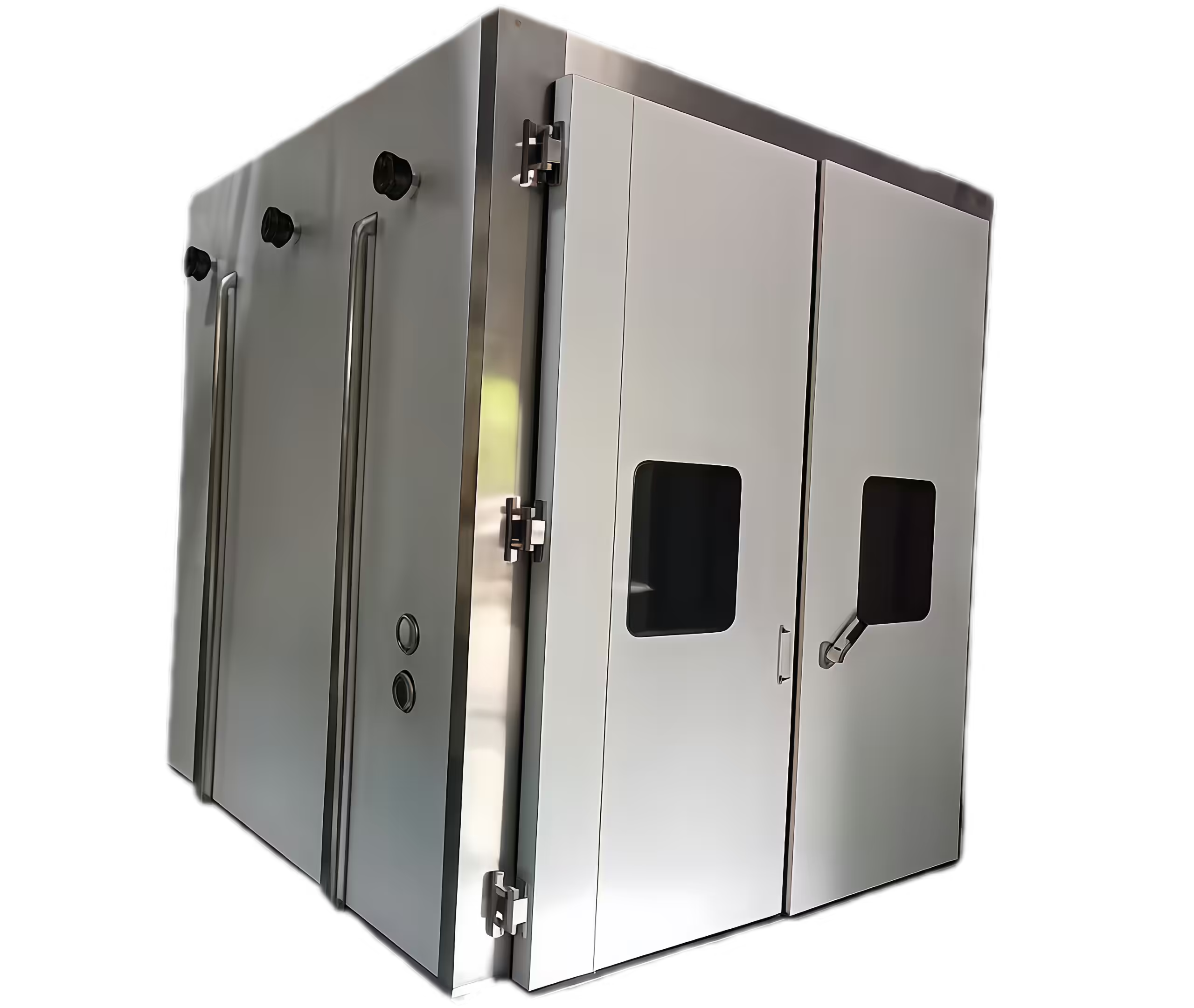
Among them, IP5X and IP6X are among the highest dustproof ratings:
IP5X : Dust Protected. Harmful dust is not allowed to enter the equipment. A small amount of harmless dust is allowed, but it must not affect the safe operation or normal function of the equipment.
IP6X : Dust Tight. Completely prevents any dust intrusion; no detectable dust particles are allowed inside.
These standards are widely used in products such as industrial equipment, automotive electronics, outdoor lighting, mobile phones, and drones, and are especially crucial in dusty environments such as deserts, mines, and factories. The stringency of the testing directly determines the reliability and market competitiveness of a product.
Basic Principles and Methods of IP5X/IP6X Testing
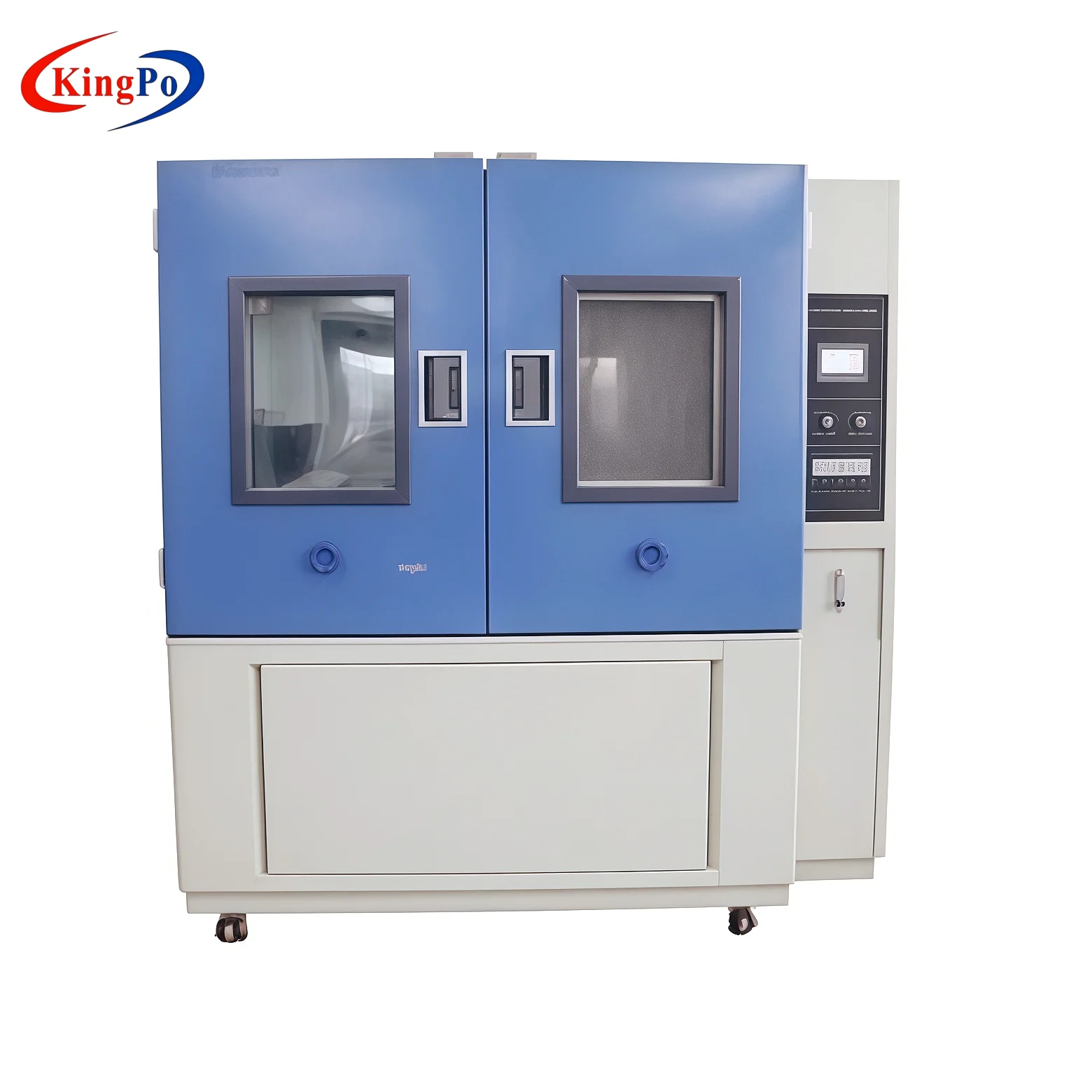
The IEC 60529 standard clearly specifies the test method for IP5X/IP6X: The sample is placed in a sealed dust chamber, and a vacuum pump or fan is used to create negative pressure (a certain value lower than atmospheric pressure) inside the equipment to simulate the real-world scenario of dust being “sucked in.” Simultaneously, a specific concentration of suspended dust is maintained inside the dust chamber, and the test duration is typically 8 hours (or the duration specified in the standard). After the test, the sample is disassembled to check for any dust accumulation inside.
- IP5X: Allows limited dust intrusion, but must be assessed to determine if it is “harmful” (e.g., does not cause short circuits, insulation degradation, or mechanical jamming).
- IP6X: Any dust intrusion is considered a failure.
The dust chamber must be equipped with a dust circulation system, concentration monitoring, and vibration device to ensure uniform dust suspension. Samples must be pretreated under standard atmospheric conditions before testing.
Test dust required by the standard: dry talc powder
IEC 60529 explicitly specifies that the IP5X/IP6X test should use dry talcum powder as the test medium, rather than sand or other mineral dust. This is because talcum powder (whose main component is hydrated magnesium silicate) has fine particles, low hydrophilicity, is easily suspended, and is non-corrosive to equipment, making it easy to simulate the most stringent “dust” environment.
The specific requirements for talcum powder are as follows:
- Particle size distribution : Must pass through a 75μm square-hole sieve (metal wire diameter 50μm), meaning the largest particle size should not exceed 75μm. The actual particle size is mostly between 1-50μm, with the majority being less than 20μm, to ensure that it can enter small gaps.
- Concentration : The dust concentration in the dust box is 2 kg/m³ (including the total volume of pipes and working space).
- Usage restrictions : The same batch of talc powder should not be used more than 20 times, after which it must be replaced to avoid particle agglomeration or contamination that could affect test accuracy.
- Drying condition : It needs to be dried before use and screened through a 200-mesh sieve to ensure there are no lumps.
This fine powder design effectively tests weak points such as the casing’s seals, seams, heat dissipation holes, and ventilation openings. If coarser dust (such as sand) is used, the test severity is actually reduced, failing to accurately reflect the device’s performance in everyday dusty environments.
Arizona Test Dust: Standard Version Search and Application
Arizona Test Dust is one of the world’s most renowned test dusts, originating from natural sand in the Arizona desert and undergoing rigorous processing. The standard version is based on ISO 12103-1:2016 “Road vehicles – Test pollutants for air filters – Part 1: Arizona Test Dust” , and is divided into four grades: A1 Ultrafine, A2 Fine, A3 Medium, and A4 Coarse, with A2 Fine and A4 Coarse being the most commonly used.
- Particle size distribution (taking a typical value for A2 fine particles as an example, with a mass percentage greater than a certain particle size):
- <1μm: Approximately 8-12%
- <5μm: Approximately 40-50%
- <10μm: Approximately 70-80%
- <20μm: Approximately 100%
- Chemical composition : mainly SiO₂ (approximately 68-76%), Al₂O₃ (approximately 10-15%), Fe₂O₃, etc., with high hardness, simulating real road dust.
- Density : Approximately 2.65 g/cm³.
Arizona dust is widely used in automotive filters, engine intake systems, MIL-STD-810 dust testing, aerospace, and other fields. It is better suited for “blown dust” or “circulating dust” testing (containing larger particles and abrasiveness) than the IEC 60529 IP5X/IP6X “airborne dust” testing. Some laboratories use it in conjunction with enhanced dust testing, but strictly adhering to IEC standards, IP testing still primarily uses talc. Arizona dust’s advantages lie in its high repeatability and good batch consistency, making it an internationally recognized representative of “standard dust.”
Kanto Loam Dust: Japanese standard test dust
Kanto Loam Test Dust originates from the Japanese Industrial Standard JIS Z 8901 “Test Powders” . It is made from volcanic ash soil (reddish-brown loam) from the Kanto Plain of Japan and is divided into three levels: Class 7, 8, and 11. It is specifically used for dust testing.
- Particle size distribution (mass % greater than a certain particle size):
- Class 7: 88% for sizes above 5μm, 76% for sizes above 10μm, and 20% for sizes below 75μm.
- Class 8: Finer, 61% above 5μm, 3% below 75μm max.
- Class 11: Extremely fine, 65% above 1μm, 50% above 2μm.
- Chemical composition : SiO₂ 34-40%, Al₂O₃ 26-32%, Fe₂O₃ 17-23%, MgO 3-7%, with high iron content and reddish-brown color.
- Features : Uniform particle distribution, simulating soil dust in the Asian monsoon region.
Kanto dust is commonly used for dust testing of electronic equipment and automotive parts in the Japanese domestic market or the Asian market, especially in JIS standard or mixed environment testing. Compared to talc, it has stronger abrasiveness and more representative particles, but it is not directly used for IEC 60529 IP5X/IP6X standard testing. Some companies use Kanto dust for supplementary verification to simulate specific regions (such as the dusty plains of East Asia).
Comparison of different dust types and selection recommendations
| Dust type | Standard Source | Main particle size range | Typical uses | Is it for use with standard IP5X/IP6X? | Features |
| talcum powder | IEC 60529 | <75μm (mostly <50μm) | IP5X/IP6X dustproof test | Yes (unique designation) | Fine, easily suspended, non-abrasive |
| Arizona dust | ISO 12103-1 | 0-200μm (primarily A2 fine) | Automotive filters, MIL-STD dust test | no | Highly abrasive, simulates real sand and dust |
| Guandong Dust | JIS Z 8901 | 1-75μm (Class 7-11) | Dust testing in Japan/Asia | no | Volcanic ash base, composition similar to soil |
When selecting dust, it is essential to strictly adhere to target standards: talc powder is required for IEC certification; if comprehensive environmental reliability testing (such as combining vibration and temperature) is being conducted, Arizona dust or Kanto dust can be supplemented. Dust purity, batch consistency, and dry storage are crucial for testing accuracy.
Conclusion
IP5X and IP6X testing are not only a threshold for product compliance, but also a core element in ensuring user safety and equipment lifespan. Standard talc powder, with its fine properties, is the preferred choice, while Arizona dust and Kanto dust provide more realistic simulations for specific scenarios. As electronic products move towards outdoor and industrial applications, understanding the differences between these dusts helps engineers optimize designs and laboratories conduct precise verification. Choosing the appropriate test dust is both a scientific approach and a demonstration of responsibility for product quality.