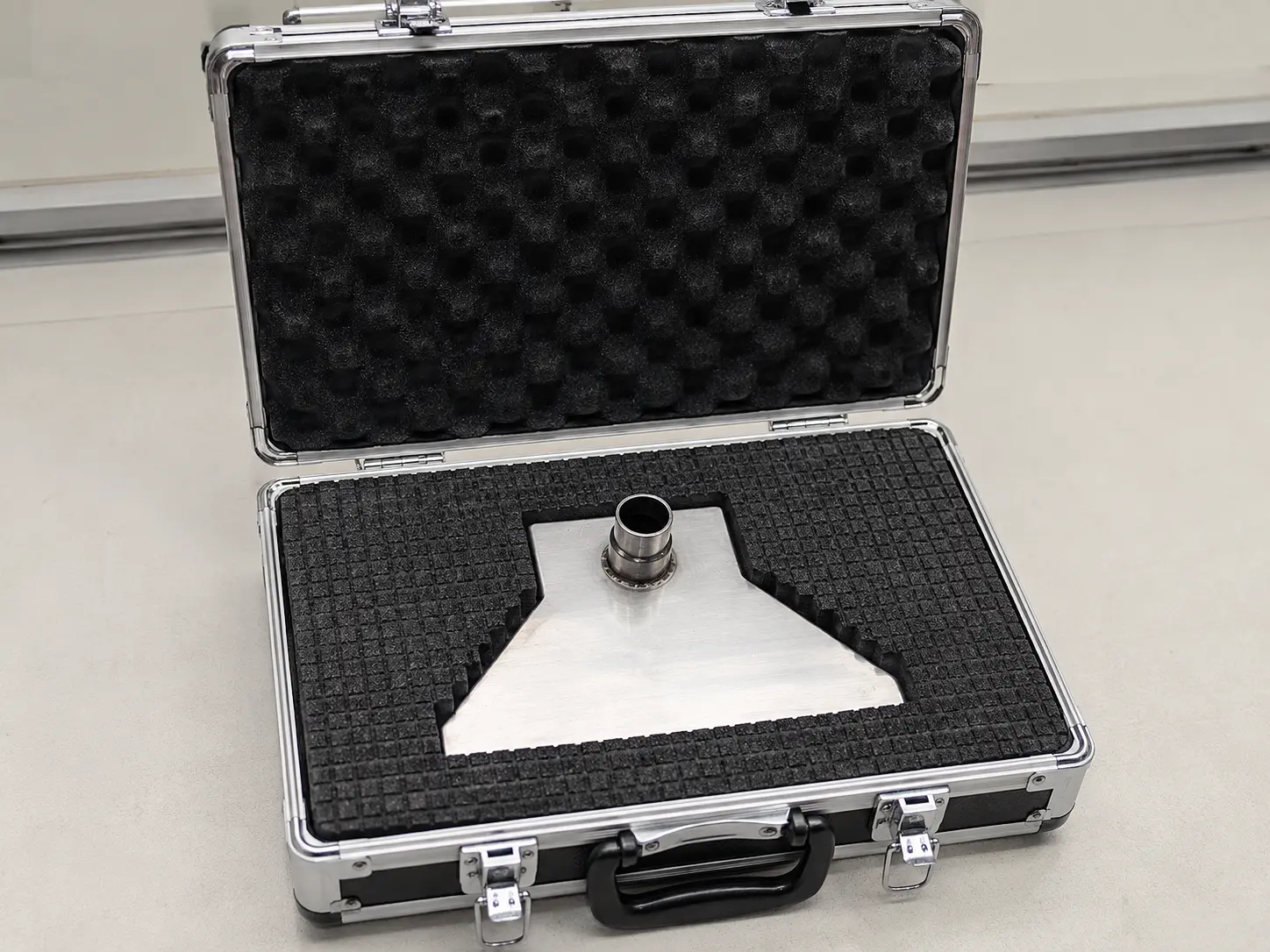
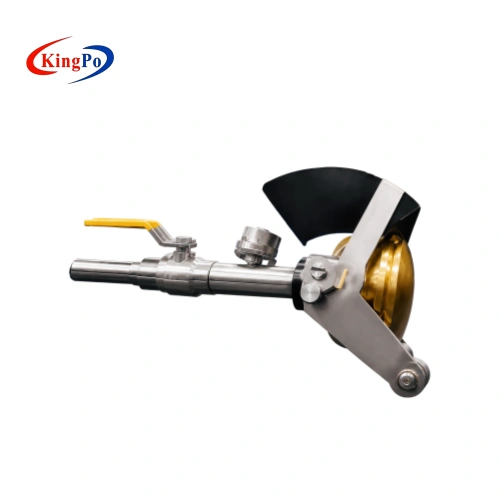
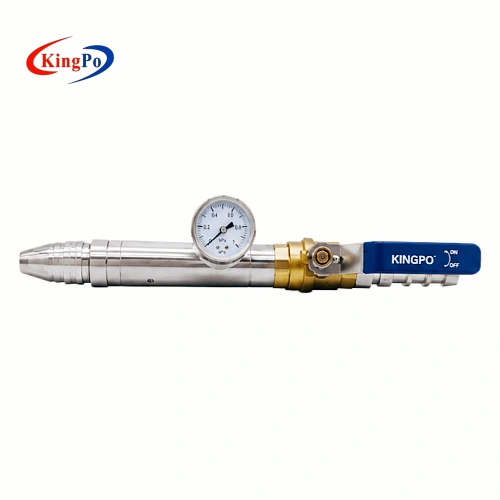
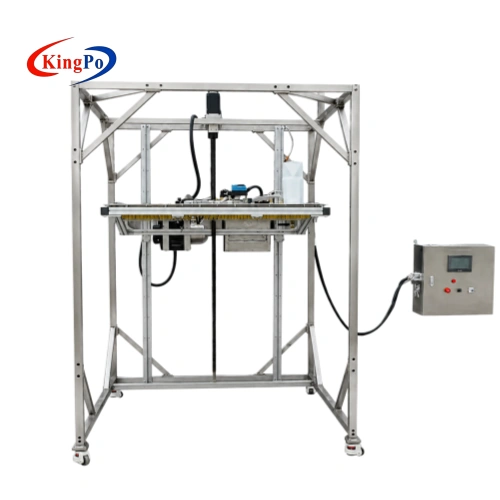
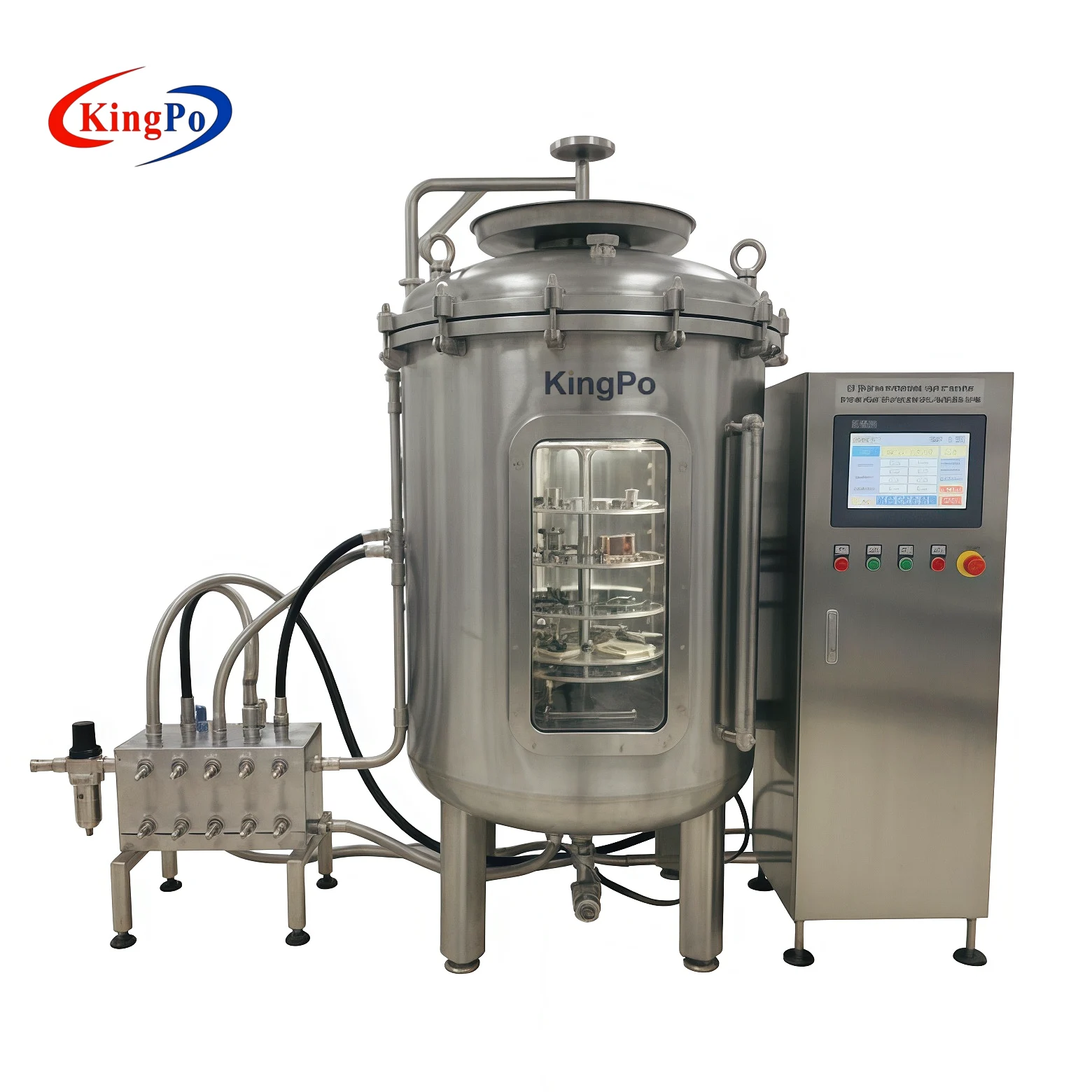
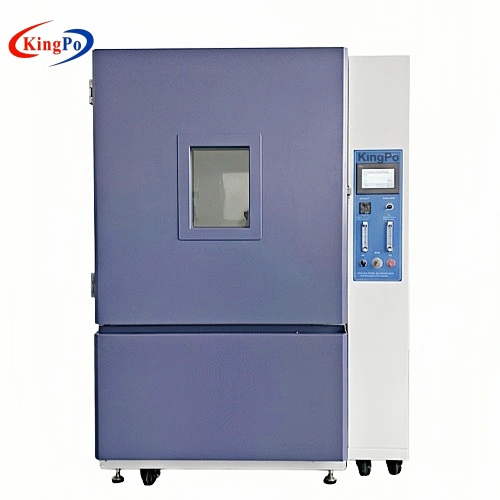
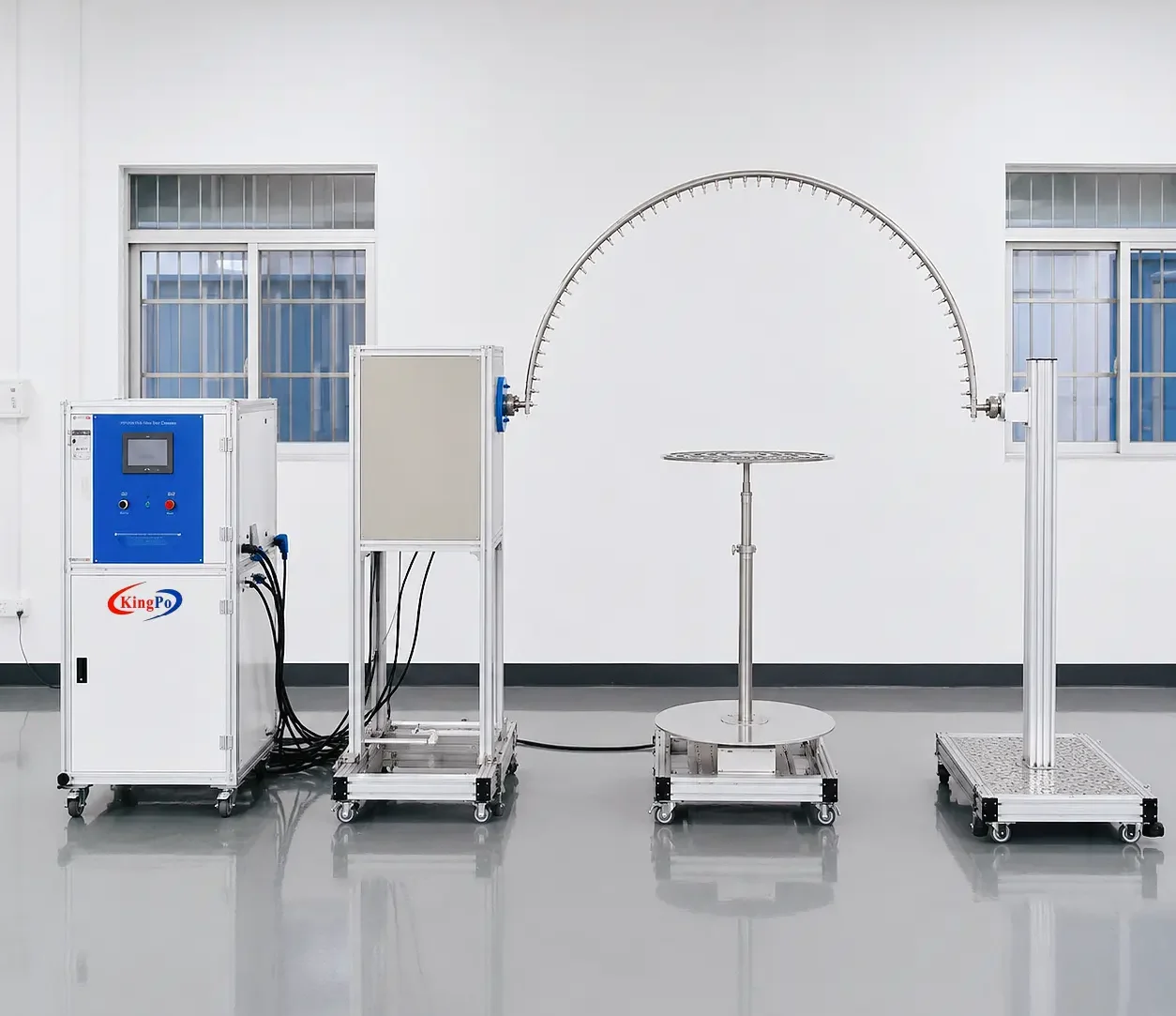
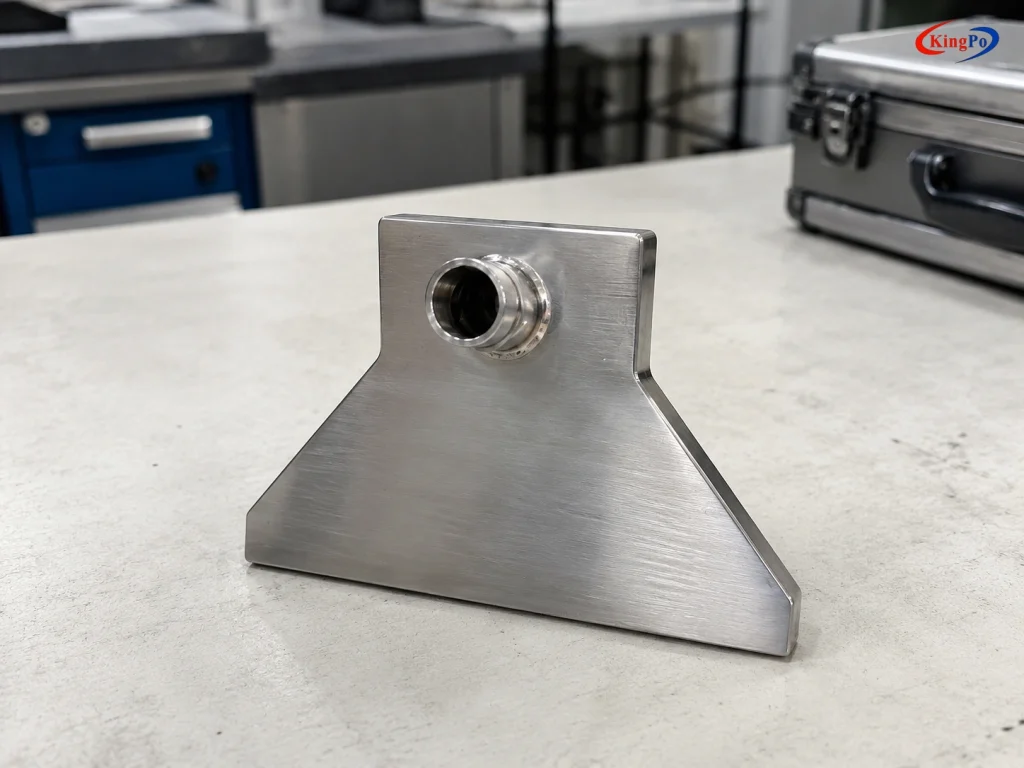
ISO 16750-4 Figure 4 splash-water test nozzle was the specific item prepared by KingPo for HORIBA MIRA Ltd. in the United Kingdom. The laboratory required a jet that matched the geometry and flow conditions defined in the standard for cold-water thermal-shock testing of automotive electrical and electronic components.
Technical discussion confirmed that the existing heating capability and specimen fixtures could be retained. The missing element was a compliant slot jet. The project was therefore reduced to the supply of a single precision stainless-steel nozzle rather than a complete new chamber.
Project Overview
| Main Application | Cold-water splash thermal-shock testing of automotive electrical and electronic components according to ISO 16750-4 |
| Delivered Item | ISO 16750-4 Figure 4 stainless-steel slot-jet nozzle |
| Test Method | Heating to Tmax followed by 3-second ice-water splash, repeated for 100 cycles |
| Main Standard | ISO 16750-4, Clause 5.4.2 Splash water test |
Customer Testing Requirement
HORIBA MIRA required the ability to perform the splash-water thermal-shock sequence defined in ISO 16750-4. The laboratory already possessed the necessary heating capability and specimen positioning fixtures. The open question was whether the water-delivery element matched the geometry and flow conditions of Figure 4.
Discussion focused on the critical parameters: water temperature of 0 °C to +4 °C, volumetric flow of 3–4 litres in three seconds, jet-to-DUT distance of (325 ± 25) mm, and the requirement that the splash width always exceed the width of the specimen.
Once these requirements were clarified, it became evident that a complete new environmental chamber was unnecessary. A single precision stainless-steel slot-jet nozzle manufactured to Figure 4 was sufficient to close the gap.
Product Supplied
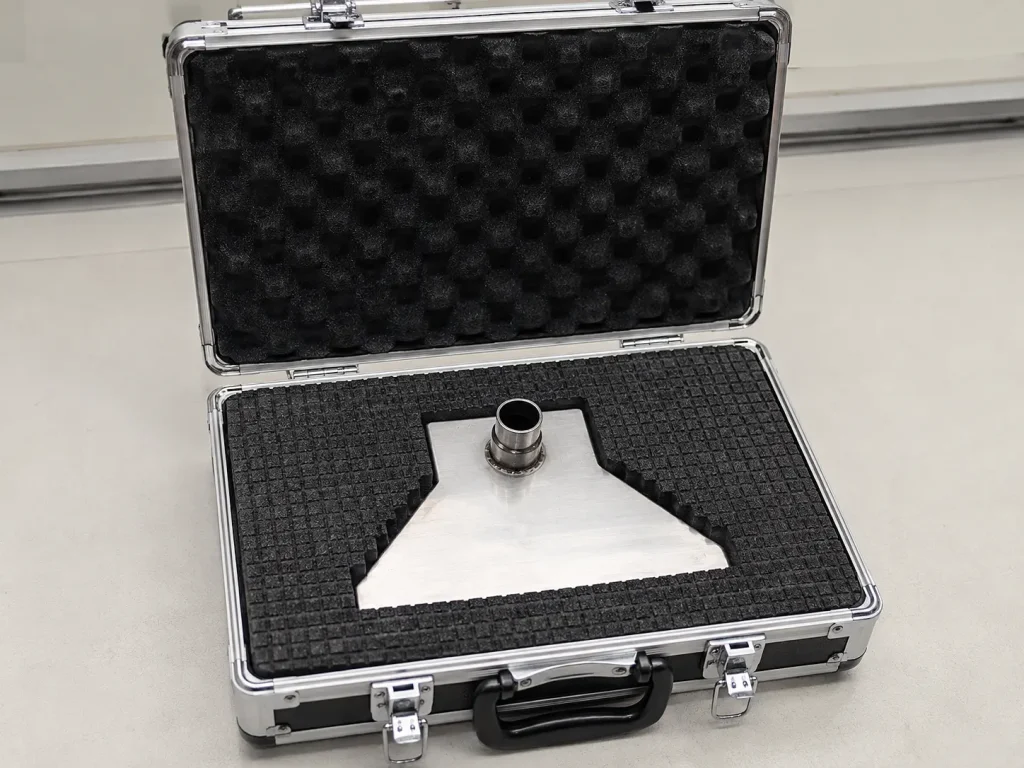
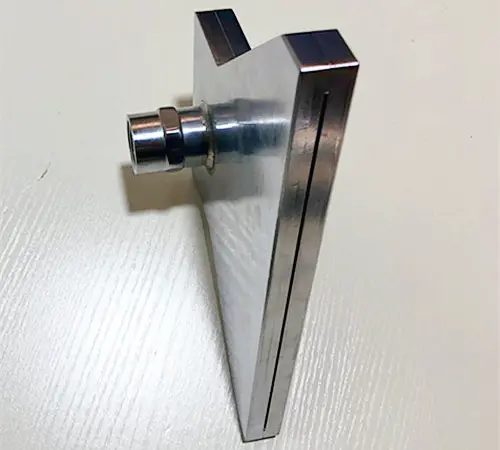
The delivered item is a stainless-steel slot-jet nozzle manufactured to the dimensional and flow requirements of ISO 16750-4 Figure 4. It produces a continuous line of splash impact whose width is greater than that of the DUT and whose volumetric discharge falls inside the 3–4 litre window for a three-second exposure.
When a single jet cannot cover a large specimen, additional identical nozzles may be arranged in a continuous row. The nozzle can be used as a stand-alone laboratory fixture or as the water-delivery element inside a larger thermal-shock system.
Because the nozzle determines splash uniformity and local cooling rate, its geometric compliance is the primary factor controlling the severity and repeatability of the thermal-shock exposure.
Key Technical Parameters
The following values are defined by ISO 16750-4 and represent the conditions that the Figure 4 nozzle is required to support.
| Parameter | Specified Value |
|---|---|
| Number of cycles | 100 |
| Holding time at Tmax | 1 h or until DUT temperature stabilisation |
| Transition duration | < 20 s |
| Test fluid | De-ionised water (optional colour or salt for detectability) |
| Water temperature | 0 °C to +4 °C |
| Water flow | 3 L to 4 L per 3 s splash duration |
| Distance jet to DUT surface | (325 ± 25) mm |
| Splash width requirement | Greater than the width of the DUT |
Applicable Standards and Test Boundaries
The nozzle supports the splash-water method defined in ISO 16750-4. Related standards may appear in the same laboratory programme but serve different purposes and should not be combined into a single general compliance statement.
| Standard | Application in This Project |
|---|---|
| ISO 16750-4 | Defines the splash-water test method, test parameters and the Figure 4 jet geometry |
| ISO 16750-1 | Provides the operating-mode definitions referenced during the splash-water cycle |
| Related IP methods | IEC 60529 IPX3/IPX4 and other water-exposure methods may be performed in the same laboratory but use different apparatus and acceptance criteria |
An ISO 16750-4 splash-water exposure does not define every post-test assessment. The relevant product standard may also specify specimen operation, mounting, preconditioning and functional checks after exposure.
Engineering Notes for Similar Laboratories
Collect the discharged volume over a measured three-second interval and confirm that the result lies between 3 L and 4 L. Record the measured value with the nozzle identification.
Set the free surface of the jet at (325 ± 25) mm from the nearest face of the specimen. Ensure the splash line fully covers the DUT width in the as-installed orientation.
If the DUT width exceeds the coverage of a single jet, arrange additional identical Figure 4 nozzles in a continuous row so that the splash line remains uninterrupted.
Keep water temperature between 0 °C and +4 °C. Complete the transfer from the heating chamber to the splash position in less than 20 seconds.
IEC 60529 IPX3/IPX4 evaluates protection against spraying or splashing water. ISO 16750-4 clause 5.4.2 specifically combines thermal preconditioning with a short, high-volume ice-water splash. The two methods are not interchangeable.
Related IP and Automotive Environmental Solutions
Although the present project required only the Figure 4 nozzle, many laboratories that perform ISO 16750-4 testing also maintain capability for general ingress-protection and other climatic-load methods. Related KingPo equipment includes:
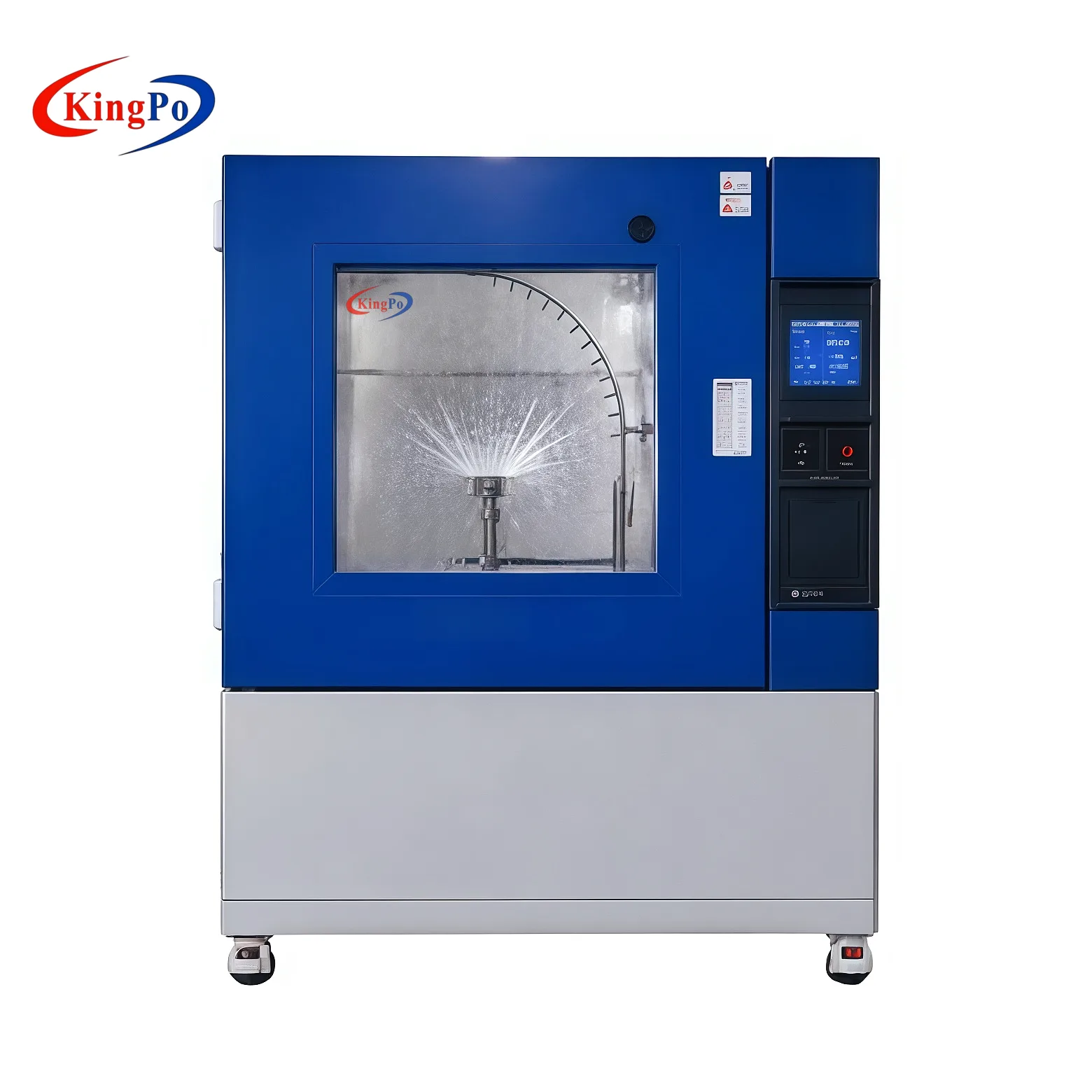
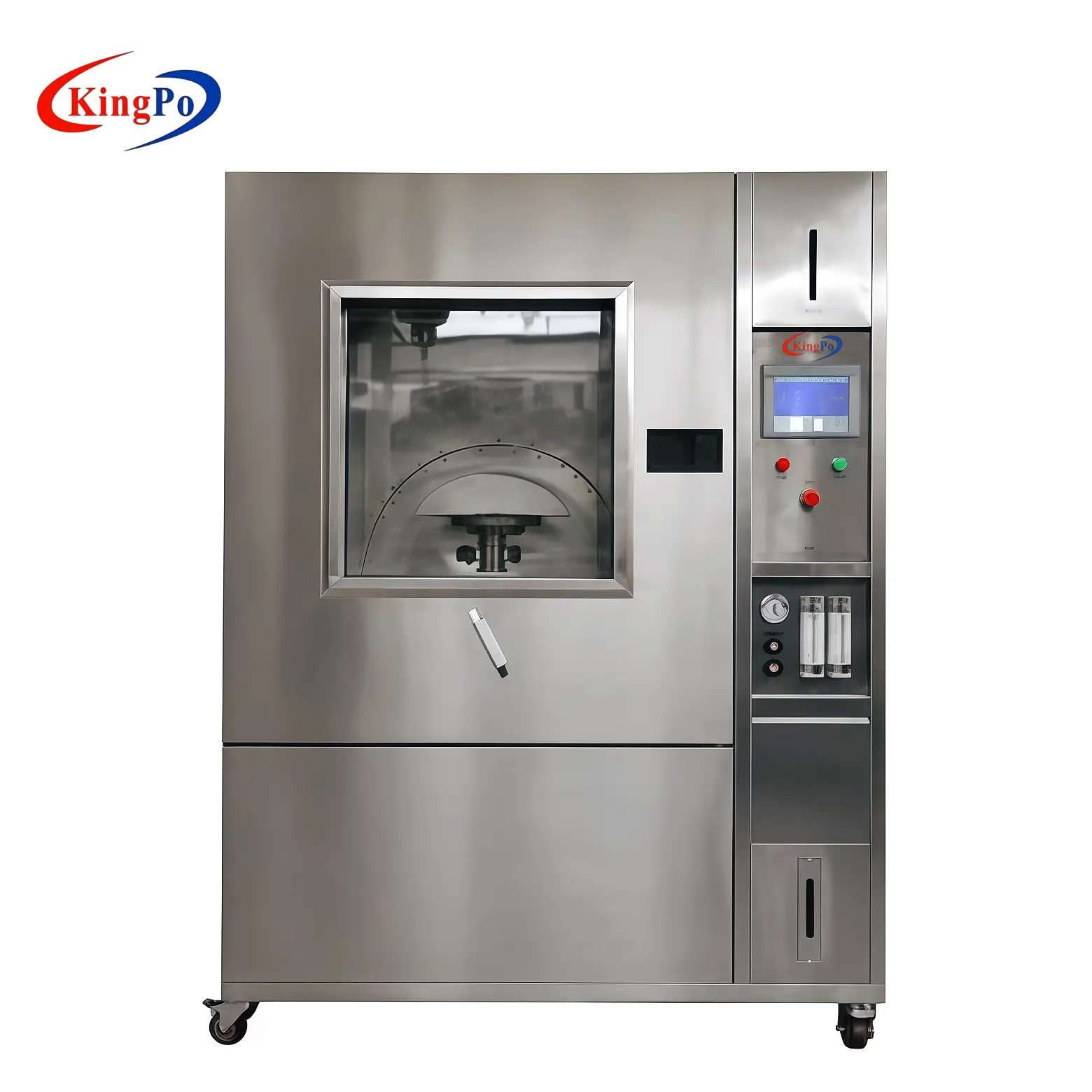
- Complete ISO 16750-4 thermal-shock splash-water systems – integrated heating chamber, refrigerated water circuit, automated cycle control and one or more Figure 4 jets
- IPX3 / IPX4 oscillating-tube and handheld spray-nozzle equipment – for general splash and spray protection under IEC 60529
- IPX5 / IPX6 water-jet test systems – controlled jet nozzles and flow regulation
- IPX9K high-pressure high-temperature spray chambers – for road-vehicle cleaning and high-pressure water-resistance tests to ISO 20653
- Combined multi-function IP systems – single platforms configurable for several IPX levels and selected automotive methods
Selecting a nozzle that already matches the Figure 4 geometry simplifies later expansion into a full thermal-shock system or integration with existing IP equipment.
Related Product and Technical Pages
ISO 16750-4 Thermal Shock with Splash Water Tester
Complete chamber solution that incorporates the Figure 4 jet, temperature control and automated cycle management.
IP Testing Equipment Overview
Broader range of ingress-protection and automotive environmental test apparatus.
Water Splash Test Chamber Guide
Technical notes on splash-water methods, standards comparison and equipment selection.
ISO 20653 IPX9K Test Chamber
High-pressure high-temperature water-spray system for road-vehicle cleaning and protection tests.
Contact Us
Request dimensional drawings, flow-verification data or quotation for additional nozzles or complete systems.
Frequently Asked Questions
Planning a Splash-Water or IP Test Equipment Project?
Send KingPo the applicable standards, specimen dimensions, required test levels, existing laboratory equipment and any interest in complete thermal-shock or multi-function IP systems. The configuration can then be reviewed against the actual testing workflow rather than selected only by the rating code.