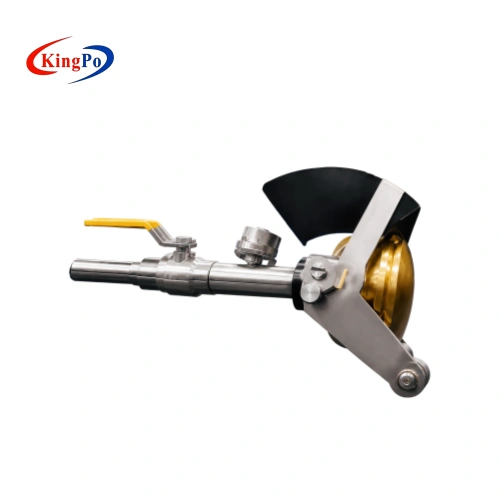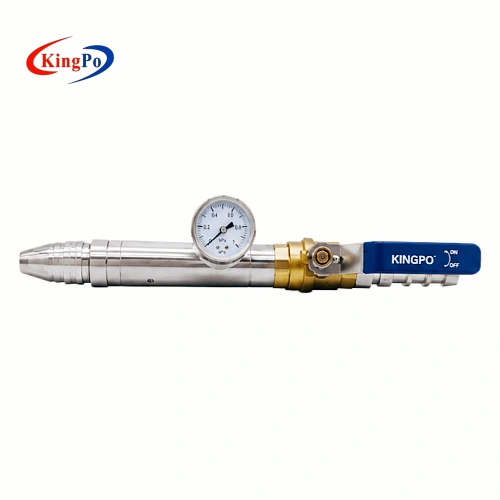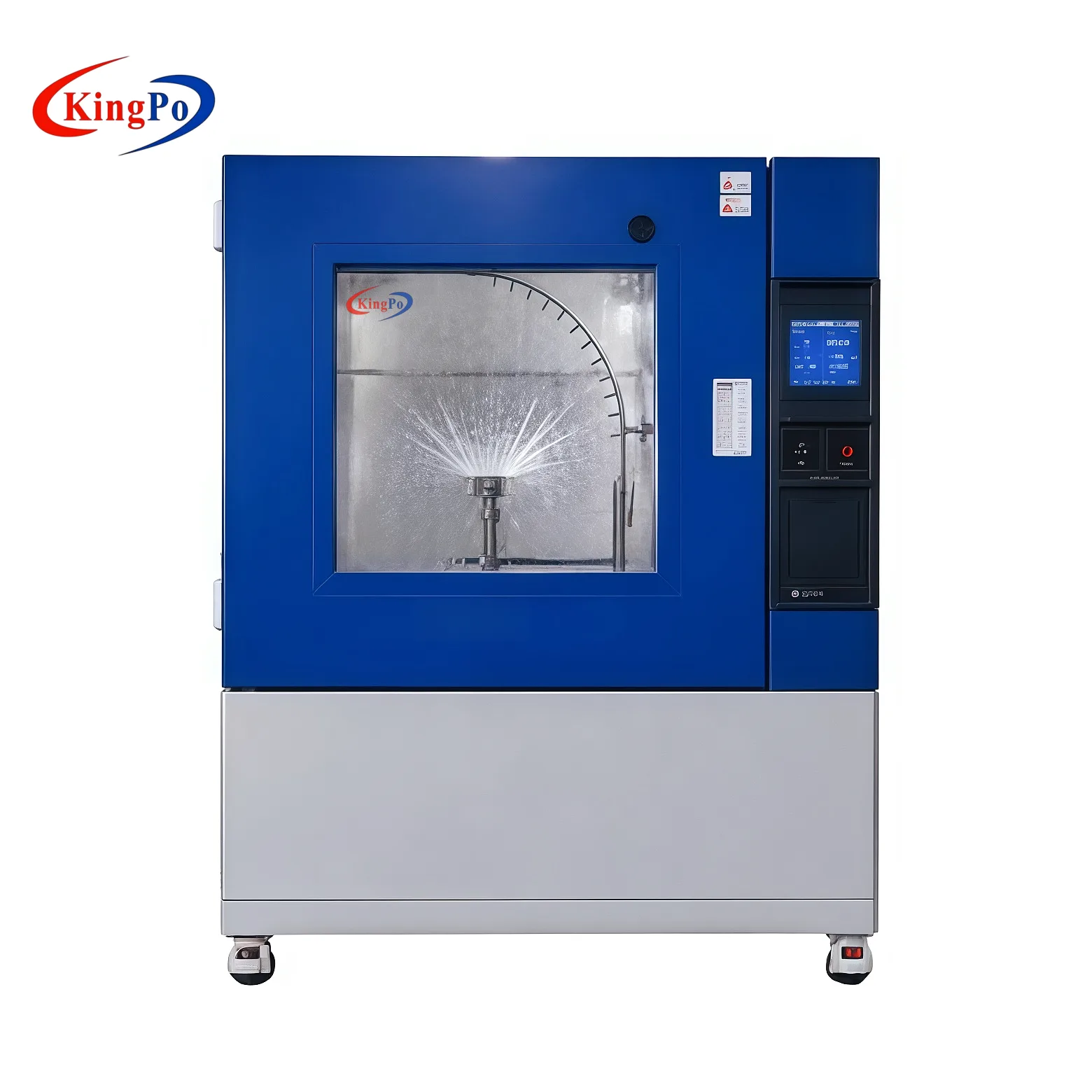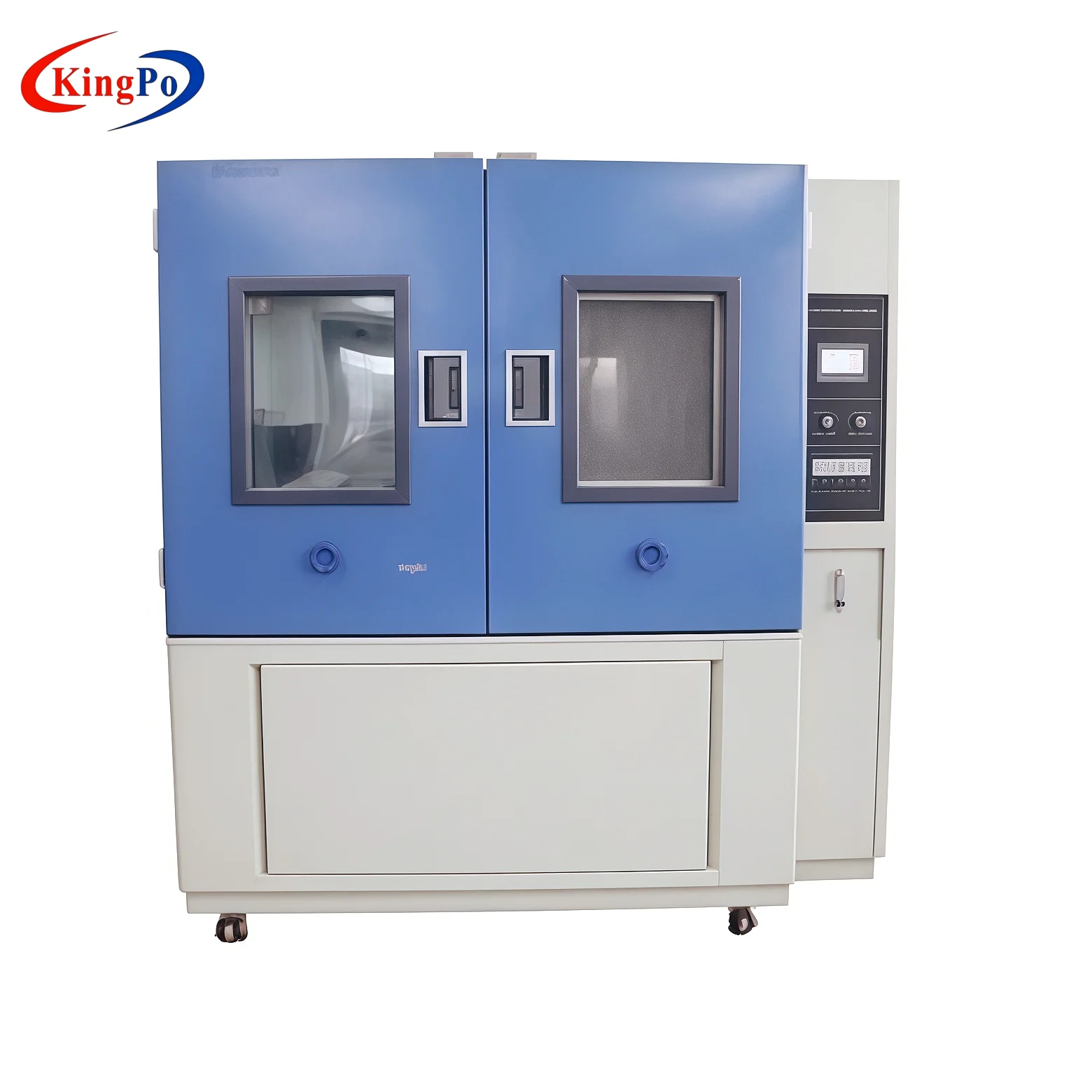
ISO 16750-4 cold-water shock testing addresses a specific automotive environmental condition: a component becomes hot during vehicle operation and is then suddenly exposed to cold road water. This rapid temperature change can create different rates of contraction between housings, seals, connectors, potting materials and internal assemblies.
Possible failure mechanisms include mechanical cracking, seal movement, loss of tightness, water ingress and electrical or functional degradation. The test is therefore particularly relevant to electrical and electronic components installed in locations exposed to road splash.
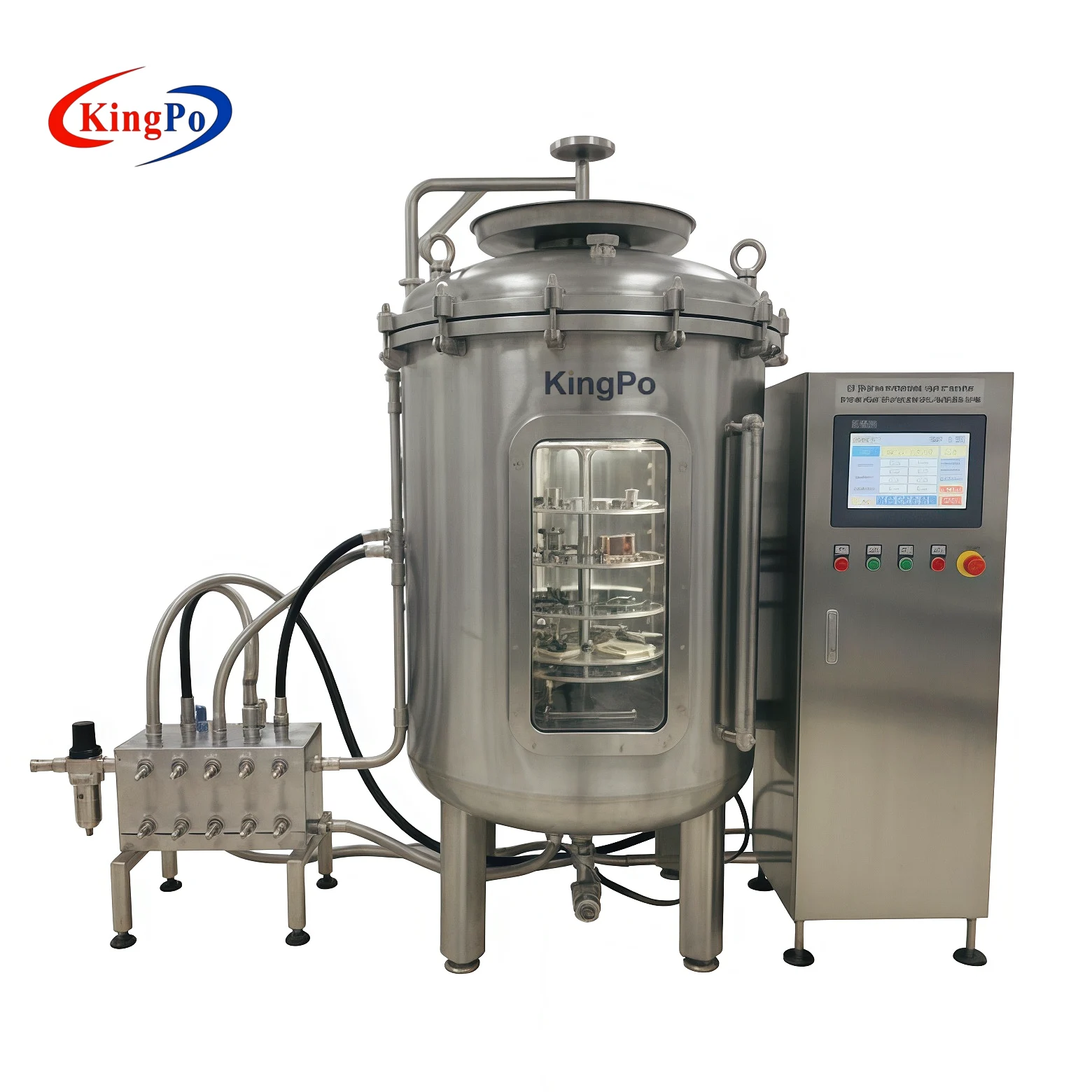
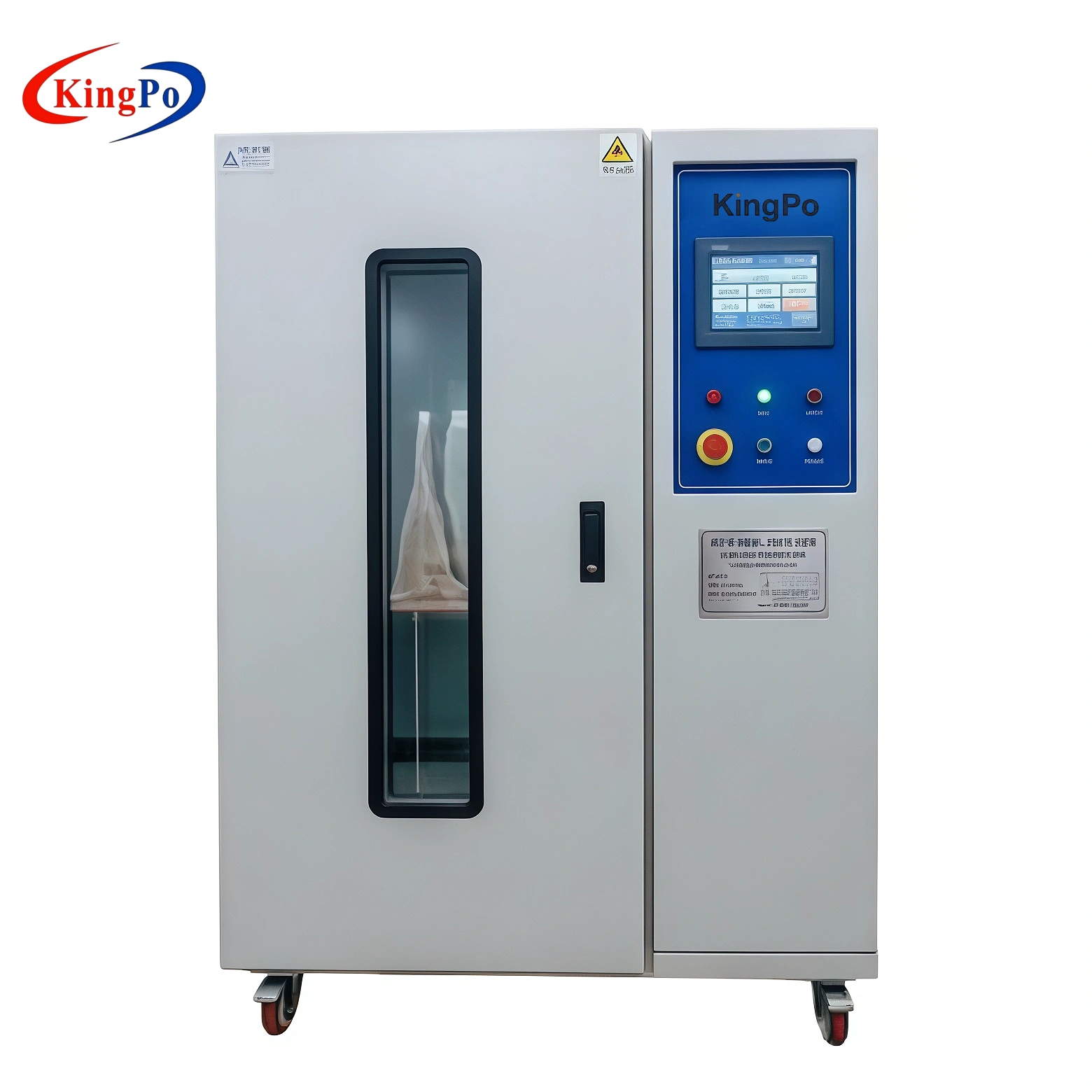
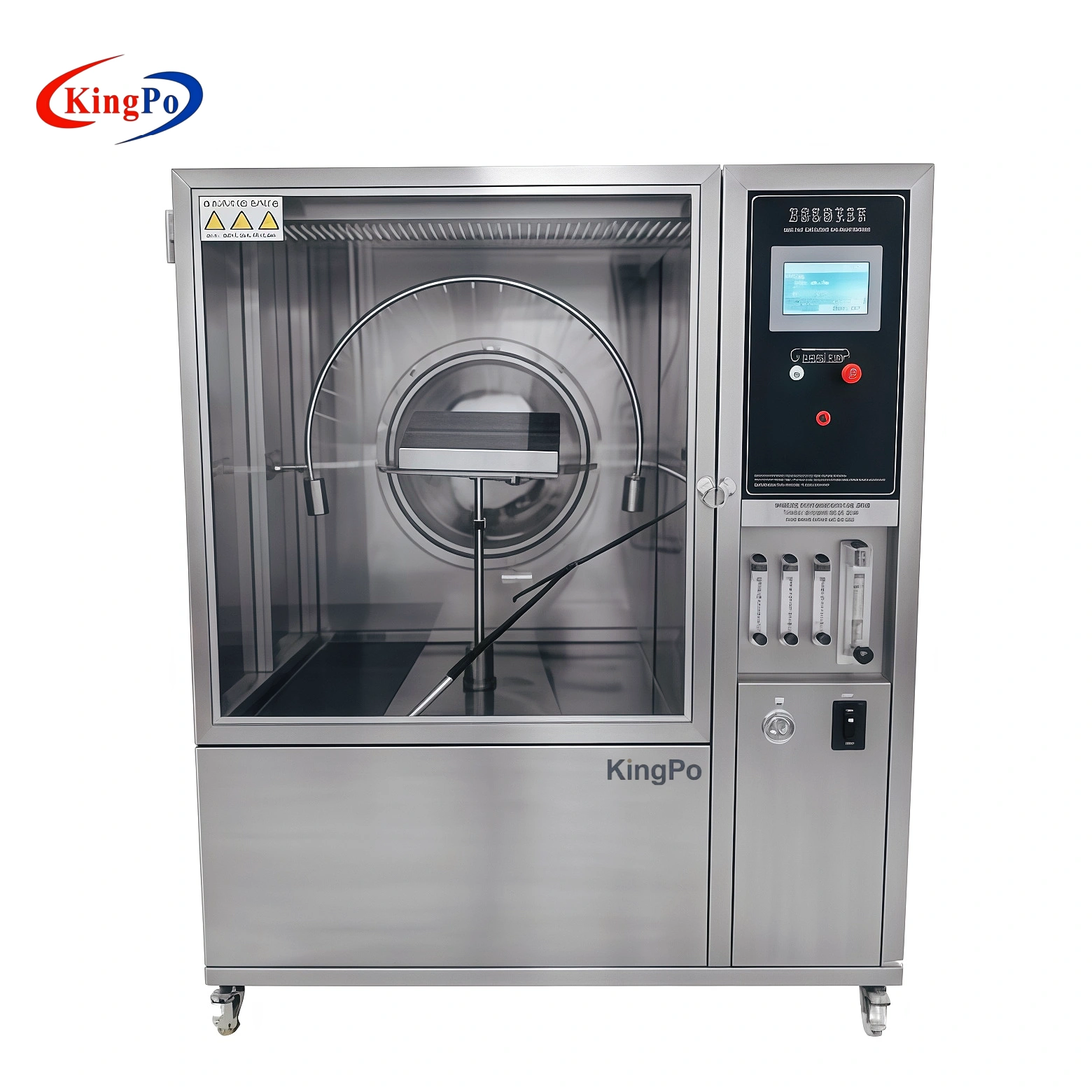
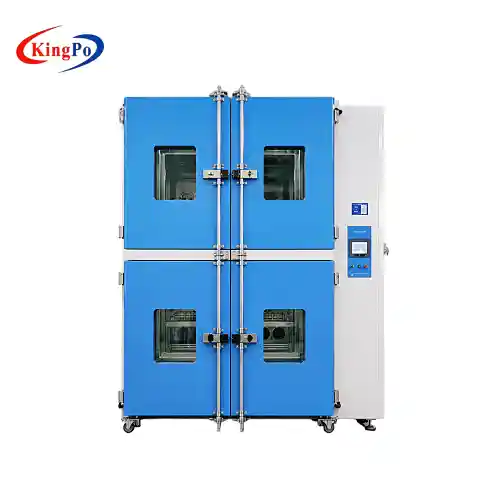
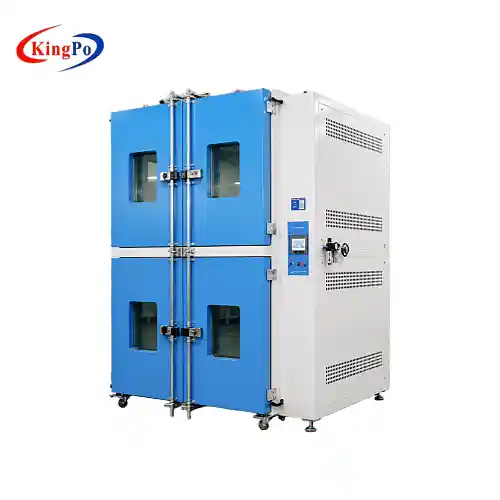
The KP-1023 provides a controlled environment for reproducing this condition. The DUT can be heated to the specified Tmax, held until the required thermal condition is reached, and then exposed to a repeatable cold-water splash. Test cycles and sequence timing are controlled through the PLC and touchscreen interface.
Unlike a conventional IP water-ingress tester, this equipment is primarily intended to reproduce thermal shock caused by cold water contacting a hot automotive component. DUT temperature, operating condition, splash direction and acceptance criteria must be selected according to the applicable product specification and test plan.
Technical Specifications
Equipment Configuration
| Parameter | Specification |
|---|---|
| Model | KP-1023 |
| Internal Working Space | 1300 × 900 × 900 mm (D × W × H) |
| Maximum DUT Dimensions | 700 × 700 × 500 mm |
| Maximum Load Capacity | 150 kg |
| Heating Temperature Range | RT +10°C to 200°C |
| Temperature Fluctuation | ±2°C |
| Temperature Deviation | ±2°C |
| Test Port | Φ100 mm |
| Control System | PLC electric control |
| Operation Interface | 7-inch color touchscreen |
| Test Mode | Splash water / cold-water shock test |
| Cycle Setting | Default 100 cycles; programmable 0–9999 |
| Power Supply | AC 380 V, 50 Hz, three-phase supply* |
Splash Water Test Parameters
| Parameter | Test Condition |
|---|---|
| Referenced Method | ISO 16750-4:2023, Clause 5.4.2 |
| Water Temperature | 0°C to +4°C |
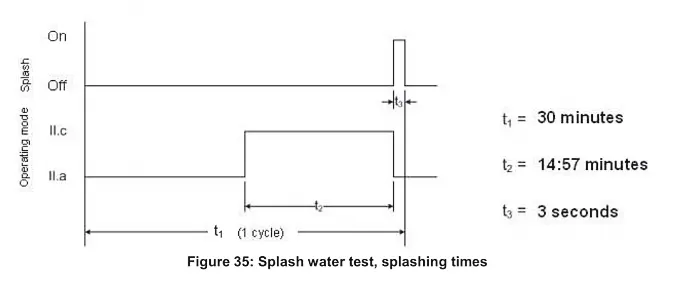
| Splash Duration | 3 s |
| Water Delivery | 3 L to 4 L during the splash |
| Nozzle-to-DUT Distance | 325 ±25 mm |
| Splash Coverage | Arranged to cover the relevant DUT width |
| Standard Test Cycles | 100 |
| DUT Orientation | Representative of installation in the vehicle |
| DUT Conditioning | At specified Tmax according to the applicable test plan |
The values above distinguish the test-method conditions from the physical capability of the chamber. The applicable Tmax and DUT operating mode are determined by the component specification rather than by one universal ISO 16750-4 temperature.
How the Cold Water Shock Test Works
The test exposes a heated DUT to a short application of near-freezing water. The resulting temperature gradient places mechanical and thermal stress on materials, interfaces and sealing structures.
A typical test sequence is:
Mount the DUT
The component is installed in an orientation representative of its actual position in the vehicle. Fixtures should reproduce the relevant installation condition without unintentionally shielding the surfaces that require splash exposure.
Condition the DUT at Tmax
The DUT is heated to the maximum temperature specified for the test.
The heating stage must allow the required DUT thermal condition to be reached before cold-water exposure. Tmax depends on the component and applicable test specification; it should not automatically be set to the maximum 200°C capability of the chamber.
Apply the Cold-Water Splash
Cold water at 0°C to +4°C is applied for 3 seconds, with 3 L to 4 L delivered during the splash.
The nozzle is positioned at the required distance from the DUT, and splash coverage is arranged according to the relevant exposed width.

Maintain the Required Test Sequence
Following the splash, the test proceeds according to the defined cycle timing and DUT operating condition.
Repeat the Test
The sequence is normally repeated for 100 cycles, unless a customer specification or agreed test plan defines otherwise.
After testing, the DUT is evaluated according to the applicable functional, electrical, mechanical and sealing acceptance criteria.
Why This Test Is Required
The splash water test is not simply a water-resistance test.
When a hot component is suddenly cooled, outer surfaces may contract considerably faster than internal structures. Different materials also respond differently to the temperature change.
This can expose weaknesses that may not appear during conventional temperature cycling or room-temperature water testing, such as:
- cracking of housings or encapsulation materials;
- movement or damage of seals;
- deterioration of bonded interfaces;
- loss of enclosure tightness;
- water penetration through stressed joints;
- connector or cable-entry leakage;
- electrical malfunction following repeated thermal shock.
For automotive reliability engineers, reproducing the combined hot DUT + cold water condition is therefore important when evaluating components installed in exposed vehicle locations.
ISO 16750-4:2023 Application
ISO 16750-4:2023 — Road vehicles — Environmental conditions and testing for electrical and electronic equipment — Part 4: Climatic loads addresses climatic environmental stresses for electrical and electronic systems and components installed on or in road vehicles.
For the KP-1023, the relevant method is:
The equipment is designed specifically around this cold-water splash method. It should not be interpreted as a complete test system for every climatic test contained in ISO 16750-4.
Note on Earlier ISO 16750-4 References
Earlier KingPo documentation and previous editions of ISO 16750-4 may refer to Clause 4.2 or older figure numbering.
For new projects based on the 2023 edition, the applicable reference should be confirmed as ISO 16750-4:2023, Clause 5.4.2.
When a customer specification still references an earlier ISO edition or an OEM test method derived from it, please provide the exact edition and test clause before quotation.

DUT Size, Orientation and Splash Coverage
DUT geometry is important when selecting and configuring a cold-water shock system.
The KP-1023 supports samples up to 700 × 700 × 500 mm with a maximum stated load of 150 kg, within its 1300 × 900 × 900 mm working space.
The DUT should be mounted according to its representative installation position. Splash direction should correspond to the environmental exposure expected at the vehicle mounting location.
For a wide DUT, one nozzle may not provide sufficient coverage across the required surface. In such cases, the splash arrangement should be reviewed and an appropriate nozzle configuration selected.
For components requiring exposure from several directions, the applicable test procedure and DUT arrangement should be confirmed before fixture manufacture.
Test Chamber and Control Design
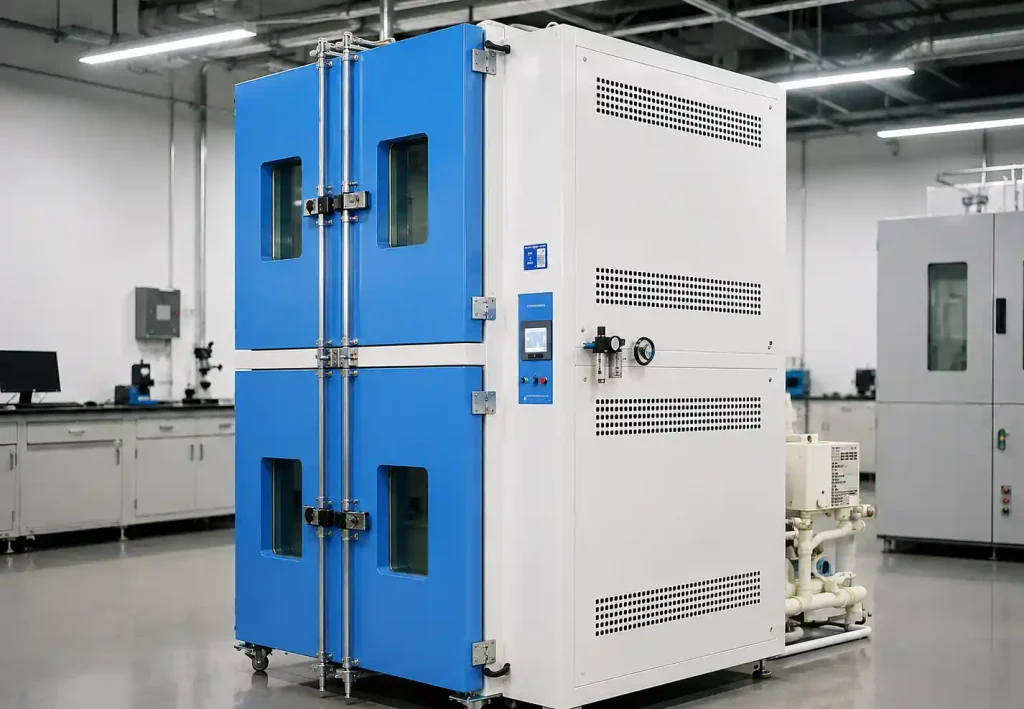
The KP-1023 is designed for repeated automotive environmental testing and incorporates features intended to simplify setup, observation and cycle control.
Key construction and operating features include:
- SUS316 stainless-steel inner chamber for the wet test environment;
- funnel-type chamber bottom to assist collection and drainage of test water;
- PLC-based test control with a 7-inch color touchscreen;
- programmable cycle count and sequence control;
- DUT heating capability up to 200°C;
- integrated low-temperature water preparation for the splash process;
- observation window for monitoring the DUT during testing;
- Φ100 mm access port for external DUT power or signal cables;
- insulated chamber structure for temperature control;
- configurable DUT positioning and splash orientation;
- electrical and control protection for laboratory operation.
The required DUT fixture, power connections and measurement interfaces should be defined for each project rather than assumed to be universal.
Test Fluid and Water System
For ISO 16750-4:2023 Clause 5.4.2, water is the basic test fluid.
The KP-1023 water system is used to prepare and deliver the cold test fluid under controlled temperature and splash conditions.
Earlier test specifications or customer-specific procedures may require additives for leakage detection or other evaluation purposes. If dust, salt, coloring agents or another additive is required, this should be stated before quotation because fluid composition can affect:
- tanks;
- pumps;
- piping;
- valves;
- filters;
- nozzles;
- seals;
- cleaning and maintenance procedures.
The applicable fluid should therefore be defined by the customer’s test specification rather than assumed from an older ISO edition.
Typical Test Objects
The KP-1023 is suitable for automotive electrical and electronic systems or components that may experience cold-water exposure while hot, subject to the equipment’s DUT size and load limits.
Typical examples include:
Not every automotive component automatically requires this test. The expected vehicle installation location and actual environmental exposure should first be considered.
Large assemblies should also be reviewed against the chamber dimensions, 150 kg load capacity, required fixture and splash coverage before an equipment configuration is confirmed.
Typical Laboratory Use
The KP-1023 is intended for organizations performing automotive environmental and reliability testing, including:
For these users, repeatability is only one part of the purchasing decision. The test system must also accommodate the actual DUT, fixture, cables, required operating condition and laboratory utilities.
Difference from Conventional IP Water Testing
The ISO 16750-4 splash water test and an IP-code water test should not be treated as interchangeable procedures.
The KP-1023 is designed to reproduce cold-water thermal shock on a hot vehicle component.
By comparison, standards such as ISO 20653 and IEC 60529 primarily define protection tests against water ingress under specified IP-code conditions.
A component may therefore require both environmental thermal-shock testing and separate IP protection testing depending on the product specification.
When both requirements apply, the laboratory should identify the applicable standard and test method before selecting the equipment.