What the New 600 V Scope and DC Arc Test Mean for Switch Testing
IEC 61058-1:2026 was published on July 30, 2026.
The fifth edition extends the scope of the appliance switch standard from 480 V to 600 V and introduces new ground-fuse requirements and a DC arc extinction test. Laboratories should review the complete test configuration before describing existing equipment as suitable for the new edition.
In This Article
IEC 61058-1:2026, the fifth edition of the international standard for switches used in appliances, was published on July 30, 2026. It replaces IEC 61058-1:2016 and introduces several technical changes that may affect switch classification, laboratory procedures and the configuration of switch testing equipment.
The most significant changes include an extension of the scope from 480 V to 600 V, new ground-fuse requirements and the addition of a DC arc extinction test.
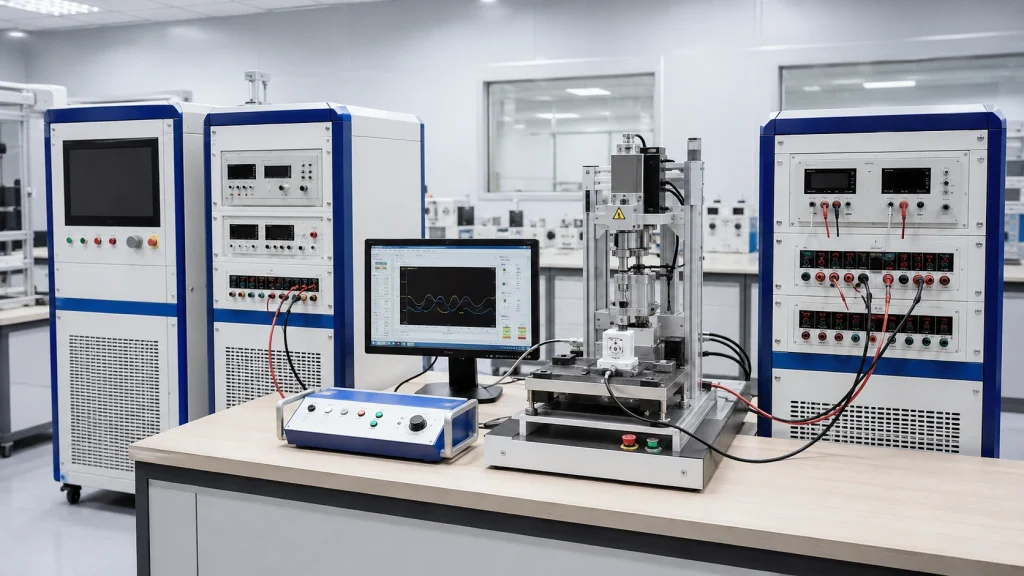
For laboratories and appliance manufacturers, this is not simply a matter of changing the standard edition shown on a test report. The complete test setup—including the power source, electrical load, operating mechanism, fixtures, protective circuit and measurement system—should be reviewed before support for the 2026 edition is claimed.
According to the IEC publication information, the new edition applies to switches or switching devices intended to control household appliances and similar equipment, with rated voltages not exceeding 600 V and rated currents not exceeding 63 A.
What Changed in IEC 61058-1:2026?
The IEC identifies the following significant technical changes in the fifth edition:
- The scope has been extended to 600 V.
- Ground-fuse requirements have been added to Clause 17.
- A DC arc extinction test has been added to Clause 17 and Annex P.
- Table 5 has been rearranged to align with switch classifications.
- Inconsistent values in Table 6 have been corrected.
- X3 capacitors have been removed from the relevant classification requirements and Table 19.
Important technical note:
These are the principal changes confirmed in the IEC publication information. Detailed test circuits, test conditions, procedures and acceptance criteria must be checked against the official IEC 61058-1:2026 text rather than inferred from the public summary.
These are the principal changes confirmed in the IEC publication information. Detailed test circuits, test conditions, procedures and acceptance criteria must be checked against the official IEC 61058-1:2026 text rather than inferred from the public summary.
1. The Scope Has Been Extended to 600 V
The previous edition covered appliance switches with rated voltages not exceeding 480 V. IEC 61058-1:2026 increases the upper limit to 600 V while retaining the maximum rated current of 63 A.
This does not mean that every switch must be tested at 600 V. Actual test conditions still depend on the rated voltage, rated current, switch classification, load characteristics and intended application of the device under test.
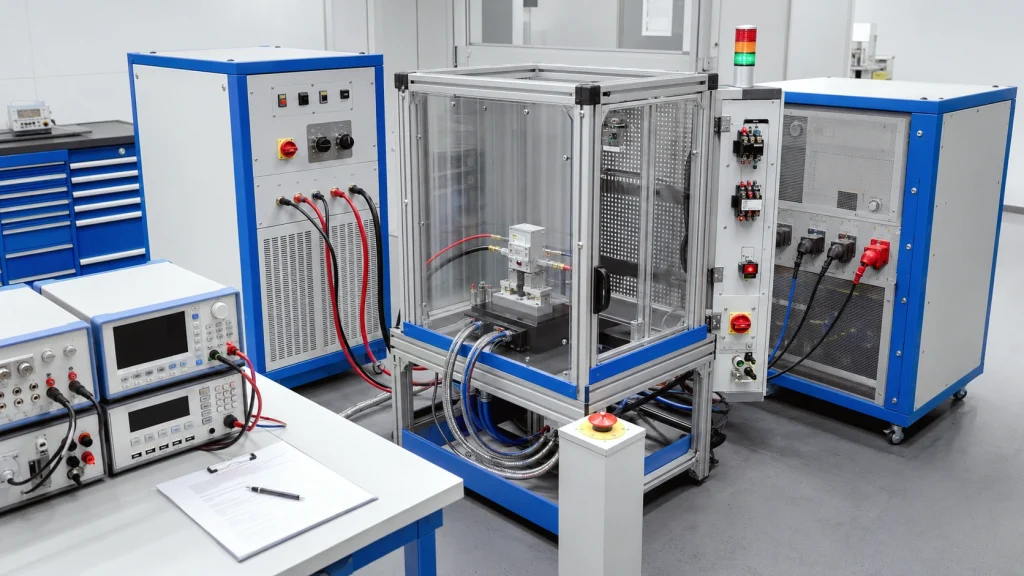
However, laboratories working with higher-voltage switching devices should review whether their existing test systems provide sufficient:
- Output voltage range
- Current and power capacity
- Electrical insulation
- Clearance and creepage distances
- Fixture and terminal ratings
- Load-circuit capability
- Measurement range
- Protective-device ratings
- Overall test-system safety margin
A test system originally designed around a maximum 480 V application should not automatically be described as supporting IEC 61058-1:2026 without a documented hardware and safety review.
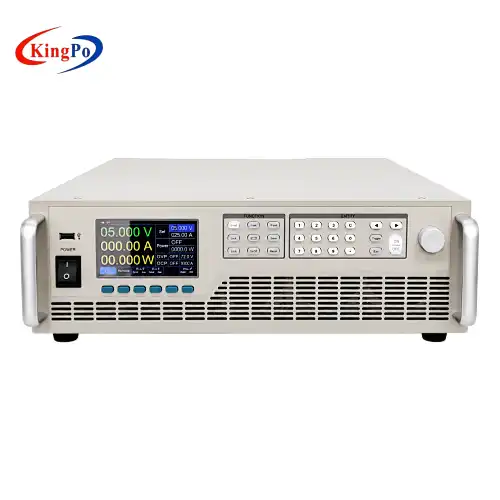
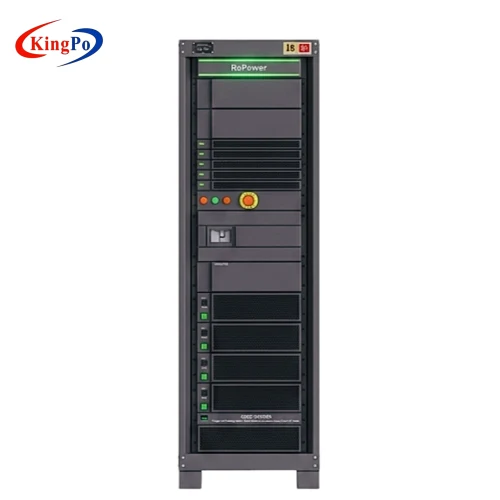
For projects requiring controlled voltage and frequency output, a suitable programmable AC power source may form part of the overall test system. Its capacity must still be selected according to the DUT rating, starting current, load characteristics and required test duration.
2. A DC Arc Extinction Test Has Been Added
One of the most consequential changes is the addition of a DC arc extinction test in Clause 17 and Annex P.
This matters because interrupting direct current presents different technical challenges from interrupting alternating current. An AC switch endurance or breaking-capacity system does not automatically provide the source, circuit arrangement, protection and measurement functions required for a DC arc test.
Laboratories preparing for the new edition may need to review:
- Controlled DC voltage and current output
- Required load characteristics
- Switching frequency and operating sequence
- DUT connection and fixture ratings
- Arc behavior or waveform observation
- Test interruption conditions
- Overcurrent and overvoltage protection
- Emergency shutdown functions
- Test-data recording
- Configuration traceability
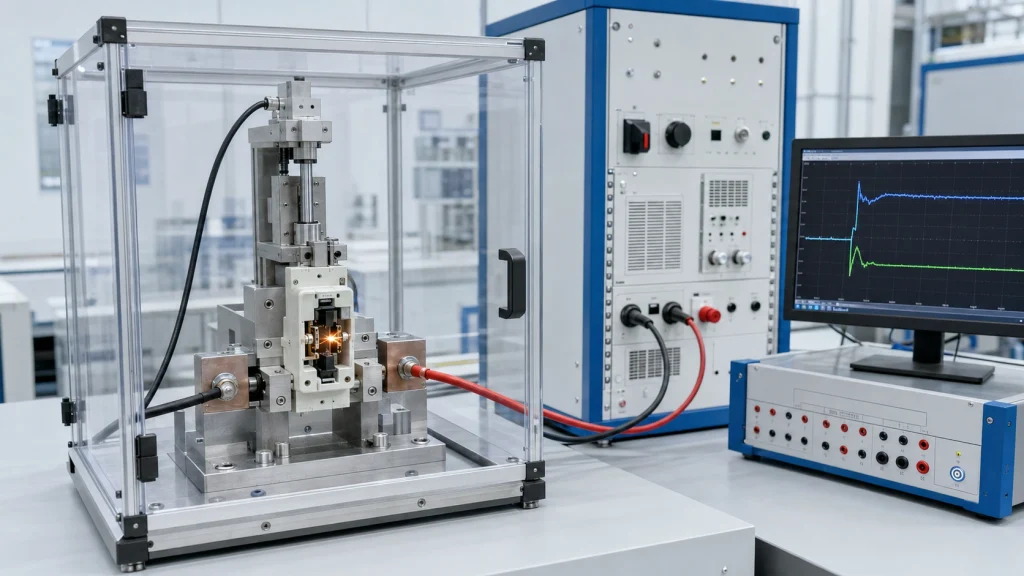
A programmable DC power supply can provide controlled DC output, but it is only one part of the test arrangement. The source, load circuit, actuator, DUT fixture, protection system and measurement equipment must work together as a coordinated test system.
The specific Annex P circuit and acceptance criteria must be taken from the official standard. A general-purpose DC source or switch endurance tester should not be described as Annex P compliant without technical verification.
3. Ground-Fuse Requirements Have Been Added
IEC 61058-1:2026 also introduces ground-fuse requirements in Clause 17. This may affect the protective arrangement, test circuit and sequence used during applicable switch tests.
Laboratories should evaluate the complete test circuit rather than treating this as a requirement to add a single fuse component. The review may need to cover:
- Fuse type and rating
- Grounding arrangement
- Source protection
- DUT connection
- Test wiring
- Fault-current behavior
- Shutdown logic
- Measurement and recording functions
4. Classification and Table Changes Require Document Review
The rearrangement of Table 5 and correction of values in Table 6 may not require major hardware changes in every laboratory. They may still affect how a switch is classified, how test conditions are selected and how results are documented.
Manufacturers, laboratories and certification organizations should review:
- Product classification records
- Test plans and laboratory worksheets
- Equipment configuration sheets
- Test report templates
- Product and equipment datasheets
- Declarations and compliance records
- Customer quotation specifications
Simply replacing “IEC 61058-1:2016” with “IEC 61058-1:2026” in a report template is not sufficient. The classification and test conditions selected from the revised tables should also be checked.
5. X3 Capacitors Have Been Removed
The fifth edition removes X3 capacitors from the relevant classification requirements and Table 19.
This change may affect component classification, test planning and technical documentation for electronic switch designs. Manufacturers should check whether existing test plans, component lists or compliance records still refer to the removed classification.
However, the deletion of X3 capacitors from the identified requirements should not be interpreted as the removal of every capacitor-related evaluation from appliance switch testing.
Does Existing Switch Test Equipment Need to Be Replaced?
Not necessarily.
Some systems may already provide sufficient voltage, current, DC output, actuation and measurement capability. Other systems may be upgradeable by modifying the power source, load circuit, fixtures, protection or control software.
The correct decision should be based on a technical gap assessment rather than the publication year alone.
Recommended Equipment Review
| Review Item | Information to Confirm |
|---|---|
| Applicable edition | Is the project based on the 2016 or 2026 edition? |
| Applicable clauses | Which clauses and annexes must be performed? |
| DUT type | What type of appliance switch is being evaluated? |
| Electrical rating | What are the rated voltage, rated current and switching category? |
| Supply type | Does the test require AC, DC or both? |
| Load characteristics | Is the load resistive, inductive, capacitive or specially defined? |
| DC arc testing | Is the applicable Annex P procedure required? |
| Mechanical operation | What force, torque, travel, speed and operating direction are required? |
| Test cycles | How many operations must be completed and recorded? |
| Protection | Are the grounding, fuse, interlock and emergency-stop arrangements suitable? |
| Measurement | Which voltage, current, timing or waveform parameters must be recorded? |
| Traceability | Can the test configuration, calibration status and results be documented? |
Why the Power Source Cannot Be Selected by Voltage Alone
A common equipment-selection error is to choose a power source only according to the rated voltage shown on the DUT.
The required power-source capacity may also depend on:
- Rated current
- Starting or inrush current
- Load power factor
- Phase configuration
- Permitted voltage drop
- Test duration
- Operating rate
- Number of simultaneous test stations
- Overload and transient requirements
For a broader explanation of these factors, see the KingPo guide on how to select programmable AC and DC power sources for product testing. The source should be selected together with the load system and switching mechanism. A source with sufficient open-circuit voltage may still be unsuitable if it cannot maintain the required current or withstand repeated switching transients.
Mechanical Operation Is Also Part of the Test System

Switch testing is not limited to applying an electrical load. The mechanical actuator must operate the DUT in a controlled and repeatable manner.
Depending on the switch structure, the operating system may need to control:
- Push, pull, rotary or rocker movement
- Operating direction
- Stroke or rotation angle
- Applied force or torque
- Movement speed
- Dwell time
- Operating frequency
- Return position
- Contact-failure detection
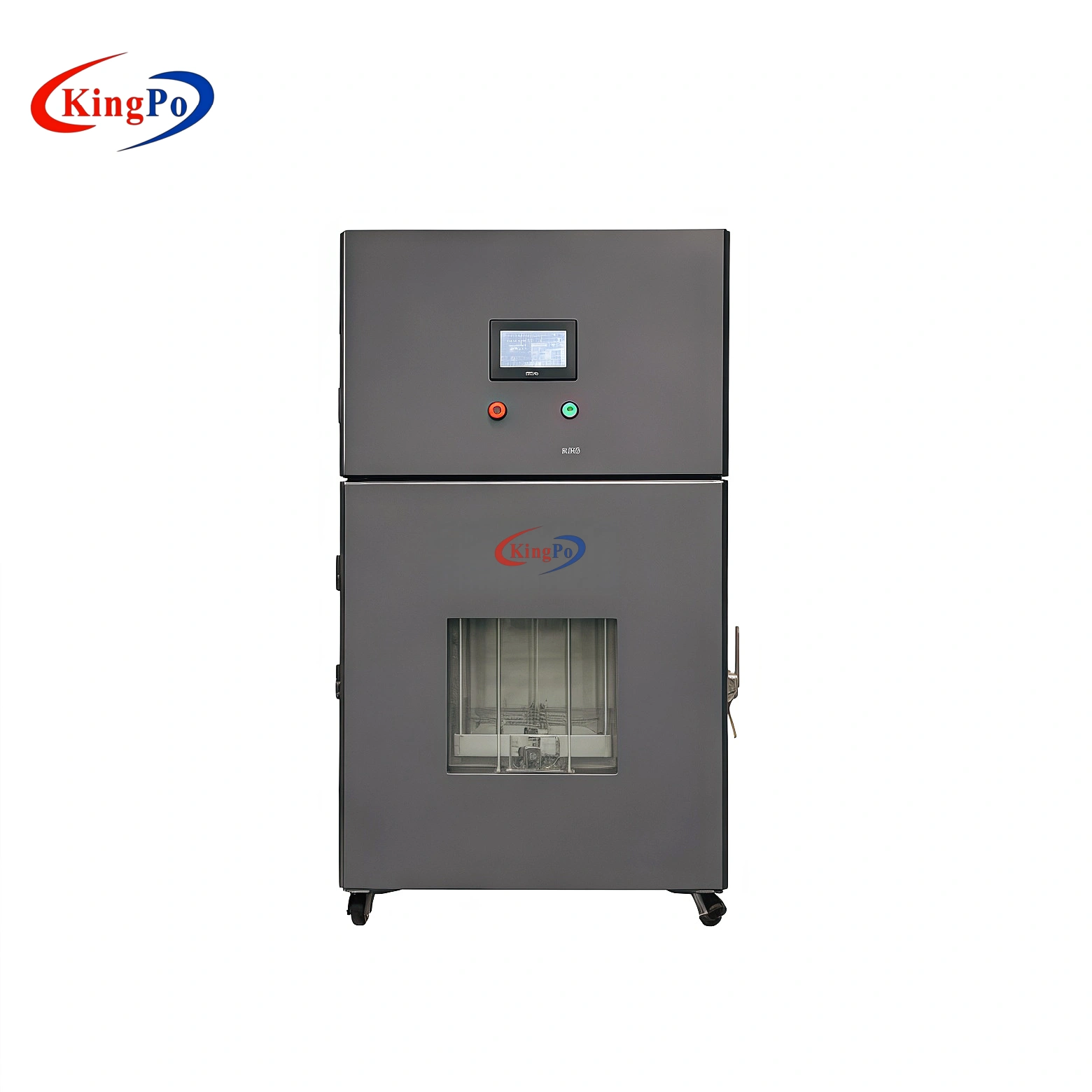
KingPo’s broader range of plug, socket and switch testing equipment includes systems for mechanical endurance, breaking capacity, temperature rise, insertion and withdrawal, and related test applications.
These products can provide useful technical references for fixture design, automated cycling and electrical-load integration. However, an IEC 60884-1 system should not automatically be presented as an IEC 61058-1:2026 test system. The applicable standard, DUT structure and required test circuit must be assessed separately.
KingPo Tailored Switch Testing Solutions
Appliance switches can vary significantly in rated voltage, current, pole configuration, contact structure, operating method, load type and required number of operations. For this reason, KingPo does not recommend selecting a test system from the standard number alone.
Based on the customer’s DUT, applicable clauses and laboratory requirements, KingPo can provide a matched testing solution that integrates the necessary electrical, mechanical, measurement, control and safety functions.
A matched system may include:
- AC or DC programmable power sources
- Resistive, inductive or capacitive load systems
- Mechanical operating mechanisms
- Customized DUT fixtures
- Single-station or multi-station configurations
- Cycle counting and test-sequence control
- Voltage and current monitoring
- Contact-failure detection
- Data acquisition and waveform observation interfaces
- Fuse and grounding arrangements
- Safety interlocks and emergency-stop protection
- PLC and touchscreen control
- PC software and test-report functions
Standalone Test Equipment
Suitable when the laboratory already has a compatible power source, load bank or measurement system and only requires a mechanical operating mechanism or dedicated DUT fixture.
Integrated Switch Test Systems
Suitable when the customer requires a coordinated system combining electrical supply, load control, mechanical operation, safety protection and data recording.
Customized Fixtures and Actuation
Suitable for switches with non-standard housings, unusual operating directions, limited mounting space or special force, stroke and torque requirements.
Automated Multi-Station Solutions
Suitable for repetitive endurance testing, comparative product evaluation or laboratories that need to test multiple samples under the same conditions.
KingPo’s electrical safety test equipment can also be combined with customized mechanical, electrical and control modules when a project includes additional appliance safety evaluations.
Final support for IEC 61058-1:2026, including the DC arc extinction procedure, must be confirmed according to the applicable clauses and the agreed project configuration.
Information Required for a Technical Proposal
To prepare a suitable system configuration, customers should provide as much of the following information as possible:
- Applicable standard and edition
- Required clauses or test methods
- DUT name and intended application
- Product drawings, photographs or samples
- Switch type and number of poles
- Rated voltage and rated current
- AC or DC operating mode
- Load characteristics
- Power factor, where applicable
- Operating force or torque
- Operating travel or rotation angle
- Required operating frequency
- Number of test cycles
- Number of simultaneous test stations
- Failure-detection requirements
- Measurement and recording requirements
- Communication interface
- Laboratory input power
- Available installation space
If the detailed standard clauses have not yet been confirmed, the customer can first provide the DUT specifications and intended certification market. KingPo can then help identify the main equipment-selection questions that should be clarified before the final system is specified.
Implications for Appliance and Switch Manufacturers
Publication of IEC 61058-1:2026 does not automatically invalidate every product evaluated under the previous edition.
Transition arrangements may depend on regional adoption, certification schemes, product categories, certification-body policies and the conditions of existing certificates.
Manufacturers should confirm:
- Which edition is required for the intended certification project.
- Whether an existing certificate remains valid during the transition period.
- Which technical changes apply to the specific switch design.
- Whether supplementary testing is required.
- Whether the existing laboratory setup can perform the applicable 2026 procedures.
The IEC publication date should not be treated as a universal regulatory enforcement date for every country or certification scheme.
How Should Test Equipment Datasheets Be Updated?
Test-equipment manufacturers should avoid changing the applicable-standard field from IEC 61058-1:2016 to IEC 61058-1:2026 without confirming the actual functions and limits of the equipment.
A useful datasheet should identify individual capabilities, including:
- Maximum AC test voltage
- Maximum DC test voltage
- Maximum test current
- Supported load types
- Number of test stations
- Operating force or torque
- Stroke or angular range
- Operating frequency
- Cycle-count range
- Fixture configuration
- Voltage and current measurement
- Failure-detection functions
- Waveform or arc-observation capability
- Safety protection
- Data export functions
- Applicable clauses
- Optional configurations
This gives laboratories more reliable information than a broad “fully compliant” statement and reduces the risk of selecting equipment that cannot reproduce the required test conditions.
KingPo’s complete testing equipment product range can be reviewed when a project requires additional power, electrical safety, mechanical endurance or customized laboratory equipment.
Frequently Asked Questions
Is IEC 61058-1:2026 officially published?
Yes. IEC 61058-1:2026 was published on July 30, 2026 as the fifth edition. It replaces IEC 61058-1:2016.
Does every switch now need to be tested at 600 V?
No. The standard now covers switches rated up to 600 V, but the applicable test voltage depends on the rating, classification and intended application of the individual switch.
What is the most important equipment-related change?
The addition of DC arc extinction testing is particularly important because an AC endurance tester does not necessarily provide the DC source, load circuit, protection or measurement functions required for the procedure.
Can a programmable DC power supply perform the complete Annex P test?
Not by itself. It may provide controlled DC output, but the complete system may also require a defined load circuit, operating mechanism, fixture, protection system and measurement equipment.
Can IEC 60884-1 plug and socket equipment be used?
Some mechanical, load or control functions may be technically relevant, but IEC 60884-1 equipment should not automatically be described as compliant with IEC 61058-1:2026. A clause-based technical assessment is required.
Must all existing switch testers be replaced?
No. Some systems may already be suitable, while others may be upgradeable. Their actual specifications should be compared with the applicable requirements of the 2026 edition.
Does KingPo provide customized switch test systems?
Yes. KingPo can develop a matched solution based on the DUT structure, rated electrical parameters, applicable clauses, load type, operating mechanism, test cycles, automation level and laboratory conditions.
What information should be submitted for configuration?
Provide the applicable standard, required clauses, DUT drawings, rated voltage and current, AC or DC operation, load type, operating force or torque, movement, operating frequency, number of cycles and required data-recording functions.
Conclusion
IEC 61058-1:2026 is more than an editorial update. The extension to 600 V, new ground-fuse requirements and addition of DC arc extinction testing can affect laboratory procedures and the configuration of switch testing systems.
However, the correct response is not to replace every existing tester or immediately update every product page with the new edition number.
Manufacturers and laboratories should first identify the requirements applicable to their switches. The power source, load circuit, mechanical actuator, fixtures, protection and measurement system should then be evaluated as one complete test configuration.
KingPo can provide matched standalone equipment, integrated systems and customized testing solutions based on the customer’s DUT and testing requirements. Support for individual IEC 61058-1:2026 procedures should be confirmed through a clause-based technical review before the final configuration is agreed.
Technical Inquiry and Configuration Support
Send us your applicable clauses, DUT voltage and current, AC or DC operating mode, load characteristics, operating requirements, cycle count and data-recording needs. KingPo will evaluate the required test-system configuration for your project.