Quick FAQ
What is a Dust Chamber used for? A Dust Test Chamber is used to simulate controlled dusty environments for testing the ingress protection of enclosures against dust particles.
What is the difference between IP5X and IP6X? IP5X allows limited dust ingress without affecting functionality, while IP6X ensures no dust penetration at all.
Why is IP testing important? IP testing verifies product durability in real-world conditions, ensuring compliance, reliability, and safety.
What standards govern IP5X and IP6X tests? These tests are primarily governed by the IEC 60529 Dust Test Standard.
Where can I find reliable dust testing equipment? Providers like KINGPO offer advanced IP5X IP6X Testing Equipment through their IP Testing Equipment category.
In today’s demanding environments, ensuring that your products can withstand dust and particulate ingress is crucial for reliability, safety, and compliance. IP testing, particularly IP5X and IP6X ratings, plays a pivotal role in evaluating how well enclosures protect against dust. But what exactly sets IP5X apart from IP6X? This guide delves deep into the nuances, procedures, standards, benefits, and applications of these tests, helping you understand their implications for product design and manufacturing. Whether you’re an engineer, quality assurance specialist, or product developer, grasping these differences can optimize your testing strategies and enhance product performance.
Key Takeaways
• IP5X testing allows for limited dust ingress that does not interfere with equipment operation, making it suitable for products in moderately dusty environments.
• IP6X testing ensures complete dust tightness, ideal for harsh conditions where no dust penetration is tolerable.
• Both tests follow IEC 60529 Dust Test Standard but differ in dust particle size tolerance, vacuum application, and acceptance criteria.
• Proper testing reduces product failures by up to 40%, enhances compliance, and supports market access in industries like electronics and automotive.
• Advanced IP5X IP6X Testing Equipment from providers like KINGPO ensures precise, repeatable results for both IP5X and IP6X evaluations.
• Understanding these differences helps in selecting the right protection level, balancing cost and performance.
IP Testing Overview
The Ingress Protection (IP) rating system, defined by the International Electrotechnical Commission (IEC) in standard IEC 60529, classifies the degree of protection provided by enclosures against solids and liquids. The first digit in the IP code indicates protection against solid objects, including dust, while the second digit covers liquids. For dust protection, the focus is on levels 5 and 6, denoted as IP5X and IP6X, where “X” can be replaced by a liquid protection digit if specified (e.g., IP65 or IP66).
Dust ingress can cause significant issues in electrical and mechanical devices, such as short circuits, overheating, corrosion, and mechanical wear. IP testing simulates real-world dusty conditions to verify enclosure integrity. Historically, IP ratings evolved from earlier standards like those from the National Electrical Manufacturers Association (NEMA) in the 1940s, but IEC 60529 Dust Test Standard, first published in 1976 and updated multiple times (latest in 2020), has become the global benchmark.
IP5X and IP6X tests specifically target fine dust particles, using talcum powder as a surrogate in controlled chambers like Dust Test Chamber or Sand and Dust Test Chamber. These tests are essential for products exposed to environments like construction sites, deserts, or industrial facilities. By comparing IP5X and IP6X, you can determine the appropriate level of protection needed, avoiding over-engineering or under-protection that could lead to failures or increased costs.
In practice, IP testing involves specialized chambers that circulate dust under controlled parameters, such as Environmental Test Chamber or Blowing Dust Chamber. Companies like KINGPO offer state-of-the-art IP Testing Equipment designed to meet these standards, ensuring accurate simulations and reliable outcomes.
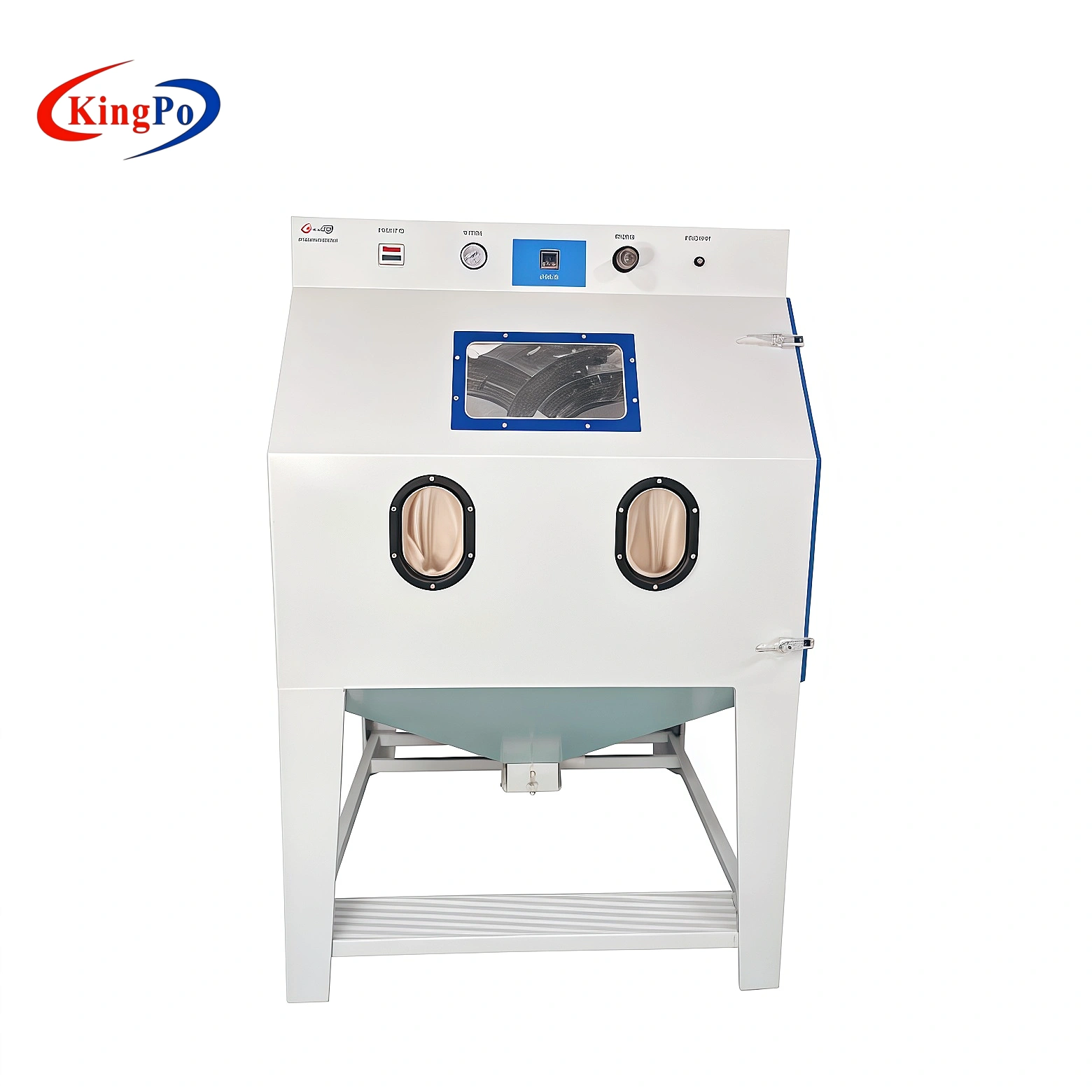
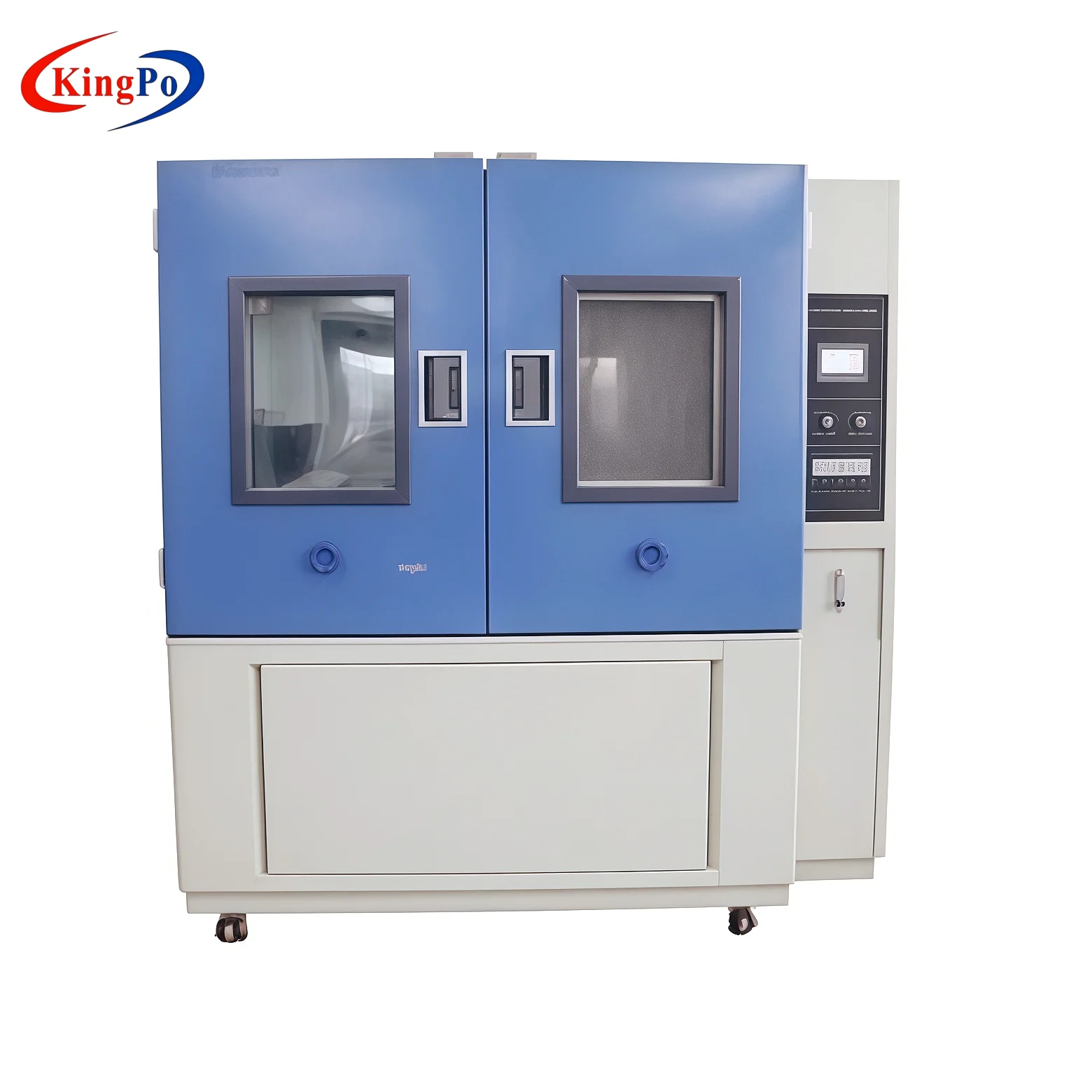
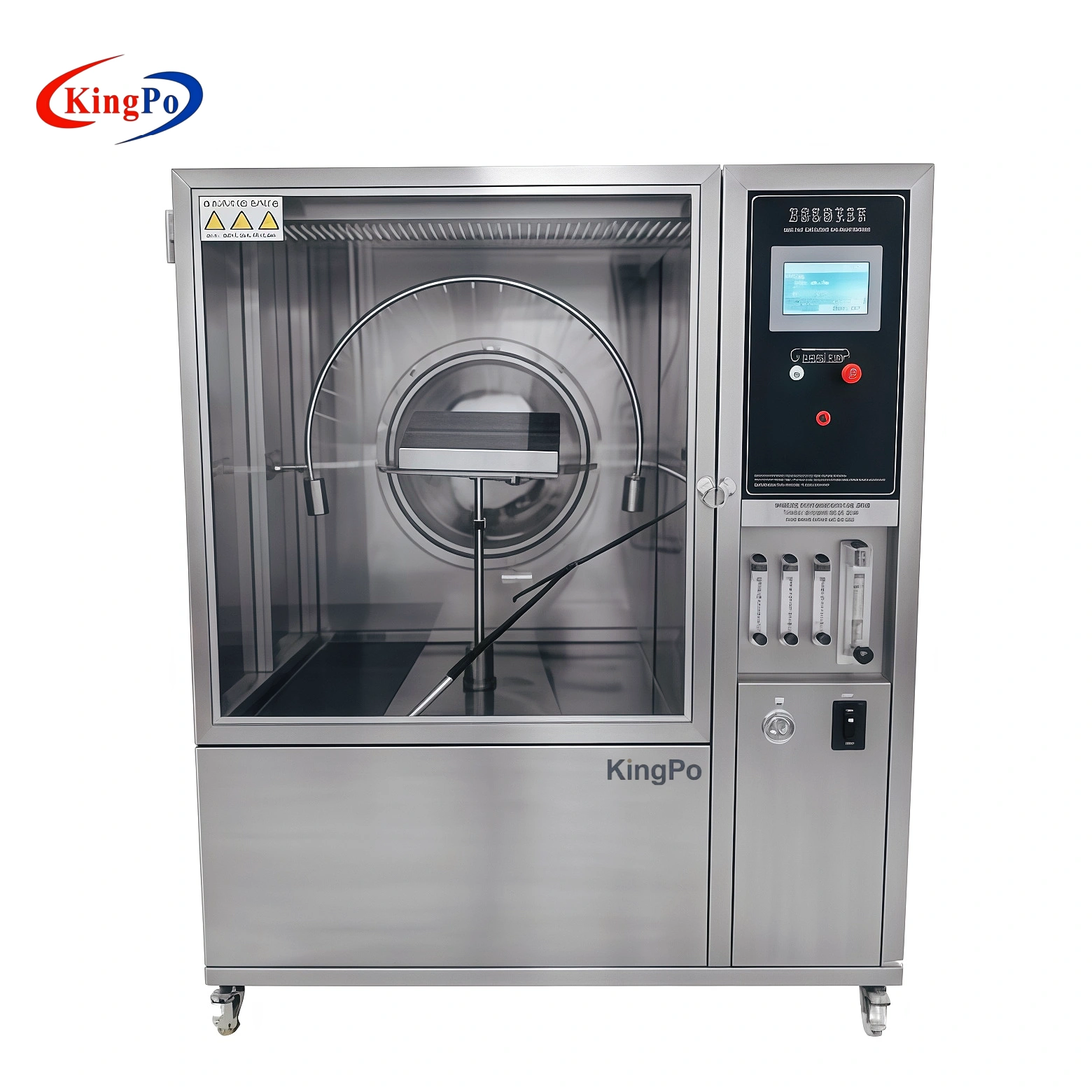
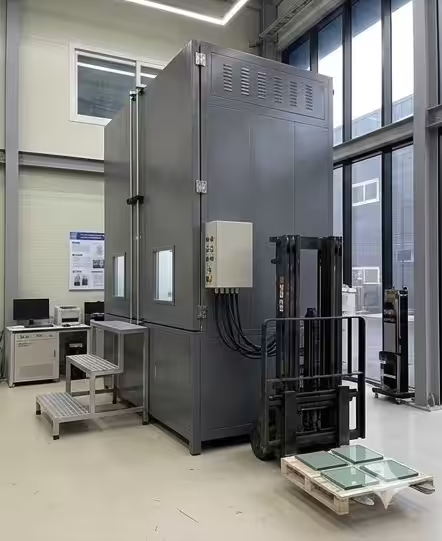
Here are some photos of KINGPO Dust Test Chamber:
What is IP5X Testing?
IP5X testing evaluates an enclosure’s ability to protect against dust ingress where limited penetration is acceptable, provided it does not impair the device’s functionality or safety. According to IEC 60529 Dust Test Standard, IP5X means “dust protected,” allowing dust to enter in quantities that won’t affect the equipment’s rated performance.
This rating is suitable for devices that operate in environments with occasional dust exposure, such as indoor industrial settings or consumer electronics like smartphones and laptops. The test uses fine talcum powder with particles up to 75 micrometers (μm) in diameter, which is circulated in a Dust Test Chamber to mimic airborne dust.
Key characteristics of IP5X:
- Dust Tolerance: Limited ingress permitted; no harmful accumulation inside the enclosure.
- Vacuum Application: Optional, but often used to simulate pressure differences that could draw dust in.
- Acceptance Criteria: After testing, the device must function normally, with no dust deposits on critical components like insulators or moving parts.
IP5X is less stringent than IP6X, making it a cost-effective choice for products not requiring absolute dust exclusion. For instance, in automotive applications, IP5X might suffice for dashboard components exposed to cabin dust but not extreme outdoor conditions, aligning with standards like SAE J575 Automotive Lighting Dust Test.
To conduct IP5X tests effectively, you need reliable equipment. KINGPO’s IP Testing Equipment includes IP5X IP6X Testing Equipment with precise airflow controls, ensuring compliance with IEC 60529 Dust Test Standard.
What is IP6X Testing?
In contrast, IP6X testing certifies an enclosure as “dust tight,” meaning it provides complete protection against dust ingress under any circumstances. Per IEC 60529 Dust Test Standard, no dust should penetrate the enclosure, even under prolonged exposure or pressure differentials.
This rating is critical for products in severe dusty environments, such as mining equipment, outdoor telecommunications gear, or military hardware. The test employs the same talcum powder (particles ≤75 μm) but with stricter conditions to ensure zero ingress, often using Sand and Dust Test Chamber for simulation.
Key characteristics of IP6X:
- Dust Tolerance: Zero ingress; absolute sealing required.
- Vacuum Application: Mandatory for certain enclosures (e.g., those with potential air leaks), simulating low-pressure scenarios like high altitudes.
- Acceptance Criteria: Post-test inspection must show no dust inside the enclosure whatsoever.
IP6X demands higher design standards, such as advanced gaskets, seals, and filters, which can increase manufacturing costs but provide superior longevity. For example, in aerospace, IP6X-rated components ensure reliability in sandy or dusty takeoff/landing zones, often tested under MIL-STD-810H Sand and Dust Testing.
Utilizing professional IP Testing Equipment from KINGPO allows for rigorous IP6X simulations, helping manufacturers achieve this elite protection level with Blowing Dust Chamber technology.
Key Differences Between IP5X and IP6X Testing
Understanding the distinctions between IP5X and IP6X is vital for selecting the right test. Below is a comparative table highlighting the main differences:
| Aspect | IP5X Testing | IP6X Testing |
|---|---|---|
| Protection Level | Dust protected (limited ingress) | Dust tight (no ingress) |
| Dust Particle Size | ≤75 μm (talcum powder) | ≤75 μm (talcum powder) |
| Ingress Tolerance | Limited dust allowed, no interference | Zero dust allowed |
| Vacuum Requirement | Optional (Category 2 enclosures) | Mandatory for Category 1 enclosures |
| Test Duration | Typically 8 hours | Up to 8 hours, with vacuum cycles |
| Acceptance Criteria | No harmful dust on critical parts | Absolutely no dust inside |
| Cost Implications | Lower design and testing costs | Higher due to stringent sealing |
| Applications | Moderate environments (e.g., indoors) | Harsh environments (e.g., outdoors) |
These differences stem from the IEC 60529 Dust Test Standard definitions: IP5X focuses on functional protection, while IP6X emphasizes total exclusion. Choosing between them depends on environmental exposure, regulatory requirements, and budget.
For precise comparisons, leveraging IP5X IP6X Testing Equipment can help simulate both scenarios side-by-side in an Environmental Test Chamber.
IP5X Testing Procedures
Conducting IP5X tests requires a systematic approach to ensure accurate results. Here’s a step-by-step guide:
Preparation and Setup
- Chamber Cleaning: Thoroughly clean the Dust Test Chamber to remove any residual particles from previous tests. Use compressed air and wipes to achieve a pristine environment.
- Specimen Preparation: Inspect the test sample (e.g., an electrical enclosure) for defects. Ensure it’s assembled as per final product specifications.
- Dust Selection: Use talcum powder sieved to ≤75 μm, with a concentration of 2 kg/m³ in the chamber, sometimes incorporating ASTM C150 Portland Cement Test Dust for specific simulations.
Parameter Setting
- Airflow and Circulation: Set the chamber to circulate dust at a velocity that prevents settling, typically 1-2 m/s.
- Temperature and Humidity: Maintain ambient conditions (15-35°C, <75% RH) unless specified otherwise.
- Vacuum (if applicable): For Category 2 enclosures, apply a partial vacuum of up to 2 kPa to simulate pressure drops.
Test Execution
- Place the specimen inside the Blowing Dust Chamber, ensuring even exposure.
- Activate dust circulation for the required duration (usually 2-8 hours, depending on enclosure size).
- Monitor parameters in real-time using sensors for airflow, dust density, and temperature.
Post-Test Analysis
- Remove the specimen and allow it to settle.
- Open and inspect internally for dust accumulation. Use magnification tools to check critical areas.
- Functional Test: Operate the device to verify no performance degradation.
Note: Always calibrate equipment before testing. KINGPO’s IP Testing Equipment features automated controls for seamless IP5X procedures in Sand and Dust Test Chamber.
This process ensures compliance and identifies design weaknesses early.
IP6X Testing Procedures
IP6X tests are more rigorous, demanding airtight conditions. Follow these detailed steps:
Preparation and Setup
Similar to IP5X, but with emphasis on sealing verification. Clean the Dust Test Chamber meticulously and prepare the specimen, ensuring all ports are as in production.
Parameter Setting
- Dust Concentration: 2 kg/m³ of ≤75 μm talcum powder, potentially using ASTM C150 Portland Cement Test Dust for enhanced realism.
- Vacuum Application: Essential for Category 1 enclosures; maintain 2-10 kPa vacuum to test seal integrity.
- Environmental Controls: Strict monitoring of temperature (20-30°C) and humidity (<50% RH) to prevent clumping.
Test Execution
- Position the specimen to expose all potential ingress points.
- Initiate dust circulation and vacuum cycles, running for 8 hours or until equilibrium in the Environmental Test Chamber.
- Use pressure gauges to ensure consistent vacuum levels.
Post-Test Analysis
- Carefully extract the specimen without disturbing potential dust.
- Disassemble and examine every internal surface—no dust particles should be visible.
- Conduct exhaustive functional and safety checks.
Tip: For complex enclosures, multiple orientations may be needed. Advanced IP5X IP6X Testing Equipment from KINGPO includes vacuum systems tailored for IP6X accuracy.
These procedures highlight the heightened scrutiny in IP6X, ensuring unparalleled protection.
Standards and Specifications for IP Dust Testing
Both IP5X and IP6X adhere to IEC 60529 Dust Test Standard, which outlines test methods, equipment requirements, and evaluation criteria. Complementary standards include:
- ISO 20653 Road Vehicles IP Code: Road vehicles—Degrees of protection (IP code).
- MIL-STD-810H Sand and Dust Testing: U.S. military environmental testing, incorporating dust methods.
- EN 60529: European adaptation of IEC.
- SAE J575 Automotive Lighting Dust Test: Specific for automotive lighting in dusty conditions.
Chamber specifications:
- Size: Scalable from 1m³ for small devices to larger for equipment.
- Features: Dust agitators, filters, vacuum pumps, and data logging in Sand and Dust Test Chamber.
- Safety: Interlocks, exhaust systems to prevent operator exposure.
Compliance requires certified labs or in-house setups like KINGPO’s IP Testing Equipment, which meet these specs, including support for ASTM C150 Portland Cement Test Dust.
Importance of IP5X and IP6X Testing
IP testing is vital for product longevity and safety. Dust can degrade performance, leading to recalls or failures. IP5X/IP6X ensures devices meet regulatory demands in global markets, like CE marking in Europe or UL standards in the U.S. It also mitigates risks in supply chains, where environmental factors vary.
By differentiating IP5X (practical protection) from IP6X (absolute), manufacturers align with specific needs, avoiding unnecessary costs, especially when using Blowing Dust Chamber for simulations.
Benefits of Conducting IP5X and IP6X Tests
Enhanced Product Reliability
Testing identifies vulnerabilities, reducing field failures by 30-50%. For IP6X, this means zero-dust environments extend component life.
Cost Savings
Early detection prevents redesigns; IP5X offers economical protection for non-critical apps.
Regulatory Compliance
Achieves certifications, facilitating international trade under standards like ISO 20653 Road Vehicles IP Code.
Market Advantage
IP-rated products appeal to quality-conscious consumers.
KINGPO’s IP Testing Equipment maximizes these benefits with efficient IP5X IP6X Testing Equipment.
Industry Applications
Electronics
IP5X for consumer gadgets; IP6X for industrial sensors.
Automotive
IP5X for interior parts; IP6X for under-hood components in off-road vehicles, compliant with SAE J575 Automotive Lighting Dust Test and ISO 20653 Road Vehicles IP Code.
Aerospace and Defense
Primarily IP6X for avionic enclosures in dusty terrains, following MIL-STD-810H Sand and Dust Testing.
Medical Devices
IP5X/IP6X ensures sterile operation in hospitals.
Industrial Equipment
IP6X for machinery in factories with airborne particulates, using Environmental Test Chamber.
Challenges in IP Dust Testing and How to Overcome Them
Challenges include:
- Simulation Accuracy: Real dust varies; use standardized talcum or ASTM C150 Portland Cement Test Dust.
- Equipment Maintenance: Regular calibration prevents errors in Dust Test Chamber.
- Cost and Time: Optimize with automated IP5X IP6X Testing Equipment.
- Interpretation of Results: Train staff on IEC 60529 Dust Test Standard criteria.
Improvements: Integrate AI monitoring for real-time adjustments in Sand and Dust Test Chamber.
FAQ
What is the main difference between IP5X and IP6X? IP5X allows limited dust, while IP6X permits none.
How long do these tests take? Typically 8 hours, but varies by enclosure size in Blowing Dust Chamber.
Do I need special equipment? Yes, dust chambers like those in KINGPO’s IP Testing Equipment.
Can IP5X products be upgraded to IP6X? Often yes, with better seals, but retesting is required under IEC 60529 Dust Test Standard.
What industries require IP6X? Harsh ones like mining and military, often using MIL-STD-810H Sand and Dust Testing.
How does vacuum affect testing? It simulates pressure differences, crucial for IP6X in Environmental Test Chamber.
Is IEC 60529 the only standard? No, but it’s primary; others like ISO 20653 Road Vehicles IP Code complement it.
What if dust enters during IP5X? As long as it doesn’t harm function, it passes.
How to choose between IP5X and IP6X? Based on environment and cost-benefit analysis, considering SAE J575 Automotive Lighting Dust Test.
Where can I get reliable testing equipment? From providers like KINGPO, via their IP Testing Equipment category, including Dust Test Chamber and IP5X IP6X Testing Equipment.
This comprehensive guide equips you with the knowledge to differentiate and apply IP5X and IP6X testing effectively. For tailored solutions, explore KINGPO’s IP Testing Equipment today and ensure your products meet the highest standards.