You rely on dust chamber testing to assess how products withstand dust exposure in controlled environments. This process helps you verify product durability and ensures compliance with international standards. Dust Chamber and Dust Test Chamber simulate challenging conditions, letting you evaluate performance before market release. KINGPO’s advanced IP Testing Equipment delivers precise results, supporting your efforts to meet regulatory requirements and boost reliability.
Key Takeaways
-
Dust chamber testing evaluates how products withstand dust exposure, ensuring durability and compliance with international standards.
-
Proper preparation and cleaning of the dust test chamber are crucial for accurate results; always start with a clean environment.
-
Correct specimen placement in the chamber ensures uniform dust exposure, leading to reliable and reproducible test results.
-
Setting the right parameters, such as dust type and airflow, is essential for simulating real-world conditions during testing.
-
Monitoring conditions throughout the test helps identify issues early, ensuring the accuracy and reliability of results.
-
Dust chamber testing supports compliance with industry standards like IEC 60529, which is vital for product certification.
-
Using dustproof test chambers reduces the risk of product failure by identifying weaknesses before market release.
-
Continuous improvement of testing procedures enhances product reliability and helps manufacturers stay competitive.
Dust Chamber Testing Overview
Dust Test Chamber Definition
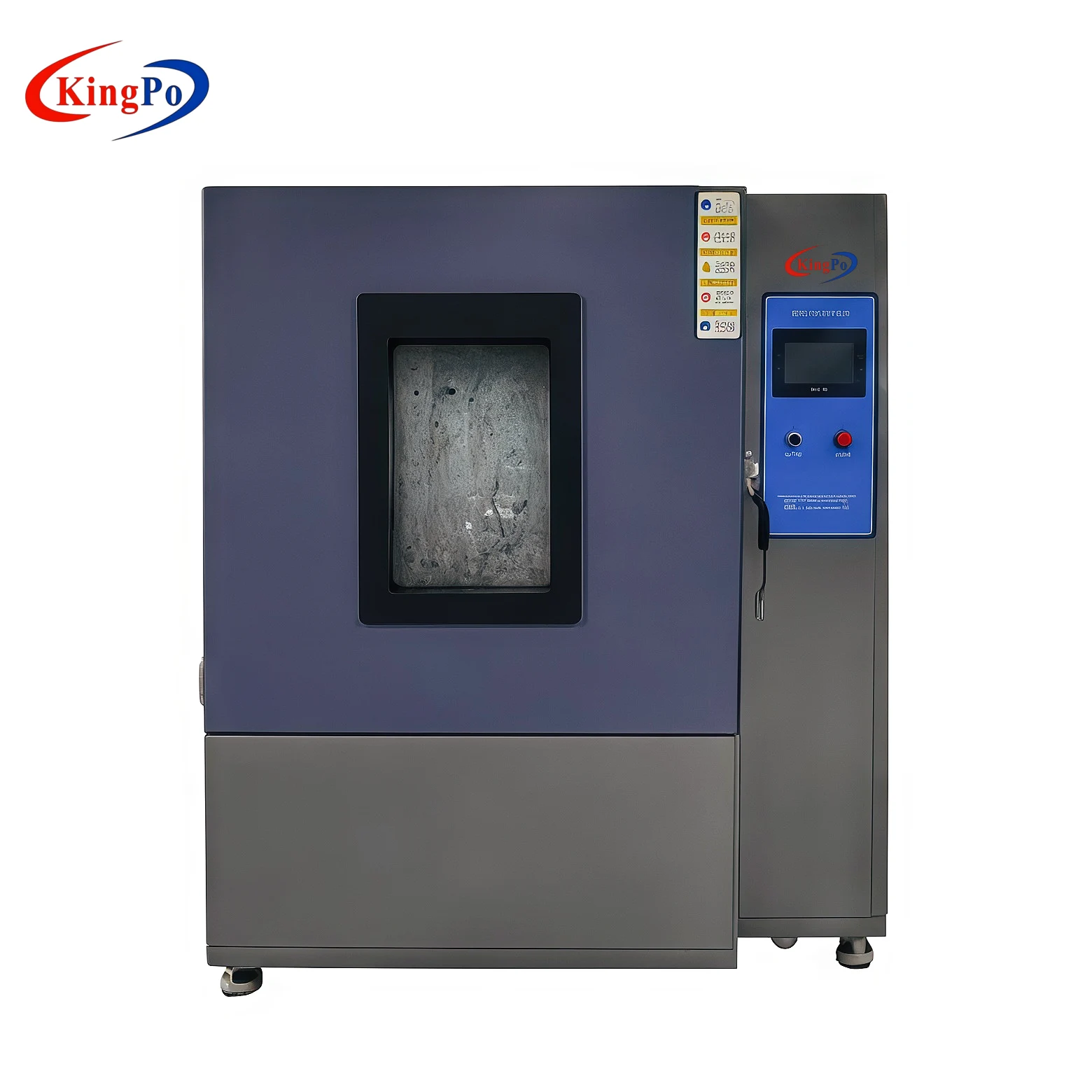
You use a dust test chamber to evaluate how products perform when exposed to dust in a controlled setting. This equipment helps you simulate harsh environments, allowing you to assess the durability and reliability of items before they reach the market. Dust chamber testing ensures that products meet international standards for dust resistance, which is critical for industries like electronics, automotive, and aerospace. Over time, dustproof test chamber technology has evolved from basic manual methods to sophisticated systems that deliver precise and repeatable results.
Note: Modern dustproof test chambers play a vital role in product development by providing accurate data on dust resistance.
Working Principle
A dust test chamber operates by recreating real-world dusty conditions. You can control variables such as dust type, airflow, temperature, and humidity to match specific environments. The chamber’s design allows you to monitor and analyze how dust interacts with the product, helping you identify potential weaknesses.
Dust Introduction
You introduce dust into the chamber using specialized mechanisms. Early methods involved simple actions like blowing dust onto samples, but today’s dustproof test chambers use automated systems to disperse dust evenly. This ensures consistent exposure and reliable results.
Environmental Control
You manage temperature and humidity inside the dust test chamber to simulate various climates. For example, you can replicate desert heat or humid industrial settings. This level of control allows you to test products under conditions they may encounter during actual use.
-
Temperature and Humidity Control: Dust test chambers maintain precise environmental settings, enabling accurate simulation of different climates.
-
Testing Standards and Criteria: You follow standards such as IEC 60529 to ensure reliable dust testing and compliance.
-
Applications Across Industries: Dustproof test chambers are essential in electronics, automotive, HVAC, and military sectors.
Collection System
You rely on a collection system to capture dust particles after testing. This system helps you measure the amount of dust that penetrates or accumulates on the product. By analyzing these results, you can determine the effectiveness of dustproof features and make improvements if necessary.
|
Year |
Development |
Description |
|---|---|---|
|
1938 |
Greenwald’s Research |
Early studies on dust dispersibility by the U.S. Bureau of Mines. |
|
1952 |
Dawes’ Studies |
Research on coal and rock dust dispersibility in England. |
|
1975 |
Cybulski’s Research |
Optical detection techniques for assessing dust dispersibility in Poland. |
|
2011 |
U.S. Navy Contract |
Initial contract awarded for dust chamber testing, leading to advancements in military testing capabilities. |
|
2013 |
Sources Sought RFI |
Pivotal in selecting Air Dynamics for advanced dust chamber systems. |
You see that dust chamber testing procedures differ across industries. In electronics, you test functionality and longevity. Automotive and aerospace sectors focus on durability of components like air filters and sensors. HVAC systems require assessment of filter effectiveness, while military equipment demands reliability in severe conditions. Dustproof test chambers help you ensure products meet market standards for dust resistance.
Dust Chamber Testing Procedures
Preparation and Cleaning
You begin dust chamber testing by preparing both the chamber and your test samples. Cleanliness is essential to prevent dust contamination from previous tests. You must ensure that the dustproof test chamber is free from residual particles and that all surfaces are wiped down. Proper sealing and positioning of the chamber components help maintain controlled conditions throughout the test. The following table outlines the standard preparation and cleaning steps:
|
Step |
Description |
|---|---|
|
Preparation |
Clean the chamber and test samples, ensuring proper sealing and positioning. |
A clean environment reduces the risk of inaccurate results due to leftover dust or other contaminants. This step supports the integrity of dust resistance testing and helps you achieve reliable data.
Specimen Placement
You must place your specimens inside the dust test chamber with care. Correct positioning prevents local obstruction and ensures that dust exposure is uniform. Proper installation leads to reproducible results and accurate evaluation of product durability. Follow these best practices for specimen placement:
-
Position each product to avoid blocking airflow or dust distribution.
-
Install specimens securely to prevent movement during testing.
-
Arrange items to allow for controlled dust exposure and even airflow.
Uniform specimen placement is critical for dustproof test chamber performance. You can trust that your results reflect true product reliability when you follow these guidelines.
Parameter Setting
You set the parameters of the dustproof testing machine to match the requirements of your specific test. Adjusting these variables allows you to simulate real-world conditions and evaluate how your products respond to dust contamination.
Dust Type
Select the appropriate dust material for your test. Most dust chamber testing uses dry, sieved talcum powder or Arizona Test Dust. These materials provide consistent particle size and composition, which is essential for repeatable dust testing.
Airflow and Duration
Set the airflow velocity and test duration according to the standards for your product. For example, airflow velocity should not exceed 2 meters per second. The dust concentration typically ranges from 2 to 5 kilograms per cubic meter, with 2 to 4 kilograms per cubic meter used for common dust test grades like IP5X and IP6X. The following table summarizes standard parameter settings:
|
Parameter |
Value |
|---|---|
|
Dust Material |
Dry, sieved talcum powder (or equivalent Arizona Test Dust) |
|
Dust Concentration |
2-5 kg/m³ (adjustable) |
|
Airflow Velocity |
≤ 2 m/s |
|
Standard Test Range |
2-4 kg/m³ for IP6X/IP5X tests |
You control the duration of dust exposure based on the product’s intended use and the relevant standards. This approach ensures that dustproof test chamber results are meaningful and applicable to real-world scenarios.
Temperature and Humidity
You adjust temperature and humidity settings to replicate the environmental conditions your product may face. For example, you might simulate a hot, dry desert or a humid industrial site. Maintaining precise control over these variables helps you understand how temperature and humidity affect dust contamination and product durability.
Vacuum Setting
Some dust chamber testing procedures require a vacuum setting. You use this feature to simulate pressure differences that can draw dust into enclosures or sealed components. By adjusting the vacuum, you can evaluate how well your product resists dust ingress under challenging conditions.
Tip: Always document your parameter settings before starting the test. This practice supports traceability and helps you answer questions about how does the dust chamber work or how does the dust chamber remove dust during analysis.
By following these procedures, you ensure that your dustproof test chamber delivers accurate, repeatable results. This process supports product reliability and helps you meet industry standards for dust resistance.
Test Execution
You start the test execution phase by confirming that all parameters match your requirements. You calibrate the dust chamber equipment to guarantee consistent conditions. You check the specimen placement to ensure even dust exposure. You configure airflow, temperature, and duration according to industry standards. You activate the chamber and begin the dust introduction process.
During the test, you monitor real-time conditions. You watch for any irregularities in airflow or dust distribution. You address issues immediately to prevent inaccurate results. You maintain strict control over the environment to avoid external contamination. You follow these best practices to achieve repeatability and reliability:
-
Calibrate the dust chamber before each test.
-
Set up specimens for uniform dust exposure.
-
Configure parameters based on relevant standards.
-
Monitor conditions throughout the test.
-
Respond quickly to any deviations.
-
Prevent contamination from outside sources.
Note: Consistent execution ensures that your dust chamber testing delivers reliable and repeatable results.
Monitoring and Analysis
You observe the test closely, using sensors and visual checks to track dust movement and environmental conditions. You record data at regular intervals. You inspect the specimens for signs of dust ingress or damage. You document every observation to support traceability.
After the test, you conduct a thorough evaluation. You measure the amount of dust that penetrated the product. You check for functional changes or failures. You compare results against standards to determine compliance. You record all findings in a detailed report.
You use this analysis to identify weaknesses and improve product design. You rely on accurate monitoring and analysis to ensure your products meet dust resistance requirements. You support ongoing quality improvement by sharing results with your team.
Tip: Careful monitoring and detailed analysis help you detect issues early and refine your testing procedures for future tests.
Dust Test Chamber Standards
International Ratings (IP5X, IP6X)
You need to understand the international ratings that define dust protection for your products. The most recognized system is the Ingress Protection (IP) rating, which classifies the degree of protection against solid objects, including dust. The first digit in the IP code shows the level of protection against solid particles. Here are the two most common dust-related ratings:
-
IP5X (Dust Protected): Dust ingress is not entirely prevented, but it does not interfere with the equipment’s operation. Your product can function reliably even if some dust enters.
-
IP6X (Dust Tight): No dust can enter the enclosure under specified test conditions. This rating ensures complete protection for sensitive components.
To achieve these ratings, you place the test specimen in a chamber with fine talcum powder. The powder circulates through controlled air currents for a set duration, often 2, 4, or 8 hours. The chamber maintains a consistent dust concentration and may use a vacuum pump to create a pressure differential. These procedures help you verify that your product meets the required level of dust resistance.
Compliance Requirements
You must meet strict compliance requirements when certifying products for dust resistance. Several international standards guide these processes:
-
IEC 60529: Defines levels of protection against dust and water. This standard is crucial for product certification across many industries.
-
ISO 20653: Focuses on dust resistance for electrical equipment, especially in the automotive sector.
-
MIL-STD-810G: Outlines testing methods for military-grade equipment, ensuring durability against dust in harsh environments.
To comply with these standards, you need to follow specific steps:
-
Testing Cycle Management: Expose your product to continuous dust for up to eight hours under controlled conditions.
-
Specimen Installation: Position each test specimen correctly to ensure accurate and uniform dust exposure.
-
Monitoring and Documentation: Track all testing parameters and document results thoroughly for compliance verification.
Note: Careful adherence to these requirements supports successful product certification and market acceptance.
Chamber Specifications
You should select dust test chambers that meet industry standards and offer reliable performance. The following table summarizes key specifications you should look for:
|
Specification Type |
Description |
|---|---|
|
ISO 14644 |
Guidelines for controlling contamination in cleanrooms, including airborne particle measurement. |
|
IP5X |
Dust Protected: Dust ingress does not interfere with operation. |
|
IP6X |
Dust Tight: No dust enters under test conditions. |
|
MIL-STD-810G |
Methods for sand and dust testing, such as Method 510.5. |
|
Particle Size Control |
Ability to generate and maintain specific particle sizes as required by standards. |
|
Humidity & Temp Regulation |
Integrated controls for precise environmental simulation. |
|
Automated Test Cycles |
Programmable cycles for consistent, repeatable testing. |
|
Calibration & Maintenance |
Regular calibration and maintenance for compliance and reliability. |
Construction Features
You benefit from chambers with robust construction. High-quality materials resist corrosion and wear. Sealed doors and reinforced windows prevent dust leakage. Modular designs allow easy cleaning and maintenance. These features ensure your chamber delivers consistent results over time.
Safety Mechanisms
You must prioritize safety during dust testing. Reliable chambers include emergency stop buttons, overpressure relief valves, and interlock systems. These mechanisms protect both your personnel and your equipment. Automated monitoring systems alert you to any irregularities, helping you maintain a safe testing environment.
Dustproof Test Chamber Benefits
Product Reliability
You depend on dustproof test chambers to enhance product reliability. These chambers allow you to simulate harsh environments and observe how your products respond to dust exposure. You gain valuable insights into performance and longevity. When you subject products to dust chamber testing, you see a noticeable improvement in their ability to withstand real-world conditions. You can identify weaknesses early and make design adjustments before mass production.
The following table highlights recent findings from case studies on dust chamber testing:
|
Evidence Type |
Description |
|---|---|
|
Performance Improvement |
Products subjected to dust tests show improved performance and longevity, with failure rates decreasing by up to 30%. |
|
Airflow System Efficiency |
Even airflow can enhance reliability of test results by 30%, allowing for versatile testing conditions. |
|
Thermal Management Importance |
Effective thermal control can predict product longevity and durability under adverse conditions. |
You use these results to inform your design process and ensure your products meet customer expectations. You build confidence in your product reliability by relying on dust chamber testing.
Failure Reduction
You reduce the risk of product failure by using dustproof test chambers. Early testing helps you identify potential failure modes and address them before products reach the market. You can modify designs based on test outcomes and prevent costly recalls or warranty claims. Accelerated testing reveals how dust affects sensitive components, allowing you to make informed decisions.
You benefit from a systematic approach to failure reduction. You monitor products for signs of dust ingress, corrosion, or malfunction. You document every observation and use this data to refine your manufacturing process. You see fewer defects and improved customer satisfaction.
|
Benefit |
Description |
|---|---|
|
Failure Mode Identification |
Accelerated testing reveals potential failure mechanisms, allowing for design modifications before mass production. |
|
Enhanced Product Performance |
Insights from dust testing lead to informed design decisions, improving product performance in dusty conditions. |
You achieve greater durability and reliability by addressing issues early. You minimize downtime and maximize operational efficiency.
Risk Mitigation
You mitigate risks associated with environmental exposure by implementing dust chamber testing. Early detection of vulnerabilities saves you time and money. You anticipate and resolve issues before they escalate into costly failures. You protect your reputation and maintain compliance with industry standards.
You gain several benefits from risk mitigation strategies:
|
Benefit |
Description |
|---|---|
|
Cost Reduction |
Early dust testing helps anticipate and resolve issues, reducing costs related to recalls and claims. |
|
Risk Mitigation |
Identifying and addressing potential issues early in development saves time and money. |
You use dust chamber testing to safeguard your products against unpredictable conditions. You ensure that your products deliver consistent performance and durability in demanding environments.
Tip: You can strengthen your quality assurance program by integrating dust chamber testing into your development cycle.
Compliance Support
You depend on dustproof test chambers to help you meet strict regulatory and industry standards. These chambers provide a controlled environment where you can verify dust ingress protection for your products. You gain confidence that your products comply with international requirements such as IEC 60529, which defines protection ratings like IP5X and IP6X. You use standardized testing procedures to demonstrate that your products withstand real-world dust exposure.
Dustproof test chambers play a crucial role in supporting compliance. You simulate dusty conditions that match those found in actual environments. You collect reliable data that supports your product claims and satisfies regulatory bodies. You avoid costly delays and rework by confirming compliance early in the development process.
Manufacturers and laboratories benefit from dustproof test chambers in several ways:
-
You replicate real-world dusty conditions to ensure your products meet industry standards.
-
You use these chambers to validate product performance and durability.
-
You streamline certification processes by providing clear, repeatable test results.
-
You reduce the risk of non-compliance and associated penalties.
The following table highlights how dust test chambers support compliance with regulatory and industry standards:
|
Evidence Description |
Relevance to Compliance Support |
|---|---|
|
Dust test chambers enable standardized testing for dust ingress protection as defined by IEC 60529. |
Ensures products meet specific protection ratings (IP5X and IP6X) critical for various applications. |
|
These chambers simulate real-world dust exposure scenarios. |
Provides reliable data to support product claims and ensure compliance with industry regulations. |
You strengthen product reliability by using dustproof test chambers to verify compliance. You build trust with customers and regulatory agencies. You demonstrate your commitment to quality and safety. You enjoy the benefits of faster certification, improved market access, and reduced risk.
Tip: You can enhance your compliance strategy by integrating dustproof test chamber results into your quality management system.
Industry Applications

Electronics
You rely on dustproof test chambers to verify the durability of electronic devices in dusty environments. These chambers help you simulate real-world conditions, allowing you to assess how dust affects sensitive components. You can test a wide range of products, ensuring that each device maintains performance and reliability after exposure to dust. Common applications include:
-
Electric fans
-
Air conditioners
-
Smartphones
-
Watches
-
Water meters
-
Communication devices
-
Outdoor cameras
You use dust chamber testing to identify weaknesses in seals, enclosures, and circuit boards. This process helps you improve product design and reduce the risk of malfunction. You gain confidence that your electronics will operate reliably, even in challenging conditions.
Tip: Dustproof test chambers support compliance with international standards, helping you meet market requirements and customer expectations.
Automotive
You depend on dust test chambers to ensure the durability of vehicle components. Automotive manufacturers use these chambers to simulate extreme environments filled with dust and particulates. You can identify potential failure points in sensors, control units, and other critical parts. This testing process allows you to optimize material selection, seal thickness, and enclosure design.
You conduct dust chamber testing during the research and development phase. You test prototypes and refine designs to enhance dust resistance. You ensure that your products comply with international reliability standards, such as ISO 20653. This standard addresses the protection of electrical equipment from environmental factors like dust. You focus on components that must function reliably in harsh conditions, including sensors and control units.
You benefit from dust chamber testing by reducing the risk of product failure and improving overall vehicle performance. You build trust with customers by delivering durable, high-quality vehicles.
Note: Dust chamber testing helps you meet industry standards and maintain a competitive edge in the automotive market.
Aerospace and Defense
You use dust chamber testing to qualify products for aerospace and defense applications. These tests ensure that electronic enclosures resist dust infiltration and maintain integrity during flight cycles. You assess sensor functionality in environments with low visibility due to dust. You evaluate material tolerance over extended flight cycles, confirming that components withstand harsh conditions.
-
Ensures the integrity of electronic enclosures against dust infiltration
-
Tests sensor functionality in environments with low visibility due to dust
-
Assesses material tolerance over extended flight cycles
You also evaluate military-grade equipment, such as communication devices and vehicles, under severe conditions. You confirm that protective gear can withstand harsh environments before deployment.
-
Evaluates military-grade equipment like communication devices and vehicles under severe conditions
-
Ensures protective gear can withstand harsh environments before deployment
You rely on dust chamber testing to support mission-critical reliability and safety. You ensure that aerospace and defense products meet stringent requirements for performance and durability.
Alert: Dust chamber testing is essential for qualifying products used in demanding aerospace and defense environments.
Industrial Equipment
You depend on dust chamber testing to verify the durability and reliability of industrial equipment. This process allows you to simulate dusty environments that industrial machinery faces every day. You gain valuable insights into how dust affects performance, safety, and maintenance needs. Manufacturers use dustproof test chambers to identify weaknesses and improve product designs before releasing them to the market.
You see dust chamber testing applied across a wide range of industrial equipment:
-
Electronics and electrical devices, including control panels and sensors
-
Heavy machinery used in construction and manufacturing
-
HVAC and air filtration systems that maintain air quality in factories
-
Consumer goods and appliances designed for industrial settings
-
Military and defense equipment, such as vehicles and communication devices
You test electronics and electrical equipment to ensure they withstand dust exposure. You evaluate heavy machinery for operational reliability in harsh environments. You assess HVAC and air filtration systems for their ability to capture dust particles and maintain clean air. You check consumer goods and appliances for durability during regular use. You rely on dust chamber testing to confirm that military and defense equipment performs reliably in severe conditions.
Dust chamber testing enhances operational reliability by allowing you to simulate real-world dusty environments. You identify vulnerabilities in products and address them early in the design process. You improve sealing technologies and material selection to prevent dust ingress. You ensure compliance with industry standards, which helps you avoid costly failures and downtime.
You benefit from dust chamber testing in several ways. You reduce maintenance needs by designing equipment that resists dust accumulation. You extend the lifespan of machinery by preventing dust-related wear and tear. You improve safety by ensuring that critical components function properly in challenging conditions. You build confidence in your products by demonstrating their ability to perform reliably in dusty environments.
Tip: You can use dust chamber testing to support quality assurance programs and streamline certification processes for industrial equipment.
You recognize that dust chamber testing is essential for maintaining operational reliability and meeting customer expectations. You use this testing to deliver durable, high-performance products that stand up to the demands of industrial environments.
Challenges and Improvement
Simulation Limitations
You face several challenges when using dust chamber testing to simulate real-world conditions. Dust test chambers provide controlled environments, but they cannot always replicate every aspect of actual field exposure. Some of the main limitations include:
-
Dust chambers may not perfectly mimic the complexity of outdoor or industrial environments.
-
Humidity and temperature fluctuations are not always fully controlled during testing.
-
You may encounter differences between laboratory results and real-world product performance.
These limitations highlight the need for ongoing research and development. You must recognize that while dust chamber testing is essential for compliance and reliability, it does not replace field testing. Companies often discover that materials behave differently in practice, which may require design adjustments after testing.
Note: Dust simulation chambers are widely used to ensure products meet IEC 60529 dust ingress standards, but you should always consider their limitations.
Testing Method Risks
You must manage several risks to ensure accurate and reliable dust chamber testing. Addressing these risks helps you avoid errors and improve product quality. Consider the following best practices:
-
Understand your product’s specific testing requirements, including dust types and concentrations.
-
Select a test chamber that matches your product’s size and airflow needs.
-
Develop comprehensive testing protocols to ensure consistent results.
-
Conduct regular visual inspections for dust penetration and document your findings.
-
Perform functional testing before and after dust exposure to assess product performance.
-
Maintain and calibrate your test chamber regularly for accurate operation.
-
Continuously review and improve your testing processes to enhance reliability.
You also need to control variables such as particle size, dust concentration, and test duration. Proper management of temperature and humidity is crucial for realistic results. Simulating vibration and mechanical stress can further improve the accuracy of your tests.
|
Challenge |
Solution |
|---|---|
|
Particle size and concentration |
Careful selection and control |
|
Test duration |
Match real-world exposure |
|
Temperature and humidity |
Maintain stable conditions |
|
Vibration and stress |
Simulate as needed for realism |
Continuous Refinement
You should always look for ways to improve your dust chamber testing procedures. Regular reviews help you identify areas for enhancement. Automation and advanced data collection technologies can increase accuracy and reduce human error. By analyzing test data, you can uncover trends that inform better product design and manufacturing.
-
Conduct regular reviews of your testing methods.
-
Investigate automation and data analytics to improve precision.
-
Foster collaboration between testing teams, engineers, and product developers.
-
Explore new technologies, such as IoT integration, for real-time monitoring and analytics.
You will see future trends shaping dust chamber testing. Many new products now feature advanced filtration systems for precise control. Compact and portable chambers are becoming more common, making testing more accessible. Multi-functional chambers that simulate temperature and humidity are on the rise. Automation, energy efficiency, and IoT integration are transforming the industry, helping you achieve more reliable and efficient testing.
Tip: Continuous improvement ensures your dust chamber testing remains effective and relevant as technology and industry standards evolve.
You recognize the necessity of dust chamber testing for ensuring product reliability and compliance. Manufacturers invest in this process to achieve extended service life, reduce costs, and accelerate development cycles. You benefit from early identification of design flaws, improved customer satisfaction, and continuous innovation. KINGPO’s advanced solutions support your commitment to quality, helping you meet regulatory standards and deliver durable products. Dust chamber testing empowers you to build trust and maintain a competitive edge in demanding markets.
-
Product reliability
-
Cost reduction
-
Customer satisfaction
-
Extended service life
-
Accelerated development
-
Continuous improvement
FAQ
What is the purpose of dust chamber testing?
You use dust chamber testing to evaluate how products withstand dust exposure. This process helps you verify durability, identify weaknesses, and ensure compliance with industry standards.
Which industries benefit most from dust chamber testing?
You see dust chamber testing in electronics, automotive, aerospace, industrial equipment, and telecommunications. These sectors rely on dust resistance for product reliability and safety.
How do you select the right dust type for testing?
You choose dust types based on test standards and product requirements. Common options include talcum powder and Arizona Test Dust. Refer to the relevant standard for guidance.
What are the main international standards for dust chamber testing?
|
Standard |
Application |
|---|---|
|
IEC 60529 |
General electronics |
|
ISO 20653 |
Automotive equipment |
|
MIL-STD-810G |
Military products |
How long does a typical dust chamber test last?
You usually run tests for 2, 4, or 8 hours. The duration depends on the product and the standard you follow.
Can dust chamber testing predict real-world performance?
Dust chamber testing simulates harsh environments. You gain valuable insights, but real-world conditions may differ. Combine lab tests with field trials for best results.
What safety features should you look for in a dust test chamber?
You should check for emergency stop buttons, overpressure relief valves, and interlock systems. These features protect you and your equipment during testing.
IEC 60529 Dust Test Chamber – IP5X IP6X Dust Proof Test Equipment
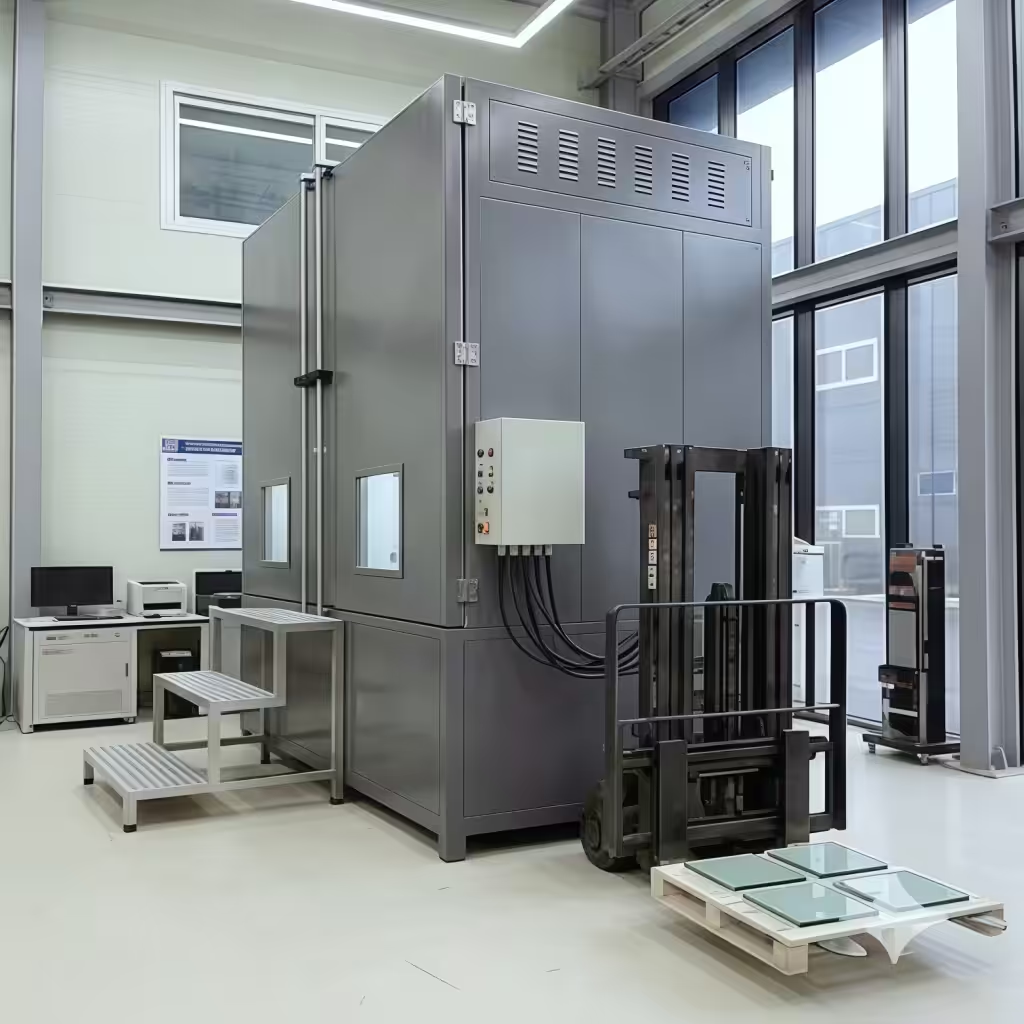
Ultimate 3*3*3m Walk-In Dust Test Chamber|IEC 60529 Compliant