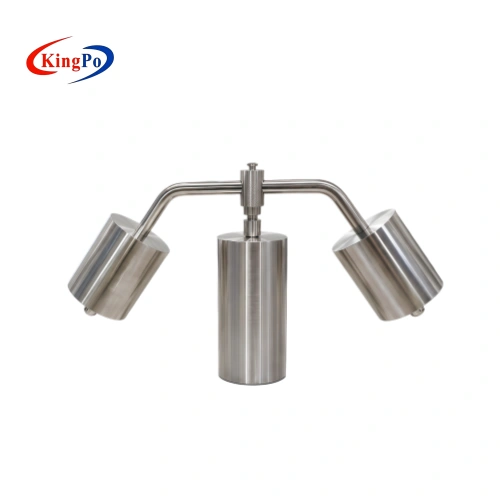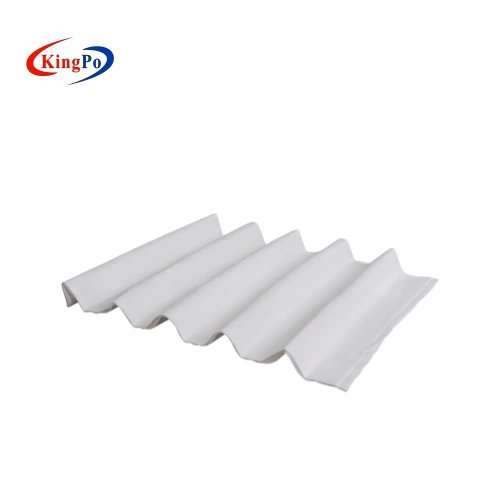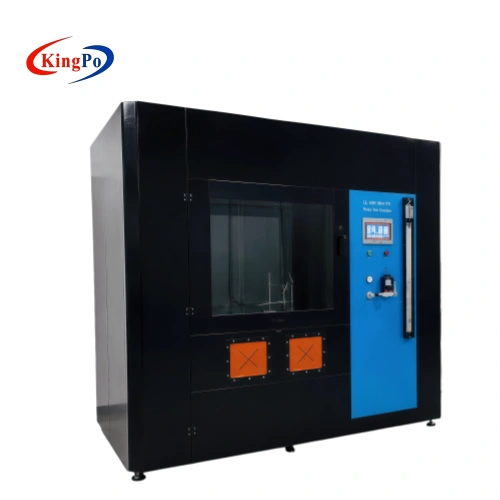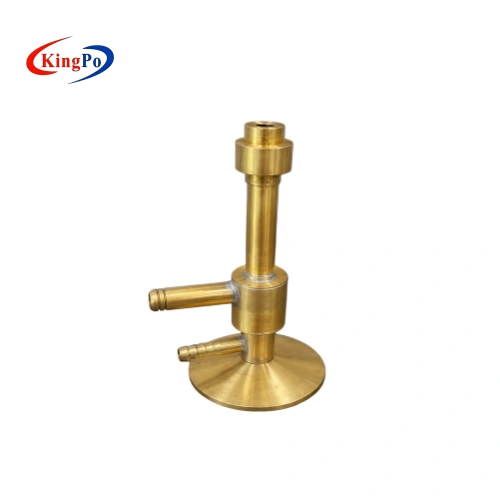
Key Takeaways
- IEC 60695 series standardizes fire hazard testing for electrotechnical products using glow-wire (GWEPT/GWFI/GWIT), needle flame, and 50W/500W horizontal/vertical flame methods.
- Glow-wire tests simulate resistive heating faults; GWEPT evaluates finished assemblies while GWFI/GWIT provide material indices in 25°C increments.
- Needle flame (IEC 60695-11-5) and horizontal/vertical flame tests (IEC 60695-11-10) target small-component arcing and plastic burning behavior, harmonized with UL 94.
- KingPo Technical Team notes that precise calibration (±10°C for glow-wire temperature, exact flame height) ensures repeatable, globally accepted results.
- Selecting KingPo IEC 60695 equipment can reduce certification failures by up to 45% for appliances, automotive parts, and IT equipment.
IEC 60695 Flammability Testing Equipment Overview
We at KingPo have manufactured IEC 60695-compliant flammability test equipment for over 15 years, supporting accredited labs, appliance makers, automotive suppliers, and battery producers worldwide. The IEC 60695 series, titled Fire Hazard Testing, gives you a practical risk-based framework to evaluate ignition sources, flame spread, and fire safety in electrotechnical products. It directly supports major standards such as IEC 60335 for household appliances and IEC 62368 for IT equipment.
Key Factors for IEC 60695 Flammability Testing
Application Needs
Different products need different approaches. Finished appliances and enclosures usually require end-product testing with GWEPT. Raw plastics and insulating materials rely on pre-selection with GWFI and GWIT. Small internal components are best tested with the needle flame method, while larger plastic parts use horizontal or vertical flame tests. Choosing the right method early avoids expensive redesigns later.
Compliance Standards
The IEC 60695 series works alongside IEC 60335-1 and IEC 62368-1. Recent updates like IEC TR 60695-2-16:2025 tighten pyrometer calibration requirements. All tests demand proper preconditioning (48 h at 23°C/50% RH) and traceable flame calibration for repeatable, auditable results.
What Is IEC 60695 Flammability Testing?
IEC 60695 defines laboratory methods that replicate common electrical faults — glowing hot wires, small arcs, or direct flames — to measure how materials and finished products behave before fire can start or spread.
Why IEC 60695 Testing Matters
Uncontrolled flammability is still a leading cause of product recalls and safety incidents. Targeted testing lets you select the right materials, verify final assemblies, and prove compliance quickly, reducing both technical risk and time-to-market.
IEC 60695 Flammability Test Equipment Technical Specifications
| Parameter | Glow Wire Tester | Needle Flame Tester | Horizontal/Vertical Flame Chamber |
|---|---|---|---|
| Standards | IEC 60695-2-10/11/12/13 | IEC 60695-11-5 | IEC 60695-11-10 (50W/500W) |
| Temperature/Flame | 550–960°C ±10°C | 12±1 mm flame (50 W) | Calibrated per IEC 60695-11-3/20 |
| Application | 0.8–1.0 N force, 30 s contact | 45° angle, 5–120 s | 30 s exposure (horizontal/vertical) |
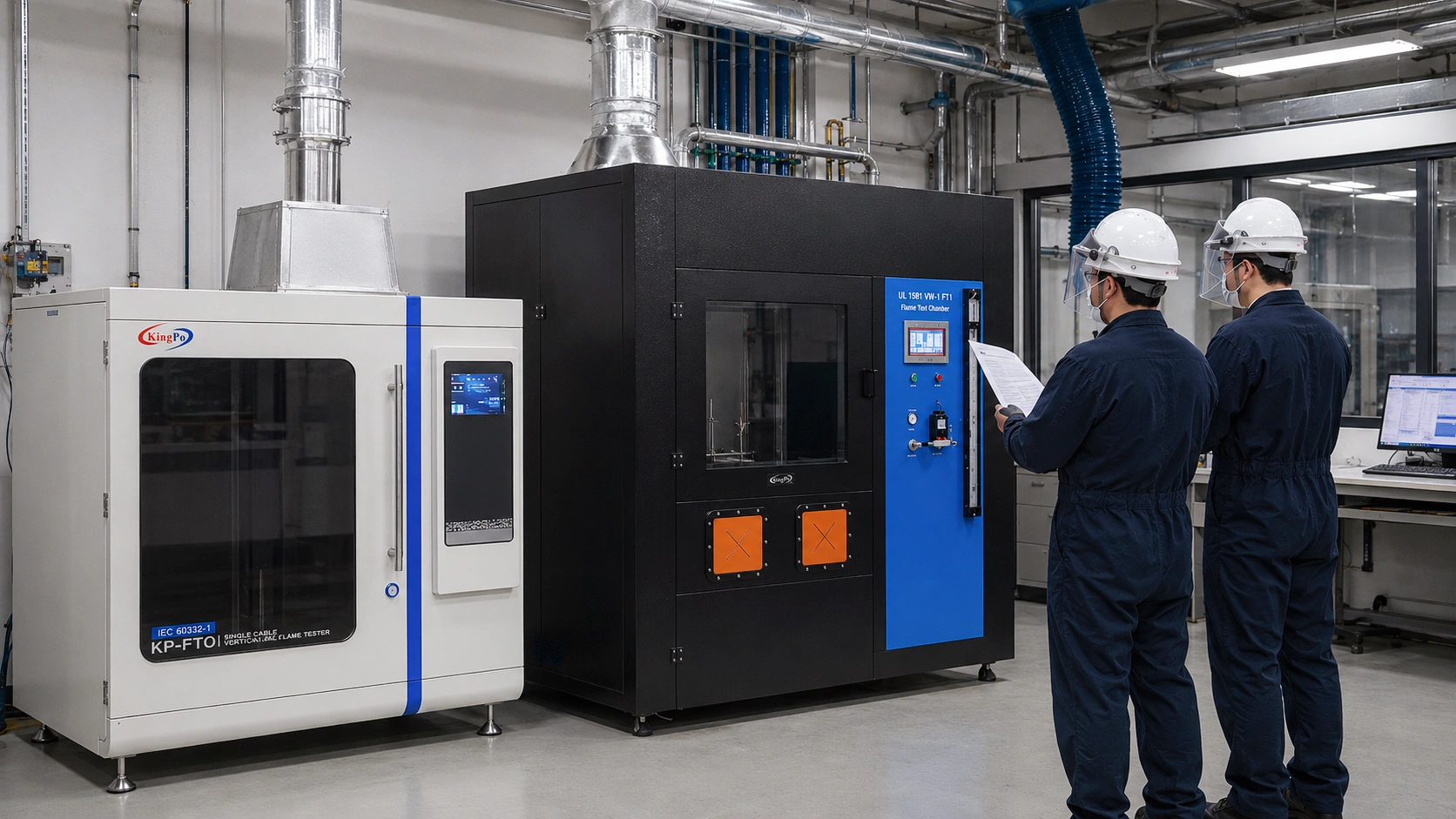
| Control | PLC touchscreen with auto-timer | Digital timer & gas flowmeter | PLC with dual burners & exhaust interlock |
| Safety | Full enclosure & interlocks | Observation window & cotton tray | Exhaust system & flame arrestor |
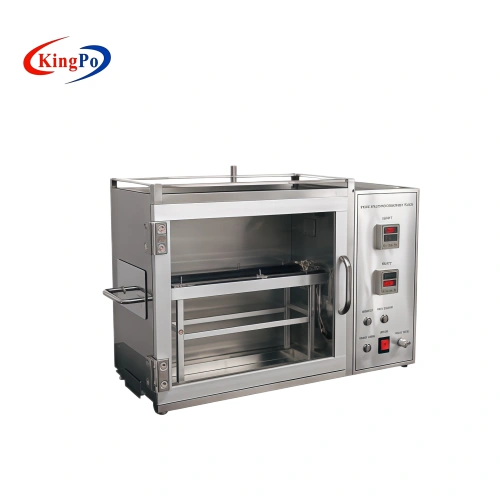
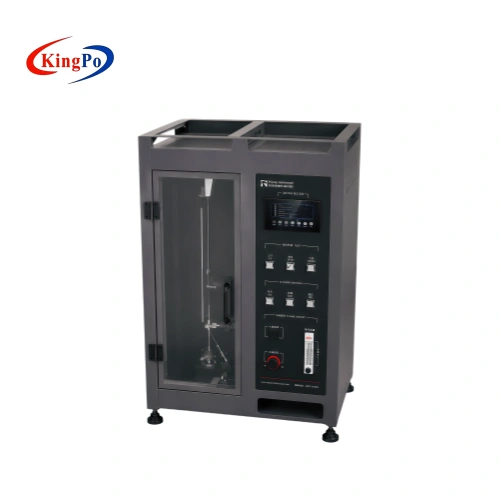
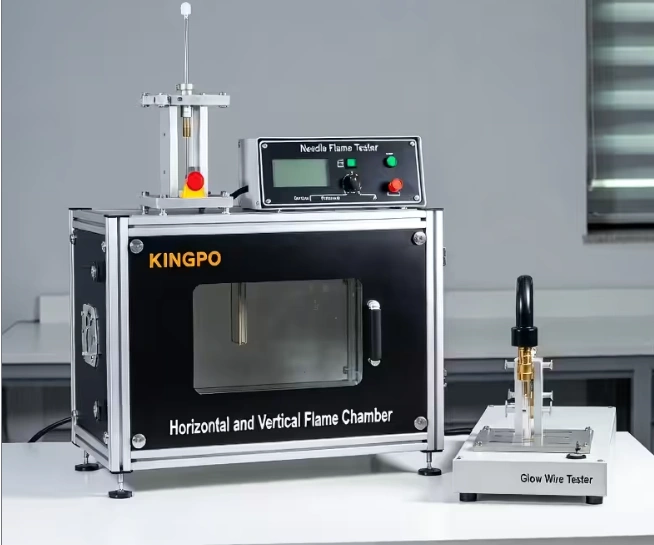
The glow-wire test uses a resistively heated NiCr wire to simulate overheating connections. The needle flame replicates internal arcing with a small calibrated burner. Horizontal and vertical flame tests classify material burning rate and dripping behavior using standardized 50W or 500W premixed flames.
How to Perform IEC 60695 Flammability Tests
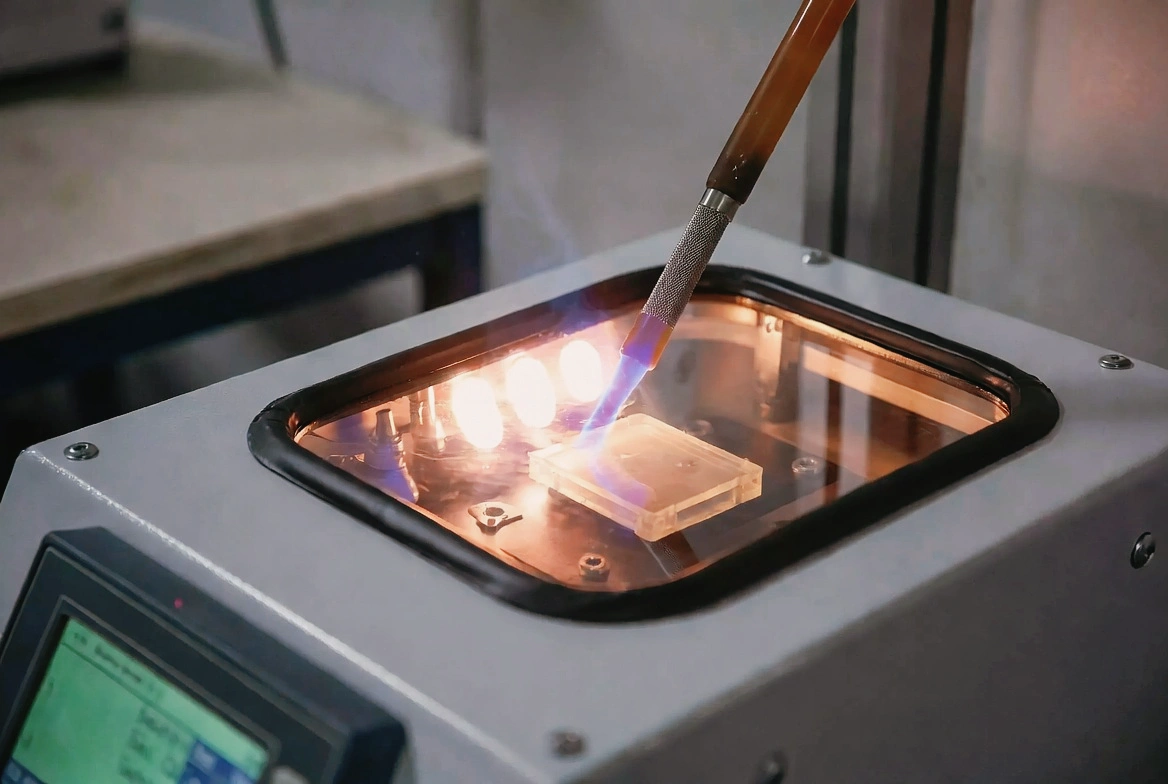
To run a reliable IEC 60695 flammability test, we at KingPo follow this clear 7-step sequence in the laboratory.
1. Specimen Preparation
- Cut the specimens to the required dimensions — for example, 3 mm thick plaques for GWFI/GWIT or 125 × 13 mm bars for vertical flame testing — then condition them at 23°C and 50% RH for 48 hours. Use a precision cutter and digital micrometer, keeping thickness tolerance within ±0.2 mm.
- ⚠️ Safety: Always wear heat-resistant gloves when handling cut edges. The goal is uniform, defect-free specimens. If any specimen is warped or uneven, discard it and re-mold.
2. Equipment Calibration
- Verify the glow-wire temperature with a fine-wire thermocouple and confirm the flame height with a gauge.
- Tools: Calibrated thermocouple, flame height gauge, gas flowmeter.
- Key Parameters: Glow-wire temperature must stay within ±10°C (typically 550–960°C); needle flame height is 12 ±1 mm.
- ⚠️ Safety: Confirm all interlocks and emergency stops are working before powering on. If any temperature drift appears, replace the thermocouple immediately.
3. Test Setup
- Mount the specimen securely in the holder, position the glow-wire or burner at the exact distance and angle, and place the indicator material (tissue paper or cotton) at the required distance below.
- Key Parameters: Glow-wire contact force is 0.8–1.0 N; needle flame angle is 45°.
- ⚠️ Safety: Activate the fume extraction system right away. The setup must be completely stable with no movement during the test.
4. Initiate Test
- Heat the glow-wire to the target temperature or ignite the burner and maintain contact for the required duration.
- Key Parameters: Common glow-wire temperatures are 750°C or 850°C; flame application time is typically 10–30 seconds.
- ⚠️ Safety: Keep the test enclosure closed throughout the entire cycle. If the flame extinguishes prematurely, check the gas supply pressure and burner cleanliness.
5. Monitor and Record
- Time the after-flame, afterglow, dripping, and any ignition of the indicator material while recording with video.
- Key Parameters: After-flame duration must not exceed 2 seconds for GWEPT or 30 seconds for the needle flame test.
- ⚠️ Safety: Do not open the enclosure until the specimen has fully cooled. If visibility is poor, clean the observation window and adjust the lighting.
6. Post-Test Evaluation
- Measure the burn length, assess any damage, and classify the result according to the applicable standard.
- Key Parameters: The linear burning rate must be ≤40 mm/min for horizontal HB classification.
- ⚠️ Safety: Allow the specimen and fixture to cool completely before handling. For borderline results, repeat the test with a fresh specimen under identical conditions.
7.Cleanup and Documentation
- Remove all residues, export the data from the PLC, and generate a full traceable report that includes photographs.
- Key Parameters: Retain raw data and photos for a minimum of 7 years.
- ⚠️ Safety: Dispose of burned materials and any hazardous residues according to laboratory waste protocols. Use the automatic PLC export function to ensure no data is missed.
Selecting the Right IEC 60695 Flammability Test Equipment
Comparison Table
| Feature | KingPo Solution | Typical Competitor |
|---|---|---|
| Temperature Accuracy | ±2°C | ±5–10°C |
| Safety Enclosure | Full interlocked | Partial or none |
| Control Interface | PLC touchscreen | Basic or manual |
| Calibration Traceability | Built-in port + certificate | External only |
| Daily Throughput | 120+ tests | 60–80 tests |
KingPo equipment includes emergency stops, exhaust interlocks, over-temperature protection, and full CE marking. Every unit ships with nationally traceable calibration certificates.
Real-World Applications & Case Studies
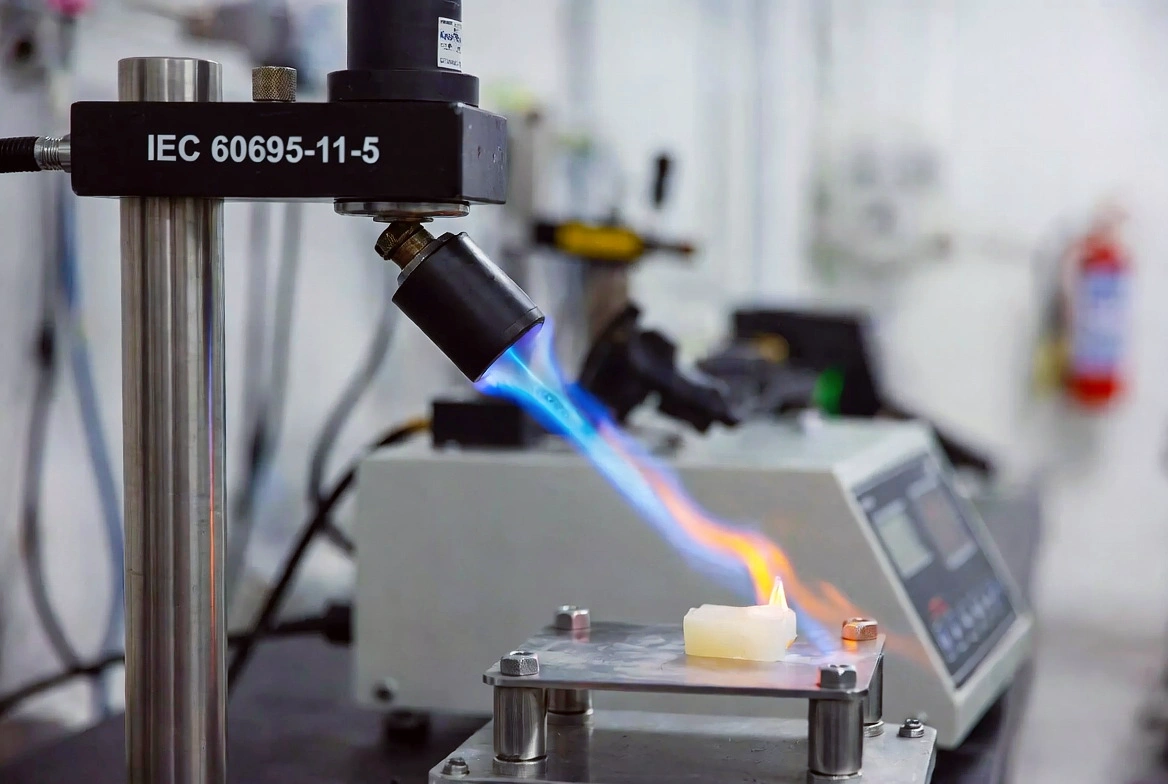
A leading European appliance maker reduced fire-related certification failures by 45% after adopting KingPo Glow Wire Testers. An automotive Tier-1 supplier achieved consistent V-0 classification for battery enclosures using our Horizontal/Vertical Flame Chamber. Medical device laboratories rely on our Needle Flame Tester for reliable small-component validation under IEC 60695-11-5.
Setup, Maintenance & Calibration
Installation Tips
Install in a well-ventilated area with stable 220V/50Hz power and adequate fume extraction. Level the unit and verify exhaust flow before first use.
Maintenance Checklist
| Task | Frequency | Notes |
|---|---|---|
| Clean glow-wire/burner | After 50 tests | Isopropyl alcohol |
| Thermocouple inspection | Monthly | Replace if drift >5°C |
| Interlock function test | Weekly | Verify emergency stop |
| Full system calibration | Every 6 months | Accredited laboratory |
| Exhaust system cleaning | Quarterly | Prevent buildup |
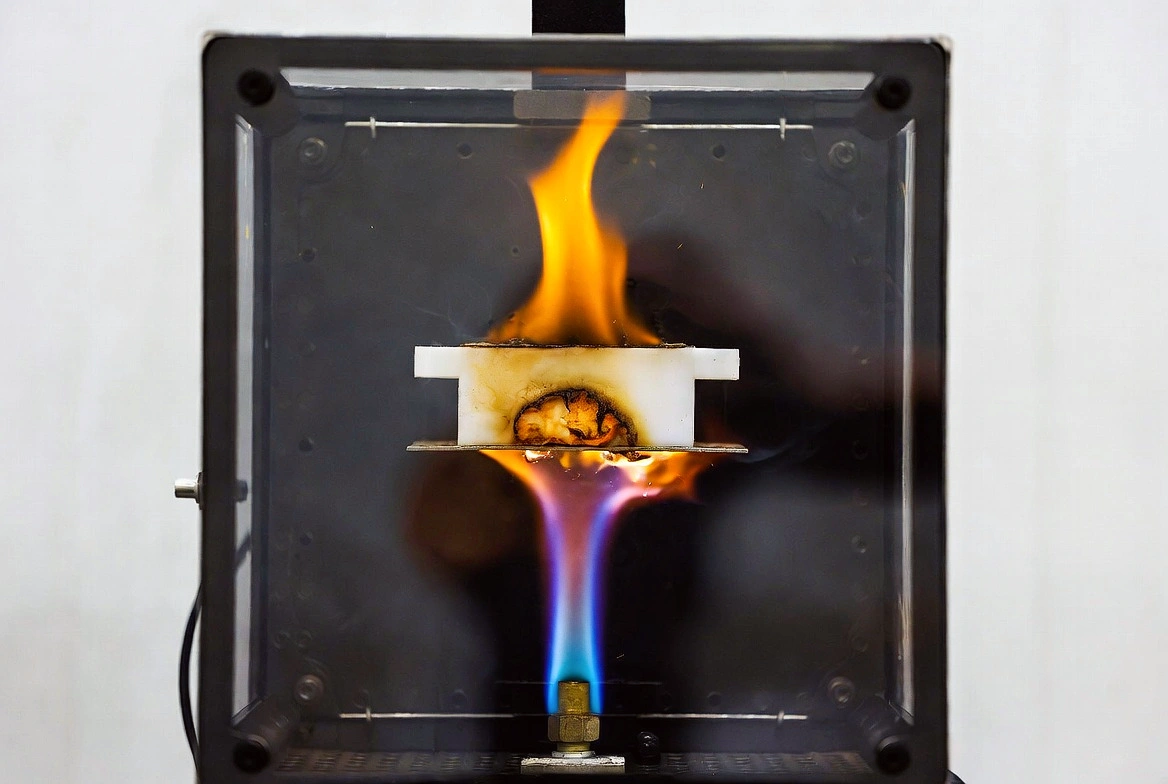
KingPo provides on-site training covering calibration, procedure execution, and emergency protocols. Most operators reach full proficiency within two days.
After-Sales Support & Warranty
All KingPo units carry a 24-month warranty with 48-hour global technical response, on-site installation support, and lifetime calibration assistance from our Dongguan facility.
Future Trends in IEC 60695 Flammability Testing
Automation with AI-assisted flame analysis, integration with smoke and corrosion testing, and development of sustainable flame-retardant materials continue to advance. KingPo equipment is already modular and upgrade-ready.
Conclusion
Mastering IEC 60695 flammability testing enables you to design inherently safer electrotechnical products while meeting stringent global standards. KingPo’s precision equipment delivers repeatable, traceable results that accelerate certification and reduce compliance risk. For a tailored configuration that matches your exact testing needs, visit our flammability test equipment page or contact our engineering team for detailed specifications and a competitive quote within 24 hours.
FAQ
What is the difference between GWFI and GWIT in IEC 60695-2?
- GWFI (IEC 60695-2-12) is the highest temperature at which a 3 mm specimen does not ignite or self-extinguishes within 30 s with no flaming drips. GWIT (IEC 60695-2-13) is the lowest temperature that causes ignition (flaming >5 s). GWIT is typically 25–75°C higher than GWFI for the same material.
Which IEC 60695 test is required for finished household appliances?
- For finished products under IEC 60335, the Glow-Wire End-Product Test (GWEPT, IEC 60695-2-11) is usually required, with flame duration ≤2 s and no ignition of surrounding tissue paper.
What flame height and duration are used in the needle flame test?
- IEC 60695-11-5 uses a 12 ±1 mm flame applied at 45° for 5–120 s (commonly 10 s or 30 s). After-flame must not exceed 30 s and must not ignite the cotton indicator 100 mm below.
What is the acceptance criterion for horizontal burning (HB) classification?
- For IEC 60695-11-10 Method A, the linear burning rate must not exceed 40 mm/min for 3–13 mm thick specimens.
How often should the glow-wire thermocouple be calibrated?
- KingPo Technical Team recommends calibration every 6 months or after 500 tests to maintain ±10°C accuracy per IEC 60695-2-10.
Can the same equipment perform both glow-wire and needle flame tests?
- No. Glow-wire and needle flame require separate dedicated testers due to different ignition sources and safety requirements.
What preconditioning is mandatory before IEC 60695 tests?
- All specimens must be conditioned for 48 hours at 23°C ±2°C and 50% ±5% RH before testing.
Flammability Test for Cables – IEC 60332 Vertical Flame Propagation Tester