Product Overview
Particulate matter released from implantable medical device components is an important consideration in evaluating device safety. ISO 14708-7:2019 includes requirements for assessing unintended particulate matter released from implantable parts intended to contact body fluids during normal use.
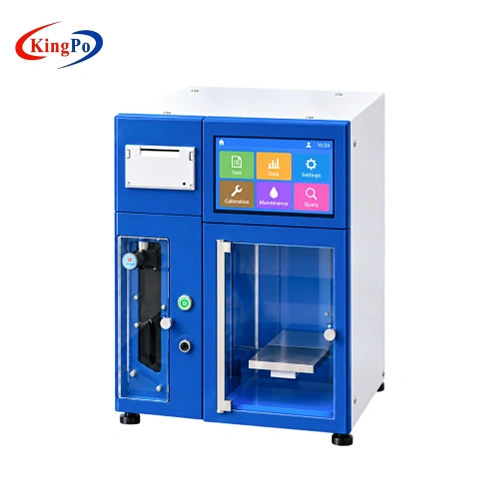
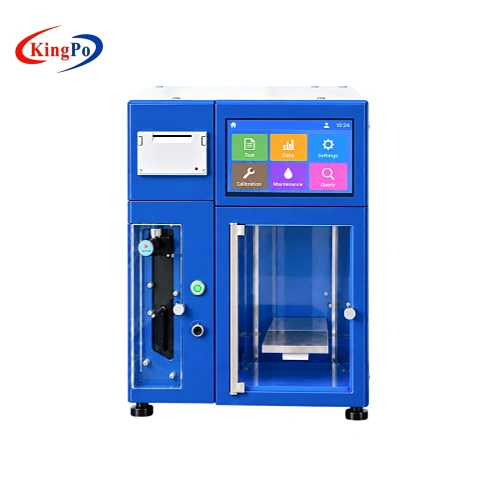
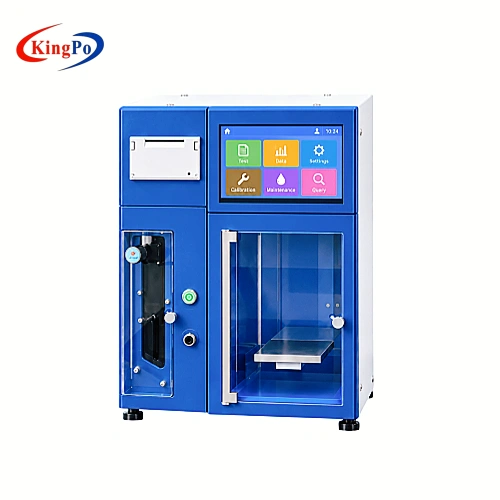
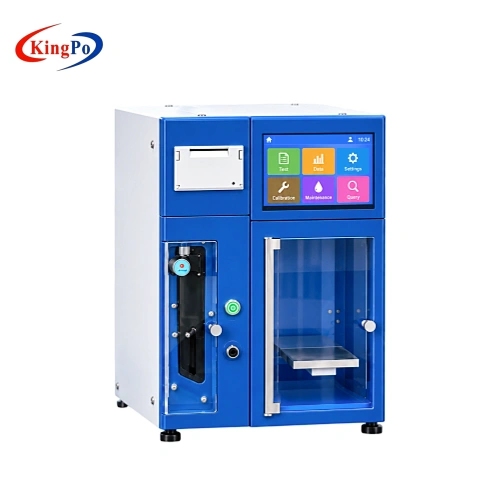
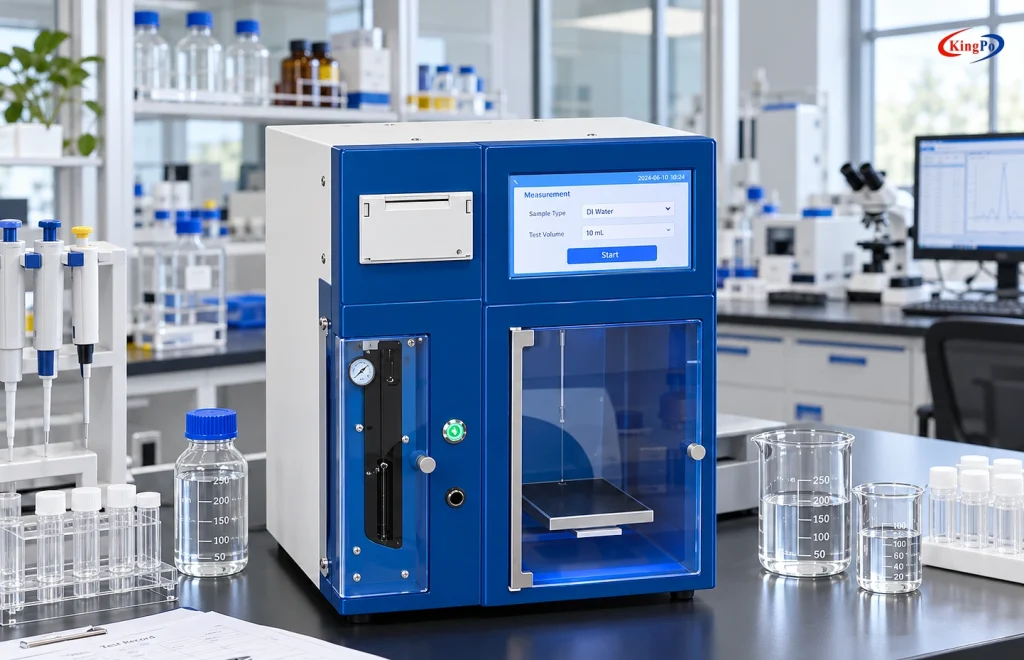
The KP-MP500D Liquid Particle Counter combines controlled sample processing with quantitative particle analysis to support this evaluation. Its dual-sample arrangement enables simultaneous stirring of reference and test samples, while temperature control and adjustable stirring speed support consistent sample preparation.
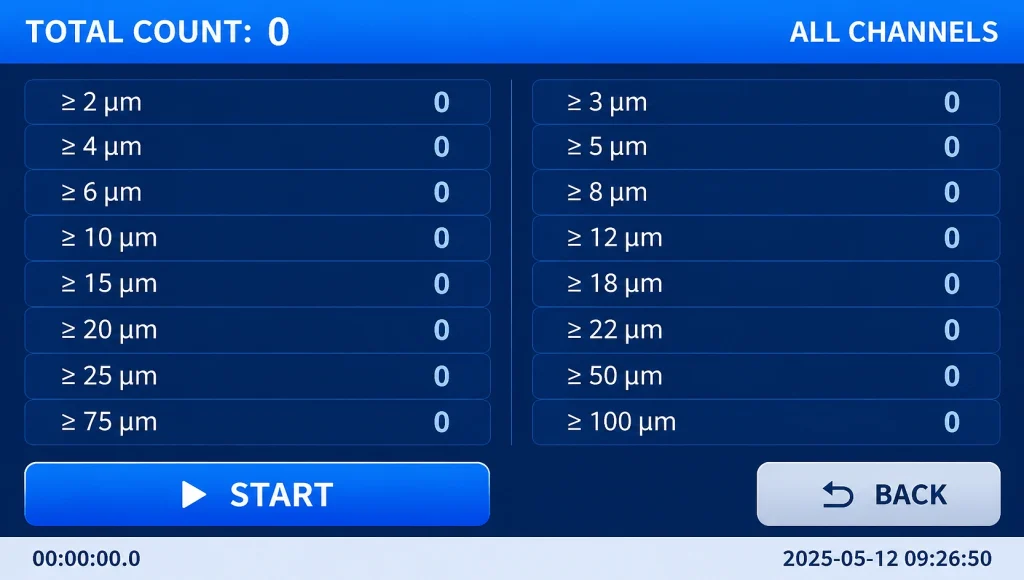
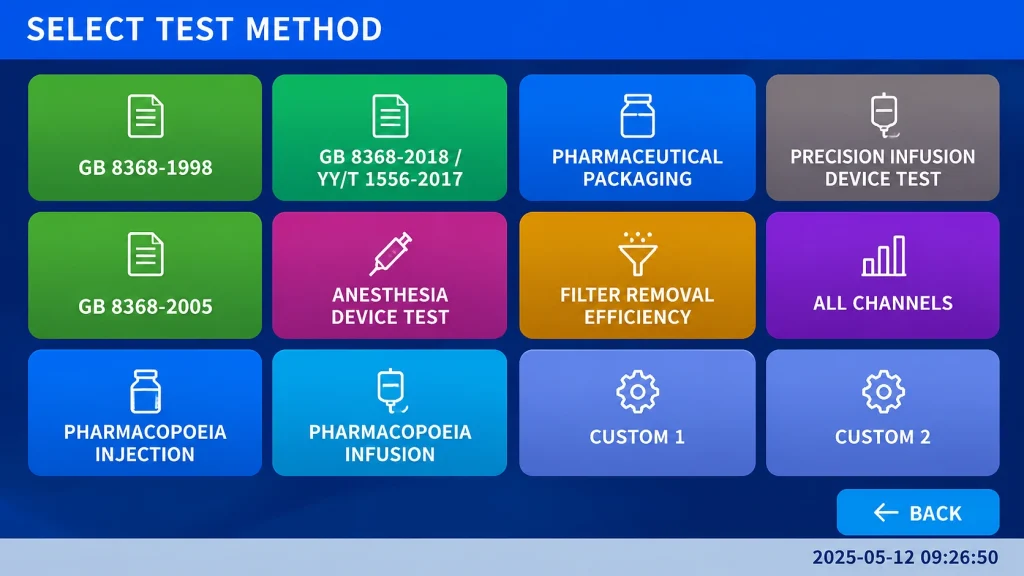
The system provides particle counts at configured size thresholds and supports selectable sampling volumes. Its control software includes test method configuration, calibration management, historical result queries and data output for laboratory testing workflows.
Technical Specifications
| Parameter | Specification |
|---|---|
| Product Name | Liquid Particle Counter for Particulate Matter Testing |
| Model | KP-MP500D |
| Primary International Standard | ISO 14708-7:2019, Clause 14.2 |
| Related Chinese Standard | YY 0989.7—2017 |
| Particle Detection Range | 1–500 μm |
| Particle Counting Thresholds | ≥5 μm, ≥10 μm and ≥25 μm |
| Particle Counting Range | 0–9,999,999 particles |
| Particle Concentration Range | 0–10,000 particles/mL |
| Relative Standard Deviation (RSD) | ≤2% at a standard particle concentration of ≥1,000 particles/mL |
| Accuracy | ±5% |
| Channel Resolution | ≥95% for the ≥10 μm channel |
| Minimum Selectable Sampling Volume | 0.1 mL |
| Sampling Time — 5 mL | Less than 10 s |
| Sampling Time — 100 mL | Less than 3 min |
| Stirring Speed | 0–1500 r/min |
| Temperature Control | 37°C ± 2°C |
| Sample Processing | Simultaneous stirring of reference and test samples |
| Custom Test Settings | At least 2 sets |
| Detection System | Optical particle detection |
| Additional Test Function | 20 μm particle removal efficiency testing |
| Software Functions | Test method configuration, calibration management, maintenance, historical queries and result management |
ISO 14708-7:2019 Particulate Matter Testing
ISO 14708-7:2019 :
Implants for Surgery — Active Implantable Medical Devices — Part 7: Particular Requirements for Cochlear and Auditory Brainstem Implant Systems,
specifies particular requirements for these active implantable medical devices.
Clause 14.2 addresses the release of unintended particulate matter from implantable parts. The associated test method evaluates the particle count in a test liquid relative to a reference liquid after exposure under specified conditions.
Test Conditions and Acceptance Criteria
The standard’s particulate matter test procedure includes saline immersion, controlled temperature and continuous agitation.
| Test Item | Requirement |
|---|---|
| Test Medium | Saline solution, approximately 9 g/L |
| Temperature | 37°C ± 2°C |
| Agitation Period | 8–18 h |
| Evaluation Method | Compare the test sample with a reference sample |
| Particles Greater Than 5.0 μm | Excess average count not exceeding 100 particles/mL |
| Particles Greater Than 25.0 μm | Excess average count not exceeding 5 particles/mL |
The specified limits apply to the excess average particle count relative to the reference sample, rather than the absolute particle concentration measured by the instrument.
The KP-MP500D supports the relevant sample preparation and particle counting operations. For test procedures requiring extended continuous agitation, the required operating duration should be included in the equipment configuration requirements.
Test Principle and Workflow
The KP-MP500D combines controlled sample preparation with optical particle detection to support comparative particulate matter analysis.
01Sample Preparation
Prepare the test specimen and reference sample according to the applicable test procedure, including the specified liquid and specimen preparation conditions.
02Parameter Configuration
Set the required sampling volume, particle counting thresholds, stirring speed and temperature.
03Synchronized Sample Processing
Stir the reference and test samples simultaneously under the specified preparation conditions.
04Quantitative Sampling
Collect the required liquid sample volume for particle measurement.
05Particle Counting
Use the optical detection system to obtain particle counts at the configured size thresholds.
06Comparative Evaluation
Compare the test and reference results using the calculation method and acceptance criteria specified by ISO 14708-7:2019.
07Result Management
Store and retrieve test methods, calibration information and measurement results through the control software.
Key Features
Synchronized Reference and Test Sample Processing
Simultaneous stirring helps maintain comparable preparation conditions for the reference and test liquids, supporting consistent comparative particle analysis.
Particle Counting Across Multiple Size Thresholds
The specified 1–500 μm detection range and three counting thresholds support size-based particle analysis for relevant medical device testing procedures.
Quantitative Liquid Sampling
Selectable sampling volumes starting at 0.1 mL accommodate different sample volume requirements. Specified sampling times are less than 10 seconds for 5 mL and less than 3 minutes for 100 mL.
Temperature-Controlled Stirring
Temperature control at 37°C ± 2°C and an adjustable stirring speed of 0–1500 r/min support controlled sample preparation for relevant particulate matter test methods.
Calibration and Test Data Management
The software supports test method configuration, calibration management, historical result queries and data output, helping laboratories organize measurement records and repeat configured test methods.
Typical Applications
| Application | Testing Purpose |
|---|---|
| Cochlear Implant Development | Evaluate particulate matter released from relevant implantable components |
| Medical Device Verification | Compare particle counts between test and reference samples |
| Quality Control Laboratories | Review particle counts and size-based measurement results |
| Third-Party Testing Laboratories | Support particulate matter testing under applicable medical device standards |
| R&D Laboratories | Investigate particulate release under defined sample preparation conditions |
The primary application is particulate matter testing associated with cochlear implant systems. Other implantable medical device applications should be assessed against the relevant standard and test procedure.