HME Moisture Loss Tester - ISO 23328-1 Conditioning Apparatus For BSF

HME Moisture Loss Tester – ISO 23328-1 Conditioning Apparatus For BSF

ISO 23328-1 HME Moisture Loss Tester precisely measures water loss, ensuring accurate performance validation for heat and moisture exchangers.

  • Standard Compliance: ISO 23328-1 and ISO 9360-1 – HME moisture loss and conditioning test apparatus
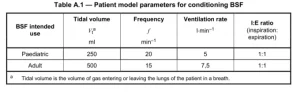
  • Breathing Simulation: Adjustable tidal volume 250 / 500 / 750 / 1000 ml, 0–30 breaths/min, I:E ratio 1:1
  • Temperature Control: Constant 37°C water bath (±0.1°C) and insulated chamber (±0.5°C)
  • Automatic Weighing: Precision electronic scale 0–15 kg, ±0.1 g accuracy with auto lift and separation
  • Test Duration: 0–9999 min with automatic stop and real-time data logging
  • Simulated Lung: 2 L reservoir bag for realistic breathing waveform
  • MOQ: 1
  • Delivery Period: 30 working days

Detail Information

ISO 23328-1 Conditioning Apparatus | HME Moisture Loss Tester for Breathing System Filters

The ISO 23328-1 Conditioning Apparatus | HME Moisture Loss Tester for Breathing System Filters is a professional laboratory test system manufactured by KingPo. It is designed to accurately measure moisture loss of heat and moisture exchangers (HME) and breathing system filters (BSF) by simulating human respiratory conditions in full accordance with ISO 23328-1 and ISO 9360-1.

Technical Parameters

Parameter Specification Remark / Notes
Standard ISO 23328-1 / ISO 9360-1 Moisture loss and conditioning test for HME and BSF
Tidal Volume 250 / 500 / 750 / 1000 ml (selectable) Adjustable to simulate different patient breathing patterns
Respiratory Rate 0–30 breaths/min Sine wave generator for realistic human breathing waveform
I:E Ratio 1:1 (default) Configurable for various test conditions
Temperature Control Water bath 37°C ±0.1°C, chamber 37°C ±0.5°C Constant body temperature simulation with PID control
Weighing System 0–15 kg range, ±0.1 g accuracy Automatic lift, separation and data recording for precise moisture loss calculation
Simulated Lung 2 L reservoir bag Provides realistic compliance and gas storage
Test Duration 0–9999 min Programmable with automatic stop and real-time monitoring
Power Supply AC 220 V, 500 W Standard laboratory power
Overall Weight <15 kg Compact and portable main unit


Professional Construction & Technical Precision

The conditioning apparatus integrates a precision sine-wave breathing generator, dual constant-temperature systems (water bath and insulated chamber), and a high-accuracy automatic weighing module. All gas pathways use medical-grade tubing and fittings to eliminate external moisture interference. The insulated chamber is filled with high-density foamed polypropylene to maintain stable 37°C environment with minimal heat loss. The electronic scale features automatic lifting and separation mechanisms for contactless weighing, ensuring ±0.1 g repeatability even during continuous long-duration tests. Real-time sensors monitor flow, temperature, humidity and weight, with data automatically logged by the industrial touchscreen PLC system.

Testing Principle

The system generates a sinusoidal breathing waveform that passes through a humidified 37°C gas stream simulating exhaled air. The HME or BSF under test is placed in the circuit; moisture retained or lost by the device is determined by precisely measuring the weight change of the entire test assembly before and after a preset test duration (typically 25 ±1 hours). The difference in mass directly corresponds to the moisture loss value as required by ISO 23328-1 and ISO 9360-1.

Common Error Mitigation

To ensure repeatable and accurate results, always allow the water bath and chamber to stabilize at 37°C for at least 60 minutes before starting a test. Verify that all connections are leak-free and that the HME is correctly seated. Perform a zero-weight reset and calibration check before each weighing cycle. Regular inspection of the breathing circuit prevents condensate accumulation that could skew moisture loss readings.

Specifications

  • The instrument is based on the standards ISO 9360-1, ISO23328-1;
  • The instrument is mainly used to test the water loss of heat and moisture exchangers (HME) used in anesthesia and respiratory systems to humidify human respiratory gases.
  • Working principle: A sinusoidal gas generator is used to simulate human breathing. The test system is calibrated using a standard HME, and the tidal volume is adjusted. The weight change of the simulated respiratory system and HME is recorded by weighing, and the water mass loss of the HME during breathing is calculated to determine the performance of the HME.
  • The tester consists of a sine wave generator, a test host, a moisture generator, a simulated lung, a constant temperature water bath, an insulation box, a gas constant temperature control device, a gas storage container, a gas delivery system, an automatic separation weighing system, a calibration HME and auxiliary test accessories.
  • Automatic weighing, using a precision electronic scale with a measuring range of 0-15 kg and an accuracy of ±0.1g. Automatic lifting and lowering of the electronic scale, automatic separation of the test system, automatic recording of system mass changes, and automatic calculation of HME moisture loss.
  • Sine wave gas generator, used to generate sine wave gas that simulates human breathing, with adjustable breathing rate from 0 to 30 times/min;
  • Automatic adjustment of tidal volume, the system defaults to four levels: 250mL, 500mL, 750mL, and 1000mL.
  • A constant temperature water bath ensures that the gases entering the HME from the simulated lung are fully humidified and kept at a constant temperature of 37°C. The constant temperature water bath automatically controls the temperature to a constant of 37°C with a control accuracy of 0.1°C.
  • The insulation box is filled with foamed polypropylene material to isolate the internal temperature of the test system from the external environment. A constant temperature control device is used to control the air temperature inside the insulation box at 37°C with a control accuracy of ±0.5°C.
  • Gas flow measurement uses a precision electronic flow meter with a response time of 10ms, a maximum resolution of 0.001SLPM, an output fluctuation of ±0.12%/℃, a flow pressure upper limit of 600Pa, and a flow upper limit of 50SLPM;
  • Test time can be set to any value between 0-9999H9999 min;
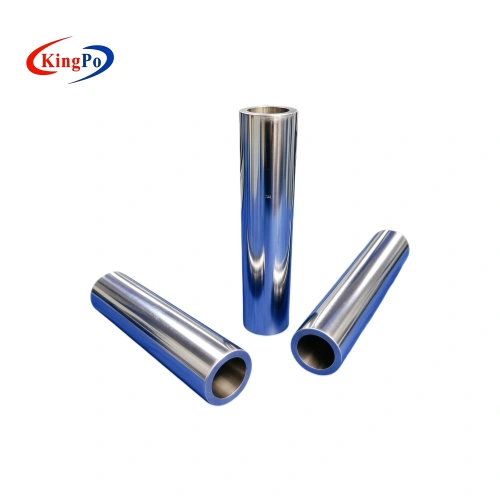
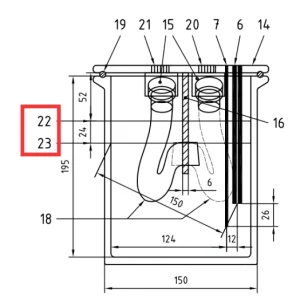
  • Calibration HME: The housing contains 81 polyvinyl chloride (PVC) pipes arranged in a 9×9 pattern. Each pipe has an inner diameter of 2mm, an outer diameter of 4mm, and a length of 50mm. It has 22 outer cones, 15 outer cones, and 15 inner cones;
  • Simulated lung volume: 2L;
  • Display: The system main interface displays real-time data such as running time, water temperature, air temperature, number of breaths, weight, tidal volume, respiratory rate, flow rate, etc.
  • Touch screen control, use the touch screen to input parameters and operate the instrument;
  • It can run continuously for 4800 hours; power supply: AC220, power 500W;
  • Weight: The main unit weighs less than 15 kg.

Technical Inquiry for ISO 23328-1 Conditioning Apparatus

f you require the ISO 23328-1 HME Moisture Loss Tester or custom configurations, our engineering team can provide technical support and configuration recommendations.

The Core Value We Deliver to You

  • Fully automated simulation of human breathing per ISO 23328-1
  • Precise ±0.1 g moisture loss measurement with automatic weighing
  • Dual 37°C temperature control for realistic physiological conditions
  • Adjustable tidal volume and respiratory rate for multiple test scenarios
  • Compact, reliable design suitable for continuous laboratory operation

Tell us your HME or BSF type or specific test requirements — our engineering team will reply with tailored recommendations within 24 hours.

Equipment Control and Operation

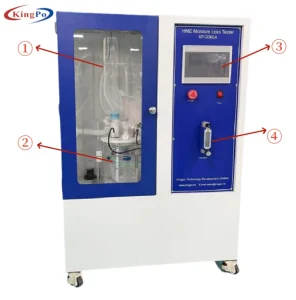
  • HME Moisture Loss Tester - ISO 23328-1 Conditioning Apparatus For BSF

    ① 2-liter anesthesia bag
    ② Postpartum dampness patient model
    ③ Control system
    ④ Flow meter (ISO9360 test)

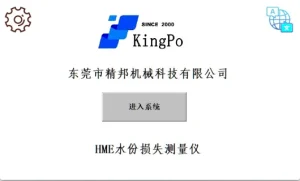
    Front page

    You can choose Chinese or English on the homepage. Click the [Enter System] button to open the running interface.
    HME Moisture Loss Tester - ISO 23328-1 Conditioning Apparatus For BSF

    Run interface

    HME Moisture Loss Tester - ISO 23328-1 Conditioning Apparatus For BSF

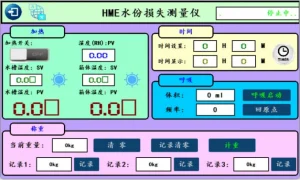
    1. Heating switch: ON, the heater starts heating, PID control, OFF turns off heating;
    2. Humidity PV: humidity value in the water tank;
    3. Water tank temperature SV: set the water tank temperature;
    4. Water tank temperature PV: real-time display value of water tank temperature;
    5. Box temperature SV: set the box temperature;
    6. Box temperature PV: real-time display value of box temperature;
    7. Time setting: set the breathing operation time, and it will stop automatically when the time is up;
    8. Time display: display breathing running time;
    9. [TIMER] button: white, timer stop, yellow, timer start;
    10. Breathing volume: Click the input box to select 1000ml, 750ml, 500ml, 250ml;
    11. Respiratory frequency: automatically selected after selecting respiratory volume;
    12. [Breathing Start] button: start breathing after selecting the breathing volume;
    13. [Return to origin] button: After the device is powered on, it will return to the origin before starting breathing;
    14. Current weight: When weighing, it displays the weight of the breathing device, which is used to calculate the loss of water during breathing;
    15. [Reset] button: used to clear the scale before weighing, so that the current weight is zero;
    16. [Record Clear] button: clear the recorded weight value;
    17. [Weight] button: used for weighing;
    18. [Record] button: used to record the weight during weighing;

    Test steps

    (1) Open the water inlet on the sink and fill the sink with water to the standard water level (119-143mm).
    HME Moisture Loss Tester - ISO 23328-1 Conditioning Apparatus For BSF

    (2) Connect the external power supply and turn the power switch to the “open” position.
    (3) Connect the test sample to the port on the right side of the device.
    (4) Set the heating temperature to 37°C. Click the water tank and box heating button to start heating, and wait for the temperature to stabilize for at least 1 hour.
    (5) Set the test time to 25±1H
    (6) Set up a test Tidal volume and start it.
    HME Moisture Loss Tester - ISO 23328-1 Conditioning Apparatus For BSF

    (7) The device stops automatically when the test time is reached

HME Moisture Loss Tester FAQs

How does the HME Moisture Loss Tester simulate human breathing accurately?
It uses a sinusoidal gas generator with 500/250mL tidal volume and 15/20 Hz frequency to mimic adult/pediatric respiratory cycles, ensuring realistic moisture loss measurement.
Can this tester handle both adult and pediatric HME devices?
Yes – adjustable tidal volume (250mL–1000mL) supports testing across adult and pediatric breathing system filters per ISO 23328-1.
What if my lab needs precise temperature control – is the system reliable?
Yes – 37°C constant water bath (±0.1°C) and insulation box (±0.5°C) maintain humidified gas conditions for consistent, repeatable results.
How does the ±0.1g weighing accuracy benefit HME performance testing?
The precision electronic scale with auto-lift/separation records minute weight changes, enabling exact calculation of HME water loss without manual errors.
What is the MOQ and delivery time for the HME Moisture Loss Tester?
MOQ 1 unit; delivery typically 15 days, allowing quick deployment for urgent testing needs.
What warranty and support does KingPo offer?
1-year warranty plus lifetime technical support for long-term reliability.
How does this tester help reduce HME failure risks in clinical use?
It identifies insufficient humidification early, preventing patient airway drying and ensuring HME performance meets ISO 23328-1 requirements.
Can the tester be used for custom breathing simulation in R&D?
Yes – adjustable frequency (0–30 breaths/min) and tidal volume allow customization for different respiratory scenarios in prototype development.
How to get a quote or sample for the HME Moisture Loss Tester?
Submit the inquiry form or email [email protected] for pricing and fast support.
How long does a typical HME moisture loss test cycle take?
Test time is programmable (0–9999 min); a standard cycle runs efficiently, saving lab time compared to manual methods.

Related Products

Related News

Dongguan, China – 10 25, 2024 – In a significant advancement for food safety technology, Chao Zhang (also known as […]

The Defibrillation Immunity Testing Requirements for Active Implantable Medical Devices (AIMDs): Standards Breakdown, Visual Insights, and Recommendation for the KP-1050S […]

IP ratings explained: Understand each code, what the digits mean, and how to choose the right protection level for electronics in any environment.
IEC 60601-2-2 testing devices for neutral electrodes verify safety, compliance, and help secure medical device approval by measuring key parameters.

Abstract Thermage, a non-invasive radiofrequency (RF) skin tightening technology, is widely used in medical aesthetics. With operating frequencies increasing to […]

Scroll to Top

Get A Free Quote Now !

Contact Form
If you have any questions, please do not hesitate to contact us.