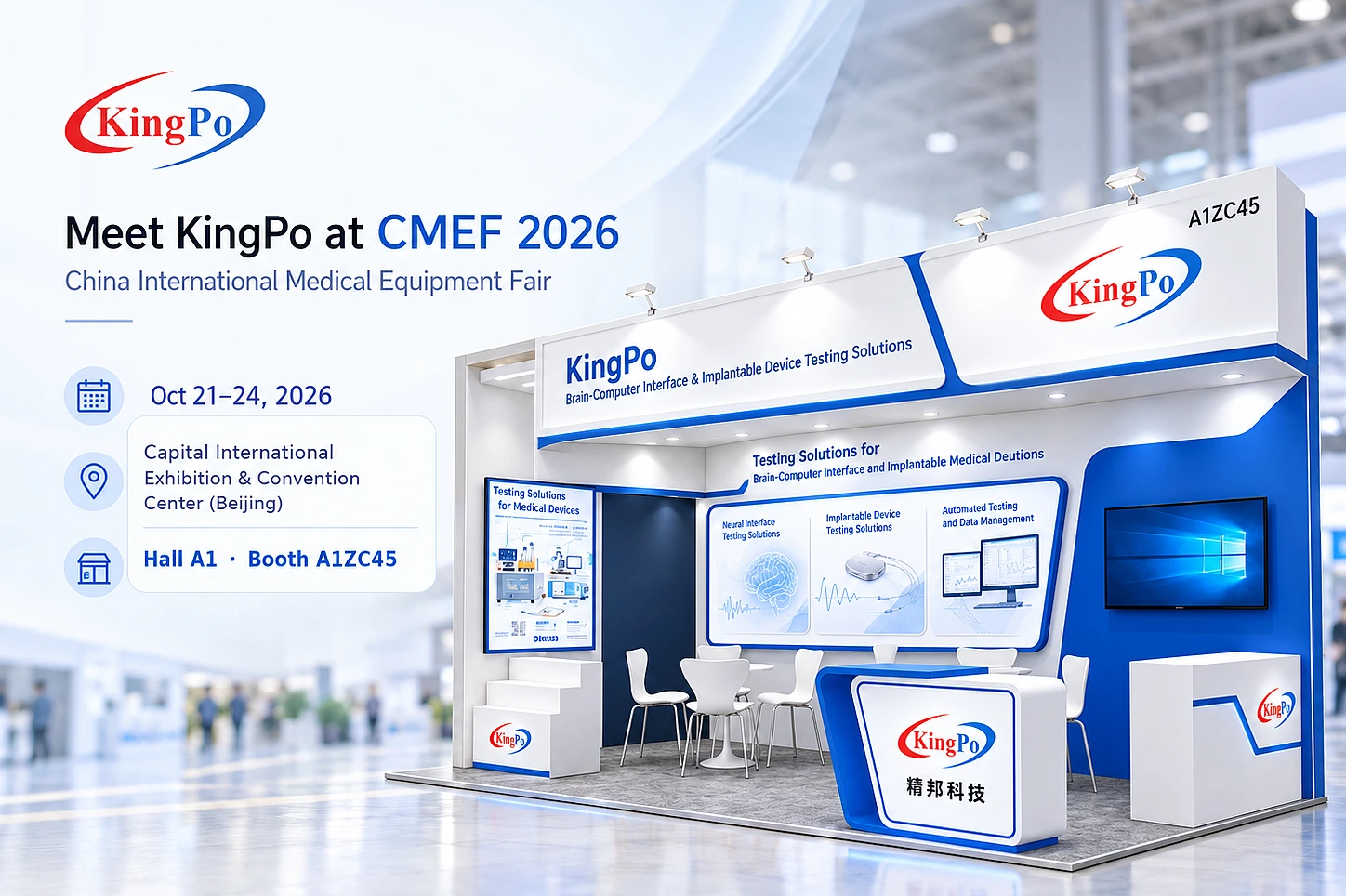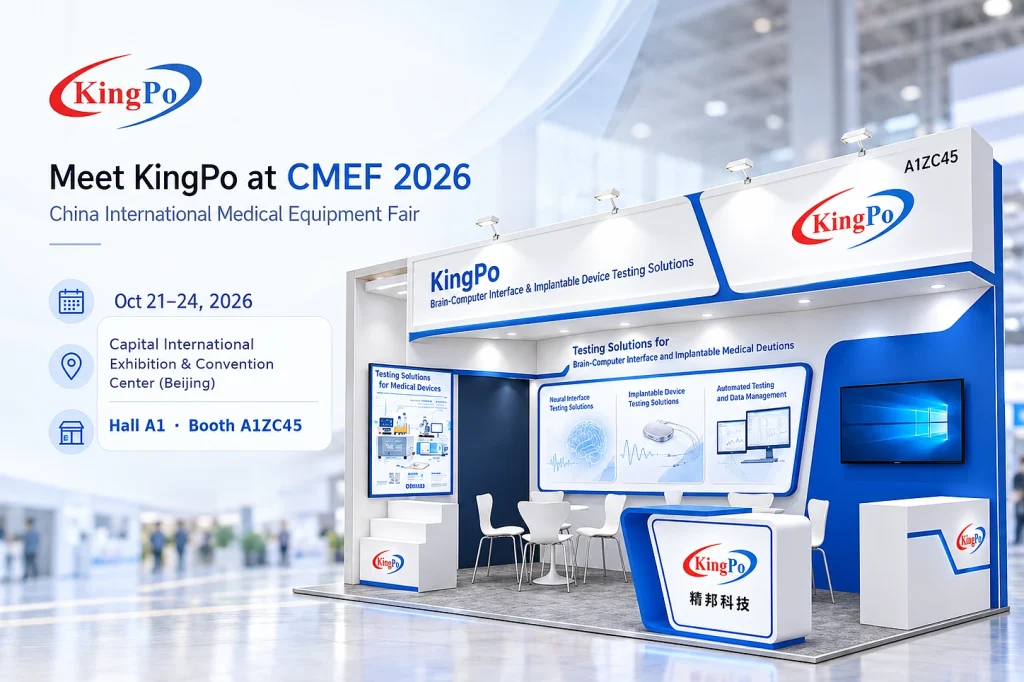
DONGGUAN, CHINA – October 20, 2026 – KingPo will participate in the 94th China International Medical Equipment Fair (CMEF), taking place from October 21 to 24, 2026, at the Capital International Exhibition & Convention Center in Beijing, China.
At Hall A1, Booth A1ZC45, KingPo will highlight its specialized testing solutions for brain-computer interfaces (BCIs), implantable neurostimulators, cochlear implants, and other active implantable medical devices, with a focus on electrical performance evaluation, electromagnetic immunity, and automated laboratory testing.
We will also participate in a technical forum on October 21, where our Senior Engineer, Zhang Chao, will deliver a presentation titled “Brain-Computer Interface Testing Equipment Solutions.”
As neurotechnology and implantable medical systems continue to advance, manufacturers face new challenges in verifying the safety, performance, and reliability of devices that interact directly with the human nervous system. Through its participation at CMEF 2026, KingPo looks forward to sharing practical engineering approaches and exploring how specialized testing technologies can support the development of next-generation medical devices.
Meeting the Testing Challenges of Advanced Implantable Medical Devices
The development of an implantable medical device involves considerably more than verifying that its electronics operate correctly under normal conditions.
An implantable neurostimulator must deliver controlled electrical signals through an electrode interface. A cochlear implant must maintain its intended performance when exposed to relevant electromagnetic disturbances. Wireless energy transfer systems introduce additional considerations related to component positioning, energy transfer efficiency, and temperature changes.
Although these technologies serve different clinical purposes, they share a common engineering challenge: how to reproduce complex operating and interference conditions in a controlled laboratory environment while obtaining reliable, repeatable measurement data.
For manufacturers and testing laboratories, this often requires a combination of programmable signal sources, precision measurement instruments, specialized test fixtures, environmental controls, and software capable of coordinating the entire process.
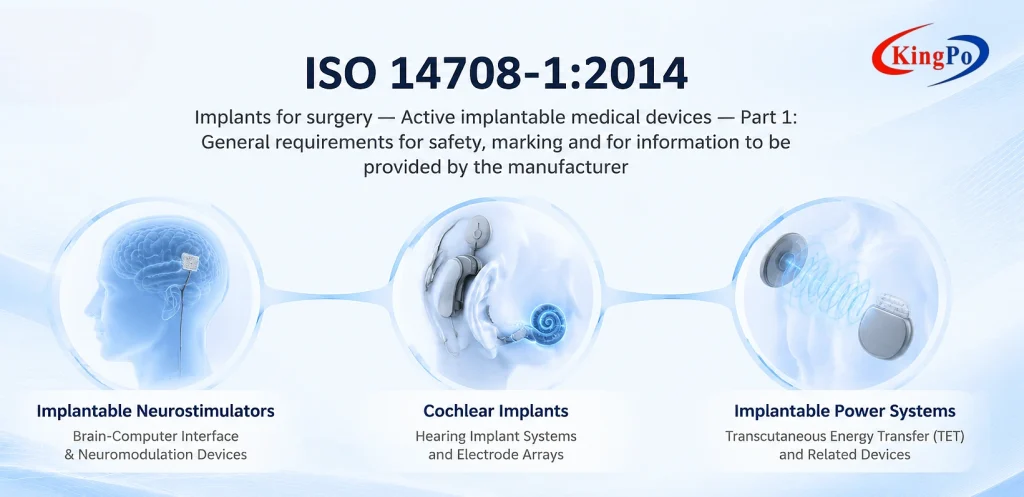
The international ISO 14708-1:2014 standard establishes general safety requirements for active implantable medical devices, while individual parts of the ISO 14708 series address the particular characteristics of different implant categories.
These standards provide an important framework for medical device evaluation. However, translating their requirements into practical test configurations can involve substantial engineering work, particularly when several instruments must operate together or when continuous monitoring of the device under test is required.
KingPo focuses on this area of laboratory engineering, developing configurable testing equipment and integrated systems that help laboratories establish controlled test conditions, automate repetitive procedures, and organize measurement results.
Specialized Testing Solutions for Neurotechnology and Implantable Systems
At CMEF 2026, KingPo will highlight engineering capabilities covering several important applications in active implantable medical device testing.
Rather than treating each requirement as an isolated measurement, these solutions emphasize the interaction between test signal generation, device interfaces, monitoring systems, and automated control.
Electrical Interference Testing for Implantable Neurostimulators
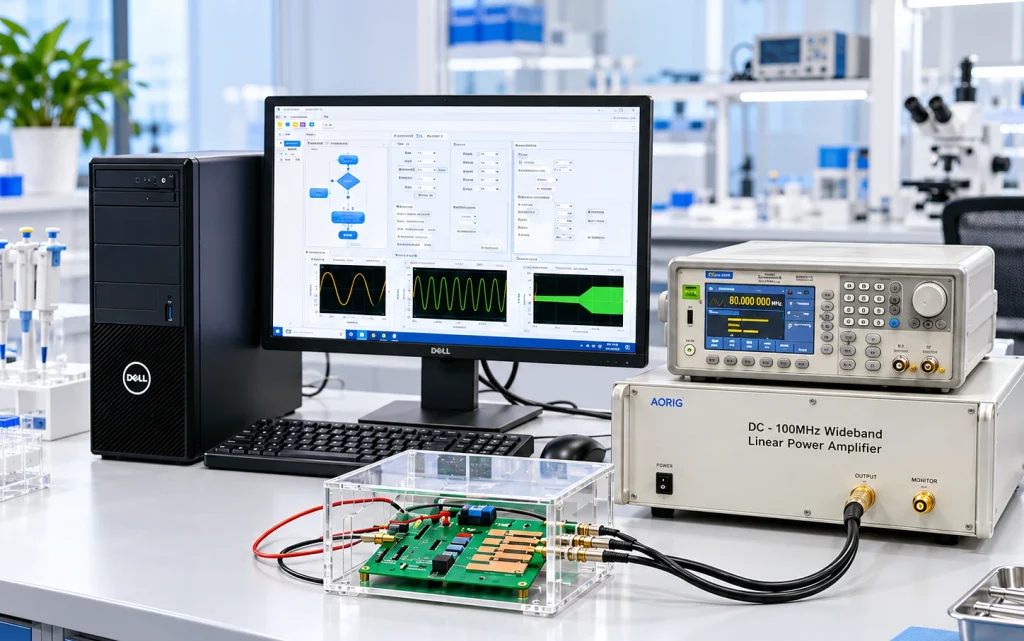
Implantable pulse generators (IPGs) are used in neurostimulation systems to deliver electrical stimulation to specific neural structures. Evaluating their response to electrical interference requires careful control of the applied signals and an appropriate representation of the electrode-tissue interface.
ISO 14708-3:2017 specifies particular requirements for active implantable neurostimulators intended to stimulate the central or peripheral nervous system.
For related electrical interference investigations, KingPo has developed an IPG voltage injection testing system concept integrating programmable signal generation, power amplification, tissue-electrode interface simulation, and automated test control.
The proposed configuration supports voltage injection testing across a frequency range of 16.6 Hz to 80 MHz, with different signal modulation conditions used across the relevant frequency bands.
A configurable five-element tissue-electrode interface model provides a means of representing the electrical characteristics of the interface under defined test conditions.
By coordinating signal generation, frequency progression, and data acquisition through software, the laboratory can reproduce selected interference conditions more consistently and examine the response of the device under test.
This approach is particularly useful during engineering verification, where repeatability and clear documentation are essential for comparing results across different test configurations.
Electromagnetic Immunity Evaluation for Cochlear Implants

Cochlear implants present a different set of testing challenges.
These systems combine sensitive electronic circuits with electrical stimulation of the auditory pathways. External electromagnetic disturbances may interfere with electronic functions or affect the behavior of the implant system, making electromagnetic immunity an important aspect of device verification.
ISO 14708-7:2019 addresses particular requirements for cochlear and auditory brainstem implant systems.
KingPo’s KP-CI2700 Cochlear Implant Immunity Test Automation Software is designed to support the integration and control of compatible laboratory instruments used in electromagnetic immunity evaluations.
Depending on the required test frequency and exposure conditions, a laboratory configuration may incorporate signal generators, power amplifiers, Helmholtz coils, antennas, field measurement devices, and dedicated fixtures for monitoring the equipment under test (EUT).
One of the key technical challenges is maintaining the intended field strength throughout the test.
In a closed-loop arrangement, the measurement system continuously provides feedback on the applied electromagnetic field. The control software can use this information to adjust the relevant signal source settings while monitoring the implant system’s response.
The software also supports the management of test sequences, instrument communication, operating status, measurement data, and test records.
By bringing these functions together, laboratories can reduce repetitive manual adjustments and establish more consistent procedures for complex immunity evaluations.
Thermal Evaluation for Transcutaneous Energy Transfer Systems
Wireless power transfer is another important technology used in certain active implantable medical systems.
Transcutaneous energy transfer (TET) enables electrical power to pass across the skin through electromagnetic coupling, potentially reducing the need for a permanent percutaneous power connection.
However, energy transfer losses and the operating characteristics of the transmitting and receiving components can produce heat. Understanding temperature changes under defined conditions is therefore an important part of engineering evaluation.
For implantable circulatory support devices, including ventricular assist devices, ISO 14708-5:2020 establishes particular safety and performance requirements.
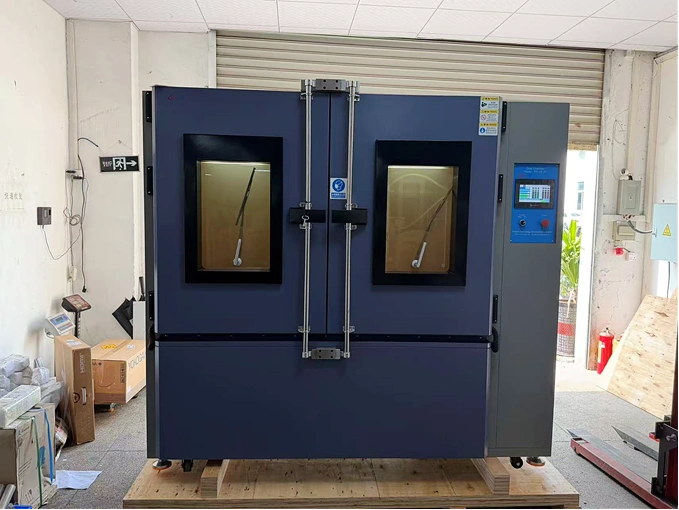
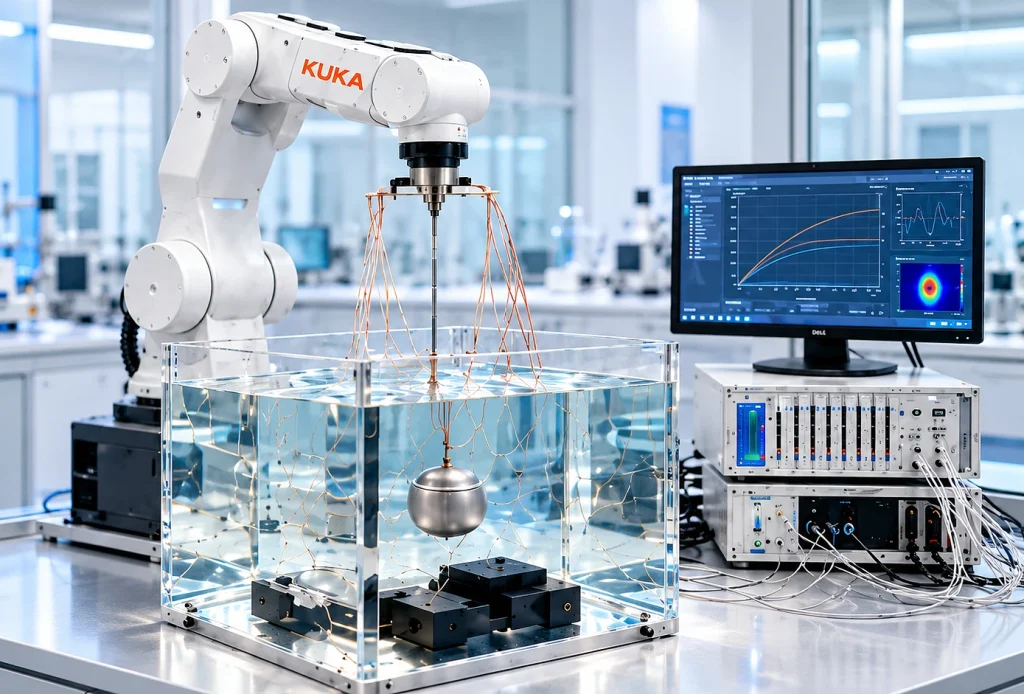
KingPo’s TET testing system concept combines precision mechanical positioning, a controlled temperature environment, multichannel temperature acquisition, and software-based temperature-rise analysis.
A representative configuration includes a six-axis robotic positioning system, a temperature-controlled water bath, and precision temperature sensors.
During testing, the system can record temperature changes over time, display transient and steady-state behavior, and calculate temperature rise (ΔT) under defined operating conditions.
This arrangement helps engineers investigate the thermal characteristics of wireless energy transfer components while maintaining documented test settings and measurement records.
For each application, the relevant test conditions and acceptance criteria must be determined according to the device design and applicable requirements.
Improving Laboratory Efficiency Through Integrated Test Automation
While the individual testing methods vary, many medical device laboratories face similar operational challenges.
A complex test may require several instruments to be configured, monitored, and adjusted throughout a sequence. Engineers must also ensure that the applied conditions remain within the required limits and that the corresponding device responses are accurately recorded.
When these operations are performed manually, repeated testing can become time-consuming and dependent on the operator’s workflow.
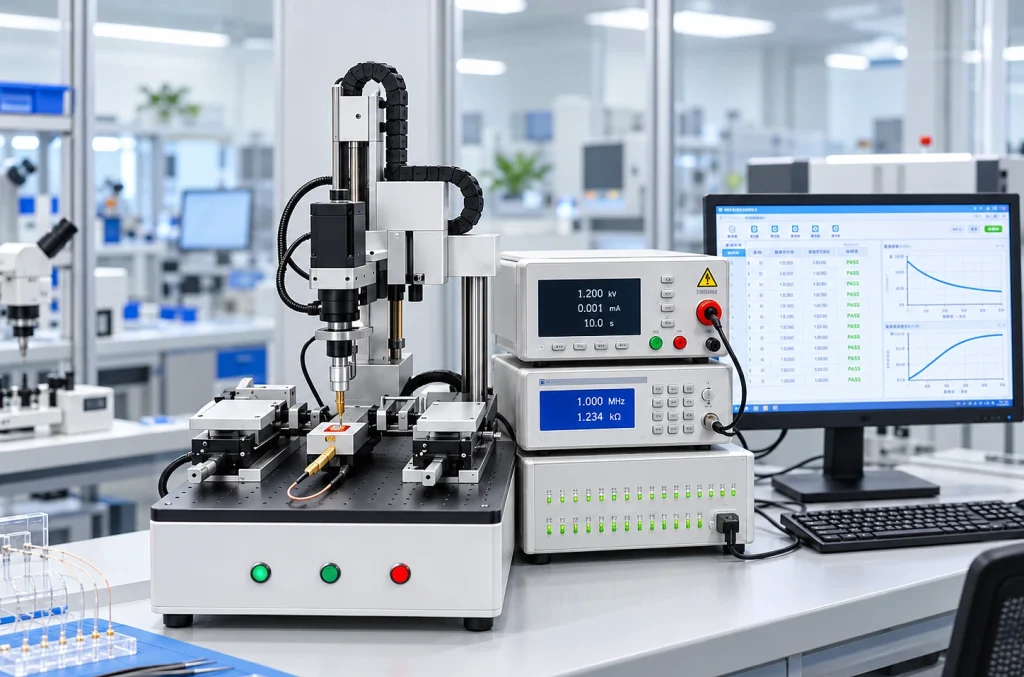
KingPo’s approach to test automation aims to bring these activities into a coordinated system.
Programmable test sequences help operators apply consistent settings across repeated measurements. Instrument communication allows compatible equipment to operate together, while measurement feedback provides additional control where the test method requires it.
Equally important is the management of test data.
Recording the applied conditions, equipment status, measurement values, and observed device responses gives engineers a clearer picture of what occurred during each test. This information supports technical review, comparison between test runs, and preparation of structured reports.
KingPo also recognizes that laboratories rarely begin with identical equipment configurations. Manufacturers may already have signal generators, oscilloscopes, power amplifiers, or measurement instruments that they intend to retain.
As a result, system planning often involves evaluating existing equipment, identifying additional components, and developing suitable interfaces and automation software.
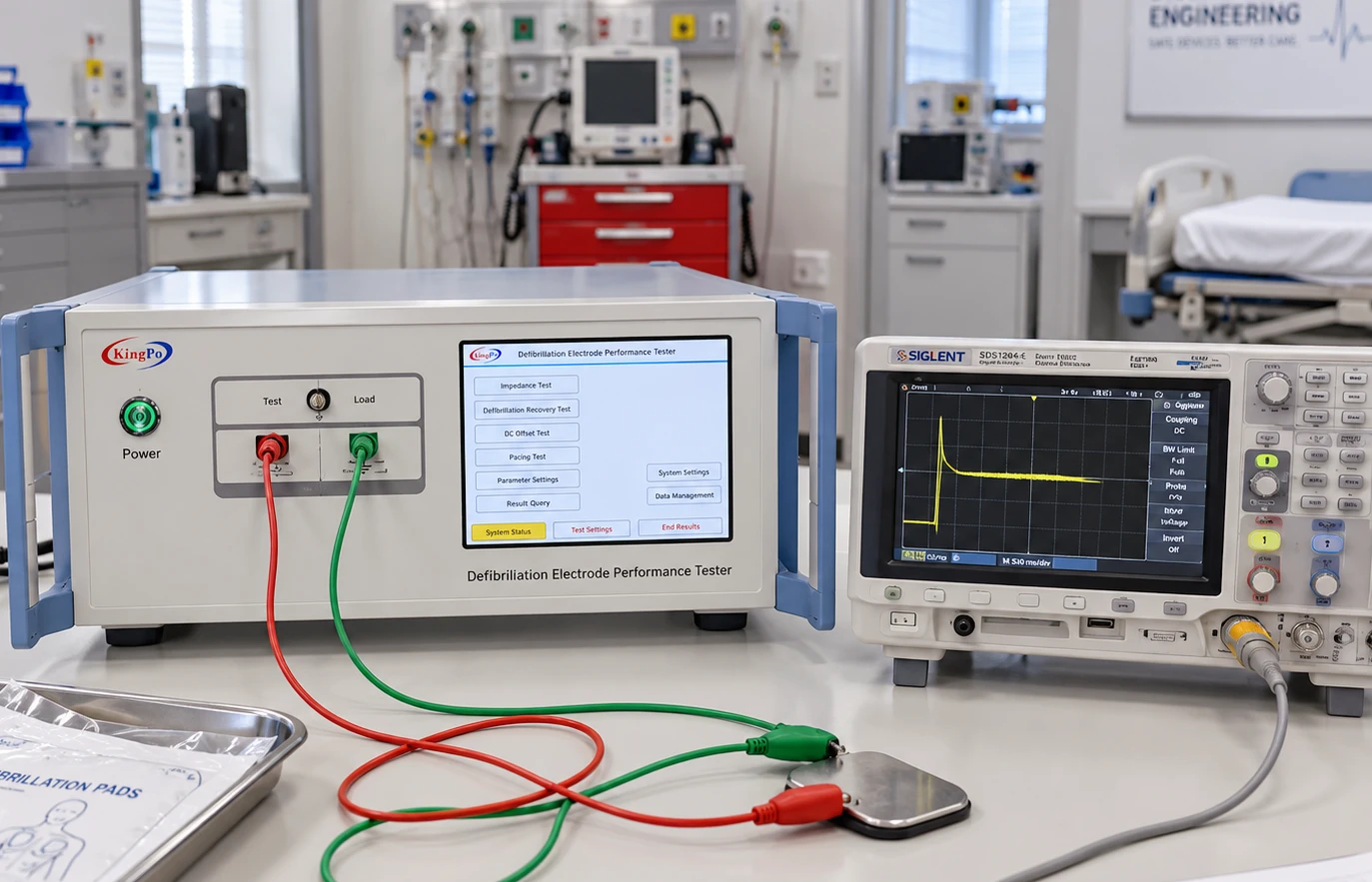
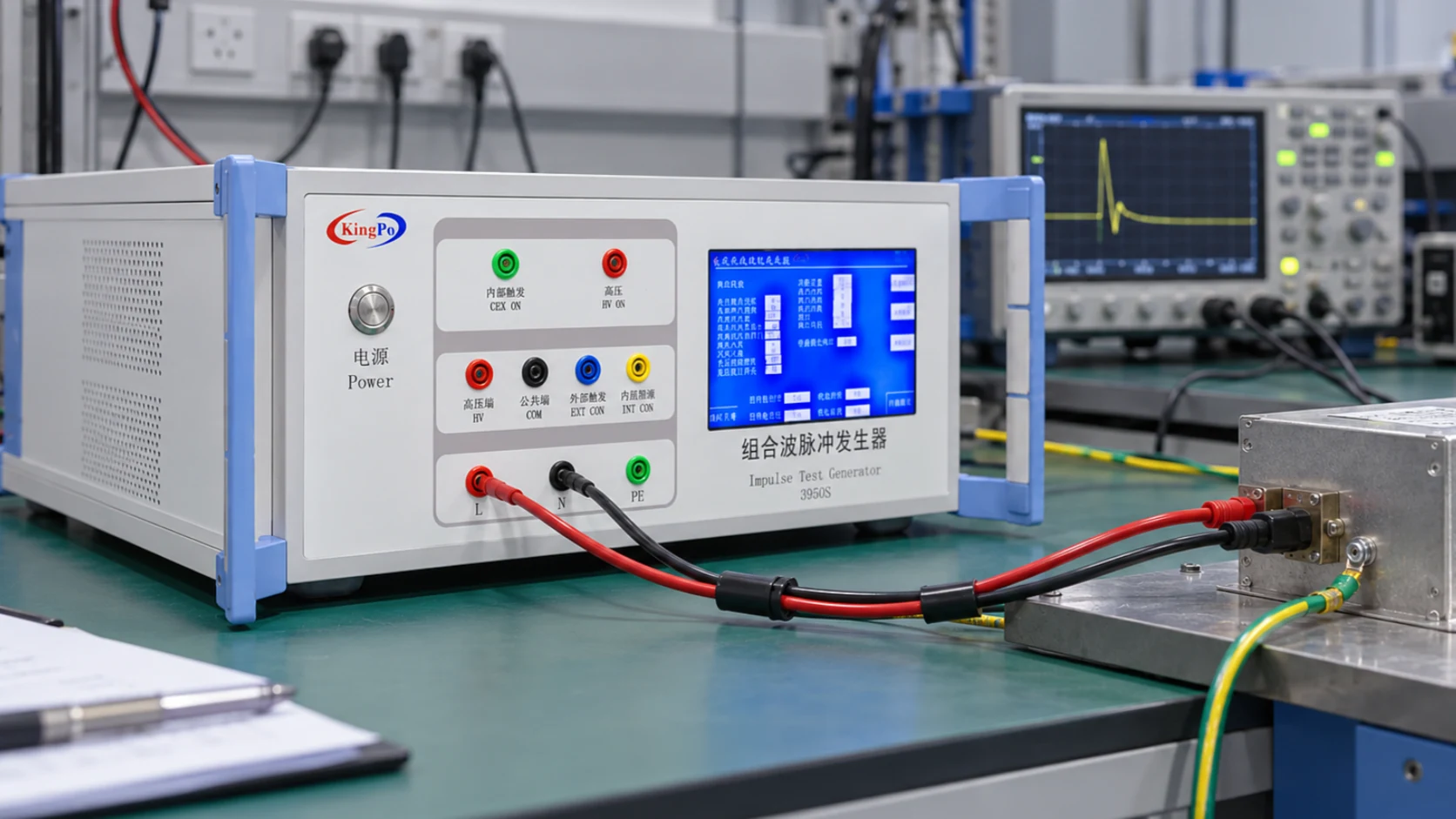
Alongside its specialized implantable device testing projects, KingPo provides a broader range of medical test equipment and laboratory testing solutions for electrical safety and performance evaluation.
KingPo Senior Engineer to Discuss Brain-Computer Interface Testing at CMEF
In addition to meeting visitors at its exhibition booth, KingPo will participate in a technical presentation focused on brain-computer interface testing equipment solutions.
Zhang Chao, Senior Engineer at KingPo, is scheduled to speak on October 21, 2026, from 16:15 to 16:35 (Beijing Time, UTC+8) at the ICMD Technical Presentation Area in Hall A1.
The presentation, titled “Brain-Computer Interface Testing Equipment Solutions,” will provide an opportunity for engineers, researchers, and medical device professionals to discuss testing technologies associated with emerging neurotechnology applications.
Brain-computer interfaces represent a rapidly developing field encompassing neural signal acquisition, electrical stimulation, electronic interfaces, and advanced medical system integration.
The diversity of these technologies presents challenges for laboratories seeking to establish suitable evaluation methods.
Testing requirements can vary significantly depending on whether a system is non-invasive, incorporates implantable components, records neural signals, delivers stimulation, or combines several functions.
For this reason, laboratory equipment selection must be based on the actual device architecture, intended application, and relevant technical requirements.
KingPo looks forward to exchanging practical engineering experience with industry professionals and discussing how automated measurement and specialized testing platforms can support research and product development.
Meet KingPo at CMEF 2026 in Beijing
CMEF brings together medical device manufacturers, technology developers, research institutions, testing organizations, and international industry professionals.
For KingPo, the exhibition provides an opportunity not only to introduce its testing capabilities but also to better understand the practical challenges faced by manufacturers developing advanced medical technologies.
Whether a project involves establishing a new testing laboratory, upgrading existing equipment, or developing a customized test configuration, early technical discussions can help clarify the necessary instruments, measurement methods, and system integration requirements.
KingPo welcomes visitors to discuss their applications and explore suitable approaches with its engineering team.
CMEF 2026 Exhibition Details
- Event: 94th China International Medical Equipment Fair (CMEF)
- Date: October 21–24, 2026
- Venue: Capital International Exhibition & Convention Center, Beijing, China
- KingPo Booth: Hall A1, A1ZC45
KingPo Technical Presentation
- Topic: Brain-Computer Interface Testing Equipment Solutions
- Speaker: Zhang Chao, Senior Engineer, KingPo
- Date: October 21, 2026
- Time: 16:15–16:35 (Beijing Time, UTC+8)
- Location: ICMD Technical Presentation Area, Hall A1
We look forward to meeting medical device manufacturers, biomedical engineers, research teams, and testing professionals in Beijing. To discuss your testing requirements or arrange a technical consultation, please contact KingPo.
KingPo — Precision Testing for Safer Medical Technologies.