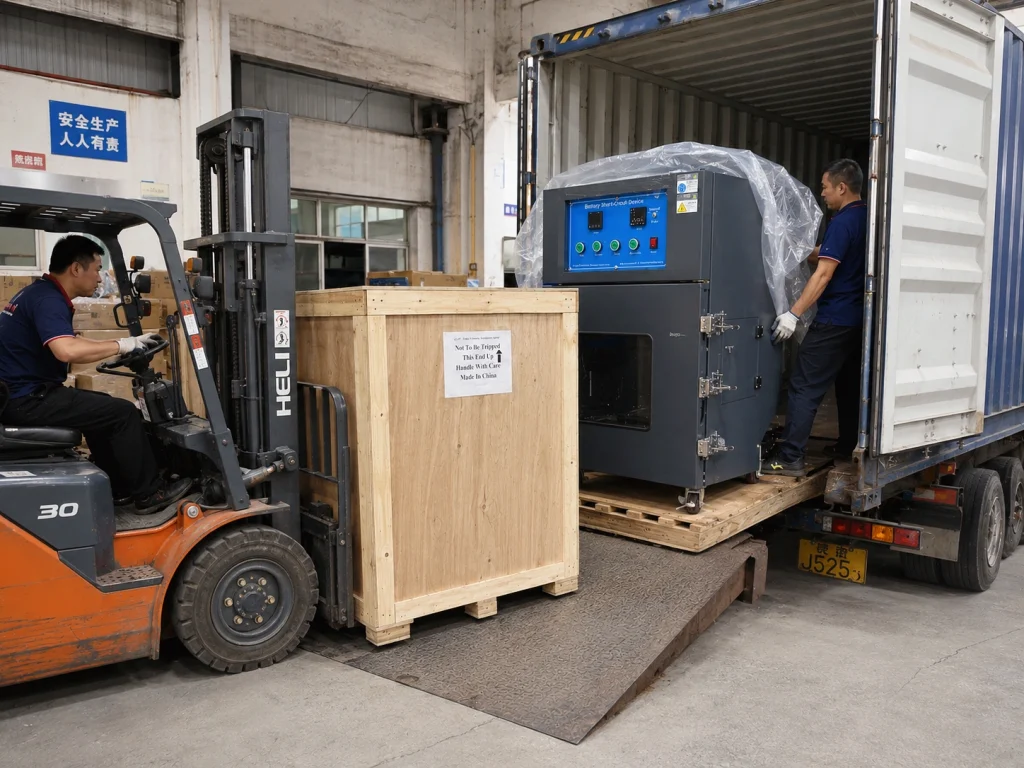
KingPo supplied an IEC 60335-1 Clause 19 Battery Short Circuit Tester to TSK Corporation for a laboratory project in South Korea. The equipment was arranged for shipment to an Intertek Korea laboratory address, supporting controlled battery short-circuit testing for household and similar electrical appliance safety evaluation.
The supplied system is designed for battery abnormal operation testing under controlled laboratory conditions. It combines a protected test chamber, low-resistance short-circuit path, temperature monitoring, timing control, exhaust connection, observation window, pressure relief structure, and fire suppression function.
Unlike a temporary short-circuit setup, this equipment provides a dedicated and safety-focused test environment for laboratories that need to evaluate battery behavior during severe electrical fault conditions.
Project Snapshot
| Item | Project Information |
|---|---|
| Customer | TSK Corporation |
| Country | South Korea |
| Project Date | April 28, 2026 |
| Shipment Destination | Intertek Korea laboratory address |
| Supplied Equipment | IEC 60335-1 Clause 19 Battery Short Circuit Tester |
| Model | KP-8102A |
| Application | Battery short-circuit safety testing |
| Applicable Standard | IEC 60335-1 Clause 19 |
| Main Test Purpose | Battery abnormal operation and short-circuit behavior evaluation |
| System Type | Explosion-proof battery short-circuit test equipment |
| Power Supply | 220V, 60Hz |
| Packaging | Plywood box for international shipment |
Project Overview
TSK Corporation required a battery short-circuit test system for a South Korea laboratory project. The equipment needed to support short-circuit testing of batteries according to IEC 60335-1 Clause 19, with particular attention to laboratory safety during abnormal operation testing.
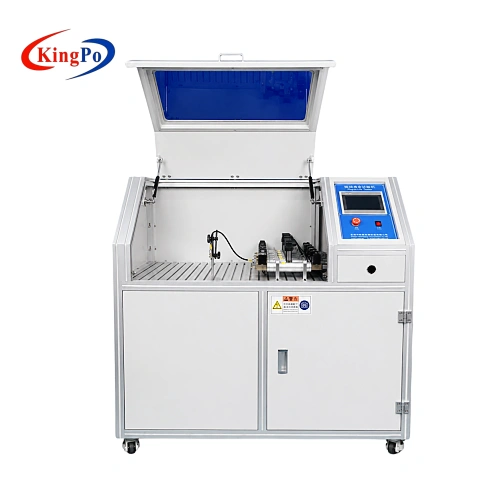
For this project, KingPo supplied the KP-8102A Battery Short Circuit Tester. The equipment includes a protected chamber for battery placement, short-circuit control, battery temperature monitoring, timing function, internal lighting, exhaust connection, pressure relief design, and fire suppression function.
Because battery short-circuit testing may involve rapid heat generation, smoke, venting, fire, pressure release, or mechanical rupture, the system was prepared as an enclosed safety test device rather than a simple switching unit. The project therefore focused on both test function and operator protection.
Laboratory Testing Challenge
Battery short-circuit testing is not only an electrical function test. For laboratories, the main challenge is how to create a severe short-circuit condition while keeping the test process controlled, observable, and safer for operators.
A temporary or open short-circuit setup may create several practical risks. The connection resistance may be unstable. Heat generation may be difficult to control. Smoke or gas release may affect the test area. Battery fire or rupture may create safety concerns for the operator and surrounding equipment.
For laboratories involved in household appliance safety testing or battery-powered product evaluation, these risks are not theoretical. The test area must consider chamber strength, observation protection, ventilation, pressure relief, fire suppression, test timing, and safe operation procedures.
For this reason, a dedicated battery short-circuit test chamber is more practical than a temporary short-circuit arrangement. The supplied system provides an enclosed test space with multiple safety-related features to support controlled laboratory testing.
Product and Test Background
IEC 60335-1 covers safety requirements for household and similar electrical appliances. Clause 19 relates to abnormal operation conditions, where appliances and components may need to be evaluated under fault or misuse-related scenarios.
For products using batteries, short-circuit testing is an important safety evaluation. A battery short circuit can produce high current, rapid temperature rise, gas release, fire, or mechanical failure depending on the battery structure, state of charge, protection circuit, and test condition.
A dedicated Battery Short Circuit Tester allows the laboratory to perform this type of test in a more structured environment. The test chamber, observation window, short-circuit control, temperature monitoring, pressure relief, exhaust connection, and fire suppression function all work together to support safer test preparation and operation.
Supplied Equipment Overview
The supplied KP-8102A Battery Short Circuit Tester is designed for IEC 60335-1 Clause 19 battery short-circuit test applications.
The system includes an internal test chamber for battery placement, short-circuit control function, adjustable timing, temperature monitoring, light control, exhaust connection, and safety protection components. The operator can set the test duration and manage the short-circuit test through the control panel.
The chamber is designed with safety-focused construction. The observation window uses double-toughened glass to support visual monitoring while maintaining protection. A pressure relief valve is included to reduce pressure accumulation risk. A stainless steel explosion-proof chain secures the chamber door during testing. The system also includes sand fire extinguishing, which can cover a burning battery automatically or manually depending on the test condition and configuration.
Key Configuration
The supplied tester was configured according to the project requirement for IEC 60335-1 Clause 19 battery short-circuit testing.
The model supplied was KP-8102A. The working voltage is 220V, 60Hz. The external dimension is 520 × 550 × 750 mm, and the internal chamber dimension is 400 × 400 × 400 mm.
The short-circuit resistance is specified as 10±2 mΩ, supporting a defined low-resistance short-circuit path for the test. The mechanical service life is specified as 300,000 cycles, supporting repeated laboratory use.
The equipment is suitable for battery manufacturers, appliance manufacturers, R&D laboratories, quality control departments, and testing laboratories that need to evaluate battery short-circuit behavior under controlled safety test procedures.
Engineering and Safety Considerations
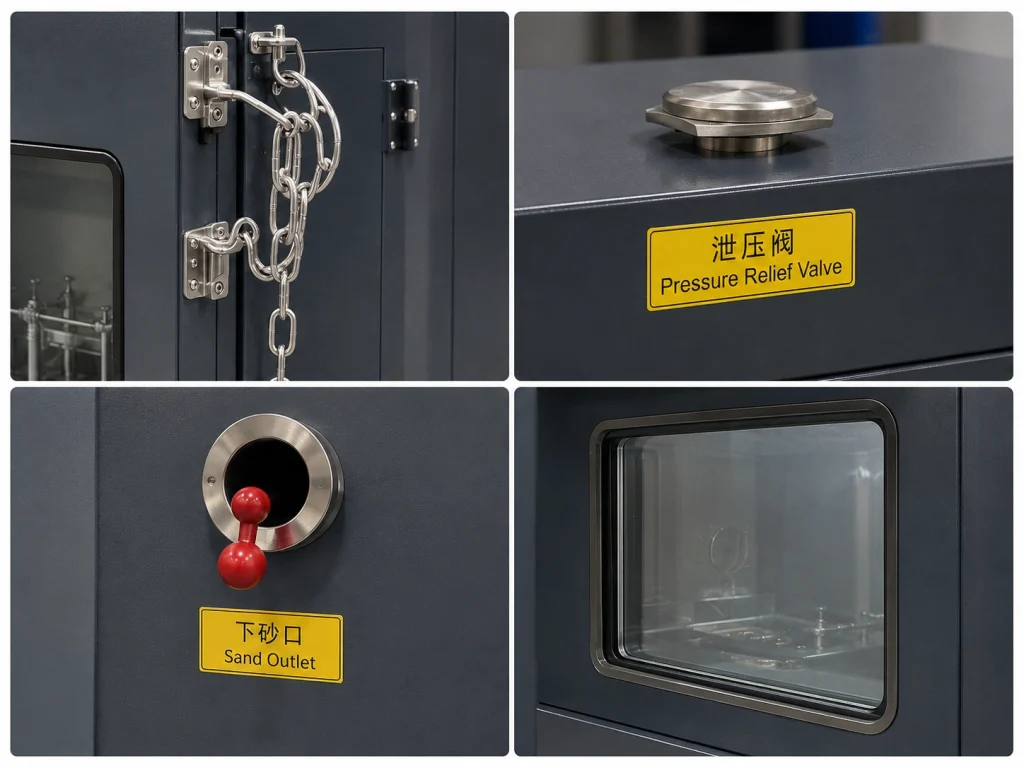
For battery short-circuit testing, the most important engineering consideration is not only whether a short circuit can be created. The complete test environment must also address heat, smoke, pressure, fire risk, observation, and operator protection.
The test chamber must provide a protected space for the battery sample. The observation window must allow the operator to monitor the test without direct exposure to the battery. The exhaust connection allows the system to be connected to laboratory ventilation where required. The temperature monitoring function helps the operator observe battery behavior during the test.
The sand fire extinguishing system provides an additional safety measure if the battery enters a thermal or burning condition. The pressure relief valve helps reduce pressure accumulation risk. The stainless steel explosion-proof chain supports secure door locking during the test process.
This combination of electrical control, chamber protection, temperature monitoring, exhaust arrangement, and fire suppression makes the system more suitable for laboratory use than a simple manual short-circuit setup.
International Delivery and Preparation
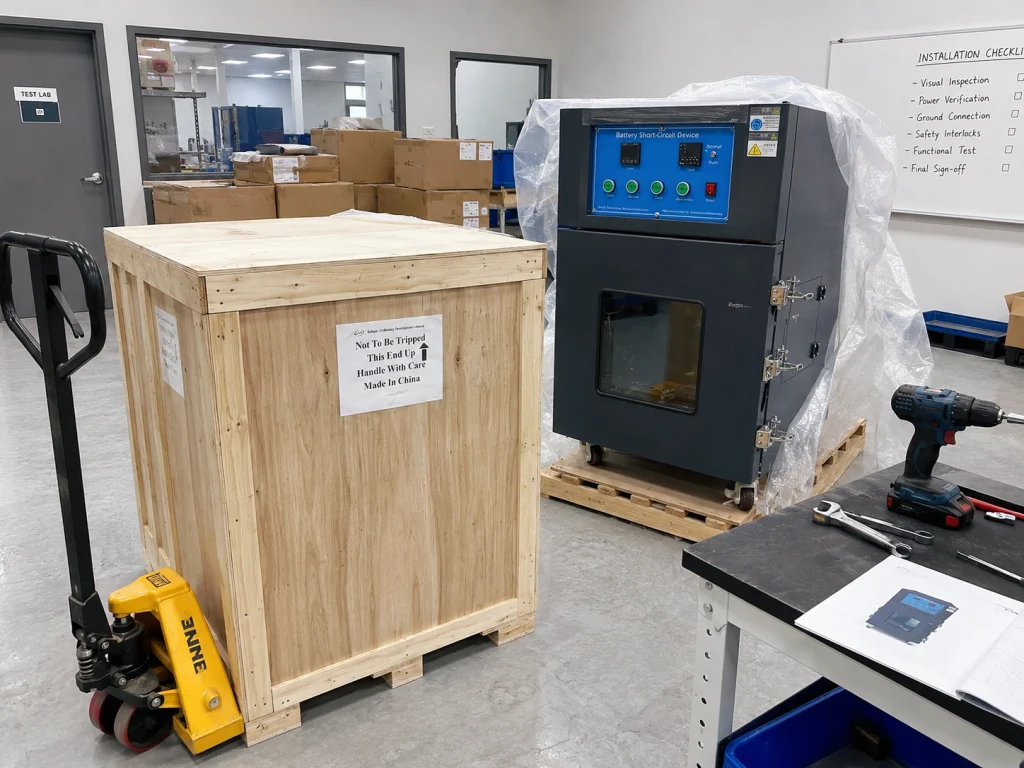
For this South Korea laboratory project, KingPo prepared the equipment not only as a test instrument, but also as an export-ready laboratory device.
The equipment was configured for 220V, 60Hz operation and prepared with protective packing for international delivery. Before shipment, KingPo checked the chamber structure, control panel, short-circuit function, timing control, temperature monitoring interface, internal lighting, exhaust connection, door locking structure, pressure relief arrangement, sand release function, and external appearance.
Because battery short-circuit testing equipment includes electrical, mechanical, chamber, observation, and safety protection components, shipment preparation is an important part of the project. The plywood packing crate, protective covering, accessory checking, and handling labels help reduce transportation risk and support smoother unpacking and installation preparation after arrival.
Delivery Outcome and Laboratory Value
The project resulted in the supply of a dedicated IEC 60335-1 Clause 19 Battery Short Circuit Tester for a South Korea laboratory project.
The delivered equipment provides a controlled short-circuit test chamber for battery abnormal operation evaluation. Compared with a temporary short-circuit arrangement, the system offers a more structured laboratory setup with defined low-resistance short-circuit path, battery temperature monitoring, test timing, observation, exhaust connection, pressure relief, and fire suppression features.
For laboratories involved in appliance safety testing or battery-related evaluation, this type of equipment supports safer test preparation, repeatable test operation, and clearer observation during battery short-circuit testing. It is especially useful when the test may involve rapid temperature rise, smoke, venting, fire, or pressure release.
The supplied equipment is intended to support laboratory testing and technical evaluation according to applicable standards. It does not represent a certification result, product approval, or endorsement by any testing institution or standards organization.
Application Areas
The IEC 60335-1 Clause 19 Battery Short Circuit Tester can be used for battery short-circuit safety testing in household appliances, battery-powered electrical products, rechargeable battery products, portable appliances, and product designs where battery abnormal operation evaluation is required.
It is suitable for testing laboratories, inspection institutions, manufacturers, R&D teams, and quality control departments that need to perform controlled battery short-circuit tests under laboratory conditions.
The system can also be considered for product development and internal verification when the manufacturer needs a more protected environment for battery short-circuit testing before third-party testing or final compliance evaluation.
Technical Notes
What is the IEC 60335-1 Clause 19 Battery Short Circuit Tester used for?
It is used to evaluate battery behavior under short-circuit conditions as part of abnormal operation safety testing. The tester provides a controlled chamber, short-circuit control, temperature monitoring, timing function, observation, exhaust connection, and safety protection for laboratory testing.
Why is low resistance important in battery short-circuit testing?
A short-circuit test requires a defined low-resistance path so that the battery can be evaluated under severe electrical fault conditions. In this system, the short-circuit resistance is specified as 10±2 mΩ.
Why does the tester need an explosion-proof chamber?
Battery short-circuit testing may cause heat generation, smoke, venting, fire, pressure release, or rupture depending on the battery and test condition. An enclosed chamber with safety protection helps reduce direct exposure risk during testing.
What safety features are included in the system?
The system includes double-toughened glass, stainless steel explosion-proof chain, pressure relief valve, exhaust connection, internal lighting, temperature monitoring, and sand fire extinguishing function for automatic or manual fire suppression.
Why is sand fire extinguishing used?
Sand fire extinguishing can cover a burning battery and help isolate the burning area inside the test chamber. It is a practical safety feature for battery short-circuit tests where heat or fire may occur.
What should laboratories confirm before selecting a battery short-circuit tester?
Laboratories should confirm the applicable standard, battery type, sample size, maximum battery voltage and capacity, short-circuit resistance requirement, chamber size, power supply condition, exhaust requirement, and safety protection configuration.
Can KingPo customize battery short-circuit testing equipment?
Yes. KingPo can customize battery short-circuit testing equipment according to chamber size, battery type, short-circuit resistance, test procedure, voltage requirement, safety protection, fire suppression method, exhaust connection, and laboratory layout.
About KingPo
KingPo Technology Development Limited develops and manufactures testing equipment for battery safety testing, appliance safety testing, electrical safety testing, ingress protection testing, environmental testing, and customized laboratory test systems.
In addition to standard test instruments, KingPo provides customized test equipment for laboratories and manufacturers when test procedures require special chamber size, safety protection, electrical configuration, fixture design, or automation functions.
Need IEC 60335-1 Battery Short Circuit Testing Equipment?
KingPo can provide IEC 60335-1 Clause 19 Battery Short Circuit Testers and customized battery safety test equipment according to battery type, test standard, chamber size, short-circuit resistance, safety protection requirement, power supply condition, ventilation requirement, and laboratory layout.
For similar projects, customers may provide the applicable standard, battery specification, sample dimensions, test method, power supply, exhaust condition, and safety configuration requirements for technical discussion.