KINGPO SUCCESSFUL CASE / ENVIRONMENTAL TESTING
On-site engineering support for a 64 m³ walk-in sand and dust test chamber at SGS Korea.
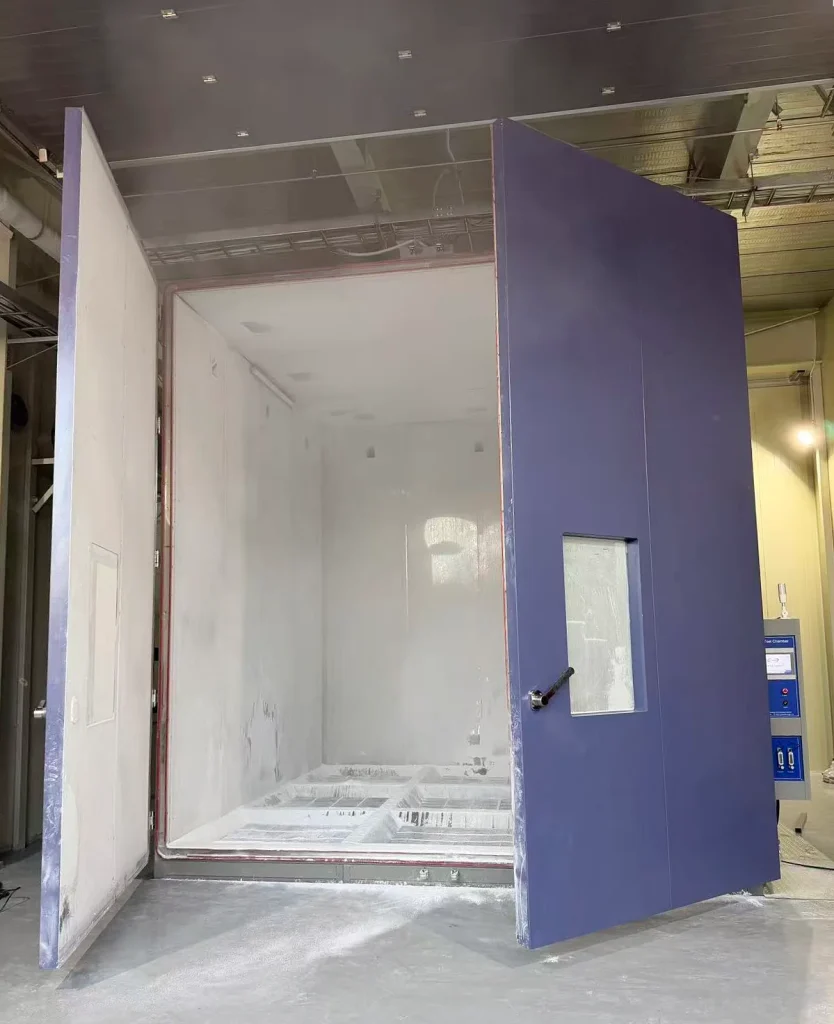
KINGPO recently provided on-site engineering support for the installation of a large walk-in sand and dust test chamber at an SGS facility in South Korea. Our engineers traveled to the customer’s site to assist with equipment positioning, structural assembly and system installation, working alongside the local team throughout the project.
The equipment, model KP-DC4000, is considerably larger than conventional laboratory dust chambers. With an internal testing space of 4,000 × 4,000 × 4,000 mm (64 m³), it is designed to accommodate large electrical equipment, industrial enclosures and complete product assemblies that are difficult to test in standard-sized chambers.
The project involved more than supplying a large environmental testing system. The chamber had to be transported internationally in separate sections, moved into the laboratory using heavy lifting equipment and assembled on site. KINGPO engineers participated in the installation to support the mechanical work and coordination of the associated testing systems.
A Large-Scale Testing Solution for Oversized Products
Dust ingress testing is an important part of evaluating the environmental protection and reliability of electrical and industrial equipment. Airborne dust can enter through enclosure joints, ventilation openings, cable entries and access panels, potentially affecting internal electrical components, mechanical assemblies and equipment operation.
For smaller products, these evaluations can usually be performed in conventional dust test chambers. Testing complete electrical cabinets, large industrial machinery or substantial equipment enclosures, however, requires considerably more space.
In many cases, the enclosure needs to be tested in its assembled condition. Door seals, cable glands, ventilation openings and connections between structural panels all contribute to the overall dust protection of the equipment. Testing these parts separately may not represent the performance of the complete assembly.
The KP-DC4000 was designed for these larger testing applications.
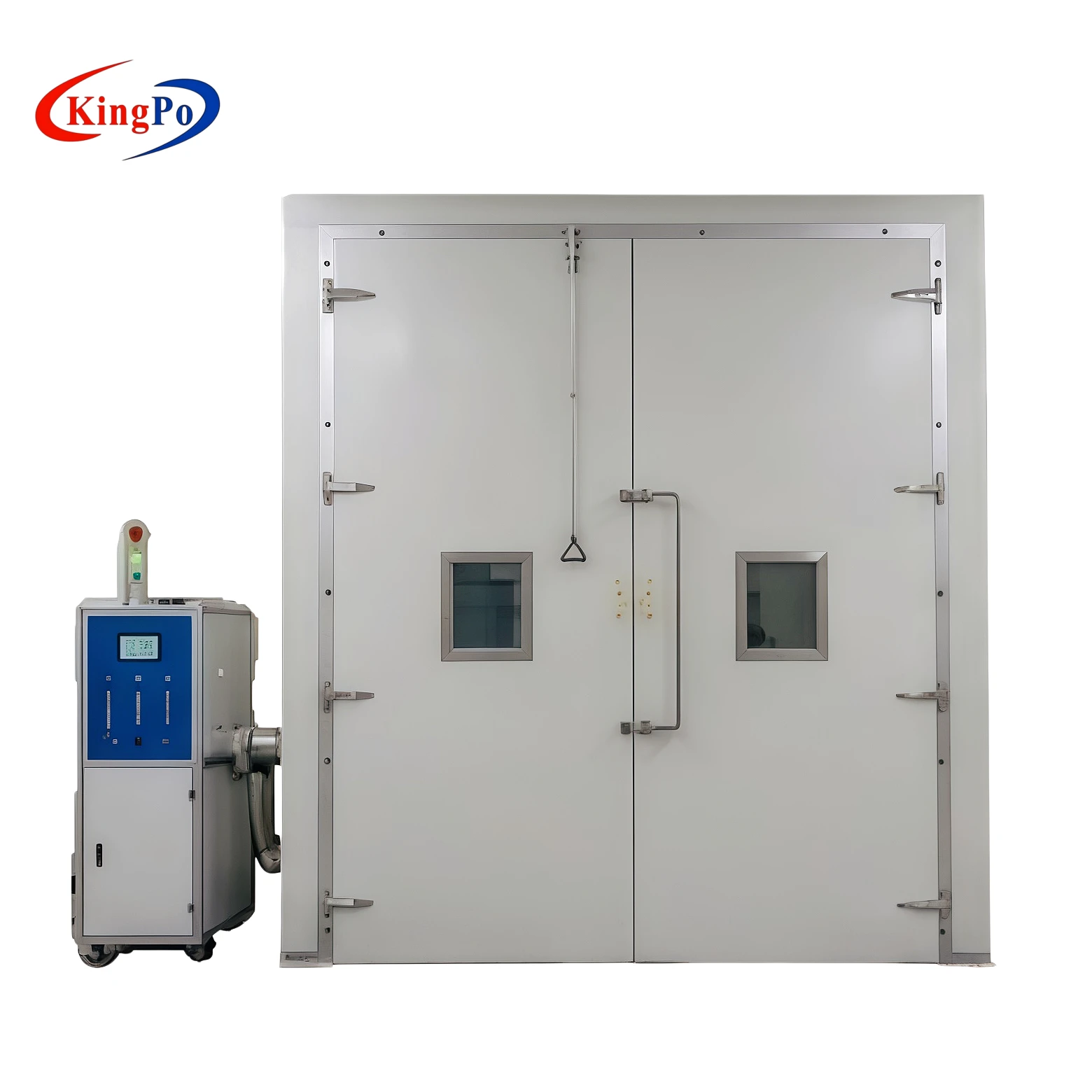
Its 64 m³ internal test space provides room for substantial specimens, while the 4,000 × 4,000 mm double-door opening facilitates the movement of large equipment into the chamber. The system supports specimen loads of up to 5,000 kg, within the specified loading conditions.
64 m³
Internal Test Volume
4 × 4 × 4 m
Internal Dimensions
5,000 kg
Maximum Specimen Load
The chamber uses a corrosion-resistant SUS304 stainless steel interior and a powder-coated steel exterior. Its configuration incorporates dust circulation, vacuum testing connections, specimen power interfaces and an integrated control system.
These features make the chamber suitable for testing large electrical distribution cabinets, industrial control enclosures, energy storage equipment, power conversion systems and other assemblies that may be impractical to accommodate in smaller environmental chambers.
Dust Testing System and Technical Capabilities
The KP-DC4000 is designed to establish a controlled dust-containing environment around the test specimen. Its main testing functions combine dust circulation, specimen vacuum extraction and programmable operation within the large walk-in enclosure.
Dust Circulation and
Exposure
Talcum powder is introduced into the chamber and distributed through an air circulation system. The equipment provides an adjustable dust loading range of 2–4 kg/m³, with a nominal setting of 2 kg/m³.
The circulation system exposes specimens to airborne dust over a defined testing period, with the operating conditions selected according to the applicable procedure.
Vacuum Testing System
For enclosure tests requiring a pressure differential, the chamber includes a vacuum pump rated at 113 L/min, with a maximum vacuum level of −90 kPa.
The vacuum system connects to the specimen enclosure and extracts air from inside the specimen when required by the test method. Pressure indication and extraction flow monitoring are provided.
Control and Specimen Interfaces
A Mitsubishi PLC and MCGS touch-screen interface provide the main operating controls, including test timing and system operation. Temperature and humidity monitoring are incorporated into the equipment.
Dedicated specimen power interfaces, rated at AC 220 V / 16 A and AC 380 V / 63 A, support powered specimen operation when required by the selected procedure.
Together, these systems support the preparation and operation of dust exposure tests on large electrical and industrial products.
Key Technical Specifications
| Parameter | KP-DC4000 Specification |
|---|---|
| Internal Dimensions | 4,000 × 4,000 × 4,000 mm |
| Overall Dimensions (Approx.) | 4,800 × 4,600 × 4,200 mm |
| Maximum Specimen Load | 5,000 kg |
| Inner Chamber Material | SUS304 stainless steel |
| Test Dust | Talcum powder |
| Adjustable Dust Loading | 2–4 kg/m³ |
| Vacuum Pump | 113 L/min; maximum vacuum −90 kPa |
| Control System | Mitsubishi PLC / MCGS touch-screen HMI |
| Specimen Power | AC 220 V / 16 A; AC 380 V / 63 A |
International Transportation and Heavy Equipment Handling
With approximate overall dimensions of 4,800 × 4,600 × 4,200 mm, the KP-DC4000 required a sectional approach to international transportation and installation.
The chamber’s major structural components were packed in large wooden shipping crates for transportation to South Korea. Rather than moving the complete chamber as a single unit, the individual sections could be unloaded, transferred into the facility and assembled in the designated laboratory area.
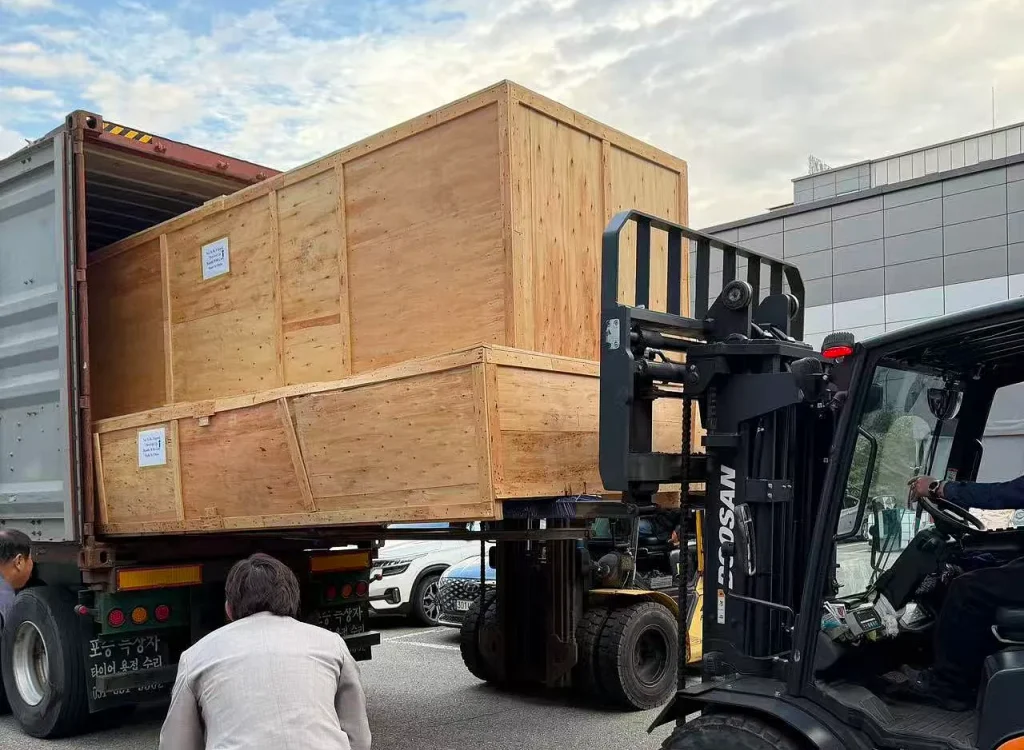
Upon arrival, heavy-duty forklifts were used to unload the equipment from shipping containers. The handling operations involved oversized crates and large structural sections, with some of the work continuing into the evening.
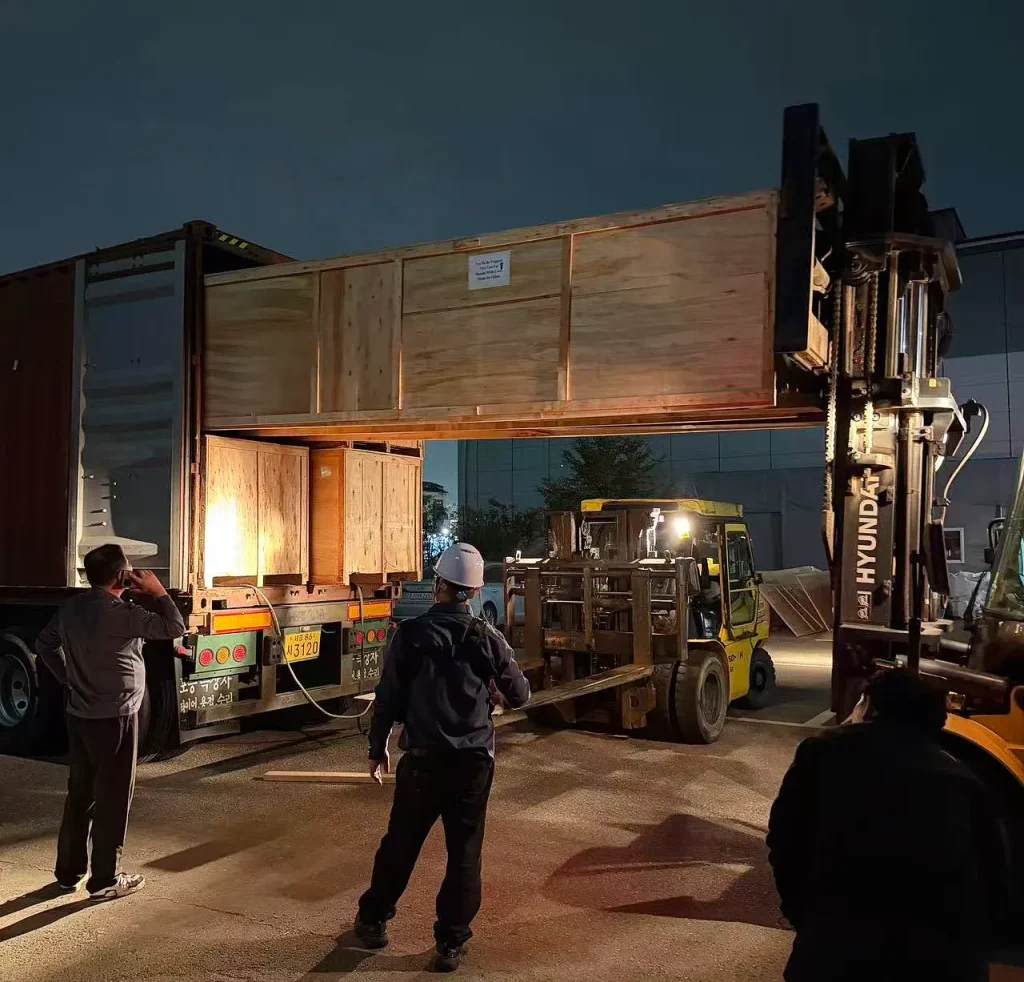
Moving the equipment into the laboratory presented further challenges. Large panels and supporting structures required mechanical lifting assistance, while the available working space and access clearances had to be considered during positioning.
Forklifts and lifting equipment were used to handle the chamber sections, with installation personnel coordinating the movement of the components into place.
KINGPO engineers worked alongside the local team throughout these activities, providing assistance with equipment positioning and the installation arrangement.
The handling of large environmental testing equipment requires close coordination between lifting operators, installation personnel and engineers. Once the components are brought into an enclosed laboratory space, their position can affect the access available for subsequent assembly operations.
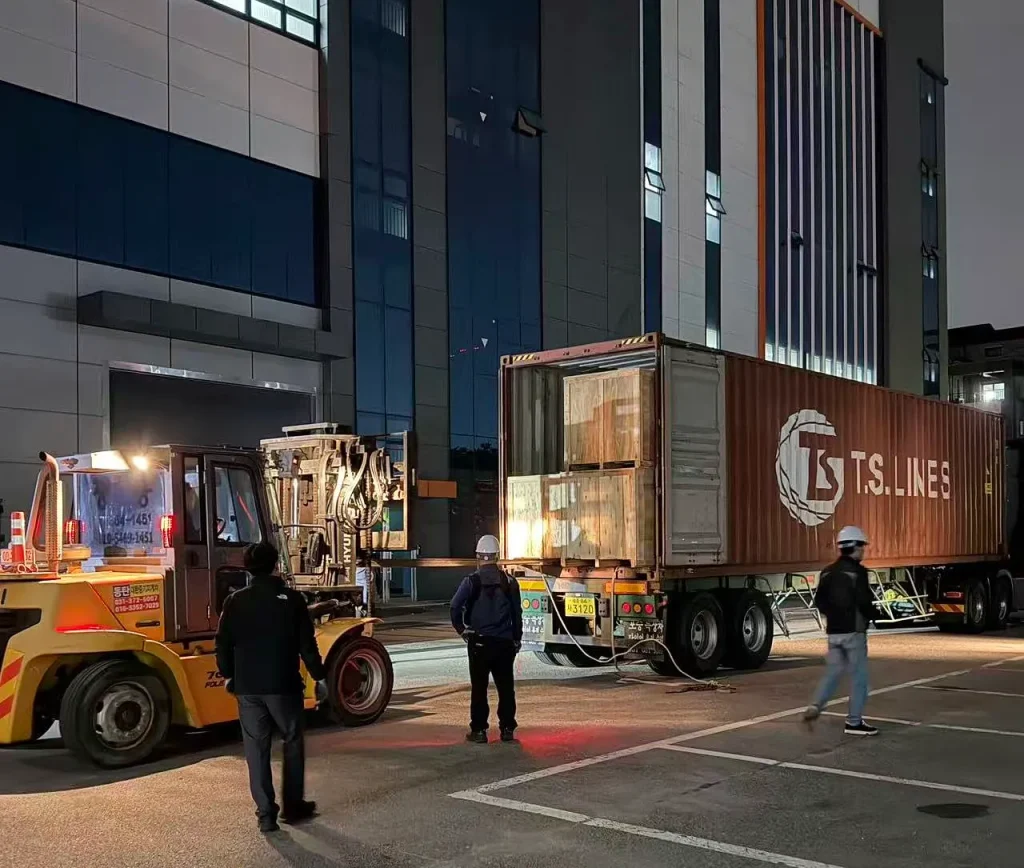
With the major sections transferred to the installation area, work progressed to assembling the chamber structure.
On-Site Assembly and System Integration
Assembly of a large walk-in dust chamber involves more than constructing an enclosed test space. The supporting structure, access doors, panel connections and dust circulation passages must be properly arranged to support the intended operating conditions.
At the SGS facility, the main chamber components were positioned and assembled with the assistance of lifting equipment. Large metal sections were raised into place as the structure gradually took shape inside the laboratory.
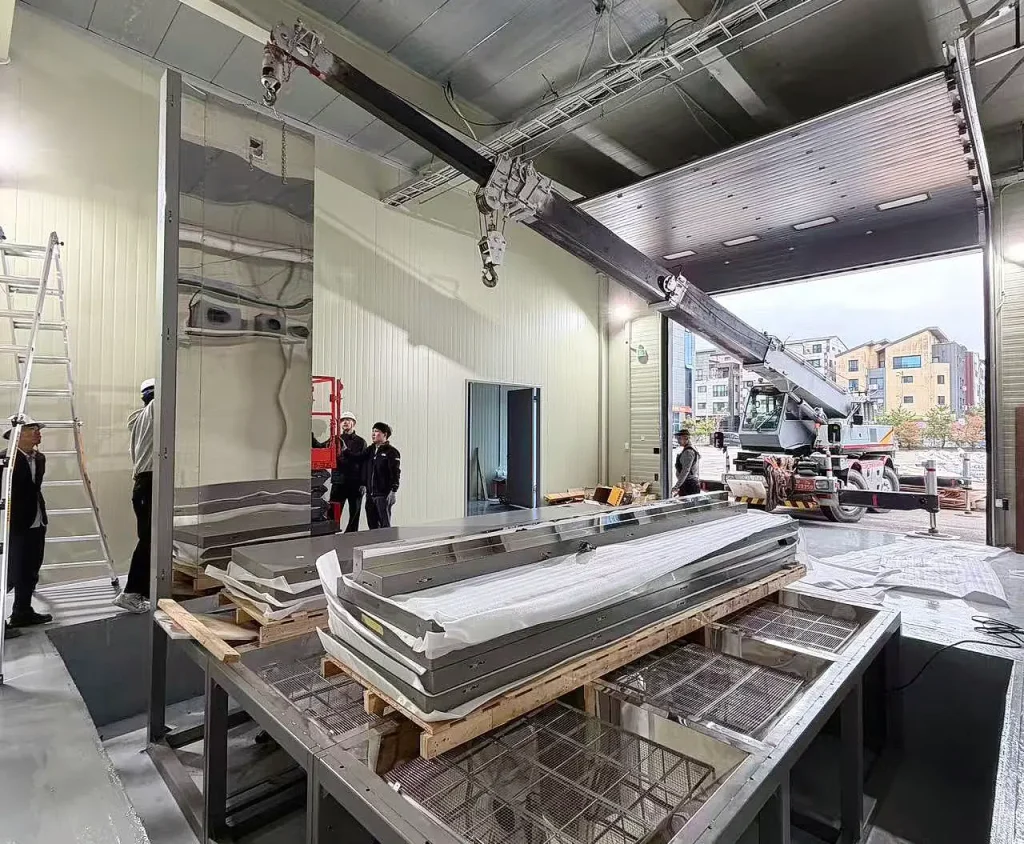
The installation involved the main enclosure panels, supporting structures, lower circulation section and associated equipment interfaces.
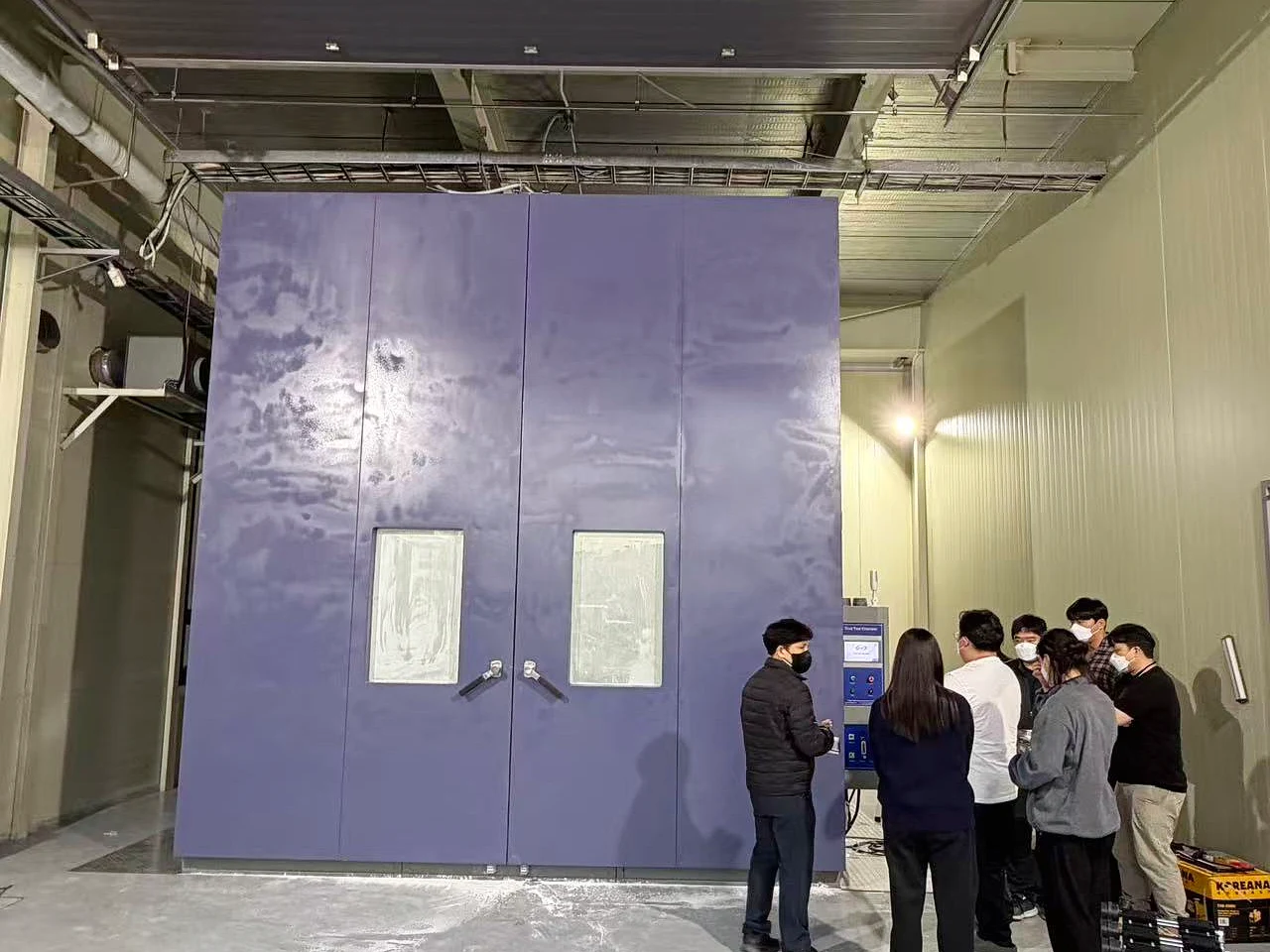
The four-metre-high internal space was particularly noticeable during assembly. Unlike a smaller cabinet-style chamber, the KP-DC4000 required personnel to work around substantial structural components while maintaining sufficient access for lifting and positioning.
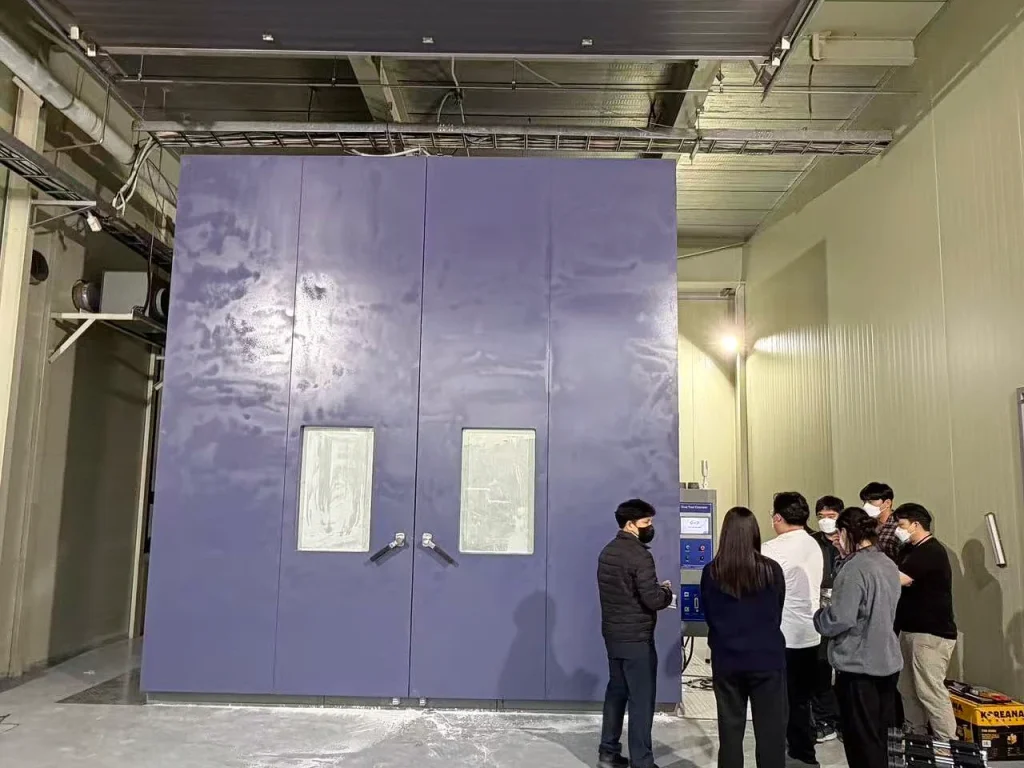
The large double doors form an important part of the mechanical design. They provide access for oversized specimens while also forming part of the enclosed testing environment. Proper positioning of the surrounding structure and door interfaces is therefore important during installation.
The lower section of the chamber accommodates the dust circulation arrangement, while the external control area houses the operating interface and related equipment.
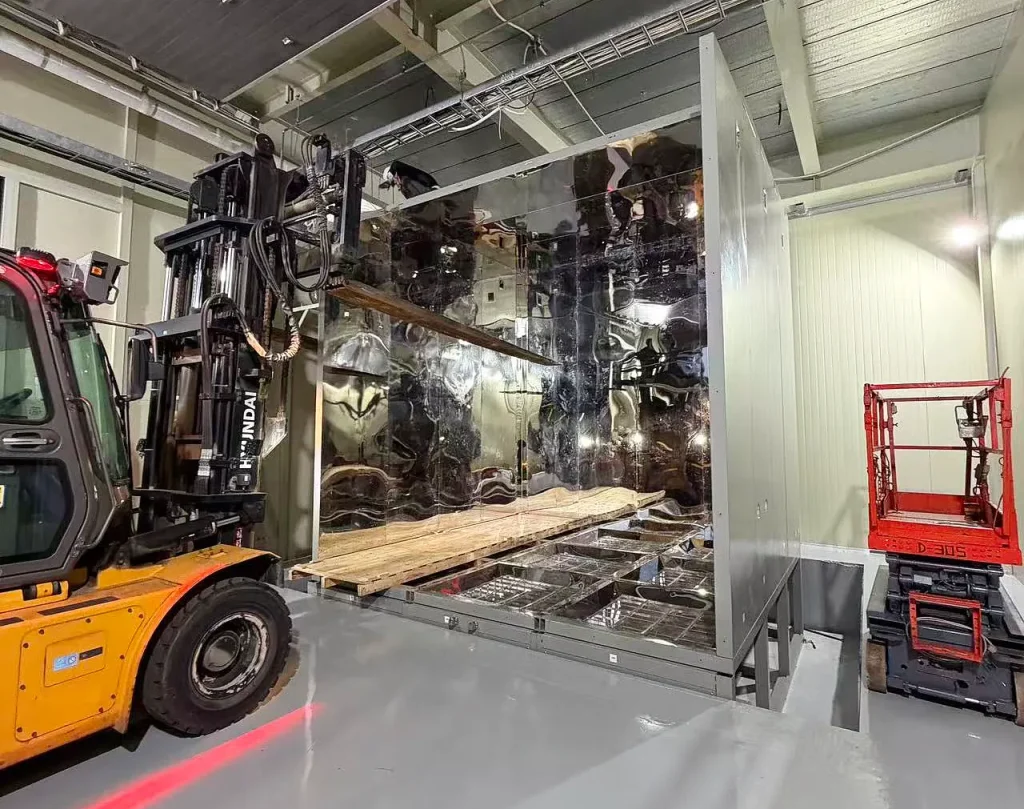
As the enclosure assembly progressed, the arrangement of the specimen connections, dust circulation system and control components was coordinated with the main chamber structure.
Our engineers assisted with these activities and worked directly with the SGS team to address the technical aspects of the installation.
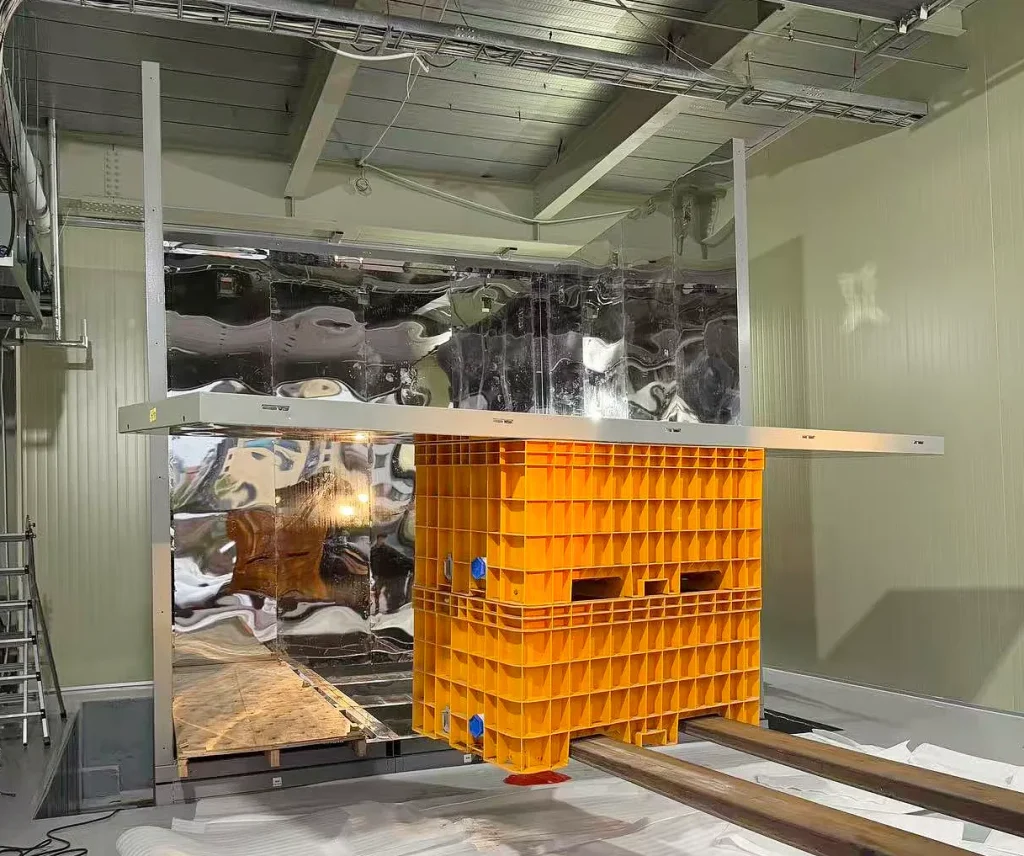
The completed assembly brought together the large walk-in enclosure, double-door access arrangement and associated systems within the laboratory.
Applications and International Testing Standards
The chamber is intended for dust ingress and environmental exposure testing associated with internationally recognized testing methods.
Relevant standards include:
IEC 60529 — Degrees of Protection Provided by Enclosures (IP Code).
Used for evaluating enclosure protection, including dust ingress requirements associated with IP5X and IP6X classifications.
IEC 60068-2-68 — Environmental Testing: Dust and Sand.
Provides methods for investigating the effects of dust and sand exposure on electrotechnical products.
IEC 60598-1 — Luminaires: General Requirements and Tests.
Relevant to enclosure protection testing for applicable lighting equipment.
These standards address different test objectives. Dust ingress testing focuses on the protection provided by an enclosure, while environmental dust and sand testing may be used to investigate the effects of particulate exposure on a product or assembly.
For larger specimens, the available testing space is particularly important. Complete electrical cabinets, industrial control systems and other equipment can contain multiple potential dust entry points that need to be assessed in their assembled configuration.
Depending on the applicable procedure, testing may involve examining enclosure seals, access doors, ventilation openings, cable entries and other interfaces after exposure.
The chamber’s large internal volume, specimen connections and vacuum testing capability provide flexibility for preparing these test arrangements, with the actual conditions and assessment criteria determined by the relevant standard.
Engineering Support and Installation at SGS Korea
Throughout the project, KINGPO engineers worked with the on-site team to assist with the installation of the chamber and the arrangement of its associated systems.
For equipment of this scale, the laboratory layout, handling of heavy components, positioning of structural sections and accessibility of the control equipment all influence the installation process. Having our engineers at the facility allowed these matters to be discussed and addressed directly as work progressed.
Following the main assembly, the chamber stood in place with its full-height double doors, observation windows and external control cabinet installed. Our engineers and the local personnel also reviewed the equipment together at the control area.
The installation at SGS Korea brought together a large-capacity environmental testing system and the practical engineering work required to deliver it overseas.
From transporting the chamber in sections to handling and assembling its substantial structural components, the project required close cooperation between the equipment manufacturer and the local installation team.
With the chamber assembled at the SGS facility, the project provides another example of KINGPO’s work in supplying large environmental testing systems and supporting their installation at international laboratories.
RELATED TESTING EQUIPMENT
Explore
KINGPO Environmental Test Chambers
for dust ingress protection, environmental exposure and related laboratory testing applications.