Product Overview
Active implantable medical devices may be exposed to different atmospheric pressure conditions during transportation and normal use. Pressure variations can affect the structural integrity and functional stability of implantable components.
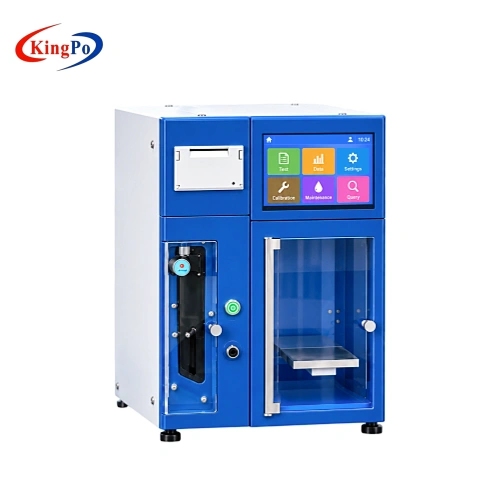
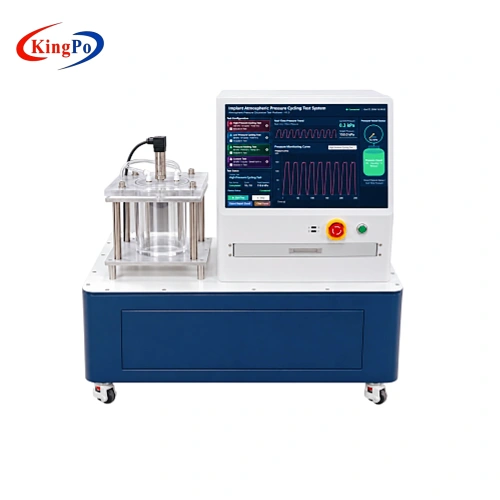
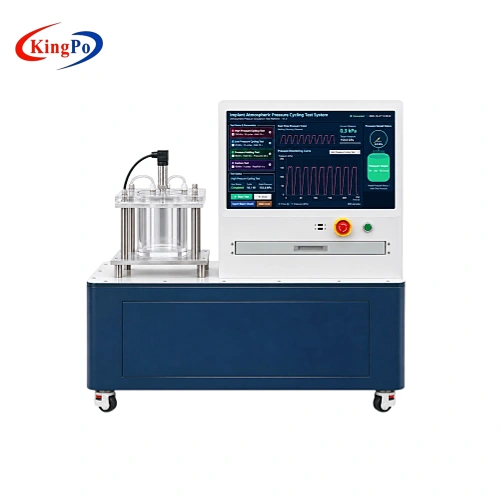
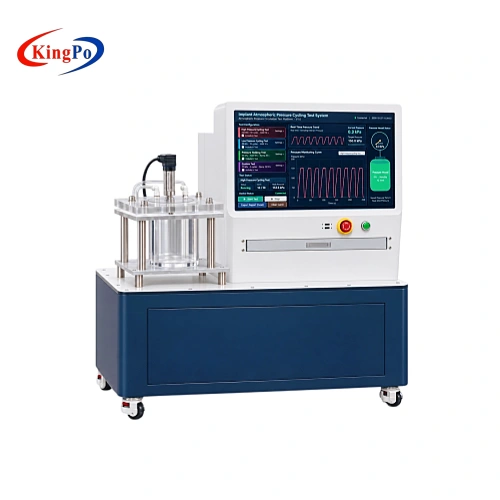
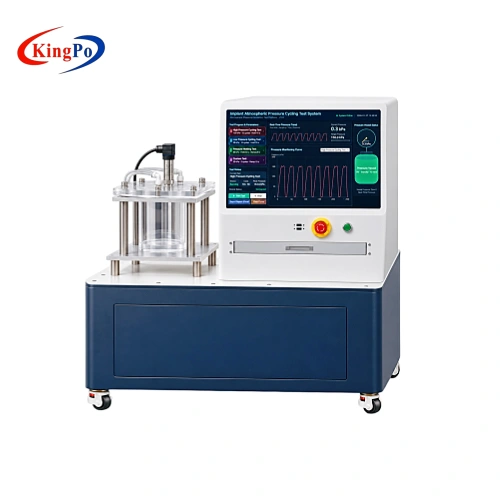
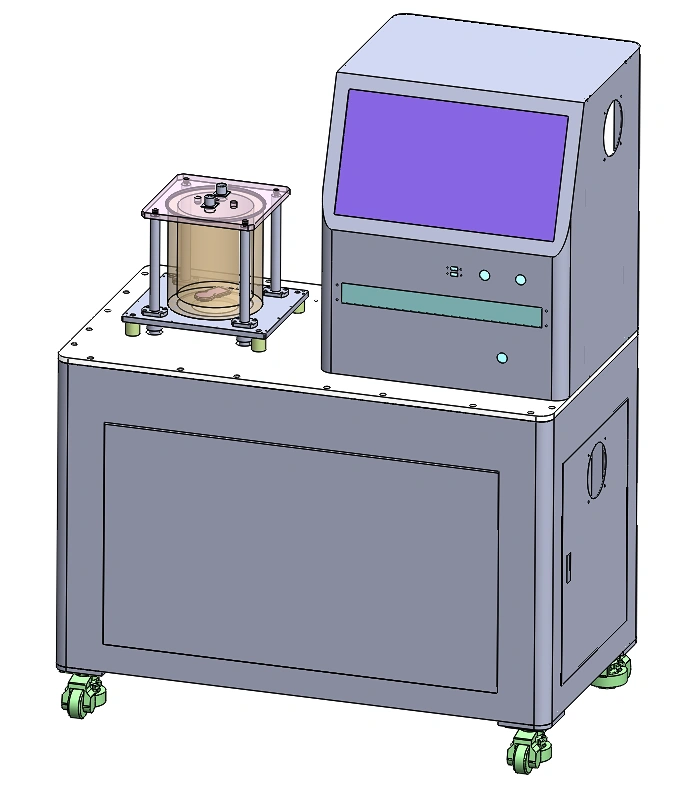
The KingPo KP3105 provides a controlled pressure environment for evaluating these effects through programmed pressure changes, repeated pressure cycles and sustained pressure exposure.
The system is designed for laboratories performing pressure-related verification of active implantable medical devices, with configurable test profiles based on applicable standard requirements and DUT specifications.
Technical Specifications
The following specifications summarize the pressure-control capability, chamber configuration and data management functions of the KP3105.
| Parameter | Specification |
|---|---|
| Model | KP3105 |
| Equipment Type | Active Implantable Medical Device Pressure Testing System |
| Test Medium | Water |
| High-Pressure Capability | ≥304 kPa |
| Pressure Change Rate | ≥152 kPa/min |
| Pressure Cycling | ≥40 cycles |
| Pressure Ramp-Up Time | ≤2 min |
| Pressure Ramp-Down Time | ≤2 min |
| High-Pressure Holding Time | ≥2 min |
| Absolute-Pressure Holding | 150 kPa ±7.5 kPa |
| Absolute-Pressure Holding Duration | ≥1 hour |
| Chamber Effective Volume | ≥500 mL |
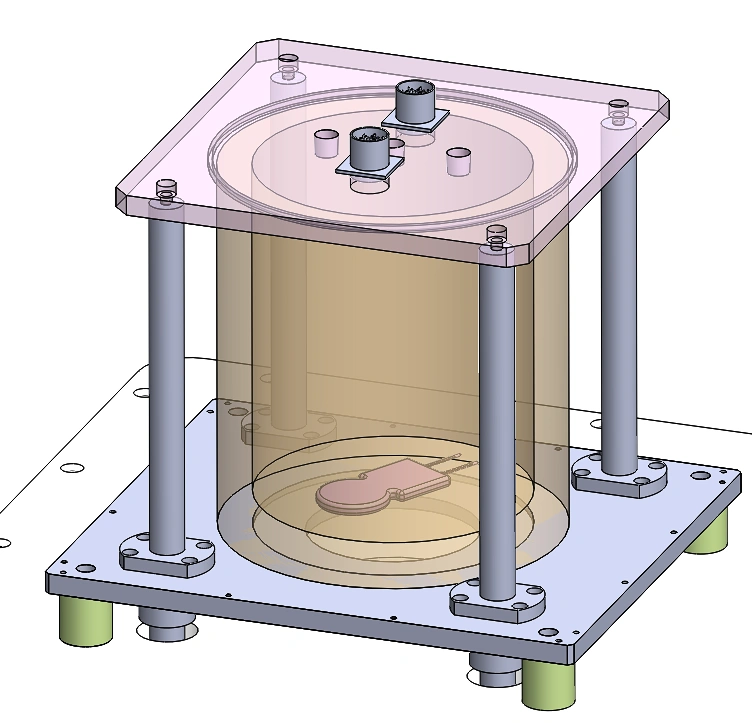
| Chamber Structure | Transparent water pressure chamber |
| Chamber Fastening | Multi-point fastening structure |
| Specimen Fixture | Stainless steel fixtures and positioning supports |
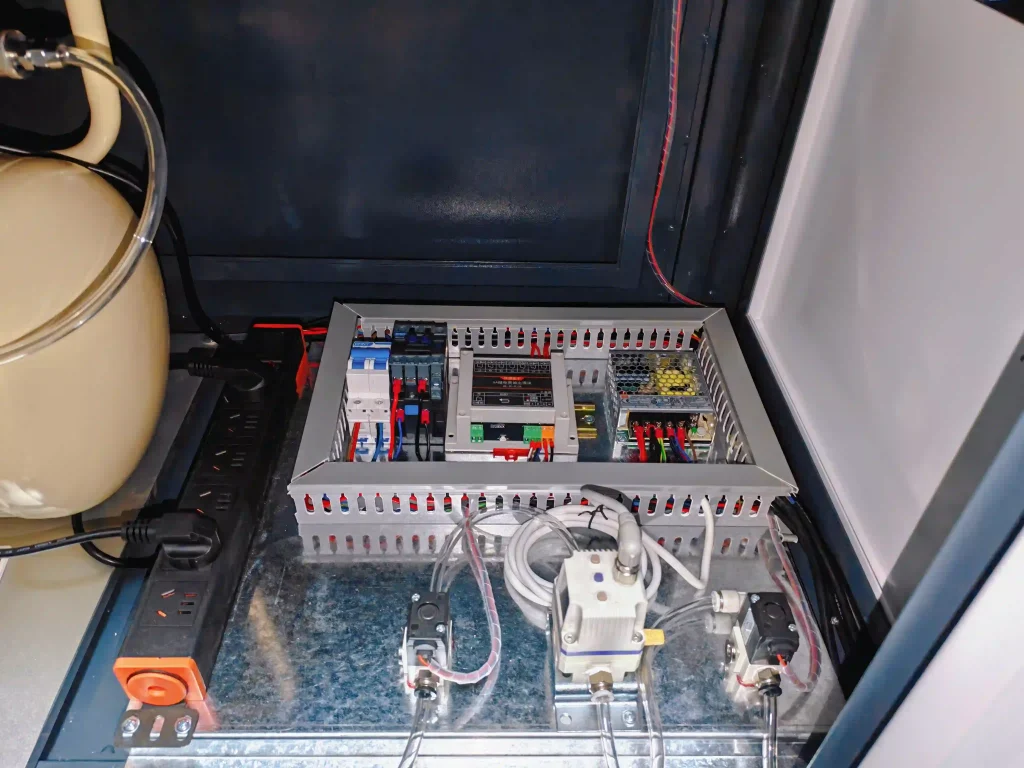
| Control Method | Programmable automatic pressure control |
| Status Display | Current pressure, operating stage and cycle number |
| Data Recording | Pressure-time data |
| Communication Interfaces | USB, LAN |
Engineering Note: The pressure reference used for the equipment’s rated pressure and control display must be confirmed during final configuration. The applicable ISO test requirements specify absolute-pressure values.
Applicable Standards and Test Requirements
The KP3105 is designed to support pressure-related testing specified in the ISO 14708 series, covering different categories of active implantable medical devices. The applicable test profile depends on the DUT type and the relevant standard clause.
ISO 14708-7:2019 — Cochlear and Auditory Brainstem Implant Systems
Relevant Clause: 25.1 — Protection of the Active Implantable Medical Device from Damage Caused by Atmospheric Pressure Changes
This clause specifies low-pressure and high-pressure exposure conditions for evaluating cochlear and auditory brainstem implant systems.
| Test Condition | Standard Requirement |
|---|---|
| Low Pressure | 50 kPa absolute |
| Low-Pressure Cycles | 25 cycles |
| Low-Pressure Dwell Time | Minimum 3 minutes |
| Low-Pressure Ramp-Up/Down | Maximum 3 minutes each |
| High Pressure | Minimum 304 kPa absolute |
| High-Pressure Cycles | 40 cycles |
| High-Pressure Dwell Time | Minimum 2 minutes |
| High-Pressure Ramp-Up/Down | Maximum 2 minutes each |
The standard requires the pressure values to be expressed as absolute pressure. The specimen is tested in saline solution (approximately 9 g/L), with the leads maintained at room temperature.
DUT evaluation requirements:
- The pulse generator must provide uninterrupted pacing during pressure exposure.
- After exposure, the pulse generator must operate as before the test without adjustment.
- Permanent deformation is acceptable only when it does not adversely affect device operation, patient comfort or safety.
The KP3105 supports programmable low-pressure and high-pressure profiles, with pressure cycling and holding parameters configured according to the applicable test requirements.
ISO 14708-1:2014 — General Requirements for Active Implantable Medical Devices
Relevant Clause: 25.1
ISO 14708-1 Clause 25.1 addresses the protection of active implantable medical devices against damage caused by atmospheric pressure changes.
| Pressure Condition | Absolute Pressure | Exposure Duration |
|---|---|---|
| Low Pressure | 70 kPa ±3.5 kPa | ≥1 hour |
| High Pressure | 150 kPa ±7.5 kPa | ≥1 hour |
The evaluation considers the effects of deformation caused by the specified absolute-pressure conditions.
The KP3105 includes a 150 kPa ±7.5 kPa absolute-pressure holding capability for at least one hour. The 70 kPa low-pressure exposure profile can be included in the customized pressure-control configuration.
ISO 14708-2:2019 — Cardiac Pacemakers
Relevant Clauses: 25.1 and 25.2
ISO 14708-2 addresses particular requirements for active implantable cardiac pacemakers. Clause 25.1 refers to the general requirements specified in ISO 14708-1:2014 Clause 25.1.
Clause 25.2 specifies a water pressure chamber test to evaluate the resistance of implant system components to foreseeable pressure increases.
| Test Condition | Standard Requirement |
|---|---|
| Test Chamber | Suitable water pressure chamber |
| Pressure Cycling | 20 cycles |
| Pressure Transition | Ambient pressure to maximum test pressure |
| Maximum Test Pressure | 1.5 times the pressure specified in the manufacturer’s documentation |
| Pressure Change Rate | ≥100 kPa/min |
| Maximum Pressure Holding | ≥1 minute |
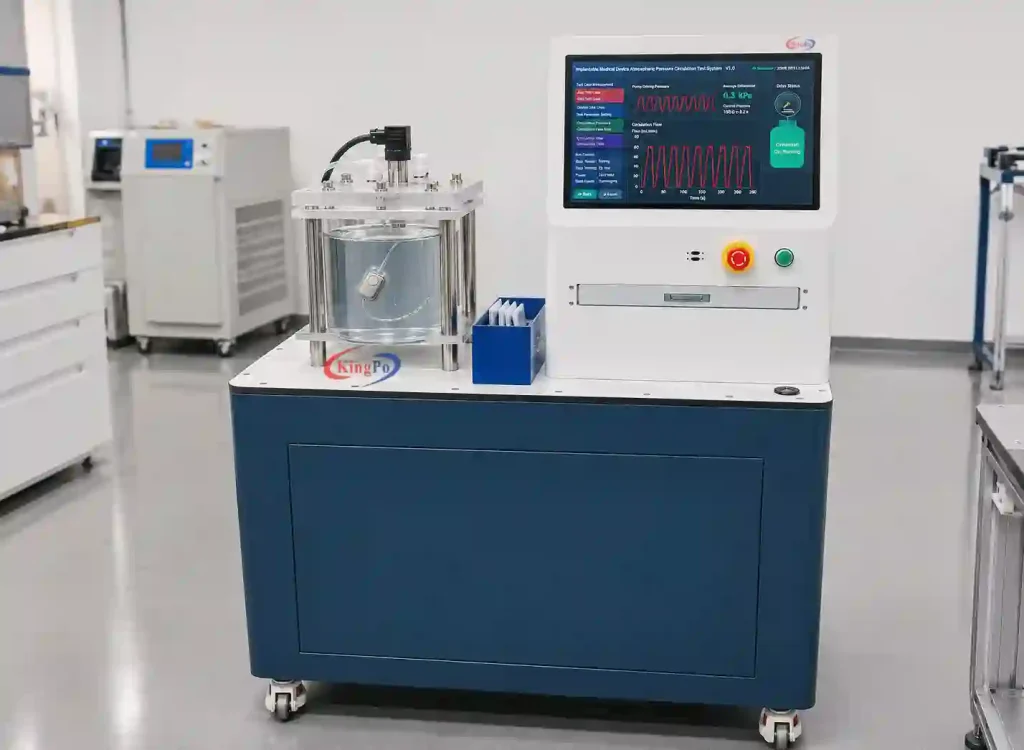
The KP3105 provides a water pressure chamber with programmable pressure cycling and holding functions.
Its specified pressure change rate of ≥152 kPa/min, cycling capability of ≥40 cycles and holding time of ≥2 minutes provide margins above the minimum rate, cycle count and holding duration specified in Clause 25.2, provided that the required maximum pressure is within the configured equipment pressure range.
The final pressure target is determined according to the DUT manufacturer’s documentation.
Corresponding Chinese National Standards
The KP3105 can also be configured for the corresponding Chinese national standard requirements.
| Chinese Standard | Corresponding International Standard | Main Scope |
|---|---|---|
| GB 16174.1-2024 | ISO 14708-1:2014 (MOD) | General requirements for active implantable medical devices |
| GB 16174.2-2024 | ISO 14708-2:2019 (MOD) | Particular requirements for cardiac pacemakers |
The final test configuration should follow the applicable standard edition, relevant national modifications and the technical documentation of the DUT.
Test Principle and Workflow
The KP3105 uses a sealed water pressure chamber to establish a controlled pressure environment around the test specimen. The pressure-control system executes predefined pressure sequences, including pressure increase, pressure holding, pressure release and repeated cycling.
During testing, the pressure is adjusted according to the selected test profile. The system records pressure and time information to document the applied pressure conditions and the progress of the test.
Typical Testing Workflow
Specimen Preparation
Prepare the DUT according to the applicable standard and confirm the required specimen condition.
Specimen Installation
Position and secure the DUT using the appropriate fixture.
Parameter Configuration
Set pressure targets, cycle counts, ramp times and holding durations.
Pressure Application
Execute the programmed pressure increase, holding and release sequence.
Data Recording
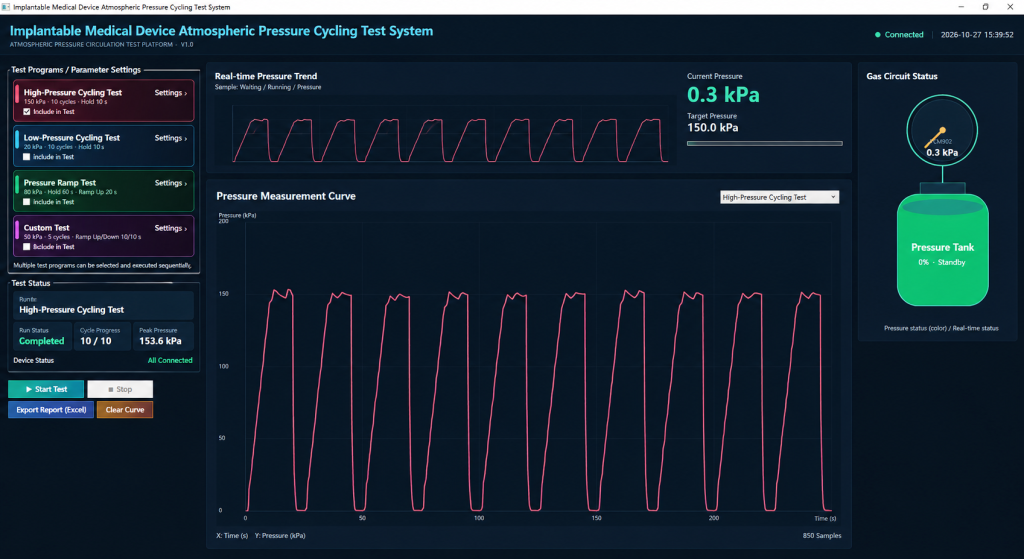
Record pressure and time information throughout the test.
Post-Test Evaluation
Release chamber pressure, remove the specimen and evaluate its physical and functional condition.
The recorded pressure-time data can be used as supporting evidence for laboratory evaluation and test documentation.
DUT Installation and Specimen Preparation
The fixture arrangement should be selected according to the DUT dimensions, structure, mounting points and lead configuration.
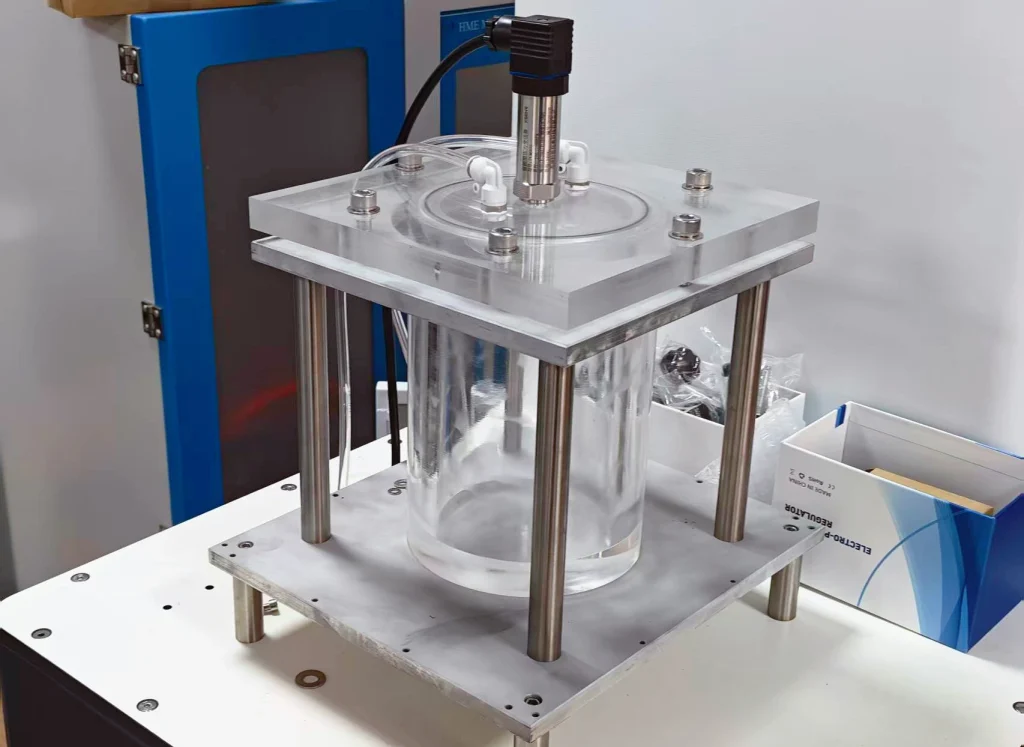
For ISO 14708-7 Clause 25.1, the specimen must be tested in approximately 9 g/L saline solution, with leads at room temperature. The specimen immersion and containment arrangement must therefore be considered during system customization.
For ISO 14708-2 Clause 25.2, the DUT must be appropriately positioned in the water pressure chamber, with the maximum test pressure determined by the manufacturer’s documentation.
Typical Applications
The KP3105 is intended for pressure-related testing during the development, design verification and quality control of implantable medical devices, including:
- Cochlear Implant Systems and auditory brainstem implant systems.
- Active Implantable Cardiac Pacemakers and associated implant systems.
- Other Active Implantable Medical Devices requiring atmospheric or water pressure resistance evaluation.
Typical users include third-party testing laboratories, medical device manufacturers, certification bodies and R&D laboratories.
KingPo KP3105 Atmospheric Pressure Cycling Test System
English technical datasheet with equipment specifications, ISO 14708 pressure test profiles, and specimen setup details.