Standards and Test Method Support
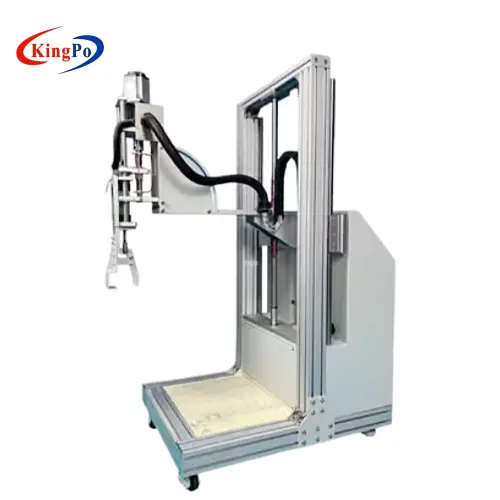
The KP-6061B Medical Bed Side Rail Strength Tester is designed according to the medical bed side rail strength requirements in YY 9706.252-2021, including Clause 201.9.8.3.3.3 for side rail strength and latch-related reliability evaluation, and Clause 201.9.8.3.3.4 for tensile rod dynamic testing.
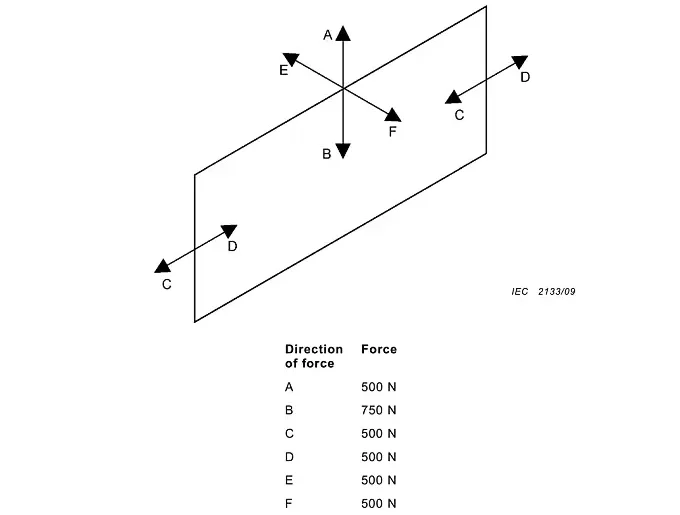
The related side rail evaluation may include two different test directions. One part focuses on repeated side rail mechanism operation, such as opening, closing, latching and unlatching. Another part focuses on force application in different directions, such as lateral force, vertical force, longitudinal force and static loading at selected or worst-case positions.
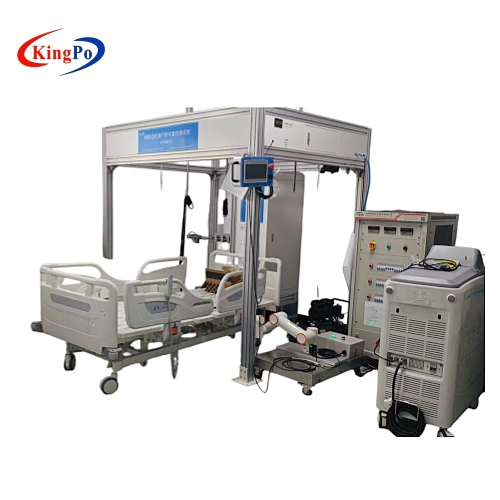
The KP-6061B is mainly configured for the force application and strength evaluation portion of the test program. It supports vertical loading, lateral push-pull force testing and tensile rod dynamic testing through a servo-driven mechanism and force sensor. For repeated side rail opening, closing and latch actuation cycles, a robotic operation system such as the KP-RB50 can be used as a complementary solution.
For projects involving IEC 60601-2-52, YY 9706.252-2021 or updated standard versions, clause-by-clause confirmation is recommended before final test configuration.
System Configuration
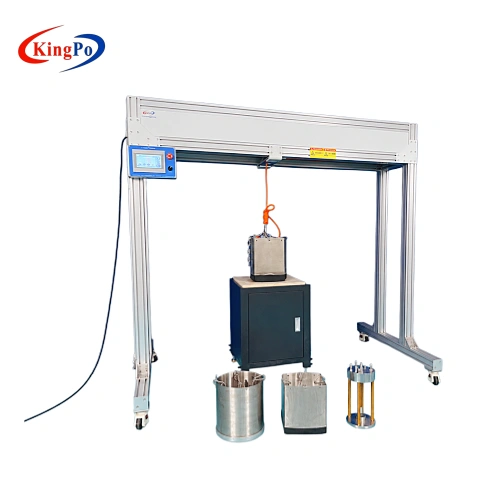
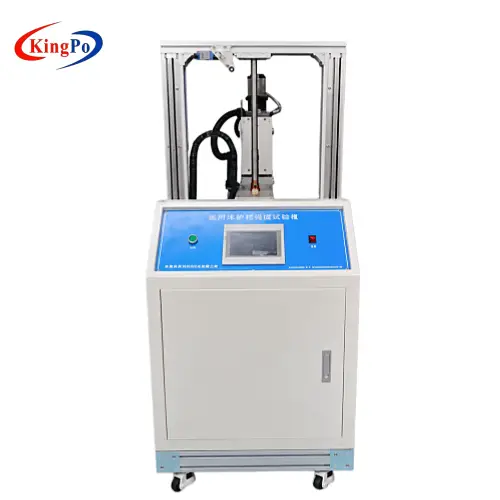
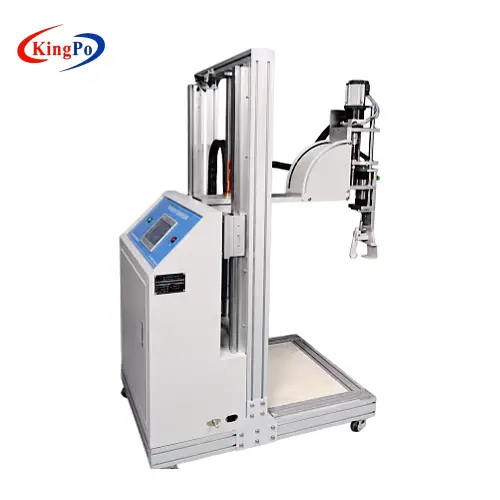
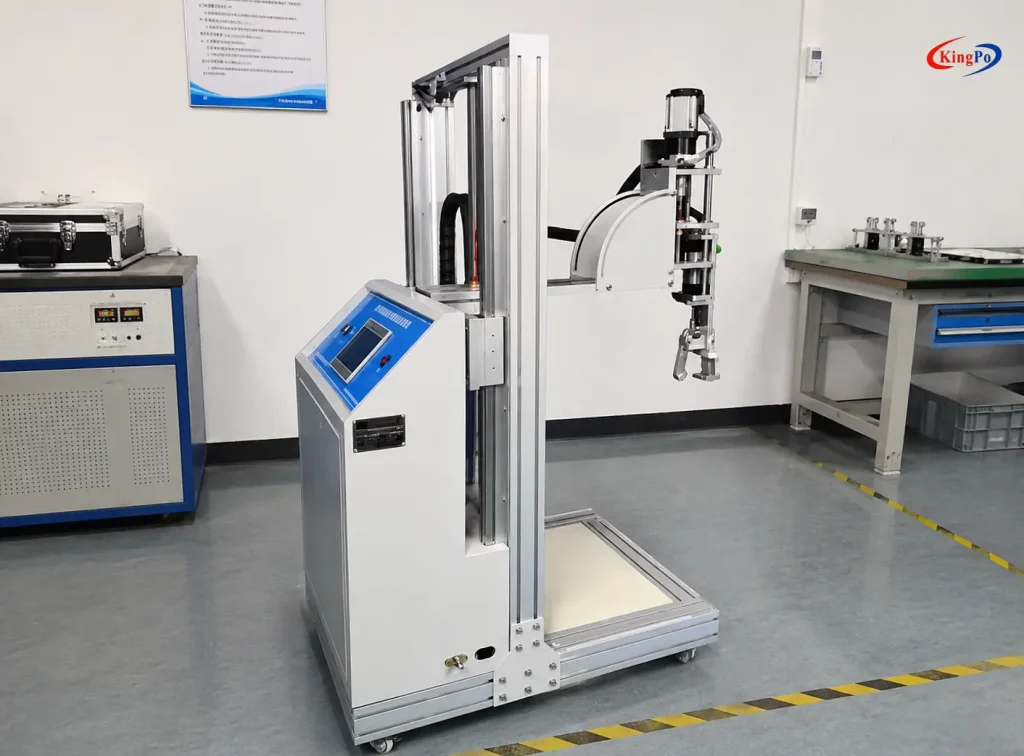
The Medical Bed Side Rail Strength Tester integrates a servo-driven force application mechanism, force sensor, PLC control system, 7-inch true-color TFT touchscreen and aluminum profile frame into one side rail strength test platform.
The servo motor applies the required test force, while the force sensor automatically collects force data during testing. Operators can set test force, load application time, stroke, holding condition and cycle count through the touchscreen interface.
The system supports automatic cycle testing. When the preset test count is reached, the equipment stops automatically and gives an alarm, helping laboratories improve test consistency and reduce manual operation error.
Professional Construction and Technical Precision
The KP-6061B is designed for controlled force application during medical bed side rail strength and guardrail push-pull testing. The aluminum profile frame provides structural support for repeated loading, while the servo-driven mechanism enables force application within the configured vertical and lateral force ranges.
The system is equipped with a 1000 N force sensor with 0.3% accuracy for automatic data acquisition. Test force values, loading time, stroke and test cycles can be preset according to the selected test procedure, making the equipment suitable for R&D verification, type testing support and production quality control.
Medical Bed Side Rail Strength Tester Specifications
| Item | Specification |
|---|---|
| Model | KP-6061B |
| Product Type | Medical bed side rail strength tester |
| Related Standards | IEC 60601-2-52, YY 9706.252-2021 |
| Related Clauses | YY 9706.252-2021 201.9.8.3.3.3; 201.9.8.3.3.4 |
| Main Test Items | Side rail strength, guardrail push-pull force, tensile rod dynamic test |
| Maximum Bed Height | 1200 mm |
| Maximum Bed Width | 1700 mm |
| Vertical Force | 0–750 N downward force |
| Lateral Force | 0–500 N push-pull force |
| Force Sensor | 1000 N |
| Force Sensor Accuracy | 0.3% |
| Force Sensor Quantity | 1 group |
| Force Application Method | Servo motor |
| Servo Motor Quantity | 1 set |
| Stroke | 0–200 mm |
| Cycle Count | 0–9999 adjustable |
| Control System | PLC + 7-inch true-color TFT touchscreen |
| Equipment Frame | Aluminum profile frame |
| Equipment Size | 1500 × 1000 × 1800 mm |
| Power Supply | AC 220 V, 50 Hz |
| Applicable Samples | Medical beds, hospital beds, nursing beds, elderly care beds, rehabilitation beds |
Test Function Parameters
| Test Function | Key Parameters | Related Use |
| Vertical Force Application | 0–750 N downward force | Side rail vertical strength test |
| Lateral Push-Pull Force | 0–500 N side force | Guardrail lateral push-pull strength test |
| Tensile Rod Dynamic Test | Stroke 0–200 mm; cycle count 0–9999 adjustable | Dynamic loading of tensile rod or related structure |
| Force Data Acquisition | 1000 N force sensor, 0.3% accuracy | Test force monitoring and data capture |
| Force Holding Control | Load application time can be set | Force stability and holding evaluation |
| Peak Force Capture | Test force peak value capture function | Monitoring maximum force during test |
| Automatic Cycle Testing | Stops and alarms after reaching preset count | Repeated force application sequence control |
For long-duration or higher-cycle test programs, customers should confirm whether the test should be performed in multiple batches or with customized PLC settings before final configuration.
Testing Principle
TheMedical Bed Side Rail Strength Tester simulates side rail loading and push-pull force conditions that medical beds may experience during use. During testing, the medical bed sample is positioned within the test area, and the force application mechanism is aligned with the side rail, guardrail or tensile rod structure according to the selected test method.
The servo motor applies the required force, while the force sensor captures force data automatically. The operator can configure the target force, holding time, stroke and cycle count through the touchscreen. After the preset test sequence is completed, the system stops automatically and provides an alarm.
The standard-related side rail evaluation includes both repeated mechanism operation and force application in different directions. The KP-6061B focuses on the force application portion of the test program, applying controlled vertical and lateral forces to the side rail or guardrail structure through a servo-driven mechanism and force sensor.
This process helps laboratories evaluate whether the side rail structure, guardrail connection or tensile rod assembly maintains mechanical strength after loading or repeated dynamic force application.
Test Workflow
- Position the medical bed sample in the test area.
- Adjust the bed height and side rail position according to the test requirement.
- Confirm the side rail is in the required test position.
- Align the force application mechanism with the required side rail or guardrail test point.
- Set the test force, stroke, holding time and cycle count on the touchscreen.
- Confirm that the bed, fixture and force sensor are properly positioned.
- Start the test sequence through the PLC control system.
- Monitor force value, peak force and loading process during the test.
- After the preset test count is reached, the system stops automatically and alarms.
- Record test data, side rail condition, deformation, loosening, failure or abnormal movement.
- Inspect the side rail, latch area, tensile rod and connection structure after testing.
Operation Notes for Side Rail Strength Testing
To improve repeatability and reduce test error, the following practices are recommended:
- Confirm the correct side rail test point before each test.
- Ensure the medical bed sample is stable and properly positioned.
- Verify the force sensor and loading mechanism before starting a new test batch.
- Set test force, stroke and cycle count according to the selected standard clause or customer test procedure.
- Check whether the loading direction is vertical, lateral or longitudinal before applying force.
- Inspect the side rail, latch area, tensile rod and connection structure after testing.
- Stop the test if abnormal noise, excessive deformation or structural instability occurs.
- For long-duration or high-cycle test programs, confirm whether multiple test batches or customized cycle settings are required.
Applications and Laboratory Use
The KP-6061B Medical Bed Side Rail Strength Tester is suitable for mechanical safety and strength testing of:
- Medical beds
- Hospital beds
- Nursing beds
- Elderly care beds
- Rehabilitation beds
- Medical bed side rails
- Guardrails and side rail assemblies
- Tensile rods and related support structures
Typical use cases include R&D verification, production quality control, incoming inspection, internal laboratory testing, type testing support and medical bed safety documentation preparation.
Difference Between KP-6061B and KP-RB50
| Product | Main Purpose | Test Method Focus |
| KP-6061B Medical Bed Side Rail Strength Tester | Side rail strength, vertical force, lateral push-pull force and tensile rod dynamic testing | Servo force application and sensor-based force measurement |
| KP-RB50 Medical Bed Side Rail and Latch Reliability Test System | Repeated side rail operation and latch reliability cycling | 6-axis robotic arm simulation of manual opening, closing, pushing, pulling and latch actuation |
If the test program focuses on side rail strength and force loading, KP-6061B is the recommended equipment. If the test program focuses on repeated side rail operation, latch actuation or long-duration mechanism cycling, KP-RB50 is more suitable.
-
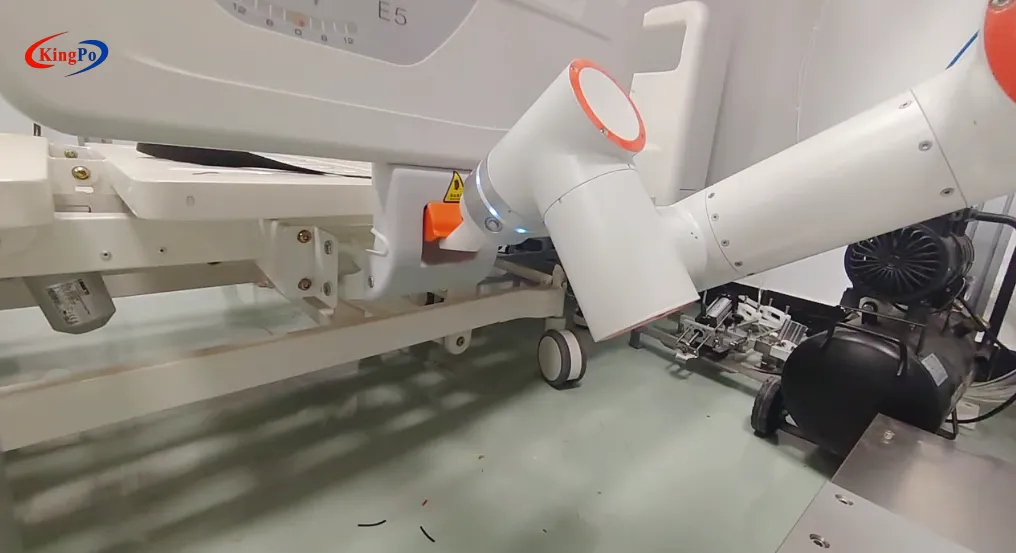
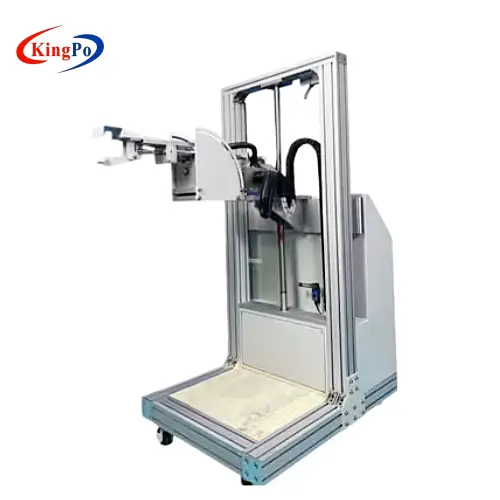
KP-RB50 6-axis robotic arm simulating repeated side rail operation for medical bed latch reliability testing
For a complete side rail evaluation program, customers may use both systems according to the required standard clauses and internal test workflow.