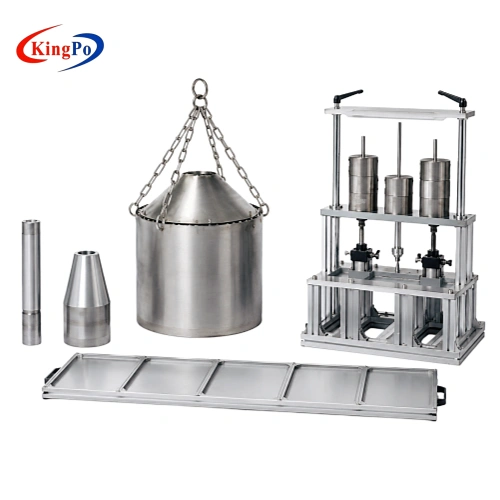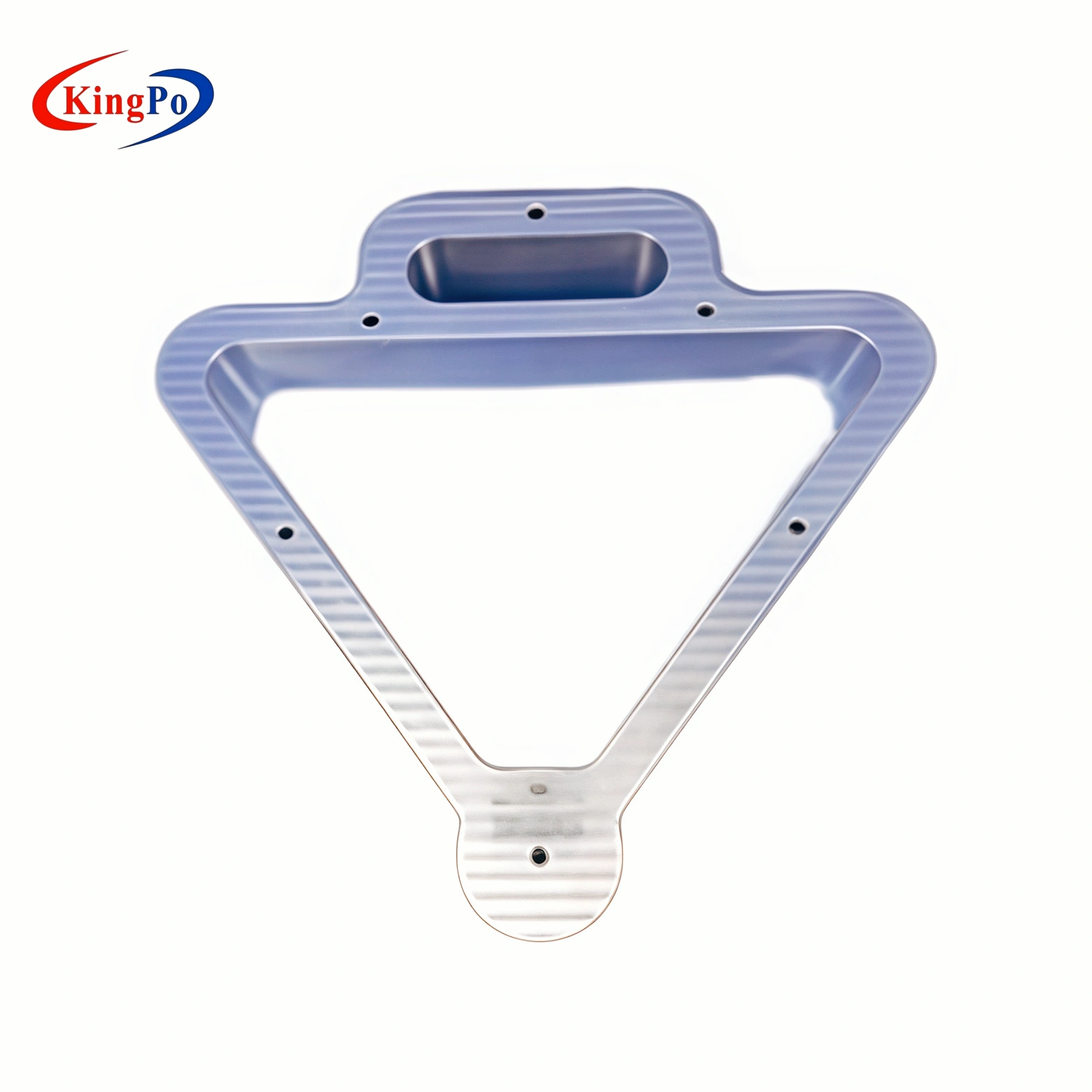
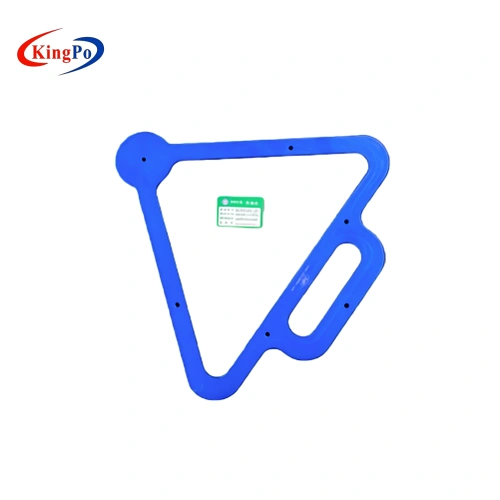
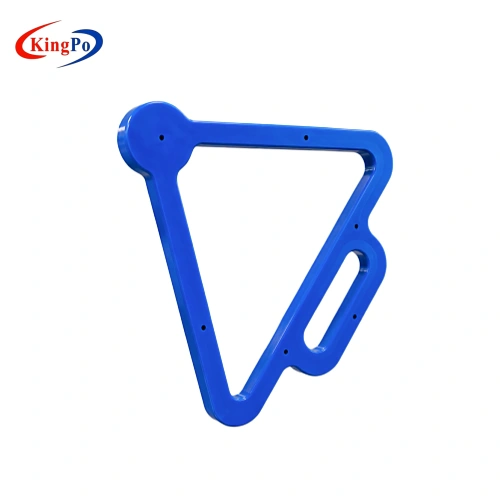
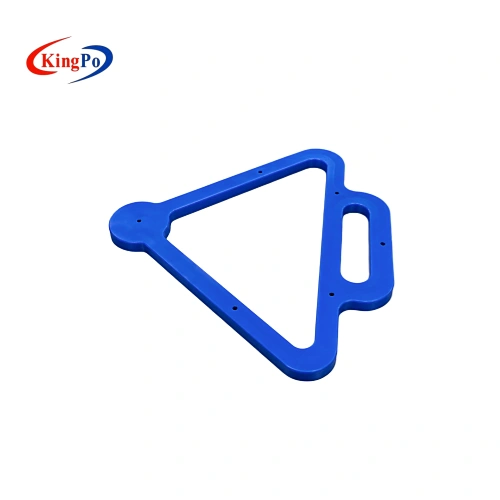
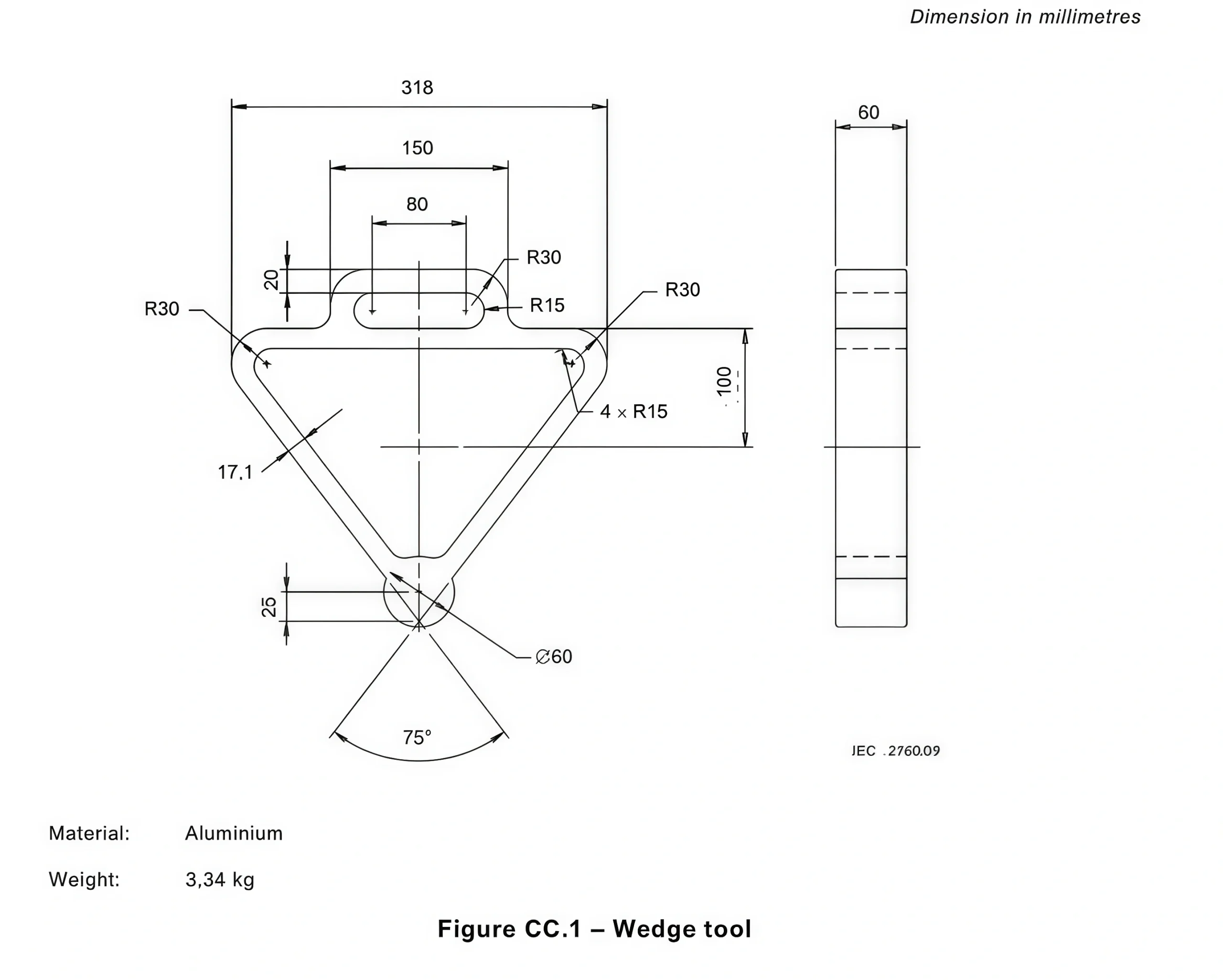
The IEC 80601-2-89 Figure CC.1 Wedge Tool is used for medical bed entrapment risk evaluation. It helps manufacturers and laboratories check whether openings, gaps or structural spaces in a medical bed may create a potential neck or body part entrapment hazard.
This tool is especially suitable for children’s medical bed safety evaluation, where opening size, gap geometry and patient protection requirements are critical. It can also support related IEC 60601-2-52 Figure CC.1 checks when required by the customer’s test method, certification project or internal laboratory procedure.
With defined wedge geometry, stable mechanical structure and durable material, the tool provides a practical solution for repeatable medical bed gap inspection, product development verification and laboratory safety evaluation.
Standards and Test Background
Medical beds may contain openings between side rails, mattress support platforms, headboards, footboards, bed frames and other non-moving parts. If these areas are not properly designed, they may create entrapment risks during patient use.
IEC 80601-2-89:2025 Figure CC.1 defines the wedge tool used for specific medical bed opening and entrapment evaluation. This product page uses IEC 80601-2-89 as the main standard direction, especially for children’s medical bed safety applications.
IEC 60601-2-52 Figure CC.1 is also commonly referenced for medical bed entrapment checks. For laboratories that still follow IEC 60601-2-52 related procedures, the wedge tool can be reviewed according to the applicable drawing, test requirement and certification procedure.
Final test method, test position, tool application method and acceptance criteria should follow the applicable standard edition and laboratory procedure.
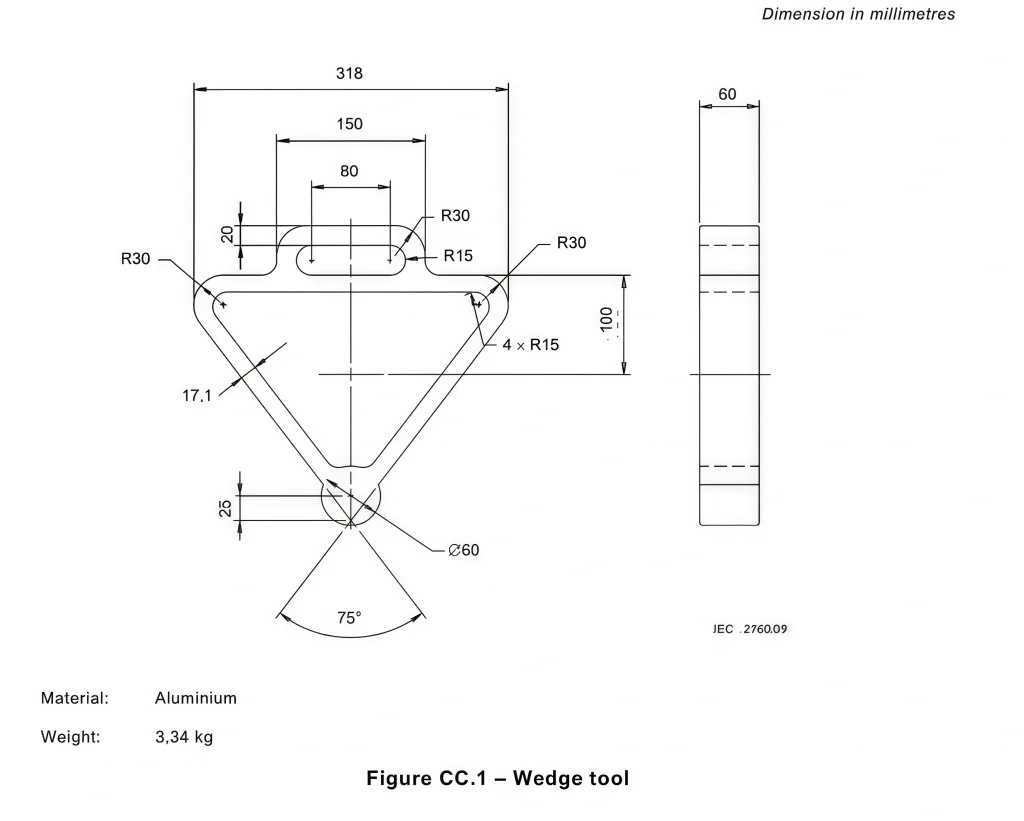
Technical Parameters
Key Specifications
| Item | Specification | Remark or Notes |
|---|---|---|
| Product Name | Wedge Tool | Medical bed entrapment test tool |
| Main Standard | IEC 80601-2-89:2025 Figure CC.1 | Core product page standard |
| Related Standard | IEC 60601-2-52 Figure CC.1 | For related medical bed entrapment checks |
| Product Type | Mechanical test tool | For gap and opening evaluation |
| Test Object | Children’s medical beds, medical beds and related bed systems | According to applicable test method |
| Test Purpose | Wedge-shaped opening and entrapment risk evaluation | Used for checking potential neck or body part entrapment areas |
| Application Areas | Side rails, mattress support platform, headboard, footboard, bed frame openings and non-moving parts | Actual test positions depend on the standard procedure |
| Material | Aluminum alloy or specified material | Final material can be confirmed before order |
| Surface Treatment | Anodized, coated or customized finish | According to customer requirement |
| Documentation | Dimensional inspection report, calibration certificate or verification record | Available according to order requirement |
| Customization | Marking, color, material, storage case and documentation | Available upon request |
Testing Principle
During testing, the wedge tool is applied to the required medical bed opening or gap area according to the applicable standard procedure. The operator checks whether the tool can enter, contact or indicate a potentially unsafe opening condition based on the specified test method.
Typical inspection positions include side rail openings, gaps around the mattress support platform, spaces between bed frame components, headboard openings, footboard openings and other non-moving structural areas.
The test result depends on the applicable standard version, test location, tool orientation, application method and laboratory pass/fail criteria. The wedge tool should only be used under the defined test condition and should not be treated as a general-purpose gauge.
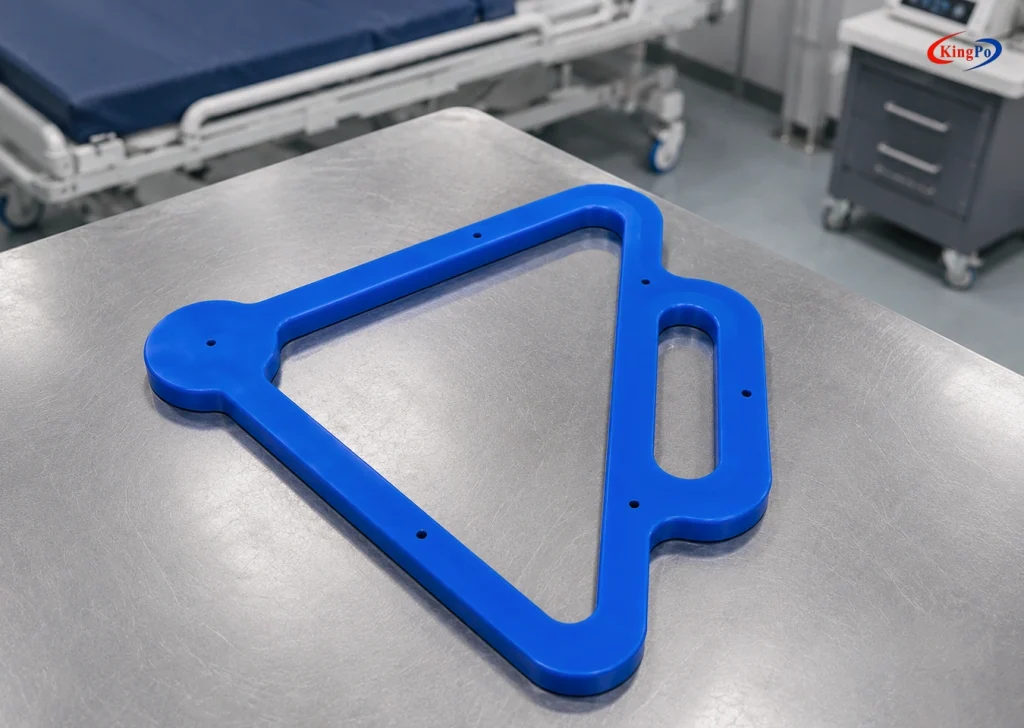
Operation and Test Notes
Before testing, operators should confirm the applicable standard edition, bed type, test area and laboratory procedure. The wedge tool should be used only for the specified IEC 80601-2-89 or related IEC 60601-2-52 medical bed entrapment evaluation.
During inspection, the tool should be applied according to the required test position, orientation and judgment criteria. Final pass/fail decisions should follow the applicable standard, certification requirement or approved internal test method.
Recommended checks:
- Confirm the applicable standard and test area before use
- Do not use the wedge tool as a general-purpose measuring gauge
- Protect the tool from impact, deformation and surface damage
- Perform dimensional verification if the tool is dropped or visibly damaged
Applications and Use Cases
The IEC 80601-2-89 Figure CC.1 Wedge Tool is used for medical bed opening safety evaluation, especially for checking wedge-shaped openings, V-shaped gaps and potential entrapment areas in side rails, mattress support platforms, headboards, footboards, bed frame spaces and other non-moving parts.
It is suitable for medical bed design verification, children’s medical bed safety evaluation, routine production quality control, pre-compliance testing and third-party laboratory assessment. Typical users include medical bed manufacturers, hospital bed suppliers, testing laboratories, certification support teams and quality inspection organizations.
Key Advantages
The wedge tool is designed according to IEC 80601-2-89 Figure CC.1 and can support related IEC 60601-2-52 Figure CC.1 medical bed entrapment checks when required.
Its defined wedge geometry supports repeatable opening evaluation, while the aluminum alloy structure provides durability, dimensional stability and convenient handling during laboratory or production inspection.
The tool is easy to use and maintain. Dimensional verification documentation, inspection report or calibration certificate can be provided according to the customer’s quality system and certification preparation requirements.
Standards & Compliance Support
The IEC 80601-2-89 Figure CC.1 Wedge Tool is a mechanical checking tool for specific medical bed gap and entrapment risk evaluation.It does not replace full medical bed compliance assessment, risk management review, structural strength testing, electrical safety testing, usability evaluation or final certification decision. For formal compliance testing, users should confirm the applicable standard edition, sample condition, test position and acceptance criteria with the responsible laboratory or certification body.