Australia and New Zealand have moved to the fourth edition of the hazard-based safety standard for audio/video, information and communication technology equipment with the publication of AS/NZS 62368.1:2026.
The new joint standard was published on March 6, 2026 and is based on IEC 62368-1:2023, Edition 4.
For AV/ICT manufacturers supplying the Australian and New Zealand markets, the change is more than a document-number update: component acceptance, external circuits, fire enclosures, liquid-filled components and battery-related requirements all deserve renewed attention.
Key Information
| Item | Status |
|---|---|
| New standard | AS/NZS 62368.1:2026 |
| International basis | IEC 62368-1:2023, Edition 4 |
| Publication date | March 6, 2026 |
| Previous version | AS/NZS 62368.1:2022 |
| New standard availability | Effective from publication |
| Previous-version application window | Until March 6, 2029 |
| Main product scope | Audio/video, information and communication technology equipment |
| Safety approach | Hazard-Based Safety Engineering |
UL Solutions reports that applications under AS/NZS 62368.1:2026 require an IEC 62368-1:2023 Edition 4 CB report, while applications using AS/NZS 62368.1:2022 may continue until March 6, 2029. Existing certificates issued to the previous standard may remain valid until their certificate expiry.
Why Does AS/NZS 62368.1:2026 Matter?

IEC 62368-1 has progressively replaced the older prescriptive safety standards IEC 60950-1 for information technology equipment and IEC 60065 for audio/video equipment.
Its hazard-based approach starts by identifying energy sources capable of causing injury or fire and then determining whether appropriate safeguards prevent hazardous energy from reaching a person or combustible material.
The fourth edition does not change this basic philosophy.
What it does change is the way several important constructions and components must be evaluated.
IEC describes IEC 62368-1:2023 as a technical revision of the third edition rather than a simple editorial update.
For manufacturers already selling products under AS/NZS 62368.1:2022, this makes a structured gap analysis preferable to assuming an existing third-edition test file can simply be reused.
1. Legacy IEC 60950-1 and IEC 60065 Component Acceptance Is Removed
This is one of the most commercially important changes in Edition 4.
Previous editions provided provisions that could allow certain components previously evaluated to IEC 60950-1 or IEC 60065 to be used without complete reevaluation.
That transitional approach has now been removed.
Where a component — or a characteristic of that component — forms part of a safety safeguard, Edition 4 generally requires it to comply with IEC 62368-1 or with the applicable safety requirements of a referenced component standard.
Why this matters
Consider an AV/ICT product using an external or internal power supply certified only to a previous edition or legacy safety standard.
The end product may not automatically inherit acceptance of that component when evaluated to Edition 4.
Additional investigation may therefore be required.
For manufacturers, this means the Edition 4 transition should include a review of critical components such as:
- power supplies and adapters;
- transformers;
- optocouplers;
- protective components;
- batteries and battery packs;
- connectors;
- insulating materials;
- components forming part of electrical or fire safeguards.
A product that has not changed mechanically or electrically can therefore still require additional compliance work if its critical component documentation has not moved with the standard.
2. External Circuit Requirements Have Been Revised
IEC 62368-1:2023 introduces a new and revised structure for evaluating external circuits.
IEC specifically lists the new table covering external circuits as one of the significant technical changes in Edition 4.
This is relevant to equipment containing interfaces such as communication and network connections that can be exposed to electrical transients originating outside the equipment.
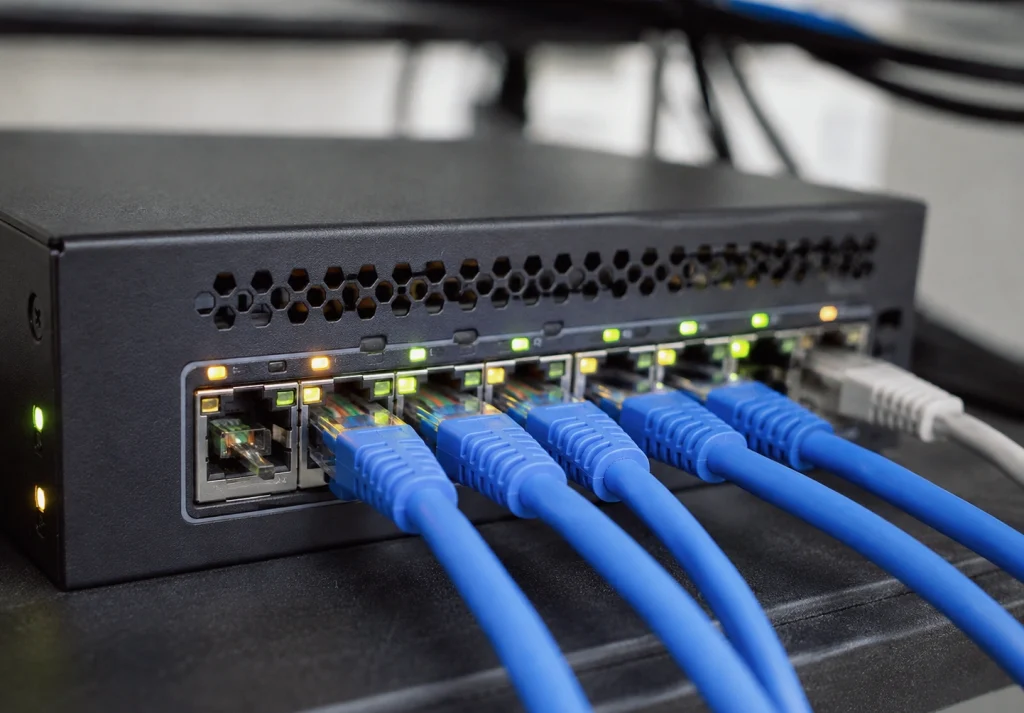
Edition 4 also restructures Table 13 and differentiates external circuit conditions more clearly.
For example, the transient environment for an Ethernet connection that remains within a building can differ from an interface connected to outdoor aerial or buried telecommunications cabling.
Manufacturers should therefore avoid evaluating every Ethernet or communication port under a single generic condition.
3. Fire Enclosure Requirements Have Changed
Fire safeguards remain one of the central elements of IEC 62368-1.
Edition 4 revises requirements related to openings in fire enclosures, another change specifically identified by IEC.
This can affect enclosure construction, ventilation openings and the evaluation of components capable of becoming potential ignition sources.
Manufacturers should review:
- top, bottom and side enclosure openings;
- orientation of the equipment;
- location of potential ignition sources;
- materials used around those sources;
- separation from combustible parts;
- whether a fire enclosure is required for the specific construction.
This is particularly relevant where an enclosure was optimized for cooling under a previous edition.
A ventilation pattern that performs well thermally should not automatically be assumed to meet the latest fire safeguard requirements.
4. Requirements for Liquid-Filled Components Have Been Expanded

Liquid cooling is becoming increasingly common in data centers, high-performance computing equipment and other high-power ICT systems.
Edition 4 expands and revises the treatment of liquid-filled components and systems. IEC identifies this as another significant technical change.
The compliance question is not limited to whether the liquid itself is flammable.
Engineers may also need to consider what happens if liquid:
- leaks onto energized circuitry;
- bridges insulation;
- reaches a potential ignition source;
- degrades insulating materials;
- creates a new electrical or fire hazard after a foreseeable failure.
For servers, telecom equipment and other liquid-cooled systems, the Edition 4 transition therefore deserves a dedicated review rather than being treated as a conventional enclosure update.
5. Battery Charging Requirements Have Been Revised
Edition 4 also modifies requirements associated with battery charging.
IEC identifies the revision of battery charging requirements as a significant technical change in the fourth edition.
Additional changes affect secondary lithium batteries and how battery-related fire safeguards are considered.
Manufacturers of equipment containing rechargeable lithium batteries should therefore confirm:
- applicable battery standard;
- battery charging conditions;
- charging voltage and current limits;
- abnormal charging behavior;
- battery protective circuitry;
- fire enclosure requirements;
- integration of the battery into the final equipment.
A battery pack carrying its own certification does not eliminate the need to evaluate how it functions within the final product.
6. Creepage, Clearance and Insulation Still Require Construction-Level Verification
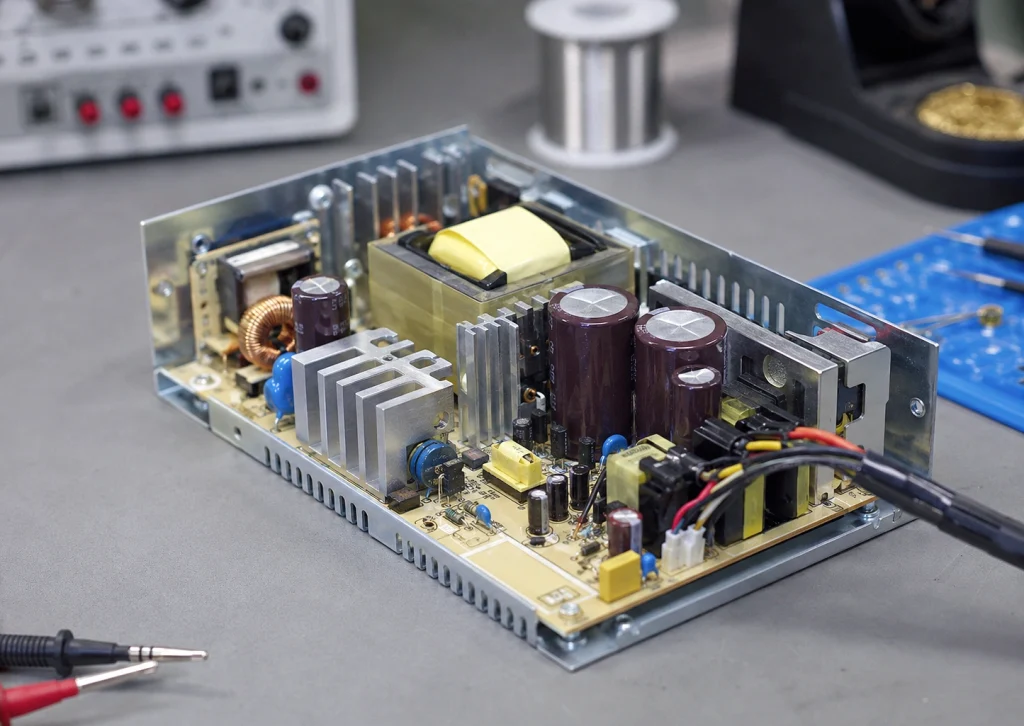
Edition 4 should not be interpreted as making insulation evaluation less important.
For mains-powered AV/ICT equipment, power supplies and communication products, manufacturers still need to establish appropriate safeguards between hazardous energy sources and accessible circuits.
Typical construction reviews can include:
- clearance;
- creepage distance;
- solid insulation;
- working voltage;
- transient voltage;
- pollution degree;
- material group;
- protective bonding;
- dielectric strength;
- impulse withstand performance.
The important point is that compliance cannot be reduced to a single remembered value such as “4 mm” or “8 mm.”
Required insulation distances depend on the actual circuit classification, working voltage, insulation function, material characteristics and environmental conditions.
For creepage evaluation in particular, the Comparative Tracking Index (CTI) of insulating materials can influence the applicable material group and required distance.
7. Impulse Testing May Need Renewed Attention
External circuit classification and insulation design are closely connected with transient voltage conditions.
Depending on the applicable IEC 62368-1 clause and interface, laboratories may need to apply defined impulse waveforms to verify that insulation and protective circuits can withstand transient electrical stress.
IEC 62368-1 Table D.1 includes impulse-generator circuits associated with waveforms such as:
- 10/700 μs;
- 1.2/50 μs.
These waveforms are not interchangeable.
The required waveform, generator circuit, test voltage and DUT connection should be selected from the applicable clause and actual interface condition.
What Should Manufacturers Do Before 2029?
The three-year transition window should not be interpreted as a reason to wait until 2029.
A more practical approach is to start with an Edition 4 gap analysis.
Recommended Review Path
1. Confirm the target market
Determine whether the product will continue to be placed on the Australian and New Zealand markets after the transition period.
2. Check the existing test report
Identify whether the current product was evaluated to AS/NZS 62368.1:2022, IEC 62368-1 Edition 3 or an earlier edition.
3. Review critical component certifications
Pay particular attention to power supplies and other components that previously relied on IEC 60950-1 or IEC 60065 documentation.
4. Review external interfaces
Identify whether communication cables remain indoors, connect to outdoor networks or are exposed to other external transient environments.
5. Review fire enclosure construction
Check enclosure openings, potential ignition sources and changes introduced for thermal management.
6. Review batteries and charging circuits
For products containing rechargeable batteries, confirm both component-level documentation and final-product integration.
7. Reassess insulation construction
Verify clearance, creepage, CTI/material group, solid insulation and relevant impulse withstand conditions.
8. Identify required retesting
Do not assume that every existing test needs to be repeated. A clause-by-clause gap analysis should determine what documentation, construction review or additional testing is actually required.
What Does This Mean for Testing Laboratories?
Laboratories supporting AV/ICT manufacturers should prepare for an increasing number of projects involving both the previous and fourth editions during the transition period.
The first step should therefore be edition control.
Before testing starts, the laboratory should confirm:
- applicable AS/NZS edition;
- IEC CB report edition;
- national differences;
- product configuration;
- critical component certifications;
- applicable external circuit classification;
- required tests affected by the Edition 4 changes.
This is particularly important where a manufacturer submits an apparently unchanged product but uses components certified only to earlier editions.
The physical product may appear identical while its certification evidence is no longer sufficient for the new evaluation.
Related IEC 62368-1 Testing
The Edition 4 transition can involve several different safety-verification disciplines rather than one dedicated “Edition 4 tester.”
Depending on the DUT and applicable clauses, laboratory equipment may include:
| Evaluation | Typical Test Capability |
|---|---|
| Creepage and clearance | Optical / dimensional measurement |
| Material tracking resistance | IEC 60112 CTI / PTI testing |
| Impulse withstand | IEC 62368-1 Table D.1 impulse generator |
| Accessibility | Standardized test probes |
| Mechanical safeguards | Impact, force and stability test apparatus |
| Thermal safeguards | Temperature measurement and abnormal-operation setup |
| Fire safeguards | Material and enclosure-related test equipment |
| Battery safety | Charging, abnormal condition and referenced battery-standard testing |
For insulating material assessment, KingPo’s Comparative Tracking Index Tester performs CTI and PTI testing according to IEC 60112 using a 100–600 V test range, platinum electrodes and controlled electrolyte application.
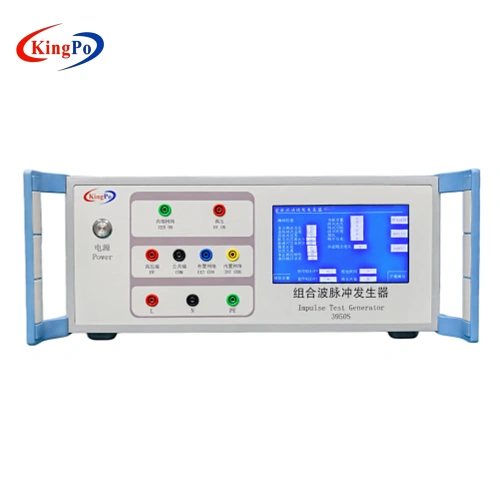
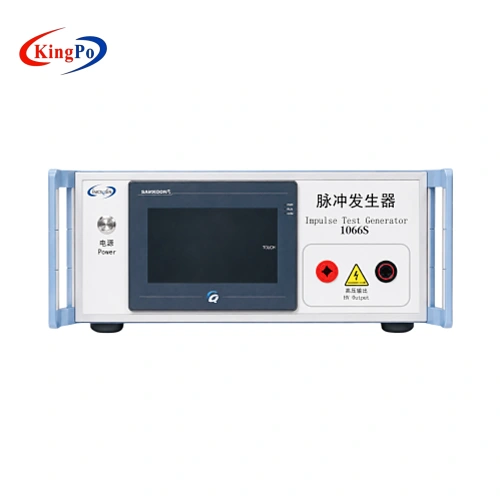
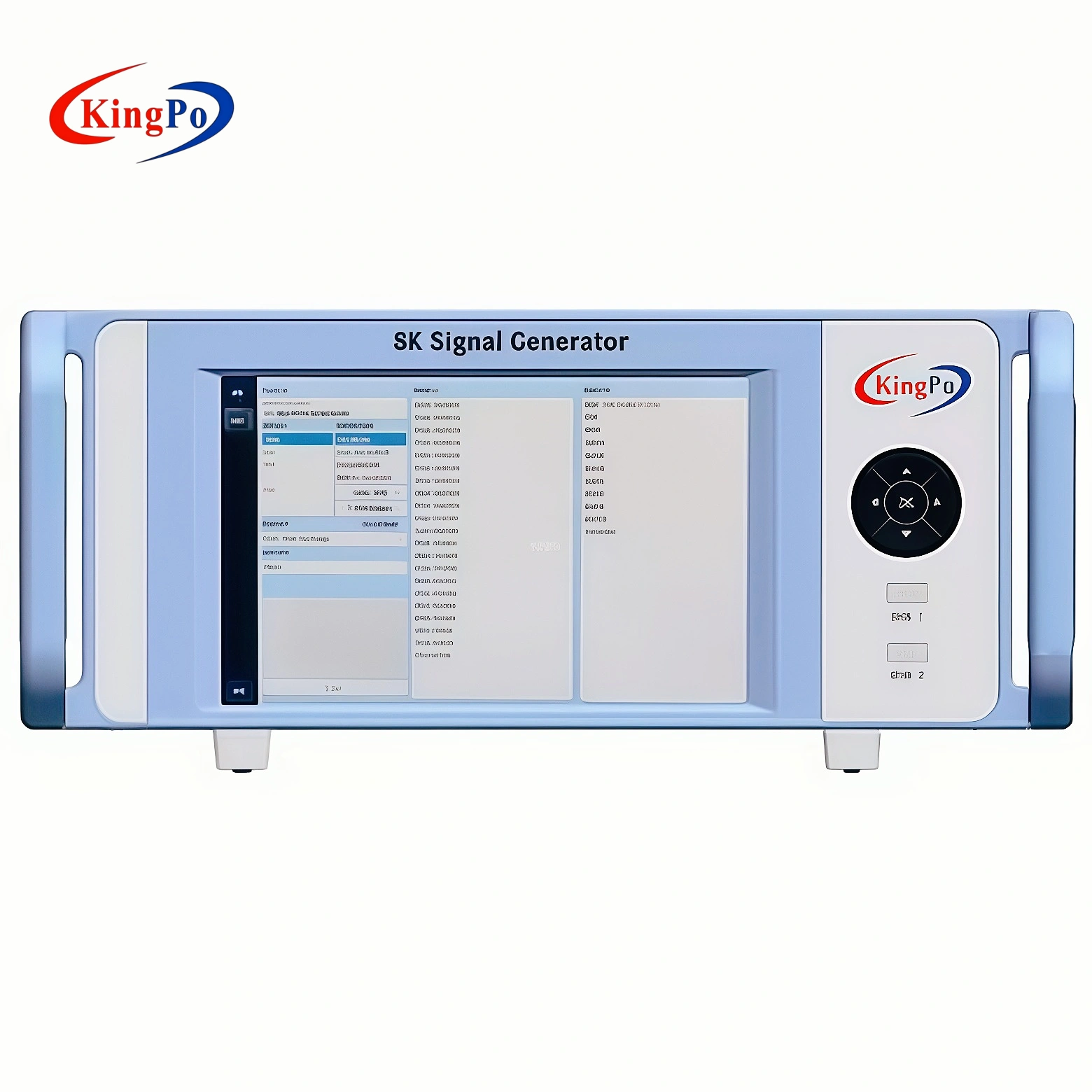
For transient electrical stress, the IEC 62368-1 Table D.1 Impulse Test Generator provides the dedicated impulse waveforms required for applicable IEC 62368-1 test circuits.
Equipment selection should always be based on the exact standard edition, clause, DUT configuration and approved laboratory test plan.
Does AS/NZS 62368.1:2026 Mean Existing Products Must Be Immediately Retested?
Not necessarily.
According to UL Solutions’ Australian regulatory update, AS/NZS 62368.1:2022 may continue to be used for applications until March 6, 2029, and existing certificates may remain valid until their expiry.
That does not mean manufacturers should automatically defer the transition.
Products with long market lifecycles, new variants, component changes or upcoming certification renewals should be reviewed early so that component documentation and test evidence do not become a bottleneck later.
Conclusion
The publication of AS/NZS 62368.1:2026 gives Australian and New Zealand AV/ICT manufacturers a defined path toward IEC 62368-1 Edition 4.
The key issue is not simply the 2029 transition date.
Edition 4 changes several areas that can directly affect product certification, including:
- acceptance of legacy components;
- external circuit classification;
- fire enclosure openings;
- liquid-filled components;
- battery charging and secondary lithium batteries;
- insulation and transient withstand evaluation.
Manufacturers planning products for the Australian and New Zealand markets should therefore begin with a structured Edition 3-to-Edition 4 gap analysis, review critical component documentation and identify any testing that needs to be updated before the transition deadline.
Early review is considerably easier than discovering during certification that a power supply, battery, external interface or safeguard component no longer has the documentation required by the new edition.