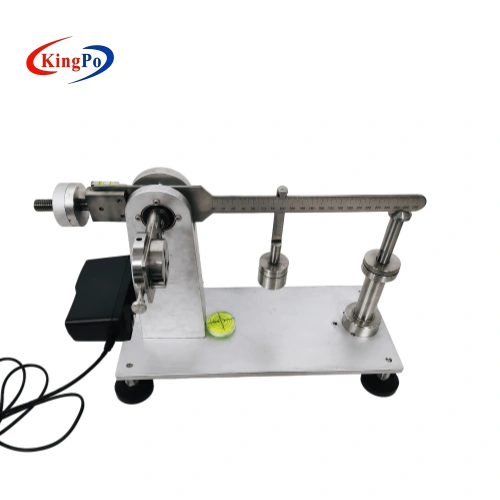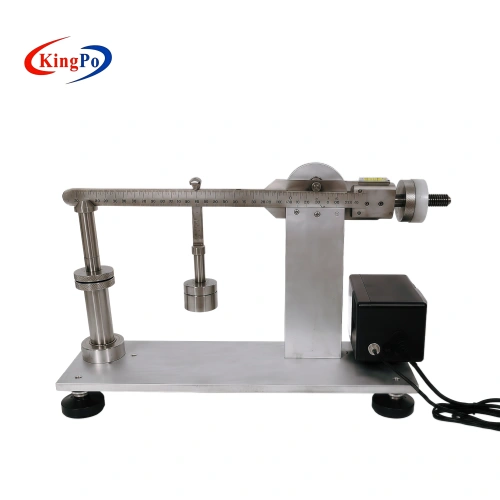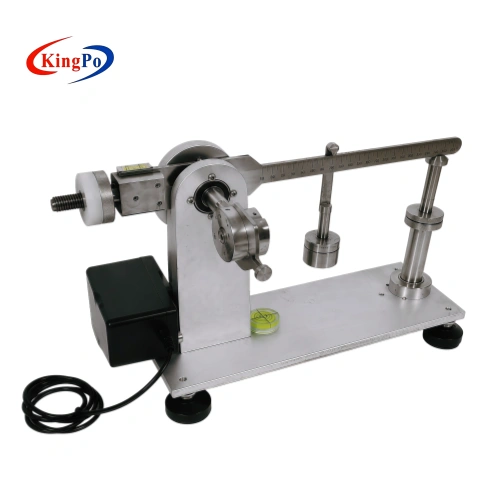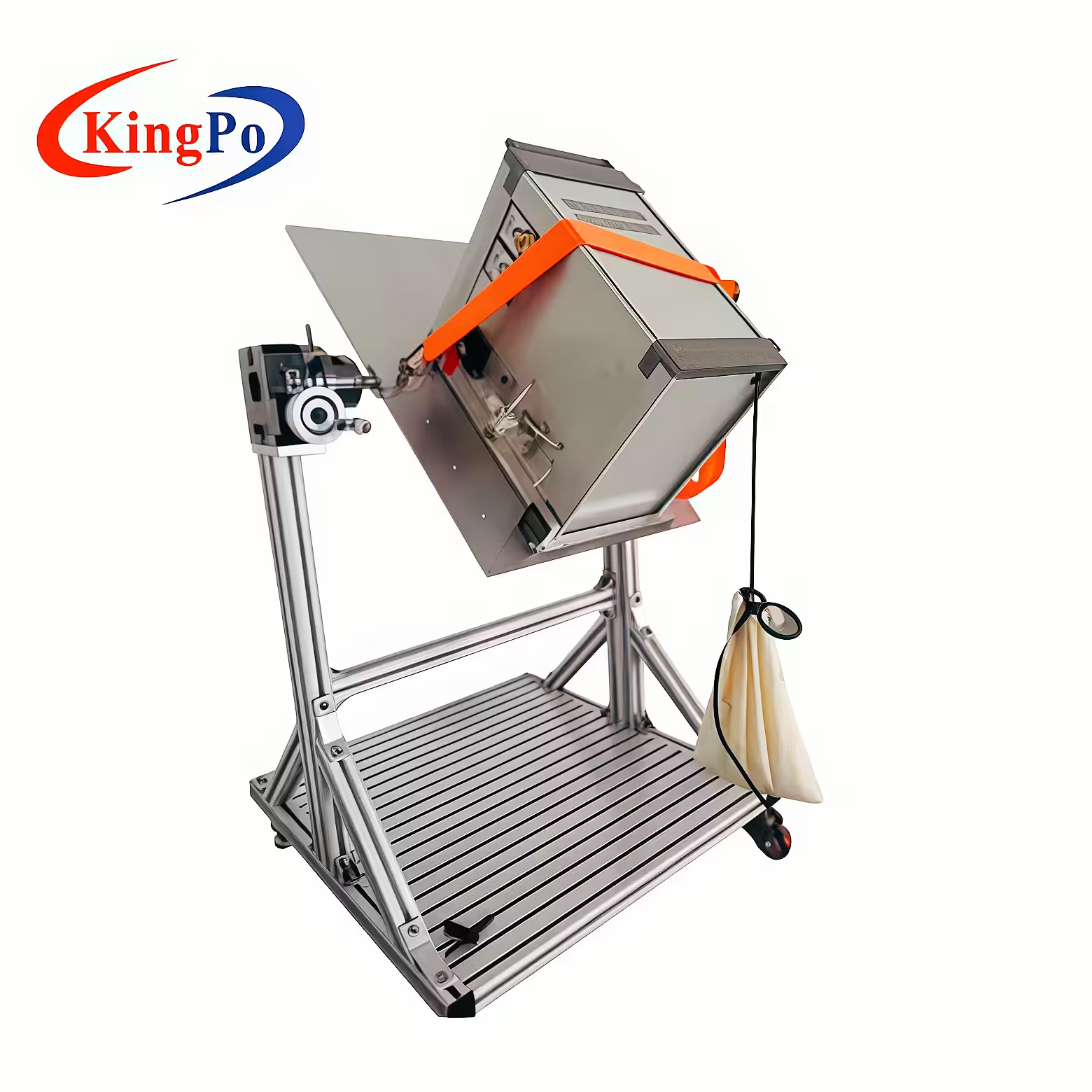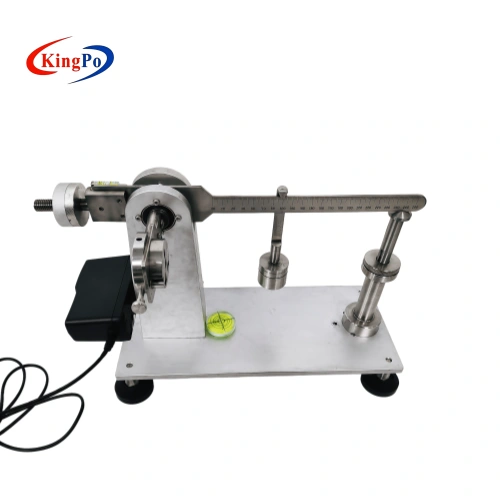
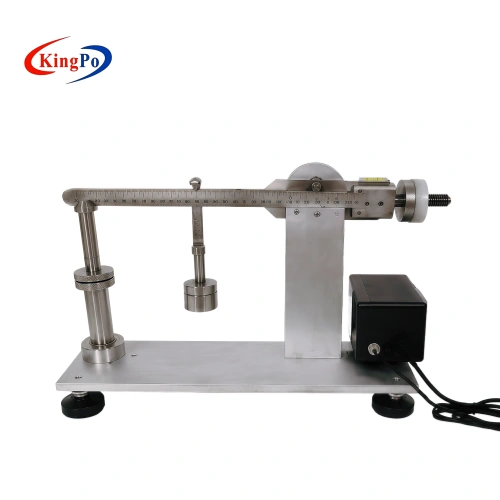
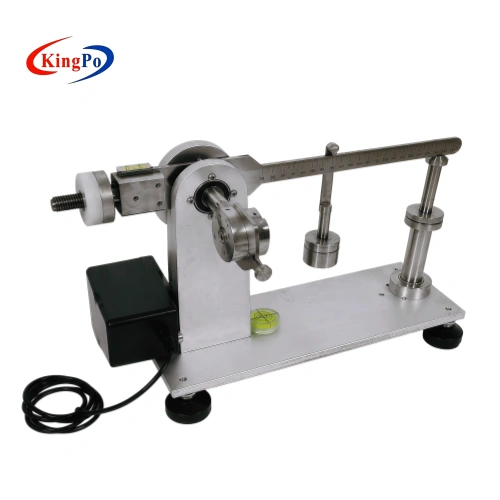
The IEC 62368-1 Clause 4.7 Plug Torque Tester is a mechanical test apparatus designed for plug-in equipment torque evaluation. It is used to check whether products fitted with plug pins apply excessive torque to fixed socket outlets when the product is supported by the plug and socket connection.
During testing, the specimen is inserted into the appropriate fixed socket fixture. The balancing arm and test weight are used to evaluate the mechanical moment generated by the plug-in device. This helps determine whether the applied torque remains within the required limit of IEC 62368-1 Clause 4.7 or other related plug safety test procedures.
The tester provides a repeatable setup for manufacturers, third-party testing laboratories and compliance departments. It is suitable for plug-in power supplies, adapters, AV/ICT equipment, household appliance accessories and other devices that may rely on socket engagement for mechanical support.
Applicable Standards and Test Method
The Plug Torque Tester is mainly designed for IEC 62368-1 Clause 4.7 related testing. This clause is used to evaluate torque applied by plug-in equipment to fixed socket outlets, helping identify whether the mechanical design of the product may overstress the socket during normal use.
The same type of socket-outlet torque balance can also support related applications under IEC 60884-1, IEC 60335-1 and IEC 60065, depending on the plug type, socket configuration, product category and laboratory procedure.
Before testing, users should confirm the applicable standard version, test clause, plug geometry, socket type, reference distance, target market and torque limit. Correct socket selection and proper mechanical alignment are important for repeatable plug torque test results.
Technical Specifications
Test Configuration
| Item | Specification |
|---|---|
| Product name | Plug Torque Tester |
| Main standard | IEC 62368-1 Clause 4.7 |
| Related standards | IEC 60884-1, IEC 60335-1 and IEC 60065 related applications |
| Test object | Plug-in equipment and fixed socket outlets |
| Test station | Single station |
| Installation | Benchtop use |
| Socket configuration | Universal socket, UL socket and European socket options |
Torque and Mechanical Parameters
| Item | Specification |
| Torque range | 0.25 N·m to 0.4 N·m typical configuration |
| Test weight | 2.5 N |
| Reference distance | 8 mm |
| Balancing arm | Adjustable balancing arm |
| Torque calculation | Weight × arm length |
| Test method | Mechanical torque evaluation of plug-in equipment |
| Typical use | Compliance verification and product structure evaluation |
Testing Principle
The test sample is inserted into a fixed socket fixture mounted on the apparatus. The plug-socket assembly is positioned according to the required test geometry so that the torque can be evaluated around the specified reference position.
A test weight and balancing arm are used to generate or evaluate the mechanical moment produced by the plug-in device. This moment represents the torque that may be applied to a fixed socket outlet when the product is supported by its plug pins during normal use.
The test result helps determine whether the plug-in equipment applies excessive mechanical stress to the socket outlet. Excessive torque may indicate a risk of socket deformation, poor support, unstable installation or non-compliance with the applicable plug torque requirement.
Applications and Use Cases
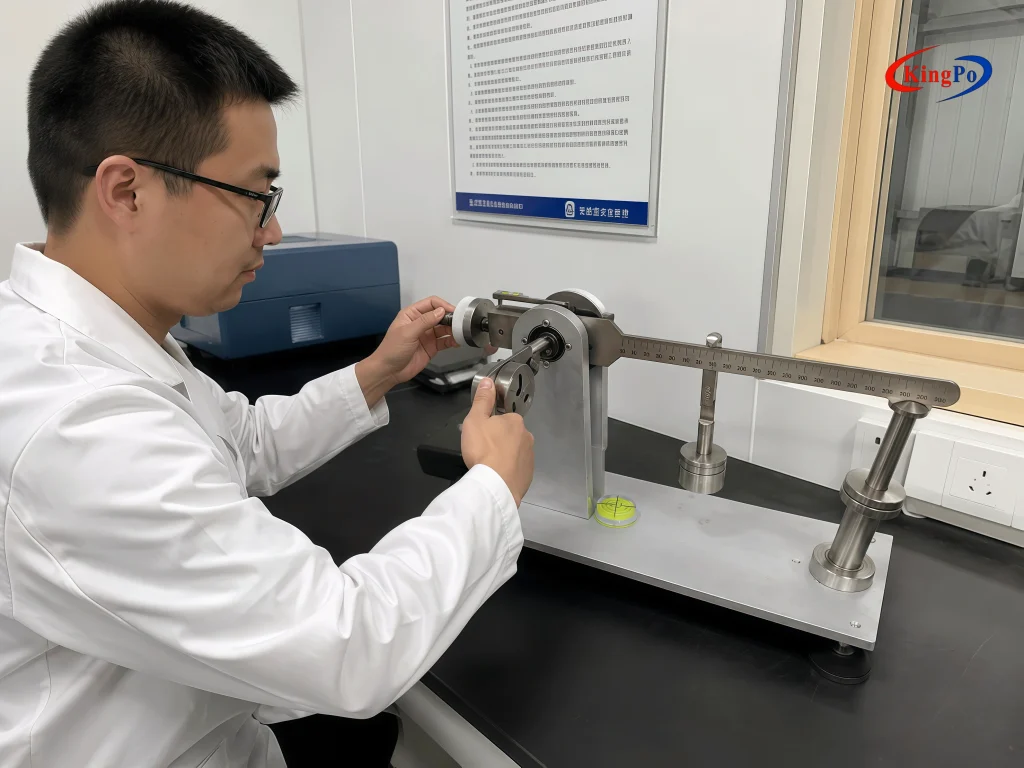
The IEC 62368-1 Clause 4.7 Plug Torque Tester is used by electrical safety laboratories, manufacturers and quality inspection organizations for plug torque verification of plug-in equipment and fixed socket outlets.
Typical test objects include plug-in power supplies, power adapters, AV/ICT equipment, household appliance accessories and similar plug-in devices. It is especially useful for products that depend on plug pins and socket engagement for mechanical support.
The apparatus supports product development verification, pre-compliance testing, certification preparation, incoming inspection and routine quality control. It helps users identify whether the mechanical design of a plug-in product may create excessive torque on the socket outlet before formal testing or market release.
Key Features
The IEC 62368-1 Clause 4.7 Plug Torque Tester provides a dedicated mechanical setup for repeatable plug torque evaluation. Its adjustable structure and selectable socket configurations help laboratories perform fixed socket outlet torque testing with consistent positioning, simple operation and reliable mechanical alignment.
As a Plug Torque Force Test Apparatus and Socket-Outlet Torque Balance, the tester can be configured according to plug type, target market and applicable test procedure. The single-station benchtop design is suitable for compliance laboratories, manufacturer quality departments and product development teams that need a practical mechanical test solution for plug-in equipment.
Operation and Setup Notes
Before testing, operators should confirm the plug type, socket configuration, product category and applicable standard clause. The correct socket fixture should be selected according to the plug type and target market to avoid setup errors that may affect torque evaluation.
The 8 mm reference distance, socket position and balancing arm alignment should be verified before each test. Incorrect alignment may change the applied mechanical moment and reduce test repeatability.
The weight value, arm length, rotating components and mounting stability should be inspected regularly. Friction, looseness, incorrect positioning or worn socket fixtures may influence the test result and should be corrected before routine testing.
This product is a mechanical plug torque test apparatus. It is not used for electrical continuity, dielectric strength, leakage current, temperature rise or other electrical safety measurements.