Standards and Test Method Support
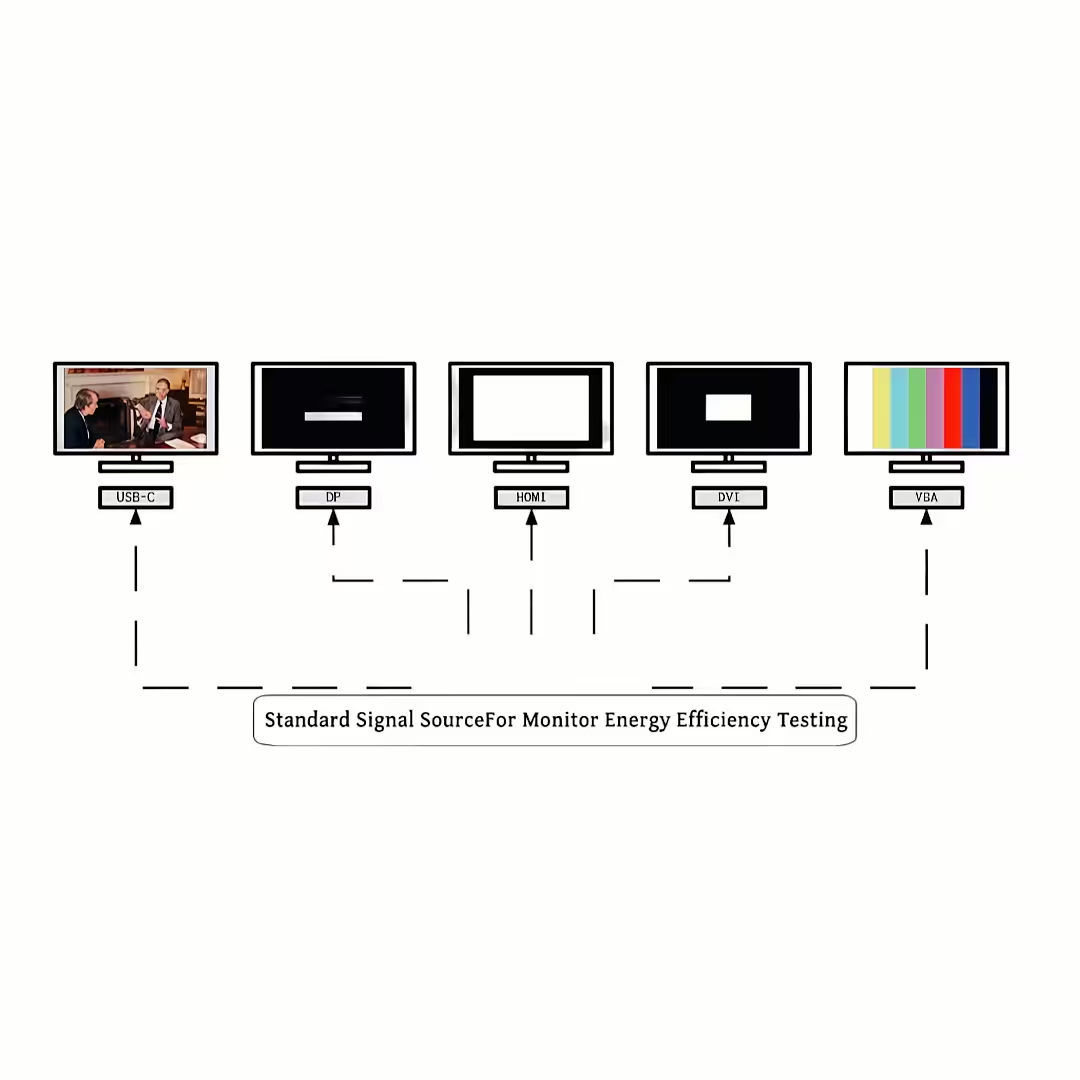
The KP210 8K Signal Generator is designed as a standard signal source for display energy efficiency testing. It supports GB 21520-2023 related display energy efficiency evaluation and IEC 62087 related video test signal requirements.
For display energy efficiency testing, the display under test must receive stable, repeatable and standard-defined video signals. The KP210 provides built-in test patterns and dynamic video signals to help laboratories perform controlled testing of power consumption and display performance.
Typical standard-related signal outputs include IEC 62087-2 dynamic video signals, 8-level grayscale signals, white window signals, full-field color signals and 10% white window signals.
System Configuration
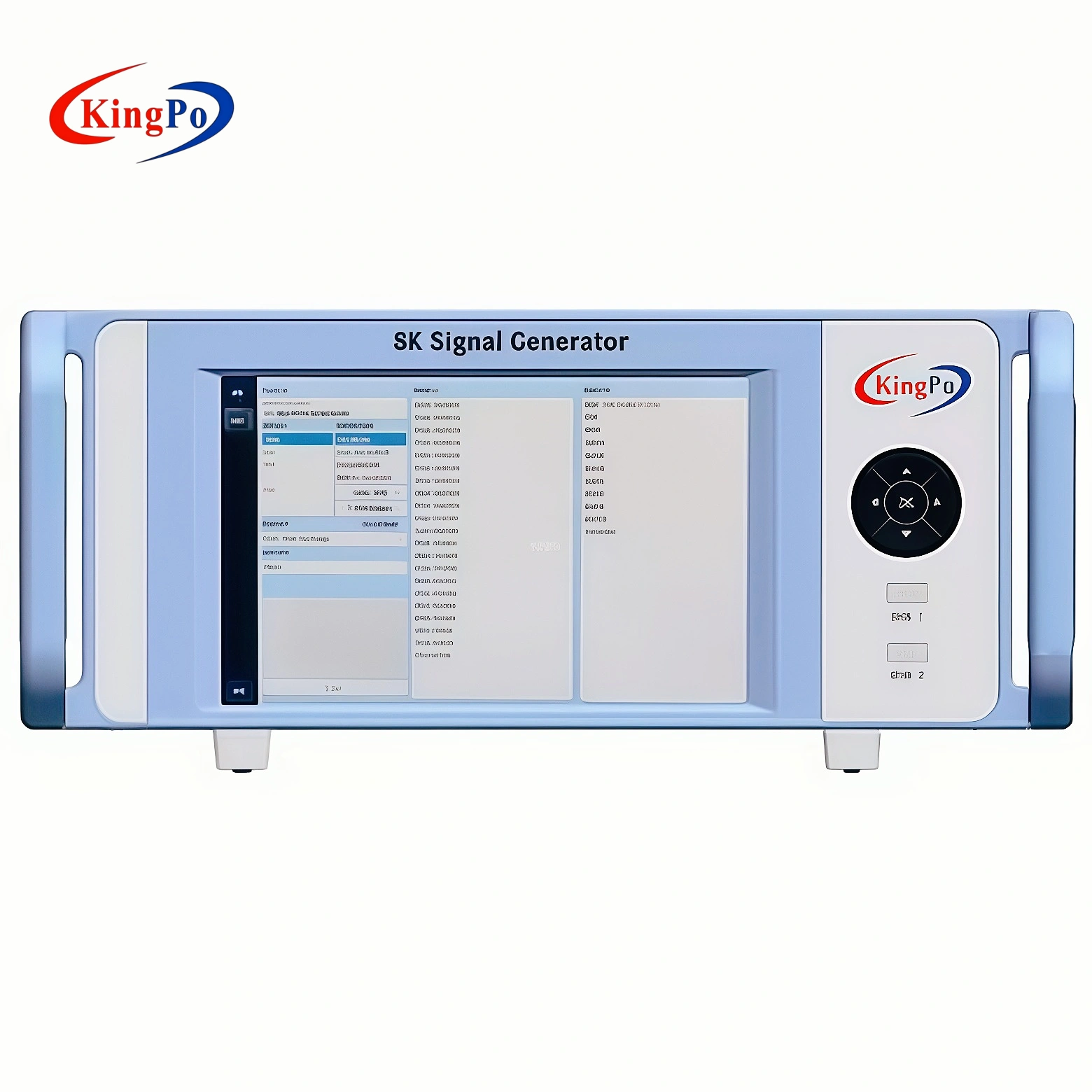
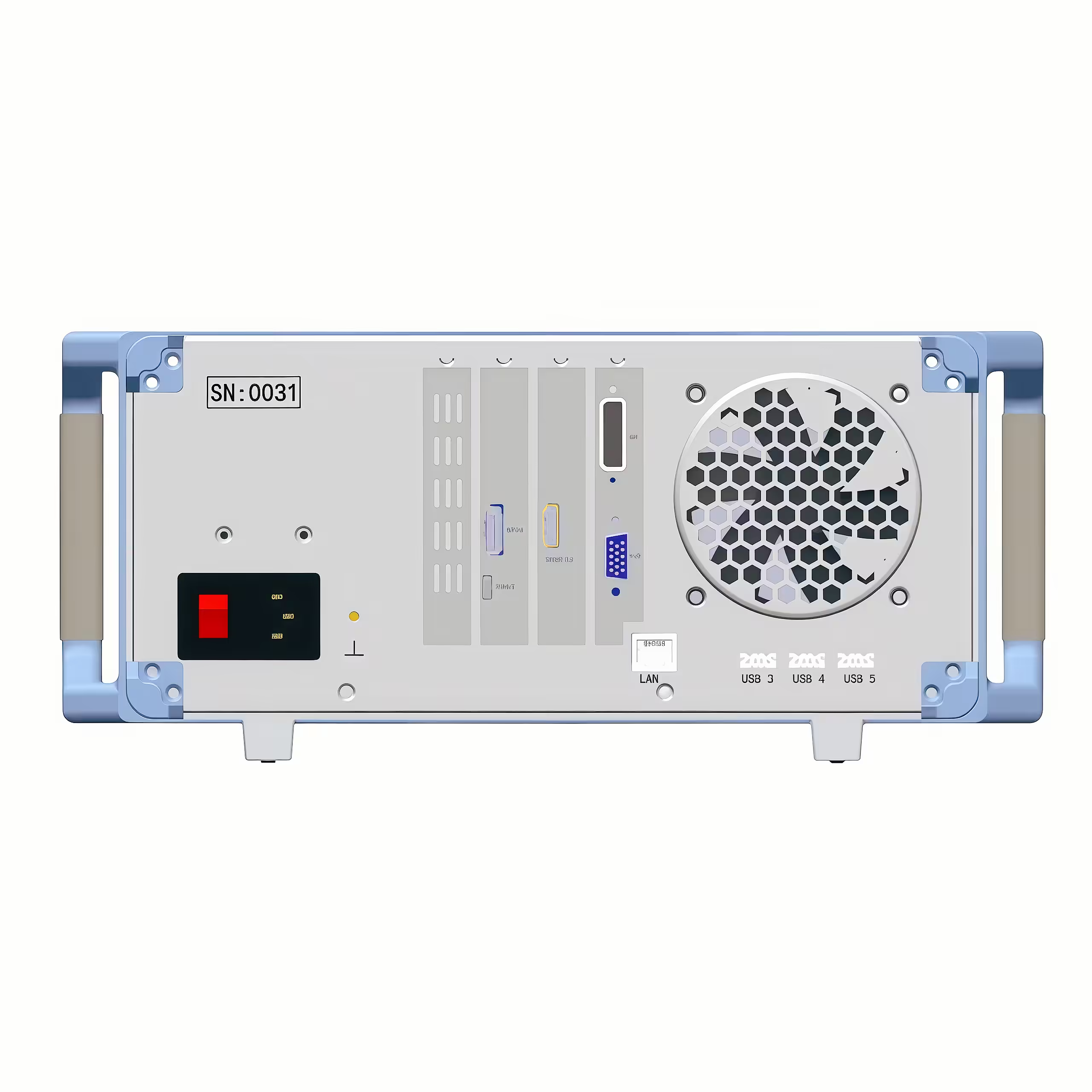
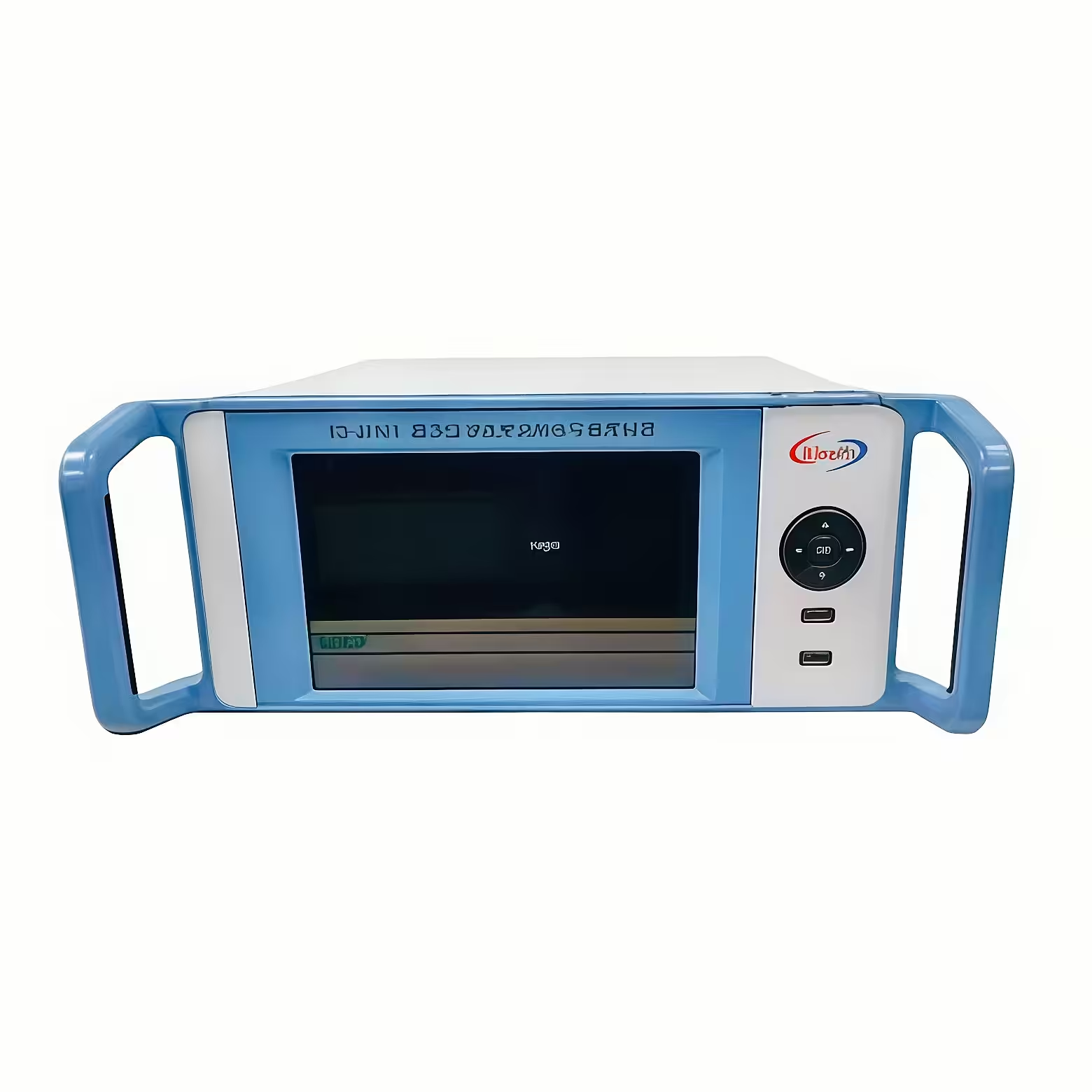
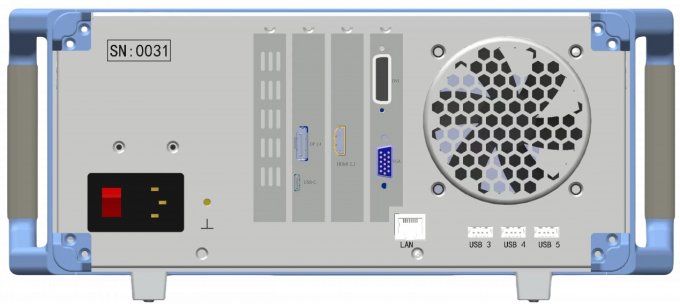
The KP210 integrates a high-resolution video signal generation platform, multiple video output interfaces, touchscreen control, EDID management, external device ports and remote-control connectivity into one professional display test signal source.
The 8-inch capacitive touchscreen allows operators to select output interface, resolution, color format, brightness range, test signal and related display output settings. EDID reading and ignoring modes help improve compatibility with different display samples during testing.
The signal generator is suitable for both laboratory bench testing and production-related display verification workflows.
Professional Construction and Technical Precision
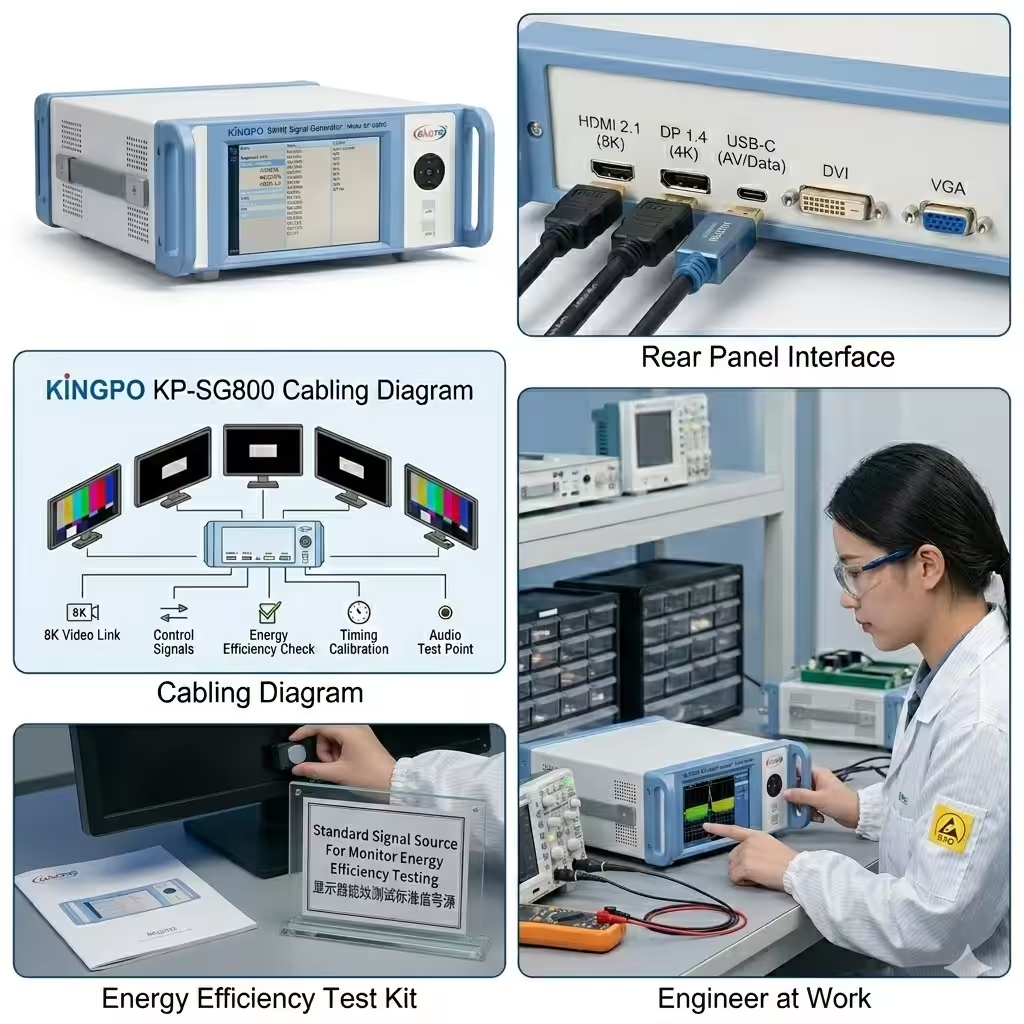
The KP210 is designed for laboratories that need a stable and repeatable signal source for display energy efficiency and performance evaluation. It supports true 8K output up to 7680 × 4320 and multiple high-bandwidth and legacy video interfaces, allowing one signal source to serve different display product types.
The system supports SDR and HDR brightness ranges, multiple pixel formats and common broadcast/display color spaces, including BT.601, BT.709 and BT.2020. This makes it suitable for modern UHD display testing as well as compatibility testing with older display interfaces.
KP210 8K Signal Generator Technical Specifications
| Item | Specification |
|---|---|
| Model | KP210 |
| Product Type | 8K Signal Generator / Standard Signal Source |
| Application | Display energy efficiency testing and display performance verification |
| Related Standards | GB 21520-2023; IEC 62087 related video test methods |
| Maximum Resolution | 7680 × 4320 |
| Video Interfaces | HDMI 2.1, DisplayPort, USB-C, DVI, VGA |
| Pixel Formats | 8-bit RGB444 Full Range, 8-bit RGB444 Narrow Range, 8-bit YUV422 Narrow Range, 10-bit RGB444 Full Range, 10-bit RGB444 Narrow Range, 10-bit YUV422 Narrow Range |
| Color Spaces | ITU-R BT.601, ITU-R BT.709, ITU-R BT.2020 |
| Brightness Range | SDR, HDR |
| Built-in Test Signals | IEC 62087-2 dynamic video, 8-level grayscale, white window, full-field color signals, 10% white window |
| Display Interface | 8-inch LCD capacitive touchscreen |
| EDID Function | EDID reading and ignoring modes |
| Remote Control | Ethernet remote control support |
| Expansion | USB ports for external devices and user-added test signals |
| Power Supply | AC 220 V, 50 Hz |
| Delivery Reference | 20 working days |
| MOQ | 1 unit |
Video Interface Support
| Interface | Supported Output Capability |
| HDMI 2.1 | Supports FRL / TMDS modes, up to 8K@60Hz, 4K@160Hz and below video formats |
| DisplayPort | Supports DP 1.4 standard, up to 8K@30Hz, 4K@60Hz, 2K@144Hz and below video formats |
| USB-C | Supports up to 8K@30Hz, 4K@60Hz, 2K@144Hz and below video formats |
| DVI | Supports up to 2560 × 1600@30Hz, 1920 × 1200@60Hz and below video formats |
| VGA | Supports up to 2560 × 1600@25Hz, 1920 × 1200@60Hz and below video formats |
For high-bandwidth 8K testing, HDMI 2.1 cable quality, display input capability and EDID settings should be confirmed before formal testing.
Built-in Test Signals
The KP210 supports standard display test signals used for energy efficiency and performance evaluation.
| Test Signal Type | Use in Display Testing |
| IEC 62087-2 Dynamic Video Signal | Used for display energy efficiency and dynamic content power consumption evaluation |
| 8-Level Grayscale Signal | Used for grayscale response and visual performance verification |
| White Window Signal | Used for luminance and power consumption evaluation under windowed white signal conditions |
| Full-Field Color Signals | Includes full white, full black, full red, full blue and full green fields |
| 10% White Window Signal | Used for specified white window test conditions and display power measurement workflows |
These test signals help laboratories maintain consistent input conditions when measuring display energy efficiency, luminance, power consumption and related display performance parameters.
Testing Principle
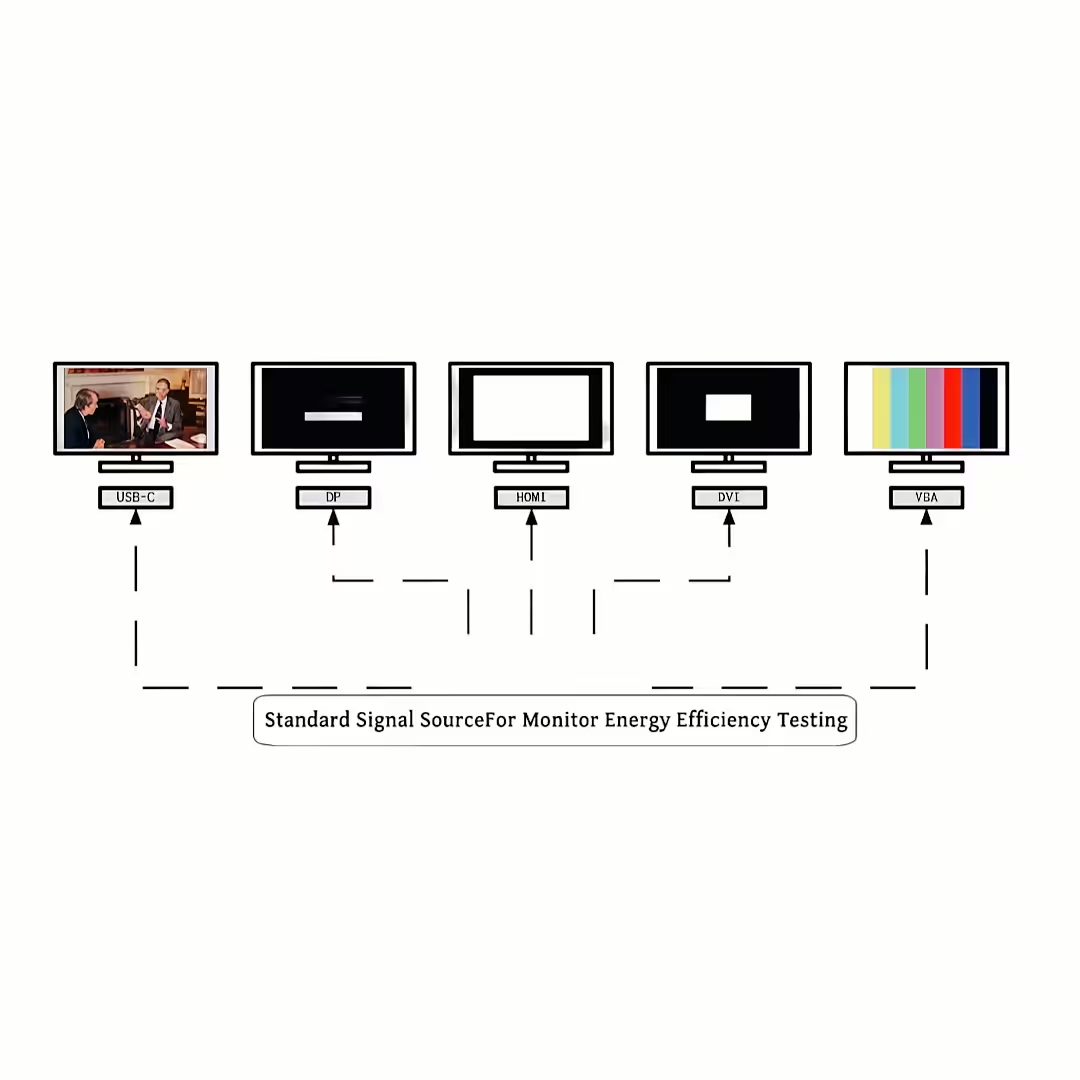
The KP210 8K Signal Generator outputs standardized video signals to the display under test. The display receives the selected signal through HDMI, DP, USB-C, DVI or VGA, while laboratory instruments measure power consumption, luminance, color performance or other required display parameters according to the test program.
In a typical display energy efficiency test, the operator selects the required signal pattern, output interface, resolution, pixel format and brightness range. The display is then operated under controlled test conditions so that power consumption and visual performance data can be measured consistently.
This process helps display manufacturers and laboratories reduce signal-source variation and improve repeatability during energy efficiency and display performance testing.
Test Workflow
- Connect the KP210 8K Signal Generator to the display under test.
- Select the required output interface, such as HDMI 2.1, DP, USB-C, DVI or VGA.
- Confirm the display input capability and EDID information.
- Select resolution, refresh rate, pixel format and brightness range.
- Choose the required built-in test signal, such as dynamic video, grayscale, white window or full-field color signal.
- Allow the display to stabilize according to the laboratory test procedure.
- Measure display power consumption, luminance or other required performance parameters.
- Record signal settings, display mode, ambient conditions and measurement data.
- Repeat the test with additional signal patterns if required by the test program.
- Save or document the final test conditions and results for reporting.
Operation Notes for Display Energy Efficiency Testing
To improve repeatability and reduce test error, the following practices are recommended:
- Confirm the applicable standard version and test signal before starting the test.
- Use certified high-bandwidth cables for 8K HDMI 2.1 output.
- Verify EDID settings before selecting high-resolution or HDR output modes.
- Confirm that the display is set to the correct input, picture mode and brightness setting.
- Record resolution, refresh rate, pixel format, color space and brightness range.
- Keep ambient light, display warm-up time and measurement position consistent.
- For HDR testing, confirm that both the signal generator and display are operating in the intended HDR mode.
- Use the same signal source configuration for repeated comparison tests.
Applications and Laboratory Use
The KP210 8K Signal Generator is suitable for:
- Display energy efficiency testing
- Monitor and television product verification
- Commercial display testing
- LED display and large-screen product evaluation
- All-in-one display terminal testing
- Display R&D laboratories
- Quality control departments
- Third-party testing laboratories
- Certification and pre-compliance testing
- Standard signal source configuration for display test systems
Typical use cases include product development verification, incoming inspection, production quality control, energy efficiency rating preparation and display performance comparison testing.
8K Signal Generator for Customer Case Studies