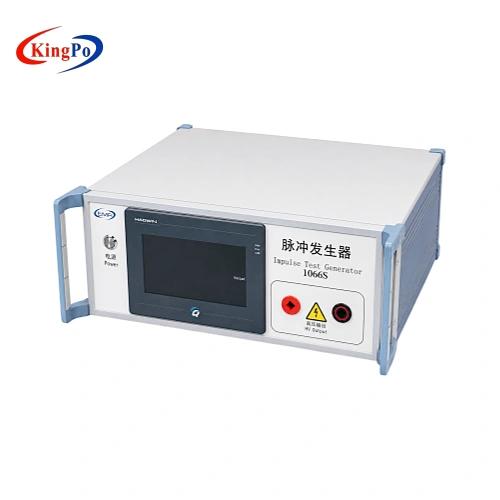
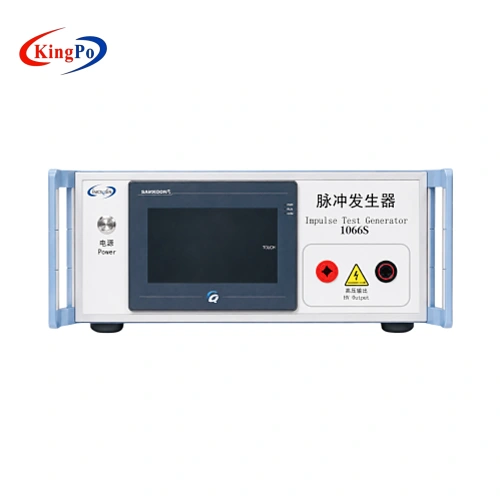
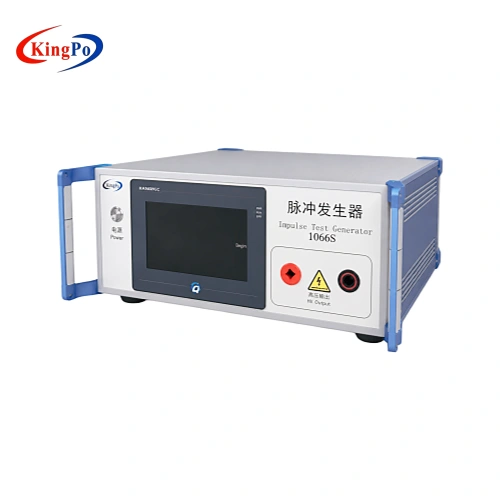
The KP-1066S is an IEC 62368-1 Annex D.3 Impulse Test Generator designed for GB4943.1 safety testing of audio/video, information technology and communication equipment. It provides a dedicated 0.5–5 kV high-voltage pulse source for laboratories and manufacturers that need to verify whether AV/ICT equipment and related circuits can withstand the specified pulse condition.
This model is suitable for safety laboratories, certification preparation, R&D verification and manufacturer quality control where repeatable Annex D.3 impulse and electronic pulse testing is required for AV/ICT equipment, adapters, power supplies and related electronic products.
It is intended for standard-related impulse testing and should not be treated as a general-purpose EMC surge immunity generator or arbitrary waveform generator.
Technical Specifications
The main specifications of this IEC 62368-1 Annex D.3 Impulse Test Generator are listed below for quick laboratory and purchasing review.
| Item | Specification |
|---|---|
| Product Model | KP-1066S |
| Applicable Standards | GB4943.1, IEC 62368-1 Annex D.3 |
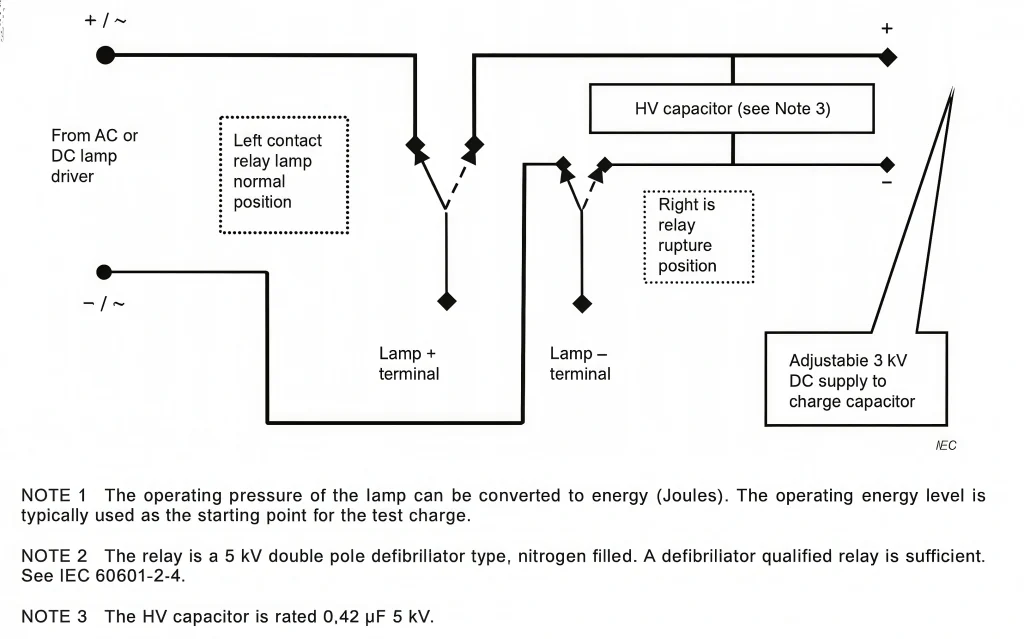
| Test Circuit | Annex D.3 electronic pulse generator circuit |
| Output Voltage | 0.5–5 kV |
| Voltage Resolution | 0.01 kV |
| Output Waveform Voltage Accuracy | ±5% ±3 digits |
| Capacitance | 0.42 μF |
| Discharge Time | 1–99 s adjustable |
| Number of Tests | 1–999 times |
| Test Count Accuracy | ±1 count |
| Control System | PLC programmable controller |
| Operation Interface | Color touchscreen |
| Protection Function | Built-in overvoltage protection |
| Memory Function | Parameter memory after power failure |
| Input Power | AC 220 V ±10%, 50/60 Hz |
| Dimensions | 480 × 460 × 200 mm |
| Weight | Approx. 10 kg |
What the Annex D.3 Impulse Test Helps Evaluate
In IEC 62368-1 Annex D.3 related testing, the impulse test generator is used to apply a defined electrical stress condition to the product or circuit under test. The purpose is to help engineers evaluate whether the design can maintain the required safety performance during pulse application.
The test may help identify weak insulation paths, insufficient protective circuit design, inadequate component withstand margin, unexpected flashover, breakdown behavior or abnormal response during high-voltage pulse exposure.
Note: This section is not a replacement for the standard test procedure. The final test arrangement, connection method and pass/fail judgment should follow the applicable IEC 62368-1 / GB4943.1 requirement and the laboratory’s internal safety procedure.
Design and Operation Features
PLC Touchscreen Control
The PLC control system and color touchscreen allow operators to set voltage, discharge time and test cycles directly, helping improve repeatability and reduce manual setting errors.
0.5–5 kV Adjustable Output
The output voltage can be adjusted from 0.5 kV to 5 kV with 0.01 kV resolution, supporting precise setting for Annex D.3 related test conditions.
0.42 μF Test Capacitance
The built-in 0.42 μF capacitance is part of the electronic pulse generator circuit configuration and should be checked together with the applicable standard requirement.
Programmable Test Cycles
The number of tests can be set from 1 to 999 times, making the equipment suitable for repeated verification, sample comparison and quality control testing.
Adjustable Discharge Time
The discharge time can be set from 1 to 99 seconds, allowing laboratories to match the test interval with their internal test procedure.
Parameter Memory
The instrument can retain parameter settings after power failure, reducing repeated setup work when the same test condition is used again.
Overvoltage Protection
Built-in overvoltage protection supports safer high-voltage operation and helps protect the instrument during testing.
Compact Benchtop Design
With a 480 × 460 × 200 mm structure and an approximate weight of 10 kg, the unit is suitable for laboratory benches, R&D rooms and QC areas.
Typical Applications
The KP-1066S is used where IEC 62368-1 Annex D.3 / GB4943.1 impulse and electronic pulse generator testing is required.
- Audio/video equipment
- Information technology equipment
- Communication equipment
- Power adapters and chargers
- Power supply modules
- Display products and related electronic devices
- Office and business electronic equipment
- AV/ICT equipment prepared for CCC, CB or internal safety verification
It is especially useful for manufacturers who need to check design margin before formal certification testing, such as insulation arrangement, protective circuit design, component selection and withstand performance.
Buyer’s Selection Notes
Before purchasing an impulse test generator for IEC 62368-1 / GB4943.1 testing, buyers should confirm the following points:
Confirm whether the project follows IEC 62368-1, GB4943.1, or another national adoption.
The KP-1066S is intended for Annex D.3 electronic pulse generator circuit testing. The required test circuit should be checked against the test plan.
This model supports 0.5–5 kV output. If the laboratory requires specific voltage points or calibration points, they should be confirmed before ordering.
The product type, test position and connection method may affect fixture preparation and test procedure.
For laboratory and certification support, buyers may need calibration documentation, factory inspection records or a technical datasheet.
Typical Operation Workflow
- Confirm the applicable standard clause, test circuit and required voltage level before testing.
- Prepare the DUT according to the laboratory test procedure.
- Set the output voltage, discharge time and number of test cycles on the touchscreen.
- Connect the DUT and test leads according to the approved test arrangement.
- Check grounding, insulation clearance and operator safety conditions before starting the test.
- Start the programmed test sequence and monitor the DUT response.
- Record the test result, abnormal behavior or visible breakdown condition.
- After testing, discharge the circuit safely and reset the equipment before handling the DUT.
Safety Note: High-voltage pulse testing should only be performed by trained personnel under controlled laboratory conditions. The operator should follow the applicable standard, internal safety procedure and equipment manual.
Typical Observations During Testing
During pulse testing, engineers usually observe whether the DUT shows insulation breakdown, flashover, abnormal discharge, protective circuit failure, component damage or unexpected functional abnormality.
The pass/fail judgment should be made according to the applicable IEC 62368-1 / GB4943.1 test requirement and the laboratory’s evaluation procedure. For pre-compliance work, test results can also help engineers identify design areas that may need review before formal certification.
Dedicated IEC 62368-1 Annex D.3 Impulse Test Generator
The term “impulse test generator” is broad and may refer to different waveforms, circuits and standards. The KP-1066S is specifically intended for IEC 62368-1 Annex D.3 / GB4943.1 electronic pulse generator circuit testing.
It should not be confused with a general EMC surge immunity generator, a 1.2/50 μs impulse generator, a 10/700 μs telecom surge generator or other IEC 62368-1 pulse test circuits. This distinction helps buyers confirm that the selected equipment matches the required test clause before ordering.