Product Overview
Surge immunity testing evaluates how electrical and electronic equipment responds when a defined high-energy transient is coupled into an applicable power or interconnection port.
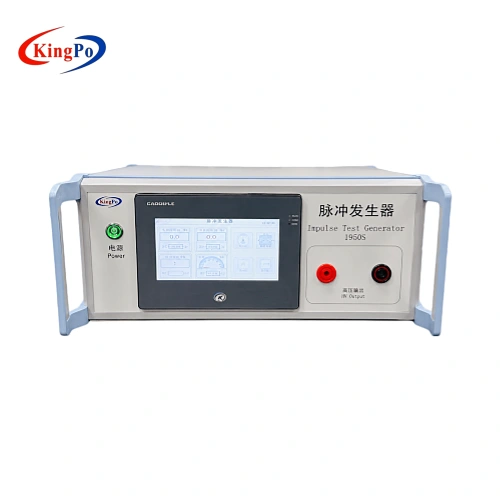
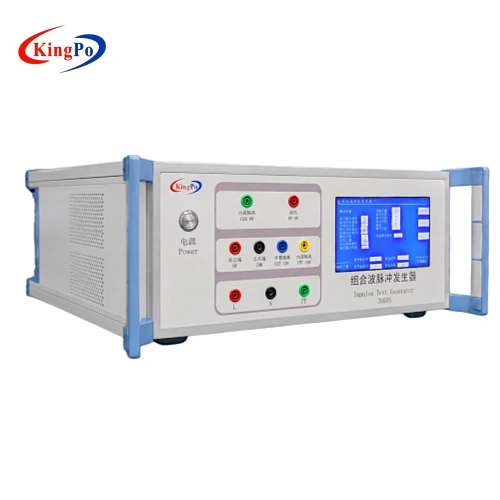
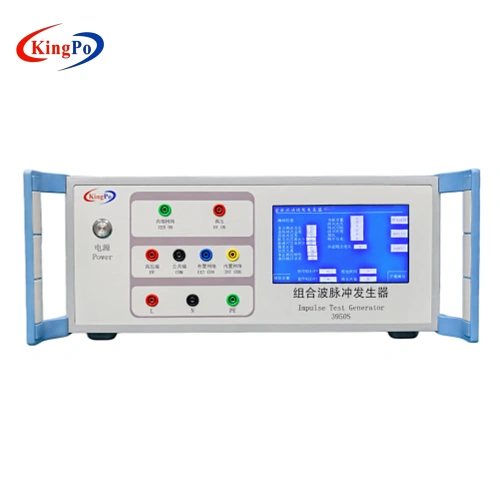
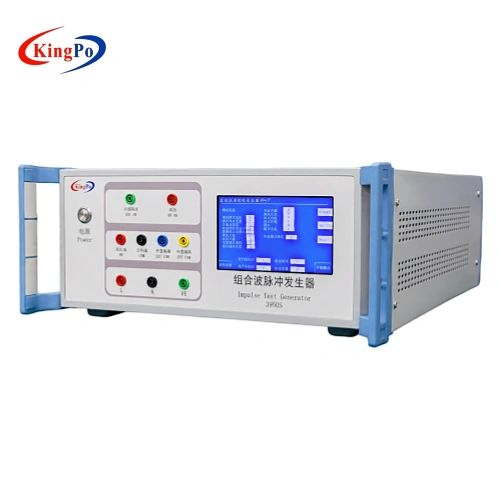
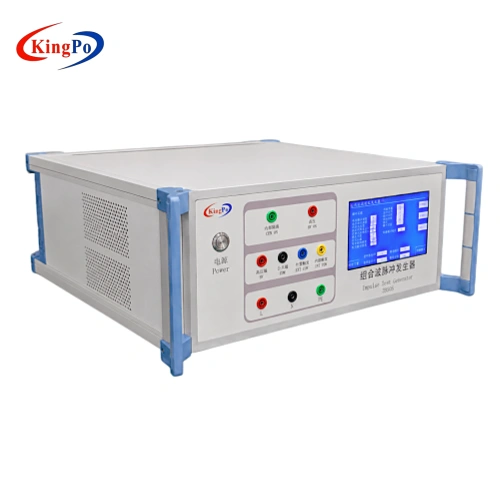
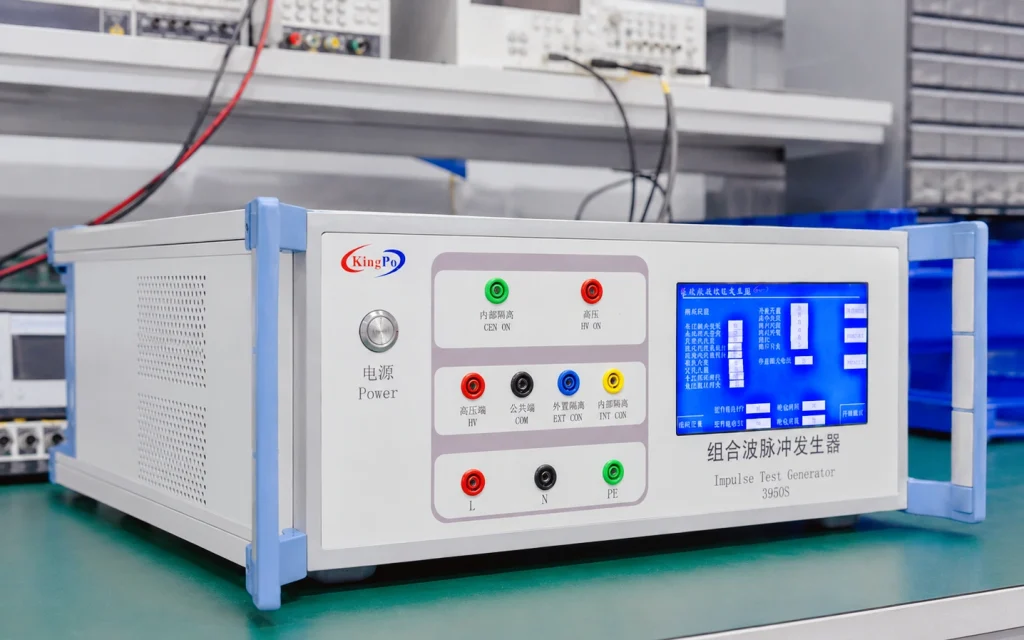
The KP-3950S generates the combination wave required for this type of laboratory test. The generator is characterized by a
1.2/50 μs voltage waveform under open-circuit conditions and an 8/20 μs current waveform under short-circuit conditions.
For power-port testing, the surge is coupled into the equipment under test through an appropriate coupling/decoupling network. The built-in single-phase network supports EUT supplies within its specified 300 V / 10 A capacity.
The required test level, coupling path, number of surges and EUT performance criteria are determined by the applicable product standard or laboratory test plan. The KP-3950S provides the surge source and coupling functions; it does not by itself determine whether an EUT passes or fails.
Technical Specifications
| Item | Specification |
|---|---|
| Model | KP-3950S |
| Open-Circuit Voltage Waveform | 1.2/50 μs |
| Voltage Front Time | 1.2 μs ±30% |
| Voltage Time to Half Value | 50 μs ±20% |
| Surge Voltage Range | 0.5–6 kV |
| Voltage Setting Resolution | 0.01 kV |
| Voltage Indication Accuracy | ±10% |
| Short-Circuit Current Waveform | 8/20 μs |
| Maximum Short-Circuit Current | 500 A ±10% (12 Ω configuration) |
| Output Impedance | 12 Ω ±10% |
| 2 Ω Configuration | Available according to test requirement; corresponding current capability to be confirmed |
| Output Polarity | Positive / negative |
| Synchronous Trigger Phase | 0–360° |
| Phase Setting Resolution | 1° |
| Surge Count | 1–9,999 |
| Surge Interval | 20–60 s |
| Built-in AC Network Capacity | Single-phase 300 V, 10 A, 50/60 Hz |
| Built-in DC Network Capacity | 300 V, 10 A |
| Coupling Paths | L-N, L-E, N-E, L+N-E |
| Power Supply | AC 220 V ±10%, 50/60 Hz |
| Dimensions | 580 × 460 × 200 mm |
| Weight | Approx. 20 kg |
The 500 A rating applies to the stated 12 Ω configuration. For a 2 Ω test configuration, please confirm the required surge-current capability before quotation.
What This Equipment Tests
The KP-3950S is intended to evaluate the surge immunity of an equipment under test (EUT) when a controlled transient is applied to an applicable electrical port.
During the test, the EUT is normally operated under the conditions defined by the applicable procedure while the specified surges are applied. Its functional response is evaluated according to the performance criteria established by the relevant product standard or approved test plan.
This test evaluates equipment immunity to controlled surge disturbances. It should not be confused with direct lightning-current testing or component-specific qualification of individual surge protective devices.
How the Combination Wave Test Works
A combination wave generator is characterized under two reference conditions: open-circuit voltage and short-circuit current.
With the generator output open, the surge is characterized by its voltage front time and time to half value.
With the generator output shorted, the surge is characterized by the corresponding current waveform.
These are not two separate test outputs. They describe the voltage and current characteristics of the same combination-wave generator under different load conditions.
When an actual EUT is connected, its impedance becomes part of the surge circuit. The resulting voltage and current therefore depend on the EUT impedance, generator source impedance and selected coupling arrangement.
Source Impedance and Configuration
Selecting a surge generator only by its maximum voltage can result in the wrong test configuration. For IEC 61000-4-5 combination-wave testing, the required source impedance depends on the applicable coupling arrangement and EUT port.
The KP-3950S is specified with a 12 Ω ±10% configuration, while a 2 Ω configuration can be provided for applications that require it. Because source impedance affects the available short-circuit surge current, the required impedance and current capability should be confirmed together.
Before configuration, confirm:
Built-in Coupling/Decoupling Network
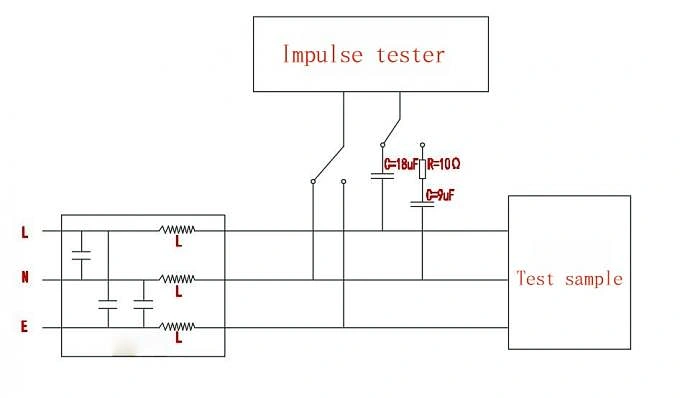
For power-port surge testing, the generator is used with a coupling/decoupling network (CDN). The CDN couples the surge into the required EUT conductors while helping prevent the disturbance from propagating back toward the auxiliary power source.
The KP-3950S includes a built-in network for single-phase power-port applications within the following ratings:
Single-phase, up to 300 V / 10 A, 50/60 Hz
Up to 300 V / 10 A
Available Coupling Paths
L-E
N-E
L+N-E
When an External CDN Is Required
The built-in network should not automatically be assumed suitable for every EUT. An external or customized CDN should be considered for:
For these applications, the surge generator and CDN should be selected as a complete test system based on the EUT supply rating, port type and applicable test method.
Typical Laboratory Test Setup
A typical power-port surge immunity test setup includes:
Before the test, the operator selects the required coupling path, surge voltage, polarity, phase angle, number of surges and pulse interval. The programmed surge sequence is then applied while the EUT operates under the conditions specified by the applicable test procedure.
The EUT response is monitored during and after surge application. The exact sequence and acceptance criteria should follow the applicable standard edition and product-specific test requirement.
Typical Applications
EMC and Certification Testing
EMC, third-party and certification laboratories can use the KP-3950S for surge immunity projects where IEC 61000-4-5 or an equivalent national standard is referenced. The generator and CDN configuration should be matched to the EUT port and required test level.
Product Development and Pre-Compliance
Manufacturers can evaluate EUT behavior under controlled surge conditions during product development and identify immunity weaknesses before formal external compliance testing.
Surge Protection Design Verification
R&D engineers can evaluate equipment containing MOVs, TVS devices, filters and other transient-protection circuits under defined combination-wave conditions and compare different protection designs.
QA and Engineering Verification
The system can support design-change verification, comparative testing and internal quality-control programs requiring repeatable surge conditions.
Engineering evaluation of surge-protection circuits does not replace the applicable component standard where individual surge protective devices require separate qualification.