Glow-Wire and Hot-Wire Methods
Fire-hazard methods based on heated wires or related thermal ignition sources for electrotechnical products and insulating materials.
Electrical fire hazard

Fire Hazard and Material Flammability Solutions
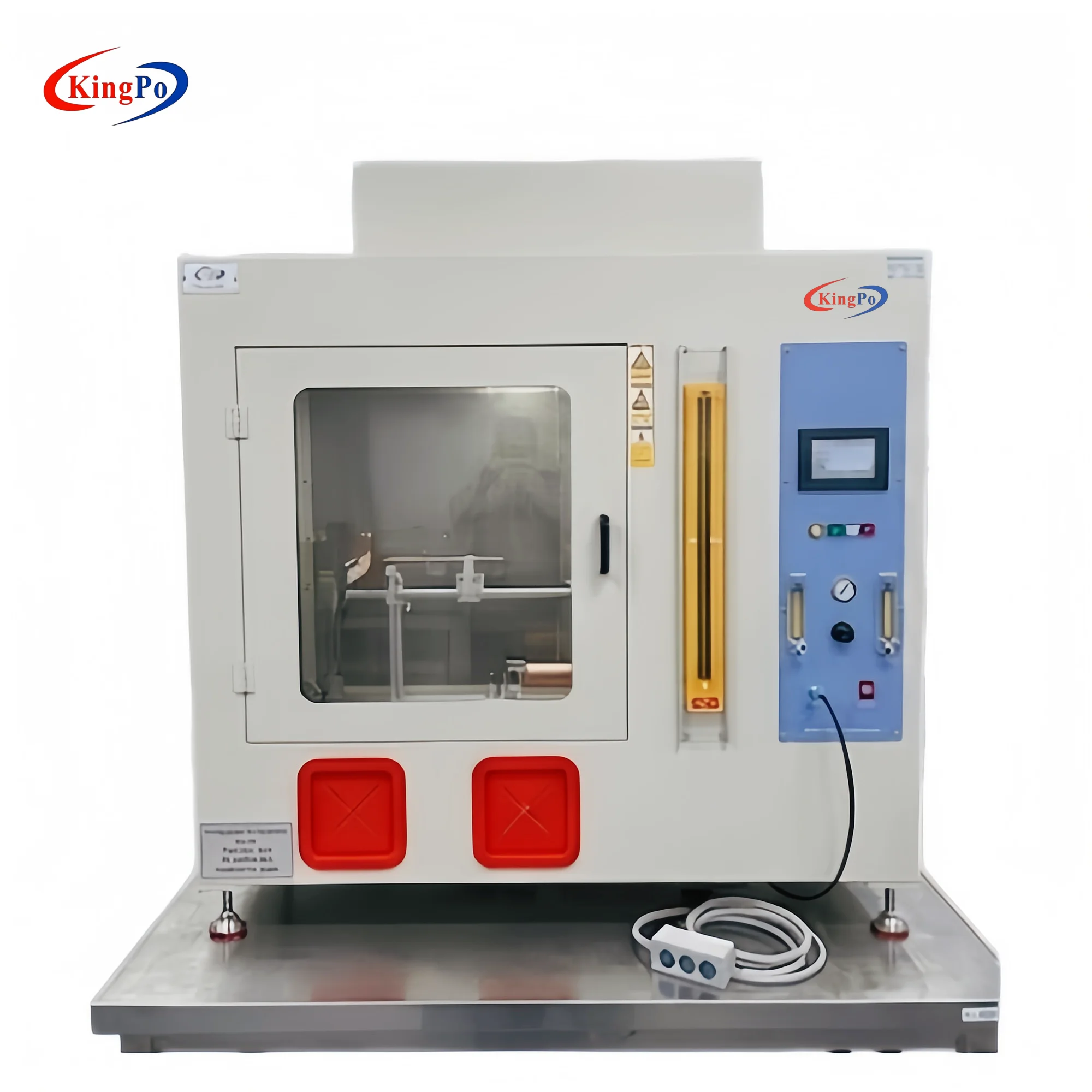
Configure glow-wire, needle-flame, 50 W and 500 W test-flame equipment, plastic-material chambers, cable flame systems, automotive and aerospace testers, non-combustibility apparatus and flammable-refrigerant test systems. The page is organized around the governing method, specimen and result—not around model numbers alone.
Quick Answer
Flammability test equipment applies a defined heat, flame, electrical arc or combustible-gas condition to a specimen and measures a method-specific response. Depending on the standard, the result may be ignition, afterflame, afterglow, flame spread, burning rate, damaged length, dripping, non-combustibility or laminar burning velocity.
Equipment selection starts with the purchased standard and exact clause. A glow-wire tester, needle-flame apparatus, 50 W burner, 500 W flame system, UL 94 chamber and cable flame tester represent different ignition sources and different acceptance logic. They should not be treated as interchangeable versions of one machine.
For a defensible laboratory configuration, also confirm the specimen form, mounting, conditioning, gas type, ventilation, calibration scope, timing functions and reporting expectations.
Do not select equipment from the word “flammability” alone. Different standards simulate different ignition scenarios, use different specimen forms and report different results. Freeze the governing publication and test method before comparing chambers or quotations.
Fire-hazard methods based on heated wires or related thermal ignition sources for electrotechnical products and insulating materials.
Electrical fire hazard
Test-flame generation, verification and application methods. The required burner and calibration system depend on the specific part.
Burner-based methods
Horizontal, vertical, 5V, thin-material and foam procedures selected around material form and requested classification.
Polymeric materials
Vertical flame test apparatus and procedures for single insulated wires, cables and optical-fibre cables.
IEC cable method
North American cable flame procedures with method-specific burner, specimen support and evaluation requirements.
Method confirmation required
Horizontal burning-rate evaluation for materials used in the occupant compartment of motor vehicles.
Automotive scope
Vertical flame-spread and Bunsen-burner methods for fabrics, flexible materials and aircraft interior applications.
Industry-specific fixtures
A furnace-based method for selected building and related materials; it is not equivalent to a UL 94 or small-flame test.
Material reaction to fire
Burning-velocity measurement and application-oriented tests for mildly flammable and flammable refrigerants.
Refrigerant safety
A technically sound quotation should answer these questions explicitly. When one is missing, the equipment list is likely incomplete or incorrectly matched.
Heated glow wire, resistance wire, needle flame, premixed burner flame, electrical arc, furnace or combustible gas mixture.
Raw material, standardized material specimen, component, cable, interior trim, textile, finished product or refrigerant mixture.
Ignition, afterflame, afterglow, flame spread, burning rate, damaged length, material class, non-combustibility or burning velocity.
Temperature, force, motion, burner geometry, gas flow, flame energy, timing, electrode movement, imaging or specimen conditions.
The equipment families below are separated by test mechanism and application. This structure prevents unrelated systems from being presented as simple power or size variants.
Simulate thermal stress from overheated or glowing electrical parts. Select the apparatus around the applicable IEC 60695-2 method, test object, temperature range, contact force, specimen movement and required observation criteria.
Apply a small standardized flame to components, insulating parts or selected positions in an end product to assess ignition and flame propagation under simulated fault conditions.
Generate and verify a nominal 50 W test flame for the applicable IEC 60695-11 procedures. The burner, gas, flame calibration and specimen fixture must match the selected test method.
Provide a higher-energy premixed flame for material and product evaluations that specifically require the IEC 60695-11-3 test-flame system and its verification arrangement.
Evaluate horizontal and vertical burning behavior of plastic, foam, film and other non-metallic specimens. Required fixtures depend on the classification method and specimen form.
Assess flame spread on a single insulated wire, cable or optical cable. IEC 60332 and UL 1581 use different apparatus and procedural details, so the governing standard must be fixed before purchase.
Use hot-wire or high-current arc methods when the fire hazard comes from localized electrical heating or repeated arc faults rather than direct exposure to an open flame.
Measure horizontal burning performance of vehicle interior materials. Confirm specimen cutting, conditioning, exposure direction and required reporting before selecting the chamber.
Use dedicated vertical-burning or Bunsen-burner systems for fabrics, flexible sheets and aerospace cabin materials. These methods require industry-specific fixtures and exposure conditions.
Evaluate whether selected materials meet the applicable non-combustibility method. This is not the same as a small-flame or UL 94 classification test.
Measure laminar burning velocity of premixed combustible gas-air mixtures for refrigerant classification and appliance-safety work involving mildly flammable or flammable refrigerants.
Support system-level evaluation related to appliances using A2L refrigerants. The chamber, release arrangement, sensors and safety controls must follow the exact clause and project scope.
Use this matrix to connect the specimen, method, standard and practical procurement notes. The product links lead to the closest current KingPo equipment pages; final configuration must still be checked against the exact clause.
| Test object / application | Test method | Standard basis | Typical equipment | Selection notes |
|---|---|---|---|---|
| Electrical or appliance part | Glow-wire end-product test | IEC 60695-2-10 / related method | Glow Wire Tester | Confirm test object, temperature, contact force, penetration, tissue layer and timing. |
| Insulating material | GWFI / GWIT material evaluation | IEC 60695-2-12 / -2-13 | Glow Wire Tester with material fixtures | Confirm specimen form, conditioning and applicable result index. |
| Small component or localized position | Needle-flame | IEC 60695-11-5 | Needle Flame Test Apparatus | Confirm burner geometry, flame height, test angle, duration and indicator layer. |
| Product or material requiring 50 W flame | 50 W test flame | IEC 60695-11-4 and applicable method | 50 W Test-Flame System | Confirm the actual test method; do not treat it as a needle-flame variant. |
| Product or material requiring 500 W flame | 500 W test flame | IEC 60695-11-3 | 500 W Flame Tester | Confirm gas, burner, copper-block verification, specimen support and chamber volume. |
| Plastic material | Horizontal / vertical burning | UL 94 / IEC 60695-11-10 / -11-20 | UL 94 Flame Chamber | Confirm classification, thickness, specimen form and required fixtures. |
| Single insulated wire or cable | Vertical flame propagation | IEC 60332-1 series | Single Cable Flame Propagation Tester | Confirm cable diameter, specimen length, burner, gas flow and damaged-length criteria. |
| North American wire or cable | VW-1 / FT1 | UL 1581 / applicable CSA method | UL 1581 VW-1 / FT1 Chamber | Confirm which procedure and burner configuration the certification plan requires. |
| Solid insulating material | Hot-wire ignition | IEC TS 60695-2-20 / applicable material standard | Hot Wire Ignition Tester | Confirm wire, power density, winding, tension, exposure time and result reporting. |
| Polymeric insulating material | High-current arc ignition | UL 746A HAI | High Current Arc Ignition Tester | Confirm current, electrode geometry, separation speed, arc count and maintenance scope. |
| Vehicle interior material | Horizontal burn-rate test | FMVSS 302 | FMVSS 302 Tester | Confirm specimen cutting, conditioning, thickness and test direction. |
| Textile or flexible material | Vertical flame spread | ISO 6941 | ISO 6941 Vertical Burning Chamber | Confirm specimen holder, ignition procedure and measured flame-spread parameters. |
| Aerospace cabin material | Bunsen-burner exposure | FAA / FAR 25.853 method as applicable | FAA Bunsen Burner Chamber | Confirm vertical, horizontal or other required method and specimen fixture. |
| Building or related material | Non-combustibility | ISO 1182 | Non-Combustibility Apparatus | Confirm specimen geometry, furnace arrangement and required measurement channels. |
| Flammable refrigerant or gas mixture | Laminar burning velocity | ISO 817 / IEC 60335-2-40 | Burning Velocity Test Apparatus | Confirm gas composition, mixing accuracy, imaging, exhaust treatment and report format. |
Reliable fire testing depends on much more than the chamber itself. The following workflow should be included in equipment planning, operating procedures and acceptance testing.
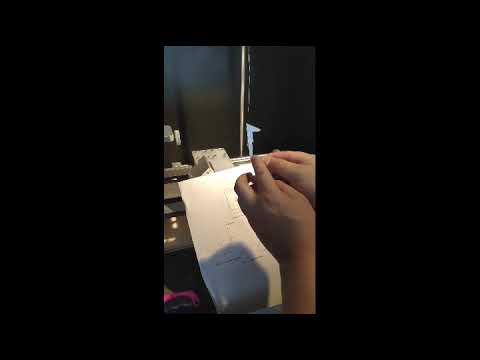
Use these videos to understand equipment format, operator access and general workflow. Final parameters, fixtures and acceptance criteria must follow the applicable standard and agreed project specification.
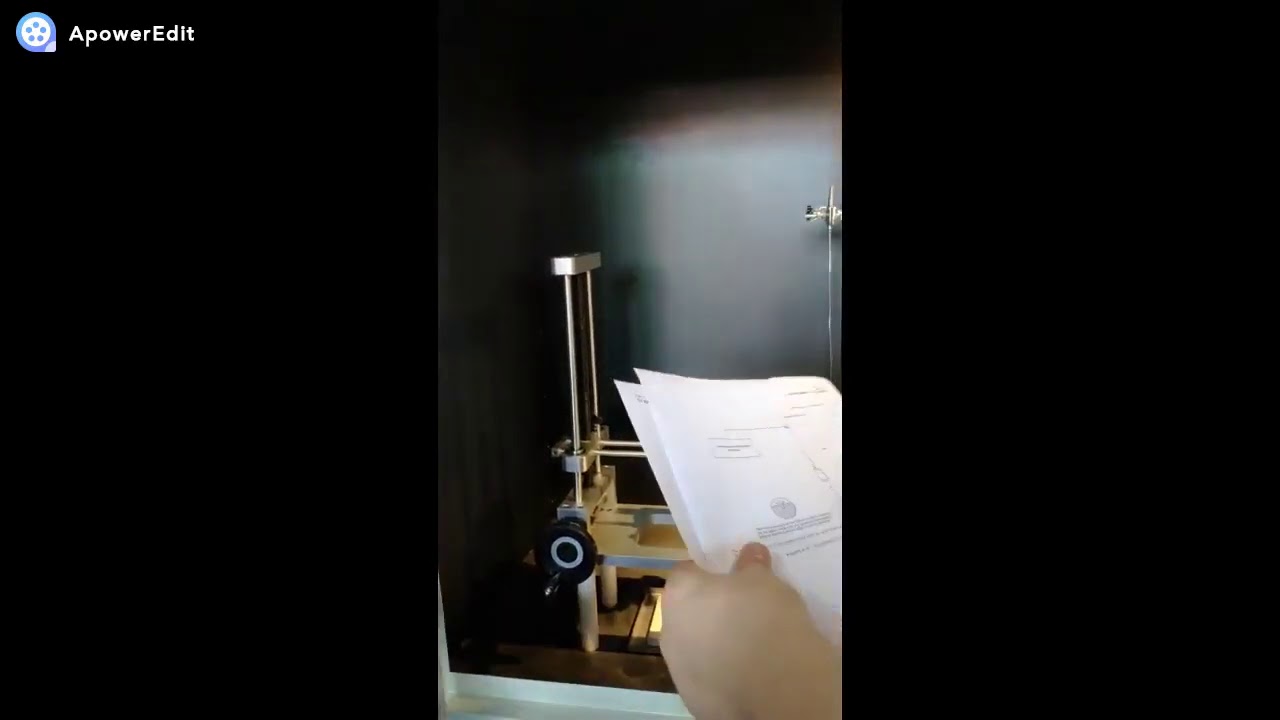
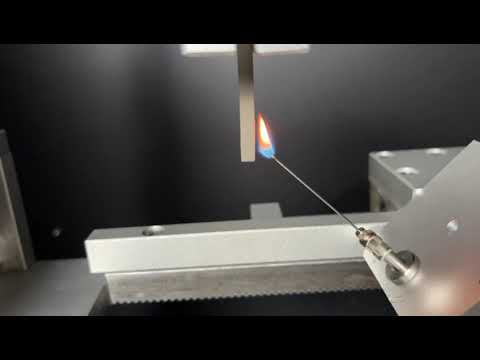
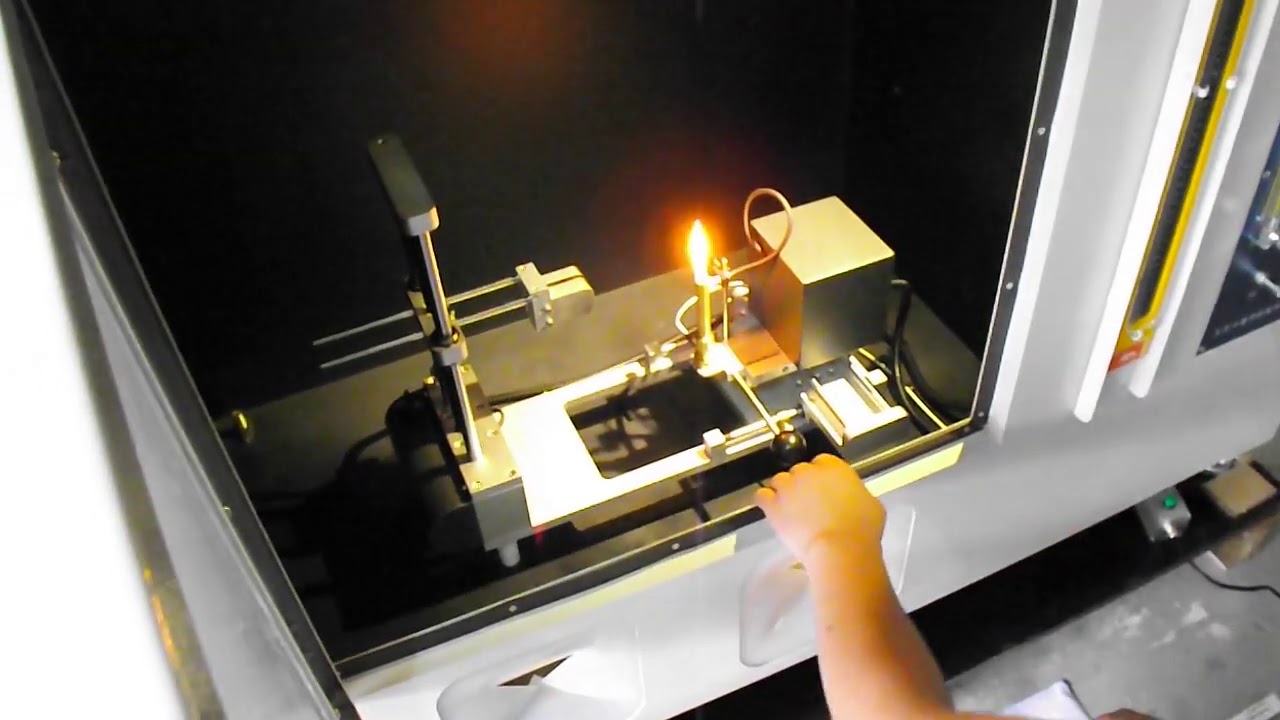
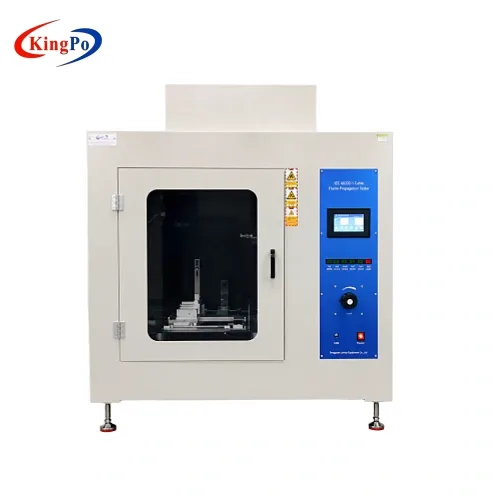
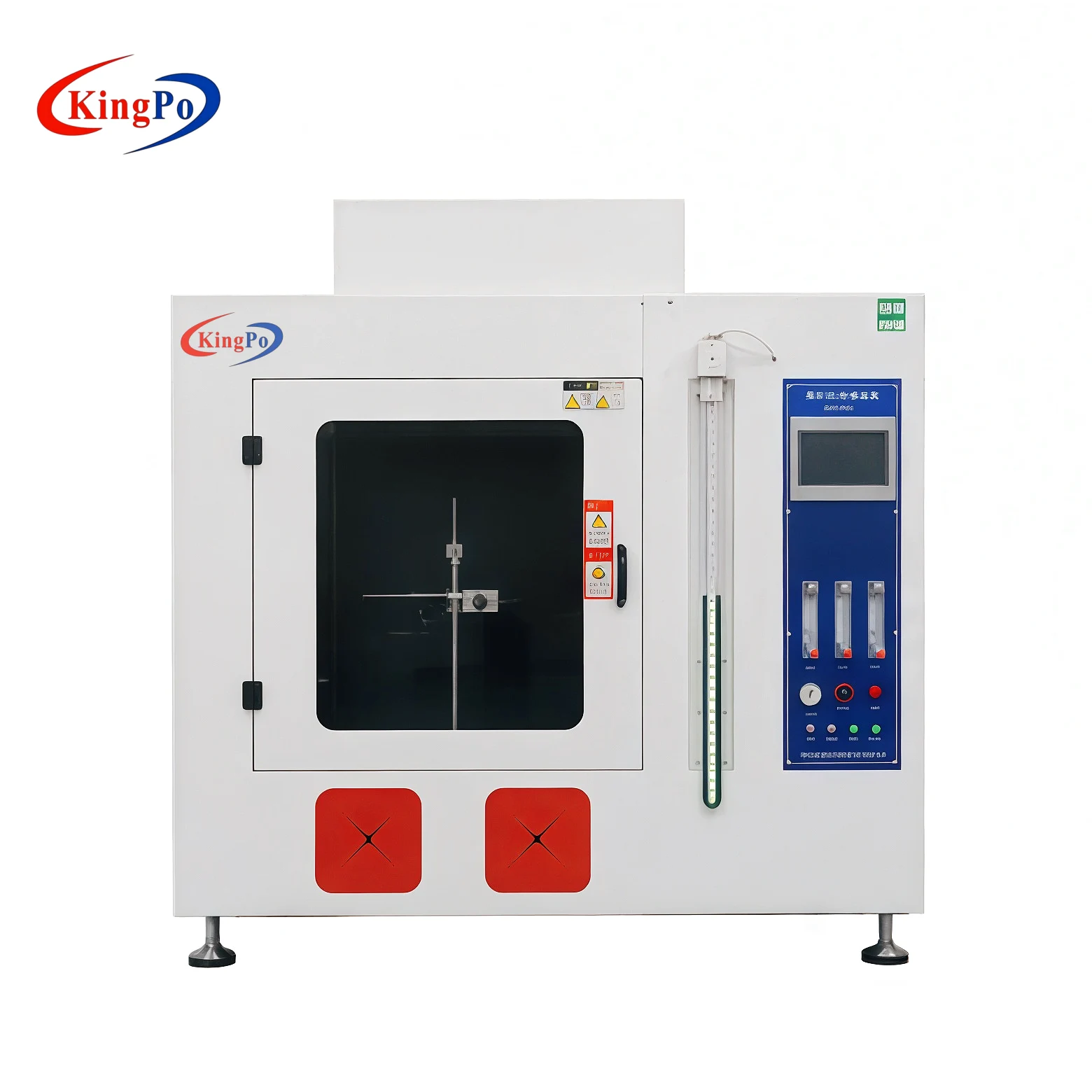
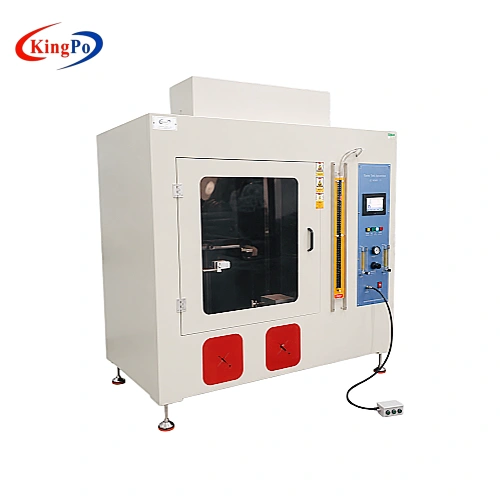
The gallery shows representative system formats. Equipment appearance and internal fixtures may vary according to the selected standard, model, specimen and automation level.
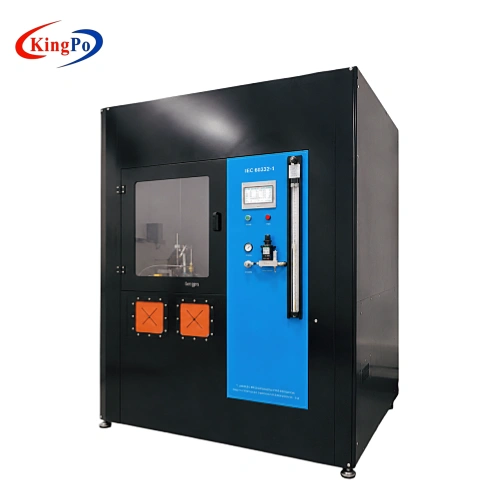
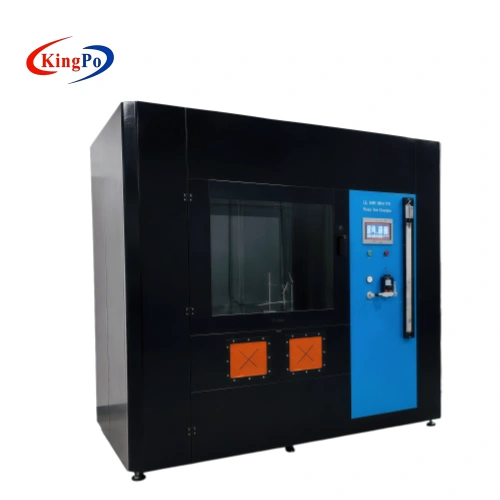
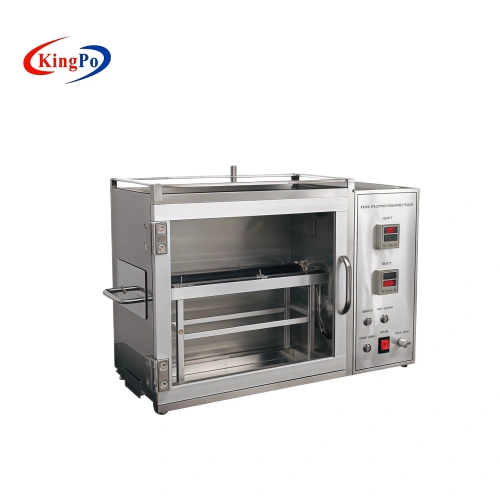
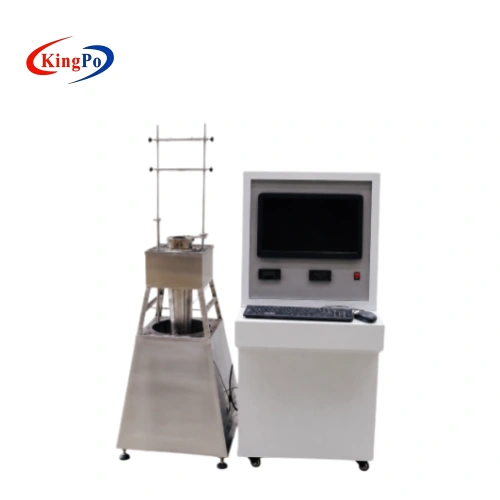
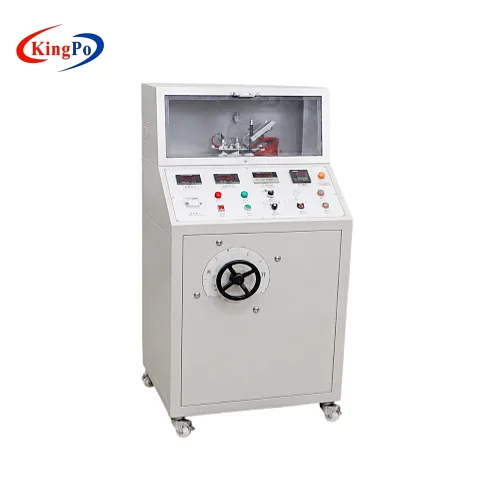
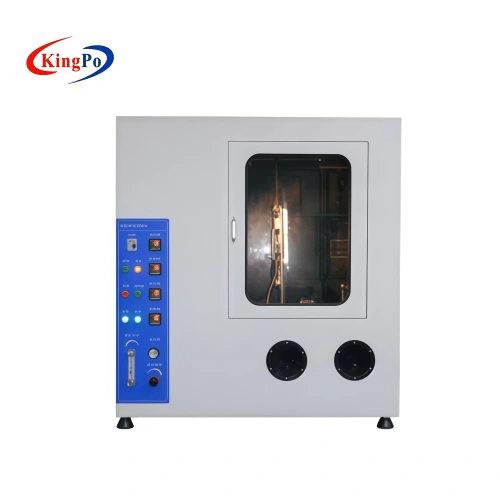
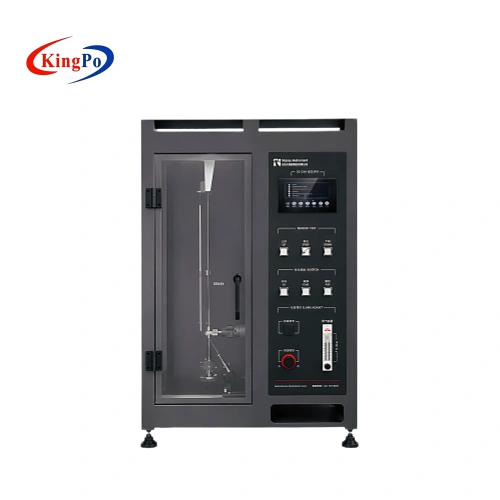
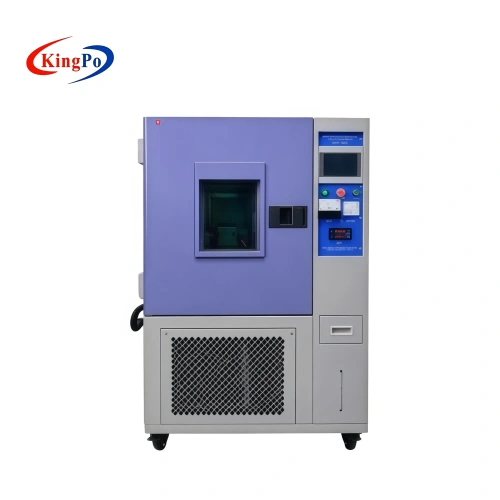
A complete quotation should distinguish the test system from the tools required to verify and maintain the ignition source. Ask which accessories are included, which require third-party calibration and which are recurring consumables.
The same industry can require several fire-test methods because raw materials, components and finished products are evaluated under different clauses.
Switches, connectors, terminal blocks, PCBs, insulation supports, housings and components exposed to abnormal heat or internal fault conditions.
Insulating parts, internal wiring supports, enclosures and components evaluated under product-standard fire-hazard clauses.
Engineering plastics, foams, films, composites and material formulations requiring ignition, self-extinguishing or classification data.
Power, communication, appliance and optical cables evaluated for flame propagation under IEC, UL or customer methods.
Interior trim, seating materials, insulation, wiring components, connectors, electronic modules and related vehicle materials.
Fabrics, films, foams and cabin materials requiring vertical burning or Bunsen-burner test methods.
A2L / A3 refrigerants, low-GWP alternatives, gas mixtures and appliances using flammable refrigerants.
Type testing, material qualification, design verification, supplier approval, comparative studies and recurring quality checks.
Needle flame, 50 W and 500 W methods use different apparatus and verification arrangements.
Burners, copper blocks, gauges, thermocouples, flow control and fixtures may need separate line items.
The laboratory connection and safety infrastructure must suit the selected test method and local rules.
Material thickness, product geometry, cable size and orientation directly affect the required support system.
Method-specific parameters can include temperature, force, speed, current, flow, pressure, flame energy and imaging.
Agree on the demonstration specimen, verification sequence, documents and pass conditions before shipment.
Use these resources to move from general method selection to a clause-linked equipment configuration.
It evaluates a defined fire-hazard response such as ignition, afterflame, afterglow, flame spread, burning rate, dripping, non-combustibility or burning velocity. The result depends on the exact method and should not be generalized across different standards.
Glow-wire testing uses a heated wire to simulate thermal stress from overheated electrical parts. Needle-flame testing uses a small open flame to simulate a localized ignition source caused by a fault. The apparatus, exposure and judgment criteria are different.
No. IEC 60695-11-5 needle-flame testing is a separate method. A nominal 50 W test flame is generated and verified for the applicable IEC 60695-11 procedure and uses a different burner and calibration arrangement.
Select it only when the governing standard or product requirement calls for the IEC 60695-11-3 500 W test flame or a method based on that flame. It should not be chosen simply because it appears more severe.
Not automatically. The chamber may support multiple methods, but HB, V, 5V, VTM and foam classifications can require different specimen holders, burners, application sequences and observation arrangements. Confirm the required methods before quotation.
Both address cable flame behavior, but the apparatus and procedures are not interchangeable by default. The certification plan should define whether IEC 60332-1, UL 1581, CSA FT or another cable method applies.
Typical checks include burner geometry, fuel type, gas and air flow, flame height, flame calibration, application angle, timing, specimen distance, chamber ventilation and the condition of copper blocks and thermocouples.
Combustion testing generates heat, smoke and gases. The laboratory should provide a safe exhaust route and sufficient make-up air, while avoiding drafts during the test. The final installation should follow the equipment manual, local safety rules and the applicable method.
Confirm the required scope for temperature, timer, gas flow, pressure, burner geometry, flame verification, contact force, movement speed, electrode motion, current, camera measurement or other method-specific parameters.
A shared cabinet is technically possible in some custom projects, but combining unrelated methods can complicate fixtures, contamination control, verification, ventilation and maintenance. Dedicated systems are usually clearer for certification laboratories.
Send the standard and edition, clause, specimen type and dimensions, required methods, gas available in the laboratory, electrical supply, exhaust conditions, automation expectations, calibration scope and site constraints.
The purchased standard, product standard, certification plan and agreed technical specification are the acceptance authority. This page is a selection guide and should not replace the original normative documents.
