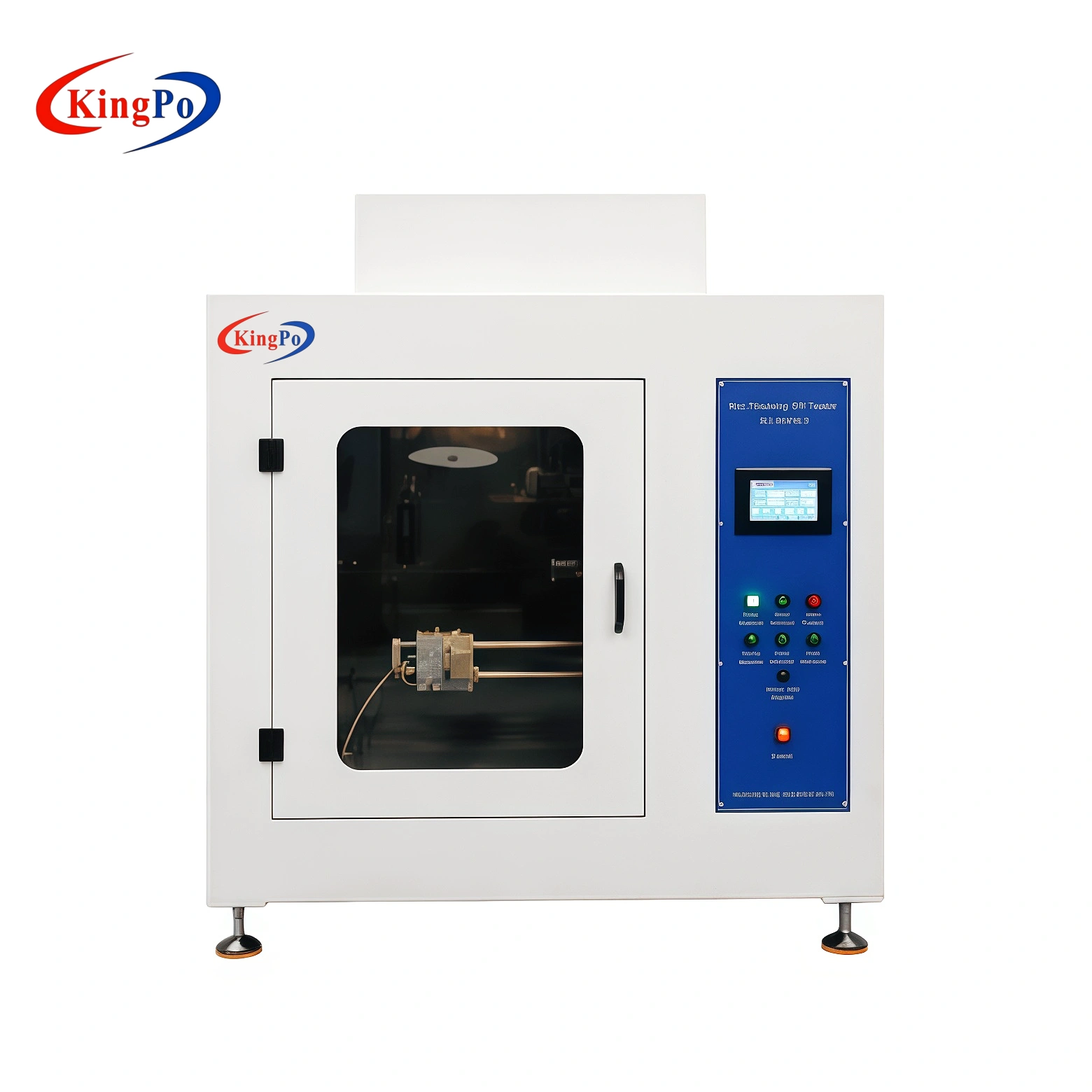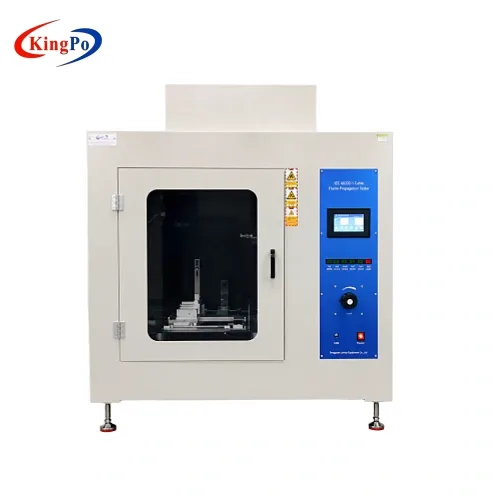
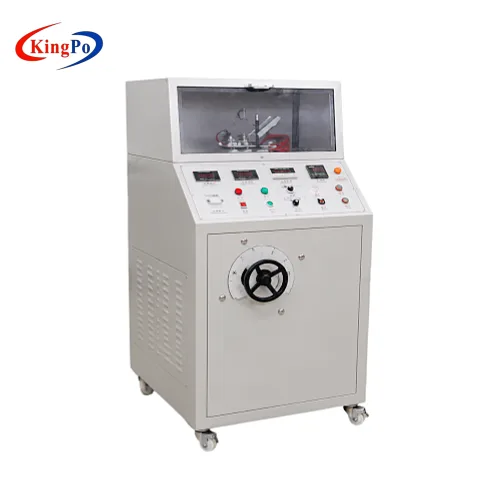
High Current Arc Ignition Test Apparatus with enclosed chamber and electrode configuration โ€“ KingPo
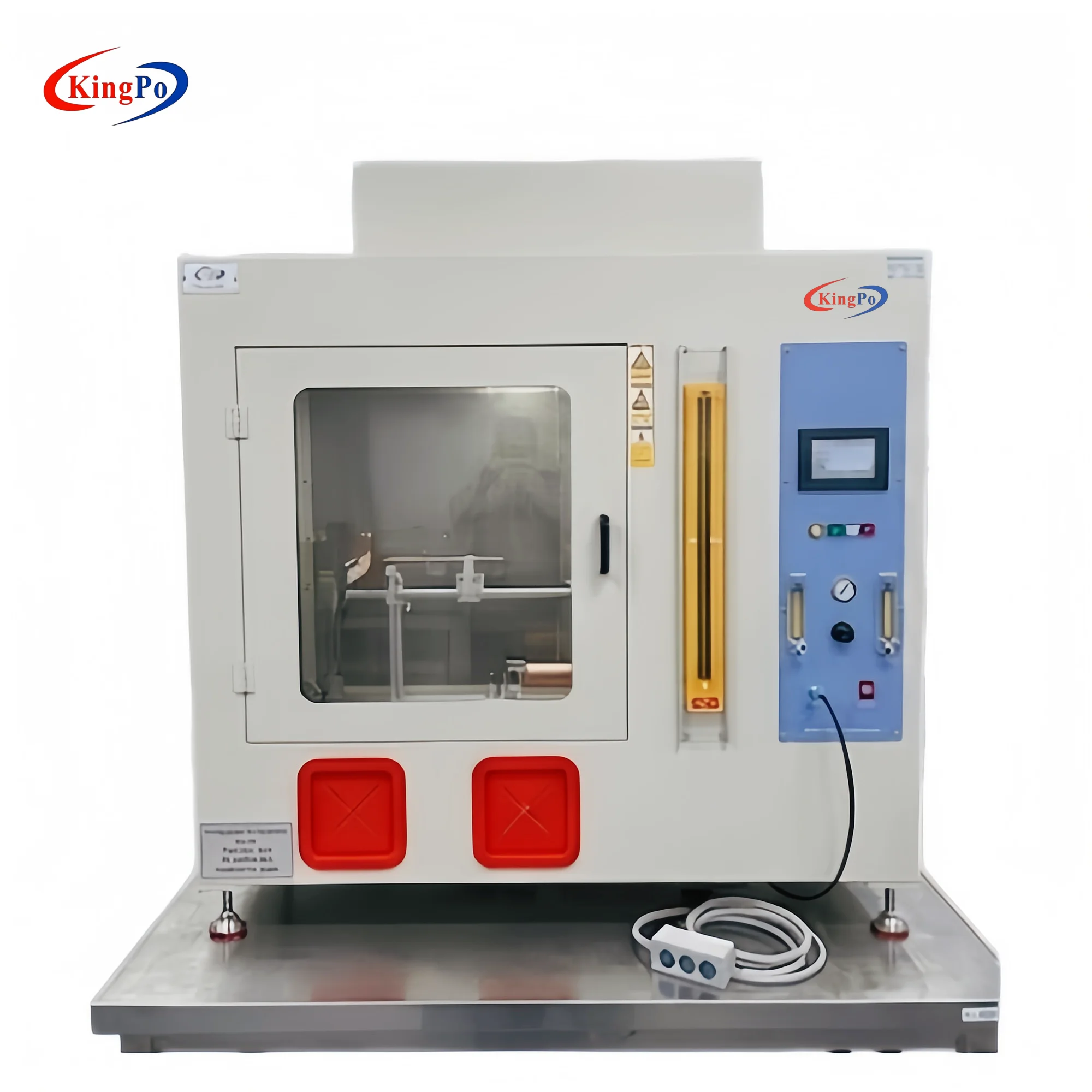
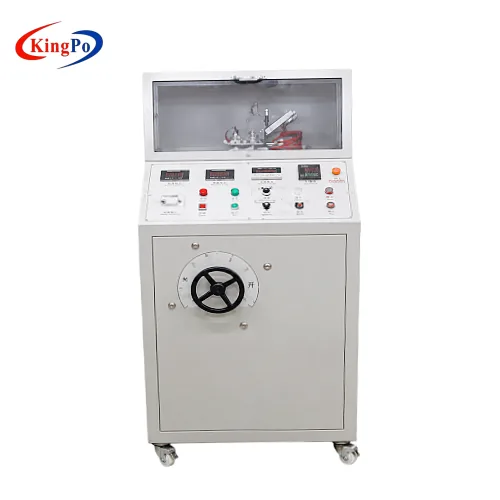
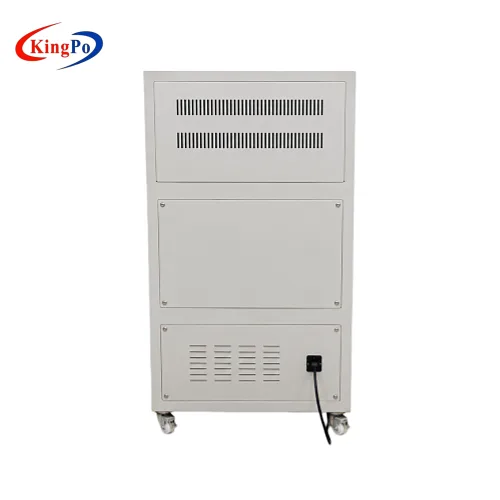
High Current Arc Ignition Tester designed for UL 746A HAI testing of insulating materials โ€“ KingPo
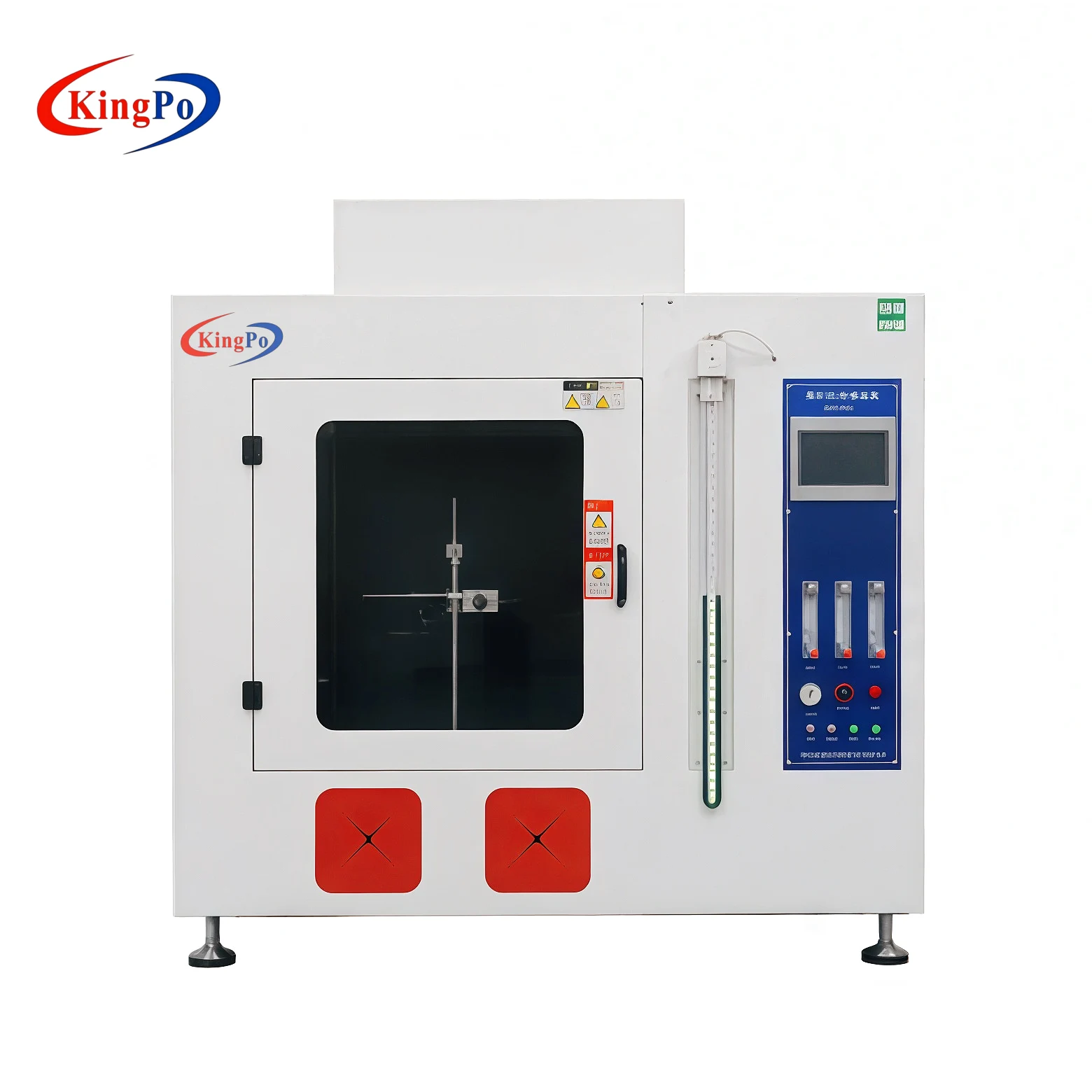
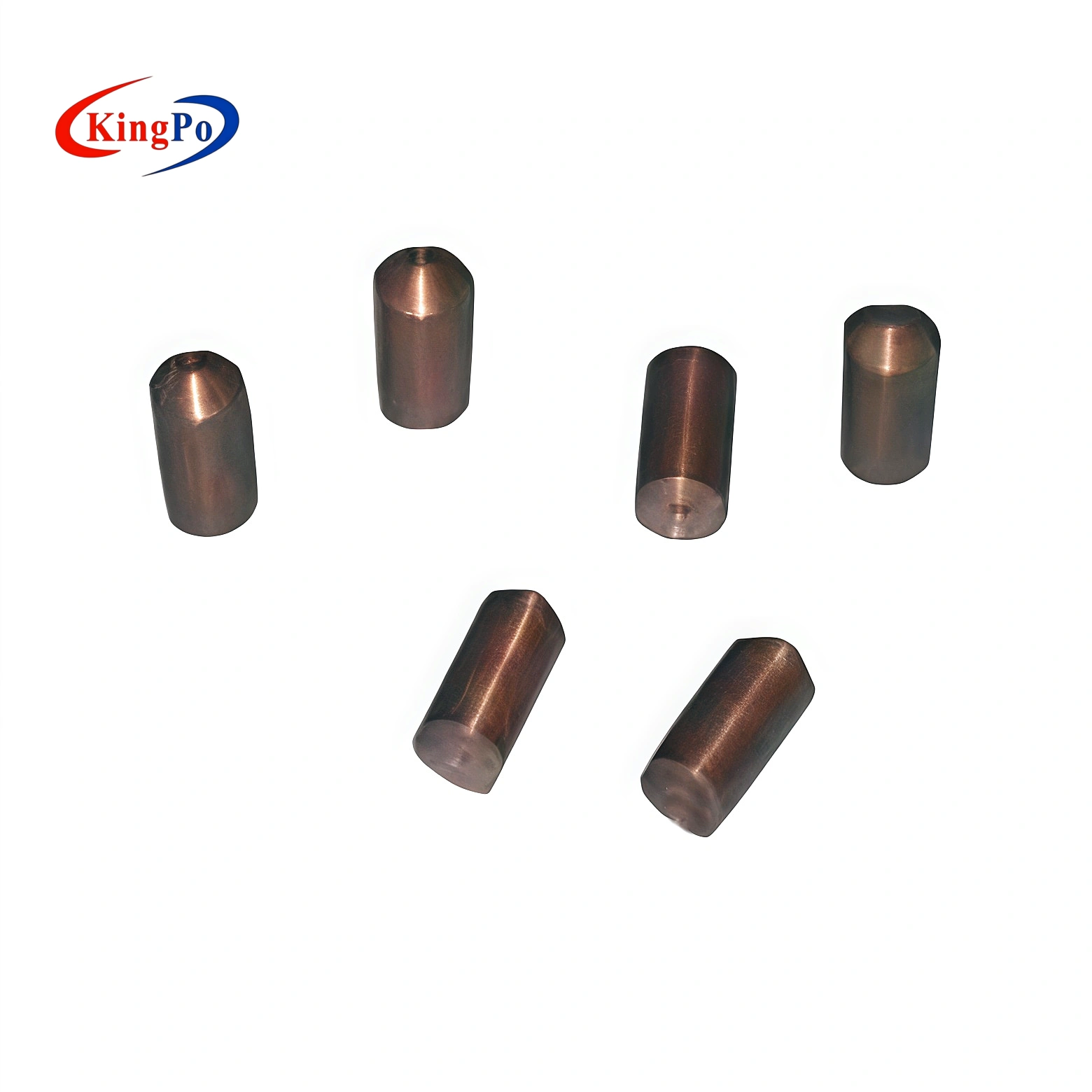
UL 746A High Current Arc Ignition Tester featuring a precision dual electrode system โ€“ KingPo
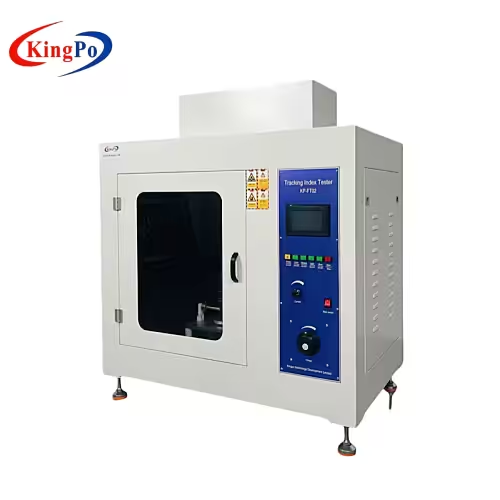
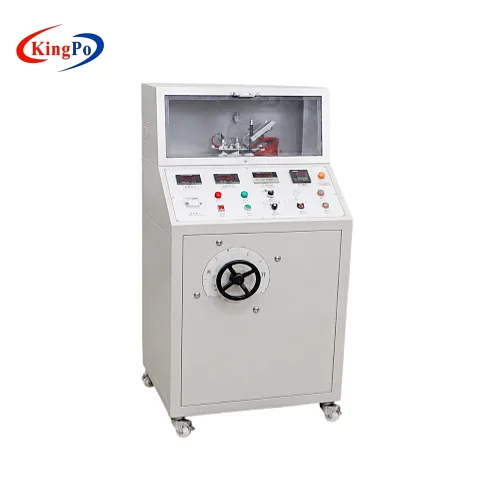
Control panel of the High Current Arc Ignition Tester with programmable arc cycle settings โ€“ KingPo
High Current Arc Ignition Test Apparatus with enclosed chamber and electrode configuration โ€“ KingPo
High Current Arc Ignition Tester designed for UL 746A HAI testing of insulating materials โ€“ KingPo
UL 746A High Current Arc Ignition Tester featuring a precision dual electrode system โ€“ KingPo
Control panel of the High Current Arc Ignition Tester with programmable arc cycle settings โ€“ KingPo

High Current Arc Ignition Tester | UL 746A HAI Test Apparatus

The High Current Arc Ignition Tester evaluates the high current arc ignition resistance of insulating materials using repeated high current arc strikes. It supports UL 746A HAI testing for material manufacturers, electrical product developers, and testing laboratories.

  • Standards Support: Designed to support UL 746A high current arc ignition testing and related requirements in IEC 60950-1, BS EN 60950-1, BS 7002, IEC 60947-1, and IEC 730-1
  • Arc Current: 33A ยฑ 5A high current arc generation
  • Arc Strike Speed: 40 times per minute
  • Electrode Separation Velocity: 254 ยฑ 25 mm/s
  • Arc Cycle Control: Programmable from 0 to 9999 arc strikes
  • Electrode System: Copper static electrode and stainless steel moving electrode
  • Control System: Digital control with preset arc strike counting
  • Safety Design: Enclosed test chamber with observation and protection features
  • MOQ: 1 set
  • Delivery Time: 30 working days

High Current Arc Ignition Tester Description

High Current Arc Ignition Test Equipment for Insulating Materials

The High Current Arc Ignition Tester is used to assess the ignition resistance of insulating materials when exposed to high current electrical arcs. The test applies repeated arcs between two electrodes in contact with the specimen to determine whether the material ignites under specified conditions.

This test method, commonly referred to as HAI testing, helps evaluate the fire hazard of insulating materials used in electrical equipment, supporting material development and product safety assessment where arc fault conditions may occur.

Technical Parameters

Parameter Specification Remark or Notes
Applicable Standards UL 746A; related IEC 60950-1, BS EN 60950-1, BS 7002, IEC 60947-1, IEC 730-1 High current arc ignition testing
Arc Strike Current 33A ยฑ 5A High current arc generation
Arc Strike Speed 40 times/min Arc application rate
Electrode Separation Velocity 254 ยฑ 25 mm/s Controlled electrode movement
Arc Strike Times 0โ€“9999 (preset) Programmable arc cycles
Static Electrode Copper, ฮฆ3.5 mm, top bevel angle 30ยฐ Fixed electrode
Moving Electrode Stainless steel, ฮฆ3.0 mm, top cone angle 60ยฐ Moving electrode
Electrode Included Angle 45ยฐ with horizontal level Standard configuration
Dropping Liquid Interval 30 ยฑ 5 s (adjustable) Optional liquid dropping function
Dropping Liquid Height 35 ยฑ 5 mm Optional liquid dropping function
Dropping Liquid Size 45โ€“50 drops/cmยณ Optional liquid dropping function
Control System Digital control with arc counting Preset and automatic operation
Safety Features Enclosed chamber with observation window Operator protection
Power Supply AC 220V / 50Hz, 1kVA Subject to final configuration


Professional Construction & Technical Precision

The High Current Arc Ignition Tester features a robust enclosed test chamber engineered for safe and consistent high current arc generation. The dual-electrode system consists of a copper static electrode and a stainless steel moving electrode, both manufactured to precise specifications to ensure stable arc formation and repeatable test results.

The equipment incorporates a digital control system that allows accurate programming of arc strike parameters, including the number of arcs and electrode separation velocity. A clear observation window enables operators to safely monitor ignition behavior throughout the test. The overall structural design prioritizes operational safety, ease of use, and long-term reliability in laboratory and quality control environments.

Testing Principle

The high current arc ignition test assesses the resistance of insulating materials to ignition when exposed to electrical arcs that may occur under fault conditions. During the test, two electrodes are placed in contact with the specimen, and a high current arc is initiated as the moving electrode separates from the static electrode at a controlled speed.

The test applies a predetermined number of arcs to the material and evaluates whether ignition occurs. Materials capable of withstanding a greater number of arc strikes without igniting exhibit superior high current arc ignition resistance. This characteristic is critical for evaluating the fire safety performance of insulating materials used in electrical and electronic equipment.

Common Error Mitigation

To achieve accurate and reliable high current arc ignition test results, the following practices are recommended:

  • Ensure the test specimen is clean, flat, and correctly positioned between the electrodes before initiating the test.
  • Confirm that the arc current and electrode separation velocity are set within the tolerances specified by the applicable standard.
  • Program the appropriate number of arc strikes according to the test requirements and material specifications.
  • Regularly inspect and clean the electrode tips to prevent inconsistent arc formation caused by oxidation or residue buildup.
  • Conduct testing in a stable, draft-free environment to minimize external interference with arc behavior and ignition observation.
  • Carefully monitor and document whether ignition occurs during or after the application of arcs.
  • Strictly adhere to electrical safety protocols when operating equipment that generates high current arcs.

Primary Use Cases & Business Value
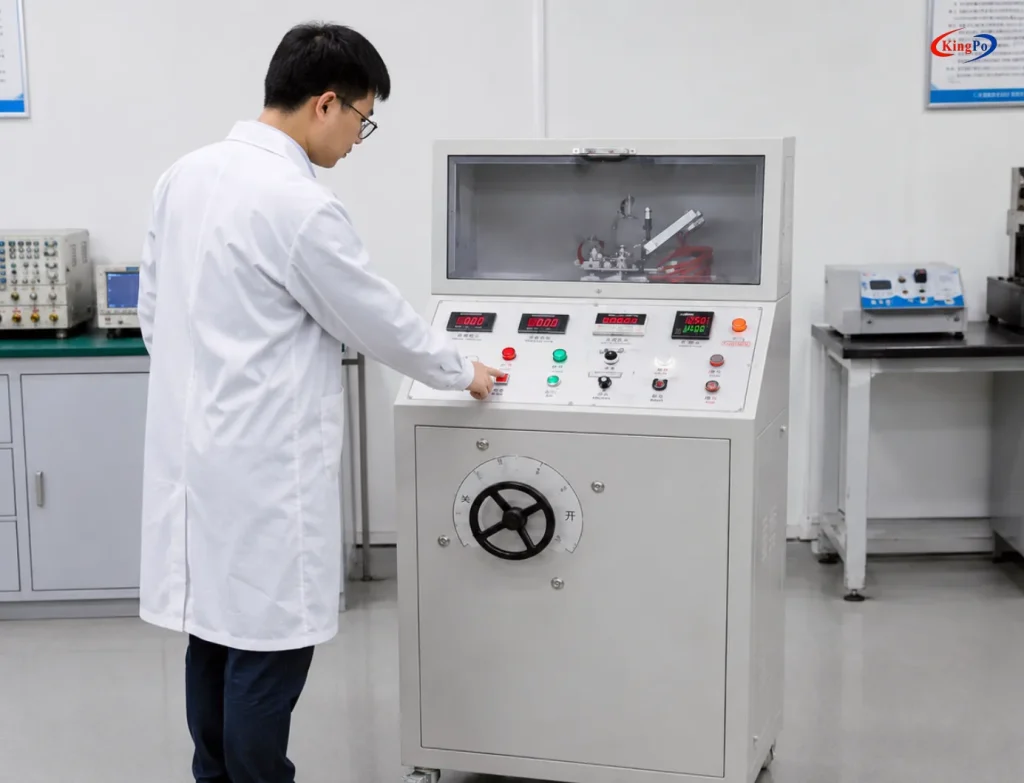
Chinese male technician operating a High Current Arc Ignition Tester in a laboratory for UL 746A HAI testing.

This High Current Arc Ignition Tester enables manufacturers and testing laboratories to evaluate the ignition resistance of insulating materials under high current arc conditions. It supports material qualification, product safety assessment, and compliance with relevant electrical equipment safety standards.

Industrial Applications & Lab Scenarios

  • Insulating material manufacturers โ€” High current arc ignition performance evaluation
  • Electrical equipment manufacturers โ€” Material safety qualification for components
  • Testing laboratories โ€” UL 746A and related HAI compliance testing
  • Quality assurance departments โ€” Routine material inspection and verification
  • Research institutions โ€” Development of arc-resistant insulating materials

Strategic Procurement Advantages & Global Support

  • Precise high current arc generation with controlled electrode movement
  • Programmable arc strike counting up to 9999 cycles
  • Dual electrode system with specified materials and geometries
  • Safe enclosed chamber design for laboratory use
  • Technical support available for test setup and standard interpretation
Compliance & Regulatory Assurance

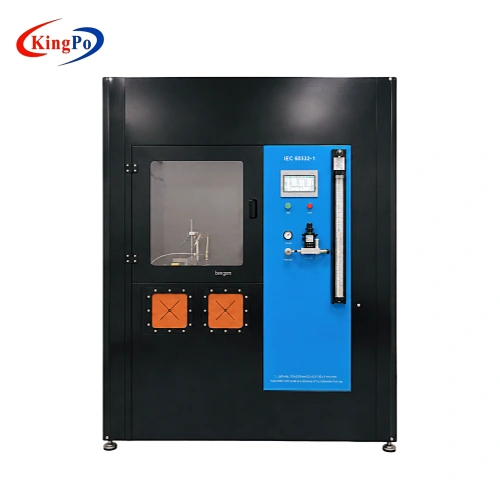
This tester is designed to support high current arc ignition testing requirements referenced in UL 746A and related standards such as IEC 60950-1. It helps manufacturers and laboratories assess the ignition resistance of insulating materials under simulated high current arc fault conditions.

Metrological Integrity & Validation

  • Factory inspection and functional verification are provided with each unit.
  • Regular verification of arc current output and electrode movement is recommended.
  • Third-party calibration of arc current, timing, and electrode movement parameters can be arranged upon request.

Download Product Documentation

Technical Inquiry & Expert Support

KingPo offers High Current Arc Ignition Testers for UL 746A and related HAI testing. Our engineering team can provide guidance on equipment configuration, test setup, and result interpretation. For technical specifications or quotations, please contact us.

The Core Value We Deliver

  • Accurate high current arc ignition testing for insulating materials
  • Precise control of arc parameters including current, speed, and cycle count
  • Safe and repeatable testing environment
  • Professional technical support for high current arc ignition evaluation

High Current Arc Ignition Tester Detail Display

High Current Arc Ignition Tester FAQs

What is High Current Arc Ignition (HAI) testing?
High Current Arc Ignition testing evaluates the resistance of insulating materials to ignition when exposed to high current electrical arcs. It simulates arc fault conditions that may occur in electrical equipment due to insulation breakdown or contact failure.
What is the purpose of the UL 746A HAI test?
The UL 746A high current arc ignition test assesses the ignition risk of polymeric materials used in electrical products. It helps determine whether a material can withstand repeated high current arcs without igniting, supporting material selection and product safety evaluation.
What standards reference high current arc ignition testing?
High current arc ignition testing is primarily referenced in UL 746A. It is also related to requirements in IEC 60950-1, BS EN 60950-1, IEC 60947-1, and IEC 730-1 for evaluating the fire hazard of insulating materials in electrical equipment.
What parameters are typically used in HAI testing?
Common test parameters include an arc current of approximately 33A, an electrode separation velocity of around 254 mm/s, and a specified number of arc applications (often up to 200 arcs or more), depending on the material and applicable standard.
What is the difference between High Current Arc Ignition testing and Needle Flame testing?
High Current Arc Ignition testing uses high current arcs generated between electrodes to evaluate ignition resistance. Needle flame testing uses a small open flame to simulate ignition from an external source. Both methods assess different fire hazard scenarios in electrical products.
Who typically uses a High Current Arc Ignition Tester?
This equipment is commonly used by insulating material manufacturers, electrical and electronic product developers, testing laboratories, and certification bodies to evaluate material performance under arc fault conditions.
How many arcs are usually applied during HAI testing?
The number of arc strikes can be preset, commonly ranging from dozens to several hundred arcs (up to 9999 in programmable systems), depending on the test specification and the performance level required by the applicable standard.
Why is high current arc ignition testing important for electrical products?
Electrical equipment may experience arc faults due to insulation degradation or loose connections. HAI testing helps identify materials that are more resistant to ignition under such conditions, thereby reducing the potential fire hazard in end products.
What factors affect the results of high current arc ignition testing?
Key factors include arc current stability, electrode condition and geometry, electrode separation speed, specimen surface condition, and the total number of arc applications. Consistent control of these parameters is essential for reliable results.
Can the High Current Arc Ignition Tester be used for standards other than UL 746A?
Yes. While primarily aligned with UL 746A, the tester can support high current arc ignition testing referenced in IEC 60950-1 and related standards, provided the test parameters are configured according to the specific requirements of each standard.

Related Products

Related News

Application and Technical Analysis of Glow Wire Test Apparatus in Flame Retardancy Performance Testi for electrical and electronic products and plastics.

โ€”โ€”IEC 60695-11-3 / IEC 60950 / UL94 500W Flame Test Practice and Cable Flammability Standard Comparison In the flammability safety […]

Meet UL94 and IEC standards with the horizontal vertical flame tester. Follow step-by-step testing and compliance procedures for reliable fire safety results.
Vertical Flame Tester offers stricter cable safety by simulating severe fire risks, while horizontal testers suit low-risk checks. Choose based on your application.

Introduction: The Hidden Threat in Your Devices Every year, thousands of residential and industrial fires are traced back to a […]

I see the glow wire test as a critical step in ensuring electrical product safety. When I use the glow […]

For plastic insulation frames, given the high heat generated by the copper wires and iron core, if the flame retardant […]

The glow wire test (GWT) is a cornerstone fire hazard assessment method in electrical and electronic product safety, as defined […]

Scroll to Top

Get A Free Quote Now !

Contact Form
If you have any questions, please do not hesitate to contact us.