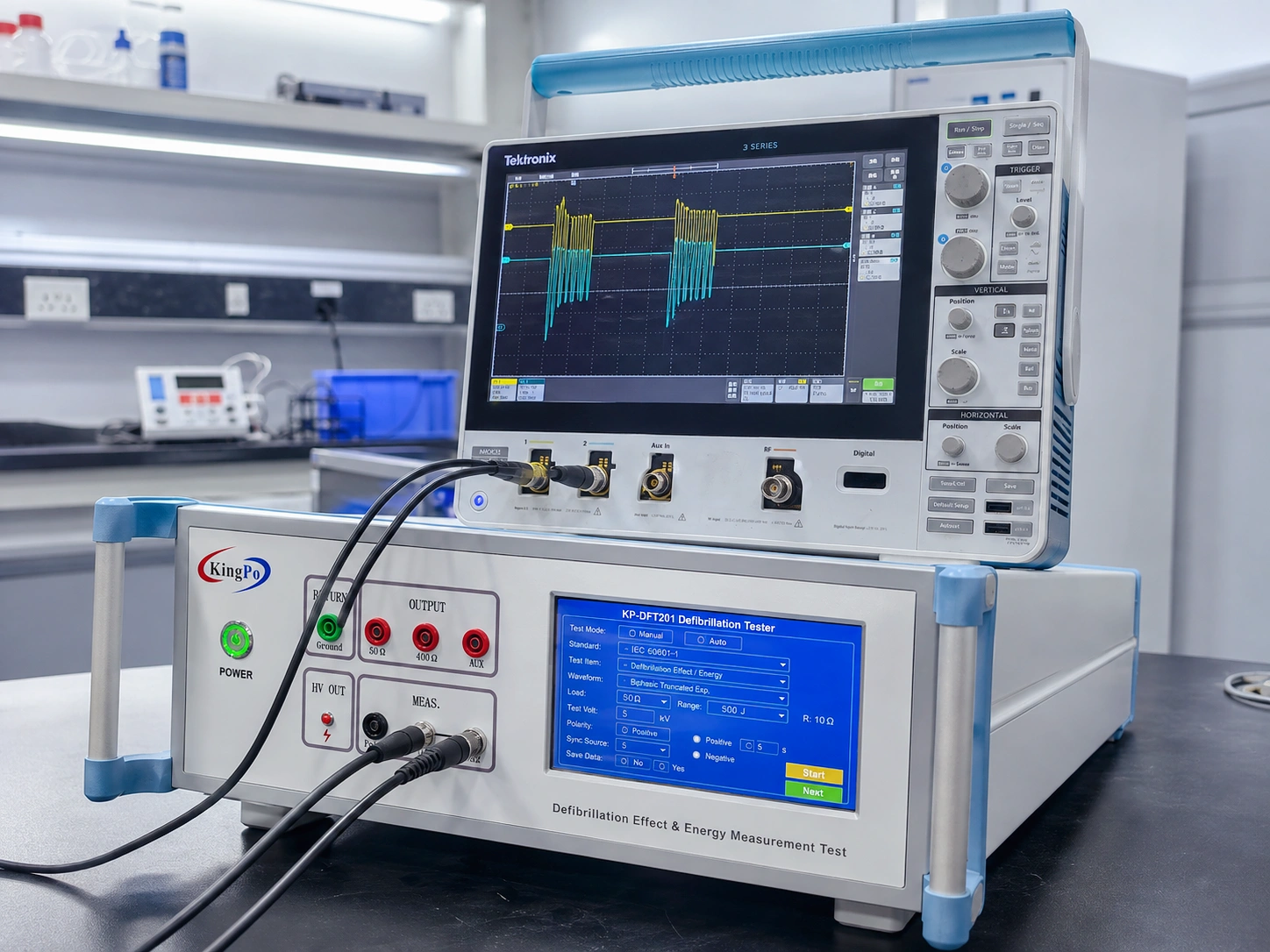
KingPo has supplied a KP-1050S Defibrillation Test Pulse Generator to NeuroPace, Inc. in Mountain View, California, United States.
Project confirmed in February 2026, this delivery involved the supply of one KP-1050S unit for medical device laboratory testing. The equipment generates controlled defibrillation pulse waveforms for evaluating the electrical immunity of active implantable medical devices.
For manufacturers developing implantable electronic products, repeatable defibrillation pulse testing can support product development, design verification, internal safety evaluation, quality control and pre-compliance preparation.
Active Implantable Medical Devices
ISO 14708-1
ISO 14117
Test 1 and Test 2
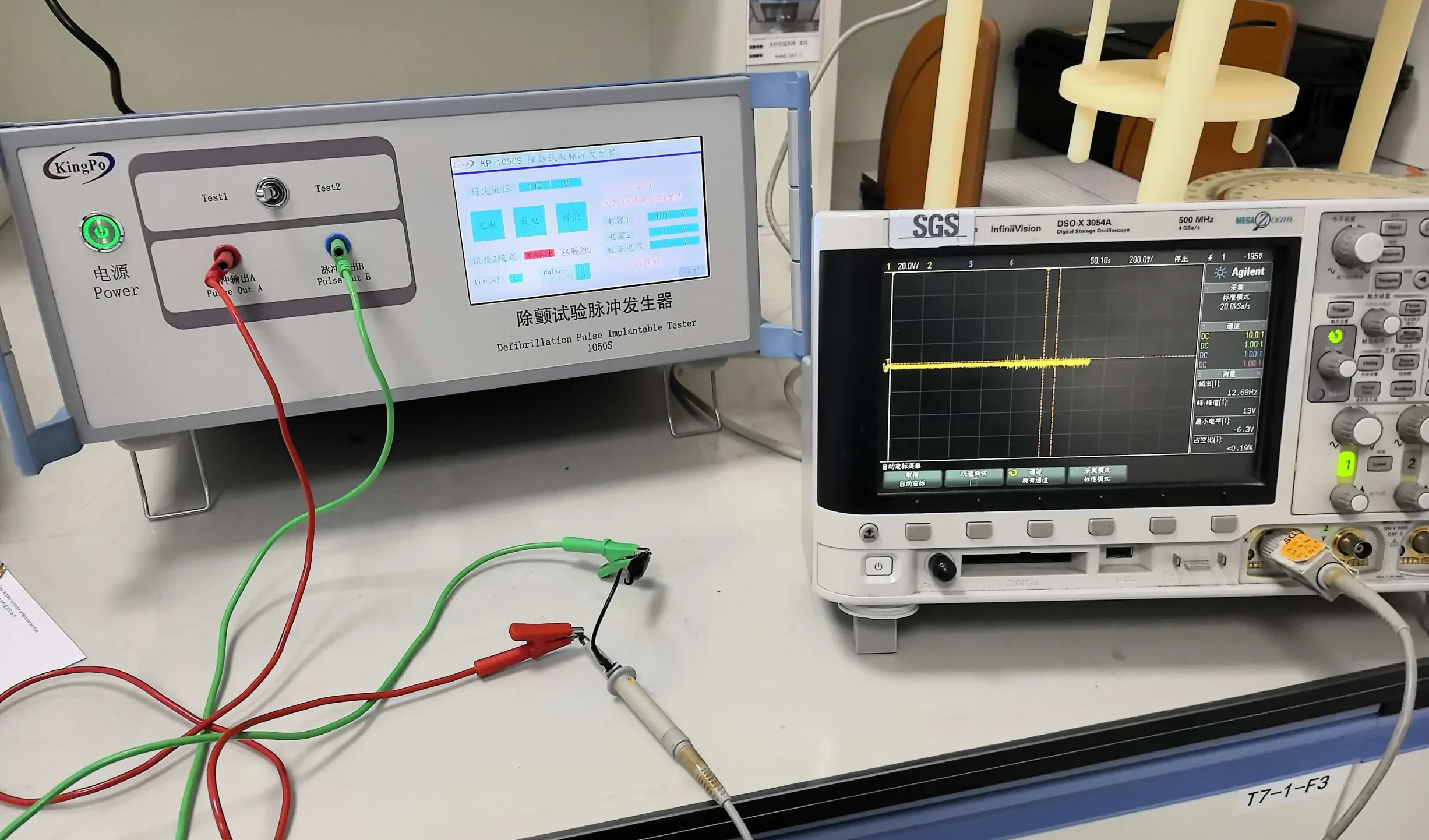
Project Snapshot
| Item | Project Information |
|---|---|
| Customer | NeuroPace, Inc. |
| Customer Location | Mountain View, California, United States |
| Project Date | February 2026 |
| Supplied Equipment | KP-1050S Defibrillation Test Pulse Generator |
| Quantity | One unit |
| Application | Defibrillation immunity testing |
| Test Object | Active implantable medical devices |
| Test Modes | Test 1 and Test 2 |
| Waveform Types | Damped sinusoidal and truncated exponential waveforms |
Why This Case Matters
This case shows how a dedicated defibrillation pulse generator can help AIMD manufacturers evaluate device response to damped sinusoidal and truncated exponential pulse conditions before formal compliance testing.
The Customer’s Testing Need
Active implantable medical devices may contain sensitive electronic circuits, batteries, sensing components, stimulation modules, communication functions and embedded software. During clinical use, an implanted device may be exposed to electrical energy generated by an external defibrillator.
Although the defibrillation pulse is intended for patient treatment, the implanted device may also experience significant electrical stress. Controlled laboratory testing helps engineers evaluate whether the device remains functional after exposure to the specified pulse conditions.
Depending on the device and test plan, engineers may check for:
Testing note:
Defibrillation immunity testing is not limited to confirming that a pulse has been generated. The waveform, voltage, polarity, external test network, pulse sequence, device connection and post-test evaluation method must all match the applicable test procedure.
From Testing Requirement to Equipment Selection
The customer required a laboratory platform capable of supporting more than one defibrillation waveform. KingPo therefore supplied the KP-1050S Defibrillation Test Pulse Generator which combines Test 1 and Test 2 functions in one instrument.
The integrated design enables the laboratory to switch between damped sinusoidal and truncated exponential pulse conditions without using two separate pulse generators. It also helps reduce repeated wiring, equipment changes and operator training requirements.
The KP-1050S is designed to support defibrillation immunity test applications related to ISO 14117, ISO 14708-1, the EN 45502 series and GB 16174.1. The exact standard edition, clause and test procedure should be confirmed for each medical device project.
Two Defibrillation Test Modes in One System
TEST 1
Damped Sinusoidal Waveform
Test 1 generates a damped sinusoidal pulse through an RLC circuit. The waveform rises rapidly and then oscillates while gradually decreasing in amplitude.
Positive and negative output polarity can be selected according to the applicable procedure.
+5% / −0%
Tp: 1.5–2.5 ms
Tw50: 3–5.5 ms
TEST 2
Truncated Exponential Waveform
Test 2 generates a truncated exponential pulse. The voltage decreases exponentially and is interrupted after the specified duration.
Single-phase or dual-phase operation can be selected according to the applicable test requirement.
+5% / −0%
Td: 9.5–10.5 ms
tr / tf: 1–5 µs
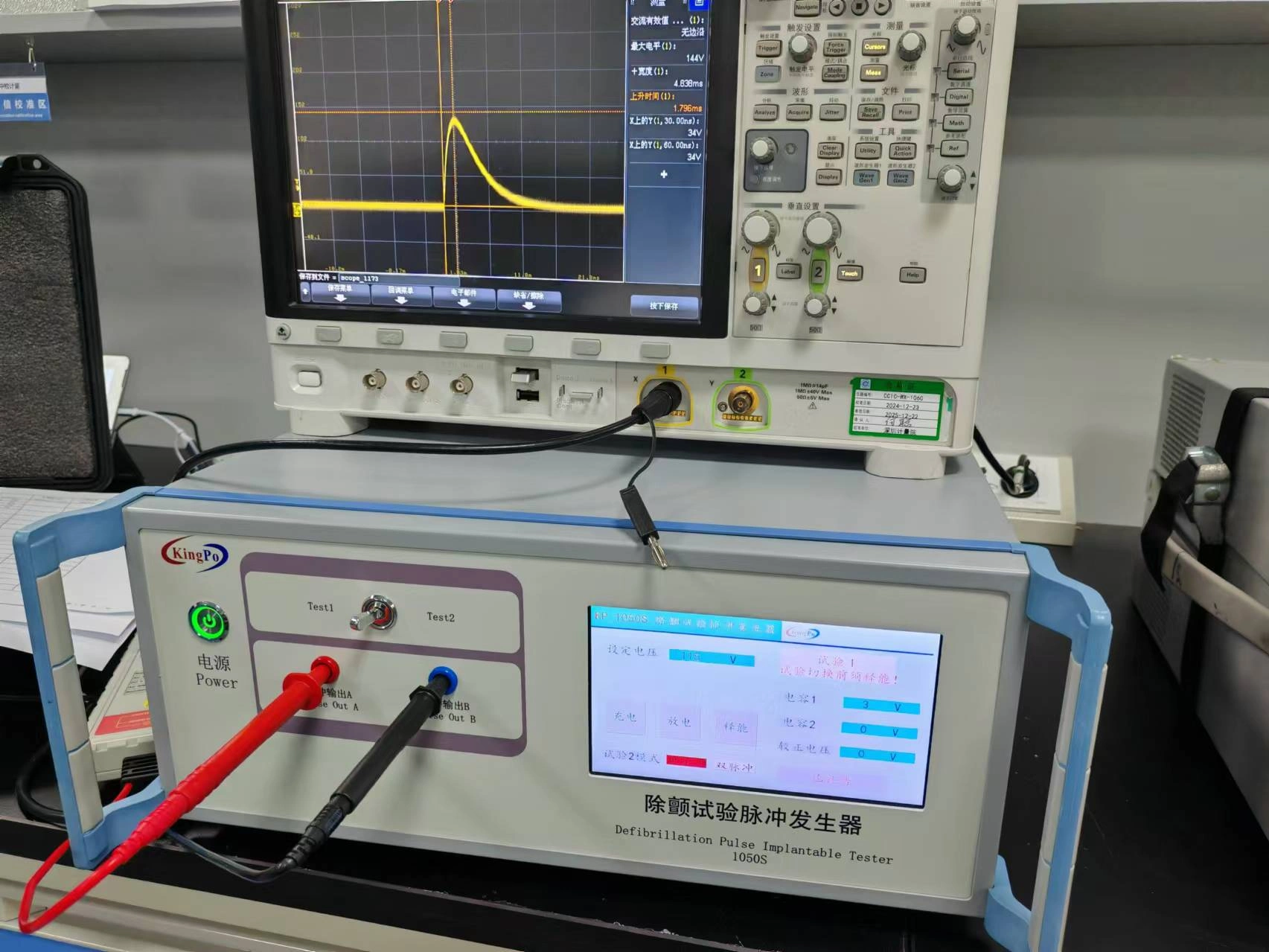
KP-1050S Technical Parameters
| Technical Item | Specification |
|---|---|
| Test 1 Waveform | Damped sinusoidal waveform generated by an RLC circuit |
| Test 1 Voltage | 140 V / 380 V, tolerance +5% / −0% |
| Test 1 Timing | 1.5 ms < Tp < 2.5 ms; 3 ms < Tw50 < 5.5 ms |
| Test 2 Waveform | Truncated exponential waveform |
| Test 2 Voltage | 140 V / 270 V, tolerance +5% / −0% |
| Test 2 Timing | 9.5 ms < Td < 10.5 ms; 1 µs < tr < 5 µs; 1 µs < tf < 5 µs |
| Phase Selection | Single-phase / dual-phase selectable for Test 2 |
| Output Polarity | Positive / negative selectable |
| Test Count | 1–999 programmable cycles |
| Operation Interface | Color touchscreen |
| External Test Network | KP-1050-1 external resistor network |
| Input Power | AC 110 V or 220 V ±10%, 50/60 Hz; maximum approximately 300 W |
| Dimensions | 480 × 460 × 200 mm |
| Weight | Approximately 10 kg |
Programmed pulse sequence:
The KP-1050S supports three positive pulses at intervals of 20 ± 2 seconds, followed by a 60 ± 2 second pause and one negative pulse. The final sequence should be confirmed against the applicable standard edition and laboratory test procedure.
How the Test Is Performed
The detailed procedure depends on the applicable standard, device design, external network and internal verification plan. A typical laboratory workflow includes four main stages.
Confirm Requirements
Confirm the standard, edition, test mode, waveform, voltage, polarity, phase mode and pulse sequence.
Prepare the Test Circuit
Connect the device through the required external network and confirm the sample connection and load conditions.
Generate the Pulses
Set the voltage, polarity, phase and test count through the touchscreen, and then start the pulse sequence.
Evaluate the Device
Check operating status, sensing, stimulation, stored settings, communication, recovery and possible permanent effects.
Responsibility note:
The KP-1050S generates and controls the required electrical pulses. The laboratory remains responsible for sample connection, waveform measurement, functional monitoring and final interpretation of the result.
Practical Value for the Customer’s Laboratory
One Integrated Platform
Test 1 and Test 2 are available in one instrument, reducing the need to operate separate waveform generators.
Clear Parameter Setting
Voltage, polarity, phase mode and test cycles can be configured through one touchscreen interface.
Improved Repeatability
Programmed pulse sequences help different samples receive consistent timing and pulse conditions.
Reduced Manual Work
Automatic timing and pulse counting reduce repetitive manual operation during laboratory testing.
Efficient Laboratory Setup
The compact integrated system can simplify equipment placement, training and routine preparation.
Support Across Development
The system can support R&D evaluation, design verification, product changes and pre-compliance work.
Important Setup Considerations
The pulse generator is one part of the complete test arrangement. Reliable testing also depends on the external network, connection method, measurement instruments, device operating condition and post-test evaluation procedure.
| Item to Confirm | Recommended Preparation |
|---|---|
| Standard and Edition | Confirm the applicable ISO, EN, GB or internal procedure and exact test clause. |
| Required Test Mode | Confirm whether the project requires Test 1, Test 2 or both modes. |
| Pulse Conditions | Confirm waveform, voltage, polarity, timing and single-phase or dual-phase operation. |
| External Test Network | Confirm resistance parameters, network configuration and device connections. |
| Device Operating State | Confirm operating mode, monitoring method and programmer communication. |
| Measurement Equipment | Confirm oscilloscope, probe, voltage range, bandwidth, grounding and calibration status. |
| Acceptance Criteria | Define post-test functional checks, recovery requirements and permitted parameter changes. |
Typical Application Areas
The KP-1050S can support defibrillation immunity evaluation for different types of active implantable medical devices, including:
Cardiac Pacemakers
Implantable Cardioverter Defibrillators
Implantable Pulse Generators
Cardiac Rhythm Management Devices
Other Active Implantable Devices
Typical users include medical device manufacturers, R&D departments, design verification teams, quality laboratories and third-party testing organizations. The equipment configuration should be selected according to the actual test object, standard and clause.
Related Medical Device Test Equipment
The following KingPo products cover related medical electrical and implantable device test applications. Each product has a different test object and should not be treated as a direct substitute for the KP-1050S.
IEC 60601-2-31
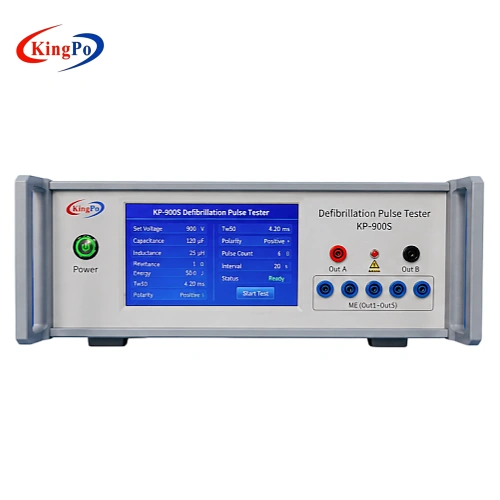
KP-900S Defibrillation Pulse Tester
Designed for defibrillation protection testing of external cardiac pacemakers with an internal power source. It uses an RCL discharge circuit and is intended for a different test object from active implantable devices.
IEC 60601 SERIES
KP3301 / KP3301B Defibrillation Effect & Energy Tester
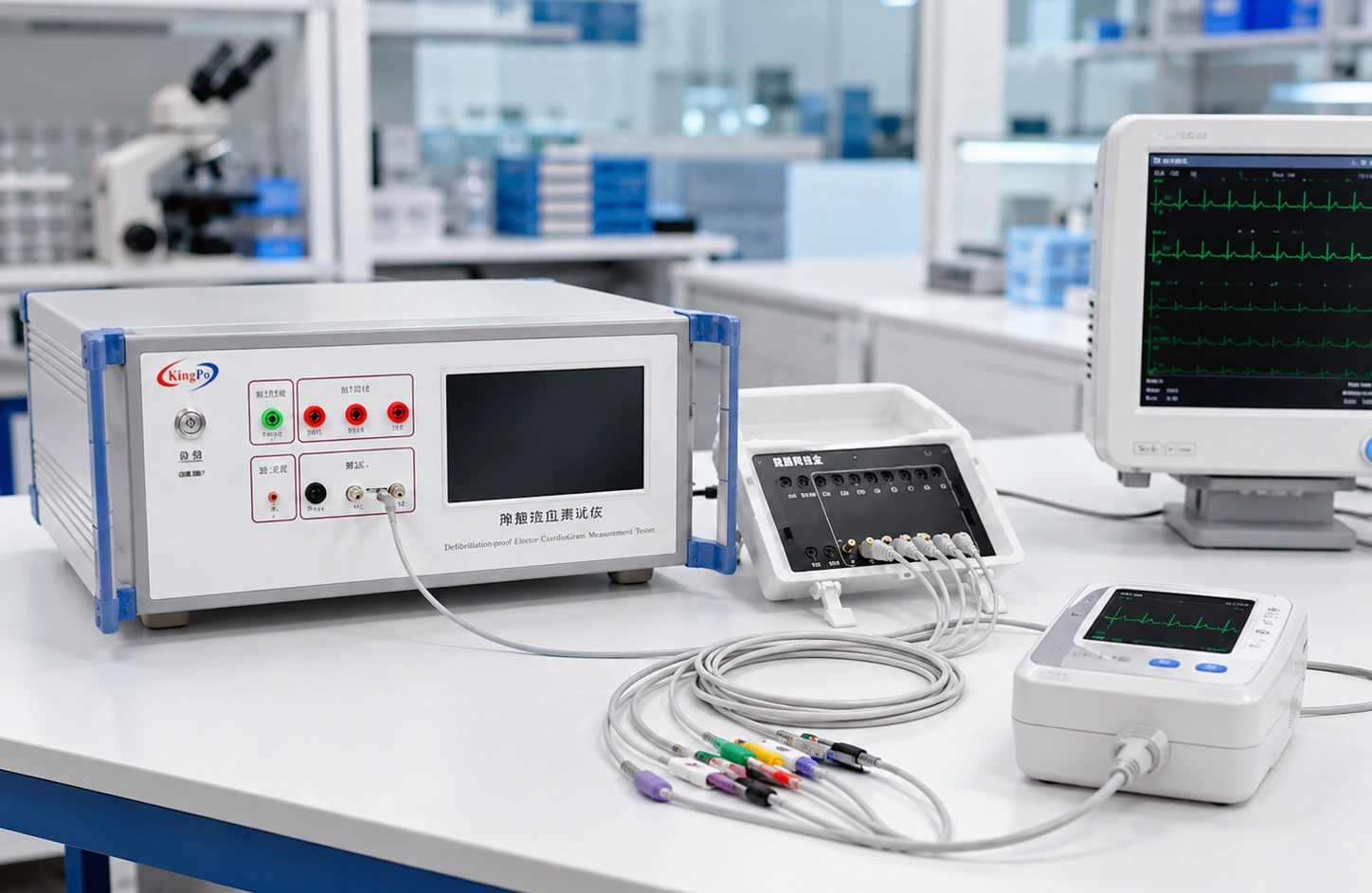
Used for defibrillation protection and energy reduction testing of ECG monitors, patient monitors, electrocardiographs, ECG leads and other related medical electrical equipment.
ISO 27186:2020 ANNEX C
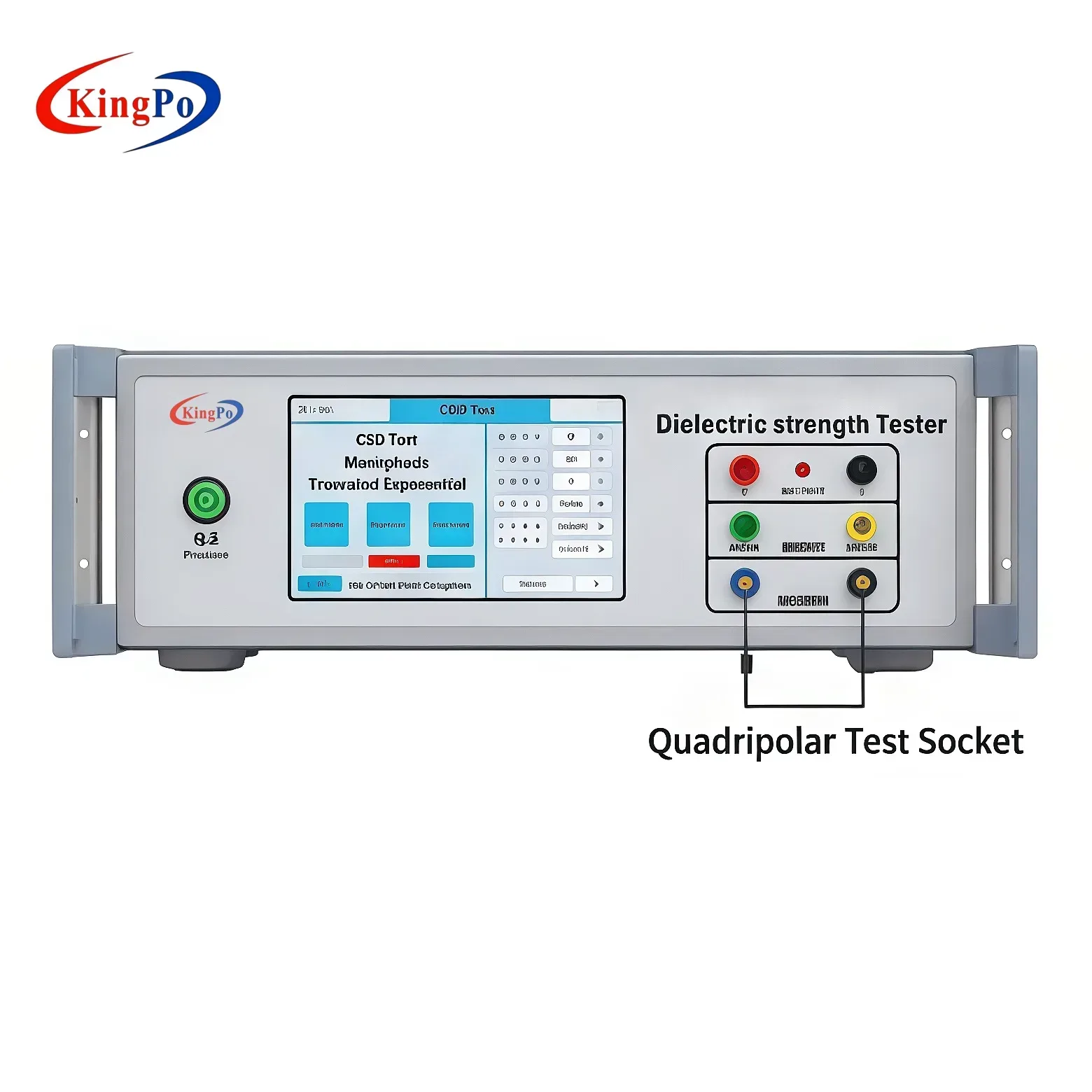
KP-1230S Dielectric Strength Tester
Generates a monophasic truncated exponential waveform for dielectric strength and defibrillation resistance testing of quadripolar connector systems used in pacemakers, ICDs and CRT devices.
Browse the complete KingPo Medical Test Equipment range for IEC 60601, ISO 14708, ISO 27186, ISO 80369 and other medical device safety and performance test applications.
Project Outcome
The delivery provides NeuroPace with an integrated platform for generating both damped sinusoidal and truncated exponential defibrillation test pulses.
For medical device engineering teams, this type of equipment can support early design evaluation, formal verification, product change assessment, internal quality testing and pre-compliance preparation.
The project also reflects KingPo’s ability to configure specialized medical device testing equipment for international laboratory applications, including different power supplies, waveform requirements, external test networks and documentation needs.
This case describes the supply of laboratory testing equipment. It does not represent product certification, regulatory approval, standards-body approval or an endorsement of KingPo by NeuroPace.
Information Required Before Quotation
For a similar active implantable medical device testing project, customers are advised to provide the following information during the initial technical discussion.
Recommended Project Information
About KingPo
KingPo Technology Development Limited develops and manufactures testing equipment for medical device safety, electrical safety, environmental reliability, ingress protection, battery testing and customized laboratory applications.
For active implantable medical device projects, KingPo can provide defibrillation pulse generators, external resistor networks, connector test systems and technical configuration support based on the required waveform, voltage, pulse sequence and laboratory conditions.
Explore more KingPo medical device testing solutions for product development, verification, quality control and laboratory applications.
Need a Defibrillation Test Pulse Generator?
The KP-1050S provides an integrated platform for Test 1 and Test 2 defibrillation immunity testing. Submit your applicable standard, medical device type, waveform, voltage, test network and documentation requirements for technical review.