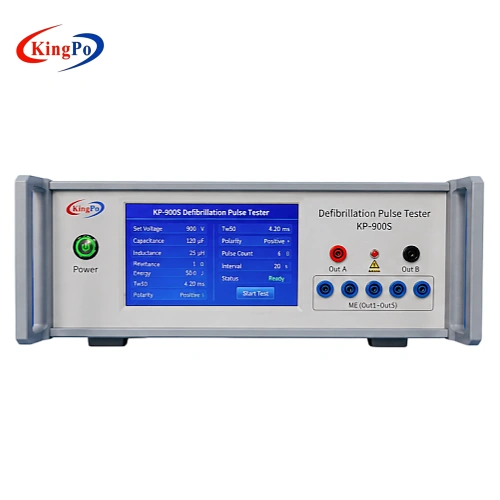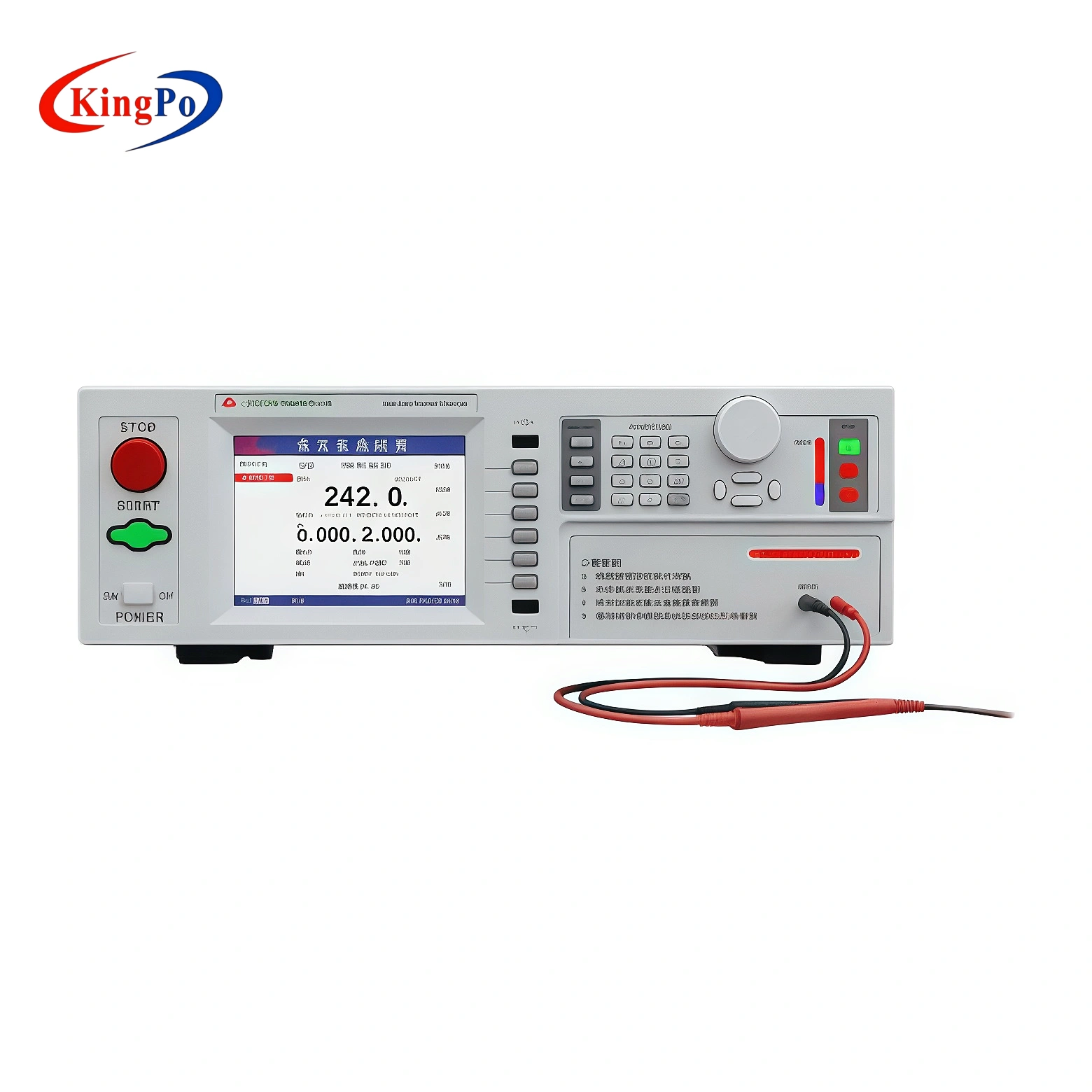
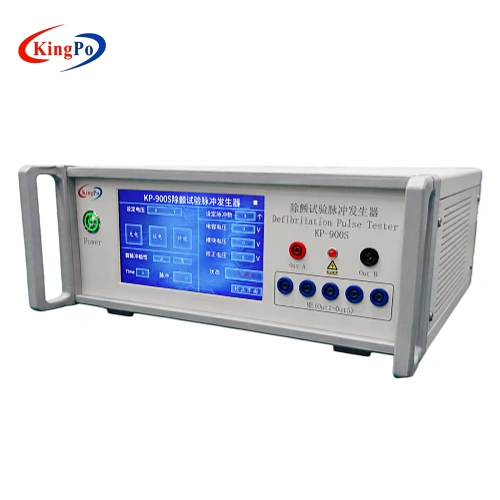
KP-900S defibrillation protection test pulse generator angled product view
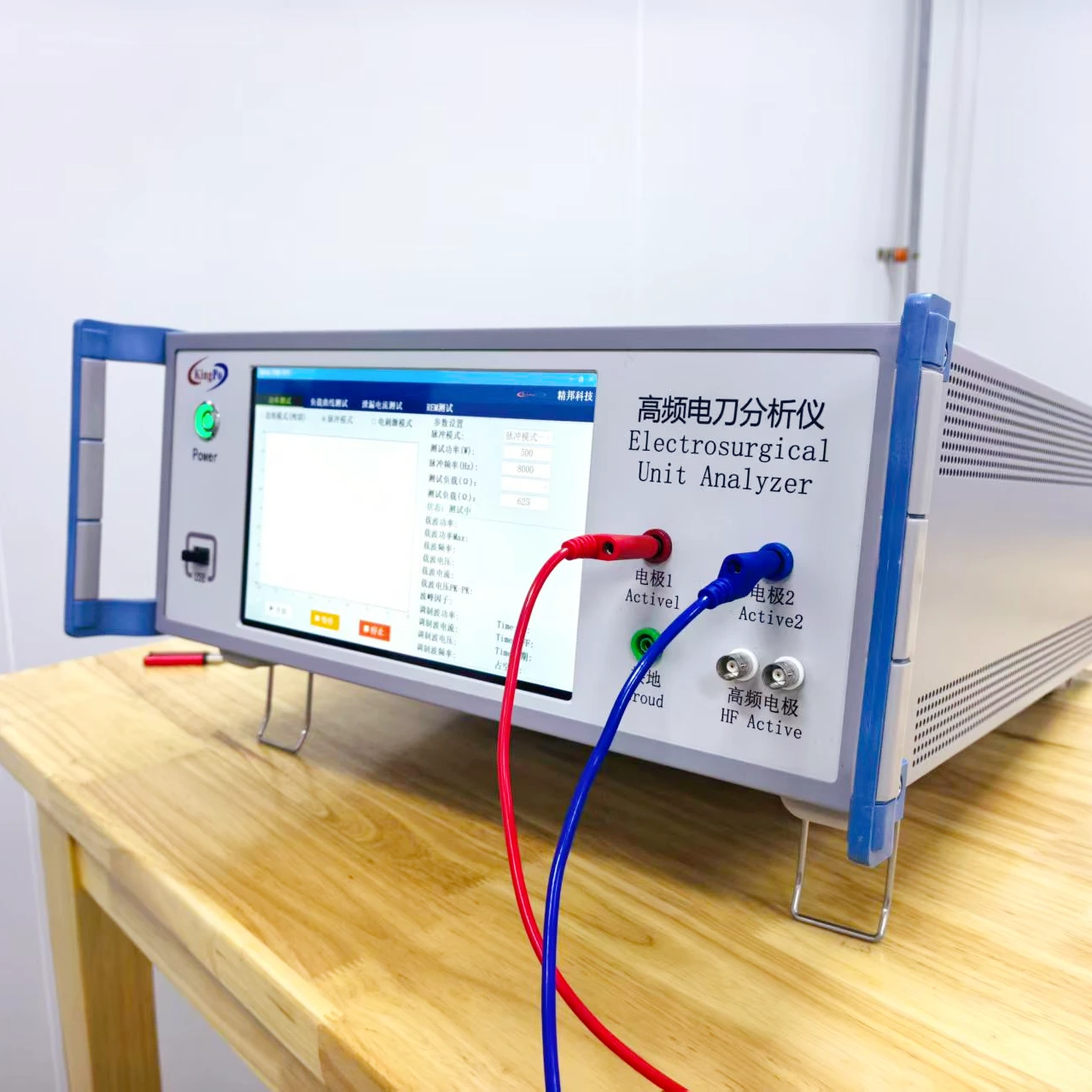
IEC 60601-2-31 defibrillation protection test pulse generator KP-900S front view
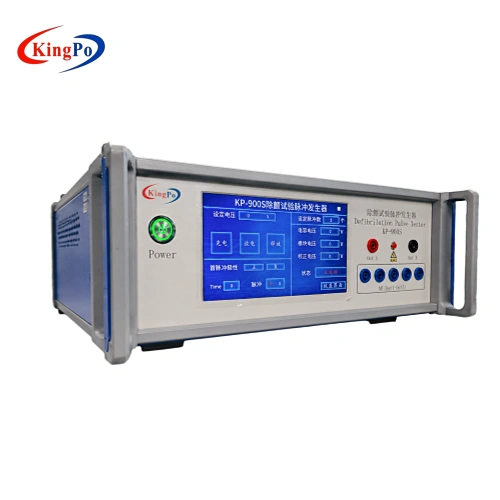
KP-900S IEC 60601-2-31 defibrillation protection test pulse generator angled front view
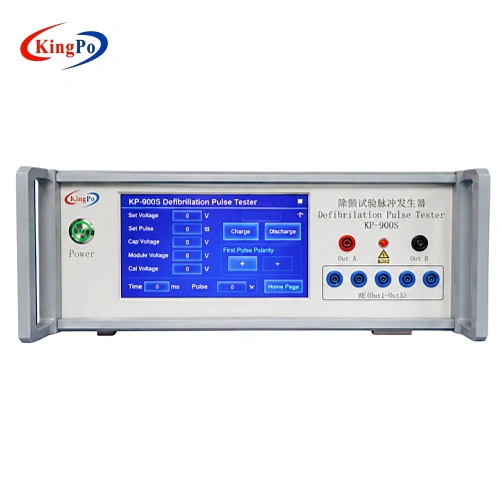
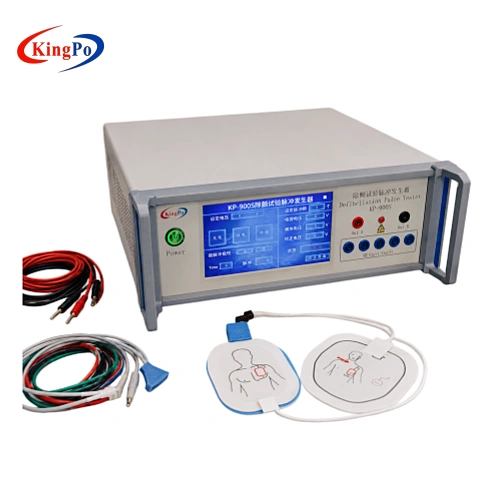
KP-900S defibrillation protection test pulse generator with output terminals and accessories
KP-900S defibrillation protection test pulse generator angled product view
IEC 60601-2-31 defibrillation protection test pulse generator KP-900S front view
KP-900S IEC 60601-2-31 defibrillation protection test pulse generator angled front view
KP-900S defibrillation protection test pulse generator with output terminals and accessories

IEC 60601-2-31 Defibrillation Protection Test Pulse Generator

The KP-900S is a dedicated defibrillation protection test pulse generator for external cardiac pacemakers with internal power source. It is used to apply a controlled high-energy pulse exposure and verify whether the pacemaker can remain free from permanent damage while maintaining basic safety and essential performance after testing.

  • Dedicated test pulse generator for external cardiac pacemaker defibrillation protection
  • Complies with YY 9706.231-2023 / IEC 60601-2-31:2020 related requirements
  • RCL pulse test circuit with 120 μF ±5% capacitance
  • 900 V maximum pulse voltage, tolerance +2.5% / -0%
  • 50 J to 55 J pulse energy range
  • Tw50 time parameter: 4.05 ms to 4.6 ms
  • Positive and negative output polarity selectable
  • Programmable pulse sequence for repeatable test execution
  • Built-in three-chamber external cardiac pacemaker test network
  • Color touchscreen interface with parameter display and setting
  • Overvoltage protection and power-off parameter memory

Product Overview

IEC 60601-2-31 Medical Electrical Safety Test Equipment

IEC 60601-2-31 Defibrillation Protection Test Pulse Generator

External cardiac pacemakers may be exposed to defibrillation-related electrical stress during clinical use. IEC 60601-2-31:2020 covers particular requirements for the basic safety and essential performance of external cardiac pacemakers with internal power source.

The KP-900S reproduces the required pulse condition using an RCL pulse circuit. It provides a 900 V maximum pulse voltage, 50 J to 55 J pulse energy range and a defined Tw50 timing range of 4.05 ms to 4.6 ms.

Unlike a general impulse generator, the KP-900S is configured for external cardiac pacemaker defibrillation protection testing. Its practical value lies in controlled pulse energy, polarity sequence, waveform timing and the built-in pacemaker test network.
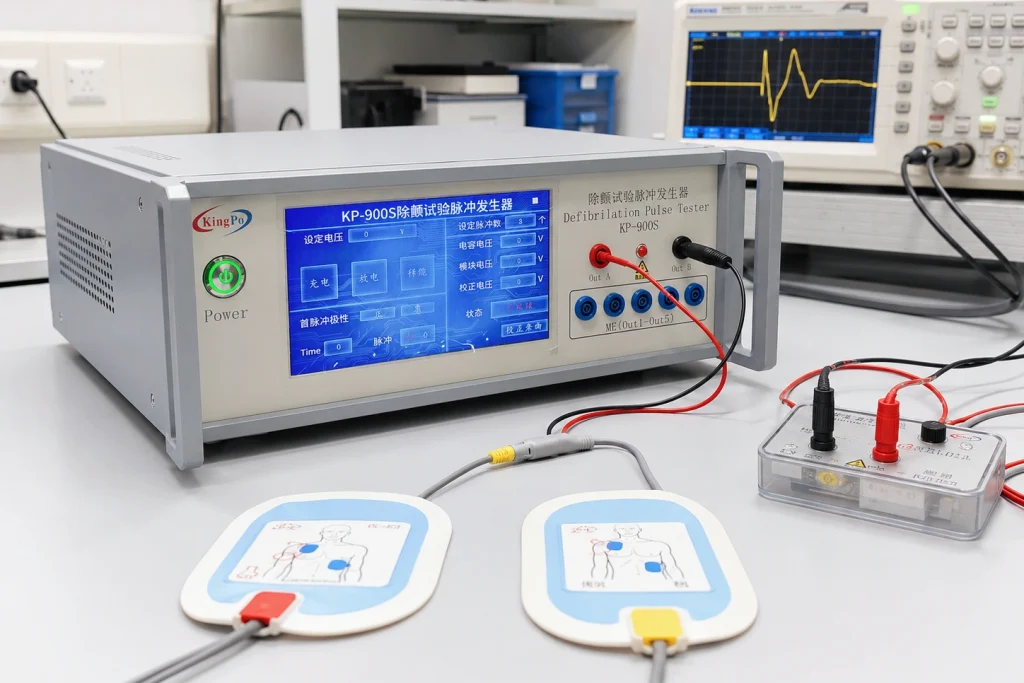
IEC 60601-2-31 external cardiac pacemaker defibrillation protection test equipment in laboratory setup
KP-900S laboratory setup for IEC 60601-2-31 external cardiac pacemaker defibrillation protection testing.

Specification Summary

Technical Specifications

The KP-900S is configured for IEC 60601-2-31 related defibrillation protection testing of external cardiac pacemakers with internal power source. The main output parameters include 900 V maximum pulse voltage, 50 J to 55 J pulse energy, RCL circuit output and a controlled positive and negative pulse sequence.

Maximum Pulse Voltage
900 V
+2.5% / -0%
Pulse Energy Range
50–55 J
Measured record: 52 J
Tw50 Time Parameter
4.05–4.6 ms
Voltage above 50%
Pulse Circuit
RCL
120 μF ±5%

Standard and Test Application
Model KP-900S
Product Type Defibrillation Protection Test Pulse Generator
Applicable Standards YY 9706.231-2023 / IEC 60601-2-31:2020
DUT Application External cardiac pacemakers with internal power source
Test Purpose Defibrillation protection verification after pulse exposure

Pulse Output Parameters
Pulse Test Circuit RCL circuit
Capacitance 120 μF ±5%
Maximum Pulse Voltage 900 V, +2.5% / -0%
Pulse Energy Range 50 J to 55 J
Tw50 Time Parameter 4.05 ms to 4.6 ms
Output Polarity Positive / negative selectable

Test Sequence and Built-in Network
Pulse Sequence 3 positive pulses, then 3 negative pulses
Pulse Interval 20 s to 25 s between each pulse
Polarity Switching Interval ≥60 s before applying negative pulses
Built-in Test Network Three-chamber external cardiac pacemaker test network
Related Figure Requirement Figure 201.105 related requirement
Test Cycles 1–999 times

Control, Power and Structure
Control System Programmable controller
Display / Operation Color touchscreen interface
Protection Function Overvoltage protection
Parameter Memory Parameter memory after power interruption
Power Supply AC 220 V ±10%, 50/60 Hz
Dimensions 320 × 260 × 150 mm
Weight Approx. 2 kg

Why This Test Is Required

External cardiac pacemakers may be exposed to defibrillation-related electrical stress during clinical use. The purpose of this test is to verify that the pacemaker is not permanently damaged by the specified pulse exposure and can still maintain the required safety and performance after testing.

The KP-900S is not a general-purpose impulse generator. It is configured for the specific defibrillation protection test condition of external cardiac pacemakers, including the required pulse energy, timing, polarity sequence and pacemaker test network.

Test Principle

The KP-900S generates a controlled high-energy pulse through an RCL circuit. The pulse condition is mainly defined by capacitance, voltage, energy, Tw50 timing and output polarity.

During the test, the pulse is applied through the required pacemaker test network and DUT connection arrangement. After the pulse sequence is completed, the external cardiac pacemaker should be evaluated according to the applicable test procedure to confirm whether its basic safety and essential performance remain acceptable.

This is a protection verification test, not simply a high-voltage output check. Pulse waveform, energy level, polarity sequence and the test network should all be controlled as part of the complete laboratory setup.
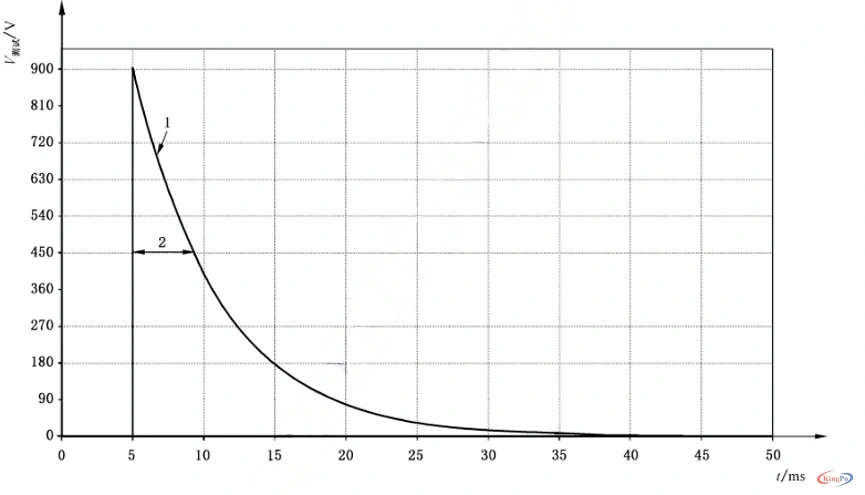
IEC 60601-2-31 defibrillation protection test pulse waveform diagram for KP-900S
Reference pulse waveform for IEC 60601-2-31 defibrillation protection testing.

Pulse Output and Test Sequence

The KP-900S uses a 120 μF ±5% capacitance in the RCL pulse circuit. The maximum pulse voltage is 900 V with a tolerance of +2.5% / -0%, and the specified pulse energy range is 50 J to 55 J.

The Tw50 parameter is the time interval during which the test voltage remains above 50% of its maximum value. For the KP-900S, this range is specified as 4.05 ms to 4.6 ms.

For polarity testing, the system first applies three positive voltage pulses, with an interval of 20 s to 25 s between each pulse. After an interval of at least 60 s, three negative voltage pulses are applied. This programmable sequence helps reduce manual timing errors during repeated laboratory testing.
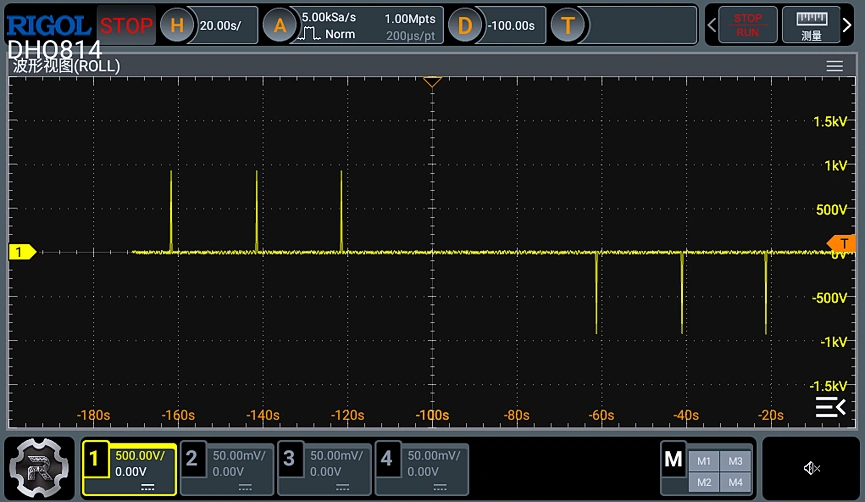
KP-900S defibrillation protection test pulse sequence waveform record showing measured 52 J output
Recorded positive and negative pulse sequence during KP-900S defibrillation protection testing.

Built-in Pacemaker Test Network

The KP-900S includes a built-in three-chamber external cardiac pacemaker test network. According to the product specification, this network is intended to meet the Figure 201.105 related requirement.

The integrated test network helps simplify wiring and improves repeatability between tests. Before formal testing, the laboratory should confirm the DUT connection method, applicable clause and complete test arrangement according to its internal procedure.

Waveform and Energy Verification

The product documentation includes measured waveform records and a measured pulse energy value of 52 J. This provides a reference for confirming that the output falls within the specified 50 J to 55 J energy range.

For formal laboratory use, waveform timing, voltage and energy verification should be performed according to the laboratory’s quality system and applicable test procedure. Calibration records, waveform screenshots, inspection reports or traceability information can be confirmed according to project requirements.
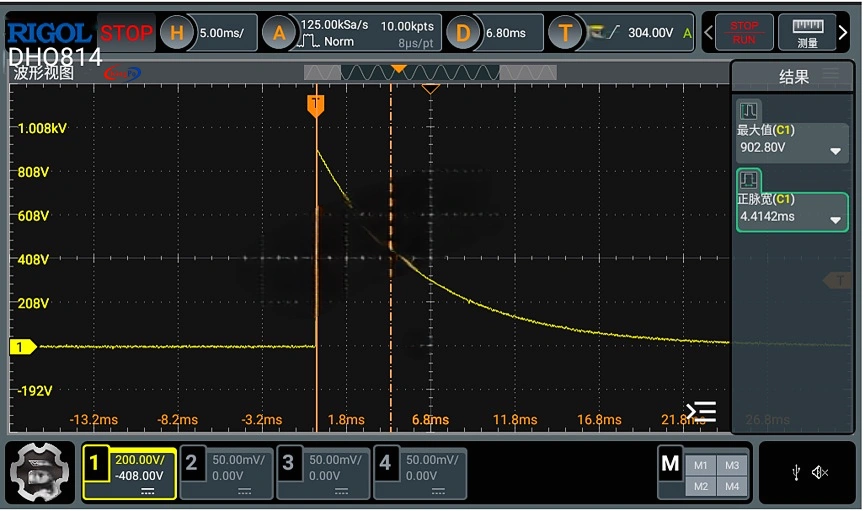
KP-900S measured defibrillation pulse waveform record for IEC 60601-2-31 testing
Measured KP-900S pulse waveform showing approximately 900 V peak voltage and Tw50 timing verification.

Typical Applications

The KP-900S is suitable for laboratories and manufacturers involved in external cardiac pacemaker safety verification.

  • IEC 60601-2-31 related defibrillation protection testing
  • YY 9706.231-2023 medical electrical safety verification
  • External cardiac pacemaker R&D validation
  • Pre-compliance testing before third-party certification
  • Factory quality control and design verification
  • Waveform and energy verification for pacemaker protection testing

Practical Value for Laboratories and Manufacturers

For laboratories, the KP-900S provides a controlled and repeatable pulse source with programmable timing, polarity selection and a built-in pacemaker test network. This helps reduce setup variation and improves consistency during repeated verification work.

For manufacturers, the system supports design verification, pre-compliance evaluation and internal quality inspection before submitting products for formal certification.

Buyer’s Selection Notes

Item What to Confirm
Applicable Standard IEC 60601-2-31:2020, YY 9706.231-2023 or the related national adoption
DUT Type External cardiac pacemaker with internal power source
Test Requirement Defibrillation protection clause and required test network
Pulse Parameters Voltage, energy range, Tw50 timing, polarity and pulse sequence
Verification Method Oscilloscope, energy measurement method and laboratory documentation process
Documentation Needs Datasheet, calibration-related document, waveform record or inspection report

Compliance & Regulatory Assurance

The KP-900S is designed to support defibrillation protection testing for external cardiac pacemakers with internal power source according to IEC 60601-2-31:2020 and YY 9706.231-2023 related requirements. Its RCL pulse circuit, 900 V pulse output, 50 J to 55 J energy range, Tw50 timing and positive/negative pulse sequence are configured for this specific medical electrical safety verification.

As with any standard-related test equipment, final compliance depends on the complete laboratory arrangement, including the DUT connection, pacemaker test network, waveform verification method, measuring instruments and the applicable edition of the standard. Calibration-related records, waveform screenshots, inspection reports or traceability information can be confirmed according to project requirements.

Applicable Standards
IEC 60601-2-31:2020 / YY 9706.231-2023
Test Object
External cardiac pacemakers with internal power source
Key Verification
Defibrillation protection after pulse exposure
Documentation Support
Datasheet, waveform record, inspection or calibration-related document

Technical Datasheet
KP-900S IEC 60601-2-31 Defibrillation Protection Test Pulse Generator
Product overview, test principle, technical specifications, pulse sequence and measured waveform records.

Technical Inquiry & Expert Support

To confirm whether the KP-900S matches your test requirement, please provide the key information below when sending an inquiry. This helps confirm the applicable standard, DUT type, test setup and required documentation before quotation.

Information Needed Description
Applicable Standard IEC 60601-2-31:2020, YY 9706.231-2023 or the relevant national adoption used in your project.
DUT Type Confirm whether the device under test is an external cardiac pacemaker with internal power source.
Test Setup Confirm the defibrillation protection clause, DUT connection method and required pacemaker test network.
Verification Method Oscilloscope, energy measurement method, waveform screenshot requirement or internal laboratory verification procedure.
Documentation Needs Datasheet, calibration-related document, waveform record, inspection report or traceability information if required.

Note: Final suitability should be reviewed together with the complete laboratory test arrangement, measuring instruments and applicable standard edition.

Defibrillation Protection Test Pulse Generator

Defibrillation Protection Test Pulse Generator FAQs

What is the KP-900S Defibrillation Protection Test Pulse Generator used for?
The KP-900S is used for defibrillation protection testing of external cardiac pacemakers with internal power source. It generates the required high-energy pulse condition to help verify whether the pacemaker can withstand defibrillation-related electrical stress without permanent damage and continue to maintain basic safety and essential performance after testing.
Which standard is the KP-900S designed to support?
The KP-900S is designed to support IEC 60601-2-31:2020 and YY 9706.231-2023 related defibrillation protection test requirements. It is intended for laboratories and manufacturers working with external cardiac pacemakers powered by an internal electrical power source.
Is the KP-900S a general impulse test generator?
No. The KP-900S is not a general-purpose impulse test generator. It is configured specifically as an IEC 60601-2-31 Defibrillation Protection Test Pulse Generator, with defined RCL circuit output, 900 V pulse voltage, 50 J to 55 J energy range, Tw50 timing and positive/negative pulse sequence for external cardiac pacemaker testing.
What pulse voltage and energy does the KP-900S provide?
The KP-900S provides a maximum pulse voltage of 900 V with a tolerance of +2.5% / -0%. The specified pulse energy range is 50 J to 55 J, and the product waveform record shows a measured pulse energy value of 52 J.
What does Tw50 mean in defibrillation protection testing?
Tw50 refers to the time interval during which the test voltage remains above 50% of its maximum value. For the KP-900S, the specified Tw50 range is 4.05 ms to 4.6 ms. This timing parameter is important because the test is not only about peak voltage, but also about waveform duration and energy delivery.
What pulse sequence does the KP-900S perform?
The KP-900S first applies three positive voltage pulses, with an interval of 20 s to 25 s between each pulse. After an interval of at least 60 s, three negative voltage pulses are applied. This positive and negative pulse sequence supports repeatable defibrillation protection verification in laboratory testing.
Does the KP-900S include a pacemaker test network?
Yes. The KP-900S includes a built-in three-chamber external cardiac pacemaker test network. According to the product specification, this network is intended to meet the Figure 201.105 related requirement, helping simplify the test setup and improve repeatability between tests.
Who typically uses the KP-900S?
The KP-900S is typically used by medical electrical safety laboratories, certification bodies, external cardiac pacemaker manufacturers, R&D departments and quality control teams. It is suitable for IEC 60601-2-31 related verification, pre-compliance testing, design validation and routine laboratory test work.
What should buyers confirm before ordering the KP-900S?
Buyers should confirm the applicable standard edition, DUT type, required defibrillation protection clause, DUT connection method, waveform verification method and documentation needs. It is also important to confirm whether datasheets, waveform records, inspection documents or calibration-related reports are required for the project.
Can KingPo provide technical documentation for the KP-900S?
Yes. KingPo can provide product documentation such as the datasheet, technical specifications, waveform record and calibration-related or inspection documents according to the project requirement. For formal laboratory use, the required documentation should be confirmed together with the applicable standard edition and test setup before ordering.

Related Products

Related News

Defibrillation electrode testing verifies whether disposable and multifunction electrode pads can maintain stable impedance, recover after a 360J shock, control […]

Quick Answer: KINGPO IEC 60601-2-52 Medical Bed Testing Equipment For laboratories and manufacturers performing medical bed compliance tests under IEC […]

Choose a medical bed side rail strength tester for IEC 60601-2-52 by focusing on force range, accuracy, compliance, and safety features.

When selecting a defibrillator tester (also known as a defibrillator analyzer), biomedical engineers and clinical laboratories must focus on accuracy, […]

Comparing IEC 60601-2-34 and IEC 60601-2-25: A Technical Guide details device scope, testing, and compliance differences for medical device standards.
KINGPO’s Electrosurgical Unit analyzer ensures ESU safety and IEC 60601-2-2 compliance with precise testing, supporting patient protection and regulatory needs.
Ensure IEC 60601 compliance in 2026 with Defib-proof and Energy Reduction Tester for safer, faster medical device approval and reliable patient protection.

External defibrillators are performance‑critical devices. According to KingPo manufacturing and metrology protocols, for third‑party calibration and certification laboratories—and for manufacturers’ […]

Scroll to Top

Get A Free Quote Now !

Contact Form
If you have any questions, please do not hesitate to contact us.