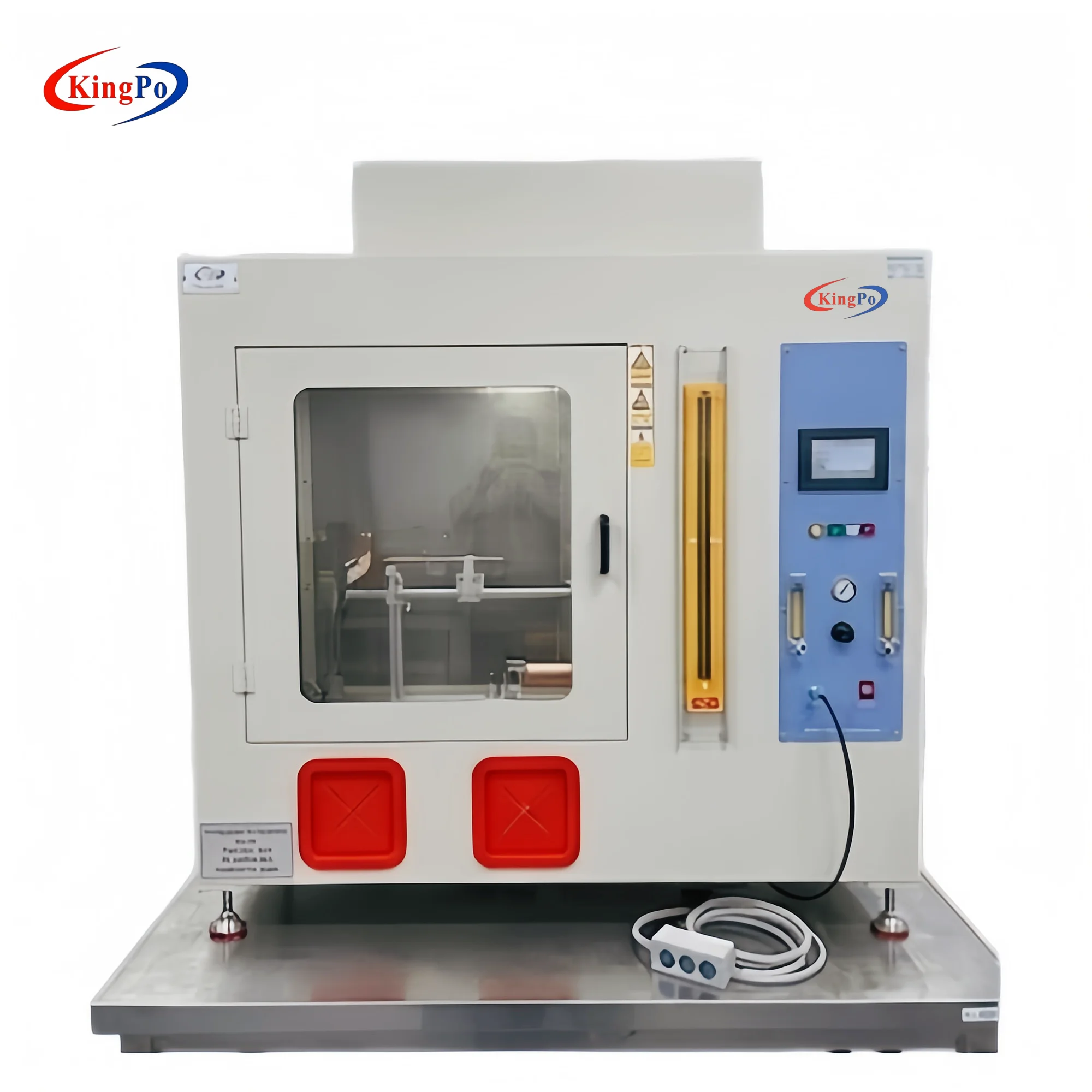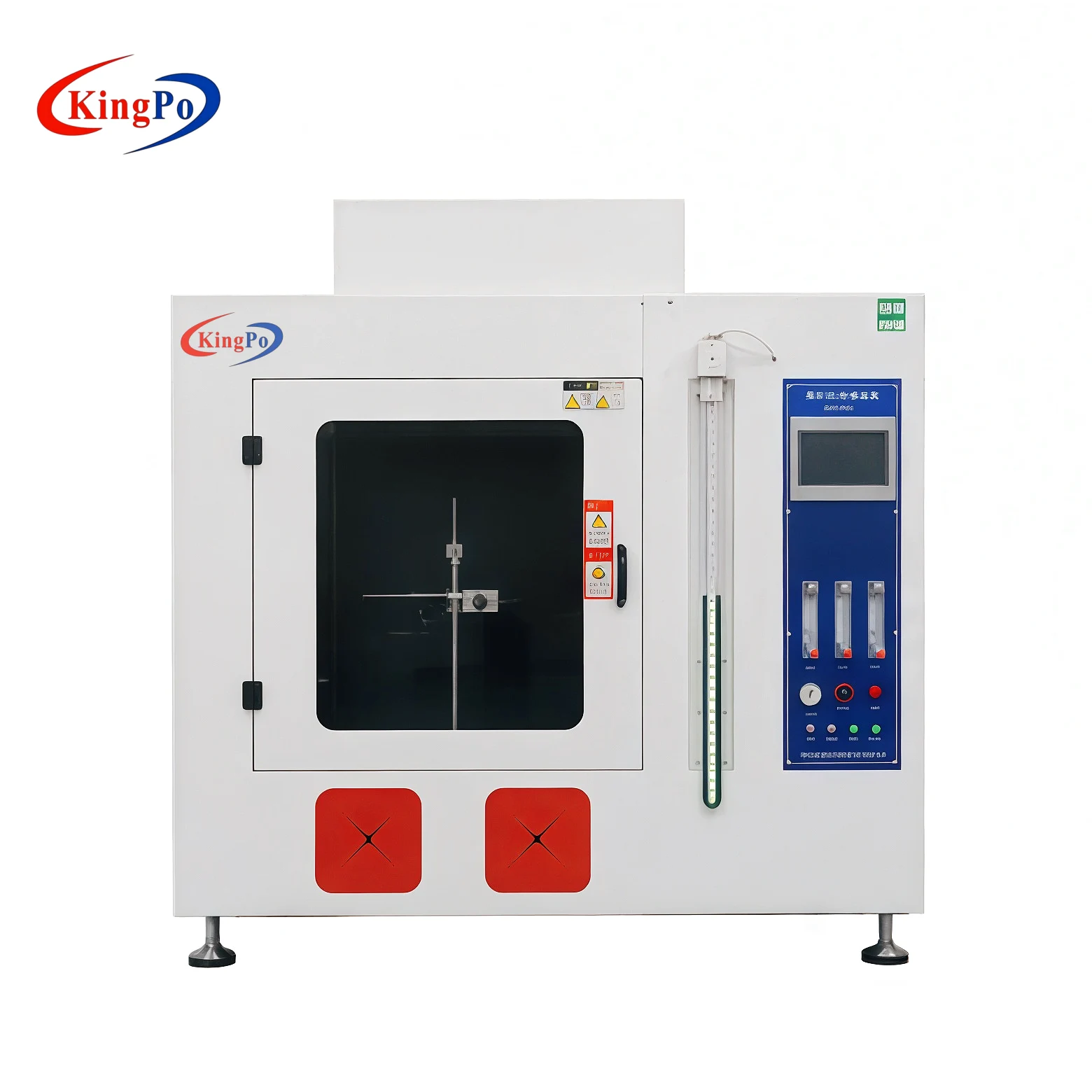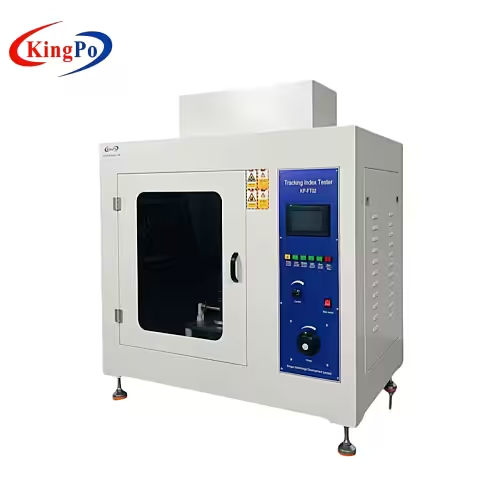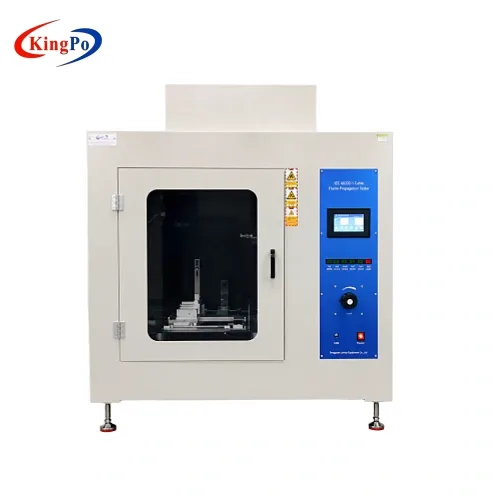
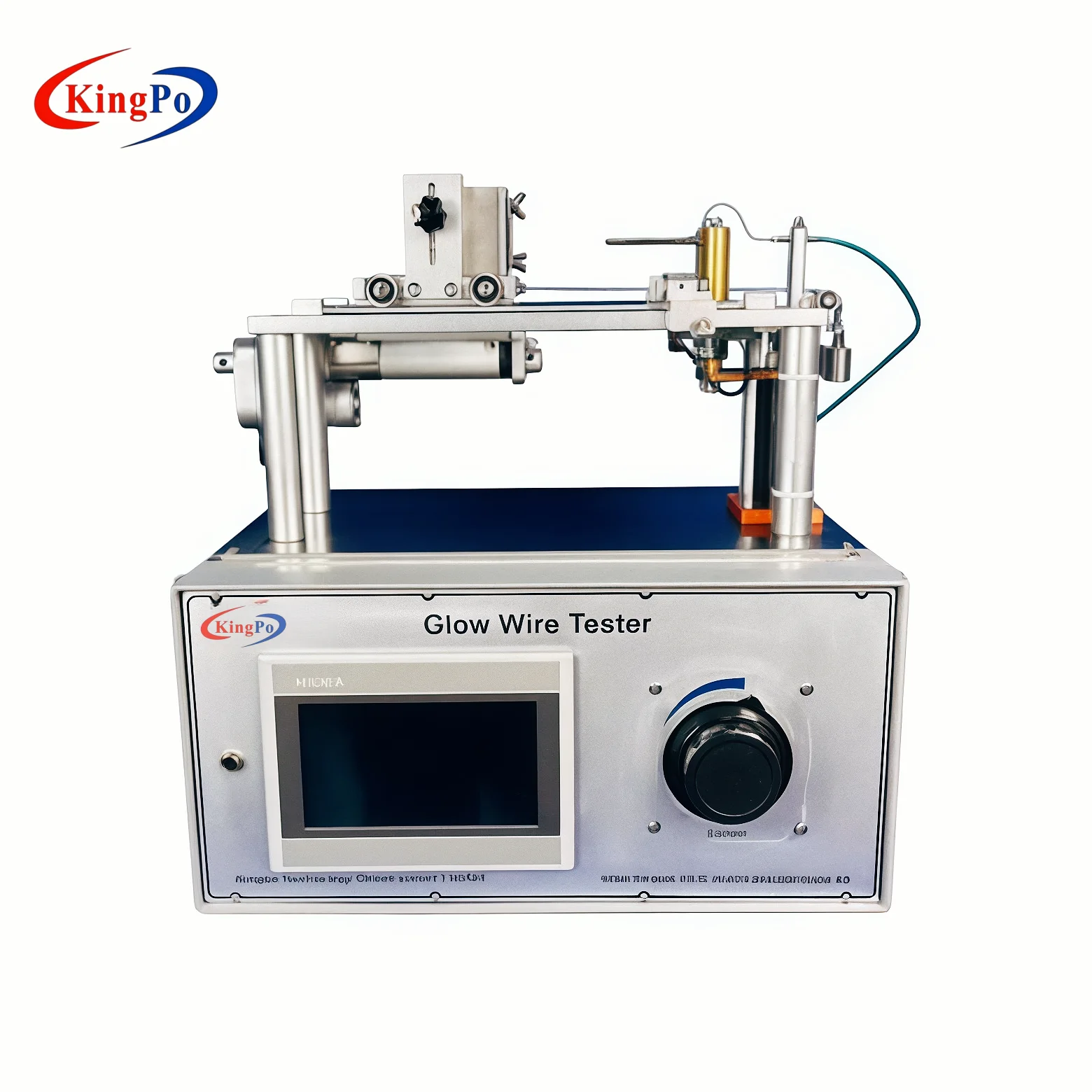
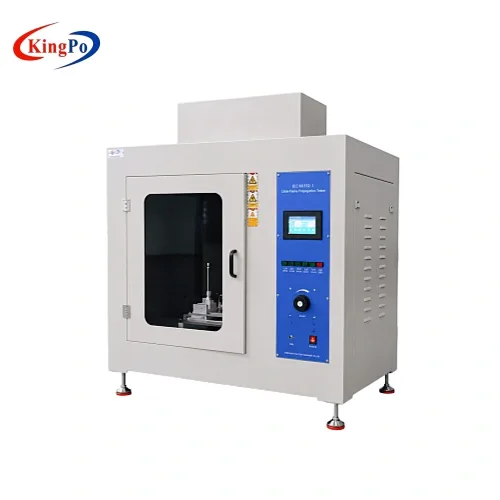
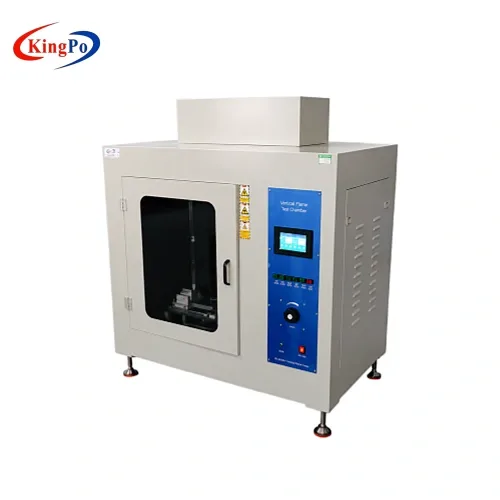
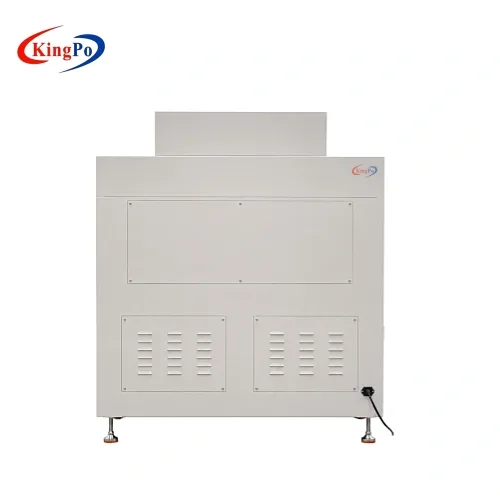
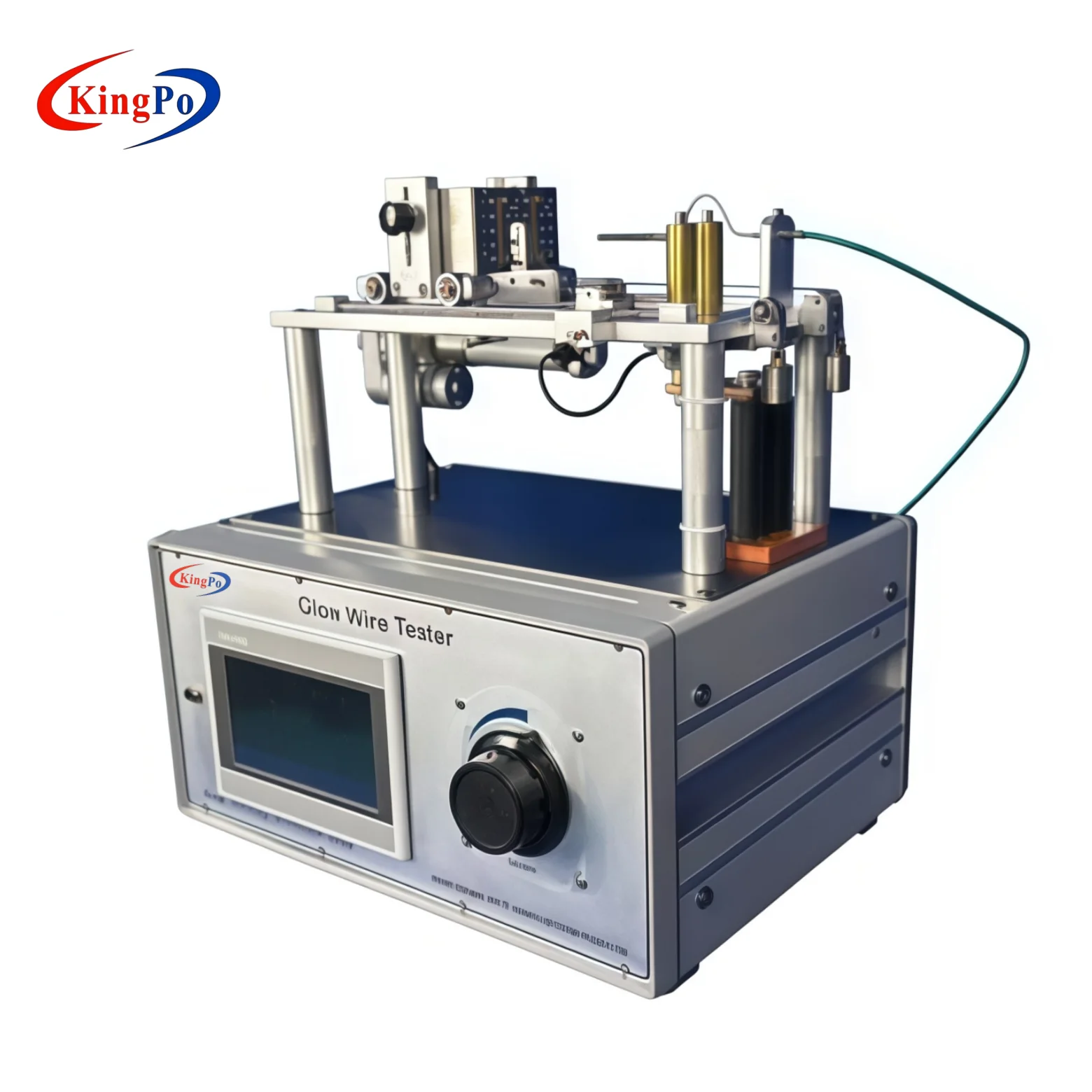
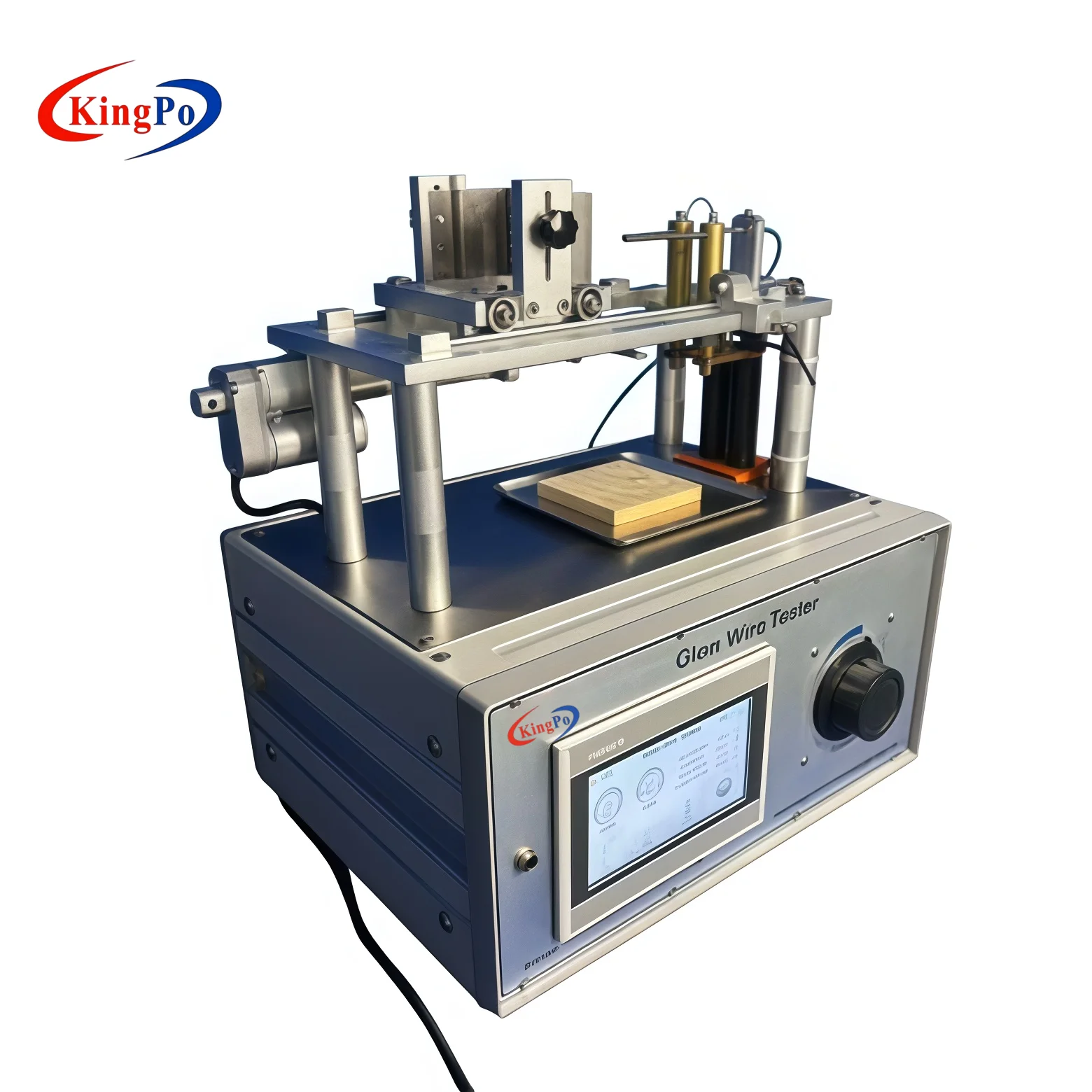
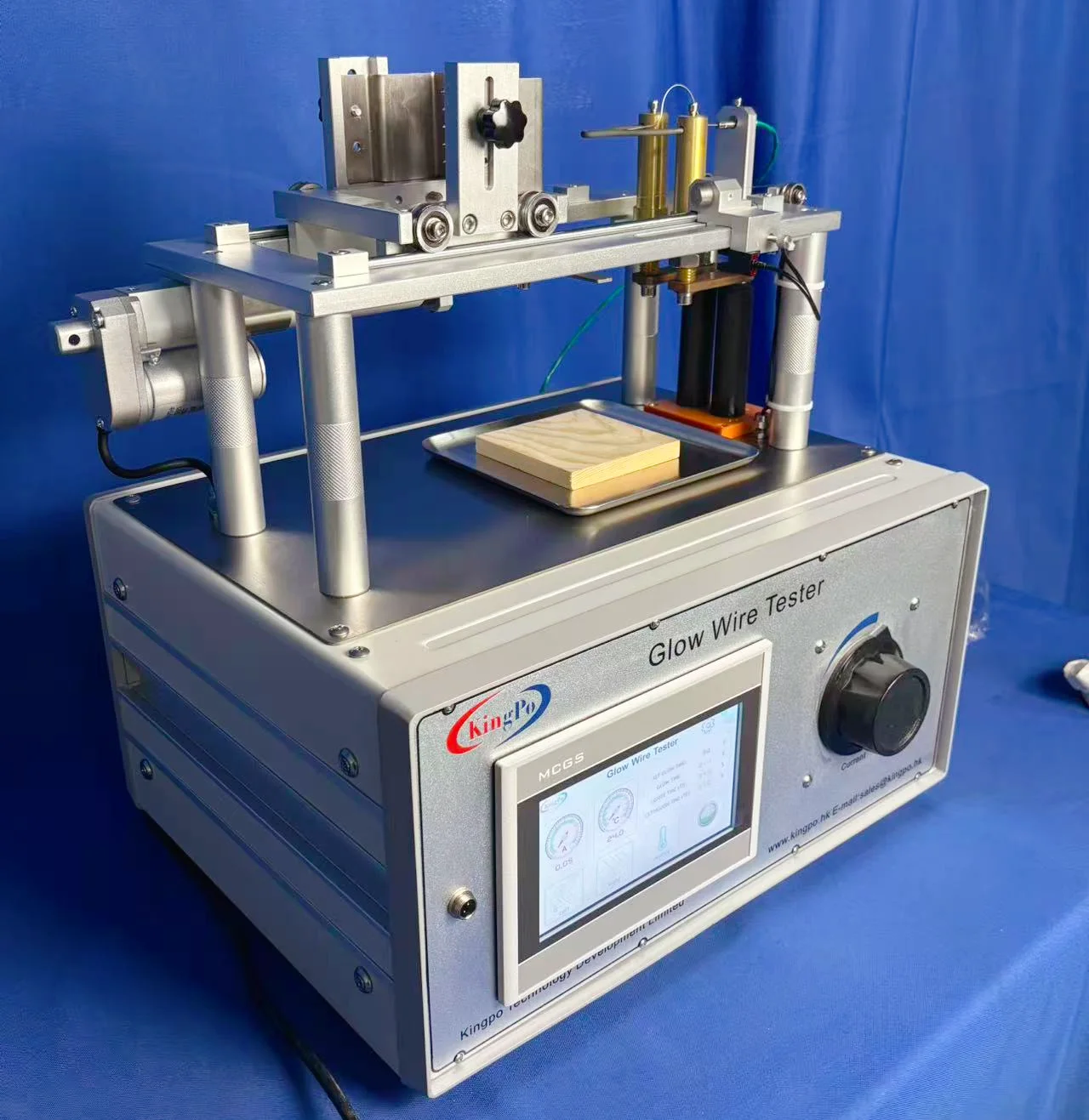
IEC 60695-2-10 Glow Wire Test Apparatus for Flammability Testing
The Glow Wire Tester is used to assess the flammability of materials and components by simulating the thermal effects of an overheated electrical part. A heated glow wire is brought into contact with the test specimen under a defined force and temperature, allowing evaluation of ignition behavior and fire hazard.
This test method is widely referenced in the safety evaluation of electrical and electronic products, helping manufacturers select appropriate materials and designs to reduce fire risk under abnormal heat conditions.
Technical Parameters
| Parameter | Specification | Remark or Notes |
|---|---|---|
| Applicable Standards | IEC 60695-2-10; related IEC 60695-2-11 / 2-12 / 2-13 and UL 746A applications | Glow wire test method and related procedures |
| Temperature Range | 100°C – 1000°C adjustable | Typical test range: 550°C – 960°C |
| Temperature Control Accuracy | ±2°C under specified calibration conditions | Digital PID control |
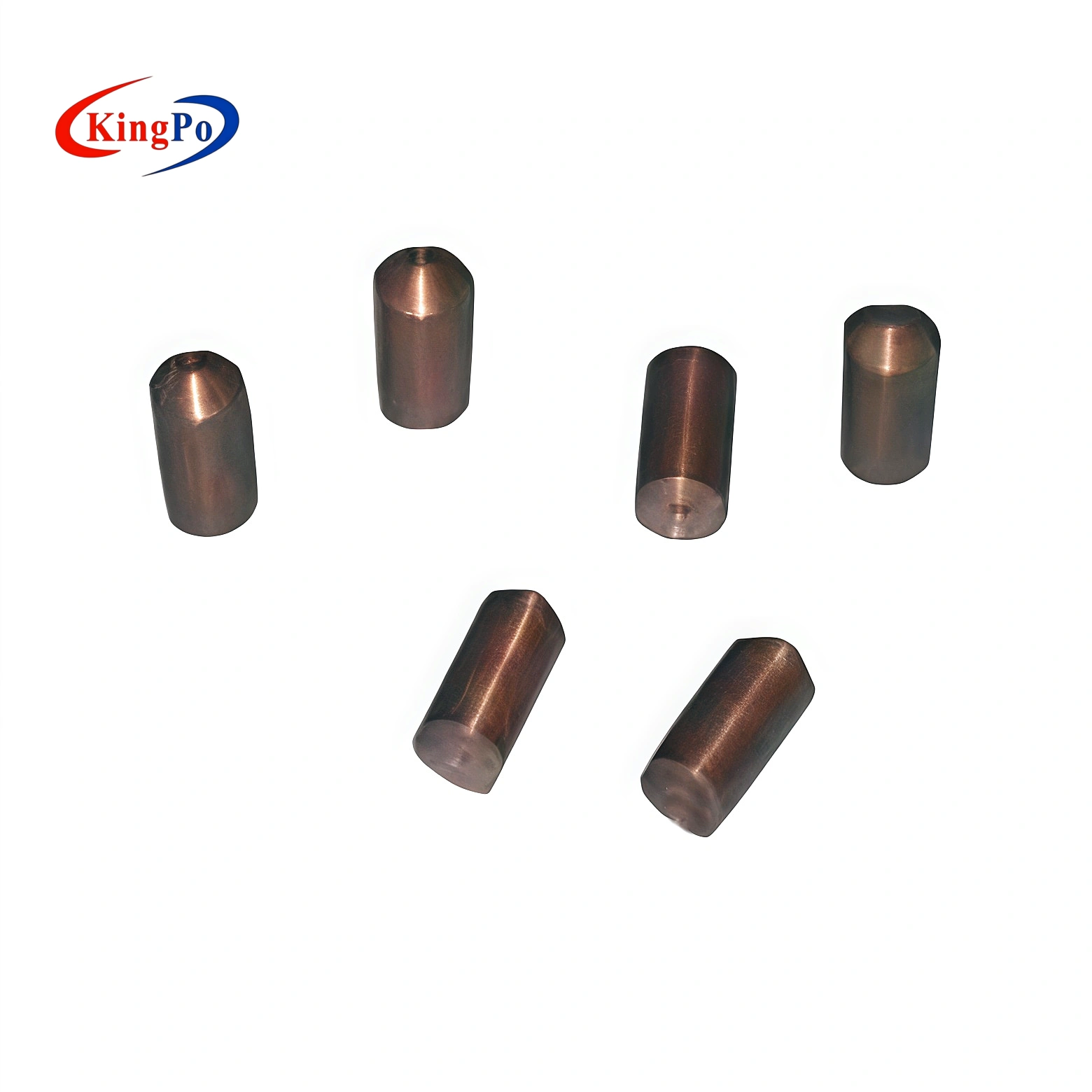
| Glow Wire | Φ4 mm Ni80/Cr20 nickel-chromium wire | Manufactured to standard dimensions |
| Thermocouple | Φ1.0 mm K-type armored thermocouple | Real-time temperature monitoring |
| Applied Force | 0.95 N ± 0.1 N | Standardized specimen contact pressure |
| Penetration Depth | 7 mm ± 0.5 mm | Controlled specimen contact |
| Test Speed | 10–25 mm/s | Controlled specimen approach speed |
| Glow Time | 0–999.9 s (commonly 30 s) | Programmable |
| Ignition Time (Ti) | 0–999.9 s+0.1s | Recorded during test |
| Extinguishing Time (Te) | 0–999.9 s+0.1s | Recorded during test |
| Chamber Volume | ≥ 0.5 m³ | Customizable |
| Control System | Microcomputer / touch screen control | Subject to final configuration |
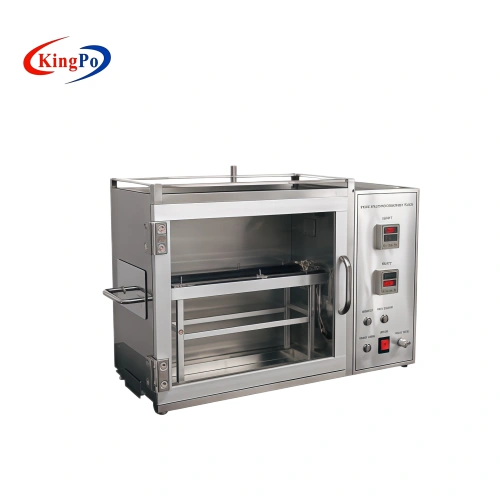
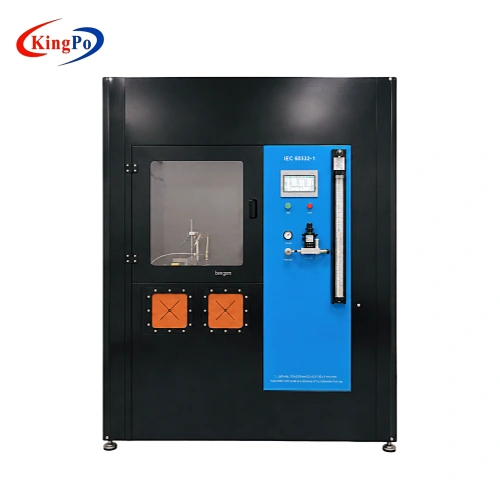
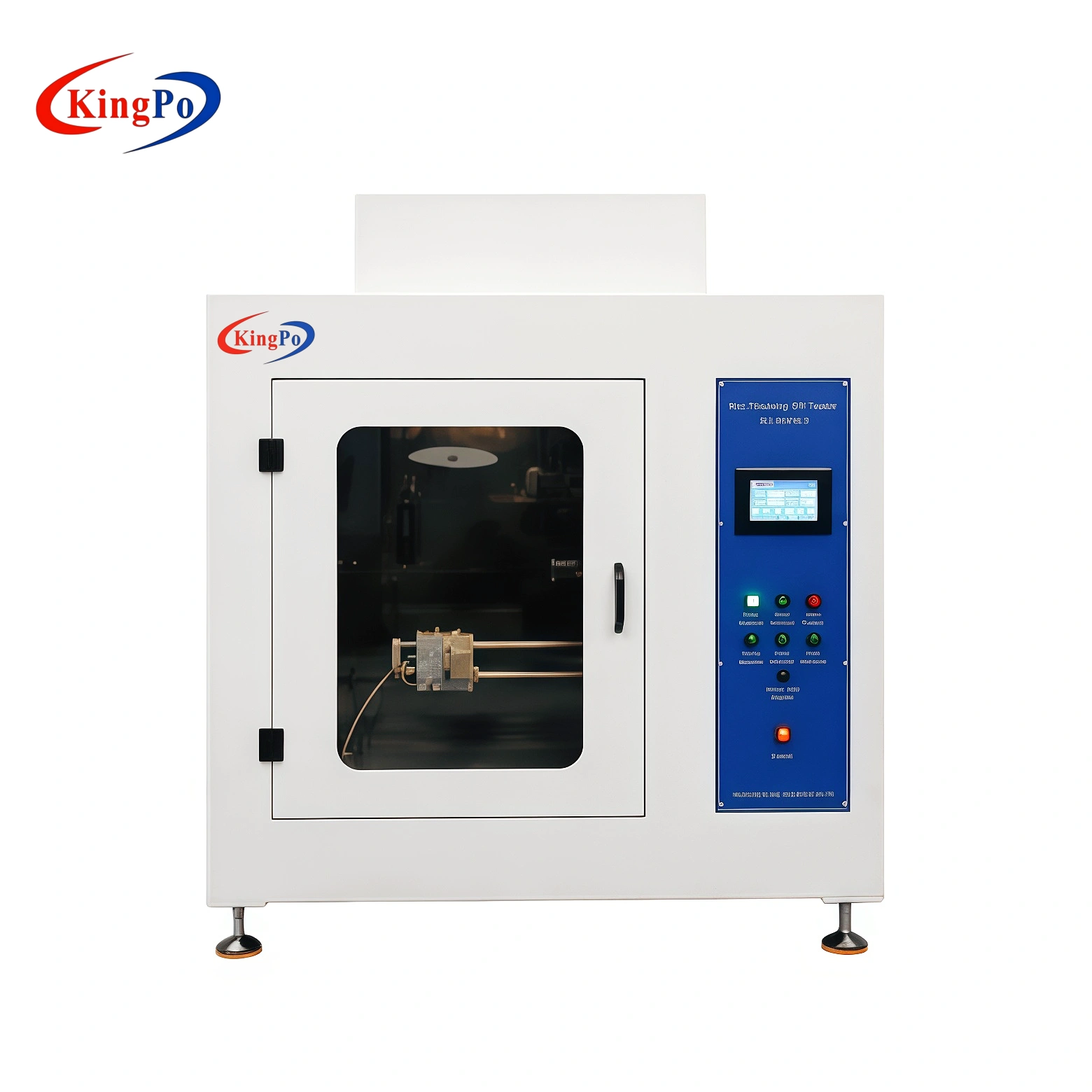
| Safety Features | Observation window, independent exhaust system | Designed for operator safety |
Professional Construction & Technical Precision
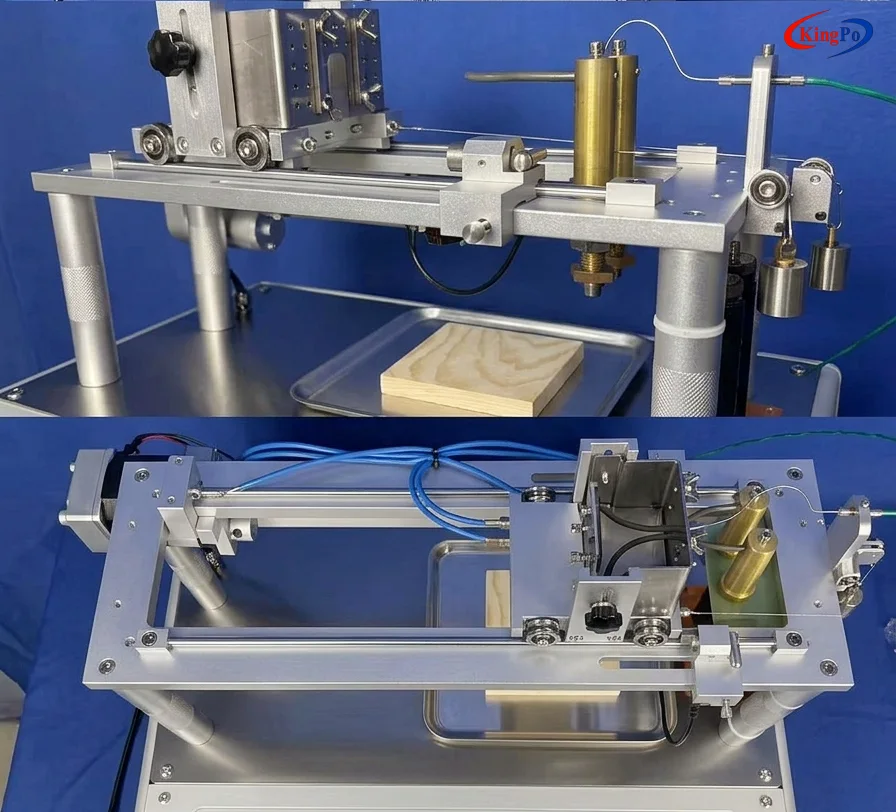
The Glow Wire Tester is built with an enclosed test chamber, precision glow-wire assembly, and controlled specimen loading mechanism. The system uses a Φ4 mm nickel-chromium glow wire and a Φ1.0 mm K-type thermocouple for temperature monitoring, supporting stable heating within the required test range under proper calibration conditions.
The specimen mechanism applies a controlled 0.95 N contact force and limits penetration depth during testing. A clear observation window allows operators to monitor ignition, flaming, glowing, and material deformation, while the independent exhaust system helps remove fumes after the test cycle.
Testing Principle
The glow-wire test is a small-scale fire hazard test method using a standardized electrically heated wire as the ignition source. It is designed to simulate short-term thermal stresses that may occur in electrical and electronic products when components overheat or when current-carrying parts come into contact with surrounding insulating materials.
During the test, the glow wire is heated to a specified temperature and then brought into contact with the specimen for a defined application time under controlled force. The test records whether ignition occurs, the ignition time, flame duration, extinguishing time, glowing behavior, and whether burning particles or molten material spread beyond the contact area.
These observations help laboratories evaluate the ignitability and fire hazard behavior of materials, components, or end products under abnormal heat conditions. The results can support material selection, product safety assessment, and compliance testing according to IEC 60695-2-10 and related glow-wire test methods.
Test procedure
Installation
- This tester should be placed on a level table
- table size no less than 1400W * 900D * (600-800)H mm
- Distance to the wall: > 200mm
- Exhaust pipe: diameter of 100mm
- The test room should be independent room equipped with exhaust system and firefighting device
-
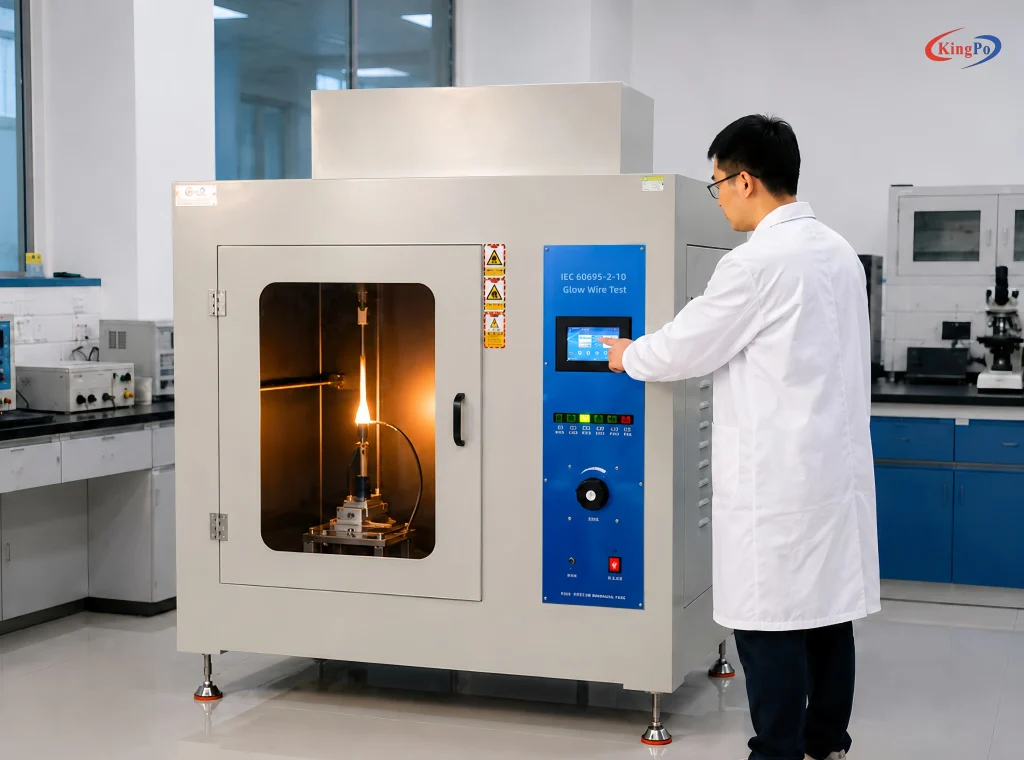
IEC 60695-2-10 Glow Wire Tester during material flammability testing
1.1) install the exhaust pipe, tighten the fitting
1.2) checks the power supply wiring, ensures it’s correct and grounded
1.3) connect thermocouple as below:
1.4) connect wire control box as below
Debugging
Before debugging, please check:
- whether wiring okay
- whether sample carrier and weight in right position, 3 wires must be in the pulley
2.1) turn power switch on, the sample carrier come to the left end, left proximity switch light up
2.2) adjust current to minimum, press heating button, and run, sample carrier come to right end, and come back 30s later.
2.3) test sample fixing. Fix the sample tight inside fixture, ensure 7mm spacing in the tolerance. And close the viewing window.
Test
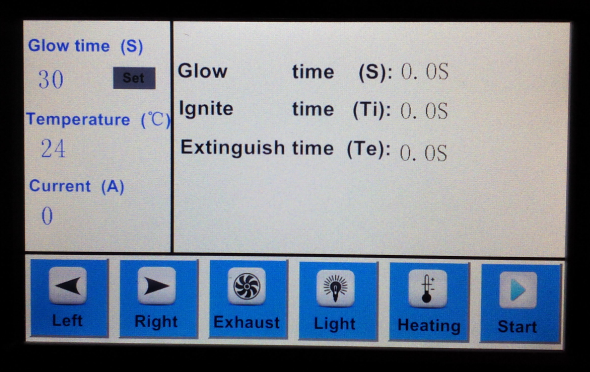
Left: sample carrier small car go left
Right: sample carrier small car go right
Exhaust: exhausting
Light: lighting
Heating: Adjust the current, reach to required temperature. Wait 5min to let the temperature be steady.
Start: Sample carrier automatically moves forward, timers (glow time, Ti, Te) start working, carrier returns when set glow time (30s) reached.
Glow time: 30s
Ti: the duration from the beginning of tip application up to the time at which the test specimen or the wrapping tissue placed below it ignites;
Te: the duration from the beginning of tip application up to the time when flames extinguish during or after the period of application.
Control box: when the sample start burning, press the button on control box, get ignite time Ti; when flame dies, presses the button on control box, get flame extinguish time Te.
When test finished, do not open the viewing window until exhaust for at least 2min.
Test procedure
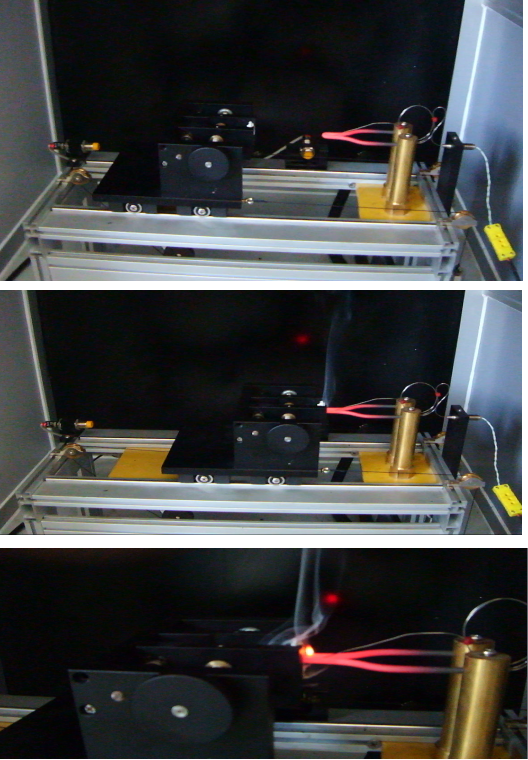
Common Error Mitigation
To obtain reliable glow wire test results, the following practices are recommended:
- Allow the glow wire to stabilize at the target temperature before each test.
- Ensure the specimen is correctly positioned and the contact force is set to 0.95 N ± 0.1 N.
- Regularly clean the glow wire tip to remove oxidation and maintain consistent thermal performance.
- Perform testing in a draft-free environment to avoid interference with flame observation.
- Accurately record ignition time (Ti), flame duration, and extinguishing time (Te).
- Verify temperature calibration periodically using reference instruments.
- Follow the exact test parameters required by the applicable product or material standard.