Abstract
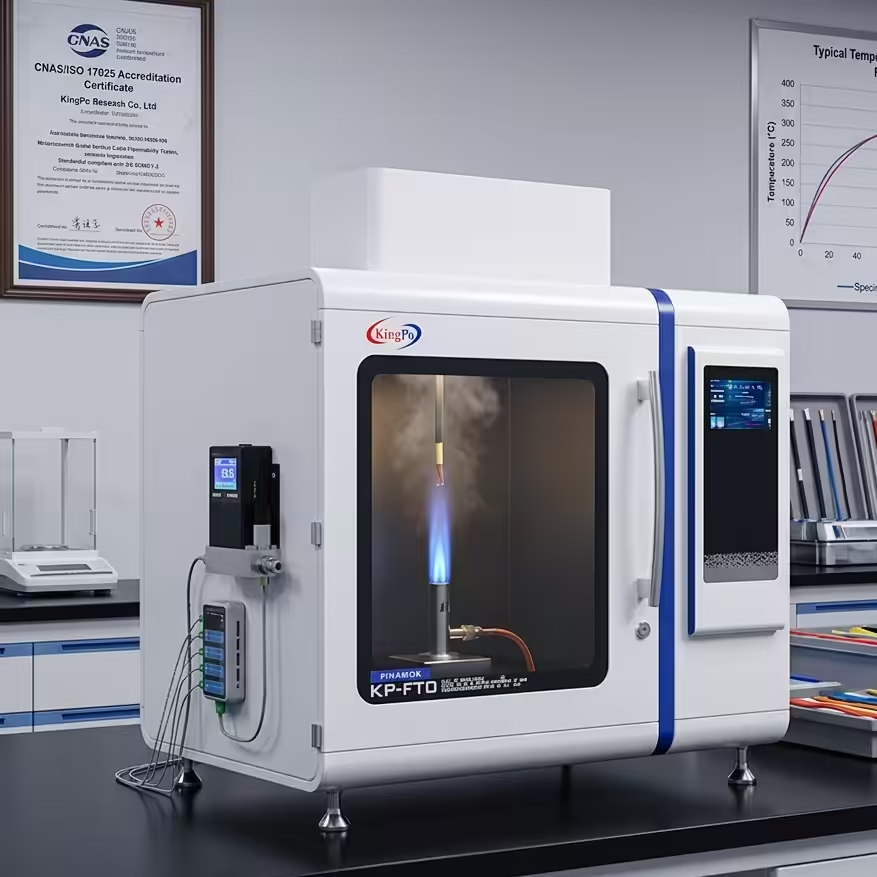
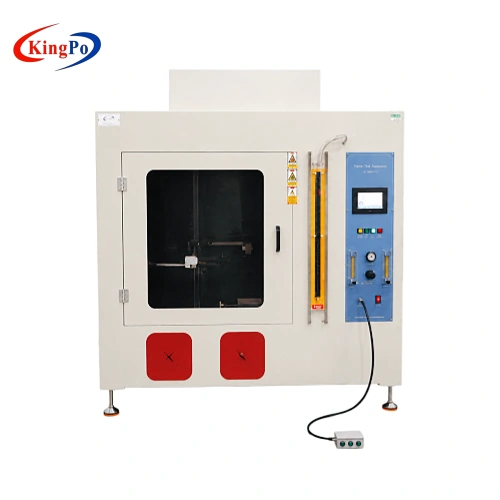
The IEC 60332-1-2 Cable Flammability Test serves as a critical benchmark for evaluating the fire safety integrity of modern cabling infrastructure. Under the rigorous conditions of this international standard, the flame propagation behavior along a single insulated wire is governed by the delicate interaction between material thermal decomposition and the consistency of the external heat flux. This study investigates the precise execution of the IEC 60332-1-2 Cable Flammability Test, focevery parameter exceeds stanusing specifically on the combustion dynamics of the 1kW pre-mixed flame. By evaluating the integration of high-precision Mass Flow Controllers (MFC), we establish a technical baseline for high-reliability cable safety assessments.Research conducted using the KingPo KP-60332 Cable Flammability Tester demonstrates that precise flame control is the foundation of reliability.
1. Industrial Context and Safety Challenges
In the global telecommunications and power distribution sectors, the IEC 60332-1-2 Cable Flammability Test is the primary method used to prevent cables from becoming conduits for fire spread. Assessing vertical flammability is not merely a routine ignition exercise; it is a complex verification of energy balance. While the IEC 60332 series sets the global threshold for compliance, laboratories often face bottlenecks such as non-uniform heat output and ambient airflow interference. These factors can lead to discrepancies in IEC 60332-1-2 Cable Flammability Test results across different certification bodies.
2. Regulatory Framework & Standards Matrix
Ensuring the authority of safety data requires strict alignment with the international regulatory frameworks surrounding the IEC 60332-1-2 Cable Flammability Test:
-
IEC 60332-1-1/1-2: Specifies the physical parameters of the 1kW test flame.
-
IEC 60332-1-3: Procedures for determining flaming droplets or particles.
-
GB/T 18380.11/12: The equivalent national standard widely used in Asian markets.
-
UL 1581 & EN 50265: Crucial cross-references for international trade compliance.
3. Technical Insight: Combustion Dynamics and Precision Engineering
Achieving the repeatability required for a successful IEC 60332-1-2 Cable Flammability Test hinges on the microscopic management of the 1kW blue-cone flame.
-
Heat Flux Constancy: Any drift in the Propane-to-Air ratio directly alters the boundary temperature. The KingPo expert-level system utilizes digital MFCs to compensate for micro-fluctuations in atmospheric pressure, ensuring the IEC 60332-1-2 Cable Flammability Test remains valid.
-
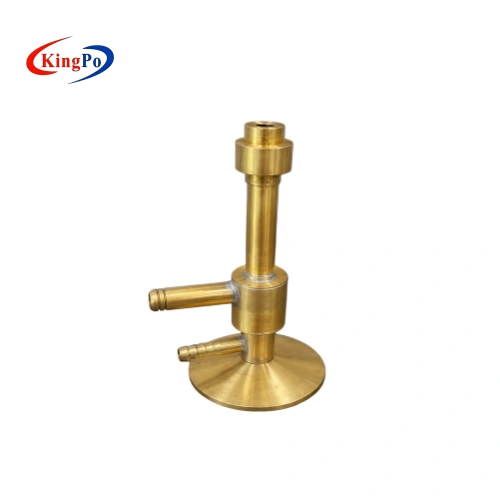
Burner Geometry: The burner’s internal diameter and manifold design must strictly adhere to IEC 60332 Annex requirements to prevent turbulence.
-
Copper Block Calibration: We establish a true technical baseline by recording the time taken for a 1.75g copper block to rise from 100°C to 700°C. This ensures the IEC 60332-1-2 Cable Flammability Test is performed with calibrated thermal power.
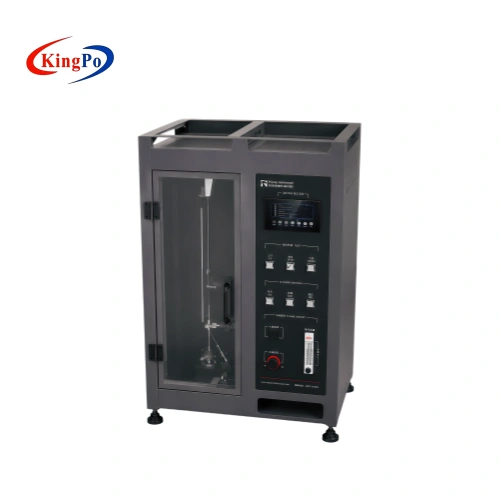
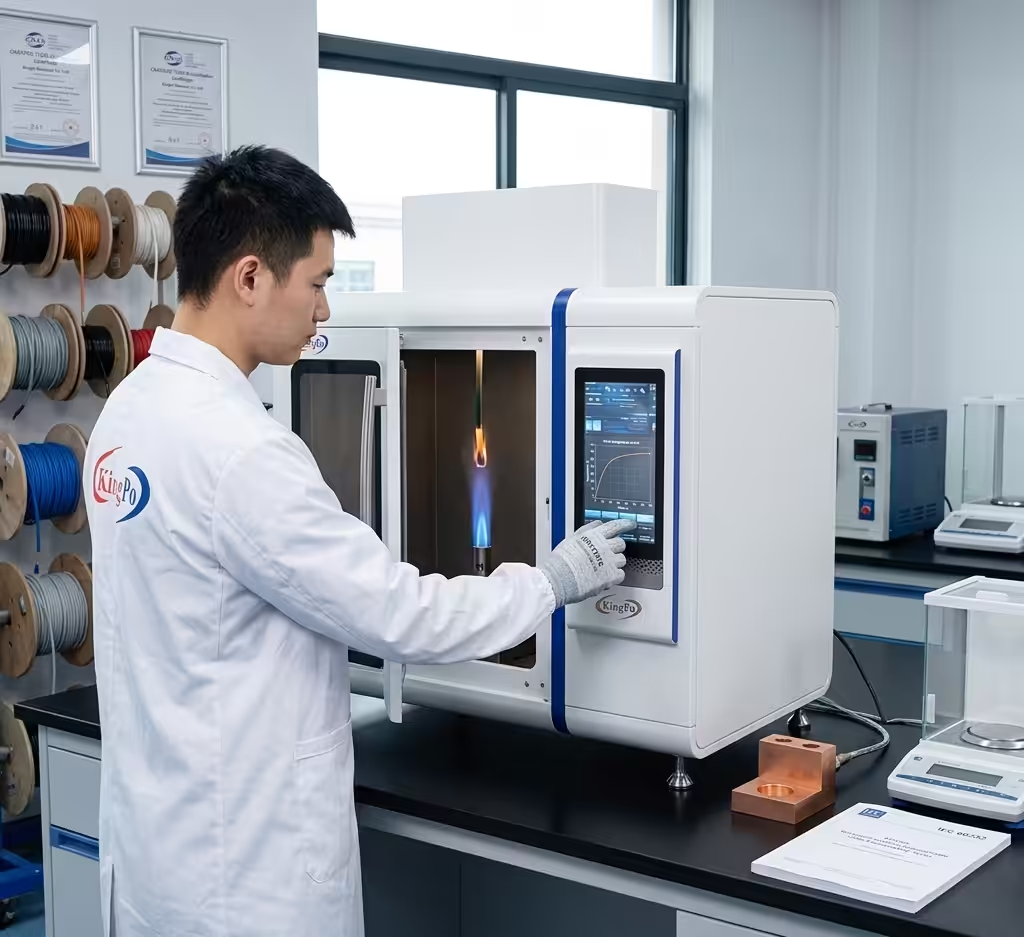
- The technical configuration of the IEC 60332 Series Flammability Testing Equipment is engineered to ensure every parameter exceeds standard requirements.
4. System Configuration & Benchmarking
| Technical Dimension | KingPo Expert-Grade Specification | Laboratory Significance |
| Test Accuracy | Optimized for IEC 60332-1-2 Cable Flammability Test | Ensures flame heat intensity aligns with standard physical models. |
| Flow Measurement | Digital Mass Flow Control (Accuracy ±1% F.S.) | Eliminates parallax errors inherent in manual rotameters. |
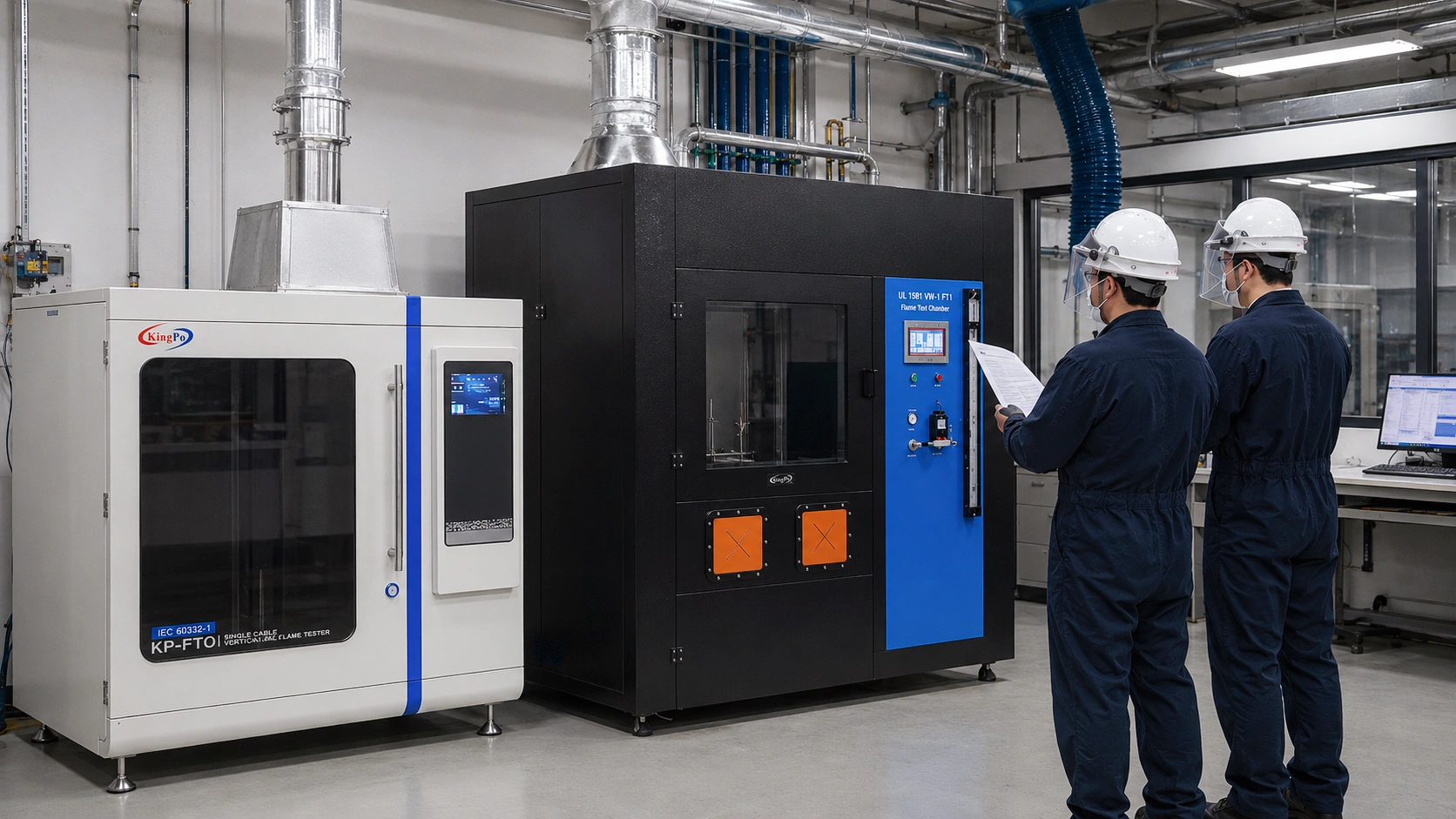
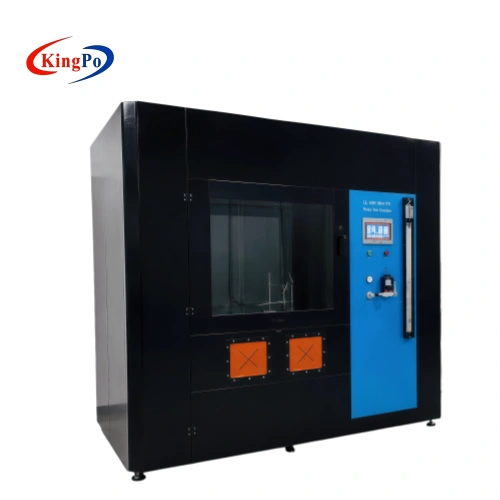
| Test Chamber | Double-layered Insulated Structure (> 4.0 m³) | Shields the flame from ambient air noise during the test. |
| Specimen Alignment | Vertical Automated Clamping Assembly | Guarantees geometric alignment between the specimen and flame. |
5. Laboratory Field Guide: Mitigating Error in Vertical Tests
Senior engineers performing the IEC 60332-1-2 Cable Flammability Test often look for subtle details that are frequently overlooked:
-
Residual Stress Relief: Over-tensioned specimens may crack prematurely when exposed to heat, leading to a failed IEC 60332-1-2 Cable Flammability Test.
-
Charring Boundary Determination: Using high-intensity localized lighting helps distinguish “smoke soot” from actual “surface carbonization” during the final measurement of the IEC 60332-1-2 Cable Flammability Test.
6. Global Compliance and Data Traceability
For cables entering EU or North American markets, a traceable IEC 60332-1-2 Cable Flammability Test report is essential. Our Cable Fire Safety Testing Solutions are designed with calibration accessibility as a priority, supporting third-party verification (such as CNAS or ISO 17025 agencies) and ensuring global compliance.
7. Conclusions and Future Evolution
As the industry moves toward Low Smoke Zero Halogen (LSZH) materials, the IEC 60332-1-2 Cable Flammability Test remains the cornerstone of safety evaluation. Precision control is no longer just about compliance—it is about using data feedback to optimize insulation formulations. KingPo remains committed to moving the benchmark of the IEC 60332-1-2 Cable Flammability Test from simply “meeting standards” to “exceeding precision.”
8.Our Customers’ Most Frequent Questions Regarding IEC 60332-1-2 Compliance
How does ambient wind speed impact the accuracy of the IEC 60332-1-2 Cable Flammability Test?
- Wind speed is a critical environmental variable. Even a slight draught (exceeding 0.2 m/s) can cause the 1kW flame to shift from its vertical axis. This prevents the flame from fully engulfing the cable specimen’s geometric center, leading to insufficient heat intake and inaccurate charring measurements. For this reason, the KingPo test chamber is designed with a draught-free, double-layered enclosure to ensure atmospheric stability.
Why is 99.5% electrolytic copper purity mandatory for flame calibration?
- The thermal conductivity and specific heat capacity of copper are highly sensitive to trace impurities. Electrolytic copper with 99.5% purity provides the only stable physical baseline for verifying the flame’s thermal power. By measuring the time (standardized at 45±5s) it takes for the copper block to rise from 100°C to 700°C, we ensure that the IEC 60332-1-2 Cable Flammability Test is performed under consistent heat flux conditions.
Does the IEC 60332-1-2 Cable Flammability Test apply to all types of cables?
- This standard specifically evaluates the flame spread characteristics of a single insulated wire or cable. While it is the industry benchmark for general fire safety, it does not reflect the hazard of cable bundles in a tray. For clustered installations, testing must be conducted according to the more stringent IEC 60332-3 series (Categories A through D).
How does the Mass Flow Controller (MFC) prevent “False Pass” results in laboratory testing?
- Traditional rotameters are prone to parallax errors and pressure fluctuations. If the propane-to-air ratio drifts, the flame’s blue-cone intensity weakens, which might result in a “False Pass” for a sub-standard cable. The KingPo integrated MFC automatically compensates for pressure changes, maintaining a precise flow of Propane (100±5ml/min) and Air (10±0.5L/min), ensuring that the IEC 60332-1-2 Cable Flammability Test is legally and technically sound.
Why does the test chamber require a minimum volume of 4.0 m³?
- Combustion is an oxygen-depleting process. A smaller chamber risks a “starved” environment where the oxygen levels drop during the test, which would artificially slow down the flame spread. The 4.0 m³ volume ensures a constant oxygen supply and prevents internal air turbulence—caused by the burner’s own heat—from interfering with the vertical flame alignment.
What is the significance of the “Charring Length” measurement in safety compliance?
- The charred extent (the distance between the lower edge of the top support and the start of carbonization) determines the cable’s self-extinguishing capability. If the charring exceeds the standardized limits (usually 475mm or reaching the support), it indicates that the material cannot sufficiently inhibit flame propagation, failing the IEC 60332-1-2 Cable Flammability Test requirements.
IEC 60332-1-2 Cable Flammability Test Technical Specifications PDF