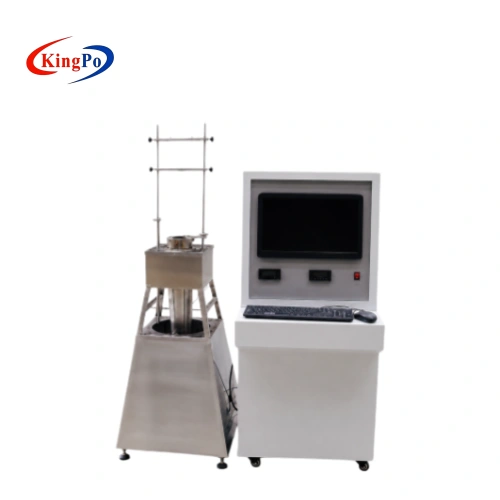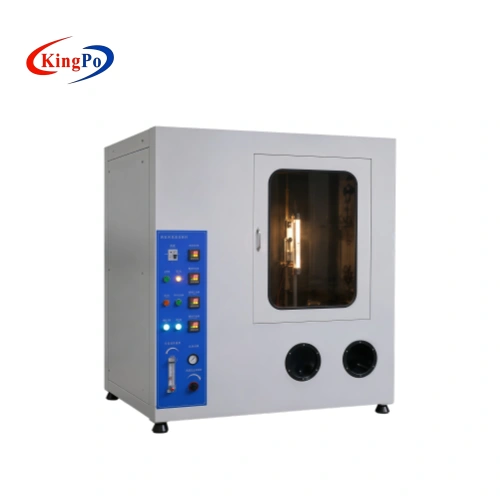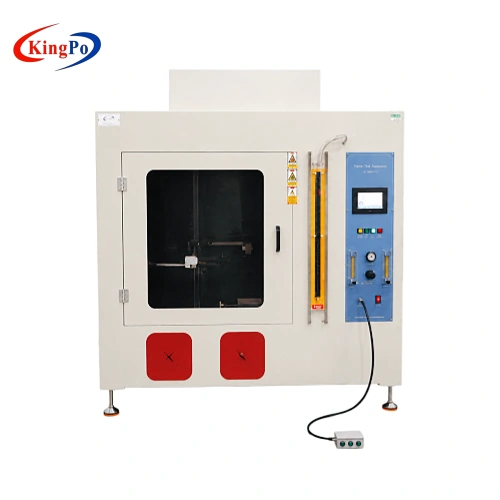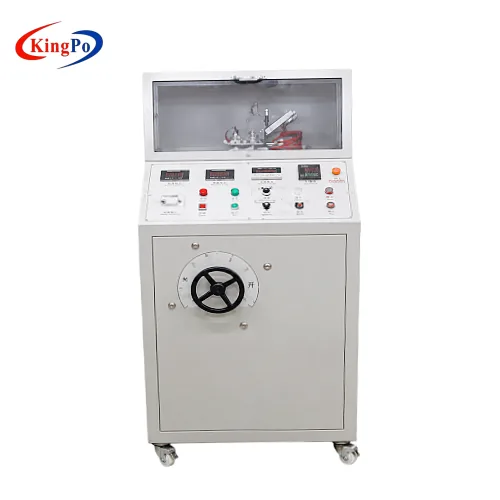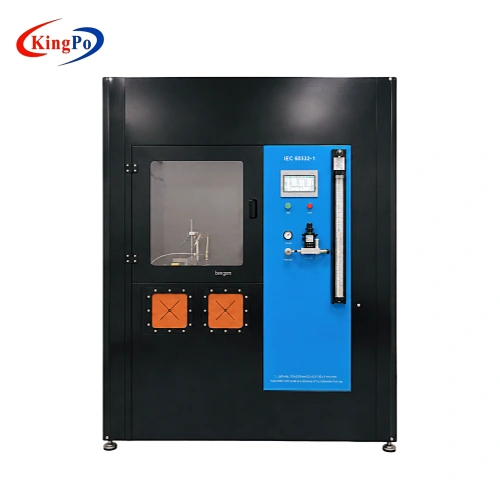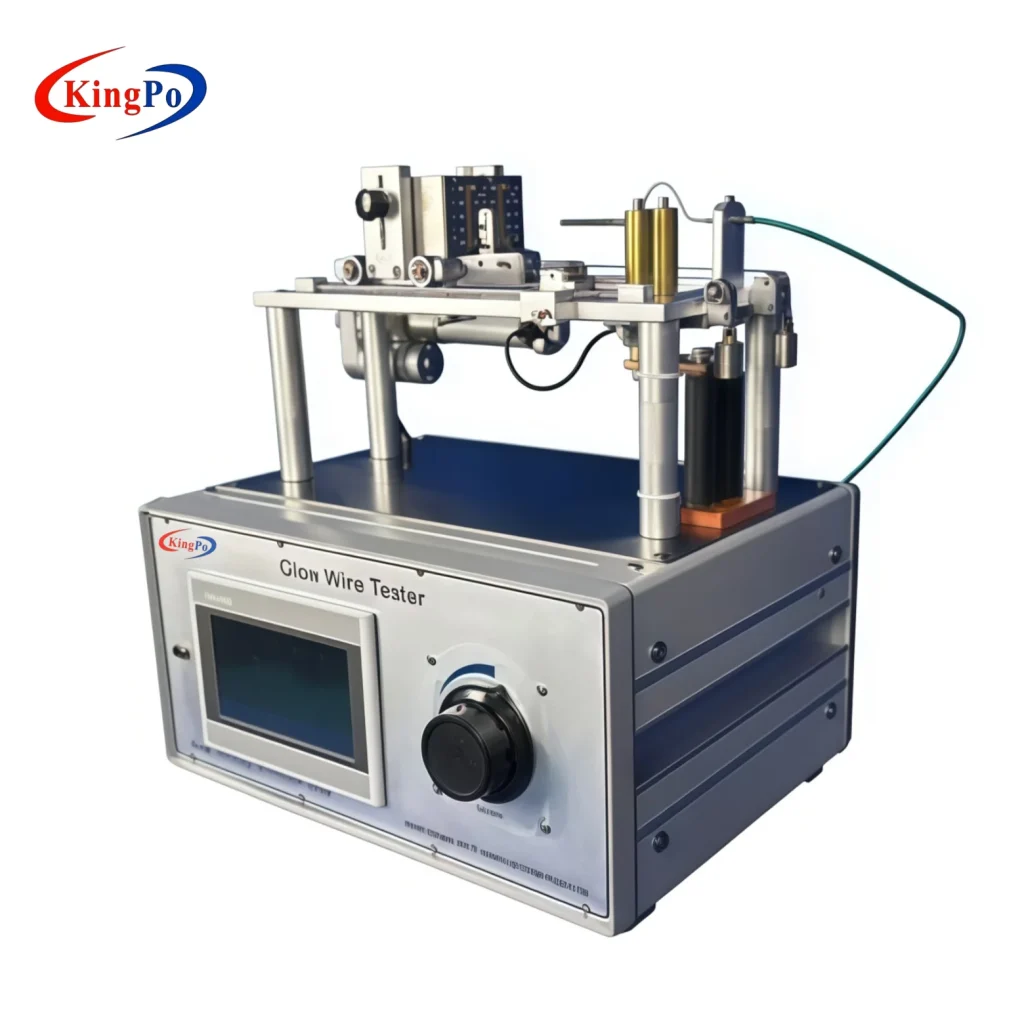
Thermal stress, fire resistance, and compliance standards drive your need for precise Application and Technical Analysis of Glow Wire Test Apparatus in Flame Retardancy Performance Testi. KINGPO empowers you to simulate real-world fire hazards by using a Glow Wire Test Apparatus that subjects plastic and polymer components to controlled ignition scenarios. You prepare test specimens, heat a wire to defined temperatures, and observe reactions with the Glow Wire Tester to evaluate flame spread, burn duration, and self-extinguishing properties. This approach ensures your products meet safety requirements in automotive, aviation, railway, and electrical sectors.
Key Takeaways
-
The KINGPO glow wire test apparatus simulates real-world fire hazards, helping you evaluate the flame retardancy of materials used in electrical and electronic products.
-
Precise control over test parameters, such as temperature and broil time, ensures reliable and repeatable fire safety evaluations.
-
Automated data logging reduces human error, streamlining the certification process and enhancing traceability of test results.
-
Consistent glow wire testing helps identify vulnerable materials before they reach the market, improving product safety and compliance.
-
The apparatus meets international safety standards, making it suitable for various industries, including automotive, aviation, and electrical manufacturing.
-
Using the KINGPO system can reduce annual testing costs by up to 30% through automation and efficient resource allocation.
-
The modular design of the apparatus allows for customizable testing, accommodating different materials and industry requirements.
-
Future advancements in glow wire testing technology will enhance accuracy and efficiency, supporting ongoing compliance and safety in product design.
KINGPO Glow Wire Test Apparatus: Application and Technical Analysis in Flame Retardancy Performance Testing
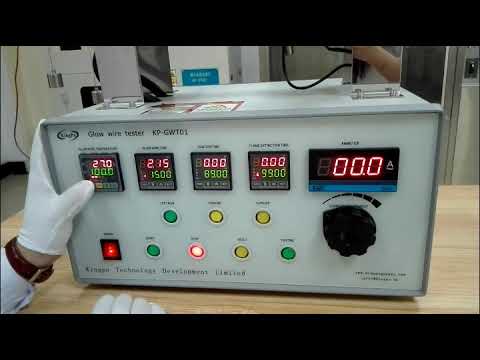
Abstract & Technical Summary:
Thermal stress simulation, flame retardancy, ignition temperature, compliance, and automated data logging define the core of Application and Technical Analysis of Glow Wire Test Apparatus in Flame Retardancy Performance Testing.
Role in Fire Safety Testing
You rely on the KINGPO glow wire test apparatus to deliver accurate and repeatable fire safety evaluations for electrical and electronic products. The apparatus simulates high-temperature contact scenarios, exposing materials to controlled ignition sources. This process allows you to assess the risk of fire initiation and propagation in real-world applications. The KINGPO system supports your efforts to prevent fire hazards by providing precise control over test parameters such as temperature, broil time, and specimen pressure.
Tip: Consistent fire safety testing with KINGPO equipment helps you identify vulnerable materials before they reach the market.
The following table summarizes the main technical features that set the KINGPO glow wire test apparatus apart from other flame retardancy testing equipment:
|
Feature |
Specification |
|---|---|
|
Glow wire temperature |
100~1000℃ ±2℃ adjustable |
|
Broil time |
0-999.9s ±0.1s adjustable |
|
Ignition time |
0-999.9s ±0.1s, automatic recording |
|
Smother time |
0-999.9s ±0.1s, automatic recording |
|
Thermocouple |
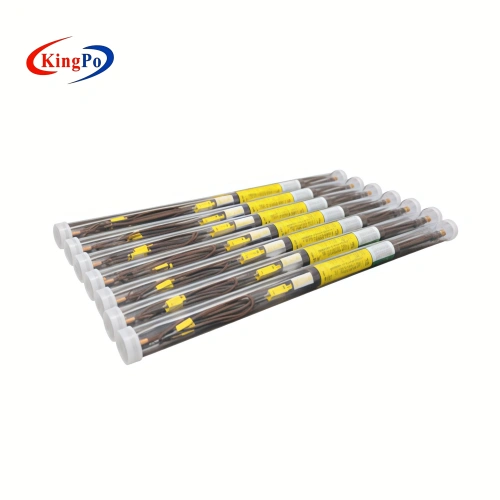
Φ1.0mm imported armour (K type) |
|
Glow wire |
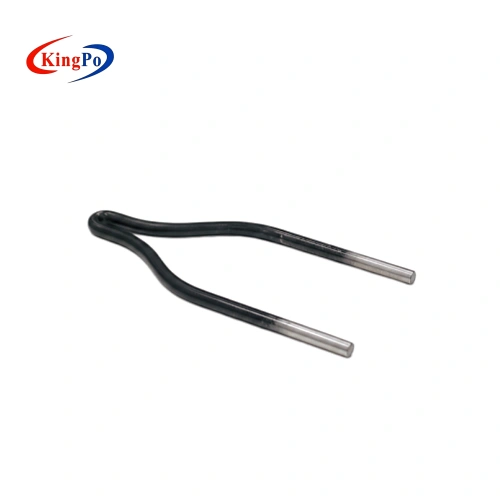
Φ4 mm chromel-filament (Ni80/Cr20) |
|
Broil depth |
7mm ±0.5mm |
|
Specimen pressure |
0.95N ±0.1N |
|
Test speed |
10 mm/s to 25 mm/s |
|
Control system |
Microcomputer touch screen + button |
|
Operation efficiency |
One-touch operation, fast and effective |
You can see how these features contribute to the Application and Technical Analysis of Glow Wire Test Apparatus in Flame Retardancy Performance Testing by ensuring reliable and efficient fire safety assessments.
Simulating Real-World Thermal Loads
The KINGPO glow wire test apparatus enables you to replicate thermal loads that materials may encounter during actual service conditions. You heat the glow wire to a precise temperature and apply it to the test specimen under controlled force and speed. This method simulates the effect of overheated components or accidental contact with hot elements.
The apparatus provides you with:
-
Adjustable glow wire temperatures from 100°C to 1000°C, allowing you to match specific application requirements.
-
Automated recording of ignition and smother times, reducing human error and increasing repeatability.
-
Microcomputer touch screen controls for efficient test setup and execution.
You benefit from Application and Technical Analysis of Glow Wire Test Apparatus in Flame Retardancy Performance Testing by gaining actionable data on material performance under thermal stress. This data supports your compliance with both domestic and international safety standards.
|
Feature |
Description |
|---|---|
|
Compliance |
Meets domestic and international safety standards |
|
Functionality |
Simulates high-temperature contact scenarios |
|
Benefits |
Accurate evaluations of material ignitability and flame retardancy |
|
Application |
Suitable for electrical and electronic products, household appliances, and plastic components |
Evaluating Polymer and Plastic Components
You use the KINGPO glow wire test apparatus to evaluate the flame retardancy of polymer and plastic components with a standardized and precise approach. The system measures critical parameters such as glow wire ignition temperature (GWIT) and glow wire flammability index (GWFI). These metrics help you determine whether a material will ignite, sustain burning, or self-extinguish after exposure to a heated wire.
Compared to traditional methods, the KINGPO apparatus offers several advantages:
-
Enhanced precision in testing results.
-
Automated data logging capabilities.
-
Compliance with multiple international standards, making it ideal for global certification.
You achieve more reliable Application and Technical Analysis of Glow Wire Test Apparatus in Flame Retardancy Performance Testing by leveraging these features. This approach ensures that your polymer and plastic components meet the highest safety and quality benchmarks.
Note: Automated data logging not only improves traceability but also streamlines your certification process.
Technical Principles and Standards
Abstract & Technical Summary:
Thermal stress, ignition simulation, compliance standards, flame spread, and material evaluation form the foundation of technical principles in glow wire testing.
Glow Wire Test Mechanism
Heating and Ignition Simulation
You use the glow wire test apparatus to simulate the thermal stress that glowing components exert on materials. The system heats a nichrome wire to a precise temperature, then applies it to your test sample under controlled conditions. This process allows you to assess ignitability and flammability by measuring ignition time and flame duration.
-
The glow wire test simulates high-temperature conditions that electrical overloads or faults can cause.
-
You replicate thermal stress on materials using a heated metal wire.
-
The test evaluates ignition characteristics and the potential for flame spread in materials.
Flame Spread and Self-Extinguishing
You observe how the material reacts after contact with the heated wire. The test involves heating a metal wire to temperatures between 550°C and 960°C. You apply the wire to the sample under specific pressure for 30 seconds. You monitor whether the material ignites or continues to burn, which helps you assess fire risk and self-extinguishing properties.
Note: You gain valuable insight into flame spread and self-extinguishing behavior, which supports safer product design.
Compliance with IEC, UL, EN, GB Standards
You must ensure your products meet global standards for flame retardancy. Each standard uses unique testing principles and evaluation systems. The following table compares key differences:
|
Standard |
Testing Principles |
Evaluation Systems |
Application Scenarios |
|---|---|---|---|
|
IEC |
Internal overheating faults |
GWFI and GWIT ratings |
Electrical products compliance |
|
UL |
Resistance to external flames |
Grades from HB to 5VA |
North American market compliance |
|
GB |
Adapted from IEC standards |
Similar to IEC, localized |
China electrical products compliance |
You select the appropriate standard based on your target market and product type. This ensures your Application and Technical Analysis of Glow Wire Test Apparatus in Flame Retardancy Performance Testing aligns with regulatory requirements.
Test Parameters and Procedures
You follow a structured process to conduct glow wire tests:
-
Prepare test specimens to specific dimensions, ensuring they are clean and dry.
-
Heat a nickel-chromium alloy wire to a temperature between 650°C and 960°C, depending on the material.
-
Expose the sample to the heated wire for 30 seconds to 2 minutes.
-
Observe the material’s reaction, including ignition, time to ignite, continued burning, and damage extent.
-
Evaluate results based on criteria that classify the material as non-flammable, flame-retardant, or flammable.
You assess the combustibility of electrical insulation and simulate real-world fire conditions. Testing temperatures range from 500°C to 960°C, depending on the standard.
Tip: Consistent procedures and accurate parameter control improve reliability and support certification.
You achieve precise Application and Technical Analysis of Glow Wire Test Apparatus in Flame Retardancy Performance Testing by following these technical principles and standards.
KINGPO Apparatus Features and Advantages
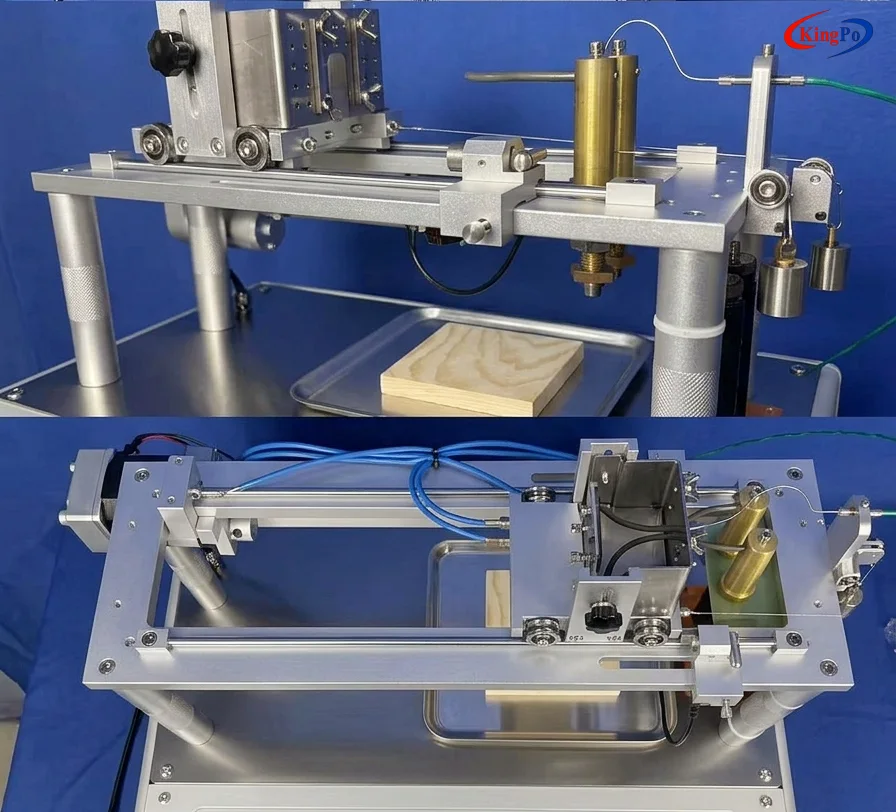
Abstract & Technical Summary:
Precision, temperature stability, automated data recording, modular design, and compliance drive the performance of KINGPO’s glow wire test apparatus.
Precision and Control
You depend on precise test conditions to achieve reliable results in flame retardancy performance testing. The KINGPO ZRS-3H Glow Wire Test Apparatus maintains a glow wire temperature of 960°C and a contact force of 1N. These features replicate essential test conditions and minimize variability. Automatic timing and recording functions reduce human error, ensuring your data remains accurate and repeatable. This level of control supports your Application and Technical Analysis of Glow Wire Test Apparatus in Flame Retardancy Performance Testing.
Temperature Stability
You monitor temperature stability throughout each test. The apparatus uses advanced sensors and microcomputer controls to keep the glow wire temperature within ±2°C of the set point. This stability ensures consistent ignition scenarios and allows you to compare results across multiple samples.
|
Parameter |
Specification |
|---|---|
|
Glow Wire Temperature |
100~1000°C ±2°C |
|
Temperature Control |
Microcomputer feedback |
|
Sensor Type |
K-type thermocouple |
Contact Force Accuracy
You rely on accurate contact force to prevent test inconsistencies. The KINGPO system applies a force of 0.95N ±0.1N, verified by precision load cells. This accuracy ensures that each specimen receives the same thermal stress, improving the reliability of your flame retardancy evaluations.
Tip: Consistent contact force eliminates variables that could affect ignition and flame spread results.
Intelligent Interface
You interact with an intuitive touch screen interface that streamlines test setup and execution. The system automates data recording and integrates safety features to protect both operators and specimens.
Automated Data Recording
You benefit from automated data logging. The apparatus records ignition time, smother time, and temperature profiles for each test. This feature enhances traceability and supports certification processes.
-
Automatic timing for ignition and smother events
-
Digital storage of test parameters and results
-
Easy export for compliance documentation
Safety Interlocks
You operate with confidence, knowing the apparatus includes safety interlocks. These features prevent accidental operation and protect you from high-temperature hazards.
Note: Safety interlocks ensure that the glow wire only activates when all protective barriers are in place.
Adaptability for Various Materials
You test a wide range of polymers, plastics, and electrical components. The KINGPO apparatus adapts to different sample sizes and material types.
Modular Design
You configure the apparatus for diverse testing needs. Modular components allow you to switch between test modes and accommodate various specimen shapes.
|
Feature |
Benefit |
|---|---|
|
Modular Fixtures |
Supports multiple sample types |
|
Quick Changeover |
Reduces downtime |
Customizable Settings
You adjust test parameters to match industry standards or specific product requirements. The system lets you set temperature, contact force, and timing for each test.
-
Customizable temperature range
-
Adjustable contact force
-
Flexible timing controls
Technical Advantages of KingPo
You gain access to over 26 years of independent R&D and one-stop testing solutions. KINGPO’s expertise ensures that you receive robust apparatus and technical support. Real-world case studies demonstrate successful flame retardancy testing in automotive, railway, and electrical sectors.
KINGPO’s legacy of innovation and practical experience strengthens your compliance and product safety outcomes.
Industry Applications
Abstract & Technical Summary:
Flame retardancy, compliance, material evaluation, ignition resistance, and safety certification drive industry applications of glow wire testing.
Automotive and Transportation
You rely on glow wire testing to enhance passenger safety and ensure compliance in automotive and transportation sectors. Manufacturers use this method to evaluate non-metallic components, such as interior plastics and dashboard assemblies. You test these materials for thermal stability and ignition resistance, simulating real-world scenarios like electrical faults or overheated wiring.
-
Automotive manufacturers conduct glow wire tests on non-metallic components to ensure passenger safety.
-
The LISUN Glow Wire Testing system (Model ZRS-3H) is used for evaluating the thermal stability of materials in vehicles.
-
A supplier enhanced vehicle safety by ensuring that interior plastics met safety standards through glow wire testing.
You benefit from precise test parameters and automated data recording, which help you identify materials that self-extinguish and prevent flame spread. This process supports your efforts to meet regulatory requirements and protect passengers from fire hazards.
Tip: Consistent glow wire testing reduces the risk of fire-related recalls and strengthens your brand reputation.
Electrical and Electronic Manufacturing
You use glow wire testing to ensure that electrical and electronic products meet stringent safety standards. This method evaluates the ignition resistance of household appliances, consumer electronics, and electrical components. You test switches, sockets, and circuit boards to prevent arcing or resistive heating from causing flames.
-
Household Appliances and Consumer Electronics: Ensures that products like food processors and hair dryers resist ignition from faulty heating elements.
-
Electrical Components: Tests switches and sockets to prevent arcing or resistive heating from causing flames.
-
Automotive Electronics: Evaluates components like battery management systems to ensure safety in high-current circuits.
Glow wire testing is vital for meeting legal requirements and ensuring that electrical and electronic equipment complies with various safety standards. This compliance is essential for product certification and market access, assuring both regulatory agencies and consumers of the safety of the products.
-
Glow wire testing helps determine how well materials withstand fire during the design phase.
-
Manufacturers can select fire-resistant materials to enhance product safety.
-
Compliance with applicable safety standards is achieved through glow wire testing.
You gain actionable data that guides material selection and supports certification. Automated test procedures and digital data logging streamline your workflow and improve traceability.
Note: Glow wire testing is a key step in achieving global certification for electrical and electronic products.
Aviation and Defense
You apply glow wire testing to critical components in aviation and defense applications. Aircraft interiors, wiring harnesses, and control panels require materials that resist ignition and self-extinguish rapidly. You test polymers and composites under simulated thermal stress to ensure they meet strict safety and compliance standards.
Glow wire testing helps you evaluate the fire resistance of materials used in cockpit assemblies, cabin panels, and military equipment. You rely on precise temperature control and automated data recording to verify that these materials protect personnel and assets in high-risk environments.
|
Application Area |
Test Focus |
Safety Outcome |
|---|---|---|
|
Aircraft Interiors |
Ignition resistance |
Enhanced passenger safety |
|
Wiring Harnesses |
Flame spread prevention |
Reduced fire propagation |
|
Military Equipment |
Self-extinguishing behavior |
Asset protection |
You strengthen your compliance with aviation and defense regulations by integrating glow wire testing into your quality assurance process.
Tip: Early detection of flammable materials reduces risk and supports mission-critical safety objectives.
Railway Equipment
Abstract & Technical Summary:
Flame retardancy, compliance, risk mitigation, ignition resistance, and safety certification define your approach to glow wire testing in railway equipment.
You face strict safety requirements when you design and manufacture railway equipment. Fire hazards in trains can lead to catastrophic losses. You must ensure that all non-metallic components, such as control panels, cable ducts, and interior fittings, resist ignition and limit flame spread. Glow wire testing provides you with a reliable method to evaluate these risks and comply with international railway standards.
You use the KINGPO glow wire test apparatus to simulate thermal stress on materials that may come into contact with overheated electrical parts. The apparatus helps you assess whether a component will ignite, sustain burning, or self-extinguish. This process supports your compliance with standards like EN 45545 and NF F 16-101, which set the benchmark for fire safety in railway applications.
The following table summarizes key test designations and their descriptions for railway equipment:
|
Test Designation |
Description |
|---|---|
|
EN 45545 / NF F 16-101 / STM-S-001 |
Required tests for R25/Classification INF EN 60695-2-11 Glow wire test |
|
|
Tests according to ITC PNL criterion of R22 requirement (STM-S-001) and classification test F NF X 70-100 Gas analysis |
|
|
Complementary test classification F (2/2) NF X 10-702 Determination of smoke opacity |
You follow these test protocols to ensure that your products meet both flame retardancy and smoke emission requirements. You also evaluate smoke opacity, which is critical for passenger evacuation during emergencies.
Vincent Laborde explains that the biggest risk for Leroy Automation, in case of the parameters not being respected, would be a short circuit on one of its products. In case of fire, the product must be able to contain the fire.
You understand that non-compliance with EN 45545-2 exposes your company to significant financial and legal risks. If a product fails to meet the standard and causes a fire, you bear responsibility for damages. The cost of a single train can reach several million euros, making compliance essential for your business continuity.
-
You protect your company from liability by ensuring all components pass glow wire testing.
-
You reduce the risk of recalls and costly litigation.
-
You enhance your reputation by delivering safe, certified railway equipment.
You rely on precise test parameters, automated data logging, and robust apparatus design to achieve consistent results. Glow wire testing with KINGPO equipment gives you confidence that your railway products will perform safely under real-world conditions.
Tip: Consistent glow wire testing not only supports compliance but also strengthens your position in the competitive railway market.
Value and Impact
Abstract & Technical Summary:
Product safety, compliance, certification, flame retardancy, and cost efficiency define the value and impact of KINGPO’s glow wire test apparatus in your quality assurance process.
Enhancing Product Safety
You improve product safety by using KINGPO’s glow wire test apparatus. The system allows you to identify flammable materials before they reach the market. You simulate real-world ignition scenarios and measure how materials respond to thermal stress. This process helps you select safer polymers and plastics for your designs.
You gain confidence in your products by relying on precise test parameters. The apparatus records ignition time, flame duration, and self-extinguishing behavior. You use this data to make informed decisions about material selection and product design.
Tip: Early detection of fire risks reduces the chance of recalls and protects your brand reputation.
The following table shows how glow wire testing impacts product safety across different industries:
|
Industry |
Safety Focus |
Glow Wire Test Outcome |
|---|---|---|
|
Automotive |
Passenger protection |
Reduced interior fire risk |
|
Electrical |
Appliance safety |
Lower ignition probability |
|
Railway |
Passenger evacuation safety |
Improved self-extinguishing |
|
Aviation |
Asset and crew protection |
Minimized flame propagation |
Compliance Assurance
You ensure compliance with international and regional safety standards by integrating glow wire testing into your workflow. The KINGPO apparatus supports IEC, UL, EN, and GB standards. You can adjust test parameters to match the requirements of each market.
You avoid costly delays and regulatory issues by verifying that your products meet all necessary certifications. Automated data logging provides you with traceable records for audits and inspections. You demonstrate due diligence and commitment to safety.
Note: Consistent compliance testing strengthens your position in global markets.
A typical compliance workflow includes:
-
Preparing test specimens according to standard dimensions.
-
Setting test parameters based on target regulations.
-
Running glow wire tests and recording results.
-
Reviewing data for pass/fail criteria.
-
Compiling reports for certification bodies.
Supporting Certification
You streamline the certification process with KINGPO’s automated features. The apparatus generates detailed test reports that you can submit directly to certification agencies. You reduce manual paperwork and minimize the risk of errors.
You benefit from digital storage and easy export of test data. This capability speeds up the approval process and helps you bring products to market faster. Certification bodies recognize the reliability of KINGPO’s test results.
Alert: Reliable documentation is essential for successful certification and market access.
You support your business goals by ensuring that every product meets the highest safety and quality standards.
Cost Efficiency
Abstract & Technical Summary:
Automation, process optimization, resource allocation, operational savings, and risk mitigation define your approach to cost efficiency with KINGPO’s glow wire test apparatus.
You want to maximize your testing budget while maintaining high safety standards. KINGPO’s glow wire test apparatus helps you achieve this goal by reducing manual labor, minimizing retesting, and streamlining certification. You benefit from automated data logging and precise parameter control, which cut down on operator time and eliminate costly errors.
You can see the cost advantages clearly when you compare traditional manual testing with KINGPO’s automated system:
|
Cost Factor |
Traditional Testing |
KINGPO Glow Wire Test Apparatus |
|---|---|---|
|
Operator Labor Hours |
High (4-6 hrs/test batch) |
Low (1-2 hrs/test batch) |
|
Retesting Rate |
15-20% |
<5% |
|
Certification Preparation |
Manual, time-consuming |
Automated, fast |
|
Error Correction |
Frequent |
Rare |
|
Consumables Usage |
High |
Optimized |
|
Annual Testing Cost |
$50,000+ |
$30,000–$35,000 |
You reduce your annual testing expenses by up to 30% when you switch to KINGPO’s apparatus. Automated features help you avoid unnecessary retesting and wasted materials. You also save on labor costs because the system requires less operator intervention.
Tip: Automated data logging and digital reporting reduce paperwork and speed up your certification process.
You gain further savings by preventing product recalls and warranty claims. Early detection of flammable materials means you can address risks before products reach the market. This proactive approach protects your brand and avoids the high costs of post-market failures.
You also benefit from efficient resource allocation. The apparatus allows you to test more samples in less time, which increases your laboratory throughput. You can allocate your technical staff to higher-value tasks, such as data analysis and process improvement.
A typical cost-efficient test flow with KINGPO’s system looks like this:
-
Prepare and load multiple specimens.
-
Set parameters using the touch screen interface.
-
Run automated tests with minimal supervision.
-
Export digital reports for certification.
-
Review results and optimize material selection.
You achieve measurable cost efficiency by integrating KINGPO’s glow wire test apparatus into your workflow. The system delivers reliable results, reduces operational expenses, and supports your business growth.
Note: Cost efficiency does not mean compromising on safety or compliance. KINGPO’s apparatus ensures you meet all regulatory requirements while optimizing your budget.
Future Developments
Abstract & Technical Summary:
Precision, automation, digital integration, compliance, and flame retardancy drive the next generation of glow wire testing technology.
Advancements in Glow Wire Testing
You will see significant progress in glow wire testing as manufacturers demand higher accuracy and reliability. The LISUN ZRS-3H apparatus now replicates high-temperature glowing contact scenarios with unmatched precision. This advancement ensures your products meet strict international standards and supports robust safety design. The future of glow wire testing points toward even greater intelligence. You can expect systems that leverage IoT connectivity and big data analytics to optimize testing efficiency and traceability. These improvements will help you streamline compliance certification and enhance product safety.
|
Feature |
Current Capability |
Future Trend |
|---|---|---|
|
Temperature Control |
±2°C accuracy |
Real-time adaptive feedback |
|
Data Logging |
Automated, local storage |
Cloud-based, big data integration |
|
Test Scenario Simulation |
Standardized conditions |
Customizable, AI-driven scenarios |
|
Compliance Reporting |
Manual export |
Instant, automated certification |
Integration with Digital Systems
The integration of cutting-edge equipment and data-analysis methods can enhance the accuracy and efficiency of Glow Wire Testing.
You benefit from digital system integration as it transforms how you conduct and manage flame retardancy tests. Modern glow wire testers now feature intelligent interfaces, automated data capture, and seamless connectivity with laboratory information management systems (LIMS). You can monitor tests remotely, analyze results in real time, and generate compliance reports with a single click. Digital integration reduces manual errors and accelerates your workflow. As you adopt these technologies, you gain a competitive edge in both speed and reliability.
KINGPO Innovation
You can rely on KINGPO to lead the way in glow wire testing innovation. KINGPO invests in research and development to deliver apparatus with advanced automation, modular design, and user-friendly interfaces. The latest KINGPO systems support customizable test parameters, multi-sample workflows, and enhanced safety features. You will soon see KINGPO integrating IoT modules and AI-driven analytics, allowing you to predict material performance and optimize product design before physical testing. KINGPO’s commitment to continuous improvement ensures you always have access to the most advanced, compliant, and efficient glow wire testing solutions.
Tip: Stay updated with KINGPO’s product releases to leverage the latest advancements in flame retardancy testing.
You gain a competitive edge with KINGPO’s glow wire test apparatus, which delivers precise ignition measurements and supports compliance with IEC 60695-2-12 and IEC 60695-2-13 standards.
|
Standard |
Description |
|---|---|
|
IEC 60695-2-12 |
Assesses flammability of materials (GWFI) |
|
IEC 60695-2-13 |
Evaluates flammability of materials (GWIT) |
You improve safety, reliability, and certification outcomes across industries. As regulations grow stricter and new materials emerge, you benefit from KINGPO’s ongoing innovation and advanced automation. Invest in skilled teams and digital solutions to ensure your products meet tomorrow’s fire safety challenges.
FAQ
What is the main purpose of glow wire testing?
Glow wire testing helps you evaluate the fire resistance of materials used in electrical and electronic products. You simulate thermal stress and measure ignition, flame spread, and self-extinguishing properties.
How do you prepare specimens for glow wire tests?
You cut specimens to standard dimensions, clean them, and ensure they are dry. You follow the guidelines for each industry standard to achieve accurate results.
Why might a material fail the glow wire test?
A material fails if it ignites easily, sustains burning, or does not self-extinguish within the required time. You must select materials with proven flame retardancy.
Which standards apply to glow wire testing?
You follow IEC, UL, EN, and GB standards. Each standard specifies test parameters, evaluation criteria, and reporting requirements for compliance.
How do you interpret glow wire test results?
You review ignition time, flame duration, and self-extinguishing behavior. You compare these results against standard thresholds to determine pass or fail.
What are common reasons for inconsistent test results?
You may see inconsistencies due to improper specimen preparation, inaccurate temperature control, or incorrect contact force. You must calibrate equipment regularly.
How can you optimize the Application and Technical Analysis of Glow Wire Test Apparatus in Flame Retardancy Performance Testing?
You use automated data logging, precise parameter control, and modular apparatus design. You review test flows and compare data to improve reliability.
Are there updates to glow wire testing standards?
You should monitor regulatory bodies for updates. Standards evolve to address new materials, safety requirements, and testing technologies.
What safety precautions should you follow during glow wire testing?
You wear protective gear, use safety interlocks, and ensure all barriers are in place before starting tests. You follow laboratory safety protocols.
How do you troubleshoot apparatus errors during testing?
You check sensor calibration, review software settings, and inspect mechanical components. You consult technical support if issues persist.
Tip: Regular maintenance and calibration help you achieve consistent results and reliable Application and Technical Analysis of Glow Wire Test Apparatus in Flame Retardancy Performance Testing.
|
Issue |
Solution |
|---|---|
|
Temperature drift |
Recalibrate sensors |
|
Data logging errors |
Update software |
|
Contact force issues |
Inspect load cells |