The glow wire test is a fire-hazard test method used to evaluate how electrical insulating materials, components and end products respond to localized abnormal heat. The IEC 60695 glow-wire series covers the common test procedure, end-product testing, Glow Wire Flammability Index (GWFI) and Glow Wire Ignition Temperature (GWIT). This guide explains the standards, test sequence, observations, result interpretation and practical factors that affect test repeatability.
What Is the Glow Wire Test?
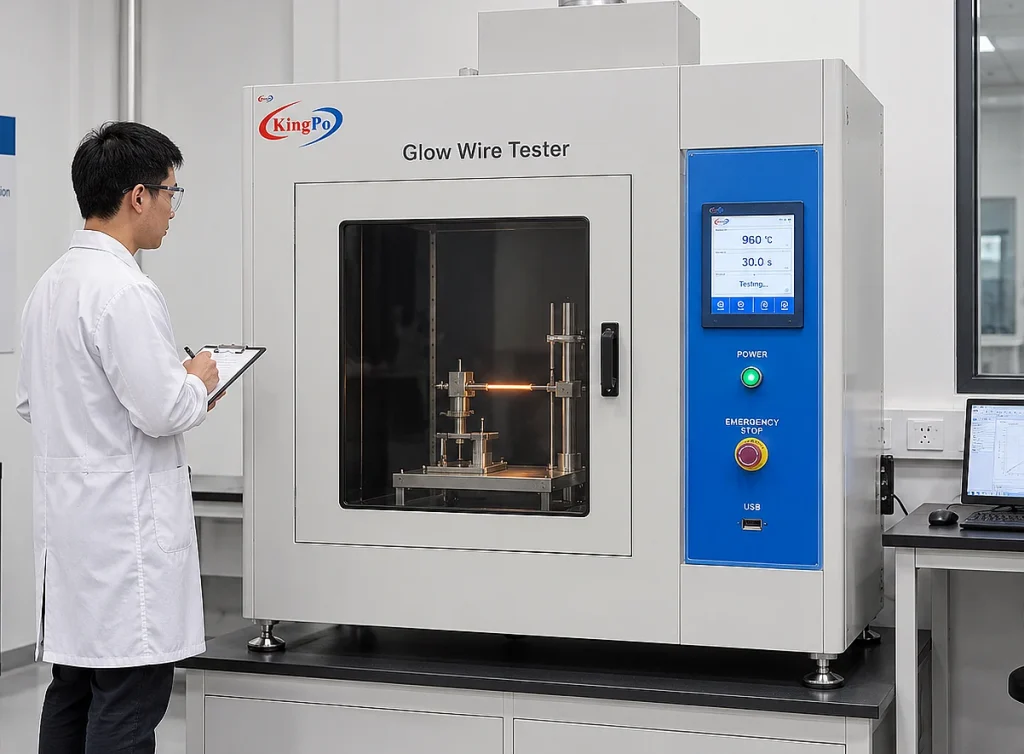
The glow wire test is designed to reproduce a specific type of fire hazard found inside electrical and electronic products: localized heating caused by an overheated component, poor electrical connection, overloaded resistor or another hot part located close to combustible or insulating material.
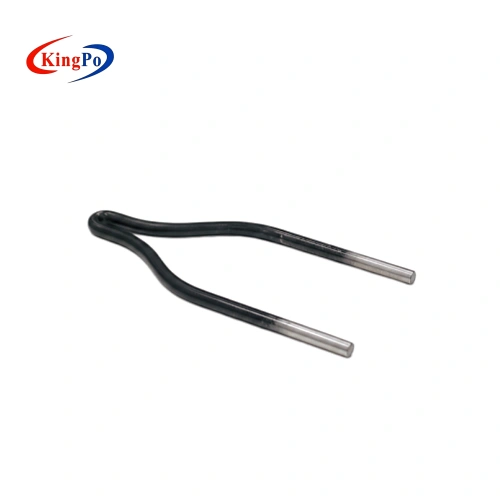
Instead of applying an open flame directly to the specimen, the method uses a standardized electrically heated glow wire. The heated element contacts the test specimen under controlled conditions while the operator observes whether ignition occurs, how the flame or glowing combustion develops, whether the specimen self-extinguishes and whether burning or molten material can ignite the specified layer below.
This makes the method particularly relevant to insulating plastics, connectors, terminal blocks, switches, appliance components, lighting products, power supplies, enclosures and other parts that may be exposed to abnormal heat during a foreseeable fault condition.
Why Glow Wire Testing Matters
Electrical fire hazards do not always begin with an external flame. In many cases, the initiating source is a hot internal component or electrical connection. A material that performs acceptably under normal operating temperature may behave very differently when exposed to concentrated thermal stress.
Glow-wire testing therefore gives designers, manufacturers and laboratories a controlled way to evaluate ignition resistance and flame propagation behaviour under this type of fault condition.
| Who Uses the Test? | Typical Purpose |
|---|---|
| Product manufacturers | Material selection, design verification and pre-compliance testing |
| Material suppliers | GWFI and GWIT characterization of insulating or combustible materials |
| Testing laboratories | Repeatable testing against IEC and product-standard requirements |
| R&D and quality teams | Failure analysis, design comparison and routine quality control |
How the IEC 60695 Glow-Wire Standards Fit Together
A common source of confusion is that “the glow wire test” is not represented by only one IEC document. Different parts of the IEC 60695-2 series define the common apparatus and procedure, end-product testing and material-level flammability or ignition evaluations.
| Standard | Main Role | Typical Test Object |
|---|---|---|
| IEC 60695-2-10:2026 | Glow-wire apparatus and common test procedure | Common foundation for related glow-wire methods |
| IEC 60695-2-11:2021 | Glow-wire flammability test method for end products (GWEPT) | Finished products, parts or assemblies |
| IEC 60695-2-12:2021 | Glow Wire Flammability Index (GWFI) | Solid electrical insulating or other solid materials |
| IEC 60695-2-13:2021 | Glow Wire Ignition Temperature (GWIT) | Solid electrical insulating or other solid materials |
IEC 60695-2-10: Common Apparatus and Procedure
IEC 60695-2-10 establishes the common technical basis for glow-wire testing, including the heated element, temperature measurement and the general test procedure used by the related methods.
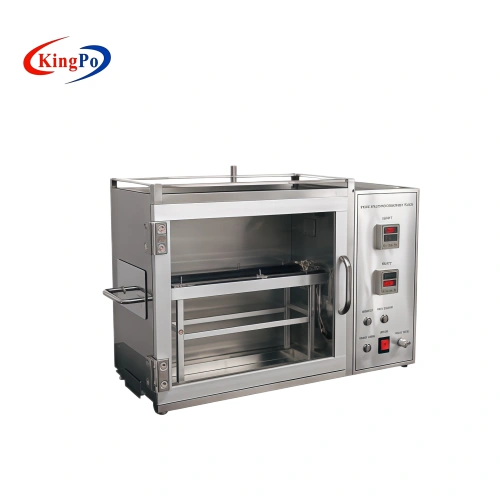
For laboratories establishing or updating this capability, an IEC 60695-2-10 Glow Wire Tester should be evaluated against the actual test methods, specimen types and product standards that the laboratory intends to support rather than against temperature range alone.
IEC 60695-2-11: GWEPT for End Products
IEC 60695-2-11 is concerned with an end product exposed to an electrically heated source. The purpose is to determine whether the product has a limited ability to ignite or, if ignition occurs, a limited ability to propagate flame under the specified test conditions.
This differs from testing a standardized material specimen. Product geometry, test-point selection and specimen mounting can therefore become important practical considerations.
IEC 60695-2-12: GWFI
GWFI — Glow Wire Flammability Index — is a material property determined through a standardized series of tests. It is primarily concerned with whether the material resists ignition or, if ignition occurs, extinguishes within the prescribed conditions without unacceptable burning behaviour.
IEC 60695-2-13: GWIT
GWIT — Glow Wire Ignition Temperature — evaluates the ignition tendency of a material under glow-wire exposure. It can be used together with other material data when selecting insulating materials for applications with defined fire-hazard requirements.
GWFI vs GWIT vs GWEPT
| Term | What It Evaluates | Practical Meaning |
|---|---|---|
| GWFI | Material flammability performance | How the material behaves after exposure to the heated glow wire |
| GWIT | Material ignition tendency | The temperature associated with defined ignition behaviour |
| GWEPT | End-product fire behaviour | How the finished product or component behaves at the selected test point |
Engineering Note
GWFI and GWIT values should not be treated as interchangeable with an end-product result. Material data can support design and material selection, but the applicable product standard ultimately determines which test method and acceptance criteria are required.
How to Prepare for a Glow Wire Test
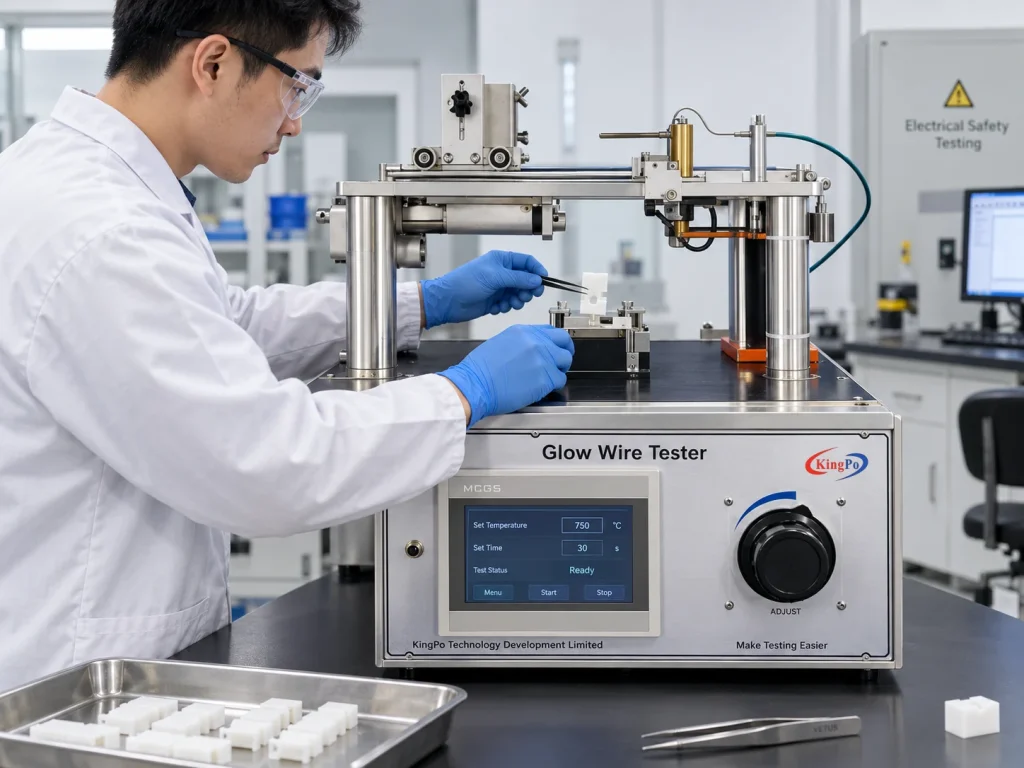
Good repeatability begins before the heated element reaches the specimen. The laboratory should first identify the applicable product or material standard and confirm the required specimen condition, test temperature, test point and acceptance criteria.
Specimen conditioning is also important. Moisture content, storage conditions and material history can influence ignition and flame behaviour, particularly when comparing different batches or materials.
Before testing, operators should check the condition of the glow wire, temperature-measurement system, specimen holder, contact mechanism, timing functions and test area. The enclosure should be clean, and uncontrolled airflow should not interfere with flame observation.
Basic Glow Wire Test Procedure
Identify whether the requirement concerns an end-product test, GWFI evaluation, GWIT evaluation or another method referenced by the relevant product standard.
Use the specimen geometry, orientation and conditioning conditions required by the applicable standard.
Verify the condition of the glow wire, temperature-measurement system, specimen mounting and contact mechanism before starting the test.
Bring the glow wire to the specified test temperature and confirm that the required thermal condition has been reached before specimen contact.
Bring the specimen and heated element into contact under the required force, movement and exposure conditions.
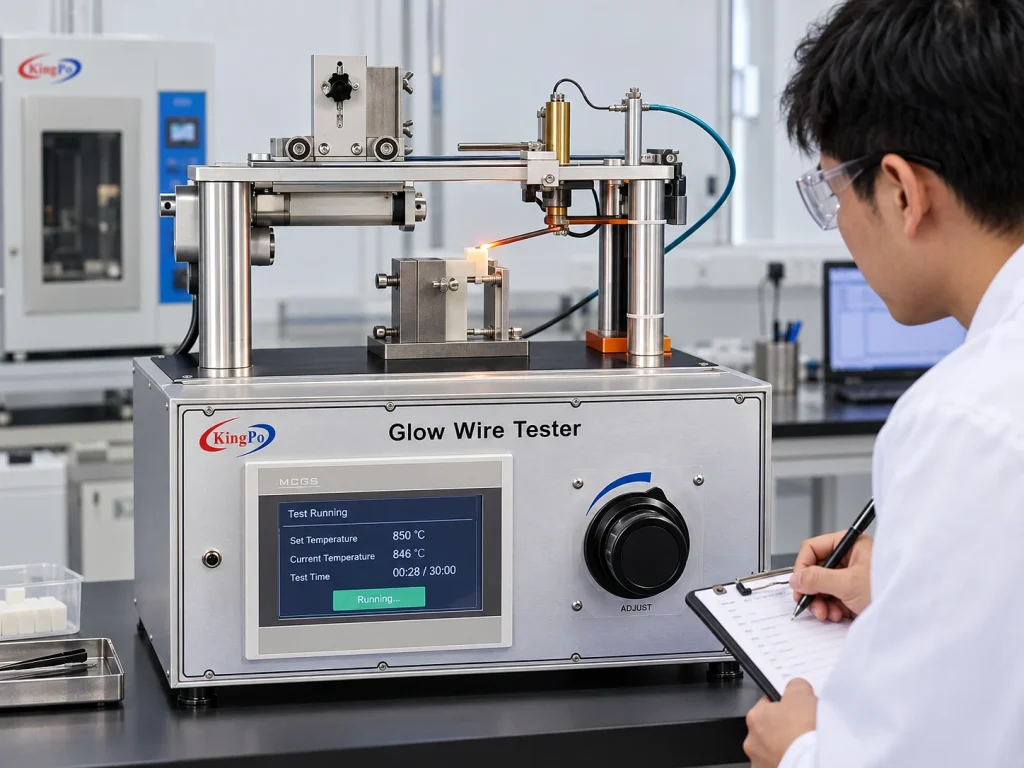
Record ignition, flaming, glowing combustion, extinguishing behaviour, dripping or molten material and the response of the specified layer below.
Document the test conditions and observations, then apply the acceptance criteria of the relevant IEC or product standard.
How Should Glow Wire Test Results Be Interpreted?
A visible flame does not automatically mean that every glow-wire test has failed. The correct evaluation depends on the applicable method and its acceptance criteria.
Useful observations typically include whether ignition occurs, ignition duration, flame or glowing-combustion duration, self-extinguishing behaviour, specimen consumption, molten or burning drops and whether the specified layer beneath the specimen ignites.
Engineers should therefore avoid reducing the result to a simple “flame/no flame” observation. The test record should capture the complete behaviour needed to support the required evaluation.
Test Conditions That Affect Glow Wire Test Repeatability
When two laboratories obtain different results from nominally identical specimens, the cause is not necessarily the material itself. Several parts of the test setup and procedure can influence heat transfer and flame behaviour.
1. Glow-Wire Temperature and Measurement
The test temperature must be established and verified correctly. Temperature measurement errors, insufficient stabilization or changes in the condition of the temperature-measurement system can produce inconsistent thermal exposure.
2. Condition of the Glow Wire
Oxidation, deformation, contamination or wear can alter the way the heated element contacts and transfers energy to the specimen. Inspection and maintenance should therefore form part of normal laboratory practice.
3. Contact Force and Movement
The mechanical interaction between the specimen and the glow wire affects the contact condition and heat transfer. Excessive or insufficient force, inconsistent approach movement or incorrect penetration can reduce repeatability.
4. Specimen Positioning
The selected test point, specimen orientation and fixture stability matter, particularly for molded parts and end products with complex geometry.
5. Timing and Operator Observation
Accurate timing is important when evaluating ignition and extinguishing behaviour. Operators must also have an unobstructed view of the specimen and understand which events need to be recorded.
6. Airflow and Test Environment
Strong drafts can alter flame behaviour and cooling. The test area should therefore provide the controlled environment required by the applicable procedure while also allowing safe removal of smoke and fumes after testing.
A properly configured Glow Wire Test Apparatus helps control the thermal, mechanical and timing conditions that contribute to repeatable IEC 60695 testing, but equipment control does not replace correct specimen preparation and operator procedure.
Common Mistakes in Glow Wire Testing
Testing the Wrong Standard or Test Method
The first error often occurs before testing begins. An engineer may refer generally to “IEC 60695” without confirming whether the requirement relates to GWEPT, GWFI, GWIT or a product-specific test condition.
Insufficient Specimen Conditioning
Differences in moisture content or storage conditions can influence material behaviour. Conditioning requirements should not be treated as an administrative detail.
Starting Before Temperature Stabilization
Beginning the exposure while the heated element is still settling can introduce unnecessary variation between tests.
Incorrect Specimen Positioning
A small change in the test point or orientation can change heat transfer, especially on ribs, thin walls, terminals and molded structures.
Ignoring Glow-Wire Condition
Residue, oxidation and deformation can accumulate gradually. A system that appears to be functioning normally can still produce poor repeatability if the working element is not inspected and maintained.
Incomplete Test Records
A useful report should make it possible to understand how the test was performed. Test temperature, specimen information, conditioning, observations and relevant equipment or calibration status should be recorded according to the laboratory’s quality procedure.
Glow Wire Test vs Needle Flame Test vs UL 94
| Method | Heat / Ignition Source | Main Purpose |
|---|---|---|
| Glow Wire Test | Electrically heated solid element | Simulates localized abnormal heating inside electrical products |
| Needle Flame Test | Small open flame | Evaluates response to a localized small-flame ignition source |
| UL 94 | Defined flame exposure | Classifies burning behaviour of plastic materials under specified tests |
These methods evaluate different fire-hazard scenarios and should not be treated as direct substitutes. The applicable product standard, material application and hazard analysis determine which method is required.
Frequently Asked Questions
What is the purpose of the glow wire test?
It evaluates how electrical insulating materials, components or end products respond when exposed to localized abnormal heat similar to that produced by an overheated electrical part or connection.
Which IEC standard defines the glow-wire apparatus?
IEC 60695-2-10 specifies the common glow-wire apparatus and test procedure. Related parts of the IEC 60695-2 series address end-product testing, GWFI and GWIT.
What is the difference between IEC 60695-2-10 and IEC 60695-2-11?
IEC 60695-2-10 provides the common apparatus and procedural foundation, while IEC 60695-2-11 defines the glow-wire flammability test method for end products.
What is GWFI?
GWFI means Glow Wire Flammability Index. It describes material flammability performance under the specified glow-wire procedure and is used as one input in material evaluation and preselection.
What is GWIT?
GWIT means Glow Wire Ignition Temperature. It characterizes ignition behaviour of a material when exposed to the glow wire under standardized conditions.
What temperature is used in a glow wire test?
The required temperature is determined by the applicable material or product standard. Engineers should confirm the governing requirement instead of selecting the test temperature independently.
Why is contact force important?
Contact conditions affect heat transfer between the glow wire and specimen. If the mechanical interaction is inconsistent, nominally identical specimens can receive different thermal exposure.
Can one system support GWFI, GWIT and end-product testing?
A common glow-wire platform may support several IEC 60695 methods when correctly configured, but specimen fixtures, procedures, observations and acceptance criteria differ between material and end-product tests.
Does glow wire testing replace UL 94?
No. Glow-wire methods and UL 94 represent different test concepts and fire scenarios. The correct test is determined by the applicable product standard and material application.
How can a laboratory improve glow wire test repeatability?
Control specimen conditioning, temperature measurement, glow-wire condition, contact mechanics, positioning, timing and environmental airflow. Consistent operator training and documented verification procedures are equally important.
From Test Method to Laboratory Setup
Understanding the glow-wire method is only one part of establishing a reliable laboratory process. The actual test setup must also match the specimens, applicable IEC sub-standard, temperature-measurement requirements, fixture needs and laboratory workflow.
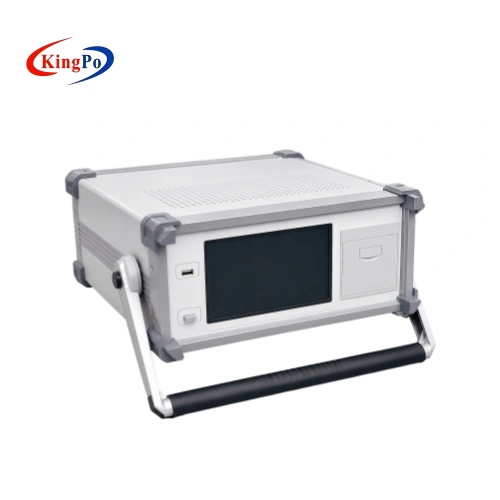
KingPo’s KP-FT01 Glow Wire Tester is intended for laboratories implementing IEC 60695 glow-wire testing where controlled temperature, specimen contact, timing and test observation need to be integrated into a repeatable test setup.