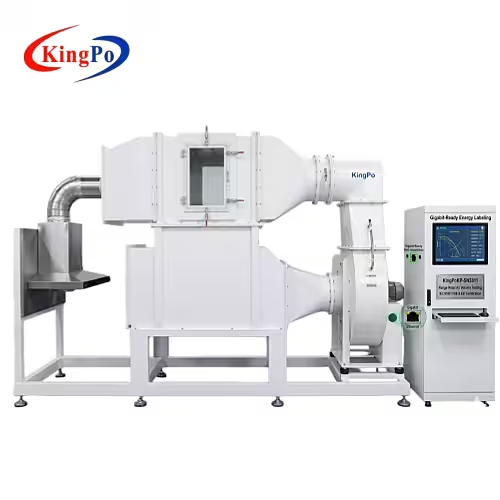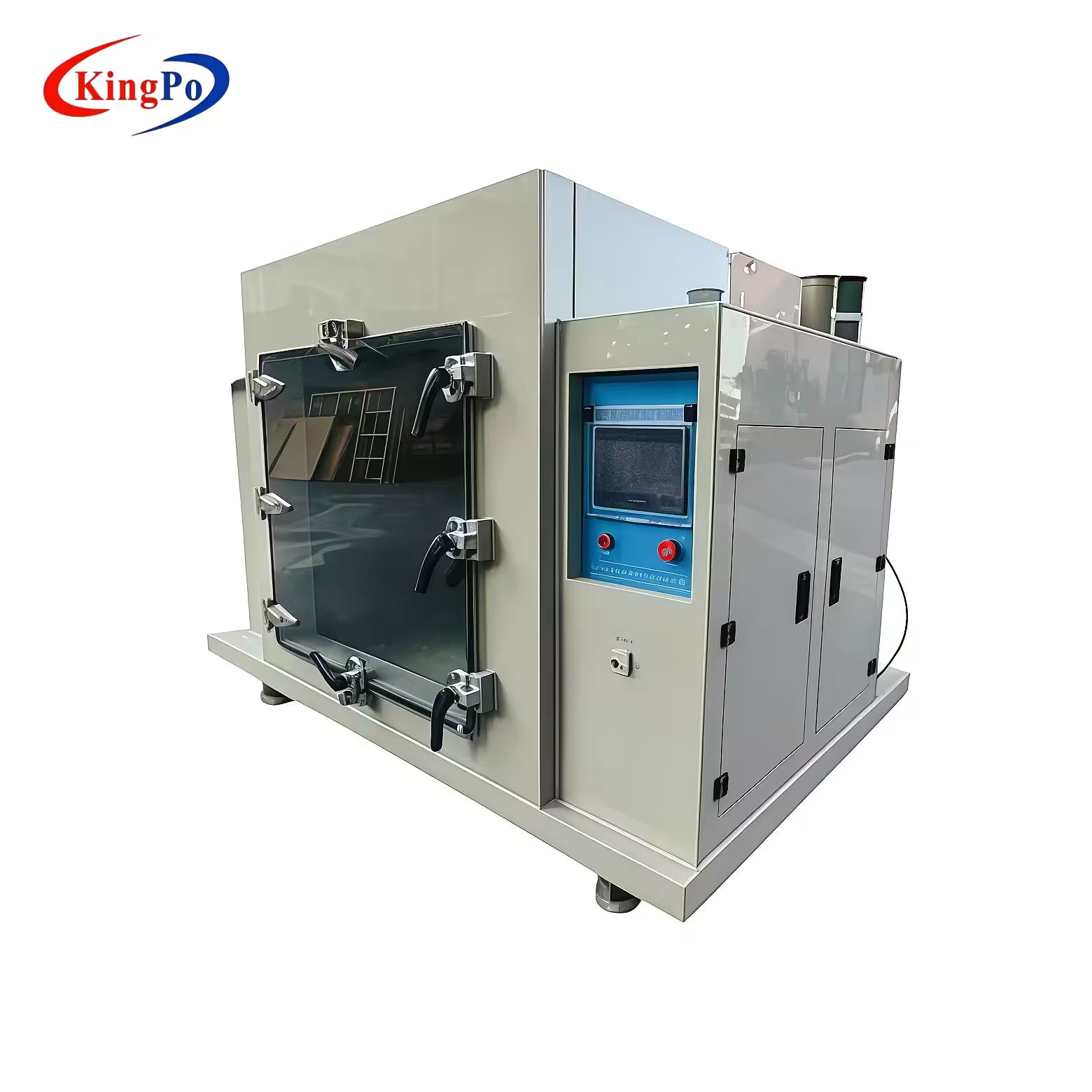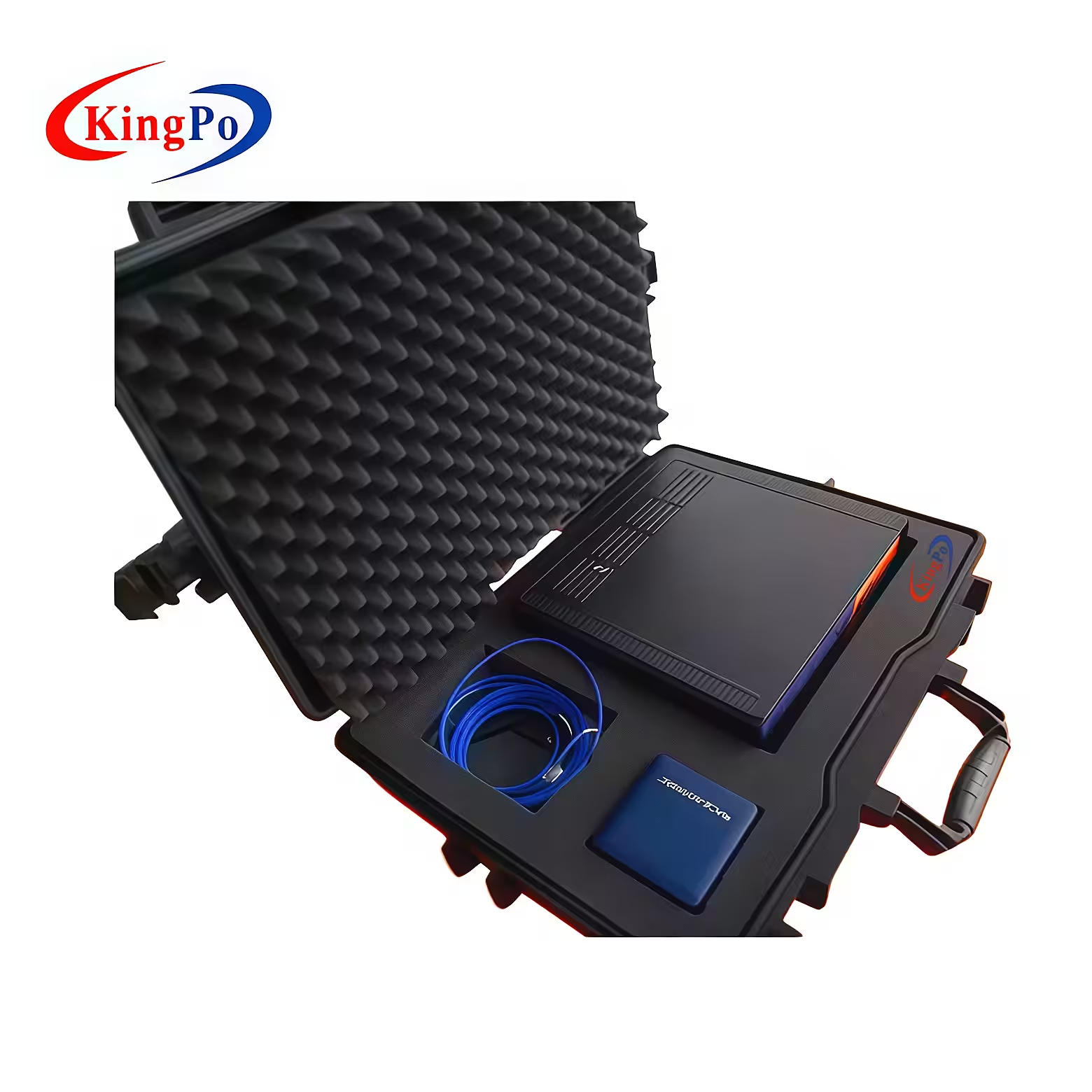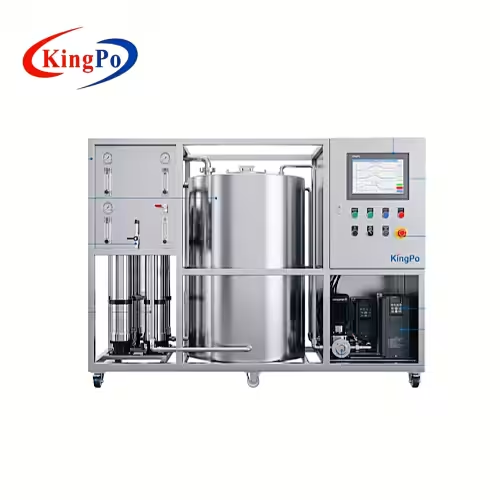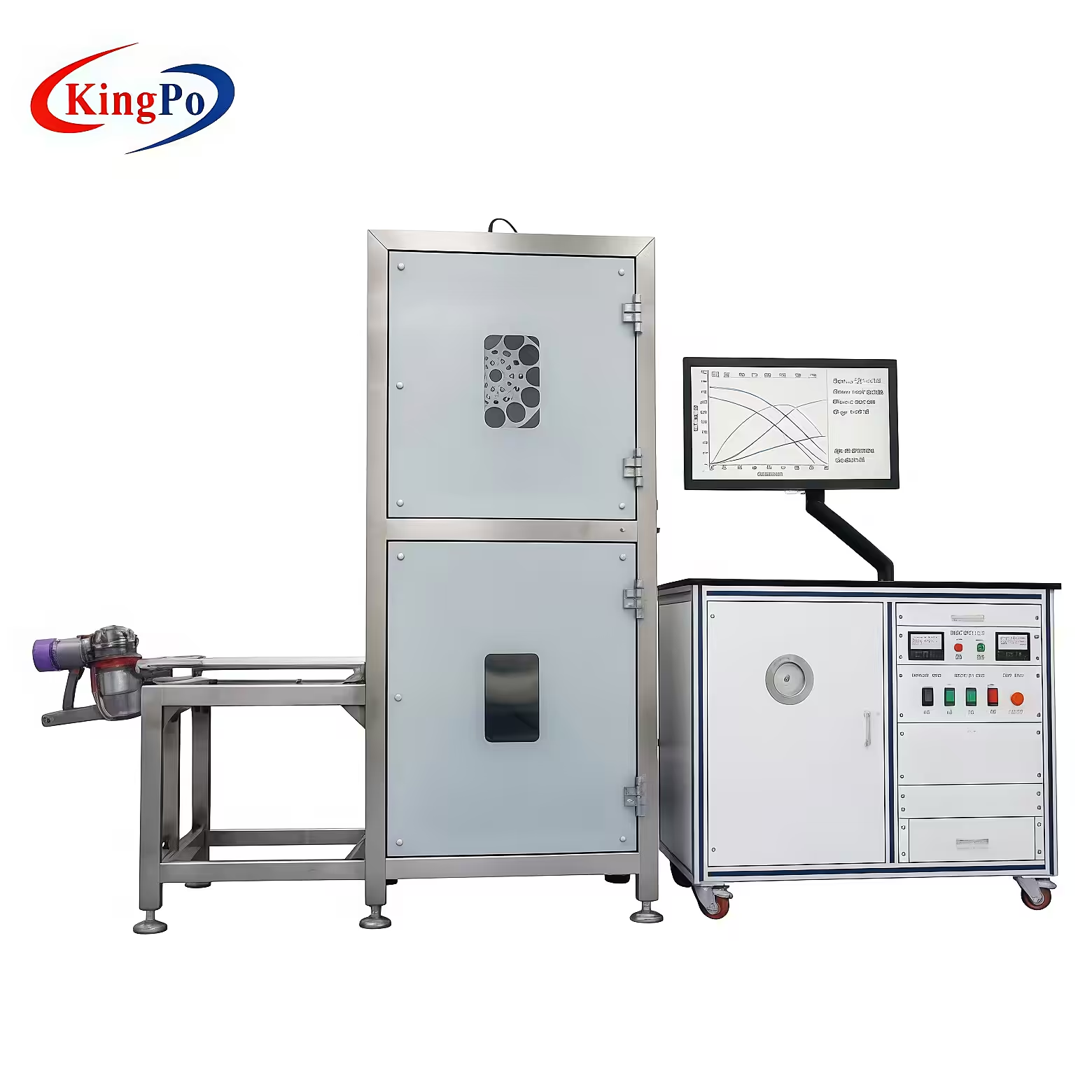
You want your vacuum cleaners to meet strict international standards, but manual testing often slows you down. The Vacuum Cleaner Air Performance Testing System from KINGPO transforms this process by automating each step, which cuts down the time required for IEC 60312 certification. Automation not only reduces errors but also delivers accurate, repeatable results with minimal operator input. When you use the IEC 60312 PC Automatic Suction & Efficiency Evalua, you can focus on precise measurements and consistent quality, helping your products reach the market faster.
Key Takeaways
-
Automate your vacuum cleaner testing with the KINGPO system to save time and reduce errors.
-
Understand IEC 60312 and IEC 62885 standards to ensure your vacuum cleaners meet global performance benchmarks.
-
Focus on key air performance criteria like suction power and efficiency to guarantee reliable cleaning results.
-
Use automated data collection to enhance accuracy and streamline the certification process.
-
Regularly verify sensor calibration to maintain consistent and reliable test results.
-
Leverage KINGPO’s comprehensive support for expert guidance on compliance and testing procedures.
-
Document all testing processes thoroughly to facilitate smooth certification and avoid delays.
-
Adopt best practices in testing to enhance product quality and ensure market readiness.
Understanding IEC 60312 Standards
What Are IEC 60312 and IEC 62885?
You need to understand the main standards that guide vacuum cleaner performance. IEC 60312 and IEC 62885 set the global benchmarks for testing requirements in this industry. These standards outline how to measure the effectiveness, safety, and efficiency of vacuum cleaners. IEC 60312-1 focuses on methods for measuring the performance of dry vacuum cleaners for household use. IEC 62885-2 expands on this by covering similar testing requirements for both household and similar uses. Both standards ensure that you can compare products fairly and consistently.
Here is a quick overview:
|
Standard |
Description |
|---|---|
|
IEC 60312-1 |
Methods for measuring the performance of dry vacuum cleaners for household use |
|
IEC 62885-2 |
Methods for measuring the performance of dry vacuum cleaners for household or similar use |
|
Test Items |
– Dust removal from hard flat floors |
These standards help you evaluate how well a vacuum cleaner removes dust from different surfaces, how much energy it uses, and how it performs under various conditions.
Key Air Performance Criteria
When you test vacuum cleaners, you must focus on specific air performance criteria. These criteria help you determine if your product meets the standards and delivers reliable cleaning results. The main parameters include:
|
Parameter |
Description |
|---|---|
|
Suction Power (P2) |
Measures the suction capability of the vacuum. |
|
Air Volume (Q) |
Indicates the volume of air moved by the vacuum. |
|
Vacuum Degree (H) |
Represents the vacuum pressure achieved. |
|
Input Power (P1) |
The power consumed by the vacuum cleaner. |
|
Efficiency (N) |
Ratio of useful work output to total energy input. |
You need to measure each of these parameters accurately to meet the testing requirements set by the standards. Consistent measurement ensures your vacuum cleaner performs as promised and stands up to market scrutiny.
Why Standards Matter for Certification
You cannot ignore the importance of standards in the vacuum cleaner industry. Meeting these standards is essential for product certification and market access. Certification proves that your vacuum cleaner meets strict safety, energy, and performance benchmarks. This process protects consumers and builds trust in your brand.
Consider these impacts of iec standards on your design and testing process:
-
Standards influence compliance with energy efficiency, safety, and performance certifications.
-
You must follow safety standards like IEC 60335 to ensure your products meet safety specifications.
-
Pre-export testing requirements now include suction performance, energy efficiency, noise levels, and dust retention.
By following these standards, you make sure your products can enter global markets and satisfy customer expectations. Certification based on iec standards also reduces the risk of recalls and regulatory issues. When you align your design and testing processes with these requirements, you create a smoother path to success.
Challenges in Vacuum Cleaner Performance Testing
Technical Barriers
You face many technical barriers when you test vacuum cleaners for compliance. Modern vacuum cleaners use advanced motors, filters, and airflow systems. These features make it difficult to measure each parameter with precision. You must check suction power, air volume, and efficiency under different conditions. Each test requires specialized equipment and careful calibration. If you do not use the right tools, you may get inconsistent results. You also need to simulate real-world cleaning scenarios. This adds another layer of complexity to your testing process.
Tip: Always verify your test setup before starting. Small errors in setup can lead to big differences in results.
Time and Resource Constraints
You often work under tight deadlines. Product launches and certification schedules do not wait. Manual testing takes a lot of time. You must set up each test, record data, and analyze results by hand. This process can slow down your entire project. You may also need to repeat tests to confirm accuracy. If you have limited staff or equipment, you may struggle to keep up with demand. Delays in testing can push back your product release. You risk missing market opportunities if you cannot finish testing on time.
Here is a quick look at common resource challenges:
|
Challenge |
Impact on Testing |
|---|---|
|
Limited staff |
Fewer tests per day |
|
Outdated equipment |
Lower data reliability |
|
Manual data recording |
Higher chance of errors |
|
Repeated measurements |
Increased time required |
Risks of Manual Testing
Manual testing introduces risks that can affect your results. Human error is a major concern. You might misread instruments or enter data incorrectly. These mistakes can lead to false conclusions about your vacuum cleaner’s performance. Manual methods also make it hard to repeat tests with the same accuracy. If you cannot reproduce your results, you may face problems during certification. Inconsistent data can delay your approval process and increase costs.
You need reliable and repeatable testing methods. Automated systems help reduce errors and improve data quality. When you use advanced testing solutions, you can trust your results and move forward with confidence.
KINGPO Vacuum Cleaner Air Performance Testing System
Discover the Testing System
Learn more about how our system can enhance your vacuum cleaner testing process.
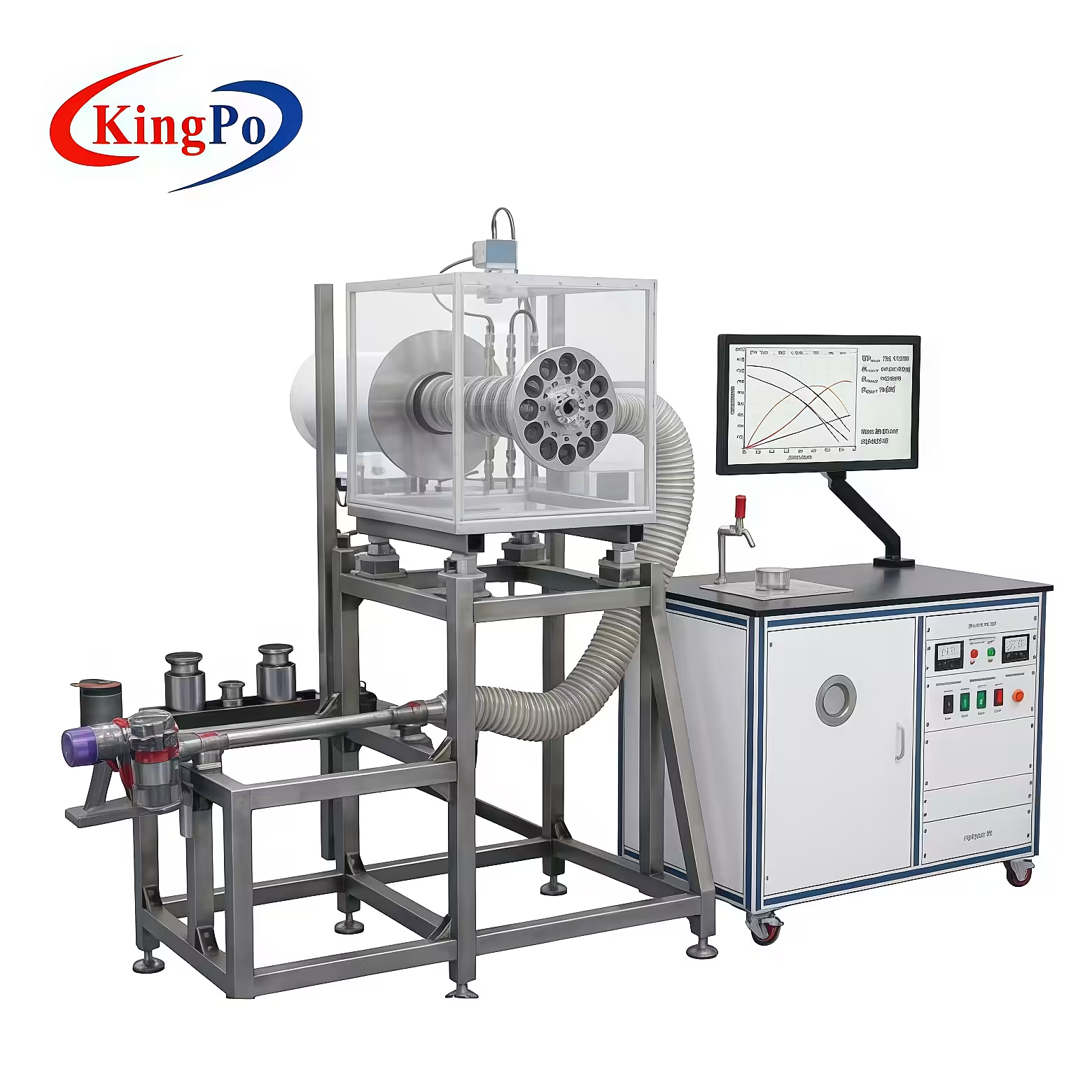
System Overview and Features
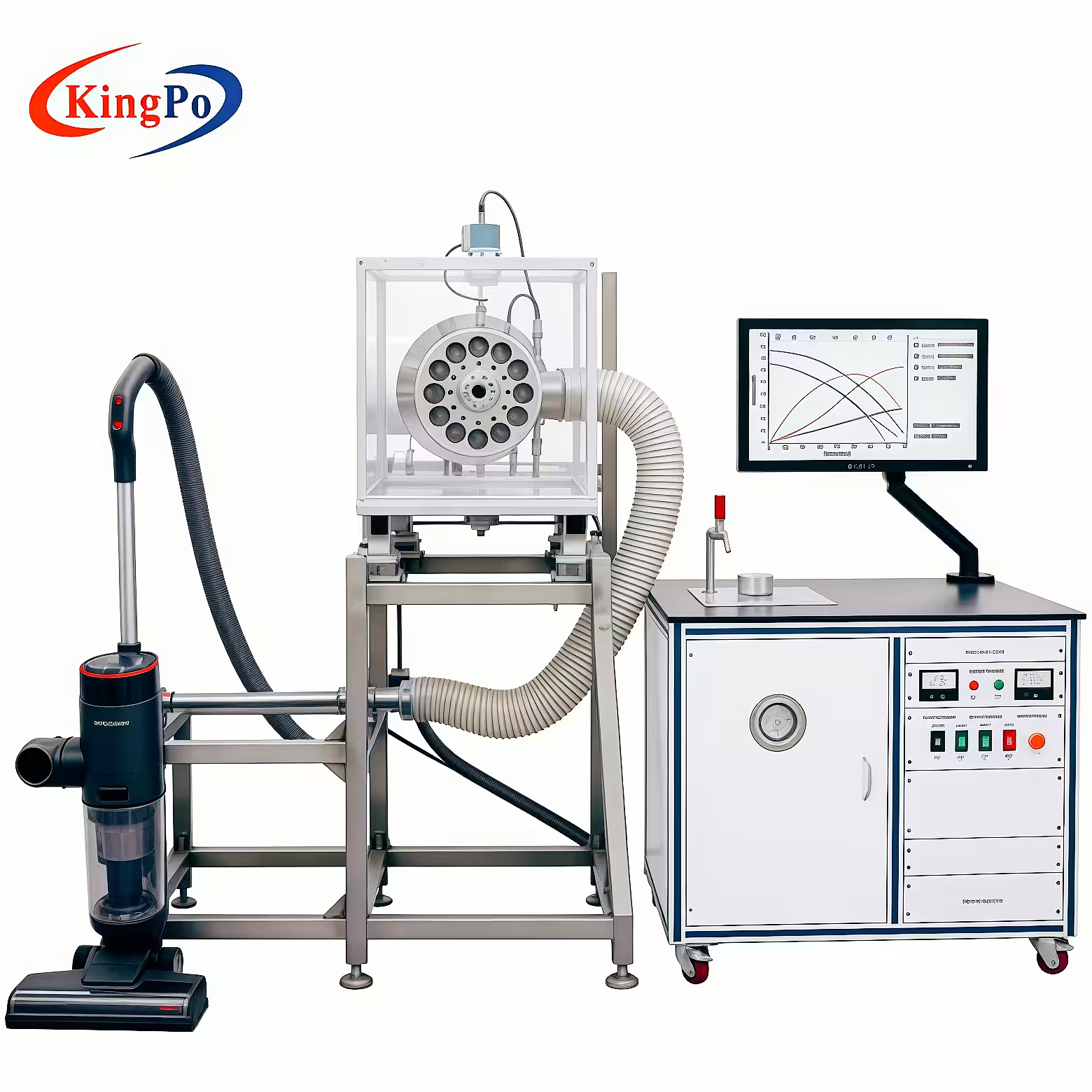
You want a solution that simplifies your testing process and ensures reliable results. The KINGPO vacuum cleaner air performance testing system gives you that advantage. This advanced system combines automation, precision, and flexibility to help you meet industry standards with confidence.
The system stands out because of its comprehensive feature set. You can see the main features and their benefits in the table below:
|
Feature |
Description |
|---|---|
|
Orifice Plate System |
Ten orifice sizes (φ50 to 0 mm) allow you to simulate a wide range of airflow conditions. |
|
Electrical Measurement |
Measures voltage (10–300 V), current (0.01–50 A), and power (up to 15,000 W) with high accuracy. |
|
Vacuum & Flow Sensors |
High-precision sensors ensure accurate readings for vacuum degree and air volume. |
|
Control & Data System |
PC and PLC control automate data collection, curve plotting, and report generation. |
|
Pressure Equalizing Box |
European Standard B type box provides stable airflow for consistent measurements. |
|
Safety & Environment |
Built-in safety features protect your equipment and operators during testing. |
You can use the vacuum cleaner air performance testing system for research, development, and quality control. The system adapts to different testing needs, making it a valuable tool for every stage of your product lifecycle.
Automation and Data Accuracy
You need accurate data to achieve certification and maintain your reputation. The KINGPO vacuum cleaner air performance testing system uses full automation to eliminate manual errors and speed up your workflow. PC-controlled operation lets you adjust orifice plates automatically or manually, so you can test under various conditions without extra setup time.
The system collects data in real time and generates detailed reports. You can view characteristic curves for suction power, air volume, and efficiency. Automatic pass/fail judgment and alarm notifications help you identify issues quickly. This level of automation ensures that you get repeatable results every time.
Tip: Automated data acquisition reduces the risk of human error and saves you valuable time during the certification process.
You can trust the results from the vacuum cleaner air performance testing system. High-precision sensors and advanced control software work together to deliver reliable measurements. This accuracy helps you make informed decisions about product design and performance improvements.
Compliance with International Standards
You must meet strict international standards to access global markets. The KINGPO vacuum cleaner air performance testing system supports full compliance with IEC 60312 and IEC 62885. The system’s pressure equalizing box and sensor accuracy align with the requirements set by these standards. You can use the system to prepare for certification tests and verify that your vacuum cleaners meet all necessary benchmarks.
The system also supports both automatic and manual testing modes. This flexibility allows you to adapt your testing process to different certification requirements. You can generate printable reports that document your results for auditors and regulatory bodies.
When you use the KINGPO vacuum cleaner air performance testing system, you streamline your path to certification. You reduce the risk of delays and ensure that your products are ready for market approval. This system gives you the confidence to move forward with new designs and innovations.
Step-by-Step Testing Cohesion
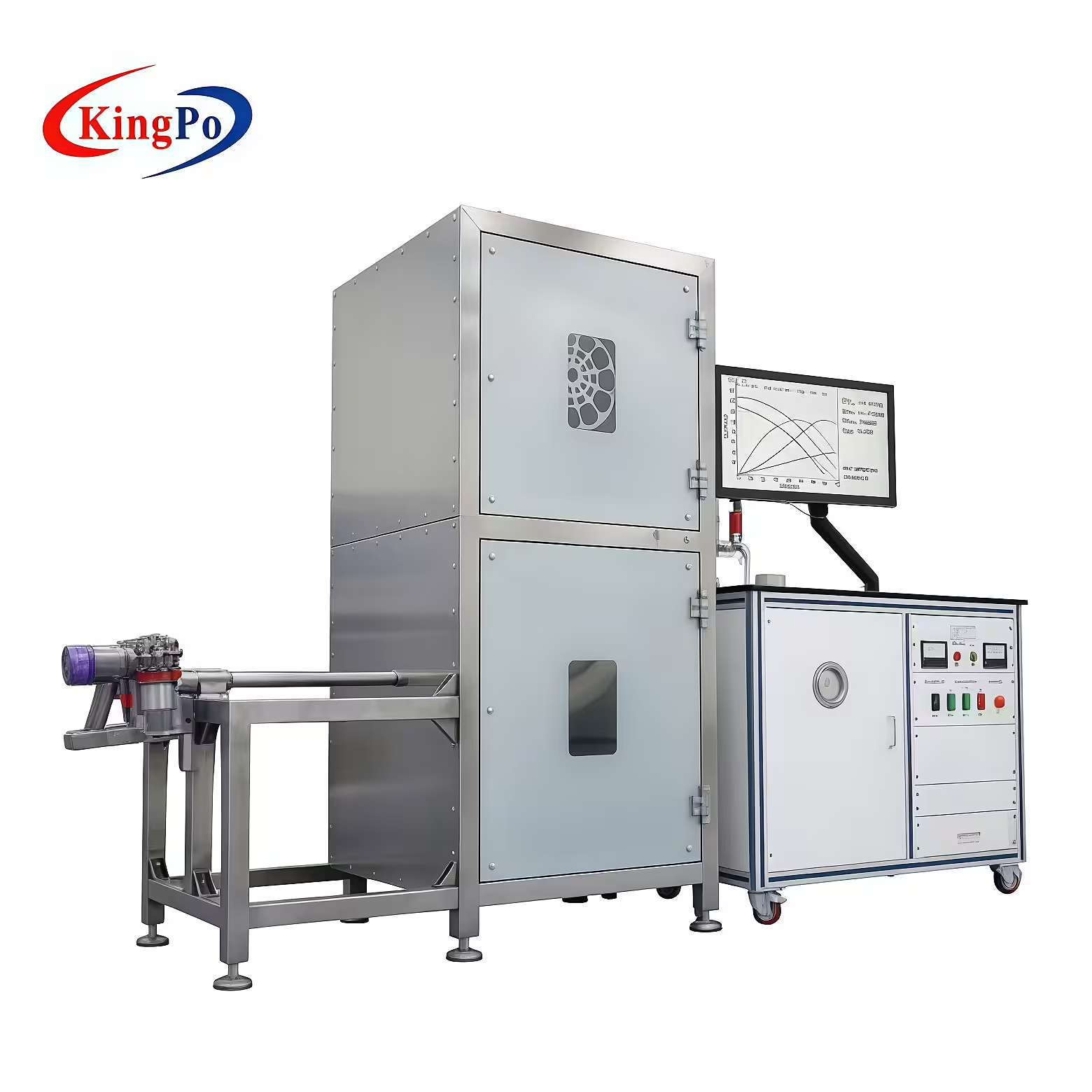
Preparing for Performance Testing
You start by setting up your workspace. Make sure the area is clean and free from dust. Place the vacuum cleaner on the test platform. Connect the device to the KINGPO system. Check all cables and sensors. You need to calibrate the sensors before you begin. Use the calibration tools provided with the system. Verify the orifice plate sizes. Select the plate that matches your test requirements. Review the test parameters. Input the standard values for suction power, air volume, and efficiency. Confirm that the pressure equalizing box is secure. Safety checks protect your equipment and your team.
Tip: Always double-check sensor calibration. Accurate calibration ensures reliable results.
Running the Test with KINGPO System
You launch the KINGPO software on your PC. Choose the automatic or manual mode. Automatic mode saves time and reduces errors. Select the test type based on IEC 60312 or IEC 62885 standards. The system guides you through each step. Adjust the orifice plate using the control interface. The system simulates different airflow conditions. Start the test by pressing the main button. The sensors record suction power, air volume, vacuum degree, input power, and efficiency. Data appears in real time on your screen. The system plots characteristic curves for each parameter.
You monitor the test progress. The system alerts you if any values fall outside the acceptable range. You can pause the test if needed. Review the data as the test completes. The system stores all results automatically. You do not need to record data by hand.
|
Step |
Action |
Outcome |
|---|---|---|
|
Select Mode |
Automatic or Manual |
Flexible testing |
|
Adjust Orifice Plate |
Use PC interface |
Simulate airflow |
|
Start Test |
Press main button |
Begin measurement |
|
Monitor Data |
Watch real-time values |
Immediate feedback |
|
Review Results |
Check curves and alerts |
Reliable analysis |
Generating Certification Results
You finish the test and generate a report. The KINGPO system creates a detailed document. The report includes all measured values, characteristic curves, and pass/fail judgments. You review the report for accuracy. Print the report for your records or submit it to certification bodies. The system highlights any areas that need improvement. You can repeat tests if necessary.
📝 Note: Certification bodies require clear documentation. KINGPO reports meet international standards and simplify your submission process.
You use the results to validate your product. The report helps you prove compliance with IEC 60312 and IEC 62885. You gain confidence in your vacuum cleaner’s performance. You move forward with certification and market approval.
Real-World Results and User Feedback
Manufacturer Success Stories
You see real benefits when you use the KINGPO system for vacuum cleaners. Many manufacturers report faster testing cycles and more reliable results. One company improved its product launch timeline by two weeks after switching to automated testing. You can also reduce the number of failed certification attempts. This happens because the system gives you accurate data for every test. Manufacturers say that they now catch issues with vacuum cleaner filters early in the process. This helps you avoid costly redesigns and delays.
“We used to spend days testing vacuum cleaners by hand. Now, with KINGPO, we finish in hours and get better data.” — R&D Manager, Appliance Manufacturer
User Testimonials on KINGPO
You want to know what other users think. Many engineers and quality managers praise the KINGPO system for its ease of use. They say the interface is simple and the instructions are clear. You can train new staff quickly. Users also like the automatic reporting feature. This makes it easy to share results with your team or with certification bodies. One engineer said, “The system helped us improve the performance of our vacuum cleaners and optimize our vacuum cleaner filters for better airflow.”
Here are some common points from user feedback:
-
You save time on each test.
-
You get consistent results for all vacuum cleaners.
-
You can test different vacuum cleaner filters without changing the setup.
-
You feel confident about passing certification.
Performance and Certification Outcomes
You want your vacuum cleaners to meet international standards. The KINGPO system helps you achieve this goal. Many users report higher first-time pass rates for certification. You can see the difference in your test reports. The system highlights any problems with vacuum cleaner filters or airflow. This allows you to make quick adjustments. You also reduce the risk of recalls because you know your vacuum cleaners meet all requirements.
|
Outcome |
Benefit for You |
|---|---|
|
Faster certification |
Quicker market entry |
|
Fewer failed tests |
Lower costs |
|
Better filter optimization |
Improved cleaning performance |
|
Reliable data |
Stronger product claims |
🏆 When you use KINGPO, you set your vacuum cleaners apart in a crowded market. You show customers that you care about quality and safety.
Tips for Seamless Compliance
Best Practices for Vacuum Cleaners
You can achieve seamless compliance with IEC 60312 by following a set of proven best practices. Start by choosing testing equipment from an ISO9001-certified manufacturer. This ensures you use reliable and accurate tools. Rely on a partner with over 20 years of experience in household appliance testing. You benefit from their expertise and support throughout your compliance journey.
Keep detailed documentation for every test. This helps you verify compliance and speeds up the certification process. Always request calibration certificates for your equipment. These certificates guarantee accuracy and traceability. Regularly verify your sensors to maintain consistent results. Use automatic operation and report generation to reduce manual errors. Comprehensive after-sales support ensures you have help when you need it.
Here is a summary of best practices and their benefits:
|
Feature |
Benefit |
|---|---|
|
ISO9001-certified manufacturer |
Ensures quality and reliability in testing equipment |
|
Over 20 years of experience |
Provides expertise in household appliance testing |
|
Detailed documentation |
Supports manufacturers in compliance verification |
|
Calibration certificates available |
Ensures accuracy and traceability in testing |
|
Regular sensor verification |
Maintains testing accuracy over time |
|
Automatic operation and reporting |
Reduces manual errors and effort in compliance |
|
Comprehensive after-sales support |
Ensures long-term reliability and assistance |
🛠️ Tip: Schedule regular sensor checks and keep all calibration records in your compliance collection.
Avoiding Common Pitfalls
You may encounter several pitfalls during compliance testing. Skipping sample testing can lead to missed defects. Always test samples thoroughly before shipment. Check that all certifications and compliance documents are current and valid. Mismatched documentation can cause delays at customs. Keep your records accurate and up to date.
Expired test certificates can create compliance gaps. Validate all certificates for authenticity and current standards. Traceability is also important. Maintain clear supply chain documentation to ensure every material in your vacuum cleaner meets requirements.
Review this table to avoid common mistakes:
|
Solutions |
|
|---|---|
|
Skipping sample testing |
Ensure thorough testing before shipment |
|
Not checking certification and compliance |
Verify all necessary certifications are up-to-date and valid |
|
Mismatched documentation |
Maintain accurate documentation throughout production |
|
Lapsed or outdated test certificates |
Validate certificates for authenticity and current standards |
|
Lack of traceability for materials |
Guarantee traceability via supply chain documentation |
⚠️ Note: A well-organized document collection helps you avoid compliance delays and costly errors.
Leveraging KINGPO Support
You do not have to navigate compliance alone. KINGPO offers comprehensive after-sales support to guide you through every step. You can access expert advice on equipment setup, sensor calibration, and report generation. The support team helps you resolve technical issues quickly. You also receive updates on the latest standards and testing methods.
If you need custom solutions, KINGPO can tailor the system to your specific requirements. You gain peace of mind knowing you have a partner committed to your success. Use the resources and training provided to maximize the value of your testing system.
💡 Tip: Reach out to KINGPO’s support team whenever you have questions about compliance or system operation. Their expertise can help you streamline your testing process and maintain a complete compliance collection.
You can make IEC 60312 compliance simple with KINGPO’s vacuum cleaner air performance testing system. Automation gives you accurate and efficient results. You see these benefits in real-world testing:
-
The IEC 62885-7:2022 standard tracks suction decay and dust extraction rate.
-
Level 3 certified models show less than 12% suction loss after 30 minutes.
You gain confidence in your product’s performance. Reach out to KINGPO for expert support or a custom quote.
FAQ
What are the main standards for vacuum cleaner testing?
You must follow standards for domestic use and standards for commercial use. These standards set test requirements for filtration efficiency, dust removal effect, and filter performance. They also include special requirements for vacuum cleaners and certification requirements for commercial vacuum cleaner models.
How do performance tests for dry household vacuum cleaners work?
You use performance testing methods to measure suction, filter efficiency, and filtration performance. These tests check if your vacuum meets relevant standards. You must test both handheld and upright models. The standard requires you to evaluate filter quality and efficiency.
Why is filtration efficiency important in vacuum cleaner testing?
Filtration efficiency shows how well your filter traps dust and particles. You need high filtration efficiency to meet standard requirements. Tests measure how much dust passes through the filter. Good filtration performance protects users and helps you pass certification requirements.
What are the test requirements for handheld vacuum cleaners?
You must follow the standard for handheld vacuum cleaners. The requirements include filter testing, filtration efficiency, and dust removal effect. You need to check if the filter meets equivalent hepa filtration. Tests also cover efficiency and filter durability.
How often should you check the filter during testing?
You should check the filter before and after each test. Frequent filter checks help you meet requirements for filtration efficiency. You must replace the filter if you see damage or reduced performance. Regular filter testing ensures you meet the standard.
What is the role of the filter in meeting certification requirements?
The filter plays a key role in passing tests. You must use a filter that meets all requirements for filtration efficiency. The standard requires you to test the filter under different conditions. Good filter performance helps you meet certification requirements.
Do commercial vacuum cleaner models have different requirements?
Yes. Standards for commercial use include extra test requirements. You must test the filter, filtration efficiency, and dust removal effect. The standard also covers special requirements for vacuum cleaners used in commercial settings. You need to check filter durability and efficiency.
How do you ensure your vacuum meets all relevant standards?
You must follow all test requirements and use approved performance testing methods. Test the filter, filtration efficiency, and efficiency for every model. You need to check handheld vacuum cleaners and commercial vacuum cleaner units. Meeting every standard helps you pass certification and satisfy users.