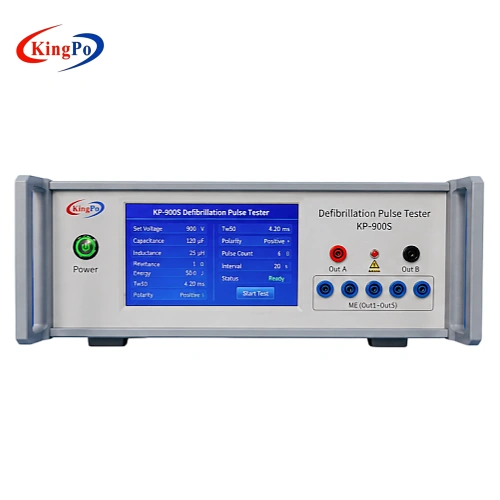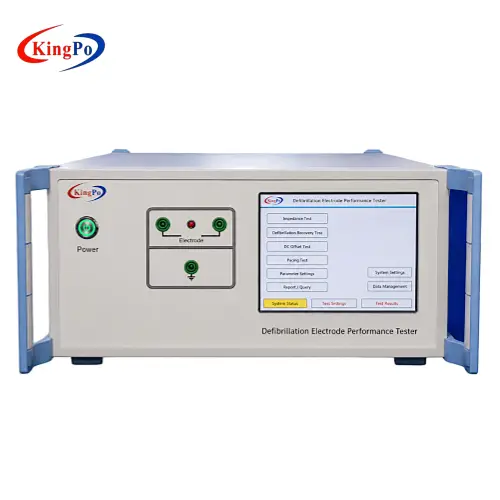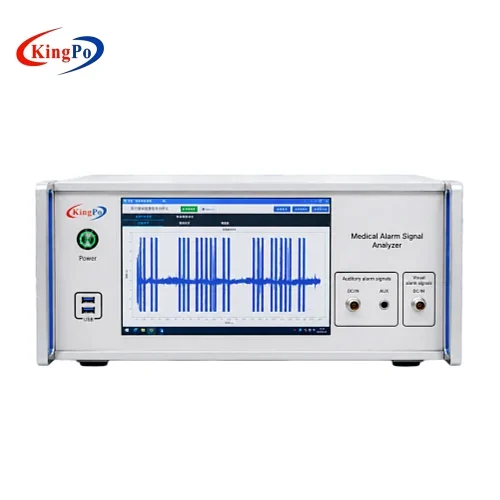
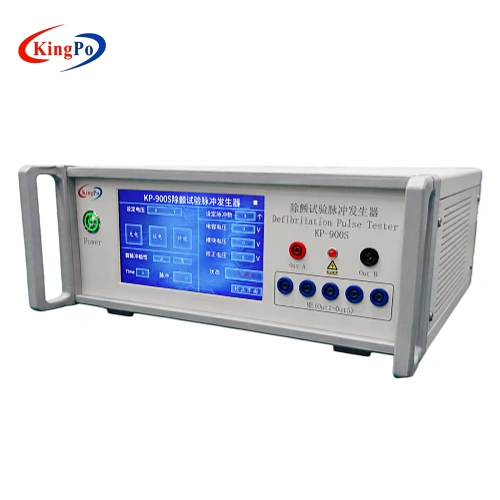
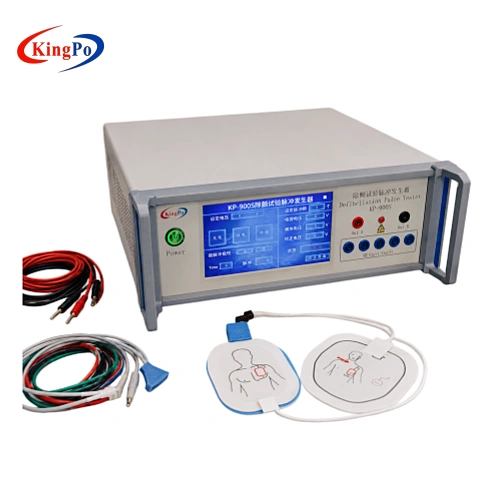
IEC 60601-2-31 Defibrillation Protection Test Pulse Generator
External cardiac pacemakers may be exposed to defibrillation-related electrical stress during clinical use. IEC 60601-2-31:2020 covers particular requirements for the basic safety and essential performance of external cardiac pacemakers with internal power source.
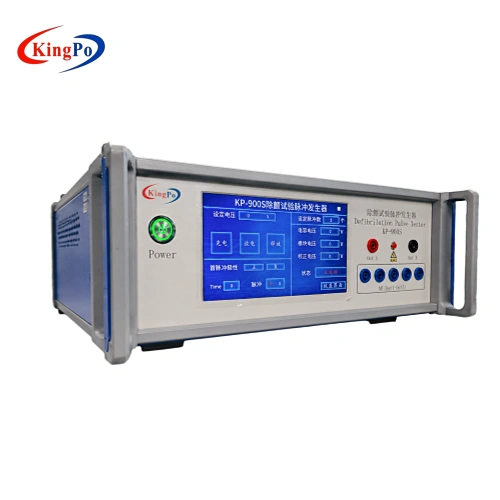
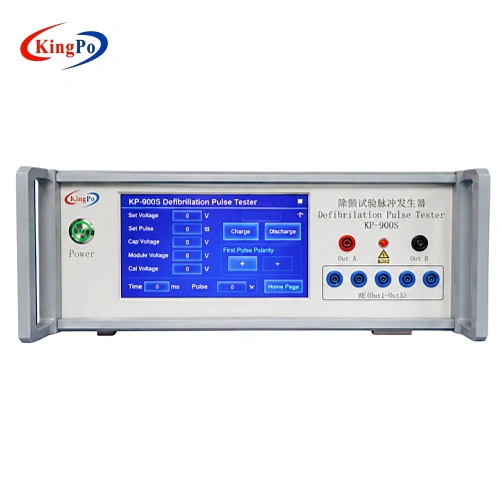
The KP-900S reproduces the required pulse condition using an RCL pulse circuit. It provides a 900 V maximum pulse voltage, 50 J to 55 J pulse energy range and a defined Tw50 timing range of 4.05 ms to 4.6 ms.
Unlike a general impulse generator, the KP-900S is configured for external cardiac pacemaker defibrillation protection testing. Its practical value lies in controlled pulse energy, polarity sequence, waveform timing and the built-in pacemaker test network.
Technical Specifications
The KP-900S is configured for IEC 60601-2-31 related defibrillation protection testing of external cardiac pacemakers with internal power source. The main output parameters include 900 V maximum pulse voltage, 50 J to 55 J pulse energy, RCL circuit output and a controlled positive and negative pulse sequence.
|
Maximum Pulse Voltage
900 V
+2.5% / -0%
|
Pulse Energy Range
50–55 J
Measured record: 52 J
|
Tw50 Time Parameter
4.05–4.6 ms
Voltage above 50%
|
Pulse Circuit
RCL
120 μF ±5%
|
Why This Test Is Required
External cardiac pacemakers may be exposed to defibrillation-related electrical stress during clinical use. The purpose of this test is to verify that the pacemaker is not permanently damaged by the specified pulse exposure and can still maintain the required safety and performance after testing.
The KP-900S is not a general-purpose impulse generator. It is configured for the specific defibrillation protection test condition of external cardiac pacemakers, including the required pulse energy, timing, polarity sequence and pacemaker test network.
Test Principle
The KP-900S generates a controlled high-energy pulse through an RCL circuit. The pulse condition is mainly defined by capacitance, voltage, energy, Tw50 timing and output polarity.
During the test, the pulse is applied through the required pacemaker test network and DUT connection arrangement. After the pulse sequence is completed, the external cardiac pacemaker should be evaluated according to the applicable test procedure to confirm whether its basic safety and essential performance remain acceptable.
This is a protection verification test, not simply a high-voltage output check. Pulse waveform, energy level, polarity sequence and the test network should all be controlled as part of the complete laboratory setup.
Pulse Output and Test Sequence
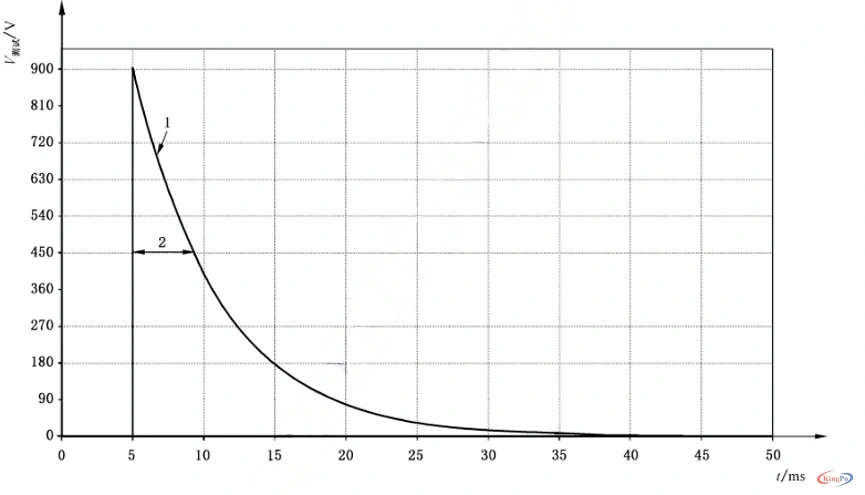
The KP-900S uses a 120 μF ±5% capacitance in the RCL pulse circuit. The maximum pulse voltage is 900 V with a tolerance of +2.5% / -0%, and the specified pulse energy range is 50 J to 55 J.
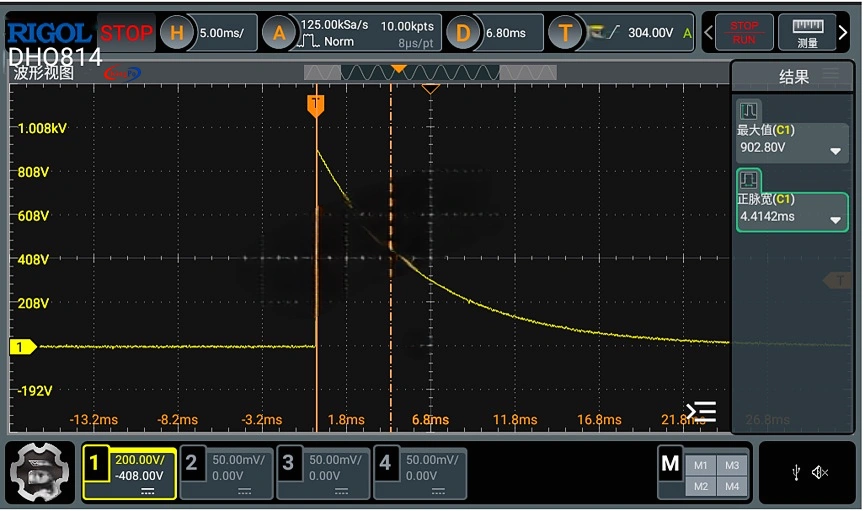
The Tw50 parameter is the time interval during which the test voltage remains above 50% of its maximum value. For the KP-900S, this range is specified as 4.05 ms to 4.6 ms.
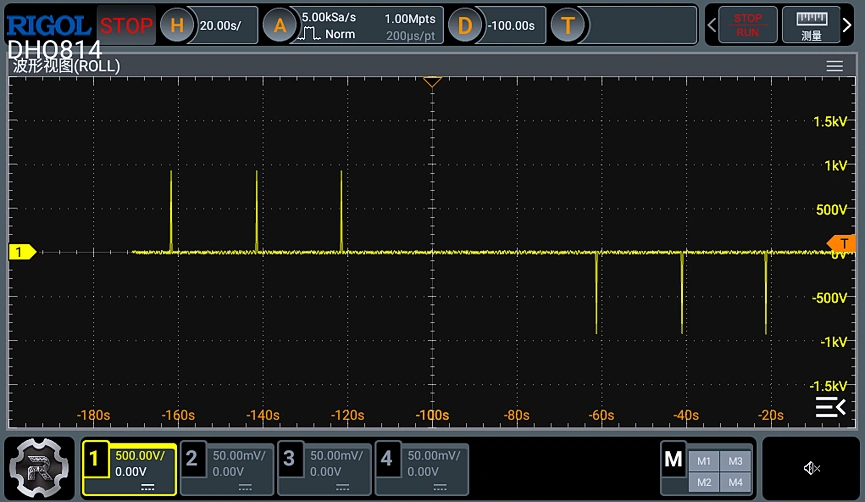
For polarity testing, the system first applies three positive voltage pulses, with an interval of 20 s to 25 s between each pulse. After an interval of at least 60 s, three negative voltage pulses are applied. This programmable sequence helps reduce manual timing errors during repeated laboratory testing.
Built-in Pacemaker Test Network
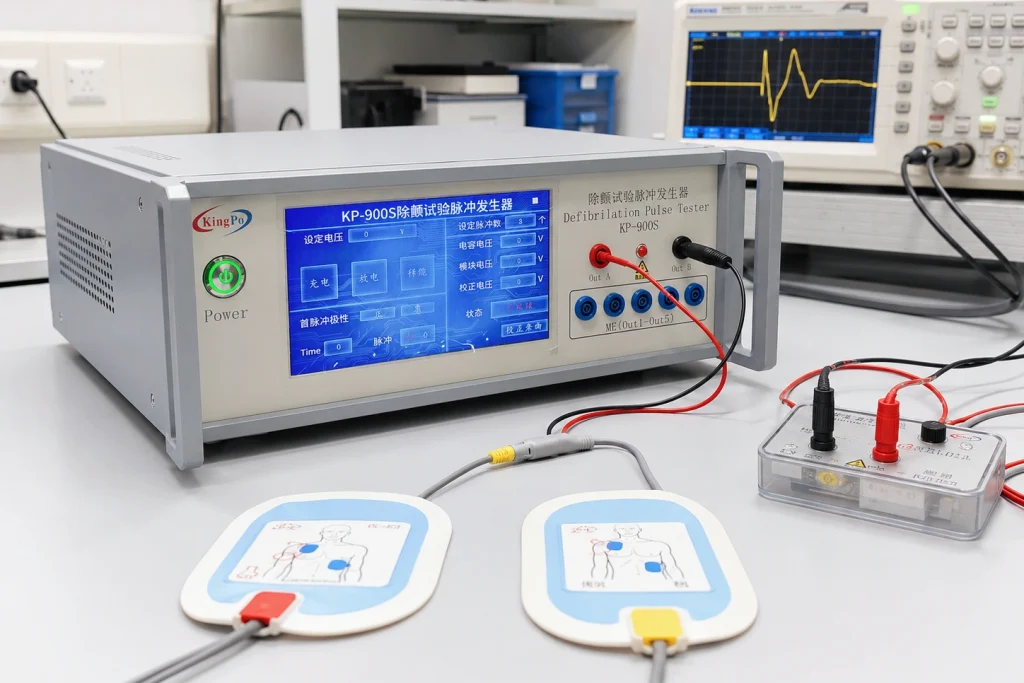
The KP-900S includes a built-in three-chamber external cardiac pacemaker test network. According to the product specification, this network is intended to meet the Figure 201.105 related requirement.
The integrated test network helps simplify wiring and improves repeatability between tests. Before formal testing, the laboratory should confirm the DUT connection method, applicable clause and complete test arrangement according to its internal procedure.
Waveform and Energy Verification
The product documentation includes measured waveform records and a measured pulse energy value of 52 J. This provides a reference for confirming that the output falls within the specified 50 J to 55 J energy range.
For formal laboratory use, waveform timing, voltage and energy verification should be performed according to the laboratory’s quality system and applicable test procedure. Calibration records, waveform screenshots, inspection reports or traceability information can be confirmed according to project requirements.
Typical Applications
The KP-900S is suitable for laboratories and manufacturers involved in external cardiac pacemaker safety verification.
- IEC 60601-2-31 related defibrillation protection testing
- YY 9706.231-2023 medical electrical safety verification
- External cardiac pacemaker R&D validation
- Pre-compliance testing before third-party certification
- Factory quality control and design verification
- Waveform and energy verification for pacemaker protection testing
Practical Value for Laboratories and Manufacturers
For laboratories, the KP-900S provides a controlled and repeatable pulse source with programmable timing, polarity selection and a built-in pacemaker test network. This helps reduce setup variation and improves consistency during repeated verification work.
For manufacturers, the system supports design verification, pre-compliance evaluation and internal quality inspection before submitting products for formal certification.
Buyer’s Selection Notes
| Item | What to Confirm |
|---|---|
| Applicable Standard | IEC 60601-2-31:2020, YY 9706.231-2023 or the related national adoption |
| DUT Type | External cardiac pacemaker with internal power source |
| Test Requirement | Defibrillation protection clause and required test network |
| Pulse Parameters | Voltage, energy range, Tw50 timing, polarity and pulse sequence |
| Verification Method | Oscilloscope, energy measurement method and laboratory documentation process |
| Documentation Needs | Datasheet, calibration-related document, waveform record or inspection report |