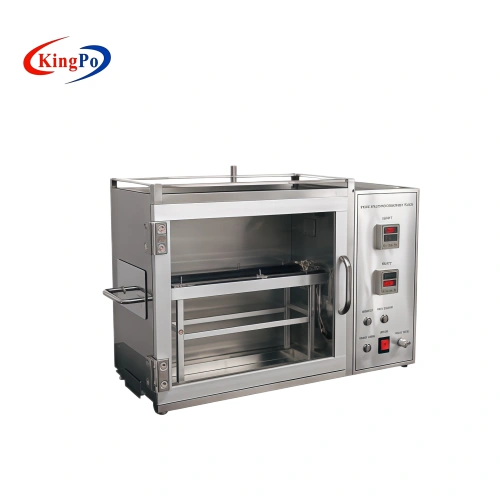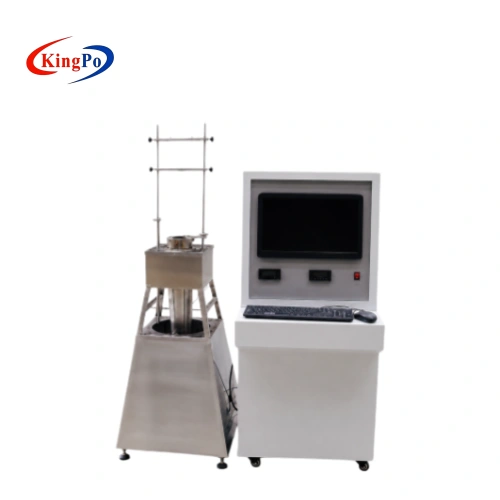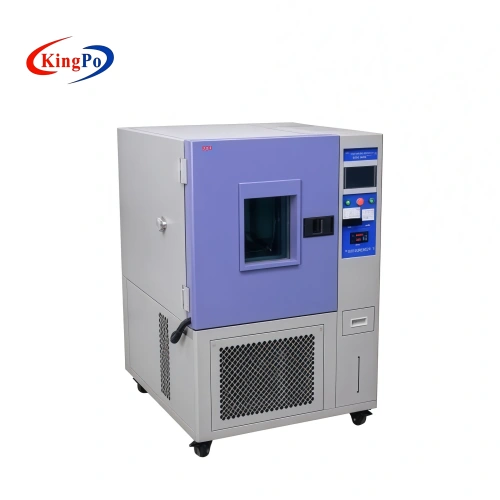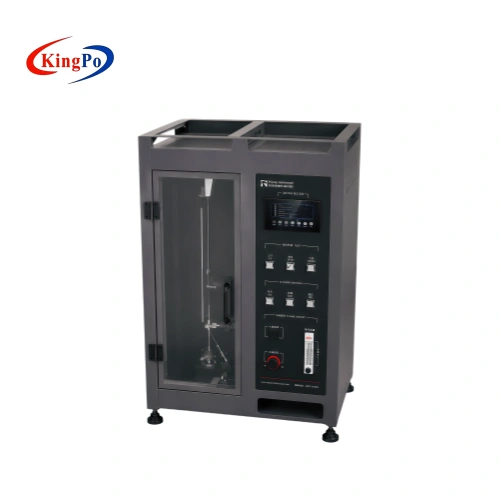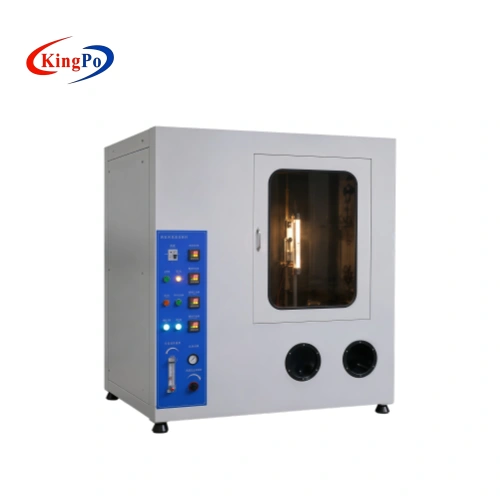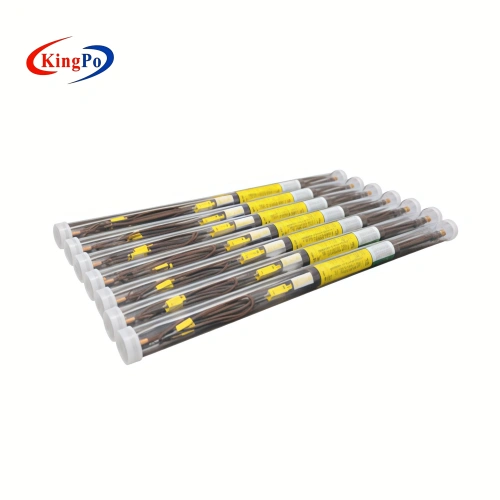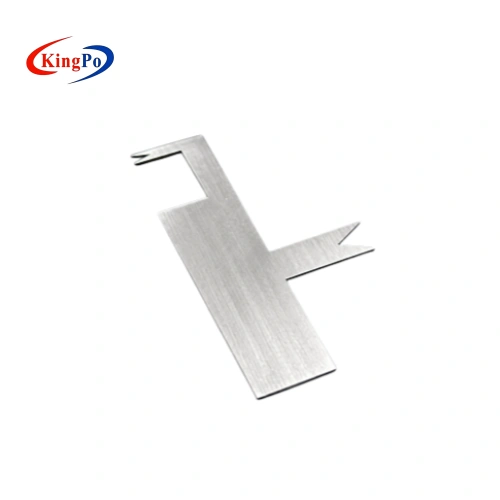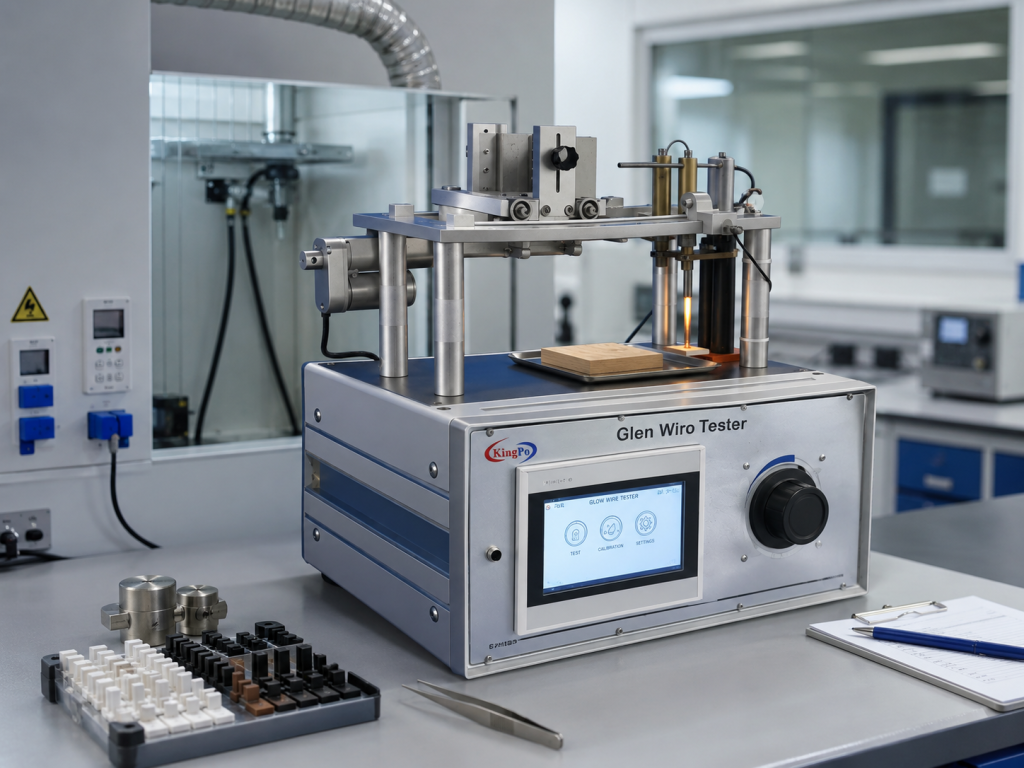
The best glow wire test apparatus for IEC 60695 should not be selected only by price or appearance. A suitable tester should match the applicable IEC 60695 test method, provide stable glow wire temperature control, accurate contact force, repeatable specimen movement, safe enclosed operation, and reliable documentation for laboratory audits.
For laboratories testing electrical and electronic products, household appliances, lighting components, connectors, switches, terminal blocks, insulating materials, plastic enclosures, or cable-related components, glow wire testing is an important fire hazard assessment method. It helps simulate abnormal heat caused by overheated parts, loose electrical connections, overloaded resistors, or internal fault conditions.
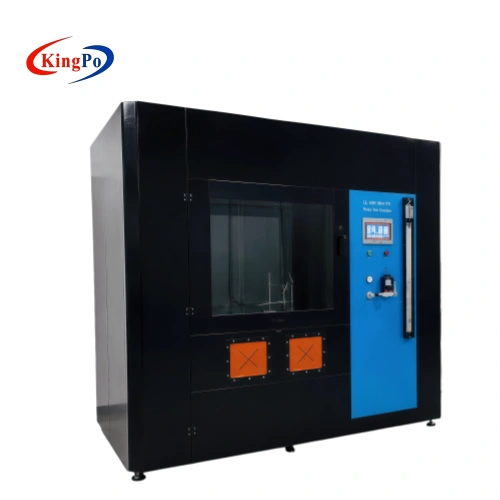
For the core glow-wire test setup, KINGPO provides the IEC 60695-2-10 Glow Wire Test Apparatus, designed for laboratories that need standard-oriented fire hazard testing with repeatable operation and practical documentation support.
Quick Answer: What Should a Good IEC Glow Wire Tester Include?
A reliable IEC 60695-2-10 glow wire test apparatus should include stable heating control, standardized glow wire construction, accurate temperature measurement, controlled contact force, repeatable specimen movement, clear timing, safe chamber protection, and calibration support.
For most manufacturer QC labs, R&D labs, and third-party testing laboratories, a semi-automatic or automatic glow wire tester is usually more suitable than a fully manual device. It reduces operator influence, improves repeatability, and makes test records easier to review during internal audits or customer inspections.
- Glow wire temperature stability before specimen contact
- Standard glow wire structure and thermocouple arrangement
- Controlled contact force between the glow wire and specimen
- Controlled specimen movement and penetration depth
- Accurate timing for application, ignition, and flame extinction
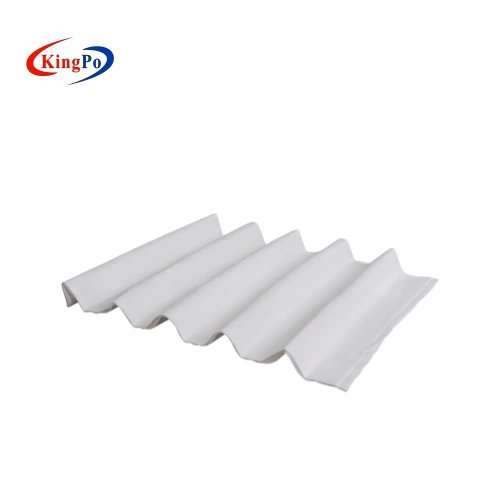
- Clear observation of flame, afterglow, molten drops, and wrapping tissue ignition
- Safe enclosed chamber with exhaust connection
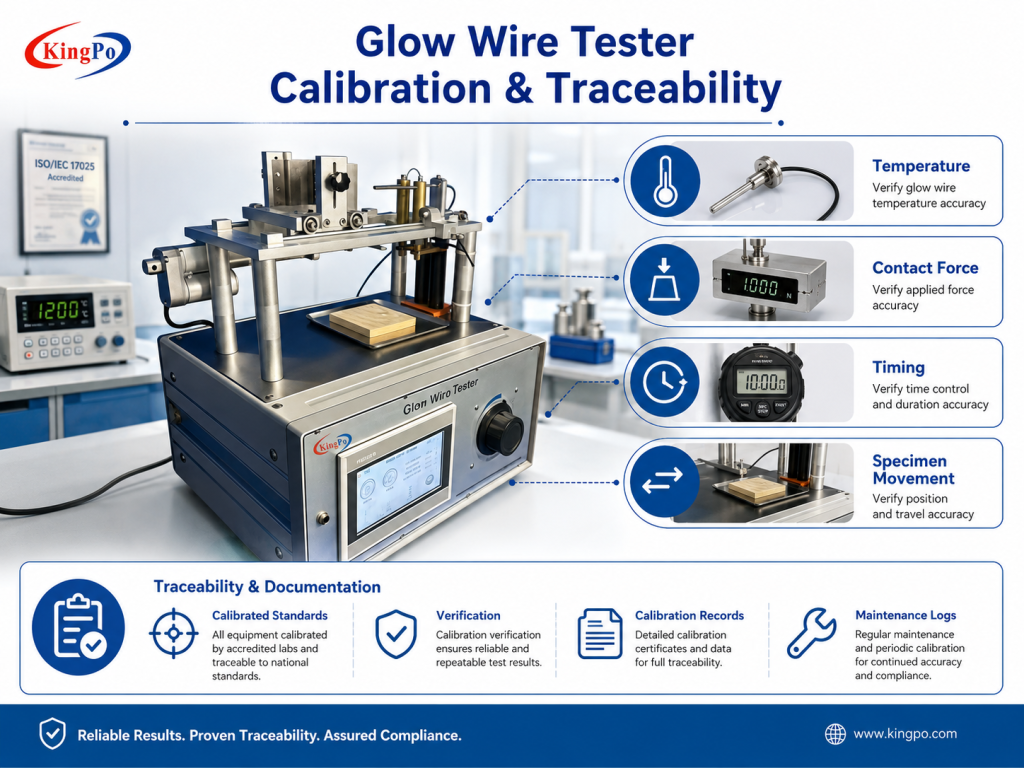
- Calibration support for temperature, force, timing, and movement
- Practical test records for quality and compliance documentation
Why Glow Wire Testing Matters for IEC Compliance
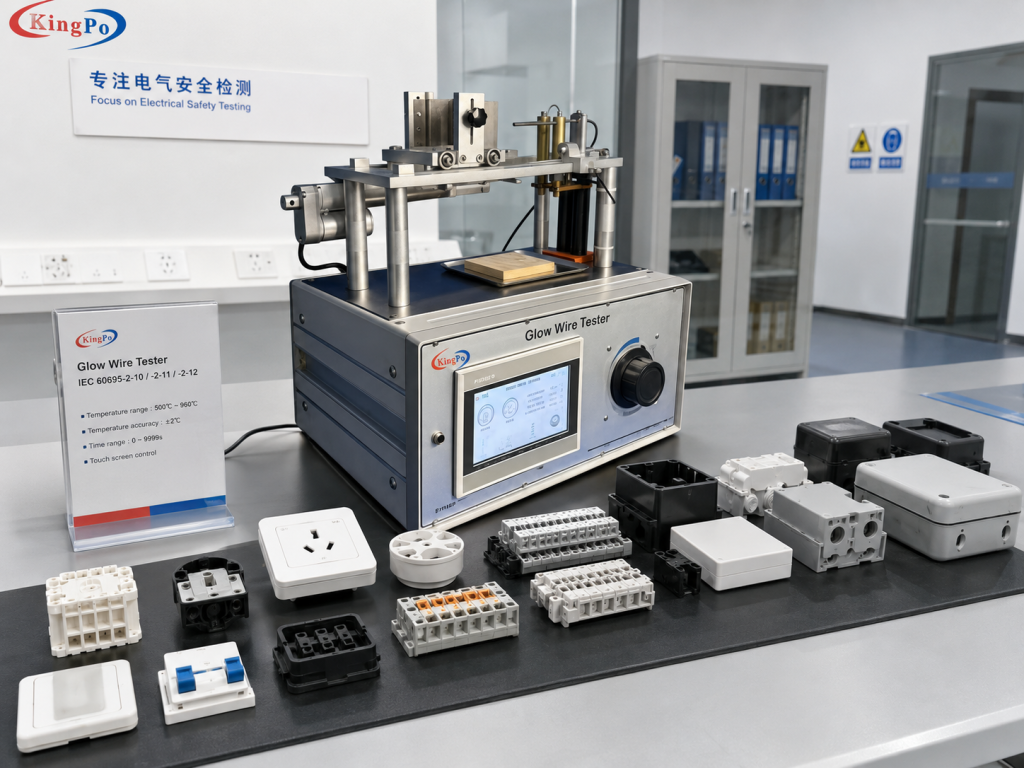
Electrical products may fail because of abnormal heat inside the product, not only because of external flame exposure. A connector, terminal block, insulation part, plastic housing, switch, relay, PCB support, or appliance component may be exposed to localized overheating during fault conditions.
Glow wire testing helps laboratories evaluate whether a material or component can resist ignition, limit flame spread, and reduce secondary fire risks under a defined thermal stress condition.
- Whether the material ignites under defined thermal stress
- Whether flame self-extinguishes within the required time
- Whether molten or burning particles ignite the wrapping tissue
- Whether the end product has limited ability to propagate flame
- Whether the selected plastic or insulation material is suitable for the product design
- Whether production batches remain consistent before certification or market release
For manufacturers, the value of glow wire testing is not only passing one standard test. It also helps engineers compare material choices, confirm supplier consistency, reduce redesign risk, and prepare more complete documentation before submitting products to third-party laboratories.
IEC Standards Related to Glow Wire Testing
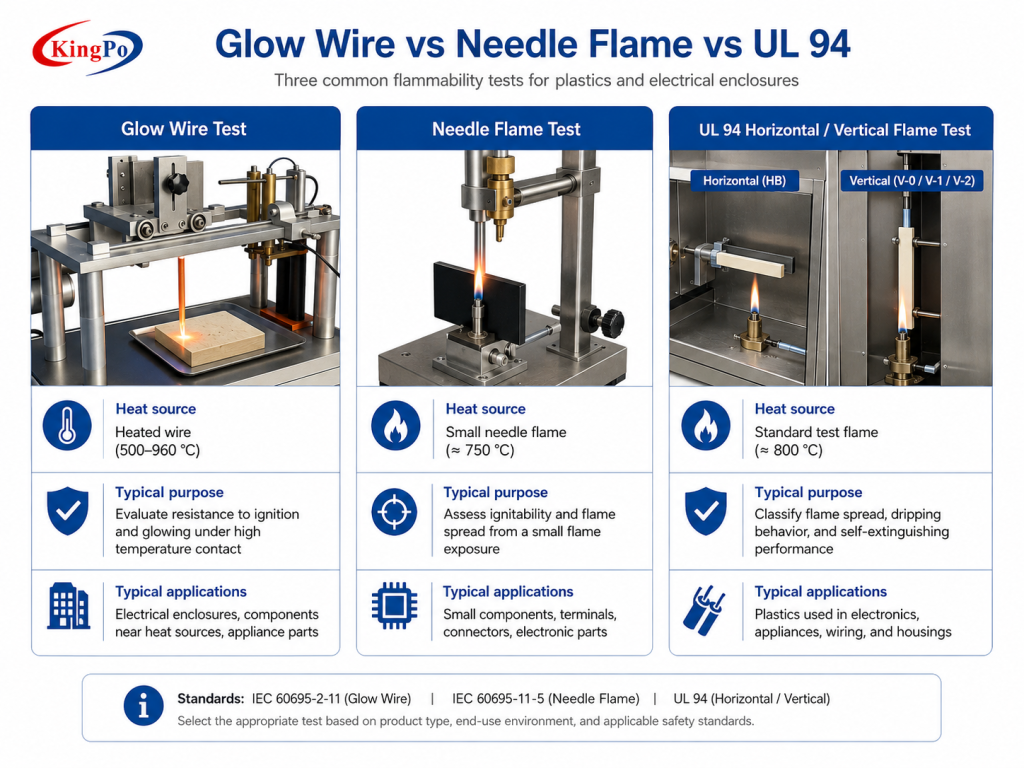
IEC 60695 is a series of fire hazard testing standards used for electrical and electronic products, materials, and components. For glow wire testing, several parts are especially important when selecting equipment and defining the test purpose.
IEC 60695-2-10 is the foundation for selecting a glow wire test apparatus. It defines the glow-wire apparatus and common test procedure used to simulate thermal stress from glowing elements or overloaded resistors. This part is closely related to apparatus construction, temperature measurement, contact force, specimen movement, timing, and repeatability of the test setup.
IEC 60695-2-11 is used for glow-wire testing of end products. It is relevant when the laboratory needs to test a finished product, component assembly, or accessible test point rather than only a standard material specimen.
IEC 60695-2-12 is used for Glow Wire Flammability Index, or GWFI. It is mainly used for material evaluation and comparison, especially when engineers need to compare plastics, insulating sheets, or flame-retardant formulations before final product design.
IEC 60695-2-13 is used for Glow Wire Ignition Temperature, or GWIT. It helps evaluate the ignition tendency of materials under glow wire exposure and is often used during R&D, supplier qualification, and material selection.
For purchasing decisions, the key point is simple: the laboratory should first confirm whether the test is for apparatus-based glow wire procedure, end-product evaluation, GWFI material comparison, or GWIT ignition temperature evaluation. The same tester platform may support multiple applications, but fixture design, specimen positioning, and reporting requirements should be confirmed before ordering.
How to Choose the Best Glow Wire Tester for Your Lab
There is no single “best” glow wire tester for every laboratory. The right configuration depends on the test object, applicable standard, testing frequency, automation requirement, fixture design, and documentation level.
Before selecting a glow wire test apparatus, laboratories should confirm these points:
- Which IEC 60695 part applies to your test?
- Are you testing a material specimen, component, or end product?
- Do you need GWFI, GWIT, end-product testing, or a combination?
- What test temperature points are required?
- What is the sample size, shape, and thickness?
- Do you need a standard fixture or customized fixture?
- How often will the lab perform the test?
- Is manual operation acceptable, or is semi-automatic operation preferred?
- Do you need test data recording and report support?
- What calibration documents are required by your quality system?
- Does your lab have proper ventilation and exhaust conditions?
- What power supply and installation space are available?
For manufacturer quality control labs, the priority is stable and easy operation for repeated inspection of materials or components. For R&D laboratories, fixture flexibility and adjustable sample positioning are usually more important. For third-party laboratories, repeatability, traceability, calibration documentation, and audit-ready reporting are critical.
A professional supplier should help the laboratory clarify these conditions before quotation, instead of recommending a tester only by model name or price.
KINGPO KP-FT01 Glow Wire Tester Recommendation
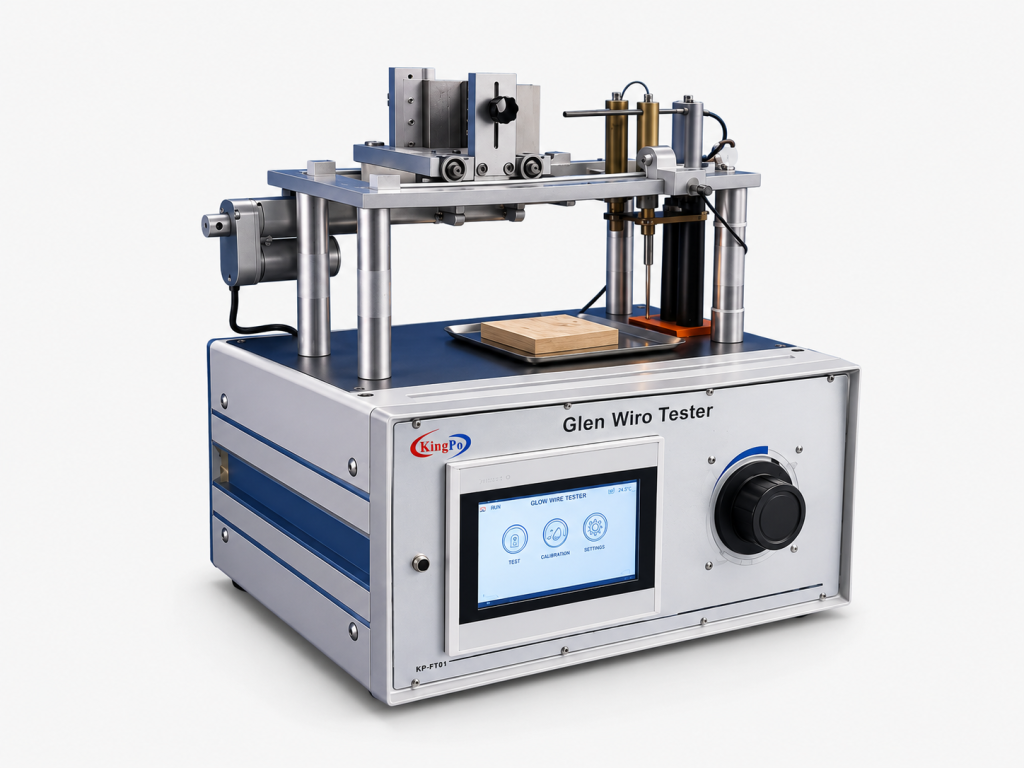
KINGPO KP-FT01 Glow Wire Tester is designed for laboratories that need a practical and repeatable glow wire testing solution for IEC 60695 series applications. Instead of focusing only on display type or price, the system is built around real laboratory requirements: stable heating, repeatable specimen contact, safe operation, clear observation, and documentation support.
The KINGPO KP-FT01 Glow Wire Tester is suitable for:
- IEC 60695 glow-wire apparatus-related testing
- End-product glow-wire evaluation
- GWFI material comparison
- GWIT ignition temperature evaluation
- Electrical and electronic component testing
- Household appliance component testing
- Lighting component evaluation
- Connector, switch, and terminal block testing
- Plastic enclosure and insulation material assessment
For routine QC testing, choose a stable and easy-to-operate configuration. For R&D testing, choose a configuration with fixture flexibility and adjustable test setup. For third-party testing, choose a configuration with stronger repeatability, calibration support, and documentation workflow.
This approach helps avoid two common purchasing problems: buying a low-cost tester that cannot support future standard-based testing needs, or buying an over-complex system that does not match the actual laboratory workflow.
How Glow Wire Testing Differs from Cable and Flame Tests
Glow wire testing is important, but it does not replace all other fire hazard tests. Different fire tests simulate different risk scenarios. A laboratory should choose the test method according to the product standard, material type, and real fault condition.
Glow wire testing simulates abnormal heat from a solid heated element inside electrical equipment. It is mainly used for materials, components, and end-product areas exposed to thermal stress from overheated parts or fault conditions.
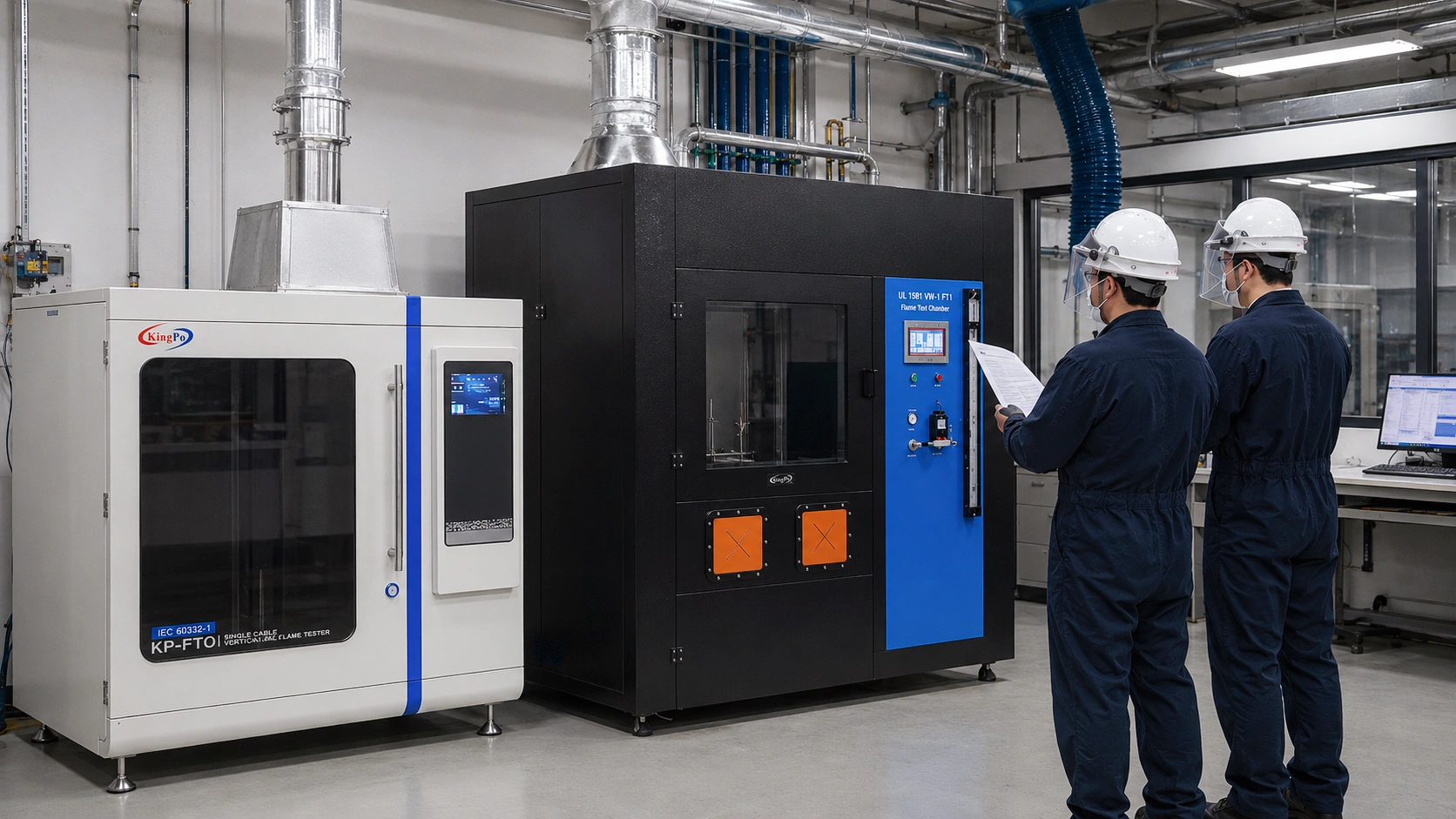
If the test object is a single insulated cable or optical cable and the purpose is to evaluate vertical flame propagation, the laboratory should use a dedicated IEC 60332-1 Single Cable Flame Propagation Tester instead of a general glow wire tester.
If the laboratory needs to evaluate flame behavior under a defined higher-power flame source, especially for IEC 60695-11-3 related fire test applications, a dedicated IEC 60695-11-3 500W Flame Tester should be considered.
In practice, a complete electrical safety lab may need more than one fire test method. Glow wire testing, cable flame propagation testing, and defined flame testing are complementary methods, not interchangeable methods. The correct choice should always be based on the applicable product standard and the actual fire risk scenario.
Common Mistakes When Buying a Glow Wire Test Apparatus
Many purchasing problems happen because laboratories compare only the product name, display type, or price. For IEC-related testing, the real comparison should focus on whether the apparatus can support repeatable, defensible, and documented test results.
Mistake 1: Choosing only by price.
A low-cost tester may be acceptable for basic internal screening, but it may not provide the repeatability, documentation, or fixture flexibility required for IEC-related laboratory work.
Mistake 2: Ignoring the applicable IEC part.
IEC 60695-2-10, IEC 60695-2-11, IEC 60695-2-12, and IEC 60695-2-13 are related but not identical. The laboratory should confirm whether the test is for apparatus setup, end products, GWFI, or GWIT.
Mistake 3: Overlooking sample fixtures.
Many testing errors come from poor specimen positioning. A stable and suitable fixture is essential for repeatable heat transfer and observation.
Mistake 4: Not planning calibration.
Temperature, force, timing, and movement-related parameters should be checked regularly. Without calibration planning, test results may be difficult to defend during audits or customer review.
Mistake 5: Treating glow wire testing as the same as cable flame or defined flame testing.
Glow wire testing, cable flame propagation testing, and defined flame testing evaluate different fire hazard scenarios. They are not interchangeable. The correct method should be selected according to the product standard and risk scenario.
What Information Should You Send Before Requesting a Quotation?
To recommend the correct glow wire tester configuration, KINGPO suggests sending the following information before quotation:
- Applicable standard: IEC 60695-2-10, IEC 60695-2-11, IEC 60695-2-12, IEC 60695-2-13, or related product standard
- Test object: material specimen, plastic part, connector, switch, appliance component, lighting component, cable, or finished product
- Required test temperature points
- Sample size, shape, and thickness
- Fixture requirement
- Preferred operation mode
- Data recording and report needs
- Calibration or audit documentation needs
- Laboratory power supply
- Ventilation and exhaust conditions
- Installation space
- Whether related fire tests are also required, such as cable flame propagation or defined flame testing
By reviewing these details first, KINGPO can help recommend a suitable glow wire test apparatus configuration that matches the laboratory’s actual testing workflow, instead of providing a generic quotation that may not fit the application.
FAQ
Which glow wire test apparatus is best for meeting IEC standards in my lab?
The best glow wire test apparatus is the one that matches your IEC 60695 test method, specimen type, and laboratory workflow. For most professional labs, the key factors are temperature stability, controlled contact force, repeatable specimen movement, accurate timing, safe enclosure, calibration support, and documentation.
Does one glow wire tester cover IEC 60695-2-10, IEC 60695-2-11, IEC 60695-2-12, and IEC 60695-2-13?
A properly configured glow wire test apparatus can support different IEC 60695 glow-wire applications, but the fixture, specimen positioning, test purpose, and reporting method may differ. Laboratories should confirm whether the configuration supports apparatus procedure, end-product testing, GWFI material testing, or GWIT ignition temperature evaluation.
Is KINGPO KP-FT01 suitable for manufacturer QC labs?
Yes. KINGPO KP-FT01 can be used by manufacturer quality control laboratories for routine testing of plastic parts, insulating materials, connectors, switches, terminal blocks, appliance components, and lighting components. It is suitable when the lab needs stable operation, repeatable test setup, and standard-oriented documentation.
Is automatic glow wire testing better than manual testing?
Automatic or semi-automatic glow wire testing is usually better for laboratories that perform frequent tests or need stronger repeatability. Manual testing may be suitable for occasional screening, but it can introduce more variation in specimen positioning, contact timing, and result recording.
What should a laboratory check before buying a glow wire tester?
A laboratory should check the applicable IEC standard, test object, temperature control, contact force, penetration depth, movement control, timing accuracy, specimen fixture, chamber safety, exhaust design, calibration support, documentation needs, and after-sales service. These factors are more important than comparing only price or display type.
Why choose KINGPO for glow wire and fire hazard test equipment?
KINGPO focuses on standard-oriented test equipment for electrical safety laboratories. For glow wire testing, KINGPO helps customers confirm the test standard, specimen type, fixture needs, automation level, calibration planning, and documentation requirements before recommending a suitable configuration. For broader fire hazard evaluation, KINGPO can also support related test methods according to the laboratory’s product scope and compliance needs.