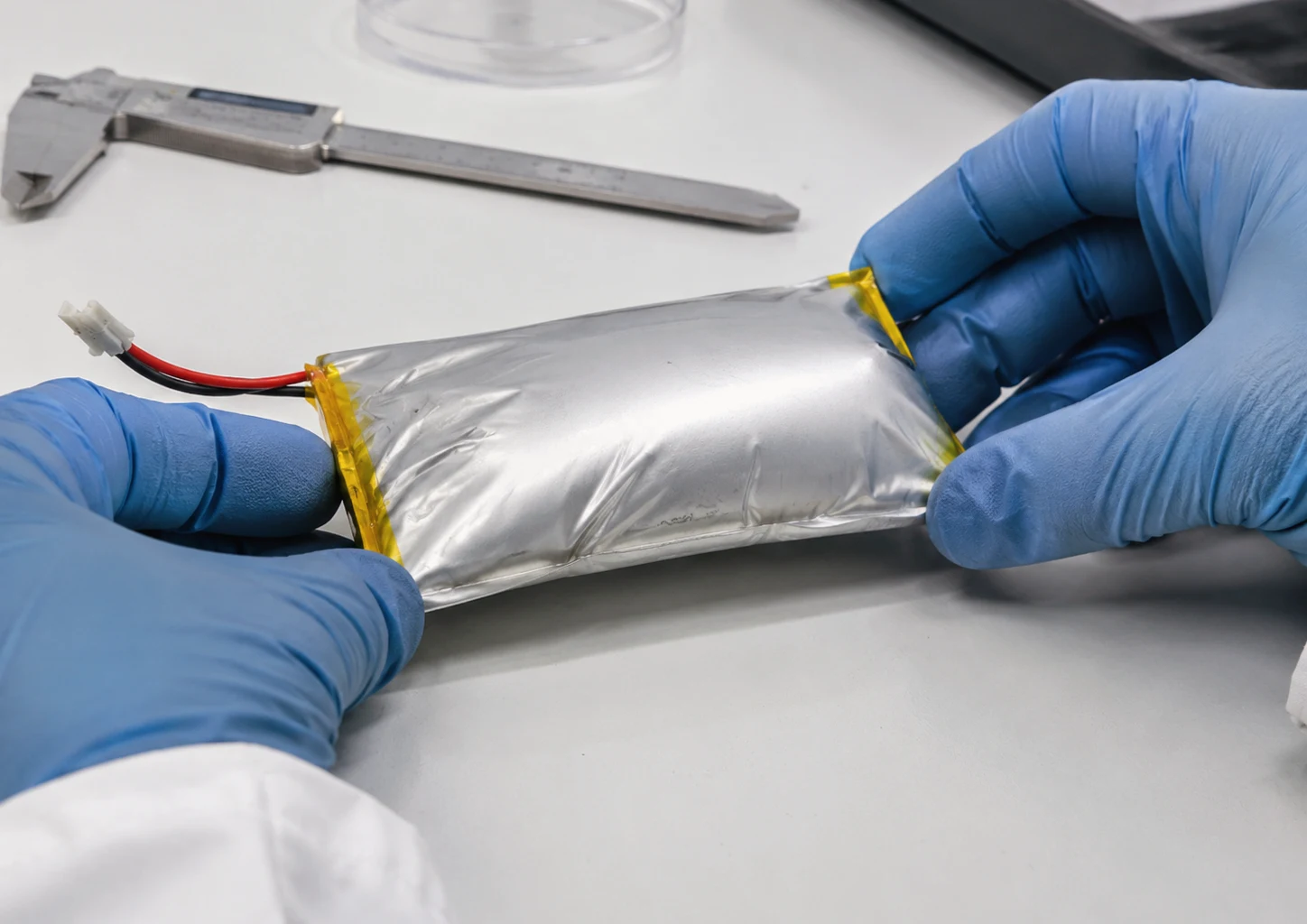
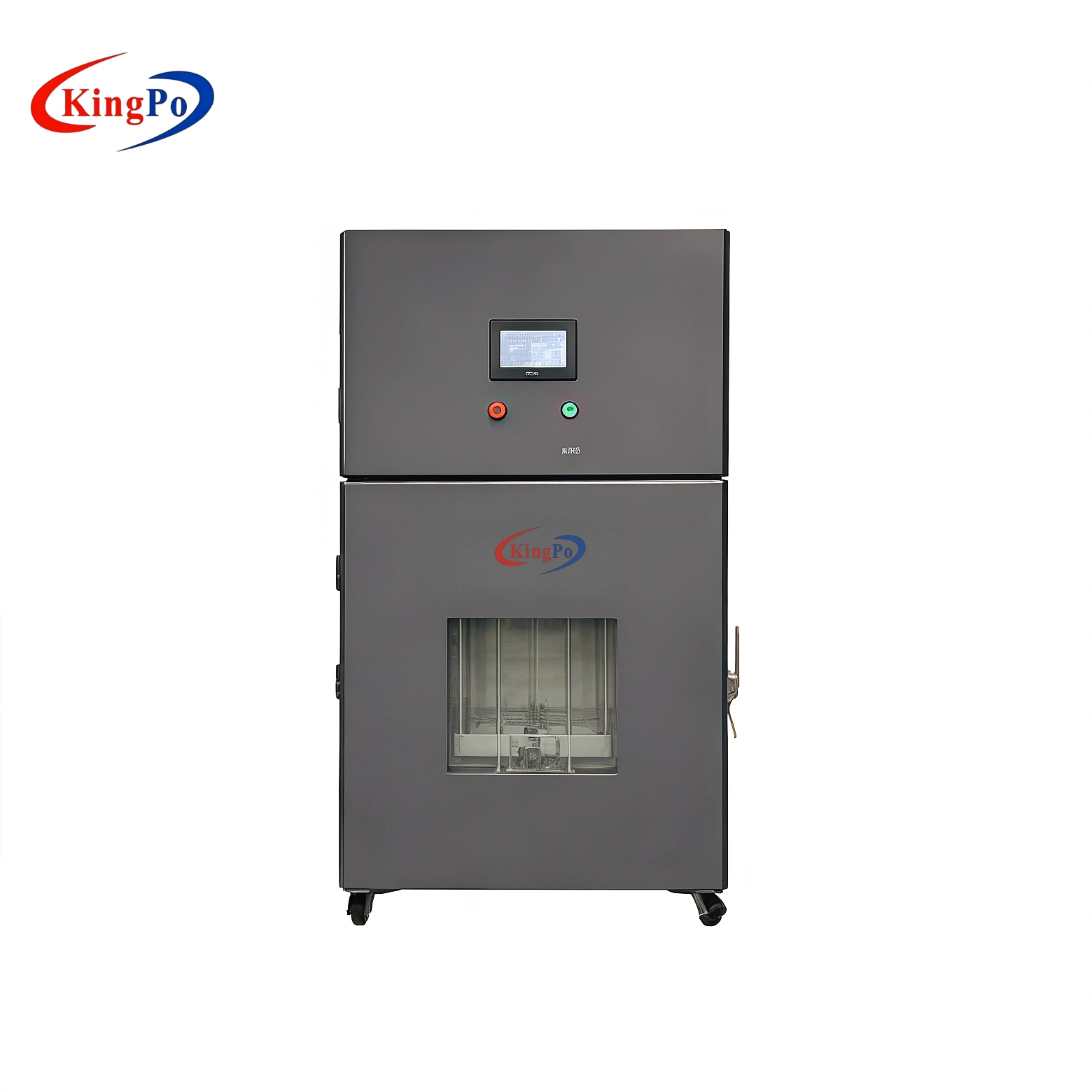
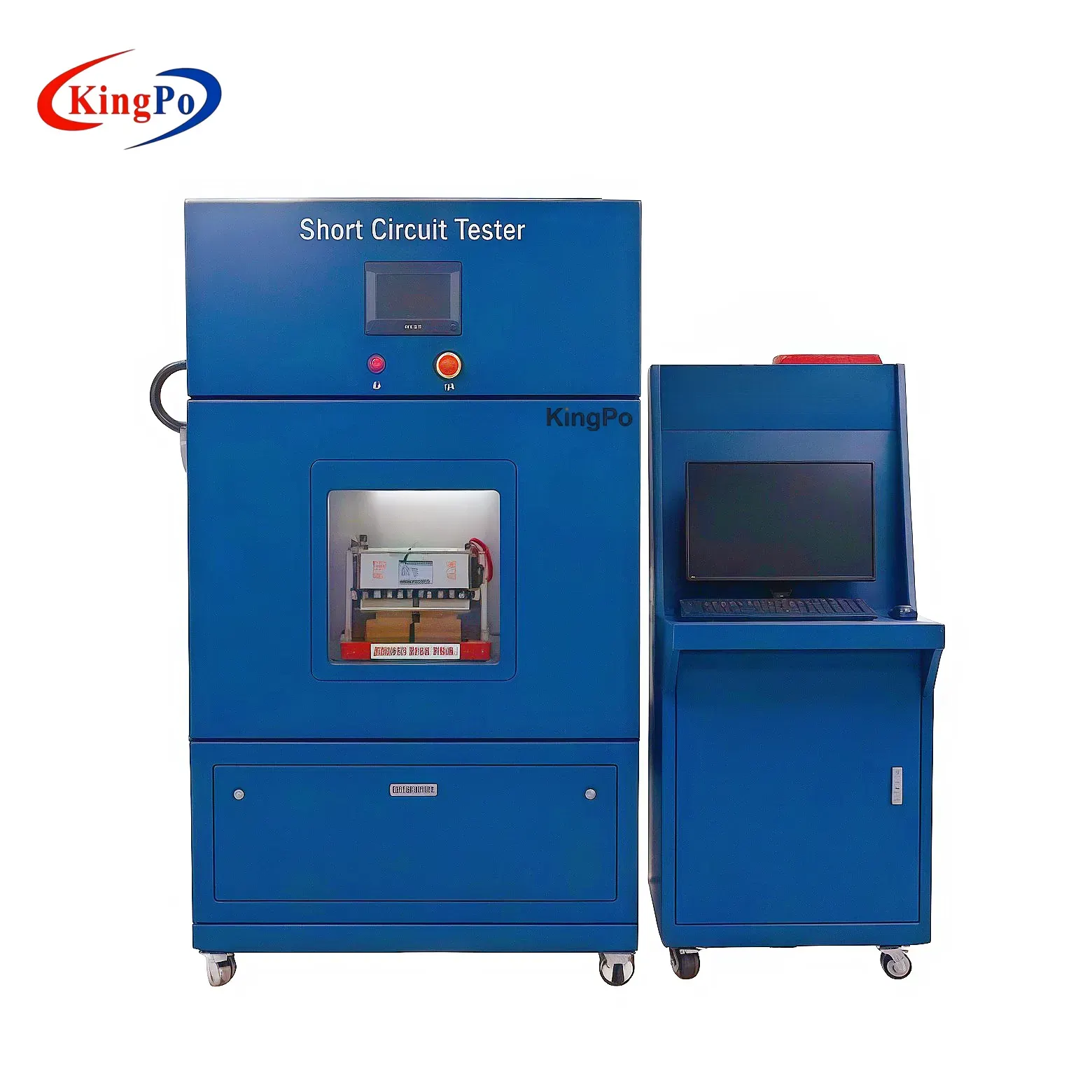
Lithium batteries are routinely transported by air, where changes in atmospheric pressure can affect battery enclosures, sealing structures and internal components. UN 38.3 Test T.1, known as the Altitude Simulation Test, evaluates whether lithium cells and batteries can withstand low-pressure conditions without hazardous physical or electrical failures.
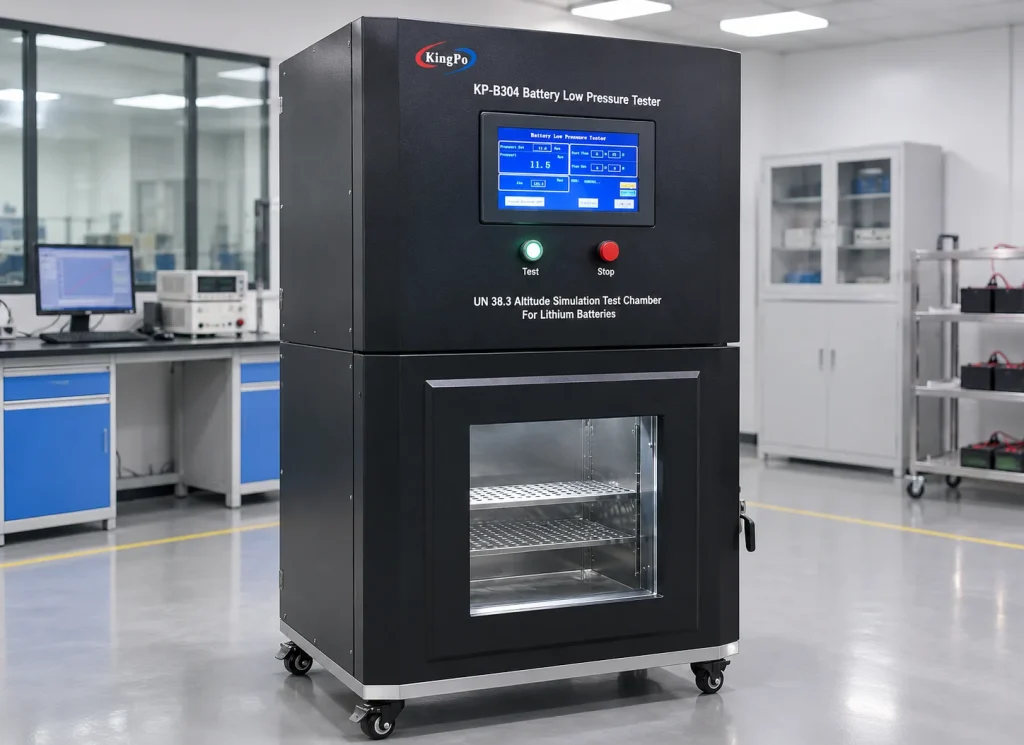
This test is part of the United Nations transport safety requirements for lithium metal and lithium-ion batteries. It reproduces a low-pressure environment associated with air transport and verifies battery integrity after exposure.
| Test Pressure | Temperature | Duration |
|---|---|---|
| ≤11.6 kPa | 20 ± 5°C | ≥6 Hours |
| UN 38.3.4.1.2 — Test T.1: Altitude Simulation | ||
1. What Is the UN 38.3 T.1 Altitude Simulation Test?
The UN 38.3 T.1 test simulates air transport under low-pressure conditions. During high-altitude flight, the external atmospheric pressure surrounding a battery is significantly lower than normal atmospheric pressure. This pressure difference may place additional stress on battery packaging, seals and internal structures.
The test evaluates whether a lithium cell or battery can maintain its integrity when exposed to a controlled low-pressure environment. Potential problems include electrolyte leakage, abnormal venting, enclosure damage and changes in open-circuit voltage.
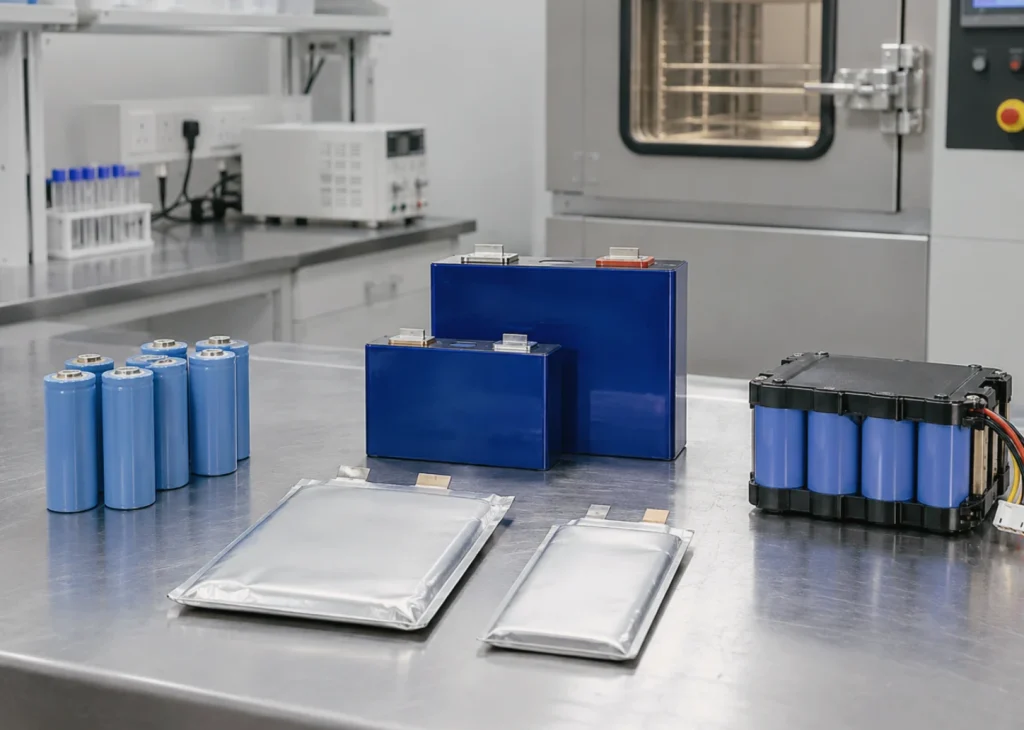
UN 38.3 applies to lithium metal and lithium-ion cells and batteries covered by the relevant transport provisions. The test may involve individual cells, single-cell batteries and multi-cell battery assemblies, depending on the applicable classification and testing requirements.
Why is the pressure set at 11.6 kPa?
The specified pressure represents a severe low-pressure environment used to simulate altitude-related conditions during air transport. It is an absolute pressure value, not a gauge pressure value. This distinction is essential when configuring and verifying the pressure control system.
2. UN 38.3 T.1 Test Conditions and Requirements
According to UN Manual of Tests and Criteria, Part III, Subsection 38.3.4.1.2, test cells and batteries must be stored under the specified pressure and temperature conditions for the required duration.
| Test Parameter | Requirement |
|---|---|
| Test Pressure | 11.6 kPa or less (absolute pressure) |
| Ambient Temperature | 20 ± 5°C |
| Exposure Duration | At least 6 hours |
| Test Environment | Controlled low-pressure atmosphere |
| Test Specimens | Applicable lithium cells and batteries |
Absolute Pressure vs. Gauge Pressure
One important consideration in altitude simulation testing is the pressure reference. UN 38.3 specifies absolute pressure. A pressure reading of 11.6 kPa absolute must not be confused with 11.6 kPa gauge pressure.
At standard atmospheric pressure, reducing chamber pressure to 11.6 kPa absolute requires a substantial reduction in the air pressure inside the chamber. Therefore, the pressure measurement and control system must use the correct absolute-pressure reference.
3. Required Test Equipment
A properly configured altitude simulation test system should provide stable low-pressure control, sufficient chamber capacity, reliable measurement and appropriate safety protection.
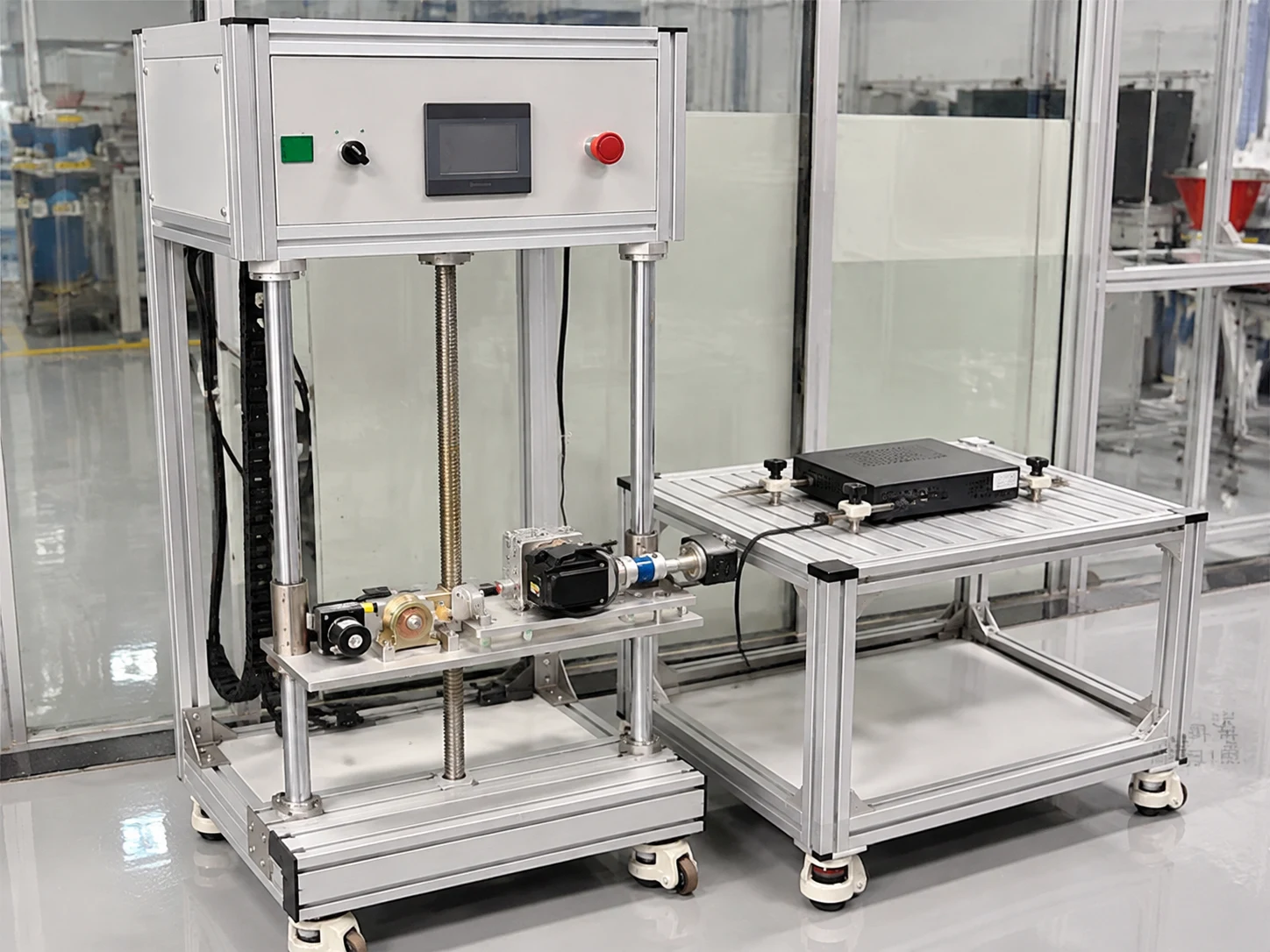
| Battery Low Pressure Test Chamber
Provides a sealed test environment and maintains the specified low-pressure condition. |
Vacuum Pump and Pressure Control System
Reduces chamber pressure and maintains the required absolute pressure throughout the test. |
| Pressure Measurement Instrument
Monitors and records chamber pressure during the test. |
Digital Multimeter or Voltage Recorder
Measures the open-circuit voltage of applicable specimens before and after testing. |
| Precision Balance
Can be used for supplementary mass measurements and leakage investigations. |
Temperature Monitoring Equipment
Verifies ambient temperature conditions during the test. |
Depending on the battery type and laboratory procedure, additional equipment may include battery charging and discharging systems, insulated sample fixtures, voltage monitoring connections and protective enclosures.
The test chamber should provide sufficient space for the specimens and appropriate electrical connections. Its vacuum system, pressure measurement range and safety design should be selected according to the battery configuration and applicable testing requirements.
4. UN 38.3 T.1 Step-by-Step Test Procedure
Step 01 — Sample Preparation and Initial Inspection
Prepare the lithium cells or batteries according to the applicable UN 38.3 sample preparation requirements. Check the external condition of each specimen and record its identification, initial open-circuit voltage and relevant physical characteristics.
Inspect the battery enclosure, terminals, sealing structures and visible surfaces for pre-existing damage. Charging and discharging preparation must follow the applicable specimen preparation procedure rather than an assumed universal charge state.
Step 02 — Specimen Installation
Place the specimens inside the low-pressure test chamber using suitable supports or fixtures. Arrange the samples to prevent unnecessary contact, compression or mechanical interference.
Where voltage monitoring connections are required by the laboratory procedure, install and check the measurement leads before closing the chamber.
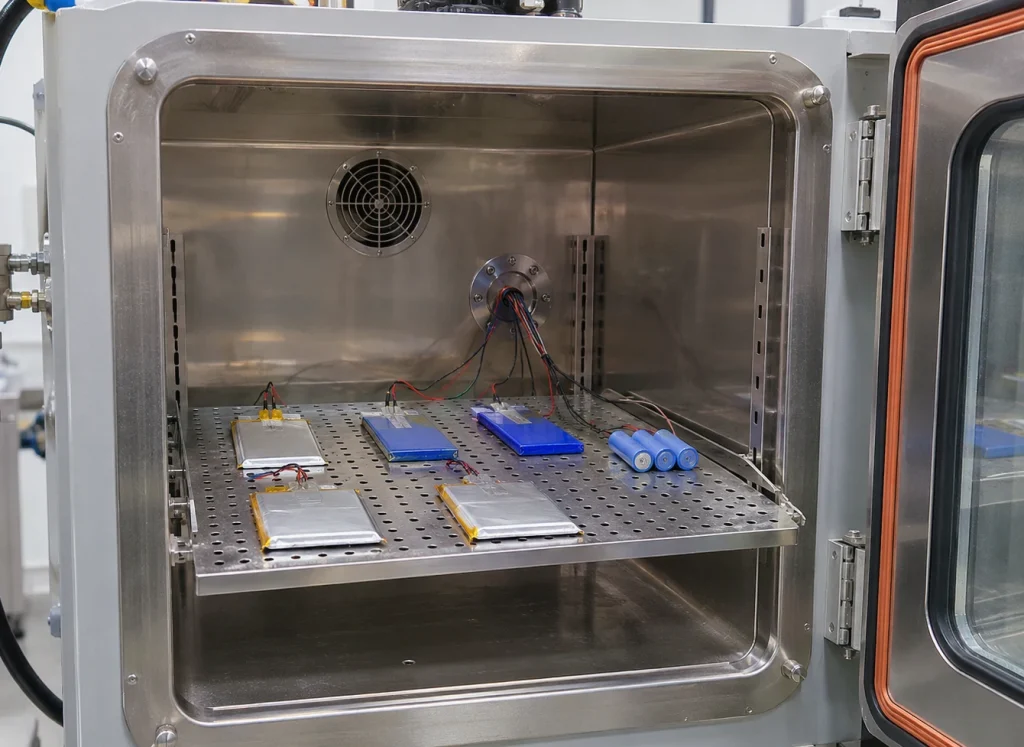
Step 03 — Establish the Test Environment
Confirm that the test environment is within the specified ambient temperature range of 20 ± 5°C. Verify the chamber sealing condition, pressure measurement system and control functions before starting the test.
Step 04 — Reduce Chamber Pressure
Activate the vacuum system and gradually reduce the chamber pressure until it reaches 11.6 kPa absolute pressure or less. Confirm the actual pressure reading using the appropriate pressure measurement instrument.
Step 05 — Maintain Low Pressure
Maintain the specified low-pressure condition for at least six hours at an ambient temperature of 20 ± 5°C. Record the test pressure and relevant environmental data throughout the exposure period.
Step 06 — Restore Pressure and Inspect Samples
After the exposure period, restore the chamber to normal atmospheric pressure using the laboratory’s established operating procedure. Remove the specimens and inspect them for leakage, venting, disassembly, rupture or fire.
Measure the post-test open-circuit voltage of each applicable specimen and compare it with the initial measurement.
5. UN 38.3 T.1 Pass/Fail Criteria
According to Subsection 38.3.4.1.3, cells and batteries must satisfy the specified physical safety conditions and electrical acceptance criteria after the test.
| Evaluation Item | Acceptance Requirement |
|---|---|
| Leakage | No leakage |
| Venting | No venting |
| Disassembly | No disassembly |
| Rupture | No rupture |
| Fire | No fire |
| Open-Circuit Voltage | At least 90% of the pre-test value |
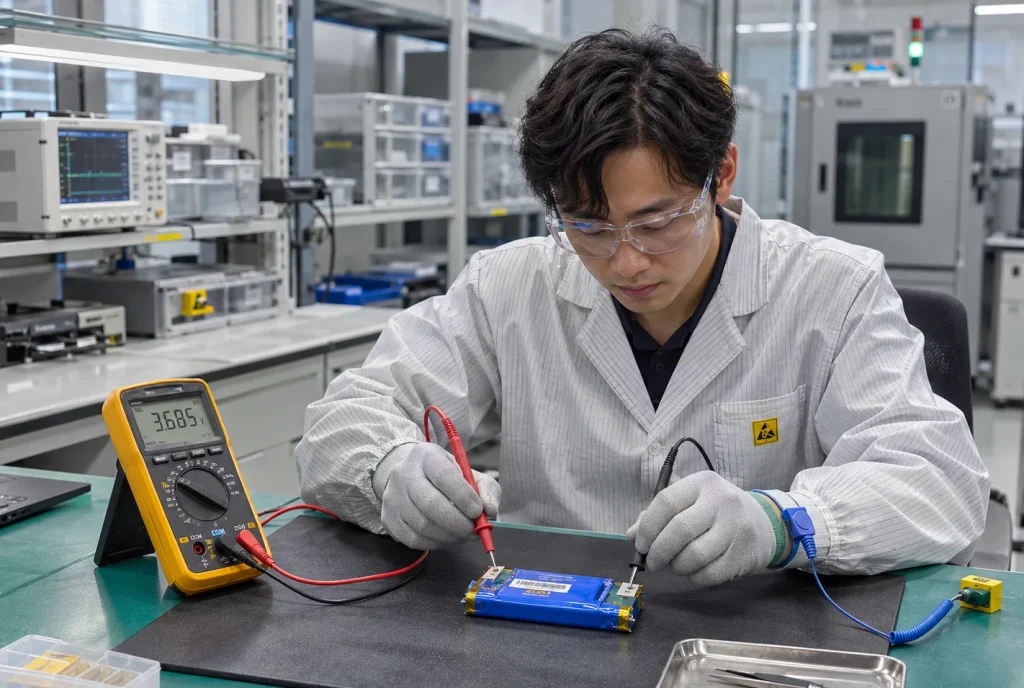
The open-circuit voltage requirement does not apply to test cells and batteries in a fully discharged state.
Open-Circuit Voltage Retention Calculation
The voltage retention ratio can be calculated using the following formula:
- Vbefore: Open-circuit voltage immediately before the test.
- Vafter: Open-circuit voltage after the test.
- Acceptance: Voltage retention must be at least 90%, except for fully discharged test specimens.
Important clarification about mass loss
Earlier editions of UN 38.3 included “no mass loss” in the T.1 acceptance criteria. This phrase was deleted through an earlier amendment. It is not a separate T.1 acceptance criterion in the current text. Mass measurements may still be useful for supplementary laboratory investigations, but should not be presented as an additional mandatory T.1 pass/fail requirement.
6. Related International Standards
In addition to UN 38.3, several international standards address lithium battery transportation safety and low-pressure environmental testing. Although their test objectives may overlap, their application scopes and procedures are not necessarily identical.
IEC 62281 — Safety of Primary and Secondary Lithium Cells and Batteries During Transport
IEC 62281 is the most directly related IEC International Standard for lithium battery transportation safety. It specifies test methods and requirements for primary and secondary lithium cells and batteries to ensure their safety during transport.
Its subject matter is closely related to UN 38.3, but IEC 62281 includes its own requirements and differences from the UN Manual. The applicable specimen preparation and test requirements should be checked against the relevant edition rather than assuming the two documents are identical.
Current consolidated edition:
IEC 62281:2019 + AMD1:2021 + AMD2:2023.
IEC 60068-2-13:2021 — Environmental Testing, Test M: Low Air Pressure
IEC 60068-2-13 specifies low-air-pressure test methods for specimens that may experience reduced atmospheric pressure during transportation, storage or operation.
Unlike UN 38.3, which focuses on lithium battery transportation safety, IEC 60068-2-13 provides a broader environmental testing method for electrical and electronic products.
This standard is particularly relevant to laboratories evaluating the environmental performance of electronic components, assemblies and equipment under low-pressure conditions.
Official standard:
IEC 60068-2-13:2021.
IEC 62133-2 — Safety Requirements for Portable Sealed Secondary Lithium Cells and Batteries
IEC 62133-2 addresses the safety requirements and testing of portable sealed secondary lithium cells and batteries containing alkaline or other non-acid electrolytes.
Its scope is different from the transportation-focused UN 38.3 and IEC 62281 standards. However, its battery safety requirements make it relevant when selecting test equipment for portable lithium battery applications.
IEC TR 62368-2:2025 — Guidance for Audio/Video and ICT Equipment Safety
IEC TR 62368-2:2025 provides explanatory material associated with IEC 62368-1. Its guidance on lithium battery safety references altitude test data specified in IEC 62281 or equivalent methods such as UN 38.3 T.1.
This provides an additional connection between battery altitude simulation and the safety assessment of batteries used in information and communication technology equipment.
Understanding the relationship between these standards
- UN 38.3: Transportation classification and lithium battery safety testing.
- IEC 62281: International Standard for lithium battery transportation safety.
- IEC 60068-2-13: General environmental low-pressure testing.
- IEC 62133-2: Portable rechargeable lithium battery safety.
- IEC TR 62368-2: Supporting technical guidance for ICT and audio/video equipment safety.
These standards should be applied according to their respective scopes and requirements. Similar test conditions do not automatically establish equivalence.
7. Typical Failure Modes and Possible Causes
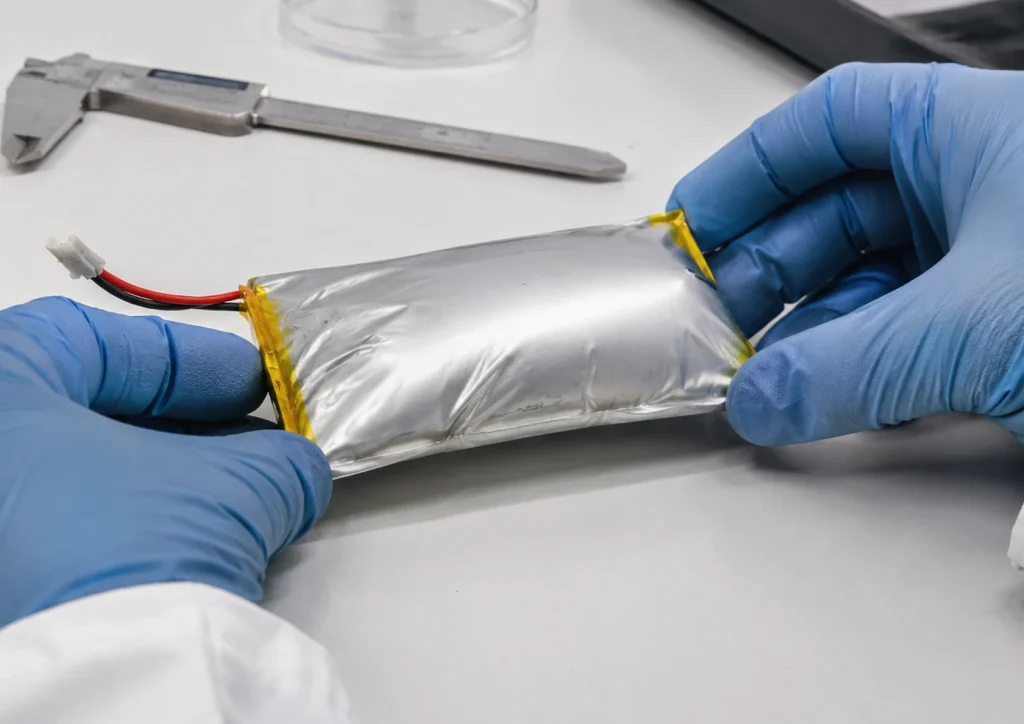
Low-pressure exposure can reveal weaknesses in battery packaging, sealing and internal construction. The following are typical failure observations and possible engineering causes that laboratories may investigate.
| Observed Condition | Possible Technical Causes |
|---|---|
| Pouch swelling | Internal gas accumulation, pressure differential or insufficient enclosure strength. |
| Electrolyte leakage | Defective pouch sealing, terminal sealing or enclosure joints. |
| Abnormal venting | Internal gas generation or activation of a pressure-relief mechanism. |
| Enclosure deformation | Insufficient mechanical strength or structural weaknesses. |
| Abnormal voltage reduction | Internal electrical abnormalities, damaged connections or possible internal short-circuit conditions. |
A particular failure observation does not automatically identify its root cause. Further inspection, electrical analysis and material evaluation may be necessary to determine the underlying mechanism.
8. Selecting a Battery Low Pressure Test Chamber
The test chamber is the primary piece of equipment used to establish and maintain the low-pressure environment required by UN 38.3 T.1. When selecting a system, laboratories should consider more than its ability to reach the specified vacuum level.
- Pressure capability: The chamber must reach and maintain 11.6 kPa absolute pressure or less.
- Pressure measurement: The measurement system should provide an appropriate range and accuracy for the specified test condition.
- Chamber capacity: Internal dimensions should accommodate the intended cell, battery or battery assembly configuration.
- Test duration: The control system should support the required exposure period of at least six hours.
- Electrical monitoring: Voltage measurement connections can be incorporated where required by the laboratory test procedure.
- Safety protection: Chamber construction, pressure relief, electrical isolation and emergency protection should be considered for the battery types under test.
- Data recording: Pressure, temperature, voltage and test-time records help support traceability and result evaluation.
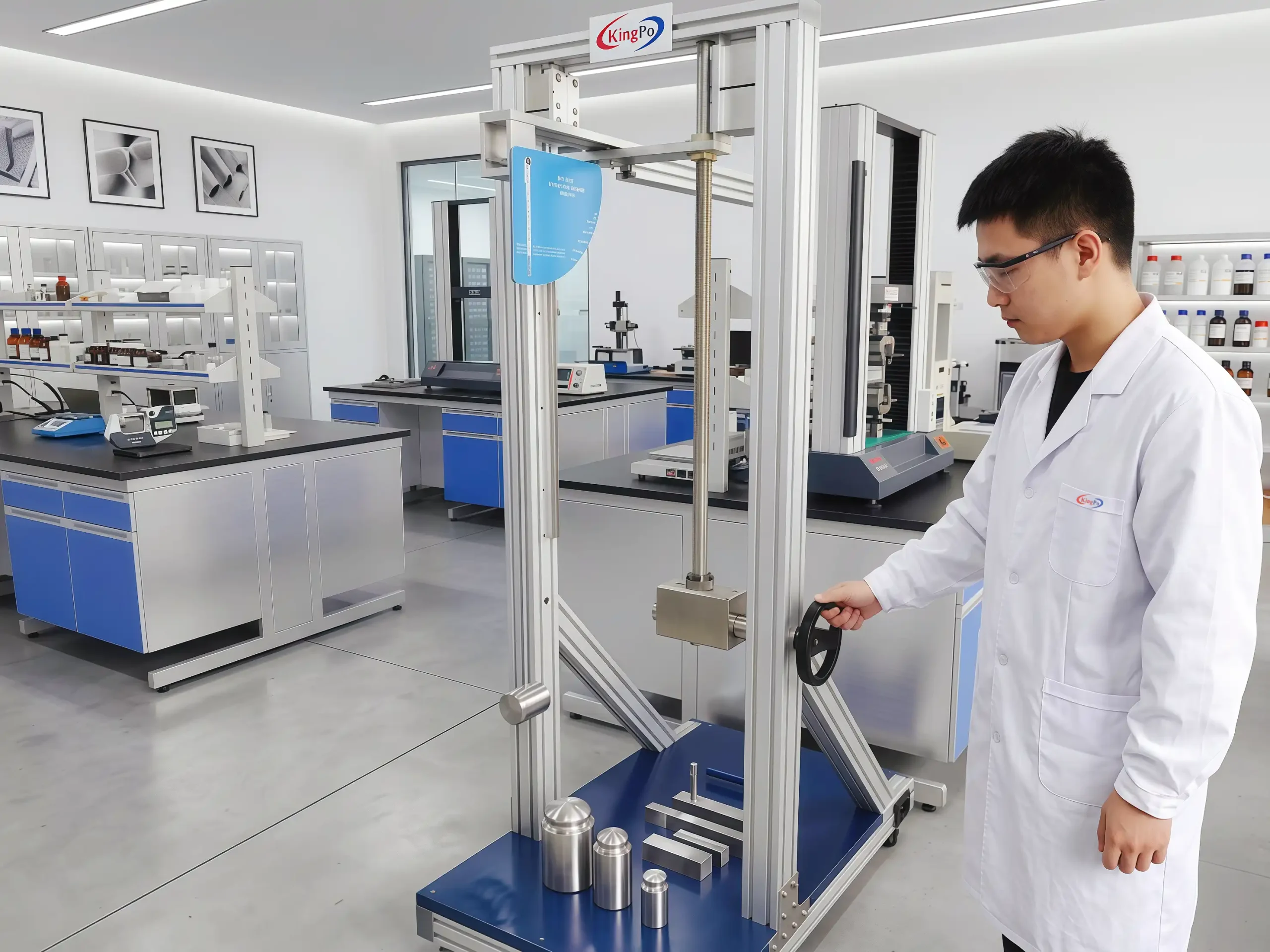
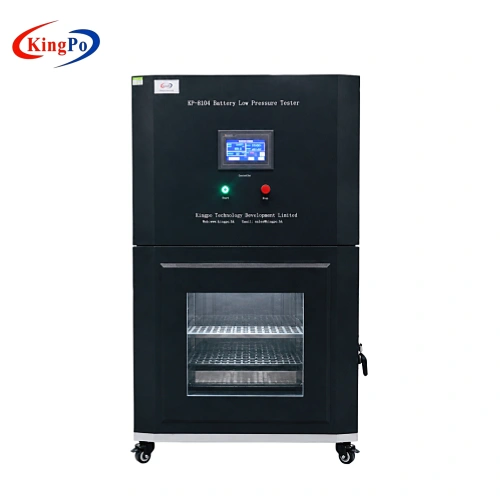
KingPo Battery Low Pressure Test Chamber
KingPo provides a Battery Low Pressure Test Chamber designed for altitude simulation testing of lithium batteries. The system supports low-pressure control at 11.6 kPa absolute pressure, automatic test timing and battery voltage monitoring.
It is intended for battery manufacturers, quality control laboratories, research institutions and testing organizations conducting low-pressure battery safety evaluations.
Conclusion
UN 38.3 T.1 is an important test for evaluating the safety of lithium cells and batteries under low-pressure conditions associated with air transportation. By maintaining a pressure of 11.6 kPa or less for at least six hours at 20 ± 5°C, the test evaluates battery integrity and verifies that specimens meet the specified physical and electrical acceptance criteria.
For battery manufacturers and testing laboratories, accurate pressure control, appropriate measurement systems and careful post-test inspection are essential to obtaining reliable results. Understanding the relationship between UN 38.3, IEC 62281 and IEC 60068-2-13 also helps laboratories select the appropriate test methods for different compliance and environmental evaluation requirements.
Frequently Asked Questions
1. What pressure is required for the UN 38.3 T.1 test?
The test requires a pressure of 11.6 kPa or less (absolute pressure), maintained for at least six hours.
2. What temperature is specified for the altitude simulation test?
The test is conducted at an ambient temperature of 20 ± 5°C.
3. Does UN 38.3 T.1 require continuous battery voltage monitoring?
The T.1 acceptance requirement specifies open-circuit voltage before and after the test. Continuous voltage monitoring may be used as an additional laboratory monitoring method, but it is not expressly specified as a mandatory continuous monitoring requirement in T.1.
4. What is the minimum acceptable voltage retention after testing?
The post-test open-circuit voltage must be at least 90% of the voltage immediately before the procedure. This requirement does not apply to fully discharged test cells and batteries.
5. Is IEC 62281 equivalent to UN 38.3?
IEC 62281 addresses lithium battery transportation safety and is closely related to UN 38.3. However, the two documents contain differences in certain requirements and test procedures. The applicable document and edition should be checked independently.
6. Can the same low-pressure chamber be used for IEC 60068-2-13 testing?
A suitable low-pressure chamber may be used for both applications if its pressure range, control capability, specimen capacity and other technical characteristics satisfy the specific test conditions of each standard.