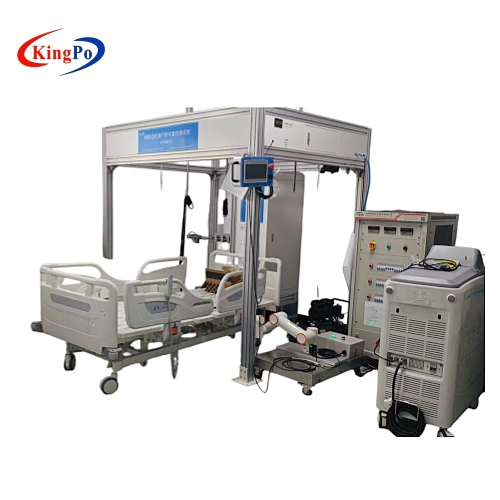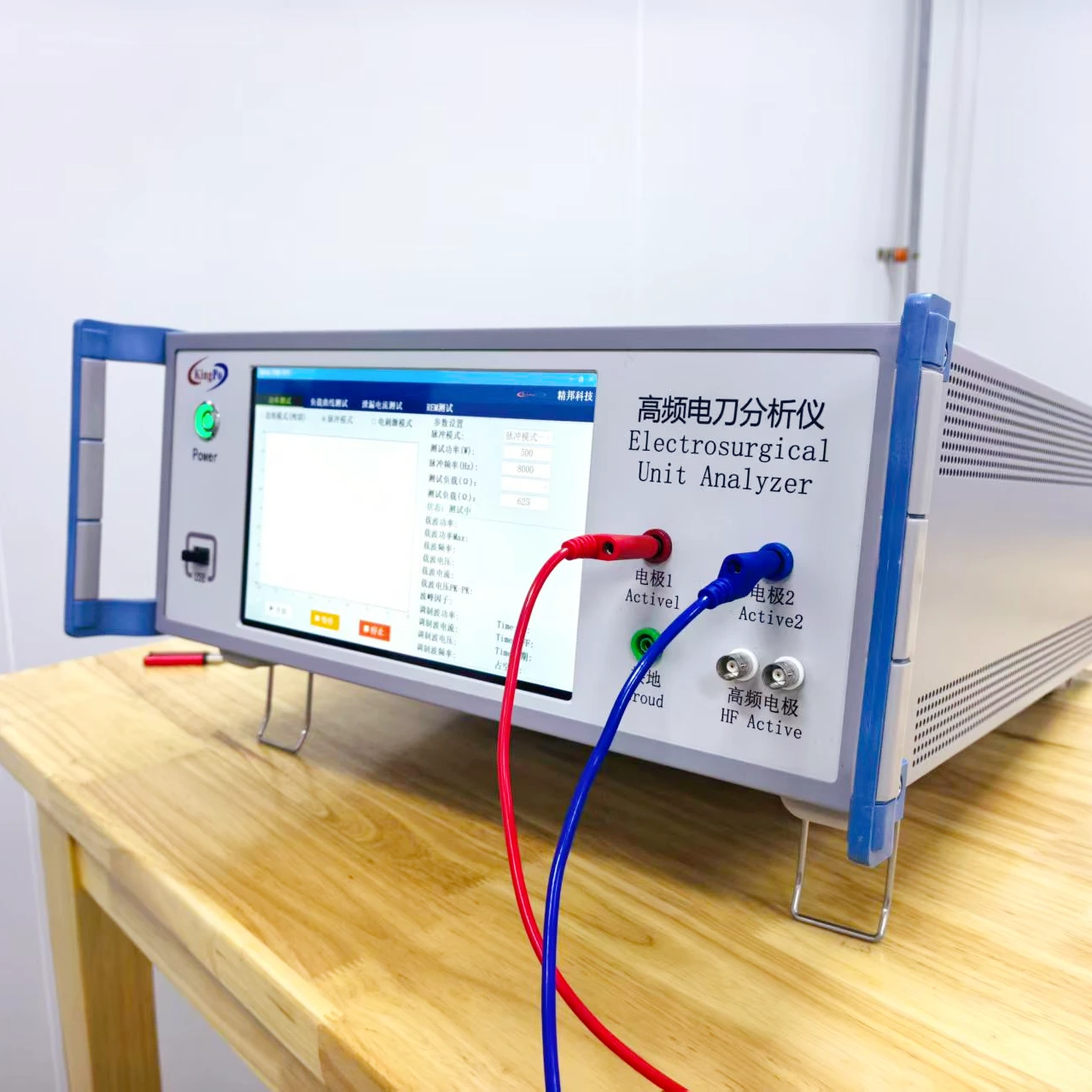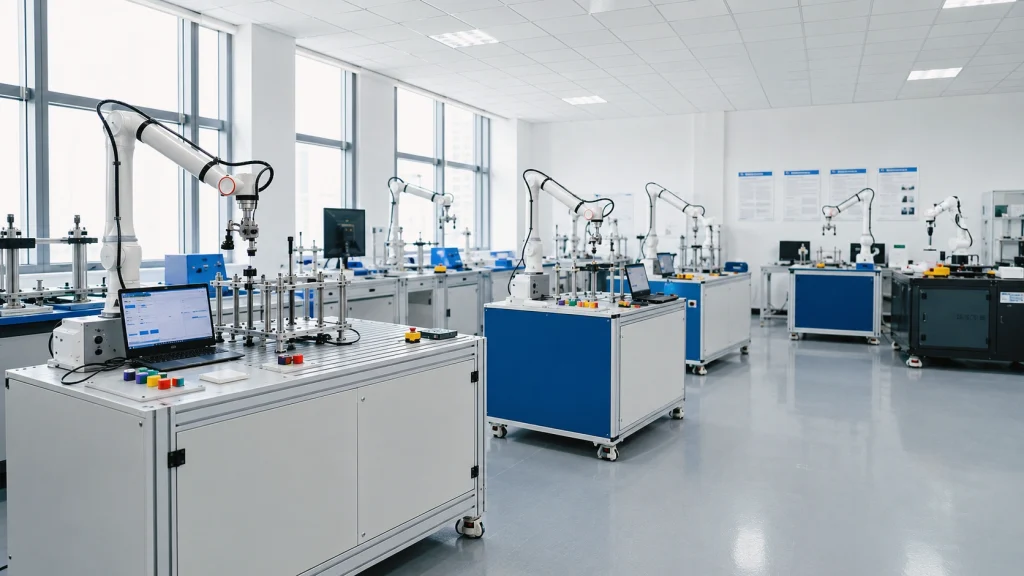
KingPo supplied a Medical Device Robotic Reliability Testing System to Yunnan Medical Device Inspection and Research Institute, supporting automated reliability, durability, and repetitive operation testing for medical device products.
The delivered system is designed as a customized robotic test platform. It combines robotic arm operation, product fixtures, a test bench, control software, and system integration to support repeated action testing under defined laboratory conditions.
This project reflects KingPo’s continued development of customized medical device testing equipment, especially for laboratories that need more automated, repeatable, and configurable test solutions for medical device product evaluation.
Project Snapshot
| Item | Project Information |
|---|---|
| Customer | Yunnan Medical Device Inspection and Research Institute |
| Supplied System | Medical Device Robotic Reliability Testing System |
| Product Type | Customized robotic automation test system |
| Application | Medical device product reliability and durability testing |
| Main Function | Automated repetitive operation and motion-based testing |
| System Structure | Robotic arm, test platform, fixture system, control software, and operating computer |
| Test Purpose | To support repeatable laboratory testing of medical device products or components |
| Project Type | Customized medical device reliability test equipment delivery |
Project Overview
Medical device reliability testing often requires repeated, consistent, and controlled operation of a product or component. In many test scenarios, manual operation is not ideal because the action angle, speed, contact position, force condition, and test cycle may vary from operator to operator.
For this project, KingPo supplied a robotic reliability testing system configured for medical device product testing applications. The system uses a robotic arm to perform programmed motion tasks on a test platform. With suitable fixtures and test programs, the system can support repeated actions such as pressing, triggering, positioning, gripping, moving, inserting, or other product-specific operation cycles.
The delivered equipment is not a standard single-purpose tester. It is a customized automation platform designed around the laboratory’s test object, operation method, fixture requirements, and reliability test procedure.
Project Background
Reliability testing is an important part of medical device product evaluation. Many medical devices and components need to remain stable after repeated use, long-term operation, or frequent mechanical interaction.
In practical laboratory work, some reliability tests involve thousands or even tens of thousands of repeated actions. These tests may include repeated button operation, handle movement, joint motion, connector operation, switch triggering, product positioning, or other functional cycles depending on the medical device design.
A robotic test system can help the laboratory perform these repeated operations with better consistency than manual testing. It also makes it easier to define motion paths, repeat operation cycles, and adjust the test setup for different product structures.
The system delivered by KingPo was developed to support this type of automated reliability testing requirement.
Supplied System Overview
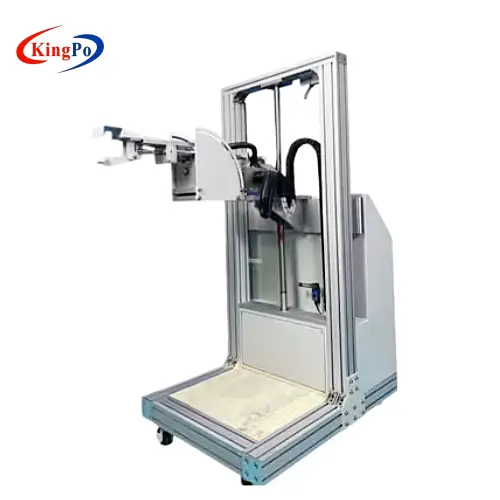
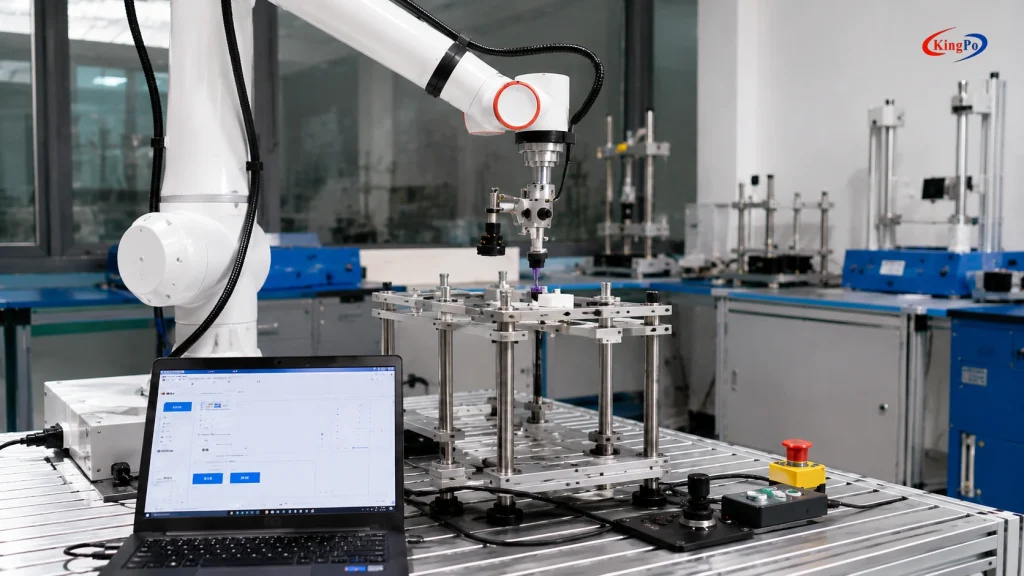
The delivered Medical Device Robotic Reliability Testing System includes a robotic arm installed on a mobile or fixed test platform. The system is equipped with a product testing area, control interface, operating computer, emergency control components, and customized fixtures according to the required test method.
The robotic arm can be programmed to perform repeated movement according to the selected test procedure. The test platform provides space for sample placement, fixture installation, product positioning, and auxiliary components.
Depending on the product and test requirement, the fixture can be designed to hold the medical device product, simulate a user action, contact a defined position, or support a repeated movement pattern. This makes the system suitable for customized reliability testing where the test object cannot be evaluated effectively by a conventional fixed-action durability tester.
Main Testing Applications
The Medical Device Robotic Reliability Testing System can be used for different medical device reliability and durability test applications, depending on the product structure and fixture design.
Typical test applications may include repeated pressing, repeated triggering, repeated gripping, repetitive movement, connector operation, switch operation, handle operation, component motion, positioning repeatability, and functional endurance testing.
For medical device manufacturers and testing laboratories, this type of system is useful when the product has complex operation actions or when the test requires more flexible movement than a traditional mechanical endurance tester can provide.
Why Robotic Testing Is Useful for Medical Device Reliability Evaluation
Traditional reliability testers are often designed for one fixed action, such as pushing, pulling, pressing, bending, or rotating. This can be suitable for many standard durability tests, but it may not be enough for medical device products with more complex operating methods.
A robotic test platform provides a more flexible approach. The movement path, action sequence, dwell time, operation frequency, and test cycle can be adjusted through programming. The same platform can also be adapted to different products by changing the fixture and test program.
For laboratory users, this helps reduce reliance on repeated manual operation and supports a more consistent test process. It also provides a practical platform for customized medical device reliability testing where the test method is closely related to the actual use condition of the product.
Engineering and Configuration Considerations
For a robotic medical device reliability test system, the key engineering requirement is not only the robot itself. The complete test setup must include the correct fixture, stable sample positioning, suitable motion path, safe operation area, control logic, and repeatable test procedure.
Before designing this type of system, the laboratory normally needs to confirm the product size, operation point, required motion, test cycle, applied direction, fixture method, operating speed, and whether additional sensing or data recording is required.
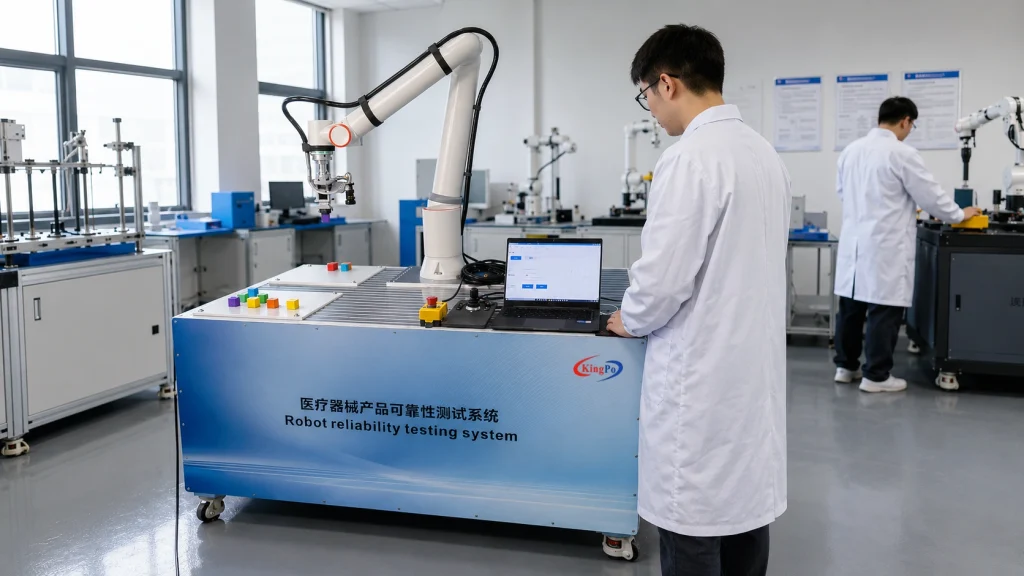
KingPo configured the system according to the project application, combining robotic motion with a dedicated test platform and control interface. The design allows the equipment to be used as a practical laboratory automation tool rather than only a robotic demonstration device.
Delivery and Laboratory Use Value
The project resulted in the delivery of a customized robotic reliability testing system for Yunnan Medical Device Inspection and Research Institute.
The supplied system provides a robotic platform for repeated operation testing of medical device products or components. It supports automated test execution, configurable movement, fixture-based sample positioning, and repeatable operation cycles under laboratory conditions.
For laboratories involved in medical device testing, this type of equipment can support reliability evaluation tasks that require long test duration, repeated mechanical actions, or consistent operation conditions. It also provides a foundation for future customized robotic test applications where the product action is difficult to reproduce by a simple single-axis durability tester.
The delivered system is intended to support laboratory testing and technical evaluation. It does not represent a certification result, product approval, or endorsement by any regulatory body or testing institution.
Application Areas
The Medical Device Robotic Reliability Testing System can be used for medical device product reliability testing, durability testing, repetitive operation testing, automated motion testing, and customized functional cycle testing.
It is suitable for medical device testing laboratories, inspection institutes, manufacturers, research institutions, and quality control departments that need to evaluate repeated-use performance or mechanical operation reliability of medical device products.
The system can also be customized for different products by changing the robotic program, fixture structure, test platform, end effector, and auxiliary measurement configuration.
Technical Notes
What is a Medical Device Robotic Reliability Testing System?
A Medical Device Robotic Reliability Testing System is a customized automated test platform that uses a robotic arm, fixture, control software, and test bench to perform repeated operation tests on medical device products or components.
What is the difference between this system and a standard durability tester?
A standard durability tester usually performs one fixed action. A robotic reliability testing system can perform more flexible motion paths and action sequences, making it suitable for products with complex operation methods.
What types of actions can the system simulate?
Depending on the fixture and program, the system can simulate repeated pressing, triggering, gripping, moving, positioning, inserting, or other product-specific operation cycles.
Why is robotic automation useful for reliability testing?
Robotic automation helps perform repeated actions with more consistent movement and timing than manual operation. It is especially useful for long-cycle tests or products that require repeatable motion control.
Can the system be customized for different medical device products?
Yes. The robot program, fixture, test platform, end effector, sample positioning method, and auxiliary control functions can be customized according to the product structure and test requirement.
What information is needed before designing a similar system?
Customers should provide the product size, product drawings or samples, required test action, operation position, test cycle, test speed, fixture requirement, expected load condition, and any data recording or safety requirements.
About KingPo
KingPo Technology Development Limited develops and manufactures testing equipment for medical device testing, electrical safety testing, ingress protection testing, reliability testing, environmental testing, and customized laboratory automation systems.
In addition to standard test instruments, KingPo provides customized test systems for laboratories and manufacturers when standard equipment cannot fully meet the product structure, test procedure, or automation requirement.
Need a Customized Medical Device Robotic Reliability Testing System?
KingPo can develop customized robotic reliability testing systems for medical device products, including robotic motion platforms, test fixtures, sample holders, operation simulators, control software, and integrated laboratory test systems.
For similar projects, customers may provide product samples, product drawings, expected test actions, reliability test cycles, operating speed, fixture requirements, and any special measurement or safety requirements for technical discussion.