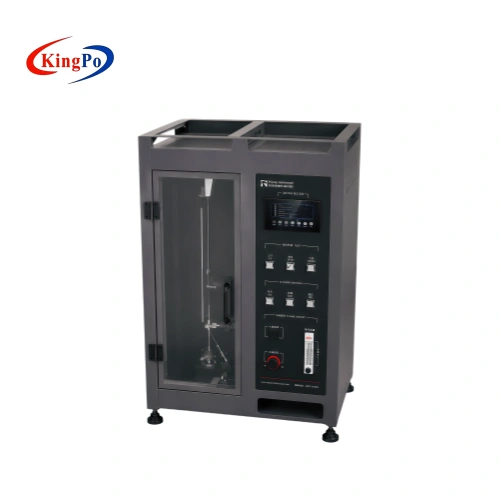
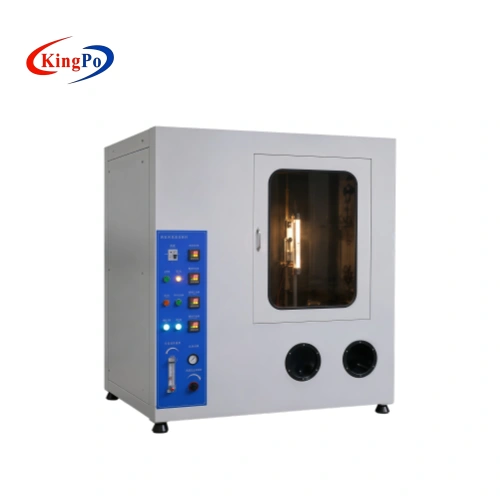
You will find that the vertical flame tester stands out as the best choice for cable safety. This method gives you a clear view of how cables react to fire, helping you select safer products. Choosing the right flame tester matters because industry standards emphasize the need for reliable fire safety tests.
-
Flammability tests protect electrical cables from fire hazards.
-
These tests show which cables ignite easily, guiding you to safer options.
-
Meeting standards builds trust with customers and regulators, and ensures cables are allowed in critical applications.
Key Takeaways
-
Vertical flame testers provide a more rigorous assessment of cable safety, simulating severe fire conditions.
-
Horizontal flame testers are suitable for low-risk environments, focusing on how quickly flames spread across flat cables.
-
Choose vertical flame testing for cables in critical applications like hospitals and data centers to ensure maximum safety.
-
Evaluate burn duration and self-extinguishing capabilities to determine a cable’s fire resistance.
-
Understand the drip factor; vertical tests measure flaming droplets that can ignite secondary fires.
-
Always align your testing method with the cable’s intended use and the level of fire risk in your environment.
-
Compliance with industry standards like UL and IEC is crucial for ensuring cable safety and passing certification.
-
Utilize KINGPO’s advanced flame testers for accurate results and ongoing support in meeting safety regulations.
Quick Comparison
Key Differences Table
You need to understand how vertical and horizontal flame testers differ before choosing the right tool for cable safety. The table below highlights the main performance differences between these two methods. Each feature shows how the testers operate and what they measure.
|
Feature |
Horizontal Flame Testing |
Vertical Flame Testing |
|---|---|---|
|
Specimen Orientation |
Laying perfectly level |
Straight up and down |
|
Primary Metric |
Speed of the flame spread |
Time to extinguish and dripping behavior |
|
Severity Level |
Lower (simulates minor ignition) |
Higher (simulates rapid fire growth) |
|
The Drip Factor |
Usually not a major focus |
A massive deal for the final grade |
|
Everyday Gear You’d Test |
Plastic computer mice, decorative desk trim |
Heavy-duty server racks, aircraft interior panels |
This table gives you a quick overview. Horizontal flame testers focus on how fast the flame moves across a cable lying flat. Vertical flame testers measure how long the cable burns, if it self-extinguishes, and whether flaming droplets fall. You see that vertical testing simulates more severe fire conditions, which is crucial for cables used in demanding environments.
Tip: If you want to test cables for critical applications, pay close attention to the drip factor and burning duration. These features matter most in vertical flame testing.
When to Use Each Tester
You should select a flame tester based on your cable’s intended use and the level of fire risk you need to address.
-
Horizontal Flame Tester:
Choose this method when you test cables or materials for low-risk environments. You often use horizontal testing for products like computer accessories, decorative trims, or cables that do not face intense fire hazards. This tester helps you check if the cable resists minor ignition sources and how quickly flames spread across its surface. -
Vertical Flame Tester:
Use this tester for cables installed in high-risk areas. You rely on vertical testing for power distribution cables, telecommunications wiring, and cables inside server racks or aircraft. This method evaluates how the cable reacts to severe fire exposure, including whether it produces flaming droplets and how long it burns. You gain insight into the cable’s ability to self-extinguish and prevent fire from spreading. -
Industry Standards:
Many safety standards require vertical flame testing for cables used in critical infrastructure. You meet these requirements by choosing a vertical flame tester, ensuring your products pass rigorous certification processes.
Note: If you manufacture cables for hospitals, airports, or data centers, vertical flame testing gives you the most reliable results for fire safety.
You make a safer choice when you match the tester to your cable’s application. Vertical flame testers offer a higher level of scrutiny, which is why you see them recommended for essential cable installations.
Vertical Flame Tester Overview
How It Works
Test Procedure
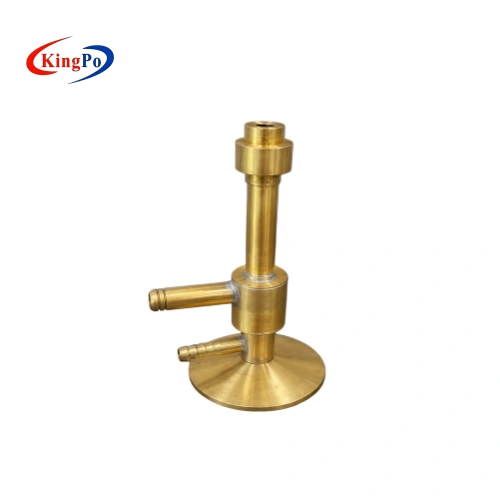
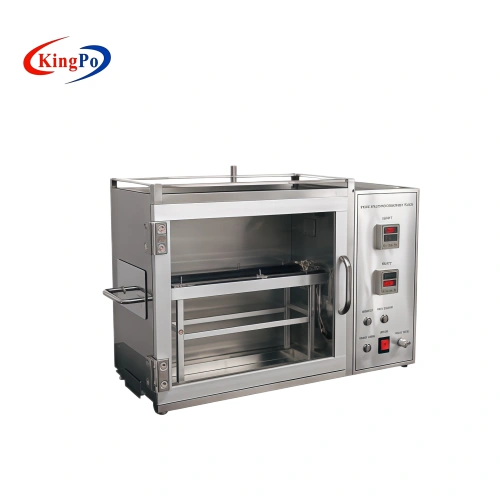
You use a vertical flame tester to evaluate how cables respond to fire exposure. The process starts by mounting the cable specimen vertically inside a combustion chamber. The burner assembly, made from high-quality brass, delivers a controlled propane-air flame to the lower end of the cable. The ignition system operates automatically, ensuring consistent flame application. The digital display and automatic control functions allow you to set precise timing for each test. The chamber keeps the environment stable, so you get repeatable results. You can adjust the angle from 0 to 90 degrees, which helps you test cables in different configurations.
Equipment Features
The vertical flame tester includes several advanced features that improve your testing experience:
|
Key Feature |
Description |
|---|---|
|
Automatic Ignition |
High-voltage igniter for seamless automatic ignition, enhancing operational convenience. |
|
Corrosion Resistance Design |
Materials resistant to smoke corrosion, extending the equipment’s lifespan. |
|
High-Quality Components |
Critical components from reputable sources ensure stability and reliability of the equipment. |
|
Digital Display and Automatic Control |
Digital display timing functions enable fully automated test procedures for user-friendly operation. |
|
Operating Principle |
Control circuit regulates flame application time, ensuring accurate and repeatable test results. |
You benefit from CNAS calibration certificates, which guarantee traceability and compliance with international flammability test standards. KINGPO’s Flammability Test for Cables meets IEC 60332-1 and IEC 60695-11-2 requirements, so you can trust the results.
What It Measures
Flame Spread
The vertical flame test measures the distance that fire travels along the cable. According to the flammability test standard GB/T 18380.11, the flame spread must stay within strict limits. You check the distance between the lower edge of the upper bracket and the carbonized part, ensuring it exceeds 50mm. The combustion must not extend downward more than 540mm.
Burning Duration
You track how long the cable continues to burn after removing the flame. The flammability test standard GB/T 18380.12 requires the afterburning time to be less than 60 seconds. The glowing time must not exceed 120 seconds. These measurements help you determine the flammability rating and the cable’s ability to self-extinguish.
Flaming Droplets
The vertical flame tester checks for flaming droplets during the test. The flammability test standard GB/T 18380.13 states that droplets must not ignite the absorbent cotton placed below the cable. This parameter is critical for fire protection and safety.
Cable Safety Impact
Real-World Scenarios
You see the impact of vertical flame testing severity in real-world applications. Manufacturers and labs use vertical flame testers to ensure cables meet international safety standards. This proactive approach improves fire protection and streamlines compliance. KINGPO’s equipment supports over 140 cable producers and accredited labs worldwide. You gain confidence that cables tested with vertical burning methods offer reliable safety for power distribution, telecommunications, and building wiring. The latest technological advancements, such as automatic ignition and digital controls, make your tests more accurate and efficient. You help bring safer products to market and protect people from electrical fires.
Enhance Your Cable Testing
Discover how KingPo’s Flammability Test for Cables can improve your fire safety validation process.
Horizontal Flame Tester Overview
How It Works
Test Procedure
You use a horizontal flame tester to examine how cables behave when exposed to fire while lying flat. The test begins by placing the cable specimen horizontally inside a controlled chamber. You apply a flame to one end of the cable for a set period. The chamber keeps the environment stable, so you can observe the burning behavior of plastics and other materials. You watch how the flame moves across the cable and record the time it takes for the fire to stop. This process forms the foundation of horizontal testing basics.
Equipment Features
Horizontal flame testers feature a simple design that makes them easy to operate. You find adjustable sample holders that secure the cable in place. The ignition system provides consistent flame application. Digital timers help you track burning duration accurately. The chamber includes safety features to protect you during testing. You can rely on these testers for repeatable results in routine quality checks.
What It Measures
Flame Spread
The horizontal flame test measures how quickly fire travels along the surface of the cable. You focus on lateral flame spread, which is important for understanding how fire might move in real-world installations. The test helps you determine if the cable material slows down or stops the flame.
Self-Extinguishing
You check if the cable stops burning after the flame is removed. This self-extinguishing property is a key indicator of flammability. If the cable self-extinguishes, you know it offers better fire protection in everyday environments.
Cable Safety Impact
Application Scenarios
You see horizontal burning tests used in many settings. Manufacturers rely on this method to assess cable safety in offices, hospitals, and schools. The horizontal flame test evaluates fire response for cables arranged horizontally, which is common in industrial installations. You use this test to check fire-retardant qualities and ensure compliance with safety regulations.
-
Offices
-
Hospitals
-
Schools
-
Industrial cable trays
Note: Horizontal flame testers provide valuable information for low-risk environments. You choose this method when you need to check basic fire resistance without simulating severe fire conditions. Compared to vertical flame testers, horizontal testers focus on lateral flame spread and self-extinguishing, making them ideal for routine safety checks.
Head-to-Head Comparison
Test Results
You see clear differences when you compare vertical and horizontal flame tests. Each method uses a unique approach to measure cable safety. The vertical flame test places the cable upright and applies the flame for a set time. You observe self-extinguishing behavior and check for flaming drips. The horizontal flame test mounts the cable flat and applies the flame to the edge. You measure how quickly fire spreads and how the cable reacts to flame propagation.
|
Test Method |
Position |
Flame Application |
Measurement Focus |
|---|---|---|---|
|
Horizontal Flame |
Horizontal |
Edge of the material |
Speed of fire spread and flame propagation |
|
Vertical Flame |
Vertical |
Fixed height for a period |
Self-extinguishing time and flaming drips |
You notice that vertical flame tests provide more severe conditions. These tests reveal how cables behave in high-risk environments. Horizontal flame tests focus on lateral flame spread and are suitable for less critical applications. You use both methods in the laboratory to ensure cables meet safety requirements.
-
Vertical Flame Test:
-
Material stands upright.
-
Flame is applied for 10 or 30 seconds.
-
You check for self-extinguishing and flaming drips.
-
-
Horizontal Flame Test:
-
Material lies flat.
-
Flame is applied to the edge for 30 seconds.
-
You measure burning speed and flame propagation.
-
Standards Compliance
UL 94, IEC, and Other Standards
You must follow strict standards when you conduct flame tests. UL 94 sets the benchmark for flammability ratings in the cable industry. You use both vertical and horizontal flame testers to meet UL 94 requirements. IEC standards, such as IEC 60695 and IEC 60332, also guide your testing procedures. The LISUN HVR-LS Horizontal Vertical Flame Tester allows you to perform tests in line with UL 94 and IEC 60695. You evaluate the flammability of materials used in electrical equipment and plastic components. These standards ensure your cables pass essential safety regulations.
You find that UL 94 requires you to test materials in both vertical and horizontal positions. You check for self-extinguishing properties, flame spread, and dripping behavior. IEC standards focus on flame propagation and burning duration. You must use laboratory equipment that complies with these standards to guarantee accurate results.
KINGPO’s Compliance Solutions
You rely on KINGPO’s solutions to meet international flame testing standards. KINGPO offers a range of compliance tools that help you validate cable safety.
|
Compliance Tool |
Purpose |
|---|---|
|
Pink Noise Generator (Model 9280) |
Ensures audio performance testing per IEC 62368-1 Annex E. |
|
Impulse Test Generators (Models 1950S & 10655) |
Validates surge resistance for electronics under Clause 5.4.2.3.2.5. |
|
Plug Capacitor Discharge Tester (KP-1060) |
Critical for assessing energy hazards in power components. |
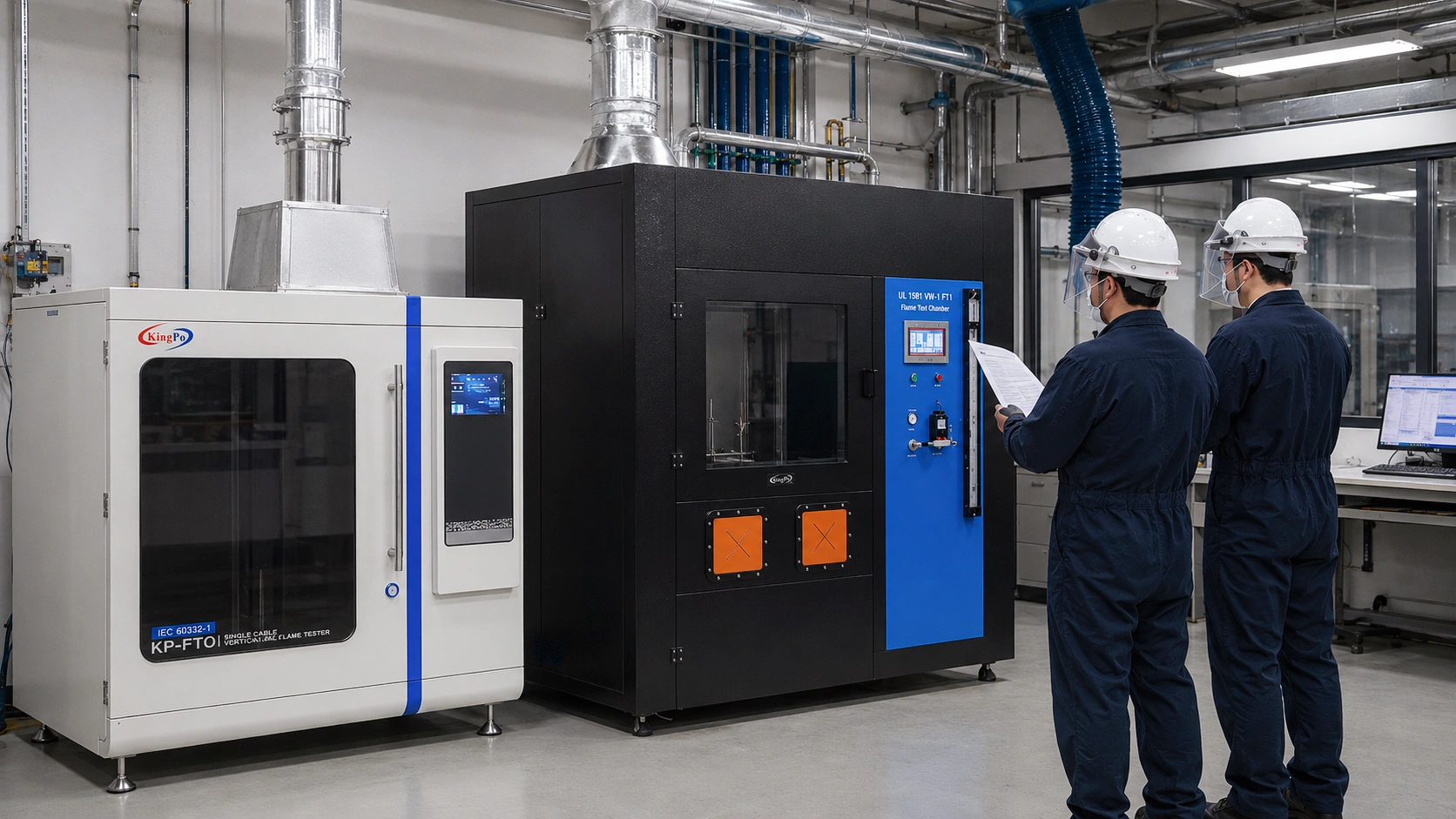
You use KINGPO’s combustion cabinet to comply with IEC60332 and UL1581 sections 1080.1 to 1080.14. The cabinet meets VW-1 flame test standards for UL13, UL444, and UL1655. You also achieve compliance with FT-1 and FT-2 of CSA. These tools support your laboratory in passing certification audits and maintaining product quality.
Real-World Implications
Demanding Tests
You face demanding tests when you work with cables for high-risk environments. Vertical flame testers evaluate self-extinguishing ability in a vertical position. This test is critical for materials likely to be vertical during a fire. Horizontal flame testers assess burn rate in a horizontal orientation. You use these tests for less critical applications.
|
Testing Method |
Description |
Implications for Safety in High-Risk Environments |
|---|---|---|
|
Vertical Flammability |
Evaluates self-extinguishing ability in a vertical position. |
Critical for materials likely to be vertical during a fire. |
|
Horizontal Flammability |
Assesses burn rate in a horizontal orientation. |
Suitable for less critical applications, potentially less safe. |
You choose vertical flame tests for cables installed in hospitals, airports, and data centers. These tests simulate severe fire conditions and help you select safer products. You use horizontal flame tests for cables in offices, schools, and industrial cable trays. Both tests play a role in your laboratory, but vertical tests offer higher scrutiny.
Tip: Always match the test method to your cable’s installation environment. You improve safety and meet regulatory requirements.
Cable Types
You test cables in either vertical or horizontal orientation. You use different procedures to meet flammability requirements. Some cable types show significant differences in flame test outcomes.
|
Method |
Flame Spread |
Heat Release |
Other Parameters |
|---|---|---|---|
|
Vertical |
Significant |
Adequate |
THR600s, HRRpeak |
|
Horizontal |
Limited |
Adequate |
FIGRA, TSP |
You see that power distribution cables, telecommunications wiring, and building cables require vertical flame tests. These cables must resist severe fire exposure and prevent flaming drips. Decorative cables and computer accessories often undergo horizontal flame tests. You use laboratory equipment to ensure each cable type meets UL 94 and IEC standards.
Note: You must understand the differences in flame spread and heat release for each cable type. This knowledge helps you choose the right test and improve cable safety.
Industry Standards
Major Standards Overview
You need to understand the main standards that guide cable flame testing. These standards set strict requirements for both vertical and horizontal flame testers. Regulatory bodies like UL and CSA create rules that help you measure cable safety. You see that each standard focuses on different aspects of fire resistance.
|
Standard |
Type of Test |
Description |
|---|---|---|
|
UL VW-1 |
Vertical |
Tests cable’s ability to self-extinguish after flame exposure. |
|
UL 910 |
Horizontal |
Monitors flame spread in plenum cables. |
|
CSA FT1 |
Vertical |
Similar to UL VW-1, requires self-extinguishing within a minute after flame application. |
|
CSA FT2 |
Horizontal |
Requires cable to extinguish after 30 seconds of flame exposure. |
You find that UL VW-1 and CSA FT1 use vertical flame testers. UL 910 and CSA FT2 rely on horizontal testers. Each standard helps you evaluate cables for different environments. UL standards play a key role in certifying cables for critical installations.
Cable Test Requirements
You must follow minimum test requirements to ensure cable safety. These requirements help you check if cables resist fire and protect people in real-world situations. You see that UL and CSA standards specify how long cables must self-extinguish and whether burning particles fall.
|
Test Name |
Description |
Requirements |
|---|---|---|
|
FT2 |
Minimum horizontal burn test for flexible cables. |
No burning particles should fall from the cable specimen after five 15-second flame applications. |
|
VW-1 |
3,000 BTU/hr vertical flame test recognized by UL and CSA. |
Must self-extinguish in a set time and not ignite flammable indicators above and below the specimen. |
|
UL 1666 |
UL-Riser cable test at 495,000 BTU/hr for vertical runs. |
Flames must not reach the 12-foot height of the chamber after 30 minutes of exposure. |
You see that UL VW-1 and UL 1666 focus on vertical flame tests. UL 910 and FT2 cover horizontal tests. You must check for self-extinguishing, flame spread, and burning particles. UL standards require you to test cables in both orientations for full certification.
Tip: Always review UL requirements before submitting cables for certification. You improve your chances of passing safety audits.
KINGPO and Standards
You rely on KINGPO’s flame testers to meet international standards. KINGPO designs equipment that matches UL and IEC requirements. You benefit from features that help you achieve accurate and repeatable results.
|
Feature |
Specification |
|---|---|
|
Burner Assembly |
High-quality brass construction per IEC60695-11-2, with burner opening diameter Φ7 ± 0.05 mm and dual high-accuracy flowmeters ensuring propane flow of 650 ± 30 mL/min and air flow of 10 ± 0.5 L/min |
|
Flame Calibration System |
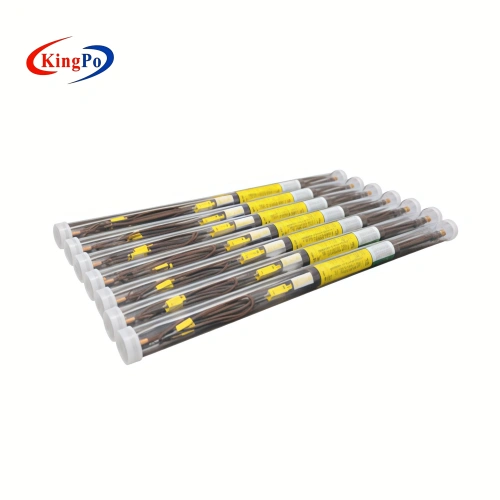
1000 W copper block (Φ9 mm ± 0.01 mm, pre-drilling mass 10 ± 0.05 g) paired with Omega-armored K-type thermocouple, achieving temperature rise from 100 ± 5°C to 700 ± 3°C in exactly 45 ± 5 s |
|
Ignition & Control |
Fully automatic intake ignition with maximum delay of 0.1 s, combined with electrical push-button interface and 9999 × 0.1 s precision timing |
|
Specimen Mounting |
Vertical fixture supporting cable lengths of 600 ± 25 mm, lower edge positioned 50 mm above burner, with rigid horizontal supports spaced at 550 mm intervals |
|
Combustion Enclosure |
1 m³ volume chamber equipped with protective metallic screen (H1200 × W300 × D450 mm), providing stable, enclosed conditions for safe and observable testing |
|
Angle Adjustability |
0–90° continuous adjustment to accommodate diverse test configurations |
You see that regulatory bodies evaluate flame testers by checking compliance with UL and IEC standards. Accredited labs use KINGPO equipment to test cables for fire performance. You submit cables for testing and receive certification symbols when you pass. These certifications show that your cables meet UL safety requirements.
-
Regulatory bodies assess cable safety through compliance with UL safety requirements.
-
Accredited testing facilities evaluate fire performance and safety of cables.
-
Testing includes reaction to fire tests and fire resistance tests, ensuring cables meet UL standards.
-
Cable manufacturers submit products for testing to recognized standards bodies.
-
Passing tests allows manufacturers to mark cables with UL certification symbols, indicating compliance with safety and performance standards.
-
Certifications provide assurance of safety, satisfy code requirements, and establish liability.
Note: KINGPO supports you throughout the certification process. You gain confidence knowing your cables meet UL and international standards.
Choosing the Right Tester
Key Factors
You need to consider several important factors when selecting between vertical and horizontal flame testers for cable safety. Each tester evaluates how cables perform under fire conditions, but the right choice depends on your application and risk assessment.
-
Burn Duration: You should check how long the cable burns after flame exposure. Shorter burn times indicate better fire resistance.
-
Self-Extinguishing Capability: You must assess if the cable stops burning once the flame is removed. This feature is crucial for preventing fire spread.
-
Extent of Burning: You need to measure how far the flame travels along the cable. Limited flame spread means safer cables.
-
Smoke and Flame Production: You should observe the amount of smoke and flame produced during testing. Lower emissions improve safety in enclosed spaces.
-
Toxic Gas Emissions: You must evaluate the release of harmful gases. This factor matters in environments where people may be exposed during a fire.
-
Orientation and Application: You need to match the test method to the cable’s installation. Vertical flame tests suit cables installed upright, while horizontal tests fit cables laid flat.
-
Fire Risk Assessment: You should consider the level of fire risk in your environment. High-risk areas require stricter testing, often with vertical flame testers.
Tip: Always align your testing method with the cable’s intended use and the safety requirements of your industry.
KINGPO Recommendations
You benefit from KINGPO’s expertise when choosing the right flame tester for your cable applications. KINGPO supports you with advanced equipment and practical guidance, helping you meet international standards and improve product safety.
-
If you manufacture cables for power distribution, telecommunications, or critical infrastructure, KINGPO recommends vertical flame testing. This method provides a rigorous assessment of burn duration, self-extinguishing ability, and flaming droplets.
-
For cables used in offices, schools, or industrial trays, horizontal flame testing may be suitable. KINGPO’s horizontal testers help you evaluate lateral flame spread and basic fire resistance.
-
KINGPO’s flammability test equipment features automatic ignition, adjustable angles, and digital controls. You gain accurate, repeatable results with minimal operator intervention.
-
Accredited labs and manufacturers rely on KINGPO’s CNAS-calibrated testers to streamline certification and ensure compliance with IEC and UL standards.
-
KINGPO offers lifetime software upgrades and responsive technical support. You receive ongoing assistance for all your testing needs.
Case Study: A cable manufacturer in Southeast Asia improved their certification process by adopting KINGPO’s vertical flame tester. They reduced testing time, achieved faster compliance, and brought safer products to market.
You make informed decisions when you use KINGPO’s solutions. You ensure your cables meet safety standards and protect people in real-world scenarios. KINGPO helps you elevate your cable testing practices and achieve reliable results every time.
You see that vertical flame testers offer the most reliable results for cable safety. The comparison shows that vertical testing provides stricter evaluation of flame spread and burning duration.
|
Finding |
Description |
|---|---|
|
Flame Spread |
Vertical testing exposes cables to severe fire risks, revealing true safety. |
|
Testing Value |
Laboratory tests simulate faults and reduce fire hazards. |
|
Countermeasures |
Flame retardant materials limit fire propagation. |
You should always choose certified cables. Compliance with standards ensures safety, reduces fire risk, and protects against dangerous smoke. KINGPO leads the industry by advancing safety standards and offering expert solutions. You can contact KINGPO for tailored advice and support.
FAQ
What is the main difference between vertical and horizontal flame testers?
You test cables in different orientations. Vertical flame testers hold cables upright and focus on burning duration and dripping. Horizontal testers lay cables flat and measure how fast flames spread across the surface.
Why do industry standards prefer vertical flame testing for cables?
You see vertical flame testing in standards because it simulates severe fire conditions. This method reveals how cables behave in real emergencies, especially in critical infrastructure.
Can you use horizontal flame testing for all cable types?
You should not use horizontal flame testing for every cable. This method works best for low-risk environments and non-critical cables. Always check your application and industry requirements.
How does KINGPO’s vertical flame tester improve cable safety?
You benefit from KINGPO’s tester through automatic ignition, precise controls, and CNAS calibration. These features help you achieve accurate, repeatable results and meet international safety standards.
What does “flaming droplets” mean in cable testing?
You observe flaming droplets when burning material falls from the cable during a test. These droplets can start secondary fires. Vertical flame testing checks for this hazard.
Do you need both vertical and horizontal flame tests for certification?
You often need both tests to meet all certification requirements. Some standards require you to test cables in both orientations to ensure complete fire safety.
How do you choose the right flame tester for your project?
You match the tester to your cable’s installation and risk level. Use vertical flame testers for high-risk or vertical installations. Choose horizontal testers for routine checks in low-risk settings.
What support does KINGPO offer after purchasing a flame tester?
You receive lifetime software upgrades and fast technical support from KINGPO. This support helps you keep your testing process efficient and up to date.