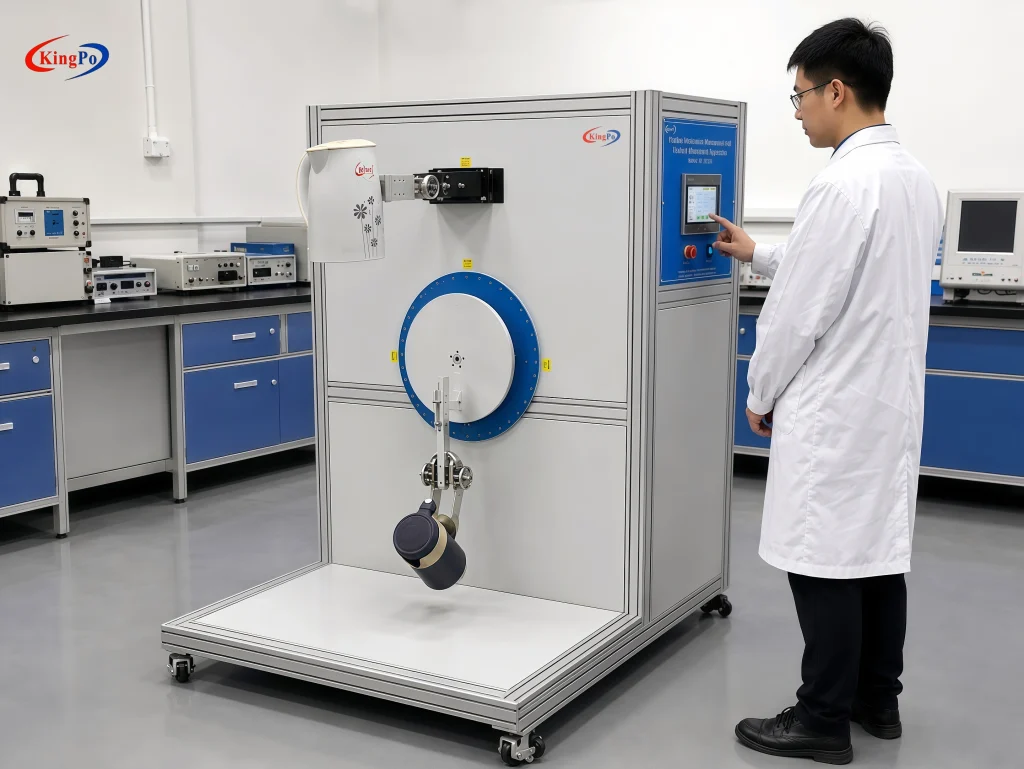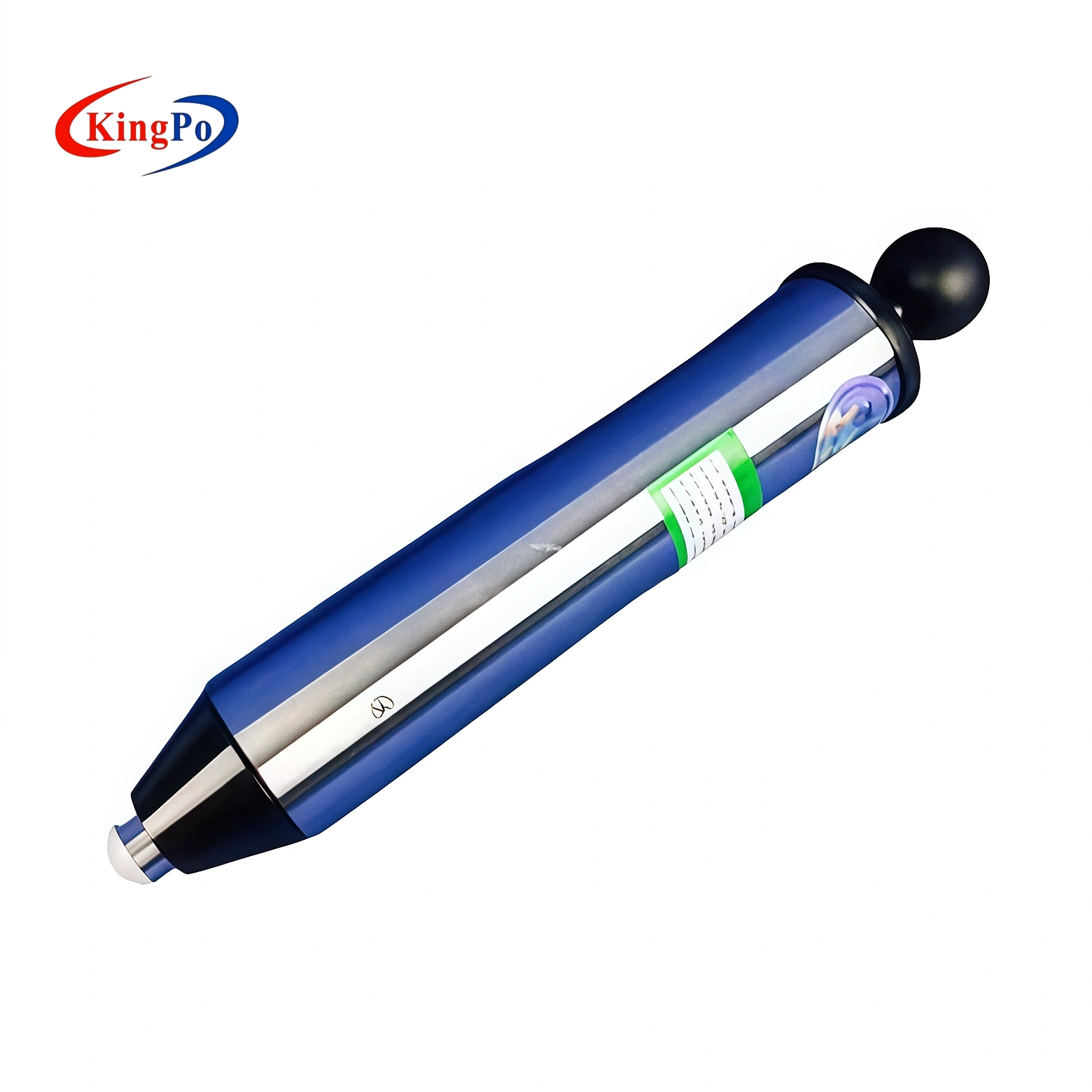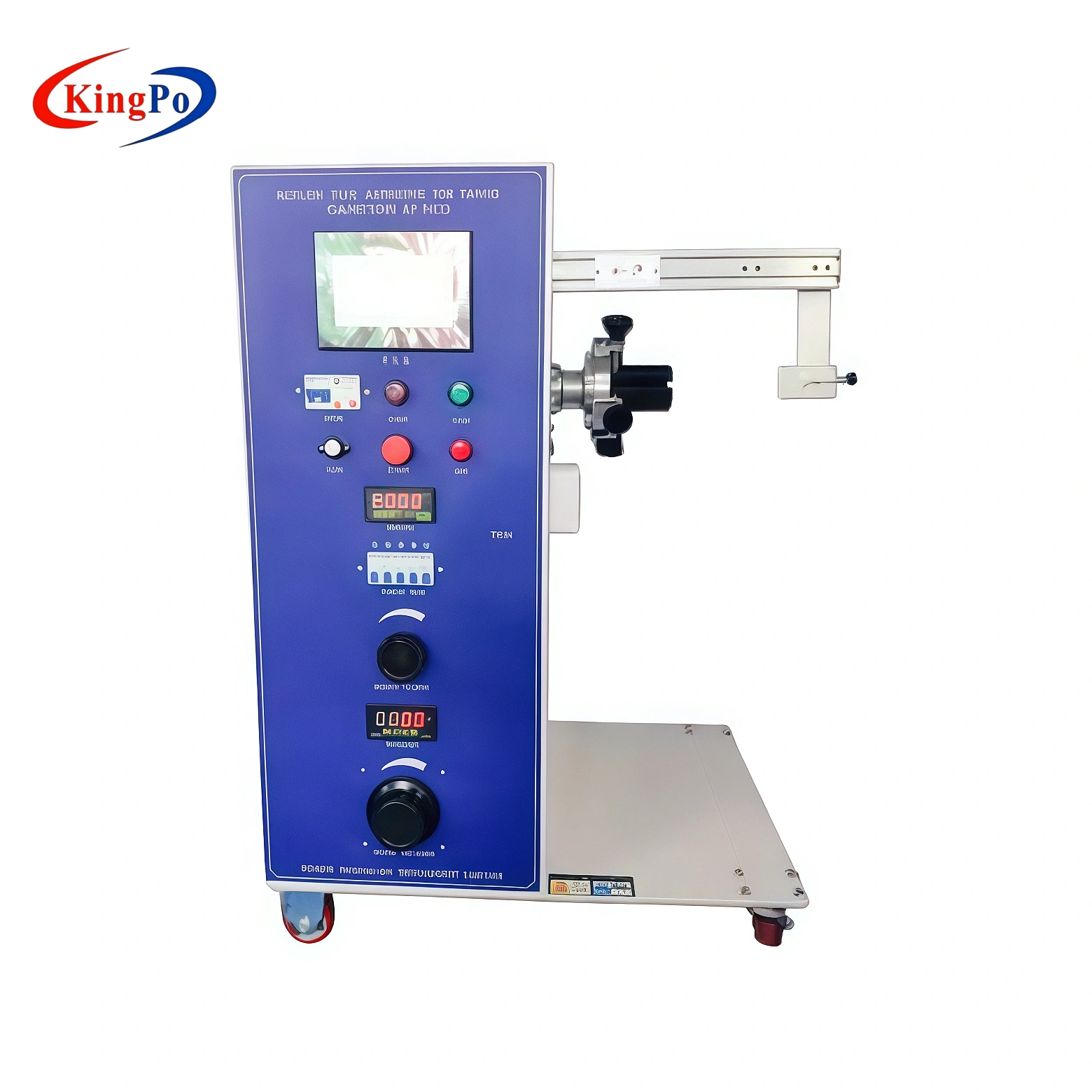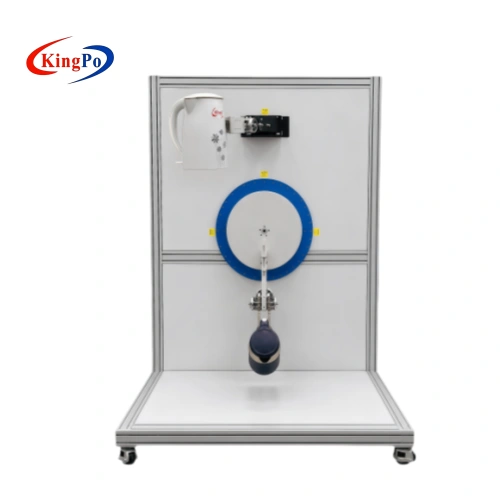
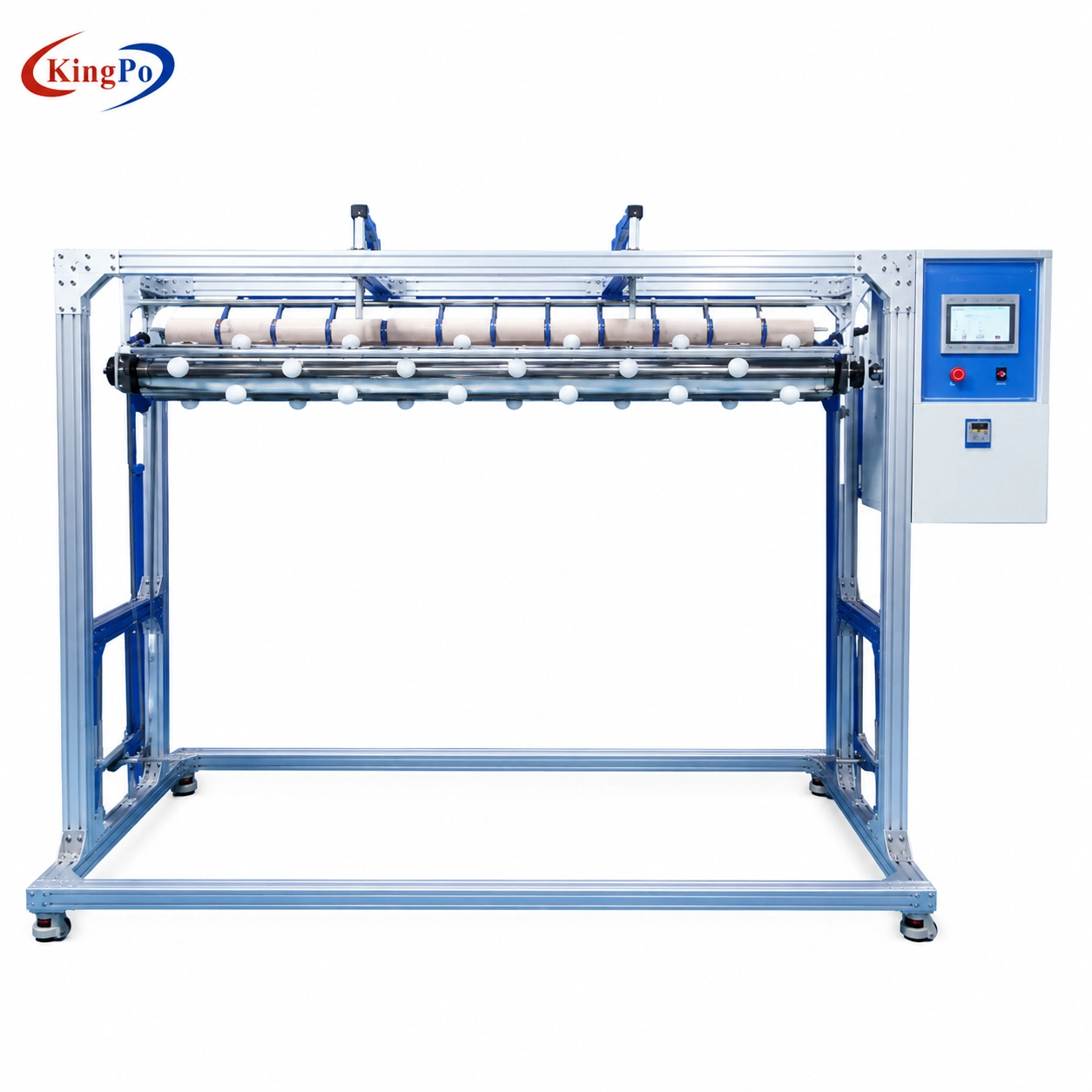
IEC 60335-2-15 Kettle Movement Test Apparatus shown from the front for kettle handle durability testing with horizontal and vertical movement fixtures.
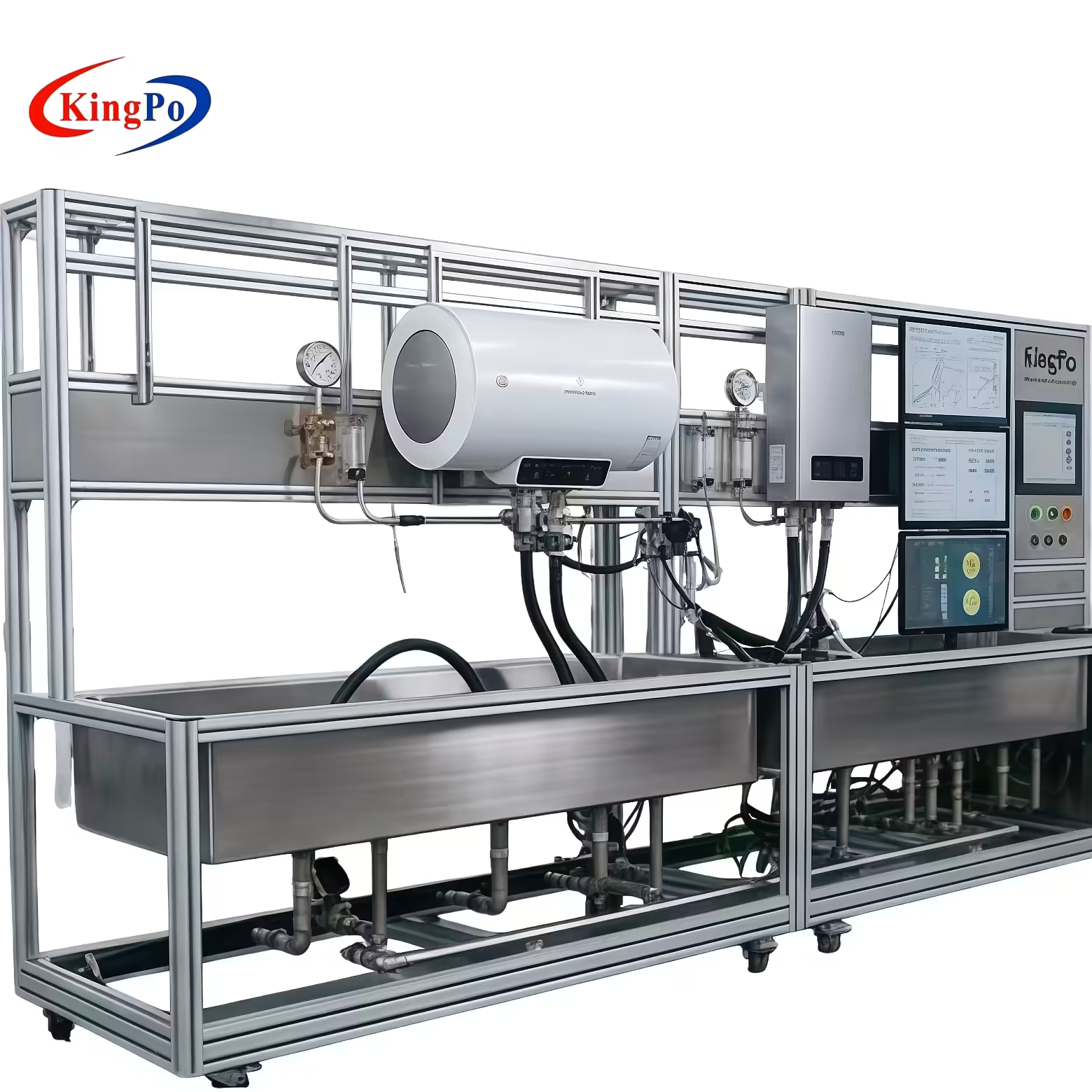
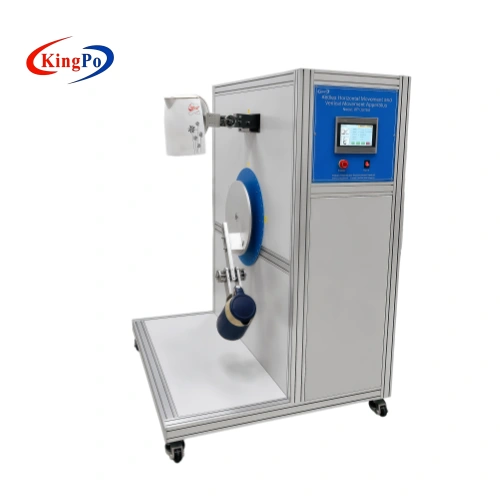
IEC 60335-2-15 Kettle Movement Test Apparatus in an electrical safety testing lab for horizontal and vertical kettle handle movement testing.
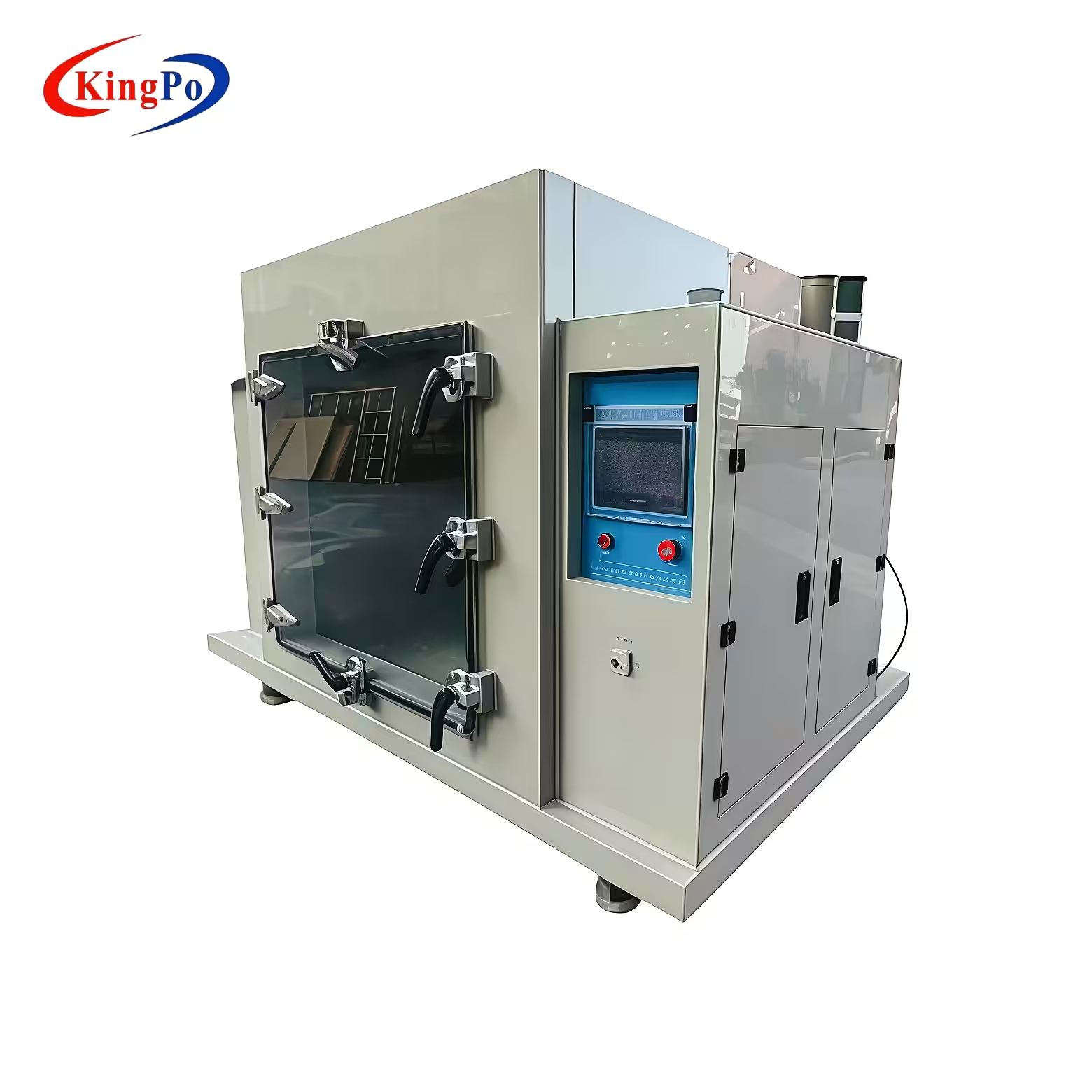
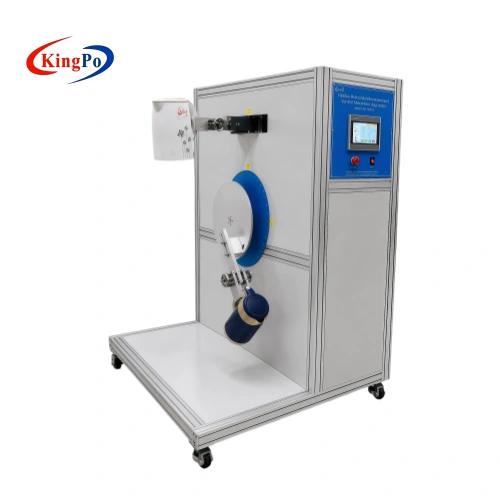
IEC 60335-2-15 Kettle Movement Test Apparatus used to evaluate kettle handle securement and durability under repeated mechanical movement.
IEC 60335-2-15 Kettle Movement Test Apparatus shown from the front for kettle handle durability testing with horizontal and vertical movement fixtures.
IEC 60335-2-15 Kettle Movement Test Apparatus in an electrical safety testing lab for horizontal and vertical kettle handle movement testing.
IEC 60335-2-15 Kettle Movement Test Apparatus used to evaluate kettle handle securement and durability under repeated mechanical movement.

IEC 60335-2-15 Kettle Horizontal and Vertical Movement Apparatus

IEC 60335-2-15 Kettle Movement Test Apparatus is designed for kettle handle durability testing according to IEC 60335-2-15 Clause 21.101. This horizontal and vertical movement apparatus performs repeated movement tests to evaluate whether the kettle handle and fixing structure remain secure after mechanical stress. The apparatus features a 400 mm ± 10 mm pivot distance, 5 mm rubber pad, PLC control, 7-inch HMI touch interface and servo motor drive for stable and repeatable testing.

  • IEC 60335-2-15 Kettle Movement Test Apparatus designed for Clause 21.101 kettle handle durability testing
  • Suitable for horizontal and vertical movement tests of kettles
  • Used to evaluate kettle handle durability and securement strength
  • Pivot point to handle grip centre distance: 400 mm ± 10 mm
  • Rubber pad thickness: 5 mm
  • Rubber hardness: 50 Shore ± 10 Shore
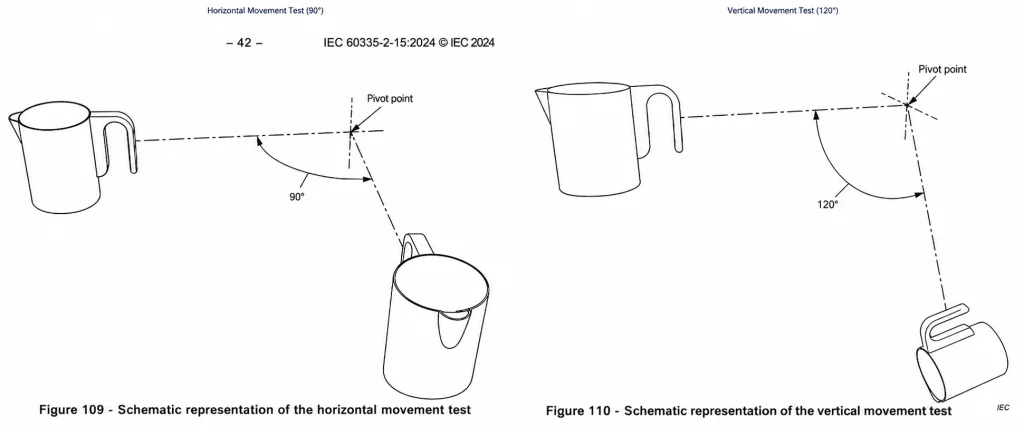
  • Horizontal movement test: 90° arc, 2,500 cycles, 10 cycles/minute
  • Vertical movement test: 120° motion, 5,000 cycles, 10 cycles/minute
  • PLC intelligent control with 7-inch human-machine touch interface
  • Servo motor drive for stable and repeatable movement control

IEC 60335-2-15 Kettle Horizontal and Vertical Movement Apparatus Overview

IEC 60335-2-15 Kettle Movement Test Apparatus

The IEC 60335-2-15 Kettle Movement Test Apparatus is used to evaluate the mechanical durability and securement of kettle handles under repeated movement conditions. It is designed for the horizontal and vertical movement tests specified in IEC 60335-2-15 Clause 21.101, helping laboratories verify whether the kettle handle, fixing structure and body connection remain safe after repeated mechanical stress.

During testing, the kettle is clamped at the handle grip area. The apparatus then performs controlled horizontal and vertical movements according to the required test method. This simulates repeated handling, lifting and pouring actions that may occur during normal use.

It is suitable for manufacturers and laboratories that need repeatable kettle handle durability testing before product release, certification preparation or compliance evaluation.

Why This Test Matters

Kettle handles are safety-critical parts. If the handle loosens, cracks or detaches during use, the user may be exposed to hot water, steam or mechanical injury. For this reason, IEC 60335-2-15 requires a defined movement test to check whether the handle and its securement means can withstand repeated mechanical loading.

This apparatus helps customers reduce manual testing variation, reproduce the required movement conditions and identify weak handle structures before certification submission or mass production.

Technical Specifications

Standard and Test Performance

Parameter Specification Remark or Notes
Product name IEC 60335-2-15 Kettle Movement Test Apparatus Horizontal and vertical kettle handle durability test apparatus
Model KP-3515A Product model
Applicable standard IEC 60335-2-15 Clause 21.101 Kettle handle movement test requirement
Test object Electric kettles Especially handle and fixing structure
Test purpose Handle durability and securement verification Simulates repeated handling and pouring stress
Rubber thickness 5 mm Rubber interface at the clamping area
Rubber hardness 50 Shore ± 10 Shore Contact condition for handle clamping
Pivot distance 400 mm ± 10 mm Distance between pivot point and centre of handle grip area
Horizontal movement test 90° arc, 2,500 cycles, 10 cycles/minute Horizontal repeated movement test
Vertical movement test 120° motion, 5,000 cycles, 10 cycles/minute Vertical repeated pouring movement test

Control and Equipment Information

Parameter Specification Remark or Notes
Control method PLC intelligent integrated control With 7-inch HMI touch interface
Drive mode Servo motor For stable and repeatable movement control
Overall dimensions To be confirmed before order Existing source information is inconsistent; use final factory datasheet
Weight Approx. 180 kg According to available product information
Typical users Appliance manufacturers, testing laboratories, certification labs and QC departments For IEC 60335-2-15 compliance preparation
Documentation support Specification and inspection support available Confirm calibration or documentation scope before order

Test Principle and Evaluation Method

IEC 60335-2-15 Kettle Movement Test Apparatus shown in laboratory operation for kettle handle durability testing, with an operator using the control panel during horizontal and vertical movement evaluation.
IEC 60335-2-15 Kettle Horizontal and Vertical Movement Apparatus

The IEC 60335-2-15 Kettle Movement Test Apparatus applies defined horizontal and vertical movement cycles to simulate repeated stress on kettle handles. The purpose is not only to move the kettle, but to check whether the handle and its fixing structure remain mechanically safe after repeated use conditions.

Before testing, the kettle is fixed at the grip area of the handle. The pivot distance is set to 400 mm ± 10 mm, and the handle contact area is supported by a 5 mm rubber interface with 50 Shore ± 10 Shore hardness.

The apparatus performs two movement tests:

Test item Movement condition
Horizontal movement test 90° arc, 2,500 cycles, 10 cycles/minute
Vertical movement test 120° motion, 5,000 cycles, 10 cycles/minute

Combined diagram for IEC 60335-2-15 Kettle Movement Test Apparatus showing horizontal and vertical kettle handle durability test methods with pivot point movement paths.

After the test, the handle, handle fixing parts, kettle body connection and surrounding structure should be inspected. The result is normally acceptable when there is no breakage, cracking, loosening, detachment or unsafe deformation. Final judgment should follow IEC 60335-2-15 Clause 21.101 and the laboratory’s acceptance criteria.

Typical Applications

The IEC 60335-2-15 Kettle Movement Test Apparatus is mainly used for:

New kettle model development and design verification
Pre-certification testing before third-party laboratory submission
Internal quality control for household appliance manufacturers
Laboratory testing according to IEC 60335-2-15 Clause 21.101

For manufacturers, this test helps identify weak handle structures before mass production. For laboratories, it provides a repeatable movement condition that supports more consistent compliance testing.

Sample Mounting and Test Setup Notes

Before using the IEC 60335-2-15 Kettle Movement Test Apparatus, the kettle sample should be checked for visible defects. The handle, screws, fixing points, grip area and kettle body connection should be inspected and recorded before testing.

The kettle should be mounted securely at the handle grip area. The operator should confirm the pivot distance, rubber pad condition, movement angle, cycle count and test speed before starting the test.
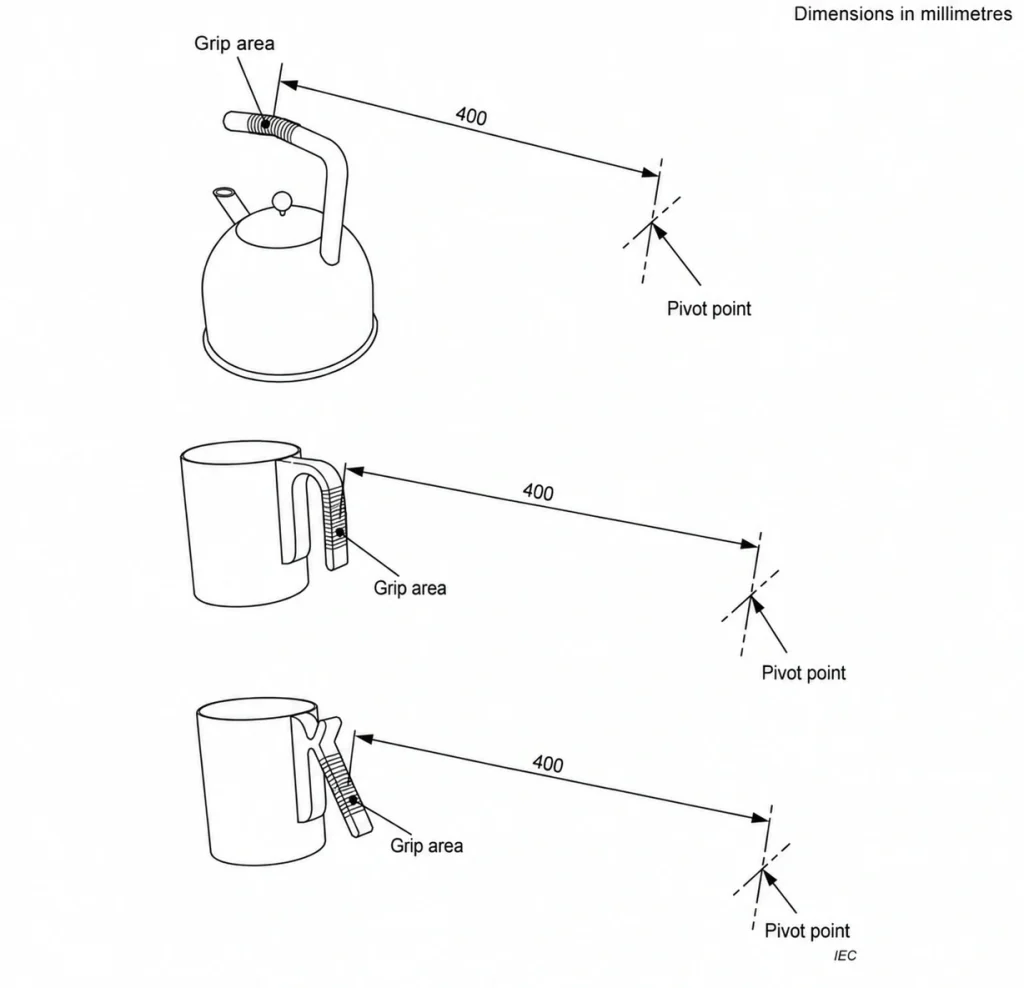
Schematic representation of clamp positions for different kettle handle designs used in IEC 60335-2-15 kettle movement test apparatus, showing the 400 mm pivot distance for handle durability testing.
Figure 108 – Schematic representation of the clamp position of different designs

During the test, the kettle should remain properly fixed. If abnormal movement, handle loosening, cracking or structural deformation appears during the test, it should be recorded with the cycle count and inspection photos.

Configuration and Purchase Notes

Before quotation or order confirmation, customers should confirm the following items:

Applicable standard version, such as IEC 60335-2-15 Clause 21.101
Kettle type, sample size and handle design
Required horizontal movement angle and cycle count
Required vertical movement angle and cycle count
Required pivot distance and fixture arrangement
Power supply requirement
Documentation or calibration requirement
Final machine dimensions and installation space
Packaging and delivery requirement

For laboratories and certification-related users, it is especially important to confirm whether the supplied documentation covers the movement angle, cycle count, test speed, pivot distance and fixture verification.

Common Setup Errors to Avoid

Reliable kettle movement testing depends on correct fixture setup and stable movement control. Laboratories should avoid:

01
Clamping the kettle outside the required handle grip area
02
Setting the wrong pivot distance
03
Using worn, hardened or damaged rubber pads
04
Using rubber pads with incorrect thickness or hardness
05
Setting the wrong movement angle
06
Confusing the horizontal and vertical cycle requirements
07
Running the test at the wrong speed
08
Failing to secure the handle fixture before starting the test
09
Ignoring handle loosening or cracking during the test
10
Recording only pass/fail results without photos or cycle information

Maintenance and Laboratory Records

The fixture, pivot mechanism, rubber pad, servo drive, moving arm and fastening parts should be inspected regularly. Worn rubber pads, loose fixtures or unstable movement may affect repeatability and should be corrected before formal testing.

After testing, the working area should be cleaned, and the moving mechanism should be checked for abnormal noise, looseness or wear. The rubber contact pad should be replaced when it becomes worn, hardened, damaged or deformed.

For formal laboratory use, recommended records include:
Equipment specification
Inspection or calibration record
Rubber pad thickness and hardness record
Pivot distance setting record
Horizontal movement angle and cycle record
Vertical movement angle and cycle record
Test speed record
Sample mounting photo
Before-and-after handle inspection photos
Final test report according to laboratory procedure

Compliance & Regulatory Assurance

  • This IEC 60335-2-15 Kettle Movement Test Apparatus is designed to support IEC 60335-2-15 Clause 21.101 kettle horizontal and vertical movement testing. Final compliance should be evaluated according to the official standard and the laboratory’s test procedure.
  • The equipment should be described as a test apparatus for supporting IEC 60335-2-15 kettle horizontal and vertical movement testing, not as a product certification result. If formal documentation or calibration support is required, the certificate scope and covered parameters should be confirmed before ordering.

Download IEC 60335-2-15 Kettle Movement Test Apparatus Catalog

Download the KINGPO product catalog for the IEC 60335-2-15 kettle movement test apparatus, including product information, test application notes, technical details and quotation reference information for electric kettle handle durability testing.

Technical Inquiry & Configuration Support

Before requesting a quotation, customers are recommended to provide the following information:

  • Applicable standard: IEC 60335-2-15 Clause 21.101 or internal test method
  • Kettle type and sample size
  • Handle structure and grip area dimensions
  • Required horizontal movement angle and cycle count
  • Required vertical movement angle and cycle count
  • Required pivot distance setting
  • Local power supply
  • Required documentation or calibration support
  • Delivery schedule
  • Packaging and shipping requirement

Based on this information, KingPo can confirm whether the KP-3515A IEC 60335-2-15 Kettle Movement Test Apparatus is suitable for the customer’s kettle handle durability testing requirement.

IEC 60335-2-15 Kettle Horizontal and Vertical Movement Apparatus

IEC 60335-2-15 Kettle Horizontal and Vertical Movement Apparatus FAQs

What is the IEC 60335-2-15 Kettle Movement Test Apparatus used for?
The IEC 60335-2-15 Kettle Movement Test Apparatus is used to test the durability and securement of kettle handles by performing repeated horizontal and vertical movement tests according to IEC 60335-2-15 Clause 21.101.
Which standard does this apparatus follow?
This apparatus is designed for IEC 60335-2-15 Clause 21.101 kettle movement testing.
What is the pivot distance used in the test?
The distance between the pivot point and the centre of the grip area of the handle is 400 mm ± 10 mm.
What rubber pad is used for the clamping condition?
The apparatus uses a 5 mm rubber pad with 50 Shore ± 10 Shore hardness.
What is the horizontal movement test condition?
The horizontal movement test uses a 90° arc, with 2,500 cycles at 10 cycles per minute.
What is the vertical movement test condition?
The vertical movement test uses a 120° motion, with 5,000 cycles at 10 cycles per minute.
What does the test evaluate?
The test evaluates whether the kettle handle, handle fixing structure and related securement parts remain safe after repeated mechanical movement.
What control system does the apparatus use?
The apparatus uses PLC intelligent integrated control with a 7-inch human-machine touch interface.
What drive method is used?
The apparatus uses a servo motor drive system for stable and repeatable movement.
What should be checked after testing?
The operator should check the kettle handle, fixing screws, handle connection area and kettle body for cracking, loosening, detachment, deformation or other unsafe mechanical damage.

Related Products

Related News

KingPo supplied an IEC 60335-1 Clause 19 Battery Short Circuit Tester to TSK Corporation for a laboratory project in South […]

Comparing IEC 60601-2-34 and IEC 60601-2-25: A Technical Guide details device scope, testing, and compliance differences for medical device standards.

KingPo Eurofins IEC 60335 Test Equipment Delivered to Finland Espoo, Finland — Jun 2023 —A complete set of high-precision IEC 60335 […]

KingPo HCT IEC 60335 Test Equipment Delivered to Korea Seoul, Korea — Jun 2021 — High-precision KingPo HCT IEC 60335 test […]

KingPo Delivers IEC 60335 Test Equipment to Intertek Hong Kong and Korea   Hong Kong & Seoul, March 2023 — KingPo […]

KingPo UL Vietnam IEC 60335 Test Equipment Delivered for IEC 62368-1 Compliance   Hai Duong Province, Vietnam — KingPo is […]

IEC 60335 Safety Standards set strict rules for household appliances, protecting users from electric shock, fire, and mechanical hazards at home.

Introduction: The Hidden Threat in Your Devices Every year, thousands of residential and industrial fires are traced back to a […]

Scroll to Top

Get A Free Quote Now !

Contact Form
If you have any questions, please do not hesitate to contact us.