
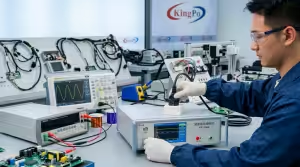
You want the best tester for capacitor discharge safety and rules. The KP-1060 from KingPo Technology is the most efficient and accurate tester you can buy. This tester has advanced features like real-time voltage checks, automatic test modes, and strong alarms. You can trust the KP-1060 for medical, home, and lab use. If you need something easy to carry or simple to use, another tester might be better for you. Picking the right tester for your work is important. The KP-1060 follows strict international rules and helps you test safely. ESD generator and capacitor discharge tester technology keeps capacitor discharge safe and protects you from electrical dangers.
Key Takeaways
-
The KP-1060 can measure voltage changes as small as 0.1V. This means it is very good for careful testing.
-
It can test voltages from 0 to 300V. This lets you check many different devices safely and well.
-
You can pick manual or automatic testing with the KP-1060. This helps you finish tests faster and make fewer mistakes.
-
The industrial touchscreen is easy to use and shows results clearly. This makes testing easier and better for users.
-
You should calibrate the KP-1060 often with the samples that come with it. This keeps the KP-1060 correct, so you can trust your test results.
Quick Comparison: KP-1060 vs Leading Models
Key Specs Table
You want to know how the KP-1060 compares to others. The table below shows the main differences between the KP-1060 and the CDT-240. This helps you pick the best tool for your tests.
|
Feature |
CDT-240 |
KP-1060 |
Winner |
|---|---|---|---|
|
8 A (optional 15 A) |
10 A |
KP-1060 |
|
|
Test voltage range |
90–270 Vrms |
0–300 V (0.1 V resolution) |
KP-1060 |
|
Sampling rate |
Not disclosed |
48 kS/s (FPGA solution) |
KP-1060 |
|
Display |
Basic LCD + BNC scope output |
Industrial touchscreen + scope output |
KP-1060 |
|
Test modes |
Manual single shot only |
Manual + Fully automatic |
KP-1060 |
|
Alarm function |
None |
Automatic over-limit alarm + peak hold |
KP-1060 |
|
Standard accessories |
CBX functional check box |
Three standard samples + calibration cert. |
KP-1060 |
Tip: The KP-1060 has more advanced features and is more accurate. It gives you a bigger voltage range and higher test current. The touchscreen makes it easier and quicker to use.
Major Feature Differences
There are many big differences between the KP-1060 and other testers. The KP-1060 can test with a higher current. This lets you test bigger capacitors. It also has a wider voltage range, so you can test more devices. The KP-1060 can measure voltage in small steps of 0.1 V. This helps you notice tiny changes during tests.
The KP-1060 has an industrial touchscreen. You can use the tester easily and see results clearly. The CDT-240 only has a basic LCD, so you see less information. The KP-1060 lets you test by hand or automatically. You can set it to run tests by itself or do each step. This saves time and helps you make fewer mistakes.
The KP-1060 has an automatic alarm. If the voltage goes too high, it warns you right away. This keeps your tests safe and dependable. The KP-1060 also saves the highest voltage, so you can check it later.
Capacitor discharge means a charged capacitor lets out its energy. The voltage, current, and charge drop fast to zero. You must discharge capacitors safely, especially big ones. Special tools like the KP-1060 help you do this without getting shocked or causing harm. You can use the KP-1060 to test medical devices, home appliances, and IT equipment.
The KP-1060 comes with three calibration samples and a certificate. This lets you check if it is accurate before each test. The CDT-240 has a check box, but the KP-1060 gives you more ways to check.
The KP-1060 is made for advanced testing. You can use it in labs, on production lines, and in certification centers. Its features help you test faster, safer, and with better results.
ESD Generator and Capacitor Discharge Tester Basics
Principles and Components
You use an esd generator and capacitor discharge tester to keep electronics safe from sudden shocks. These tools help you copy real esd events and see how devices react. The esd generator and capacitor discharge tester have many important parts. You can see them in the table below:
|
Component/Principle |
Description |
|---|---|
|
Power Supply |
Gives power to the system. |
|
High Voltage Generation Circuit |
Makes electrostatic discharge waves for esd testing. |
|
Storage Capacitors |
Hold high-voltage energy and let it out during esd testing. |
|
Contact Devices |
Touch electronic devices and send out stored energy. |
|
Control System |
Sets time, strength, and speed for repeatable esd tests. |
|
Display System |
Shows voltage, current, and other numbers during testing. |
|
Voltage Adjustment and Waveform Shaping |
Changes voltage and shapes waves for standard esd tests. |
|
Discharge Preparation |
Gets contact devices ready for safe esd testing. |
|
Discharge Process |
Lets out energy fast to act like real esd events. |
|
Monitoring and Recording |
Watches and saves how devices work during esd testing. |
Capacitor discharge is when a charged capacitor lets out its energy. The voltage, current, and charge drop quickly in a curve. The time constant τ is resistance times capacitance (τ = RC). You see voltage go down as the capacitor empties. Sometimes, a capacitor loses charge slowly by itself. For safety, you use a resistor or a special esd generator and capacitor discharge tester to discharge fast and safely. You can also use an insulated screwdriver to stop shock or damage.
Main Applications
You use an esd generator and capacitor discharge tester in many electronics jobs. These tools help you test electronic devices, products, and equipment for esd. The table below shows where you use them most:
|
Application Type |
Description |
|---|---|
|
ESD Testing of Electronic Devices |
Tests chips, sensors, and circuits to see if they work during esd. |
|
ESD Testing of Electronic Products |
Checks if phones, computers, and other products are safe. |
|
ESD Testing of Electronic Equipment |
Makes sure automation and medical equipment work safely in tough places. |
-
Capacitors help protect ports and chip pins from esd.
-
Different capacitor sizes filter signals at different frequencies.
Usage Steps
You follow easy steps to use an esd generator and capacitor discharge tester:
-
Connect the esd generator and capacitor discharge tester to the device.
-
Set things like voltage and wave shape for the test.
-
Press the discharge switch to send esd to the device.
-
Write down how the device reacts and look at the data.
Tip: Always check your wires and settings before you start esd testing. Good setup keeps your electronics safe.
Compliance and Shared Features
International Standards
You must follow strict rules when using these testers. These devices need to meet international standards for safety. The main standards are IEC 61000-4-2 and ISO 10605. IEC 61000-4-2 helps test how electronics handle electrostatic discharge. ISO 10605 is for testing car modules during assembly and service.
|
Standard |
Description |
|---|---|
|
IEC 61000-4-2 |
Testing and measurement techniques for electrostatic discharge immunity in electronics. |
|
ISO 10605 |
ESD test methods for automotive electronic modules during assembly and service. |
The KP-1060 and other top models also follow IEC 62368-1, IEC60601.11, and IEC60335.1. These standards cover safety for power parts, medical devices, and home appliances.
|
Standard |
Compliance Status |
|---|---|
|
IEC60601.11 |
Compliant |
|
IEC60335.1 |
Compliant |
|
IEC 62368-1 |
Compliant |
Note: Meeting these standards is needed for certification. It makes sure your devices are protected from electrostatic dangers.
Calibration and Maintenance
You need to keep your tester accurate and dependable. Regular calibration is important for certification and testing. The KP-1060 gives you three calibration samples to check accuracy before each test. Other models have calibration tools, but KP-1060 offers more choices. Maintenance means cleaning probes, checking connections, and updating software. You should follow a schedule to keep your tester working well.
-
Check calibration samples before every test.
-
Clean probes and connectors to stop mistakes.
-
Update software for new certification rules.
Tip: Good calibration and maintenance help you get correct results and pass certification checks.
Supported Test Types
Capacitor discharge testers can be used for many tests. These include medical device tests, home appliance checks, and IT equipment safety. The KP-1060 supports manual and automatic modes. You can test different pole combinations like L-N, L-G, and N-G. These testers are also used for quality control and product development.
Capacitor discharge is when a charged capacitor lets out its stored energy. The voltage, current, and charge drop quickly to zero. You must discharge big capacitors safely to avoid shock or harm. Special tools like the KP-1060 help you do this during tests and certification.
Remember: The types of tests depend on what you need. Pick a tester that fits your certification needs and testing goals.
Capacitor Discharge Tester Feature Comparison
Display and Interface
You want a clear and simple display when you use a capacitor discharge tester. The KP-1060 gives you a large industrial touchscreen. You can see all your test results at once. The touchscreen lets you change settings fast. The CDT-240 uses a basic LCD. You see less information at one time. If you need to check many details during testing, the KP-1060 makes your job easier.
Sampling Rate and Data Analysis
A good capacitor discharge tester must capture data quickly. The KP-1060 samples at 48,000 times per second. This high rate helps you see small changes in voltage and current. You get more accurate results. The CDT-240 does not share its sampling rate. Fast data helps you understand how a capacitor releases energy. You can watch the voltage drop as the capacitor discharges.
Automation and Test Modes
You save time with automatic testing. The KP-1060 offers both manual and automatic modes. You can set it to run tests by itself or control each step. This helps you avoid mistakes. The CDT-240 only has manual mode. If you need to test many devices, the KP-1060 makes your work faster and safer.
Accessories and Verification
A reliable capacitor discharge tester comes with tools for checking accuracy. The KP-1060 includes three calibration samples and a certificate. You can check if your tester works right before each test. The CDT-240 has a check box, but the KP-1060 gives you more ways to verify your results. This is important for labs and certification.
Portability and Build Quality
You may need to move your capacitor discharge tester between work areas. The KP-1060 has a strong build for labs and production lines. It is not as small as some models, but it is very sturdy. The CDT-240 is lighter and easier to carry. If you need a tester for field work, you might choose a lighter model. For most testing in labs, the KP-1060 gives you better build quality.
Note: Capacitor discharge is when a charged capacitor lets out its stored energy. You must use a safe tool like a capacitor discharge tester to avoid shock or damage during testing.
Electrostatic Discharge Generator in Testing
Role in Compliance
You want your electronics to be safe from sudden shocks. An electrostatic discharge generator helps you test this. The tool makes real electrostatic events in a safe way. You use it to see how your device handles these shocks. This is needed for safety rules and standards.
-
An electrostatic discharge generator copies real electrostatic events. You can see how your device acts during these tests.
-
You use the generator to check if your product passes safety standards. This helps you stop problems before they happen.
-
The generator helps you make your product stronger. You find weak spots before customers use your product.
-
You set the right test settings and connect everything well. This gives you good results when you test for electrostatic tolerance.
Many jobs need these tests. Medical, car, and home electronics must pass electrostatic safety checks. You have to use an electrostatic discharge generator to show your product is safe for the market.
Integration with Testers
You often use an electrostatic discharge generator with other testers. This helps you learn more about your device’s safety. For example, you might use a capacitor discharge tester after the generator. The generator makes the electrostatic event. The tester checks how much energy is left in the device.
Capacitor discharge is when a charged capacitor lets out its stored energy. This usually happens through a resistor. The voltage, current, and charge drop fast toward zero. The time constant, called tau, is resistance times capacitance (τ = RC). Sometimes, capacitors lose charge on their own. Big capacitors need special care. You must use a load or a tool like an electrostatic discharge generator to discharge them safely. This stops shock or damage.
You connect the electrostatic discharge generator to your device. You run the test and watch what happens. Then you use a tester to measure any energy left. This keeps your work safe and helps you follow all electrostatic safety rules.
Pros and Cons Overview
KP-1060 Strengths and Weaknesses
You want a tester that is easy to use and keeps you safe. The KP-1060 Plug Capacitor Discharge Tester is special because it has many smart features and works really well. Here are the main good things about the KP-1060:
-
High Accuracy: You can see voltage changes as small as 0.1V. This helps you notice even tiny drops when the capacitor discharges.
-
Wide Voltage Range: You can test things from 0 to 300V. This means you can use it for lots of different devices.
-
Automatic and Manual Modes: You can pick to do tests by hand or let the tester do them for you. This saves time and helps you make fewer mistakes.
-
Industrial Touchscreen: You see all your test results on a big, bright screen. You can change settings fast and easily.
-
Safety Alarms: You get a warning if the voltage goes over your limit. This helps keep you and your devices safe.
-
Calibration Samples: You can check if the tester is correct before every test with three samples. This helps you trust your results.
-
Strong Build: You can use the KP-1060 in labs, factories, and testing centers. It is made to last a long time.
Note: Capacitor discharge is when a charged capacitor lets out its stored electrical energy. The voltage, current, and charge drop down fast. You need to use a safe tool like the KP-1060 so you do not get shocked or hurt, especially with big capacitors.
CDT-240 Strengths and Weaknesses
The CDT-240 also helps you test capacitor discharge, but it is better for simple jobs or when you need to move your tester a lot. Here are the main things to think about:
|
Strengths |
Weaknesses |
|---|---|
|
Lightweight and portable |
Basic LCD display |
|
Simple to operate |
Manual mode only |
|
Good for field work |
Lower test current |
|
Includes check box |
Fewer calibration options |
You might choose the CDT-240 if you need a tester that is easy to carry. You get simple buttons and a lighter body. You do not get as many smart features as the KP-1060, but you can still test basic capacitor discharge safely.
Tip: Always use the right tool to discharge capacitors. This keeps you safe and stops your equipment from getting damaged.
Buying Guide: Choosing the Right Tester
For Labs and Production Lines
When you work in a lab or on a production line, you need a tester that matches your environment. You should look at these important points:
-
Decide if you need a handheld tester for moving around or a benchtop model for steady work.
-
Check if the tester can measure the capacitance and ESR values you use most.
-
Think about whether you need high precision or faster testing. Some jobs need very accurate results, while others need speed.
-
Compare the cost with the features and how long you plan to use the tester.
Capacitor discharge is the process where a charged capacitor releases its stored electrical energy. This usually happens through a resistor. The voltage, current, and charge drop down quickly. The time constant, called tau, is resistance times capacitance (τ = RC). You need to use the right tool for safe and fast testing.
For Field and Portability
If you need to move your tester often, you should focus on these features:
-
Choose a tester with strong build quality. This helps it last longer in tough places.
-
Do routine maintenance. Check parts often to keep the tester working well.
-
Make sure the tester has a good cooling system. This stops it from getting too hot during testing.
-
Calibrate your tester often. This keeps your results correct.
-
Use real replacement parts. This helps your tester last longer and work better.
You may need to discharge big capacitors quickly and safely. You can use a resistor or a special tool. Sometimes, people use an insulated screwdriver, but this is not as safe as using a proper tester.
For R&D and Compliance
When you work in research or need to meet safety rules, you must pick a tester that gives you accurate and repeatable results. Look for models that support both manual and automatic testing. Make sure the tester follows international standards. You should also check if the tester comes with calibration samples and certificates. This helps you trust your testing results and pass compliance checks.
Tip: Always match your tester to your job. The right choice makes testing safer and easier.
You need a good tester for your work. The KP-1060 is very accurate and safe. It is also simple to use. If you want a tester that is easy to carry, you might pick a different one. Always choose a tester that works best for what you do. Capacitor discharge is when a charged capacitor lets out its energy. This usually happens through a resistor. You must use the right tool so you can stay safe.
Remember: Always check calibration, follow the rules, and pick a tester that fits how you work.
FAQ
What is capacitor discharge and why is it important?
Capacitor discharge happens when a charged capacitor lets out its stored energy. You must discharge capacitors the right way to stop shocks or damage. Using a resistor or a special tool helps you do this fast and safely.
How does the KP-1060 improve electronic device testing?
The KP-1060 gives you very accurate results. It can measure small voltage changes. You can use it by hand or let it run tests by itself. This makes testing easier and helps you trust your results.
Why should you use specialized testing equipment for capacitors?
Special testing tools help you discharge big capacitors safely. You will not get shocked and your devices stay safe. The right tools also help you follow safety rules during tests.
Can you use an insulated screwdriver to discharge a capacitor?
You can use an insulated screwdriver, but it is not as safe as a real tool. For big capacitors, always use a resistor or a special tester to keep safe.
How often should you calibrate your capacitor discharge tester?
You should check if your tester is correct before every test. Regular checks keep your results right and help you pass safety checks.
