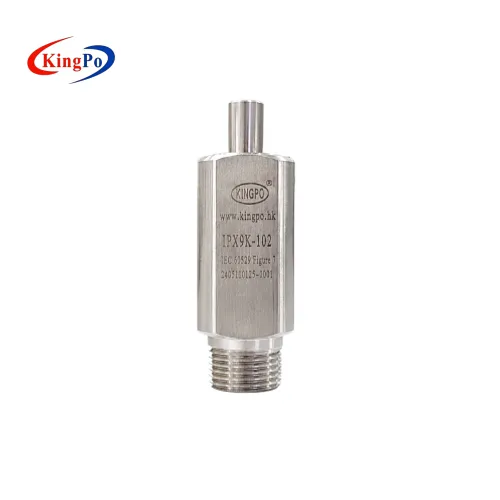
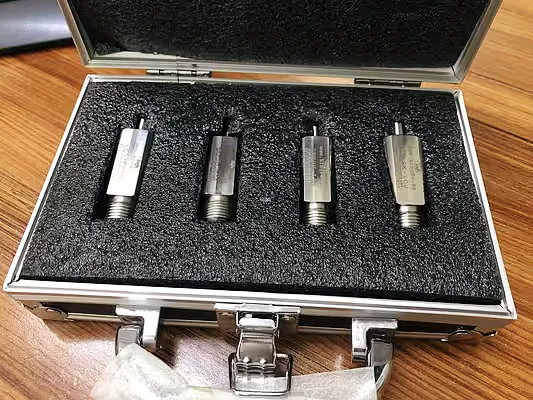
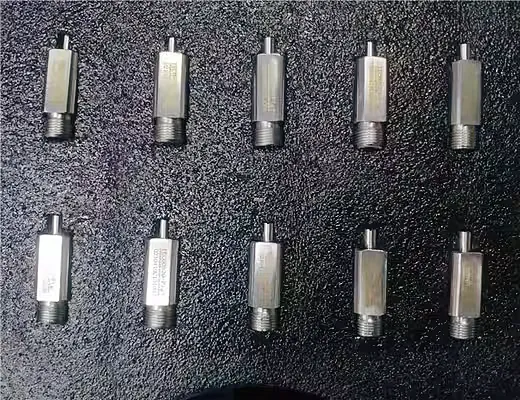
IPX9 Spray Nozzles | IEC 60529 Figure 7 Fan Jet Nozzles
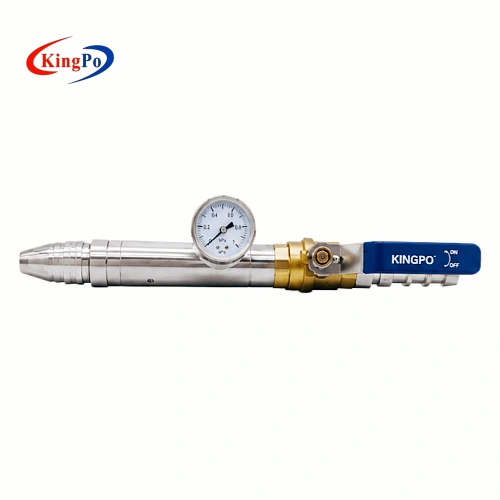
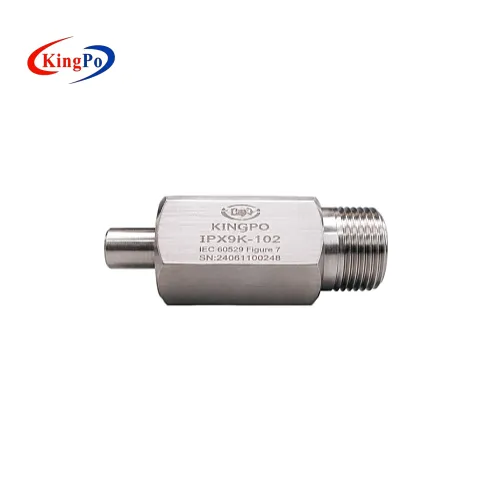
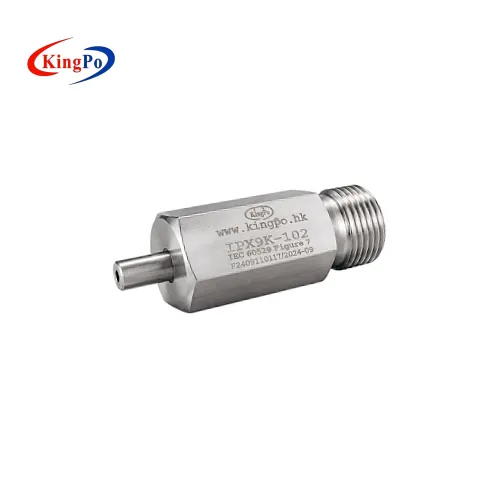
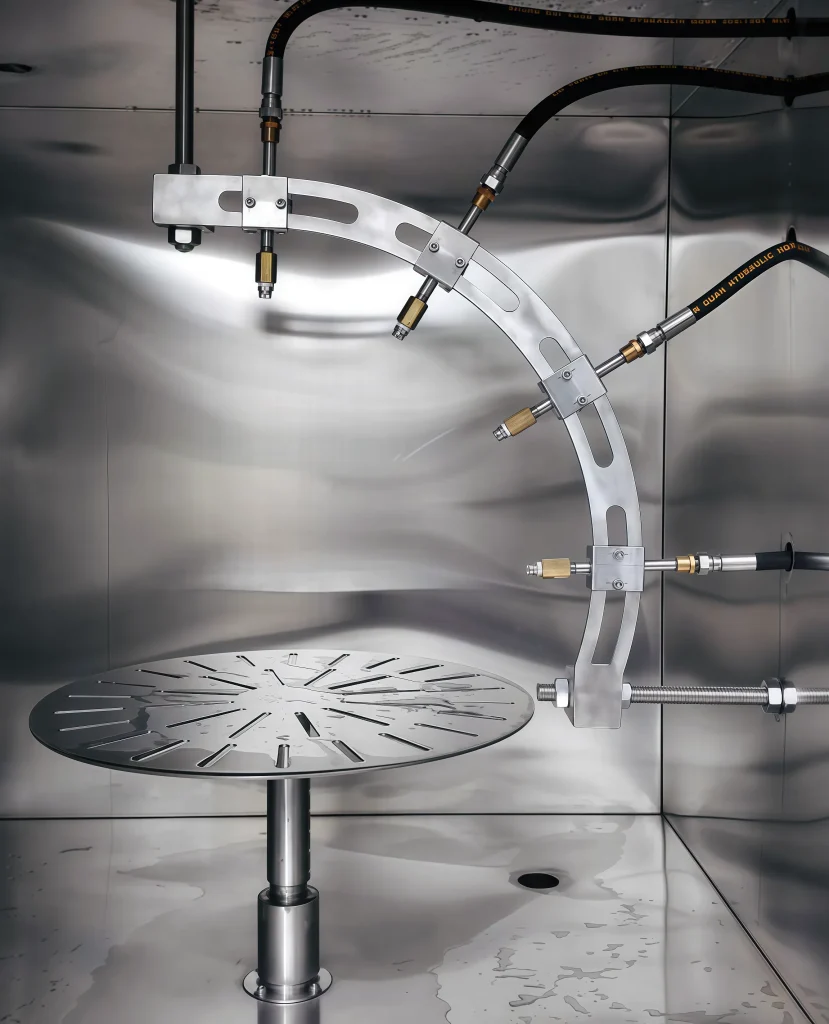
The IPX9 Spray Nozzles are precision fan jet nozzles used for high-pressure water jet testing to evaluate the ingress protection of enclosures and components. They are manufactured to meet the dimensional and performance requirements specified in IEC 60529 Figure 7.
These nozzles generate the required fan jet spray pattern for IPX9 testing and support stable water output when integrated with a properly configured high-pressure water supply system. Similar fan jet nozzle configurations may also be used in IPX9K testing according to ISO 20653, depending on the chamber design and test configuration.
Technical Parameters
| Parameter | Specification | Remark / Notes |
|---|---|---|
| Applicable Standard | IEC 60529 Figure 7 (IPX9) | Fan jet nozzle dimensions |
| Material | Stainless steel | Corrosion resistant |
| Nozzle Type | Fan jet nozzle | Per IEC 60529 Figure 7 |
| Supported Water Flow Rate | 14–16 L/min | Supported IPX9 test condition, subject to system configuration |
| Supported Water Pressure | 80–100 bar (8–10 MPa) | Supported IPX9 test condition, subject to system configuration |
| Supported Water Temperature | Up to approximately 80°C | When used with a compatible high-temperature water supply system |
| Supported Spray Distance | 100–150 mm (typical) | Supported IPX9 test condition |
| Supported Spray Angles | 0°, 30°, 60°, 90° | Standard test positions |
| Customization | Supported | Available upon request |
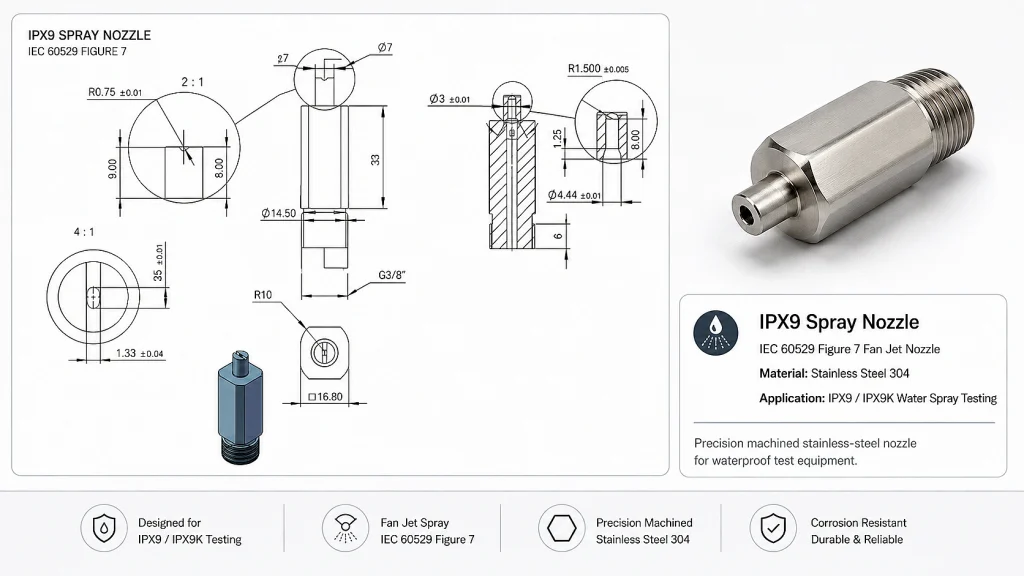
Figure 7 – Fan jet nozzle dimensions
The nozzle should match the IEC 60529 Figure 7 fan jet nozzle design requirements. Dimensional accuracy is important because small changes in nozzle geometry may affect spray distribution and test consistency.
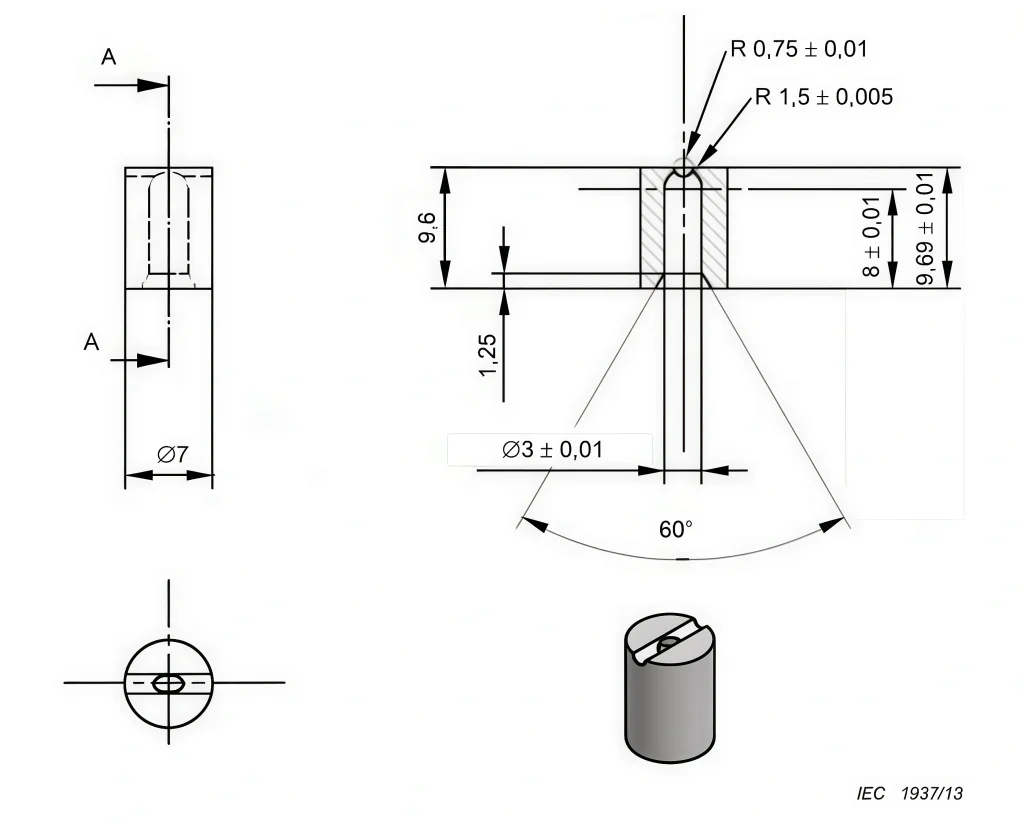
Figure 8 Spray Hole Checking Dimension
The resulting dimensions of the spraying hole should be checked when required. This is especially important for replacement nozzles, high-use laboratories and test systems that must maintain long-term repeatability.
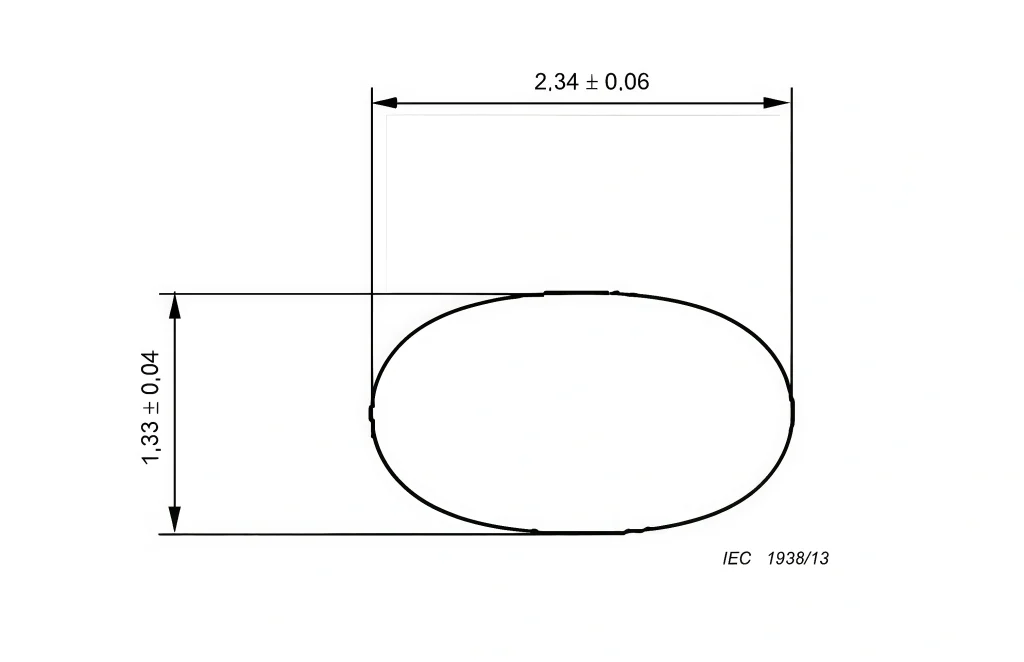
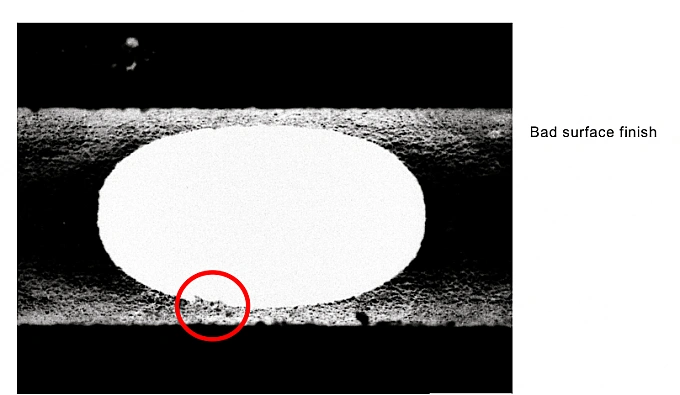
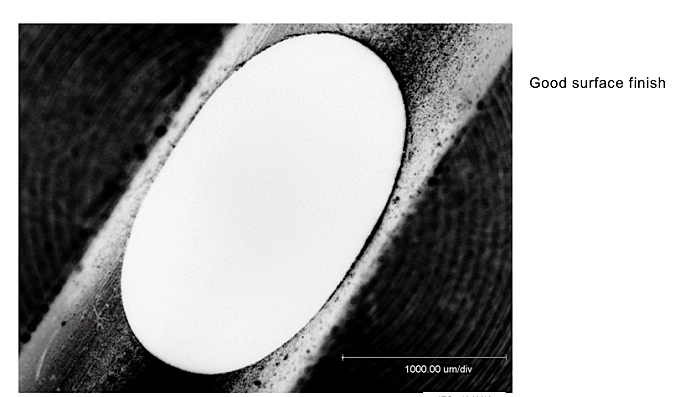
Figure 9 Surface Finish Quality
Surface finish quality is another important factor. A poor surface finish may disturb the spray pattern, while a properly finished nozzle helps maintain a more stable fan jet output.
- Bad surface finish
- Good surface finish
The IPX9 Spray Nozzles are manufactured from high-quality stainless steel with precision-machined orifices to produce the required fan jet spray pattern as defined in IEC 60529 Figure 7. The design ensures consistent spray characteristics when used with a properly configured high-pressure water supply system.
These nozzles are suitable for both new IPX9 test systems and as replacement components in existing rain test chambers. Each nozzle undergoes inspection to support repeatable performance and long-term reliability.
Design drawings of Kingpo
Testing Principle
How the IPX9 Fan Jet Nozzle Works
During IPX9 testing, high-pressure hot water is delivered through the fan jet nozzle toward the enclosure or component under test. The specimen is normally exposed from defined directions, commonly including 0°, 30°, 60° and 90° spray angles, while positioned at the required distance from the nozzle.
The nozzle converts the pressurized water into the required fan-shaped spray. This spray pattern helps simulate demanding wash-down or high-pressure cleaning conditions that may occur in industrial, outdoor or automotive-related environments.
Why Spray Pattern and Nozzle Quality Matter
In IPX9 testing, the nozzle is not just a simple water outlet. The spray pattern, spray hole geometry, surface finish and orifice condition can influence the water impact distribution and test repeatability.
If the nozzle surface finish is poor, the spray hole is worn, or the nozzle is partially blocked, the water jet may become unstable or uneven. This can lead to inconsistent test conditions and unreliable ingress protection evaluation.
Regular inspection of the nozzle is recommended, especially for laboratories or manufacturers that perform frequent high-pressure water jet tests.
Common Error Mitigation
To achieve accurate and repeatable results during IPX9 testing, the following practices are recommended:
- Use nozzles that comply with the dimensional requirements of IEC 60529 Figure 7.
- Maintain correct water temperature, pressure, and flow rate throughout the test when using a compatible system.
- Ensure proper nozzle-to-sample distance and alignment at each test angle.
- Verify that turntable speed and test duration meet standard requirements.
- Regularly inspect nozzles for wear, clogging, or damage.
- Record all critical test parameters for traceability and compliance documentation.
Primary Use Cases & Business Value
The IPX9 Spray Nozzles provide a reliable solution for performing standardized high-pressure water jet testing according to IEC 60529. They help manufacturers and testing laboratories verify product ingress protection levels and serve as replacement components for worn nozzles in existing test systems.
Industrial Applications & Lab Scenarios
- Automotive component manufacturers — High-pressure water jet testing for parts exposed to cleaning processes
- Electrical enclosure manufacturers — IPX9 compliance verification
- Testing laboratories — IPX9 high-pressure water jet testing services
- Certification bodies — Product evaluation for ingress protection ratings
- Industrial equipment manufacturers — Validation of wash-down resistant designs
Strategic Procurement Advantages & Global Support
- Designed according to IEC 60529 Figure 7 for IPX9 high-pressure water jet testing
- Suitable for both new test systems and replacement of worn nozzles
- Stainless steel construction for durability under demanding conditions
- Technical support available for nozzle selection and test configuration
- Documentation available to support laboratory traceability requirements