IEC 60335-2-2 current-carrying hose crushing tester for vacuum cleaner hose resistance to crushing test
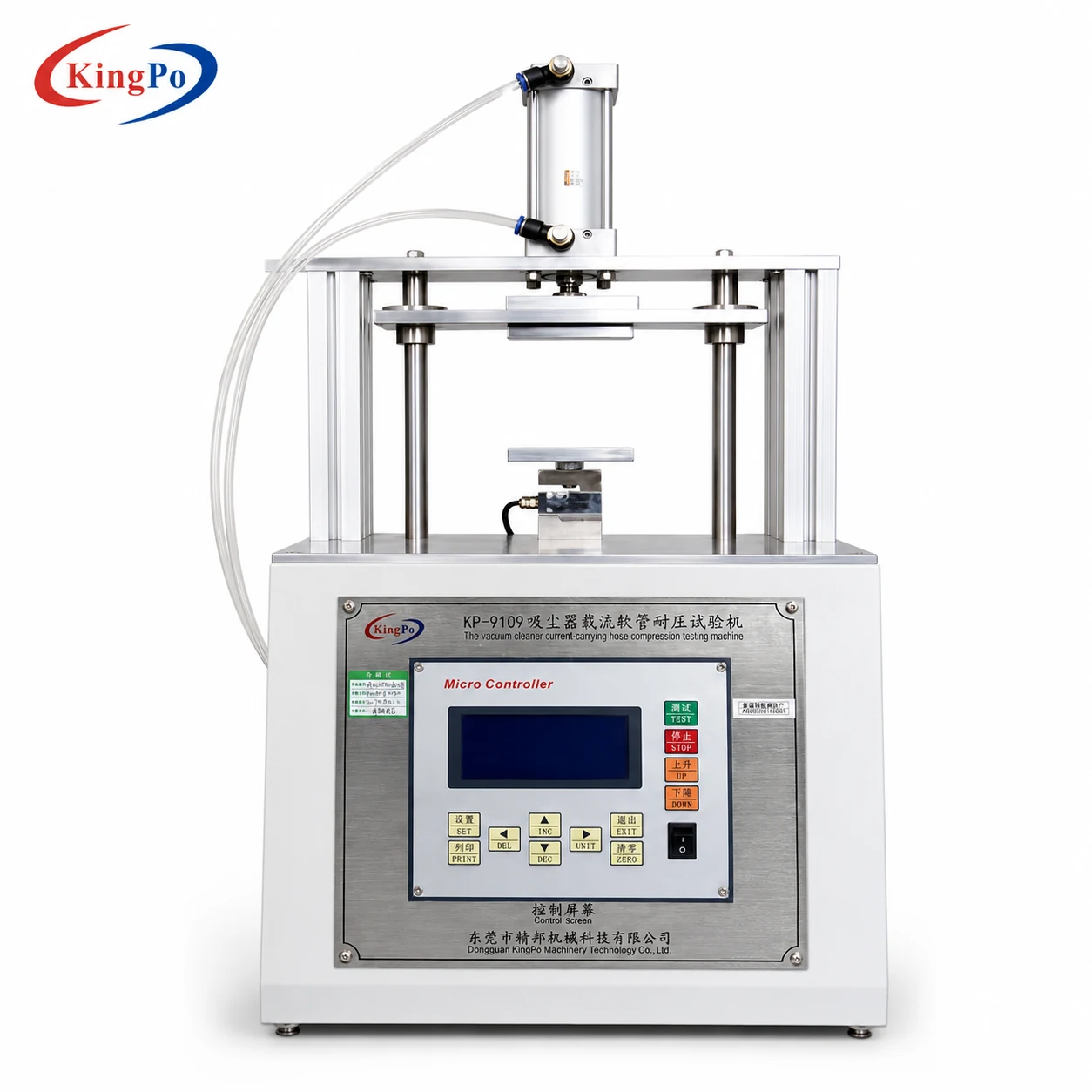
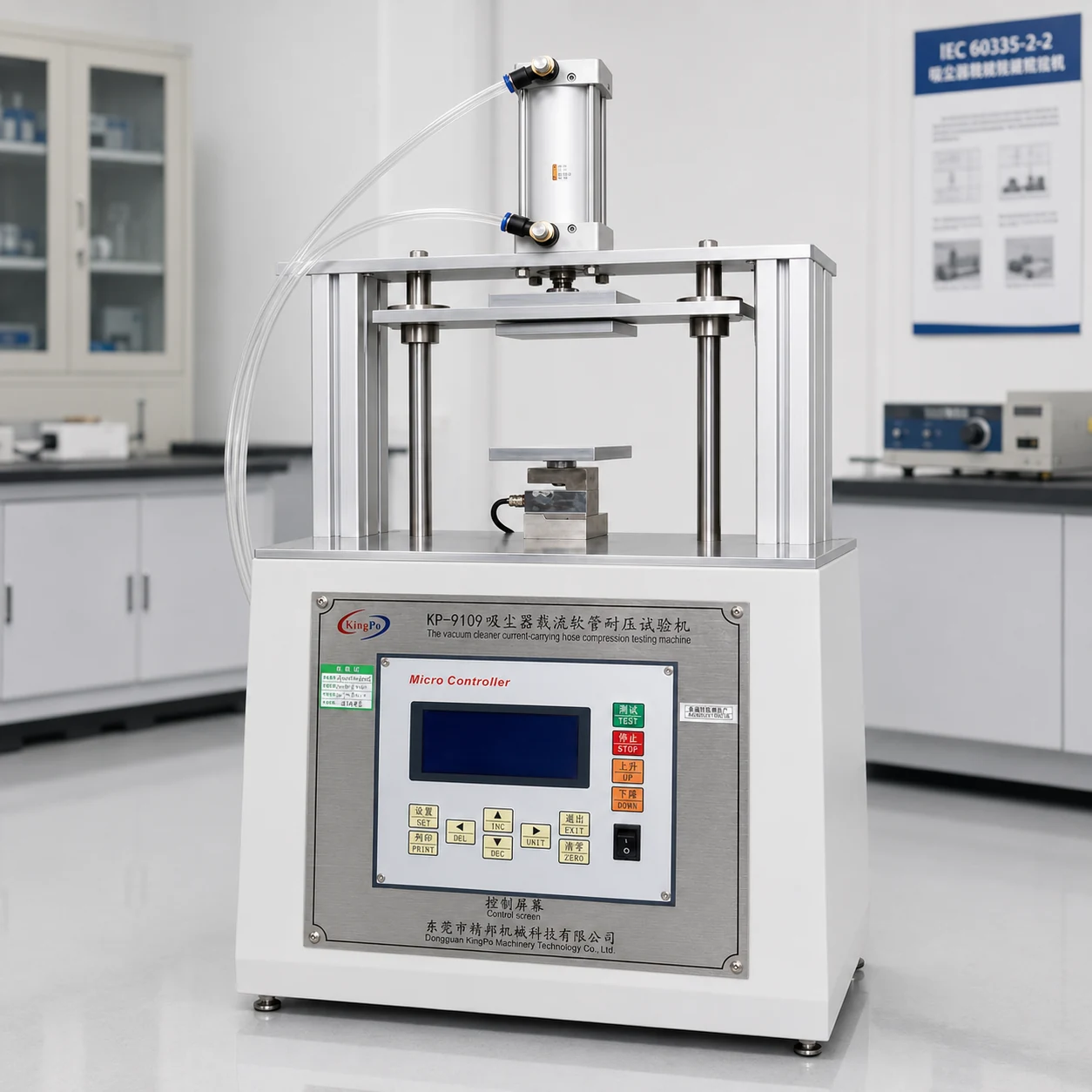
Vacuum cleaner current-carrying hose crushing tester with compression frame and control panel
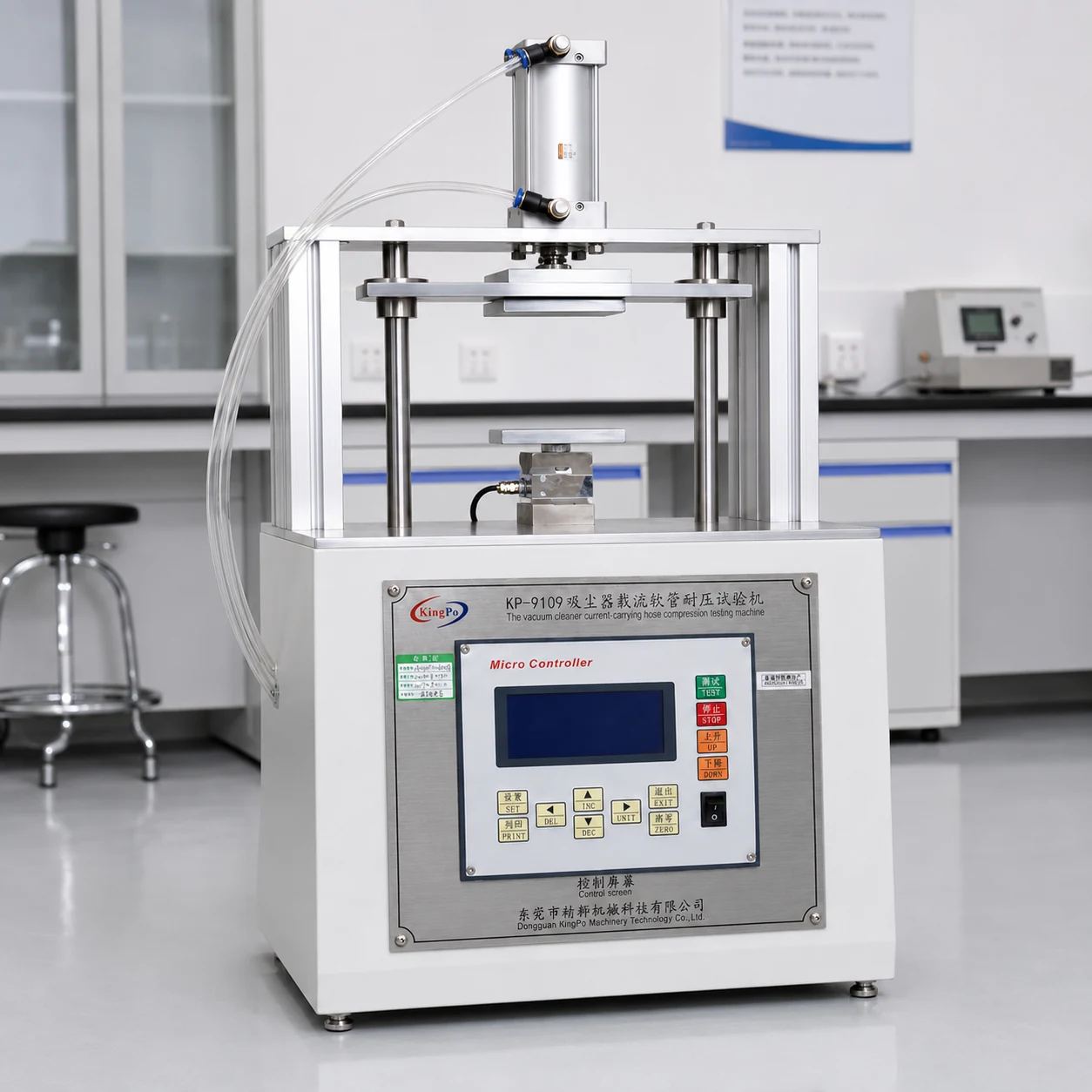
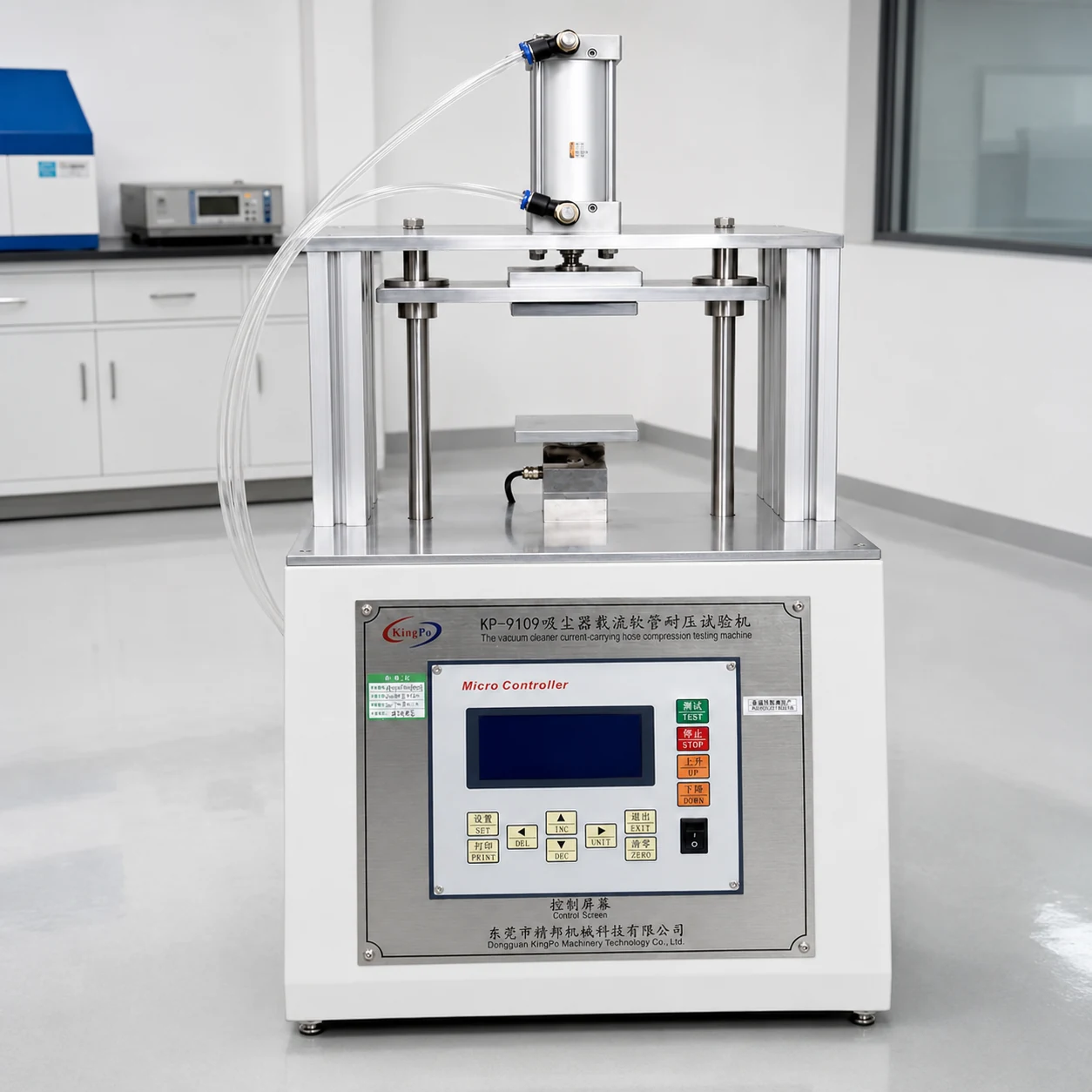
Current-carrying hose crushing tester used in a laboratory for IEC 60335-2-2 testing
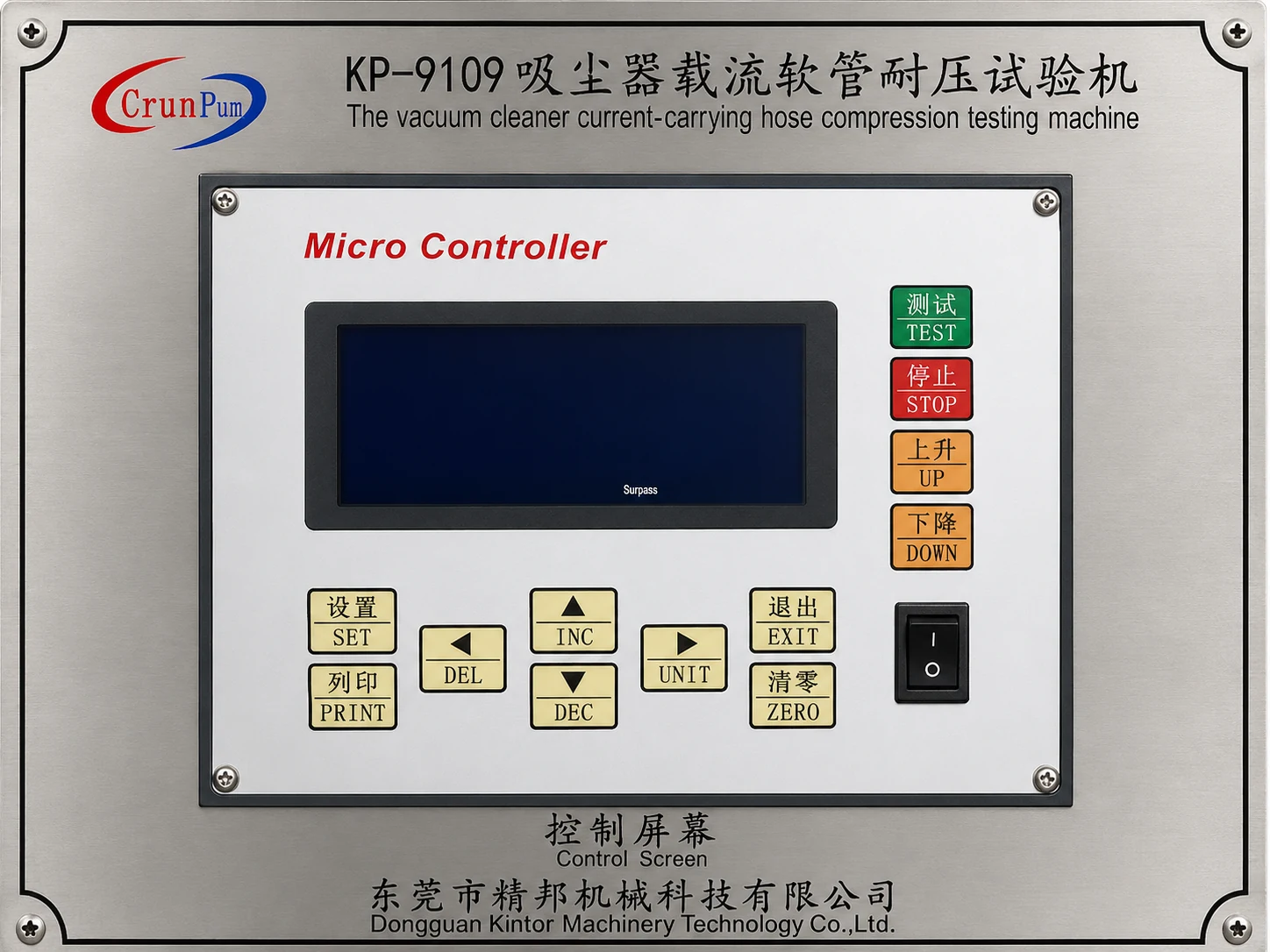
Control panel of IEC 60335-2-2 current-carrying hose crushing tester with button operation
IEC 60335-2-2 current-carrying hose crushing tester for vacuum cleaner hose resistance to crushing test
Vacuum cleaner current-carrying hose crushing tester with compression frame and control panel
Current-carrying hose crushing tester used in a laboratory for IEC 60335-2-2 testing
Control panel of IEC 60335-2-2 current-carrying hose crushing tester with button operation

IEC 60335-2-2 Current-Carrying Hose Crushing Tester

KINGPO Current-Carrying Hose Crushing Tester is designed for the crushing test specified in IEC 60335-2-2 Clause 21.101. It applies a defined compression force to current-carrying hoses used with vacuum cleaners and water-suction cleaning appliances.

This model uses straightforward button operation and is dedicated to the mechanical hose crushing procedure required by IEC 60335-2-2 Clause 21.101. The subsequent electric strength verification can be carried out with separate electrical safety test equipment.

    • Applicable Standard: IEC 60335-2-2 Clause 21.101
    • Product Type: Current-carrying hose crushing tester / hose compression test device
    • Test Object: Current-carrying hoses for vacuum cleaners and water-suction cleaning appliances
    • Main Purpose: Resistance to crushing test before electric strength verification
    • Typical Users: Vacuum cleaner manufacturers, hose suppliers, R&D laboratories, QC departments and third-party testing laboratories
    • Test Method: Hose compressed between two parallel steel plates
    • Important Note: This equipment performs the mechanical crushing procedure only; electric strength verification should be carried out with separate electrical safety test equipment

Product Overview

The KINGPO Current-Carrying Hose Crushing Tester is used to apply a specified mechanical compression load to current-carrying hoses according to IEC 60335-2-2 Clause 21.101. These hoses may contain internal conductors or powered connections for vacuum cleaner functions, so their insulation structure must remain suitable after mechanical stress.

This tester provides a standard-focused crushing setup for manufacturers, hose suppliers, safety laboratories and certification preparation teams. It helps users prepare hose samples under the required mechanical condition before the following electric strength verification.

Unlike a general-purpose compression machine, this equipment is configured around the IEC 60335-2-2 hose crushing method, including the parallel steel plate structure, specified compression speed and 1.5 kN applied force.

Technical Specifications

The main specifications are organized below to help users quickly confirm the applicable standard, test method, force requirement and equipment configuration.

Main Parameters
Product Name Current-Carrying Hose Crushing Tester
Applicable Standard IEC 60335-2-2 Clause 21.101
Test Type Resistance to crushing test
Test Object Current-carrying hose
Typical DUT Vacuum cleaner and water-suction appliance current-carrying hoses
Compression Method Hose compressed between two parallel steel plates
Steel Plate Size 100 × 50 mm
Compression Speed 50 mm/min ± 5 mm/min
Applied Force 1.5 kN
Control Method Button operation
Power Supply 220 V
Documentation Product specification, inspection record or calibration support can be confirmed before ordering

IEC 60335-2-2 Clause 21.101 Reference

Standard Application

IEC 60335-2-2 covers safety requirements for electric vacuum cleaners and water-suction cleaning appliances for household and similar use. It also applies to current-carrying hoses associated with a particular vacuum cleaner.

Test Boundary

This tester is designed for the mechanical crushing part of the test. The electric strength verification after crushing should be performed with separate electrical safety test equipment.

Testing Principle

1
Place the Hose

Position the current-carrying hose between two parallel steel plates.

2
Align the Sample

Keep the hose axis at right angles to the longer sides of the plates.

3
Apply Compression

Compress the hose at 50 mm/min ± 5 mm/min until the force reaches 1.5 kN.

4
Verify Electrically

After force release, proceed with electric strength verification using separate equipment.
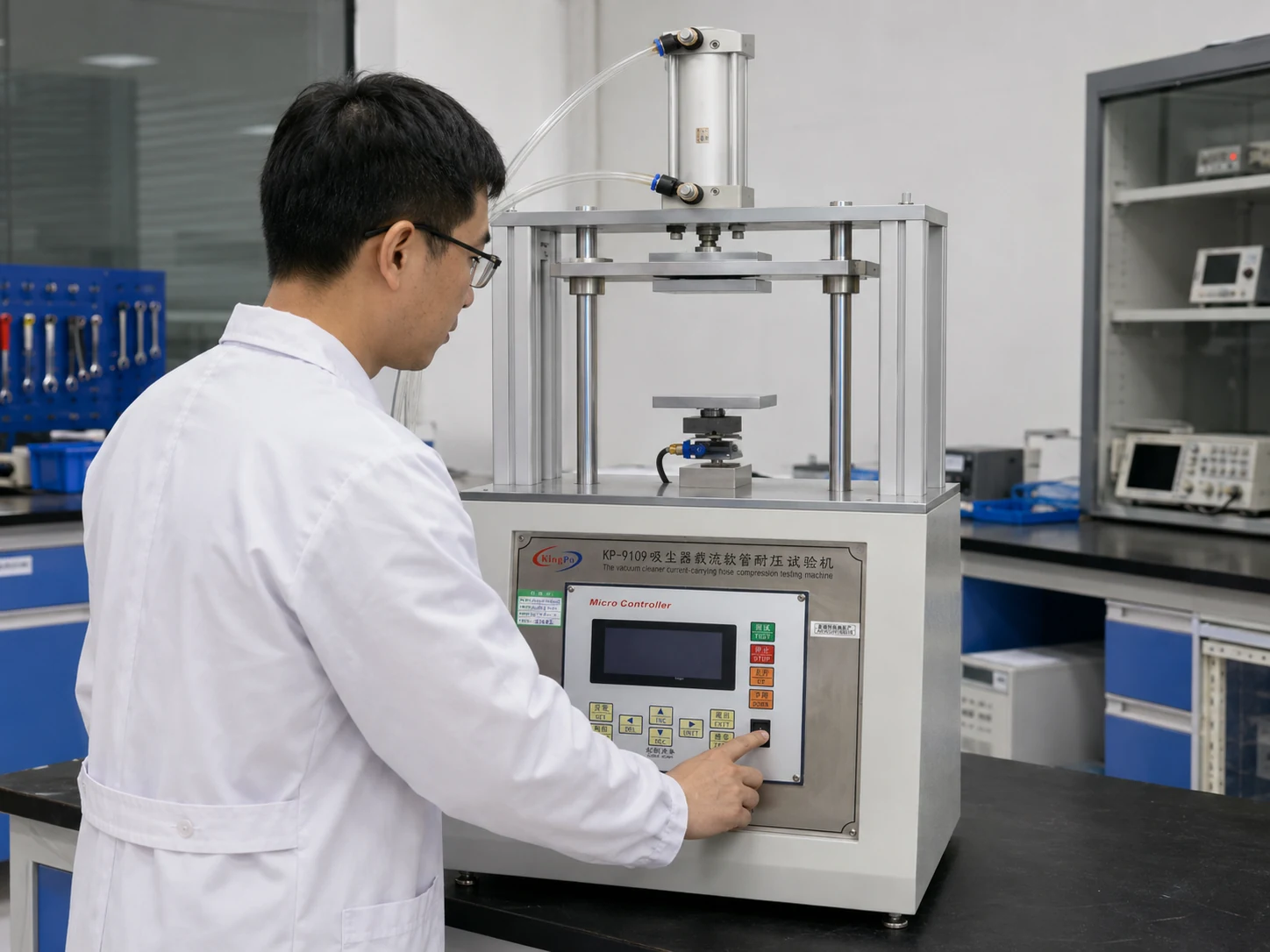
Laboratory technician operating a current-carrying hose crushing tester for IEC 60335-2-2 Clause 21.101

Difference from Related IEC 60335-2-2 Hose Test Equipment

Current-carrying hose testing may involve different mechanical and electrical test methods. This product should be selected according to the required clause and test purpose.

Equipment Type Main Purpose
Current-Carrying Hose Crushing Tester Applies 1.5 kN compression force for Clause 21.101 resistance to crushing test
Current-Carrying Hose Abrasion Tester Evaluates abrasion resistance of the hose surface
Current-Carrying Hose Flexing Tester Evaluates repeated bending durability
Current-Carrying Hose Torsion Tester Evaluates resistance to twisting
Electric Strength Tester Performs electrical insulation verification after mechanical stress

Design and Operation Features

Dedicated for Clause 21.101

Configured for the current-carrying hose crushing test required by IEC 60335-2-2 Clause 21.101.

Parallel Steel Plate Compression

The hose is compressed between two parallel steel plates to support repeatable standard-based testing.

Specified 1.5 kN Force

Applies the required crushing force for evaluating hose resistance to mechanical compression.

Controlled Compression Speed

Supports compression at 50 mm/min ± 5 mm/min according to the test method.

Button Operation

Suitable for routine laboratory use and standard-oriented mechanical test operation.

Steel Structure

Provides stable mechanical support for repeated hose compression testing.

Typical Applications and Buyer’s Selection Notes

Typical Applications
  • Vacuum cleaner current-carrying hose testing
  • Water-suction cleaning appliance hose testing
  • Hose supplier sample validation
  • Appliance manufacturer pre-compliance checks
  • Safety laboratory testing
  • Certification preparation before formal submission
  • Incoming component inspection for hose assemblies
Buyer’s Selection Notes
  • Confirm IEC 60335-2-2 Clause 21.101 or the applicable internal laboratory procedure.
  • Confirm whether the sample is a current-carrying hose.
  • Provide hose diameter, length and conductor arrangement if available.
  • Prepare separate electrical safety test equipment if electric strength testing is required after crushing.
  • Confirm local power supply and documentation requirements before ordering.

Typical Operation Workflow

  1. Confirm the applicable IEC 60335-2-2 edition and Clause 21.101 requirement.
  2. Prepare the current-carrying hose sample according to the laboratory procedure.
  3. Position the hose between the two parallel steel plates.
  4. Make sure the hose axis is at right angles to the longer sides of the plates.
  5. Start the compression process through button operation.
  6. Compress the hose at 50 mm/min ± 5 mm/min until the applied force reaches 1.5 kN.
  7. Release the force after the required condition is reached.
  8. Remove the hose sample and proceed with electric strength verification using separate equipment.
  9. Record the test condition, sample condition and any abnormal observation.
Safety Note: Mechanical compression and subsequent electrical testing should be performed by trained personnel according to the laboratory’s approved procedure.

Compliance & Regulatory Assurance

The KINGPO Current-Carrying Hose Crushing Tester supports IEC 60335-2-2 Clause 21.101 resistance to crushing testing for current-carrying hoses used with vacuum cleaners and water-suction cleaning appliances. It helps manufacturers, hose suppliers and laboratories perform standard-based mechanical pre-conditioning before the subsequent electric strength verification.

Product Datasheet
IEC 60335-2-2 Current-Carrying Hose Crushing Tester
Download the PDF datasheet for the product overview, IEC 60335-2-2 Clause 21.101 crushing test conditions, technical specifications, operating notes and technical inquiry support.

Technical Inquiry & Expert Support

For IEC 60335-2-2 Clause 21.101 current-carrying hose crushing testing, KINGPO can help confirm whether this tester matches your hose sample, test method, power supply and documentation requirements before quotation.

Please provide the following information:

  • Applicable standard: IEC 60335-2-2 Clause 21.101 or internal laboratory procedure
  • Test object: current-carrying hose for vacuum cleaner or water-suction cleaning appliance
  • Sample information: hose diameter, hose length and internal conductor structure
  • Test requirement: resistance to crushing test before electric strength verification
  • Required power supply: 220 V or other local voltage requirement
  • Documentation requirement: datasheet, inspection record or calibration support if needed

Our team will review your sample and test scope before quotation, helping you confirm whether the current-carrying hose crushing tester and related electric strength test equipment are required for your IEC 60335-2-2 test project.

IEC 62368-1 Clause 9.6 Wireless Power Receiver

FAQ

What is the purpose of the current-carrying hose crushing tester?
The current-carrying hose crushing tester is used to apply a specified mechanical compression force to hoses used with vacuum cleaners and water-suction cleaning appliances. It helps evaluate whether the hose can withstand crushing stress before the subsequent electric strength verification required by IEC 60335-2-2 Clause 21.101.
Which standard is this hose crushing tester designed for?
This tester is designed for the resistance to crushing test specified in IEC 60335-2-2 Clause 21.101. It is intended for current-carrying hoses associated with vacuum cleaners and water-suction cleaning appliances. Customers should confirm the applicable standard version and clause before ordering.
What type of hose can be tested with this equipment?
The equipment is mainly used for current-carrying hoses, especially hoses that may contain internal conductors or powered connections for vacuum cleaner functions. It is not a general-purpose hose compression tester for all ordinary hoses unless the customer’s test method specifically requires the same crushing procedure.
Does this equipment perform the electric strength test after crushing?
No. This equipment performs the mechanical crushing procedure only. After the crushing force is applied and released, the hose sample should be checked using a separate electric strength tester according to the applicable IEC 60335-2-2 test procedure and laboratory requirements.
How is the hose positioned during the crushing test?
The current-carrying hose sample is placed between two parallel steel plates. The hose axis should be positioned at right angles to the longer sides of the plates. This positioning helps reproduce the crushing condition required by the standard and supports consistent test operation.
What are the main test parameters for this crushing test?
The key parameters include the compression structure, steel plate size, compression speed and applied force. For this IEC 60335-2-2 Clause 21.101 crushing test, the tester uses parallel steel plates, a 50 mm/min ± 5 mm/min compression speed and a 1.5 kN applied force.
Who typically uses this current-carrying hose crushing tester?
Typical users include vacuum cleaner manufacturers, water-suction cleaning appliance manufacturers, hose suppliers, R&D laboratories, quality control departments and third-party testing laboratories. It is especially useful for pre-compliance checks, component validation and safety testing preparation before formal certification.
Is this tester the same as a hose abrasion, flexing or torsion tester?
No. This is a crushing tester for applying mechanical compression to current-carrying hoses. Abrasion testers, flexing testers and torsion testers evaluate different mechanical stresses. Customers should confirm whether their IEC 60335-2-2 test project requires crushing, abrasion, flexing, torsion or electric strength testing.
What information should be provided before requesting a quotation?
Please provide the applicable standard clause, hose type, hose diameter, sample length, internal conductor structure if available, required power supply and documentation requirements. If post-crushing electric strength verification is required, please also confirm the related test voltage, duration and connection method for separate equipment selection.
Can this tester be used for manufacturer pre-compliance testing?
Yes. Manufacturers and hose suppliers can use this current-carrying hose crushing tester for internal pre-compliance checks before submitting samples to a third-party laboratory. It helps identify possible hose structure, insulation protection or conductor arrangement risks before formal IEC 60335-2-2 testing.

Related Products

Related News

DENG Sha¹, ZHANG Chao², WU Shaohai¹    Corresponding author: FAN Xiang¹ Guangdong Institute of Medical Device Quality Supervision and Inspection, No. […]

Abstract & Technical Summary Under the UK’s BS 7671 IET Wiring Regulations (18th Edition), electrical safety and circuit protection rely […]

Essential equipment for residual voltage testing under IEC 60601-1, IEC 60335-1, IEC 61010-1, IEC 62368-1 and similar safety standards. 1. […]

External defibrillators are performance‑critical devices. According to KingPo manufacturing and metrology protocols, for third‑party calibration and certification laboratories—and for manufacturers’ […]

Shan Chao 1 , Qiang Xiaolong 2 , Liu jiming 3 , Zhang Chao 3 . (1. Heilongjiang Institute for […]

Abstract Thermage, a non-invasive radiofrequency (RF) skin tightening technology, is widely used in medical aesthetics. With operating frequencies increasing to […]

Scroll to Top

Get A Free Quote Now !

Contact Form
If you have any questions, please do not hesitate to contact us.