Technical Overview
IPX8 is an ingress-protection rating for continuous water immersion under conditions specified for the product. Under IEC 60529, IPX8 does not have one universal test depth or duration. The applicable condition is defined for the product and must be more severe than the IPX7 temporary-immersion condition.
For engineers and laboratories, the practical question is not simply “Is the product IPX8?” but “At what depth or pressure, for how long, in which configuration, and according to which acceptance criteria was the product tested?”
1. Understanding the IPX8 Test Condition
What Does IPX8 Mean?
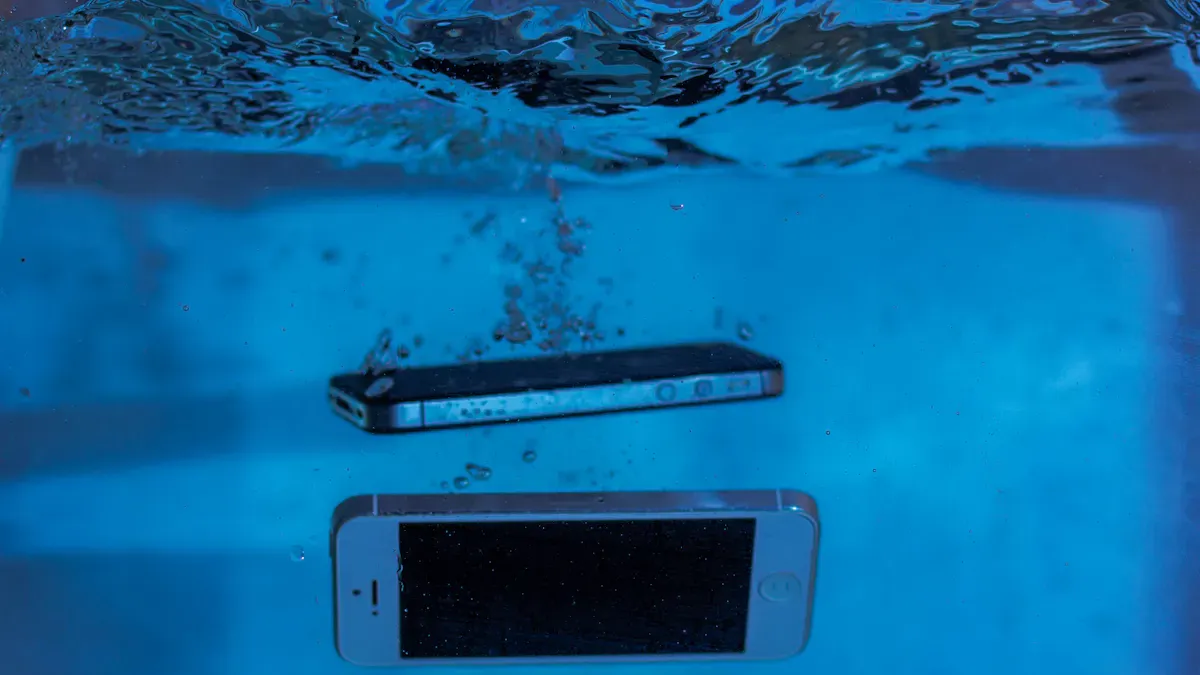
IPX8 indicates that an enclosure has been evaluated for continuous immersion in water under specified conditions. The “X” means that the code does not state a solid-particle protection level, while the “8” identifies the continuous-immersion water-protection category.
IPX8 should not be interpreted as a universal “fully waterproof” claim. Two products can both carry an IPX8 rating while using different immersion depths, pressures, test durations and acceptance criteria.
IPX7 vs IPX8
| Rating | Immersion Type | Depth / Pressure | Duration | Main Interpretation |
|---|---|---|---|---|
| IPX7 | Temporary immersion | Defined by the IEC 60529 IPX7 immersion condition | Commonly 30 minutes | A standardized temporary-immersion evaluation |
| IPX8 | Continuous immersion | Specified for the product | Specified for the product | The declared condition must be more severe than IPX7 |
How Are IPX8 Depth and Duration Defined?
IEC 60529 does not assign one fixed IPX8 depth and duration to every product. Instead, the test condition is specified for the application. The declared condition should identify the immersion depth or equivalent pressure, the test duration and the sample configuration.
This matters because a simple statement such as “IPX8 waterproof” is incomplete from an engineering perspective. A useful claim should state the actual tested condition.
An IPX8 test should be defined by the actual depth or pressure, duration, sample configuration and acceptance criteria—not by the rating label alone.
IEC 60529 or ISO 20653?
IEC 60529 is widely used for degrees of protection provided by enclosures for electrical equipment. ISO 20653 is commonly associated with road vehicles and automotive electrical equipment. The correct standard depends on the product category, customer requirement and intended application.
The test report should clearly identify the standard and edition used. An automotive component should not automatically be assessed with the same assumptions as a general industrial enclosure, even if both use an IP code.
2. Define the Test Condition Before Choosing Equipment
Before selecting an immersion tank or pressure chamber, the laboratory should define the actual test requirement. This step prevents over-specifying the system in some areas while missing important requirements in others.
| Item to Confirm | Why It Matters |
|---|---|
| Applicable standard | Determines the technical basis of the test and reporting language. |
| Depth or pressure | Determines the required pressure range and chamber design. |
| Test duration | Affects timer range, stability requirements and test scheduling. |
| Sample dimensions and weight | Determines tank volume, basket capacity and fixture design. |
| Mounting orientation | Ingress behavior can change when the product is tested in a different position. |
| Operating state | Some products may need functional checks before, during or after testing. |
| Acceptance criteria | Defines how water ingress, functionality and safety are judged after the test. |
3. Selecting IPX8 Test Equipment
Water Immersion Tank or Pressure Chamber?
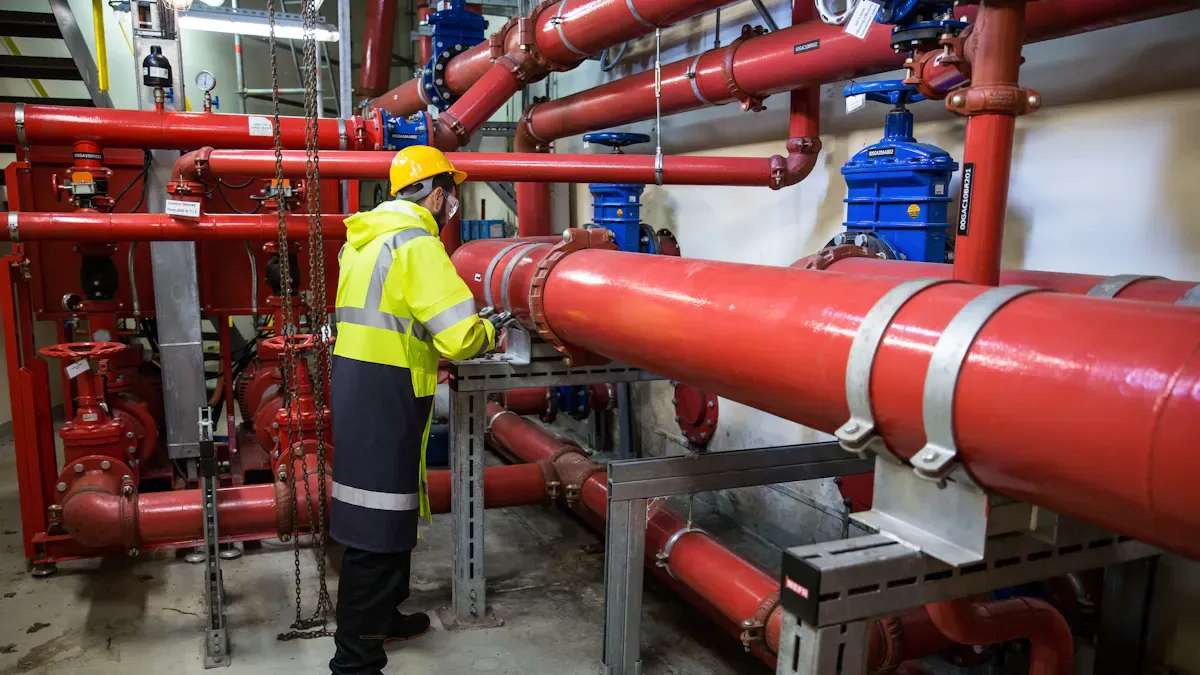
A simple immersion tank can be suitable when the required depth can be achieved directly with water level. A pressure chamber becomes more practical when the declared depth is difficult to reproduce with a physical water column or when a compact laboratory system is preferred.
For pressure-type testing, the chamber simulates immersion depth by controlling pressure in a sealed vessel. Equipment selection should therefore focus on the declared pressure or depth, rather than on the IPX8 label alone.
Pressure Range
The required pressure range should cover the declared IPX8 condition with a suitable operating margin. A laboratory testing shallow consumer products may need a very different system from one evaluating marine, automotive or underwater equipment.
Tank Size and Sample Capacity
Internal tank dimensions should be selected according to the largest specimen, the required orientation and any support fixture. The sample should be fully immersed and remain stable during filling, pressure application and pressure release.
Safety and Control
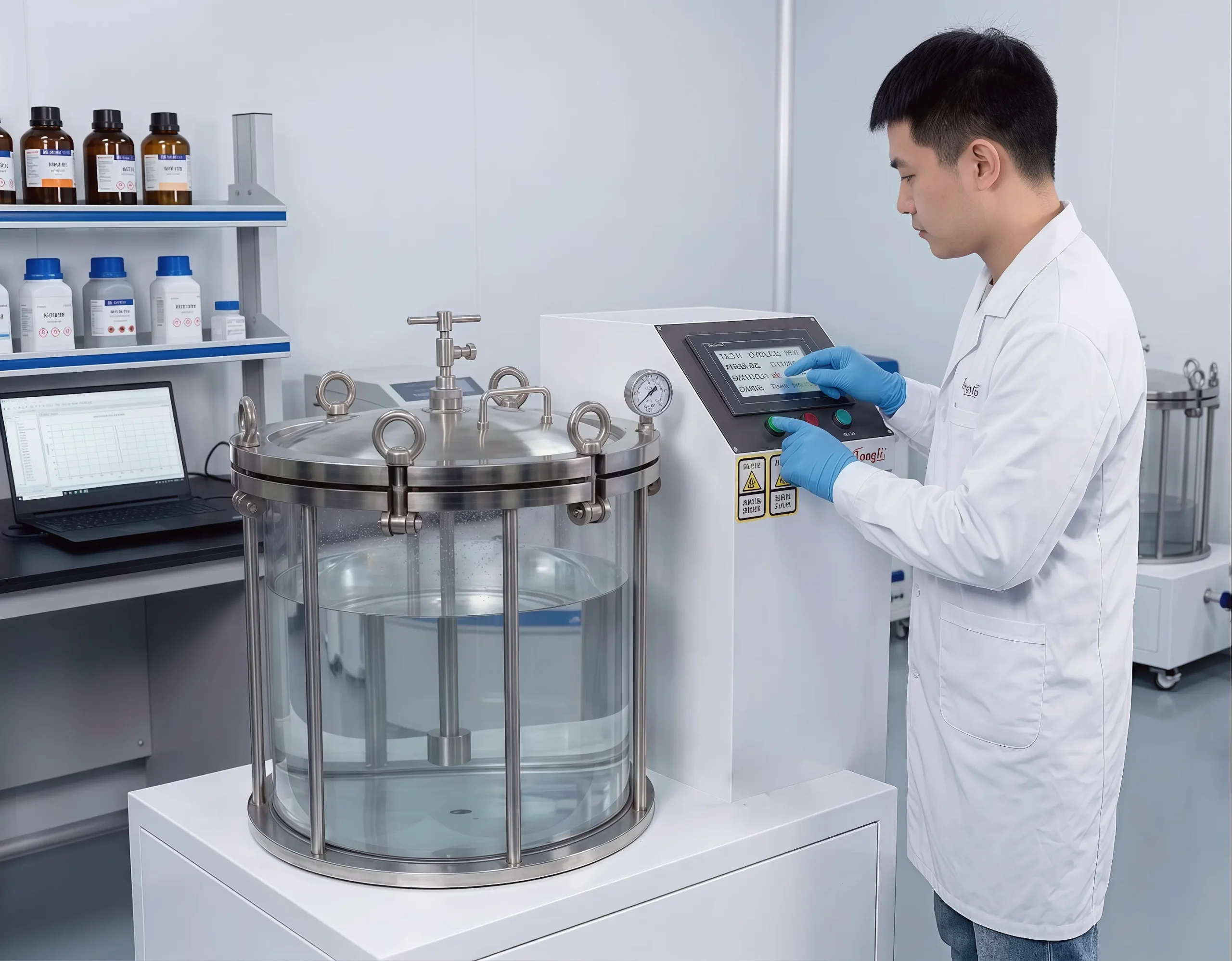
Pressure immersion equipment should include suitable control and safety functions. Typical considerations include a pressure gauge, programmable timer, secure chamber cover, over-pressure protection, emergency stop, inlet and drain control, and a clear pressure-release procedure.
Typical Equipment Parameters
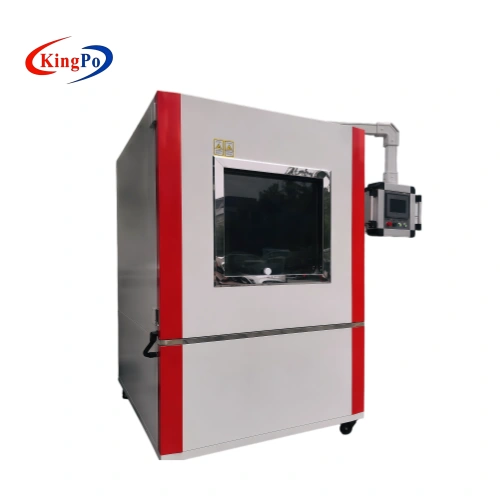
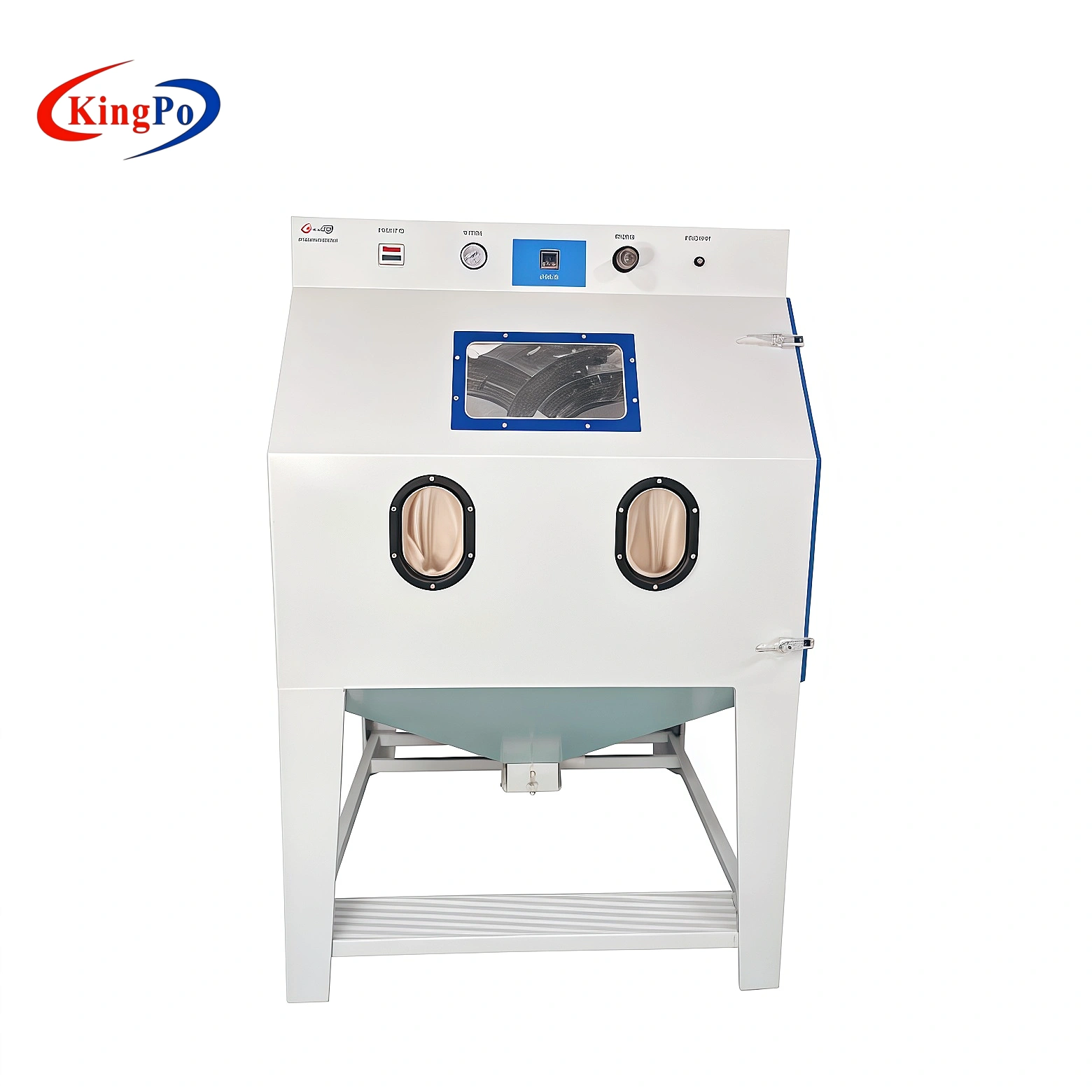
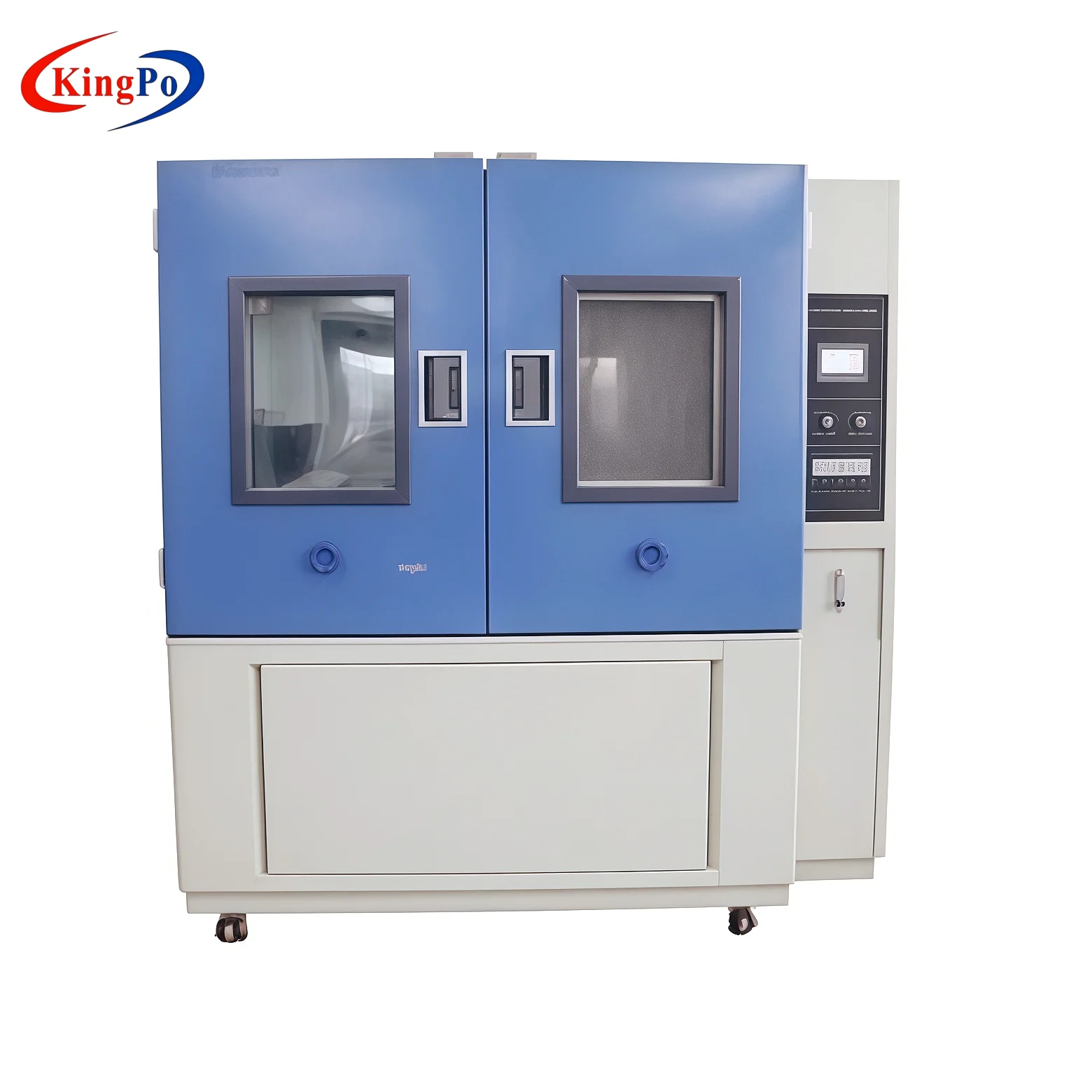
The original KingPo equipment configuration described for this application includes SUS304 stainless steel construction, selectable pressure ranges, programmable timing, water-level indication and pressure-safety functions. The exact configuration should be confirmed against the required test condition before ordering.
| Parameter | Available / Typical Direction | Selection Note |
|---|---|---|
| Tank material | SUS304 stainless steel | Suitable for laboratory water-immersion use and easier maintenance. |
| Pressure range | 0–0.3 / 0–0.5 / 0–1 / 0–3 MPa options were listed in the existing configuration | Select according to the declared IPX8 pressure or simulated depth. |
| Tank size | Ø600 × H1000 mm / Ø1000 × H1500 mm were listed in the existing configuration | Custom dimensions may be required for larger products. |
| Test duration | Programmable timer | The range should cover the longest declared test. |
| Safety functions | Over-pressure protection and emergency stop | Important for safe pressure-vessel operation. |
Application-Oriented Selection
| Application | Typical Equipment Direction | Main Selection Point |
|---|---|---|
| Wearables and small electronics | Compact immersion or pressure chamber | Stable sample placement and repeatable timing |
| Automotive sensors and connectors | Pressure chamber matched to the required condition | Fixture, cable exits, orientation and ISO 20653 applicability |
| Outdoor enclosures | Larger tank or pressure vessel | Door seals, cable glands, vents and representative assembly |
| Marine or underwater equipment | Higher-pressure or customized system | Declared depth, long duration, safety margin and reporting |
4. Related KingPo IPX8 Equipment
For laboratories planning an IPX8 setup, the following pages provide the most relevant equipment and selection information.
5. IPX8 Test Procedure
Step 1: Inspect the Sample
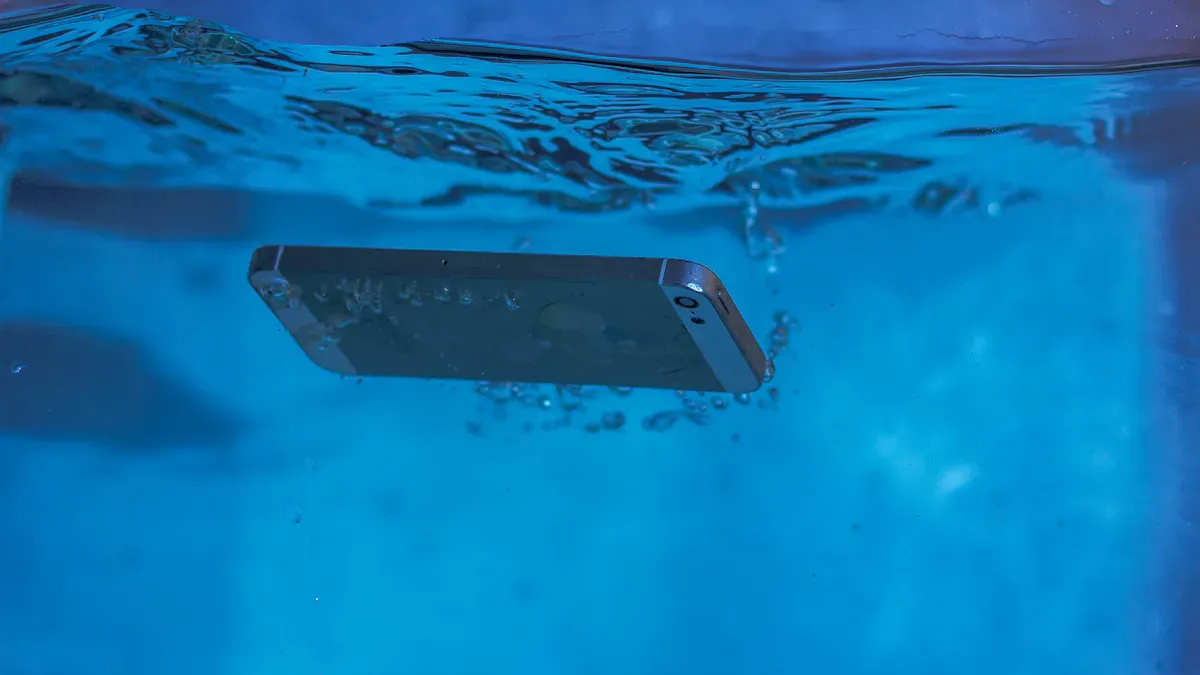
The sample should represent the configuration being evaluated. Inspect the enclosure, gaskets, cable entries, connectors, covers, vents, buttons and fasteners before testing. A simplified prototype may be useful for development work, but it may not support the final IPX8 claim if the production design is different.
Step 2: Set the Test Parameters
Confirm the declared depth or pressure, test duration, sample orientation and acceptance criteria before the test begins. These values should match the applicable standard, product specification or agreed test programme.
Step 3: Prepare the Chamber
Check the tank, water level, pressure gauge, timer, safety valve, emergency stop and drainage system. Place the sample securely so that it cannot move unexpectedly during filling or pressurization.
Step 4: Run the Test
Fill the chamber and apply the required immersion or pressure condition. Maintain the declared condition for the required duration. Pressure, water level and timing should remain controlled throughout the exposure period.
Step 5: Monitor Pressure and Time
Record the actual pressure or water level, test duration, water temperature and any abnormal condition. If the pressure falls unexpectedly, the chamber leaks or the sample moves, the validity of the test should be reviewed.
Step 6: Release Pressure Safely
After the test duration is complete, release pressure gradually and follow the equipment’s safe operating procedure before opening the chamber. Remove the sample carefully so that external water does not interfere with the post-test inspection.
6. Post-Test Evaluation and Reporting
What Should Be Checked After Testing?
Post-test evaluation should follow the applicable acceptance criteria. Depending on the product, this may include visual inspection, internal inspection, functional verification, electrical safety checks or other product-specific evaluations.
| Evaluation Item | What to Check |
|---|---|
| External condition | Cracks, deformation, displaced seals or mechanical damage |
| Internal condition | Water droplets, condensation, corrosion marks or localized ingress |
| Functional condition | Displays, buttons, sensors, communication ports and other required functions |
| Safety condition | Any safety-related effect required by the product-specific evaluation |
Pass/Fail Considerations
The pass/fail decision should be based on the declared IPX8 condition and the applicable acceptance criteria. A report should avoid vague statements such as “fully waterproof” unless the exact test condition is also stated.
A more useful engineering conclusion is: “The sample met the declared IPX8 condition of [depth/pressure] for [duration] under [standard/procedure], subject to the tested configuration.”
What Should the Test Report Record?
| Report Element | Why It Matters |
|---|---|
| Standard and edition | Defines the technical basis of the evaluation. |
| Sample identification | Connects the result to the actual tested configuration. |
| Declared IPX8 condition | States the depth or pressure and duration being claimed. |
| Mounting orientation | Ingress can change when sample position changes. |
| Test equipment | Shows how the immersion or pressure condition was produced and controlled. |
| Observed ingress | Documents any water or condensation found after testing. |
| Functional result | Confirms whether required operation remained acceptable. |
| Final conclusion | States the accepted rating and any restrictions. |
7. Common IPX8 Failures and Design Lessons
- Insufficient gasket compression: A seal is present but does not maintain uniform compression under immersion or pressure.
- Connector or cable-entry leakage: Interfaces around connectors, buttons, cable glands or unused ports become local ingress paths.
- Housing deformation: Thin covers or enclosure walls deform under pressure and open a leakage path.
- Cracks or molding defects: Small defects can become significant during long-duration exposure.
- Internal condensation: Moisture may appear because of temperature or pressure changes, even when no obvious external leak is visible.
- Assembly variation: A prototype may pass while production units fail because of different gasket material, screw torque, cable diameter or accessory configuration.
These findings should be fed back into enclosure design and pre-compliance testing. Changes to gaskets, connectors, housing geometry, vents or fastening methods should be reviewed before assuming that an earlier IPX8 result still applies.
8. Information Required Before Equipment Recommendation
To recommend a suitable IPX8 water immersion test system, please provide the actual test requirement rather than only the rating name.
- Applicable standard and edition
- Required IPX8 depth or pressure
- Test duration
- Sample dimensions and weight
- Mounting orientation and fixture requirements
- Number of samples per test cycle
- Required chamber size and pressure range
- Calibration, documentation, installation and operator-training requirements
9. Frequently Asked Questions About IPX8 Testing
What does IPX8 mean?
IPX8 means that an enclosure is evaluated for continuous immersion in water under specified conditions. The actual depth or pressure, duration and acceptance criteria should be declared for the product.
What is the difference between IPX7 and IPX8?
IPX7 covers temporary immersion under a defined test condition. IPX8 covers continuous immersion under product-specific conditions that must be more severe than IPX7.
Does IPX8 always mean deeper than 1 meter?
IPX8 is not defined by one universal depth. The actual depth or equivalent pressure is specified for the product and should be stated in the test documentation.
How long is an IPX8 test?
There is no single universal duration for every IPX8 product. The duration is part of the declared test condition and should be agreed before the test begins.
What equipment is used for IPX8 testing?
IPX8 testing typically uses a water immersion tank or a pressure immersion chamber. The correct system depends on the declared depth or pressure, sample size, test duration and laboratory requirements.
Can an IPX8 chamber also perform IPX7 testing?
Some immersion systems can support both IPX7 and IPX8 if the chamber size, water depth, pressure control and test procedure match the required condition. The exact configuration should be confirmed before equipment selection.
Does IPX8 cover water jets?
No. IPX8 is an immersion rating. Water-jet resistance is evaluated using other IP water-protection levels and test methods.
What should an IPX8 test report include?
The report should identify the standard and edition, sample configuration, declared depth or pressure, duration, mounting orientation, equipment used, observed ingress, functional result and final conclusion.
Conclusion
IPX8 is best understood as a declared continuous-immersion condition rather than a generic waterproof label. The rating only becomes technically useful when the tested depth or pressure, duration, sample configuration and acceptance criteria are clearly defined.
For laboratories and manufacturers, the correct workflow is straightforward: define the test condition first, select the equipment around that condition, run the test with traceable parameters, evaluate the sample against agreed criteria, and record enough detail for the result to remain meaningful after the test is complete.
Technical disclaimer: This article provides practical engineering guidance and does not reproduce or replace IEC 60529, ISO 20653 or any licensed standard. Final test conditions, classifications and acceptance criteria must follow the applicable standard edition, product-specific standard and approved laboratory procedure.