1.Abstract & Technical Summary
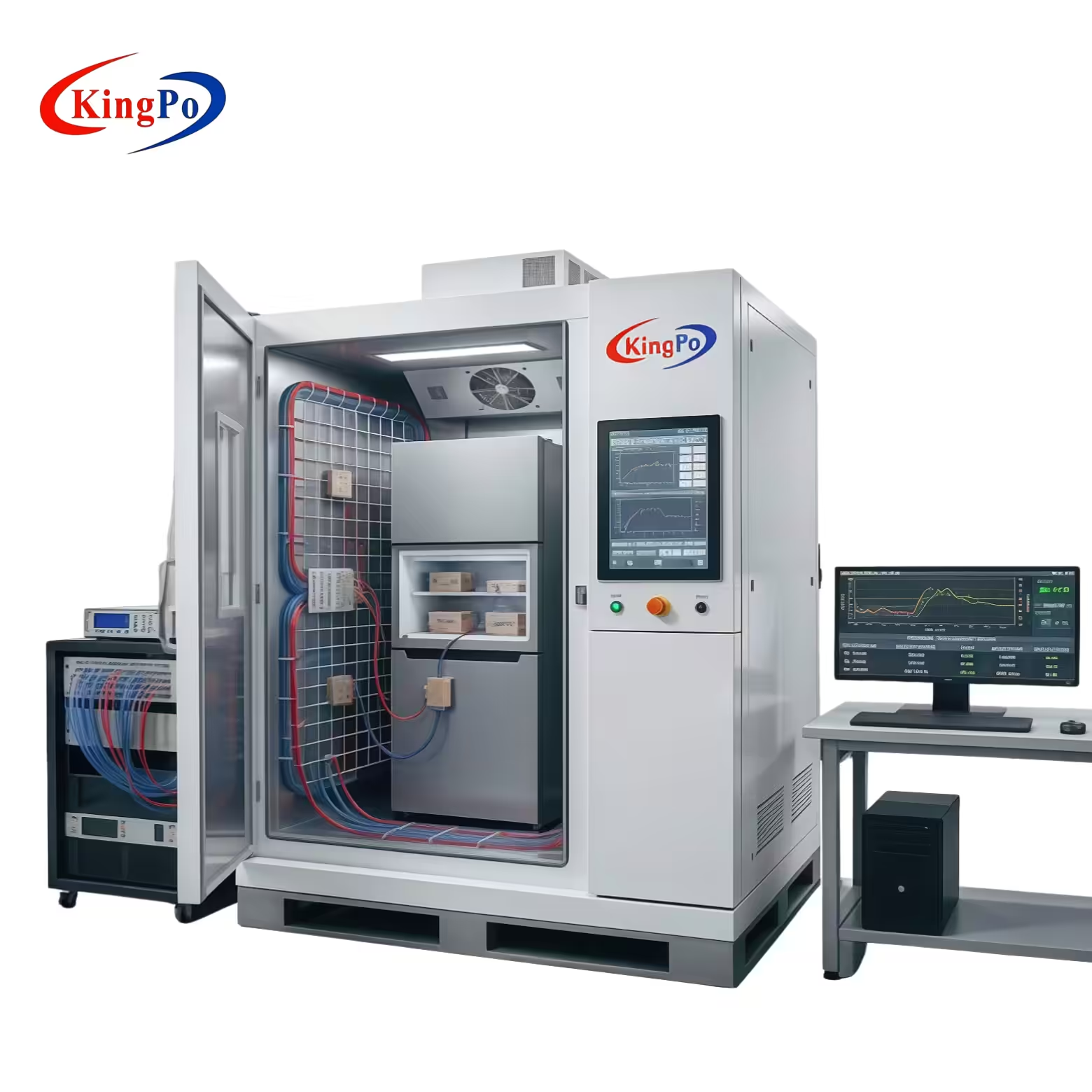
The KingPo IEC 62552 Refrigerator Test Chamber delivers industry-leading climate simulation chamber performance for energy consumption test, temperature uniformity, humidity control system, pull-down time, steady-state operation, door opening test, and COP measurement under the latest IEC 62552 standard, enabling manufacturers to achieve precise energy labeling compliance and superior refrigeration efficiency validation.
2. Introduction to IEC 62552 and Its Importance
IEC 62552 (Household refrigerating appliances — Characteristics and test methods) is the global benchmark for measuring energy consumption, cooling performance, and operational efficiency of refrigerators, freezers, wine coolers, and similar appliances. The 2023 edition introduces tighter tolerances on temperature uniformity, humidity control system stability, and door opening test repeatability, directly influencing energy labeling programs such as EU Energy Label, US ENERGY STAR, China GB 12021.2, and other regional regulations.
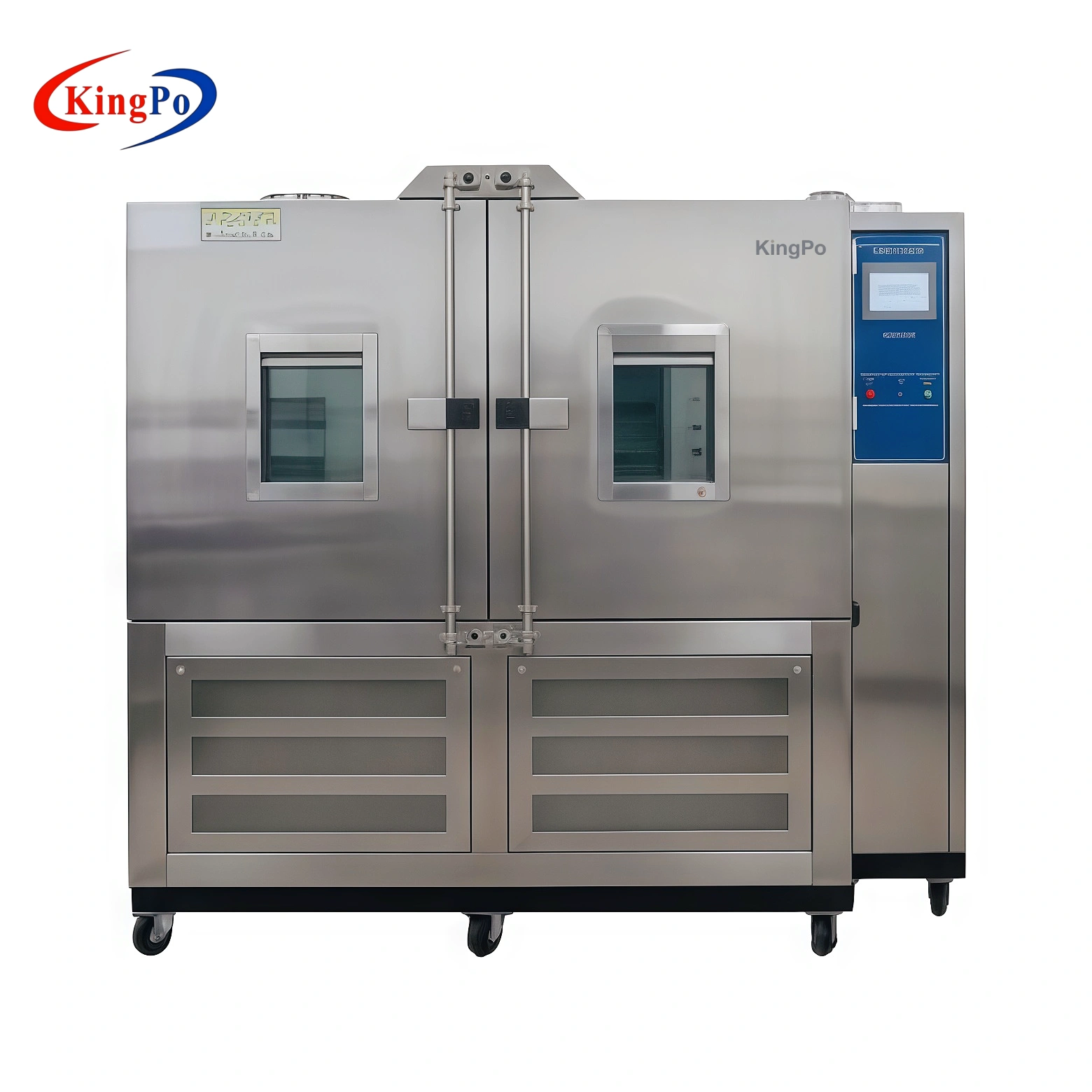
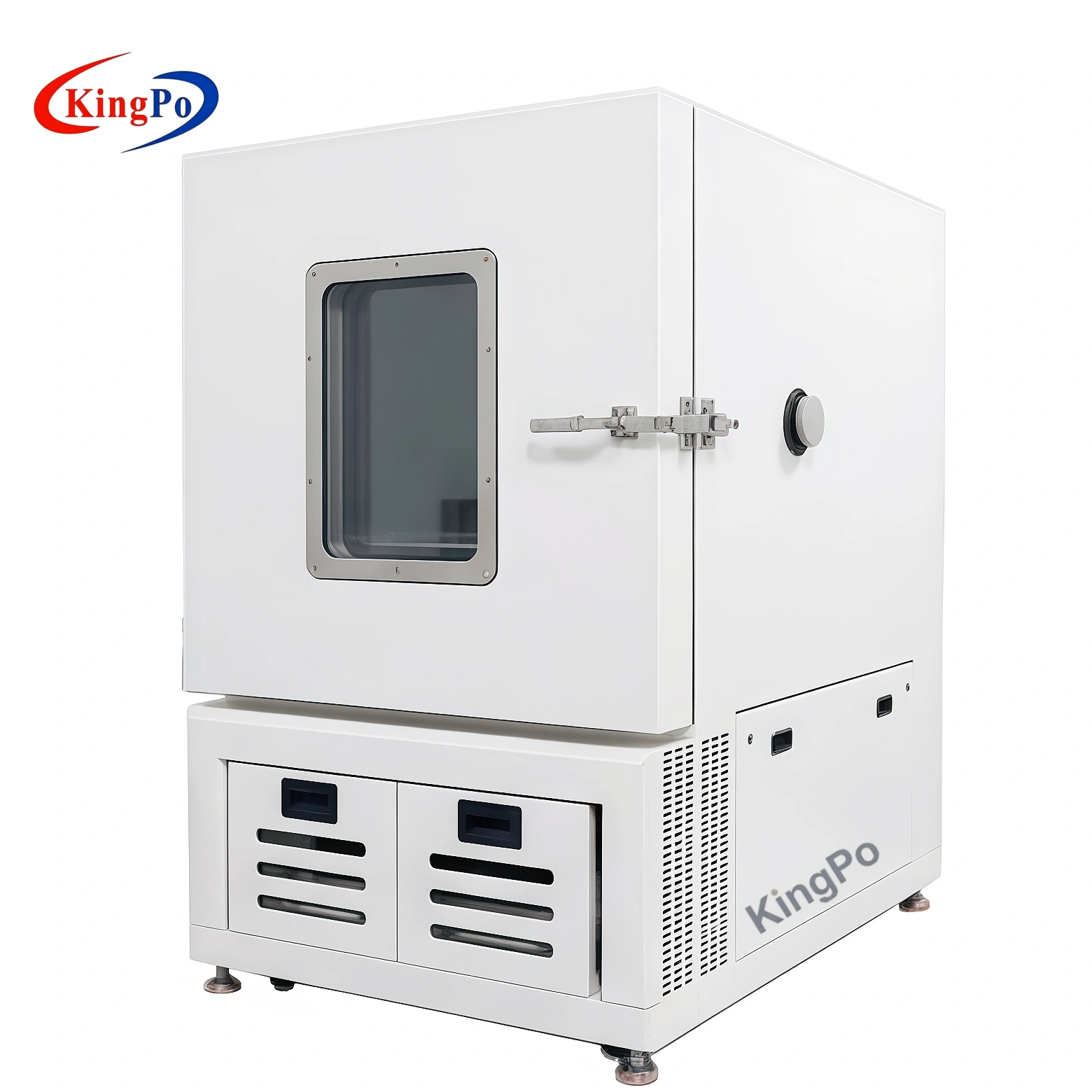
Accurate testing requires a climate simulation chamber capable of maintaining precise ambient conditions while monitoring power input, internal temperatures, and dynamic load changes. The KingPo IEC 62552 Refrigerator Test Chamber is purpose-built for this, offering ±0.5°C uniformity and ±2% RH control across the full test volume.
3. Core Components of the KingPo Test Chamber
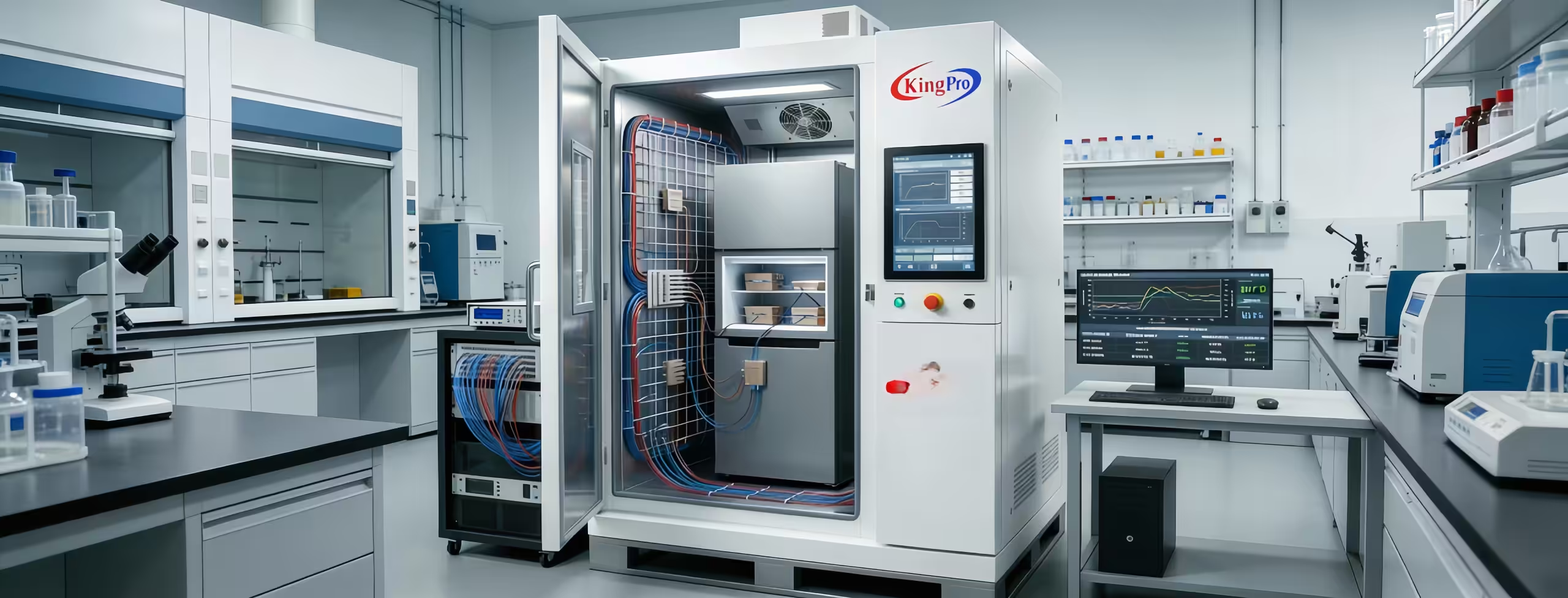
The system features dual independent compartments (indoor/outdoor simulation zones) with:
- Multi-zone PID temperature control for superior temperature uniformity
- Ultrasonic humidification and desiccant dehumidification for stable humidity control system
- Variable-speed airflow (0.1–0.5 m/s) to replicate real-world convection
- High-resolution power analyzer (0.01 Wh resolution) for energy consumption test
- Automated door opening mechanism for standardized door opening test cycles
- Data acquisition system logging pull-down time, steady-state operation, and COP measurement
4. Step-by-Step Guide: How to Perform Accurate IEC 62552 Energy Consumption Test
- Chamber Preparation Pre-condition the chamber to target ambient (e.g., 16°C, 25°C, 32°C) with humidity control system set to 65% RH ±2%. Verify temperature uniformity across all shelves using 12-point mapping.
- Sample Installation Place the refrigerator in the test compartment, ensure proper leveling, connect power analyzer, and install thermocouples per IEC 62552 Annex A positions.
- Pull-Down Time Test Start from stabilized ambient, power on the unit, record time to reach set-point. Monitor pull-down time and initial power surge.
- Steady-State Operation Run 24-hour cycles under stable conditions. Record energy consumption test data, internal temperatures, and compressor cycling behavior.
- Door Opening Test Execute programmed door openings (e.g., 36 times/day for household models) with defined durations. Observe recovery time and additional energy draw.
- COP Measurement Calculate Coefficient of Performance using measured cooling capacity and input power during steady-state operation.
- Data Analysis & Reporting Export curves and values via PC software. Compare against limit values for compliance.
5. Key Challenges and Solutions
- Temperature uniformity deviations: Solved by multi-zone control and forced air circulation.
- Humidity control system instability: Ultrasonic + desiccant hybrid ensures ±2% accuracy.
- Door opening test variability: Automated mechanism eliminates human error.
- Common failure causes are addressed through pre-test checklists and real-time monitoring.
6. Latest Standard Updates (IEC 62552:2023)
The 2023 edition tightens pull-down time tolerances, adds dynamic load testing for inverter models, and refines energy consumption test calculation formulas. KingPo chambers are fully upgradable to meet these changes.
7.FAQs
How to calibrate the KingPo IEC 62552 Refrigerator Test Chamber?
- Calibration requires certified reference thermometers, humidity generators, and power standards to verify temperature uniformity, humidity control system accuracy, and energy measurement. Full procedure and recommended frequency are detailed in the user manual and calibration service guide.
Why do energy consumption test results fail IEC 62552 compliance?
- Common causes include poor temperature uniformity, incorrect door opening test cycles, unstable humidity control system, thermocouple placement errors, or chamber air leakage. Always perform pre-test checklists and monitor real-time data to identify and correct issues early.
What are the latest standard updates for IEC 62552?
- IEC 62552:2023 edition introduces stricter energy consumption test tolerances, new pull-down time requirements, and refined calculation formulas for inverter models. KingPo chambers are fully upgradable to support these changes.
How does the chamber support COP measurement?
- The system automatically calculates COP from measured cooling capacity and input power under steady-state operation, with high-resolution power analyzer and real-time data logging.
Can the system perform door opening test automatically?
- Yes, the PC software controls programmable door opening cycles with precise timing, duration, and energy monitoring, fully compliant with IEC 62552 requirements.
What is the maximum test capacity of the chamber?
- The chamber supports refrigerators up to 800 L internal volume and 600 kg weight, suitable for most household and commercial models.
How accurate is the humidity control system?
- Humidity is controlled within ±2% RH across the 30%–90% range, using ultrasonic humidification and desiccant dehumidification for stable performance.
Is the system suitable for inverter refrigerator testing?
- Yes, it fully supports variable-speed compressor testing under dynamic load conditions, including energy consumption test at multiple ambient temperatures.
What maintenance is required for long-term accuracy?
- Annual sensor recalibration, quarterly filter cleaning, and regular airflow verification are recommended to maintain optimal performance.
How to request a customized chamber configuration?
- Contact our engineering team with your specific requirements (size, temperature range, additional sensors, etc.), and we’ll provide a tailored solution and quotation.