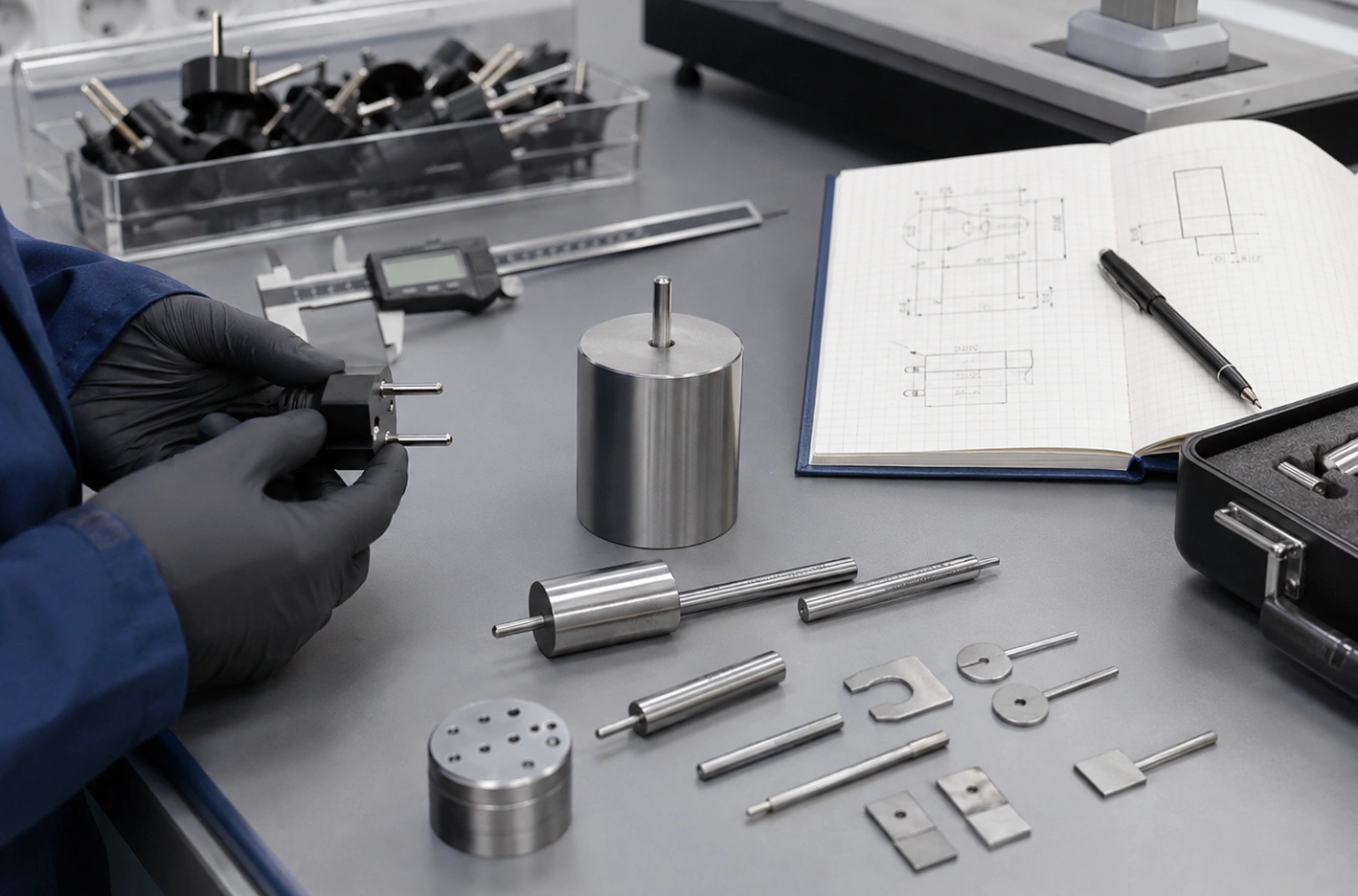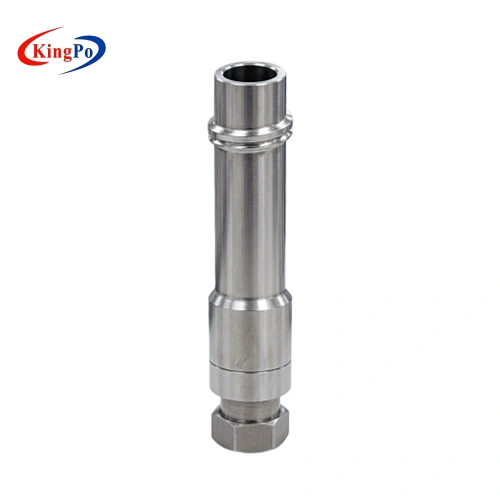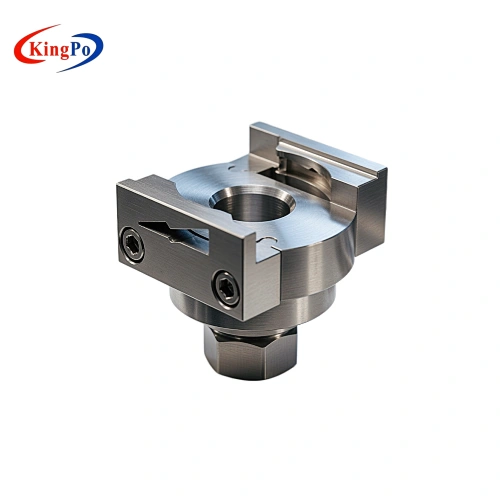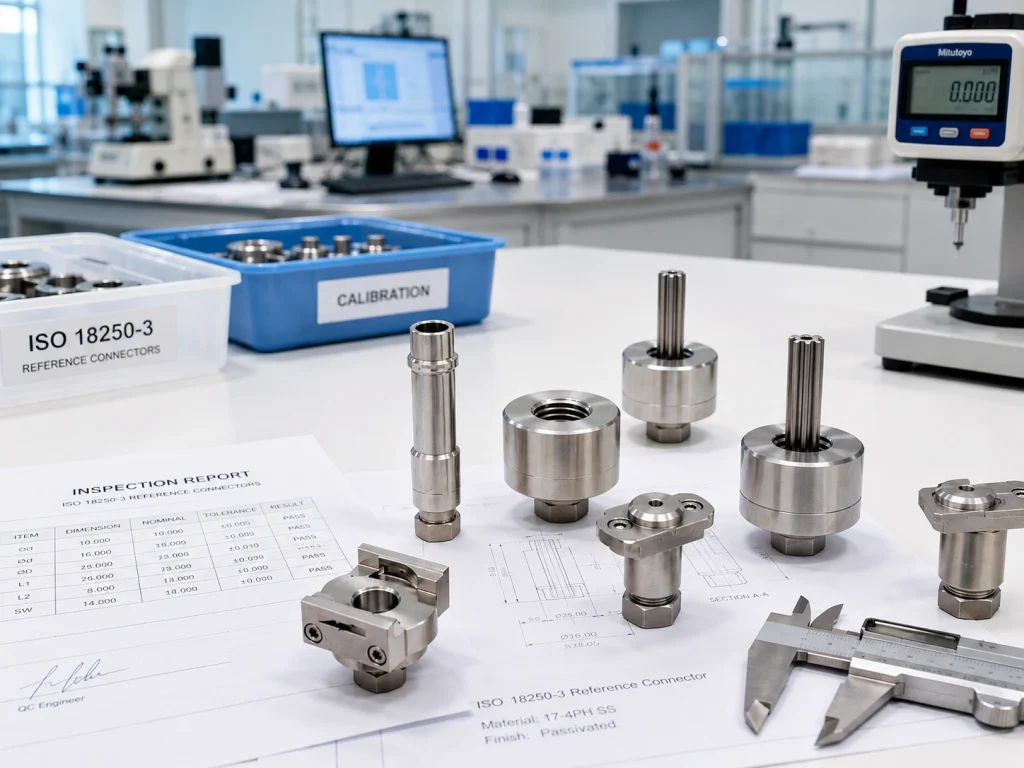
ISO 18250-3 Reference Connectors were supplied by KingPo to Fresenius Jiangxi Factory on June 23, 2026, including the Figure C.3 Reference Connector and Figure C.4 Cross Reference Connector for cross-port reservoir connector verification and reservoir delivery system connector testing applications.
The supplied stainless steel reference connectors support different ISO 18250-3 test configurations. Figure C.3 is mainly used for leakage, stress cracking and unscrewing-related evaluation, while Figure C.4 is mainly used for axial load separation and overriding resistance test preparation.
For a medical device manufacturing facility, this distinction is important. Figure C.3 and Figure C.4 should not be treated as interchangeable parts. Using the wrong reference connector may lead to an unsuitable test setup, unclear verification results or repeated test preparation work.
This project reflects KingPo’s support for medical device manufacturers and production facilities that need accurate ISO 18250-3 reference connector configurations for internal verification, quality control, product validation and laboratory test preparation.
Project Snapshot
| Item | Project Information |
|---|---|
| Customer | Fresenius |
| Project Date | June 23, 2026 |
| Supplied Products | ISO 18250-3 Figure C.3 Reference Connector and Figure C.4 Cross Reference Connector |
| Product Type | Stainless steel reference connectors |
| Applicable Standard | ISO 18250-3 |
| Focus Keyword | ISO 18250-3 Reference Connectors |
| Test Object | Cross-port reservoir connector / reservoir delivery system connector |
| Main Application | Leakage, unscrewing, axial load separation and overriding resistance test setups |
| Project Type | Medical device connector reference connector supply |
| Typical Users | Medical device manufacturing, quality control, R&D and laboratory teams |
Project Overview
Fresenius Jiangxi Factory required ISO 18250-3 Reference Connectors for cross-port reservoir connector related verification work. In this type of testing, a reference connector is not selected only by appearance or material. It must match the intended test item, sample connector structure, loading condition and fixture arrangement.
For this project, KingPo supplied two different reference connector configurations: Figure C.3 and Figure C.4.
The Figure C.3 Reference Connector is mainly used in leakage, stress cracking, unscrewing resistance and disconnection-by-unscrewing related test setups. The Figure C.4 Cross Reference Connector is mainly used in mechanical performance test setups, especially where axial load separation or overriding resistance needs to be evaluated.
The two connectors support different test intentions. Figure C.3 is more closely related to sealing behavior and unscrewing-related connection performance. Figure C.4 is more closely related to mechanical resistance under defined loading conditions. Supplying both connectors helps the factory prepare different ISO 18250-3 connector verification tasks with the correct reference interface.
Why ISO 18250-3 Reference Connectors Matter
Medical device connector testing is not only a dimensional inspection task. For reservoir delivery system connectors, the test may involve sealing behavior, leakage resistance, stress exposure, unscrewing behavior, axial separation, overriding resistance, connector interface stability or mechanical load response.
Because the test purposes are different, ISO 18250-3 Reference Connectors must be selected according to the intended verification item. A reference connector used for leakage or unscrewing-related testing may not be suitable for axial load or overriding resistance testing. Similarly, a connector intended for mechanical resistance evaluation may not represent the correct setup for leakage or stress cracking related test preparation.
For production facilities and quality teams, this distinction matters. If the wrong reference connector is selected, the test setup may not properly represent the intended ISO 18250-3 requirement. The result may also be affected by pressure condition, sample alignment, fixture design, loading direction, rotation direction, holding method and connector mating condition.
By clearly separating the use of Figure C.3 and Figure C.4, engineering and quality teams can reduce confusion during test preparation and build a more organized connector verification workflow.
Medical Device Quality and Traceability Context
For medical device manufacturing facilities, reference connectors are usually not treated as ordinary mechanical parts. They may be used during product validation, internal verification, incoming inspection, process control, quality investigation or laboratory test preparation.
Because of this, dimensional consistency, material selection, surface finish, identification, inspection records and traceability can be important depending on the customer’s quality system requirements. A reference connector used in a regulated manufacturing or laboratory environment should be handled as part of the test setup documentation, not only as a simple hardware accessory.
For projects involving ISO 18250-3 Reference Connectors, customers may need to confirm whether dimensional inspection records, material information, identification details, packing records or other supporting documents are required before order. These documents can help support internal traceability, incoming inspection and verification record preparation.
This is especially important when the reference connector will be used repeatedly by R&D, quality or laboratory teams for connector performance evaluation.
Supplied Connector Scope
The supplied ISO 18250-3 Figure C.3 Reference Connector is used as a defined reference connector in cross-port reservoir connector test setups. It is mainly applied when the connector needs to be evaluated for leakage-related or unscrewing-related performance.
Typical Figure C.3 applications include positive pressure liquid leakage test setups, subatmospheric pressure air leakage test setups, stress cracking related preparation, resistance to separation from unscrewing and disconnection by unscrewing test configurations.
The supplied ISO 18250-3 Figure C.4 Cross Reference Connector is used for mechanical performance evaluation of cross-port reservoir connectors. It is mainly applied when the connector needs to be tested for resistance to separation from axial load or resistance to overriding.
Together, the two ISO 18250-3 Reference Connectors provide Fresenius Jiangxi Factory with reference components for different connector verification scenarios.
Difference Between Figure C.3 and Figure C.4
Figure C.3 and Figure C.4 may both be related to cross-port reservoir connector testing, but they serve different test purposes.
Figure C.3 is more closely related to leakage behavior, stress cracking preparation and unscrewing-related evaluation. It is selected when the test focuses on whether the connector can maintain sealing performance, resist leakage, or respond correctly under unscrewing-related separation conditions.
Figure C.4 is more closely related to mechanical force evaluation. It is selected when the test focuses on whether the connector can resist axial separation or overriding under defined loading conditions.
This difference affects more than the connector itself. It also affects the test fixture, sample holding method, direction of force, pressure or vacuum equipment requirement, and how the sample connector is assembled before testing.
For this reason, Figure C.3 and Figure C.4 should be selected according to the test item, not simply according to product category or connector appearance.
Factory Use Value
For a medical device manufacturing facility, ISO 18250-3 Reference Connectors can support several internal functions, including product development, design verification, incoming inspection, process validation, quality control and laboratory test preparation.
Using the correct reference connector helps engineering and quality teams identify connector-related issues earlier. Leakage-related testing may reveal sealing or mating problems, while mechanical resistance testing may reveal interface stability, axial separation or overriding risks.
The supplied Figure C.3 and Figure C.4 reference connectors support clearer separation between leakage / unscrewing-related test preparation and axial load / overriding resistance test preparation. This helps the factory organize ISO 18250-3 connector verification work with the correct reference interface for each test scenario.
In a production environment, this can also support clearer communication between R&D, quality, manufacturing and laboratory teams. Each figure number can be linked to a specific test purpose, fixture arrangement and verification record, reducing ambiguity during test planning and internal documentation.
Engineering Considerations for Test Setup
For Figure C.3 related testing, the main engineering considerations include the sample connector structure, mating condition, pressure or vacuum condition, leakage medium, sealing method, holding fixture and unscrewing direction.
For Figure C.4 related testing, the main engineering considerations include sample alignment, holding method, loading direction, axial force application, overriding force condition and fixture stability.
In both cases, the reference connector is not a complete automatic test instrument by itself. It is a precision reference component used within a larger test configuration. Depending on the selected ISO 18250-3 test item, additional leakage equipment, mechanical loading equipment, holding fixtures or customized accessories may be required.
Before final selection, customers should confirm the required ISO 18250-3 figure number, intended test item, sample connector structure, test medium, loading method, fixture needs and documentation requirements.
Documentation and Support Considerations
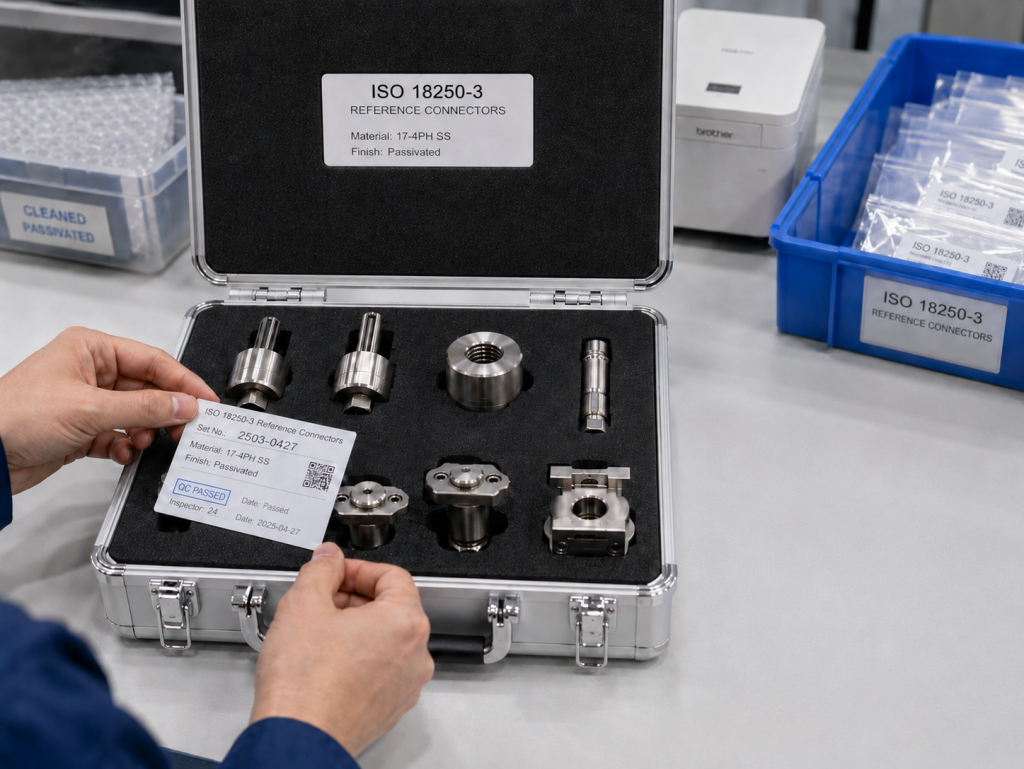
For ISO 18250-3 Reference Connectors projects, documentation requirements should be confirmed before order. Depending on the agreed supply scope, customers may request dimensional inspection records, material information, identification details, packing records or other supporting documents for internal quality control.
For medical device manufacturers, these documents can support internal traceability, incoming inspection and verification record preparation. KingPo can review the required documentation scope with the customer before production or shipment, especially when the reference connector will be used in a regulated manufacturing or laboratory environment.
If the customer requires additional fixture support, leakage test setup discussion or mechanical loading arrangement, KingPo can also assist with configuration review according to the intended ISO 18250-3 test item and sample connector structure.
Delivery Outcome and Factory Use Value
The project resulted in the supply of ISO 18250-3 Reference Connectors to Fresenius Jiangxi Factory, including Figure C.3 and Figure C.4 configurations.
The delivered configuration supports two different types of connector verification work. Figure C.3 supports leakage, stress cracking and unscrewing-related test preparation, while Figure C.4 supports axial load separation and overriding resistance test preparation.
For a medical device manufacturing facility, this distinction is important. It helps engineering, quality and laboratory teams avoid using one reference connector for the wrong test purpose. It also supports clearer internal communication when preparing ISO 18250-3 related connector verification procedures.
By supplying both C.3 and C.4 configurations, KingPo provided Fresenius Jiangxi Factory with reference components for different reservoir delivery system connector test scenarios.
The supplied products are intended to support internal testing, technical evaluation, quality control and laboratory test preparation. This delivery does not represent a certification result, regulatory approval, product approval or endorsement by any standards organization.
Typical Application Areas
The ISO 18250-3 Figure C.3 and Figure C.4 reference connectors can be used by medical device manufacturers, reservoir delivery system connector manufacturers, third-party testing laboratories, product validation teams, R&D departments and quality control departments.
They are suitable for connector development, internal verification, pre-compliance checking, laboratory testing preparation and production quality control where ISO 18250-3 related cross-port reservoir connector performance needs to be evaluated.
These ISO 18250-3 Reference Connectors are especially useful when the customer needs to separate leakage-related verification from mechanical load-related verification and maintain clearer internal test records for each connector performance requirement.
Technical Notes
What are ISO 18250-3 Reference Connectors used for?
ISO 18250-3 Reference Connectors are used in reservoir delivery system connector test setups to provide defined reference interfaces for evaluating cross-port reservoir connector performance under selected ISO 18250-3 test conditions.
What is the ISO 18250-3 Figure C.3 Reference Connector used for?
The Figure C.3 Reference Connector is used in ISO 18250-3 related cross-port reservoir connector test setups, especially for leakage, stress cracking, unscrewing resistance and disconnection by unscrewing related evaluations.
What is the ISO 18250-3 Figure C.4 Cross Reference Connector used for?
The Figure C.4 Cross Reference Connector is used for mechanical performance evaluation of cross-port reservoir connectors, especially resistance to separation from axial load and resistance to overriding.
Are Figure C.3 and Figure C.4 interchangeable?
No. Figure C.3 and Figure C.4 are used for different test purposes. Figure C.3 is more related to leakage and unscrewing configurations, while Figure C.4 is more related to axial load and overriding resistance test setups.
Does the reference connector complete the full test by itself?
No. A reference connector is not a complete test instrument. Leakage tests may require pressure or vacuum equipment, while mechanical tests may require holding fixtures, loading equipment and proper sample alignment.
Why does the fixture arrangement matter?
Fixture arrangement affects sample alignment, holding stability, loading direction, pressure condition and mating condition. If the fixture does not match the intended test item, the test setup may not properly represent the selected ISO 18250-3 requirement.
What documentation should be confirmed before order?
Customers may need dimensional inspection records, material information, identification details, packing records or other supporting documents depending on their internal quality system requirements. These requirements should be confirmed before production or shipment.
What should be confirmed before ordering ISO 18250-3 reference connectors?
Customers should confirm the required figure number, sample connector structure, intended test item, leakage or mechanical loading requirement, fixture arrangement and documentation needs. Sample drawings or photos can help reduce selection errors.
Can KingPo supply other ISO 18250-3 reference connectors?
Yes. KingPo can supply ISO 18250-3 reference connectors for different figure configurations and assist with connector selection according to the required test item, sample structure and laboratory test setup.
About KingPo
KingPo Technology Development Limited develops and manufactures testing equipment and reference components for medical device connector testing, electrical safety testing, ingress protection testing, environmental testing, battery safety testing and customized laboratory test systems.
For ISO 18250-3 connector testing, KingPo provides reference connectors, selection support and configuration review to help customers match the required reference connector with the intended test item and sample structure.
Need ISO 18250-3 Reference Connectors for Connector Testing?
KingPo can supply ISO 18250-3 Reference Connectors, including Figure C.3 Reference Connectors, Figure C.4 Cross Reference Connectors and related ISO 18250-3 configurations for reservoir delivery system connector testing.
For similar projects, customers may provide the required ISO 18250-3 figure number, sample connector drawing, intended test item, leakage or mechanical loading requirement, fixture needs and documentation requirements for technical discussion.