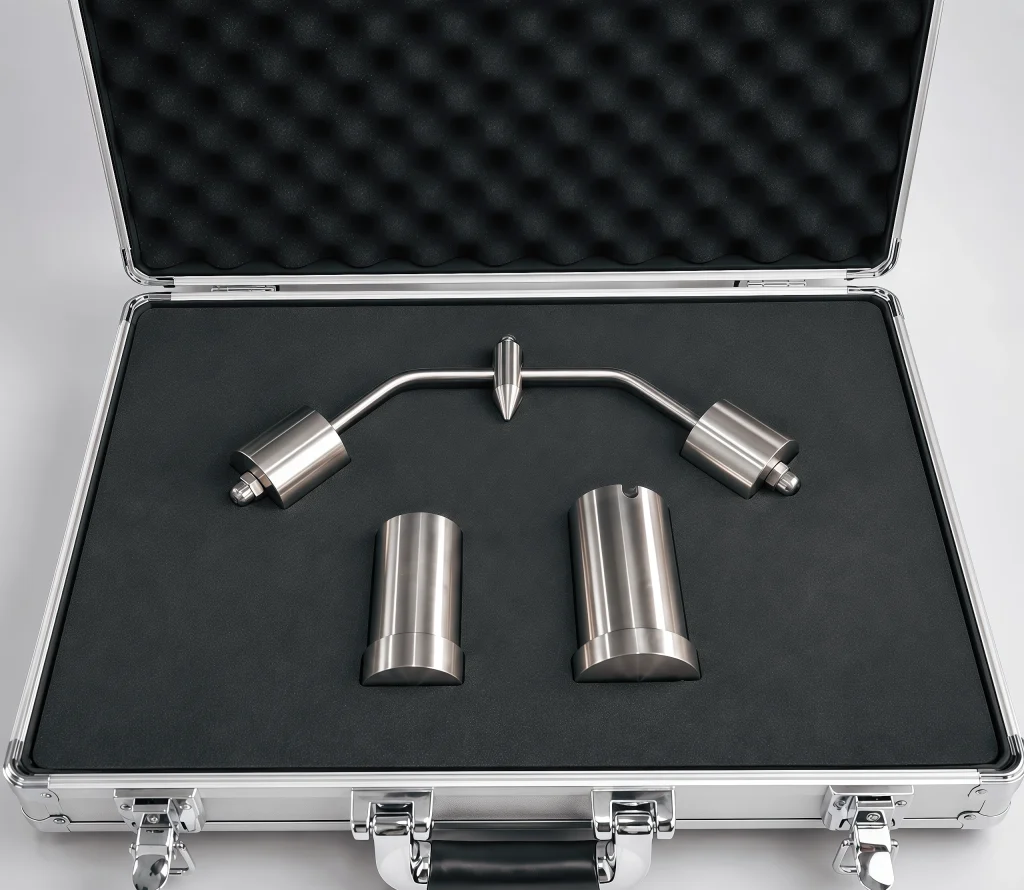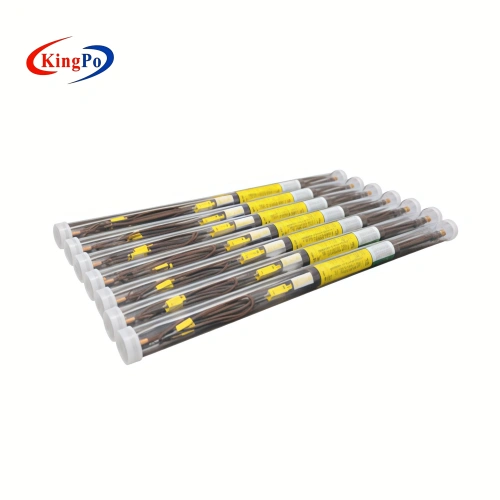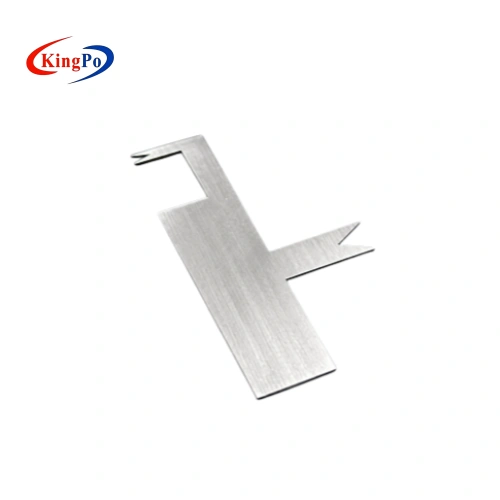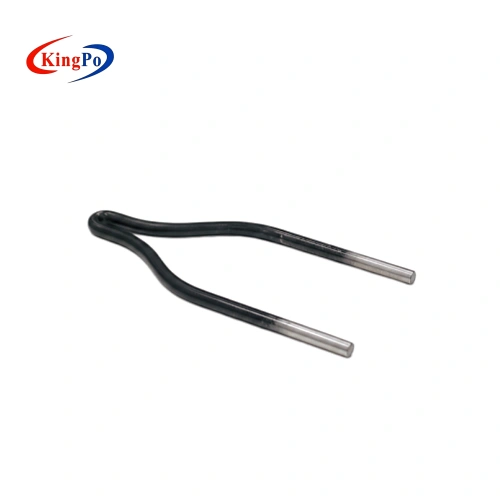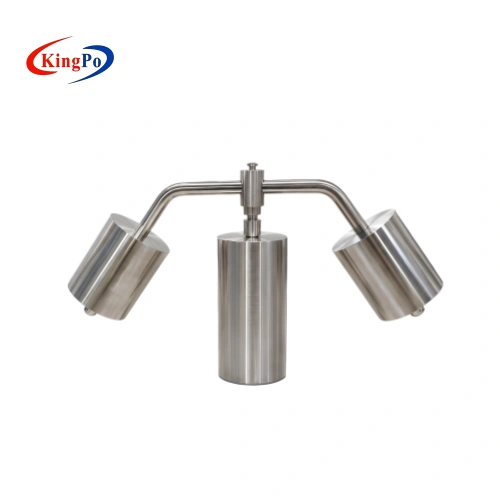
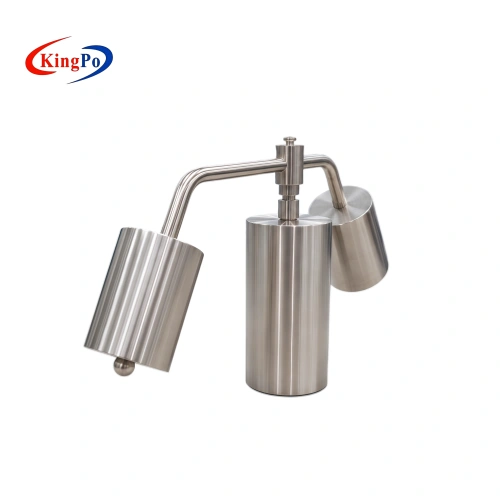
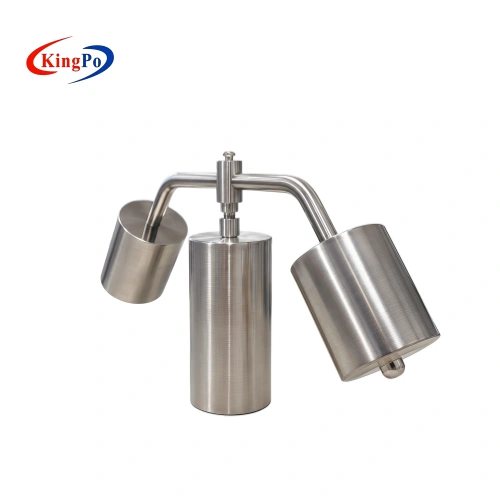
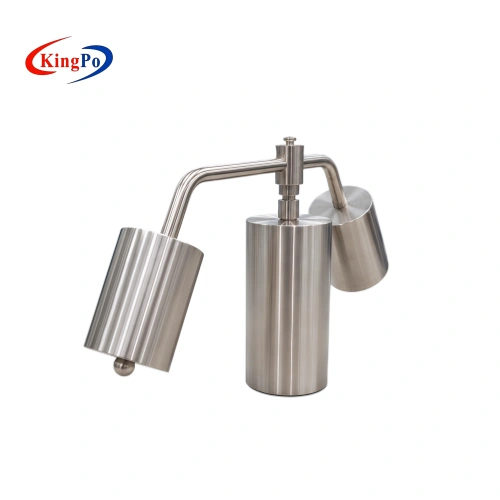
IEC 60695-10-2 Ball Pressure Test Apparatus complete set with balancing arm and weights
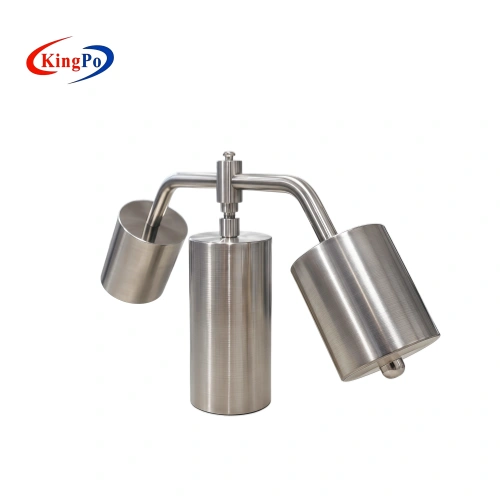
Close-up view of IEC 60695-10-2 Ball Pressure Test Apparatus showing the pressure ball and balancing arm mechanism on laboratory bench.
Detail view of stainless steel IEC 60695-10-2 Ball Pressure Test Apparatus on lab bench
IEC 60695-10-2 Ball Pressure Test Apparatus complete set with balancing arm and weights
Close-up view of IEC 60695-10-2 Ball Pressure Test Apparatus showing the pressure ball and balancing arm mechanism on laboratory bench.
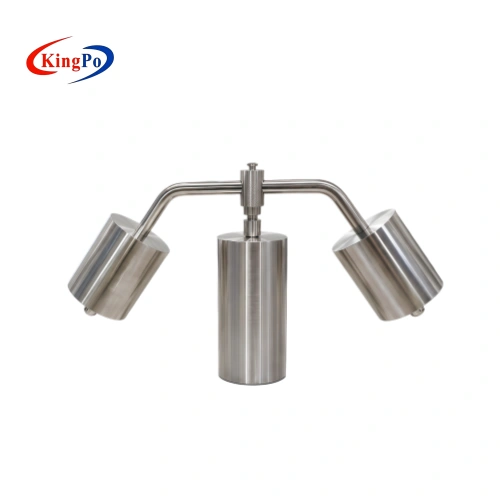
Detail view of stainless steel IEC 60695-10-2 Ball Pressure Test Apparatus on lab bench

IEC 60695-10-2 Ball Pressure Test Apparatus

The IEC 60695-10-2 Ball Pressure Test Apparatus is used to evaluate heat resistance and thermal deformation of insulating materials under specified temperature and mechanical load.

It applies a 20 N load through a 5 mm steel ball during heating, then uses the indentation result to judge material deformation resistance according to the applicable standard.

  • Designed for IEC 60695-10-2 ball pressure test requirements
  • 20 N ± 0.2 N constant vertical load for standardized deformation evaluation
  • 5 mm hardened steel ball provides a defined contact surface on the specimen
  • Solid steel specimen support for stable horizontal sample positioning
  • Suitable for insulating materials, engineering plastics and non-metallic components
  • Used with a temperature-controlled heating chamber or laboratory oven
  • All-steel construction with electroplated surface for durability and corrosion resistance
  • Simple mechanical structure for routine laboratory and quality control testing
  • Supports related testing for plugs, socket-outlets, switches, luminaires and household appliances
  • Product specification and inspection support available according to project requirements

IEC 60695-10-2 Ball Pressure Test Apparatus Overview

The IEC 60695-10-2 Ball Pressure Test Apparatus provides a standardized mechanical fixture for evaluating whether insulating materials can maintain dimensional stability under abnormal heat conditions. It helps manufacturers and laboratories verify material resistance to softening, indentation and deformation before product certification or routine quality inspection.

For electrical products, poor heat resistance of insulating parts may affect mechanical support, creepage distance, clearance distance or insulation performance. A repeatable ball pressure test setup helps users compare materials, verify production consistency and prepare evidence for safety compliance.

This apparatus is suitable for manufacturers, third-party laboratories and quality control departments testing plugs, socket-outlets, switches, luminaires, household appliances, electrical accessories and other products containing insulating plastic parts.

Technical Parameters

Standard and Application Information

Parameter Specification Remark or Notes
Product name IEC 60695-10-2 Ball Pressure Test Apparatus Ball pressure test device for heat resistance testing
Applicable standard IEC 60695-10-2 Ball pressure test method for insulating materials
Related standards IEC 60884-1, IEC 60335-1, IEC 60598-1, IEC 61058-1 related applications Confirm according to product category and test clause
Product type Mechanical ball pressure test apparatus Used with heating chamber or laboratory oven
Test object Insulating materials and non-metallic parts Typical for electrical and electronic products
Test purpose Heat resistance and thermal deformation evaluation Measures indentation after heat and pressure exposure
Typical applications Electrical insulating materials and plastic components Specific product applications are listed below
Typical users Manufacturers, third-party laboratories and QC departments Suitable for R&D, type testing and routine inspection
MOQ 1 set Standard order quantity
Delivery time 15 working days Confirm before order according to production schedule

Test Conditions and Apparatus Configuration

Parameter Specification Remark or Notes
Test load 20 N ± 0.2 N Constant vertical force applied to specimen
Steel ball diameter 5 mm Defined ball contact surface
Ball radius R2.5 mm Corresponds to 5 mm ball diameter
Ball reference Hardened steel ball conforming to ISO 3290-1 According to current product specification
Typical test temperature 125 ± 2 °C Other temperatures may apply according to product standard
Test duration 60 minutes ± 1 minute Confirm according to applicable standard
Specimen support Solid steel cylinder, Ø50 mm × 100 mm Provides stable horizontal positioning
Cooling method Rapid immersion in water at 20 °C ± 5 °C Cooling procedure should follow the test method
Measurement timing Within 3 minutes after removal from water Indentation should be measured promptly
Typical pass criterion Indentation diameter ≤ 2 mm Final acceptance depends on the relevant product standard
Structure All-steel construction with electroplated surface Durable and corrosion-resistant
Supporting equipment Temperature-controlled heating chamber or oven Required for maintaining the test temperature


Testing Principle

IEC 60695-10-2 Ball Pressure Test Apparatus complete set, including balancing arm, pressure ball and weights, stored in protective aluminum carry case.
IEC 60695-10-2 Ball Pressure Test Apparatus

The test specimen is placed horizontally on the steel support inside a temperature-controlled heating chamber. A 5 mm steel ball is positioned on the specimen surface, and the apparatus applies a constant 20 N vertical load during the specified heating period.

Under elevated temperature, some insulating materials may soften and deform. The steel ball forms an indentation on the specimen surface. After the heating period, the specimen is rapidly cooled in water, and the indentation diameter is measured within the required time window.

The result is used to evaluate whether the material has sufficient resistance to thermal deformation under the specified test condition. Test temperature, duration, specimen preparation, cooling method, measurement timing and acceptance criteria should follow IEC 60695-10-2 and the applicable product standard.

Common Error Mitigation

Reliable ball pressure test results depend on the complete test setup, not only the apparatus. Load accuracy, ball condition, specimen preparation, chamber temperature stability and indentation measurement timing all influence the final result.

To reduce test variation, laboratories should avoid the following errors:

  • Starting the test before the chamber temperature has stabilized
  • Using a specimen with an uneven, contaminated or unsupported surface
  • Placing the steel ball on an edge, curved area or unsuitable test position
  • Using a damaged steel ball or unstable loading mechanism
  • Delaying cooling or indentation measurement after heating
  • Measuring indentation with unsuitable or unverified measuring tools
  • Applying the wrong acceptance criterion for the product standard

Applications and Use Cases
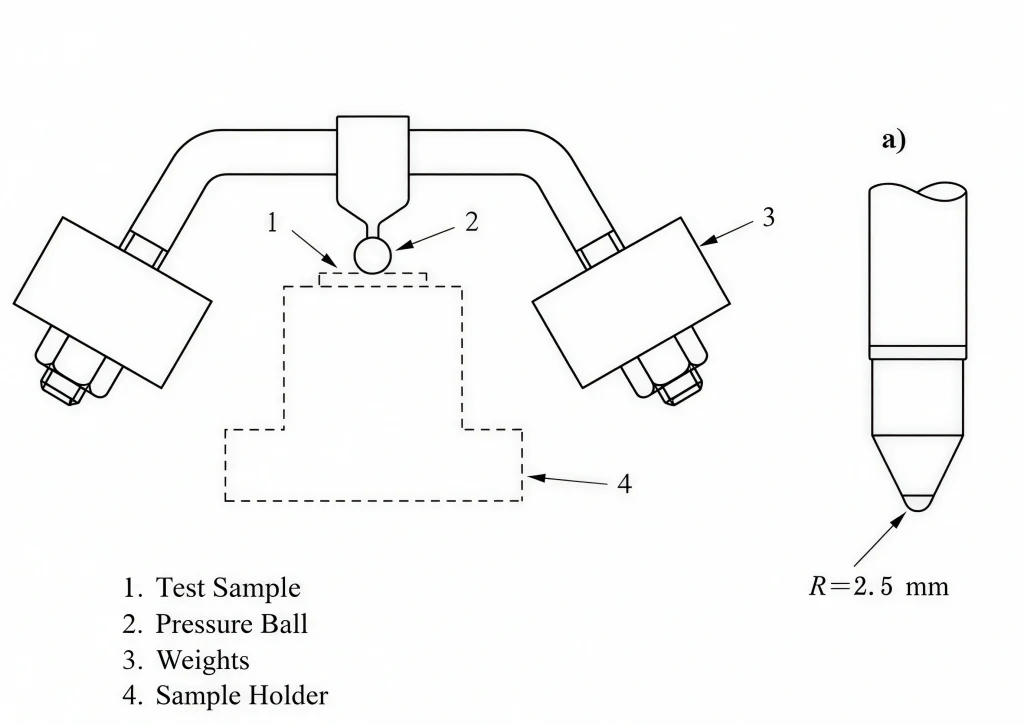
Schematic diagram of IEC 60695-10-2 Ball Pressure Test Apparatus showing test sample, pressure ball, weights and sample holder arrangement.
Schematic Diagram of IEC 60695-10-2 Ball Pressure Test Apparatus

The IEC 60695-10-2 Ball Pressure Test Apparatus is used for heat resistance verification of insulating materials and plastic components in electrical products. It supports product development, material selection, incoming inspection, pre-compliance testing and third-party laboratory evaluation.

Typical applications include:

  • Heat resistance testing of insulating materials in plugs and socket-outlets
  • Thermal deformation evaluation of plastic parts in household appliances
  • Ball pressure testing for luminaires and lighting equipment
  • Material verification for switches, appliance couplers and electrical accessories
  • Quality control of engineering plastics used in electrical and electronic products
  • Pre-compliance testing before safety certification

Operation and Test Notes

Before testing, users should confirm the applicable product standard, test temperature, test duration, specimen size, support condition and acceptance criterion. The heating chamber should reach a stable temperature before starting the test.

The specimen surface should be flat, clean and properly supported. The steel ball should contact the correct test position without lateral movement. Any tilting, unstable support, incorrect loading or chamber temperature fluctuation may affect the indentation result.

Dimensional Verification and Maintenance

Regular inspection helps maintain repeatable test conditions. The steel ball diameter, load value, support surface and mechanical alignment should be checked according to the laboratory quality system.

The steel ball should remain smooth and free from corrosion, flat spots, scratches or contamination. The specimen support should be clean, flat and stable. The loading structure should move freely without looseness, misalignment or abnormal friction.

After use, the apparatus should be cleaned and stored in a dry protective condition. If damage, corrosion, deformation or abnormal wear is found, the apparatus should be checked before formal testing.
Compliance & Documentation Support

The Ball Pressure Test Apparatus is designed for IEC 60695-10-2 heat resistance testing of insulating materials. It also supports related ball pressure test requirements in product standards such as IEC 60884-1, IEC 60335-1, IEC 60598-1 and IEC 61058-1 when required by the laboratory procedure.

For formal compliance testing or routine quality control, users should confirm the relevant product standard, material category, test temperature, test duration, specimen condition, indentation limit and reporting requirements with the responsible laboratory or certification body.

KingPo can provide product specification, dimensional information and inspection support according to order requirements. Laboratories should keep relevant test records, heating chamber temperature records, apparatus inspection records and indentation measurement results according to their internal quality system.

Download Product Documentation

Download the IEC 60695-10-2 Ball Pressure Test Apparatus product catalog with technical specifications, standard reference and application information.

Download Catalog

Technical Inquiry & Expert Support

KingPo supplies the IEC 60695-10-2 Ball Pressure Test Apparatus for heat resistance and deformation testing of insulating materials. Our engineering team can help confirm whether the apparatus configuration matches your product standard, test temperature, specimen type and laboratory setup.

Please Provide the Following Information:

  • Applicable standard: IEC 60695-10-2, IEC 60884-1, IEC 60335-1, IEC 60598-1, IEC 61058-1 or internal test procedure
  • Test object: Insulating material, engineering plastic, plug, socket, switch, luminaire, appliance part or electrical accessory
  • Test temperature: 125 °C or another temperature required by your product standard
  • Test duration: 60 minutes or other required duration
  • Specimen information: Material type, sample thickness, sample size and surface condition
  • Supporting equipment: Heating chamber, oven model or laboratory temperature control system
  • Documentation requirement: Product specification, inspection record, dimensional confirmation or other quality document
  • Customization needs: Packaging, marking, storage case, documentation package or special laboratory requirement

Based on this information, KingPo can provide product confirmation, documentation support and quotation for your IEC 60695-10-2 Ball Pressure Test Apparatus requirement.

IEC 60695-10-2 Ball Pressure Test Apparatus

IEC 60695-10-2 Ball Pressure Test Apparatus FAQs

What is the main purpose of the Ball Pressure Test Apparatus?
The Ball Pressure Test Apparatus is used to evaluate the heat resistance and deformation behavior of insulating materials and non-metallic parts under load at elevated temperatures. It helps determine whether materials used in electrical products can maintain dimensional stability when exposed to abnormal heat, in accordance with IEC 60695-10-2.
Which standards does this Ball Pressure Test Apparatus comply with?
This apparatus is designed in full compliance with IEC 60695-10-2. It is also commonly used to support testing requirements in related standards such as IEC 60884-1 (plugs and socket-outlets), IEC 60335-1 (household appliances), IEC 60598-1 (luminaires), and IEC 61058-1 (switches).
What materials are typically tested with the Ball Pressure Test Apparatus?
It is suitable for testing insulating materials, engineering plastics, and non-metallic components used in plugs, sockets, switches, luminaires, household appliances, and information technology equipment. The test assesses their resistance to softening and deformation under heat and pressure.
What are the standard test conditions for the Ball Pressure Test?
Typical test conditions include a 5 mm steel ball applying a constant 20 N load on the specimen for 60 minutes at 125 ± 2 °C inside a heating chamber. After cooling in water, the indentation diameter is measured. Exact temperature and duration may vary according to the applicable product standard.
Do I need a separate heating chamber to use this Ball Pressure Test Apparatus?
Yes. The Ball Pressure Test Apparatus is a mechanical device that must be placed inside a temperature-controlled heating chamber or oven to achieve and maintain the required test temperature during the heating phase.
How is the pass/fail criterion determined in the ball pressure test?
After the test and cooling, the diameter of the indentation on the specimen surface is measured. In most cases, an indentation diameter not exceeding 2 mm is considered acceptable. The exact acceptance limit should be confirmed according to the relevant product standard.
Can this apparatus be used for testing at temperatures other than 125°C?
Yes. While 125 °C is commonly used, the Ball Pressure Test Apparatus can be applied at other temperatures as specified by different product standards or customer requirements. Please confirm the required test temperature before ordering.
Is this Ball Pressure Test Apparatus suitable for testing plugs and sockets?
Yes. It is widely used for heat resistance testing of insulating materials in plugs, socket-outlets, and similar accessories, particularly to meet the requirements of IEC 60884-1 and related national standards.
How should the Ball Pressure Test Apparatus be maintained?
Regular inspection of the steel ball condition, load accuracy, and sample support surface is recommended. The apparatus should be kept clean and stored properly to ensure consistent test results. Periodic verification or calibration helps maintain measurement reliability.
What is the difference between the Ball Pressure Test and the Glow Wire Test?
The Ball Pressure Test evaluates the resistance of insulating materials to deformation under heat and pressure. The Glow Wire Test assesses the flammability and ignition behavior of materials when exposed to a heated wire. They serve different safety evaluation purposes and are often used complementarily.

Related Products

Related News

The best glow wire test apparatus for IEC 60695 should not be selected only by price or appearance. A suitable […]

   Abstract:Needle flame test apparatus calibration should be completed before each IEC 60695-11-5 test series, especially when the laboratory is […]

Application and Technical Analysis of Glow Wire Test Apparatus in Flame Retardancy Performance Testi for electrical and electronic products and plastics.

——IEC 60695-11-3 / IEC 60950 / UL94 500W Flame Test Practice and Cable Flammability Standard Comparison In the flammability safety […]

Vertical Flame Tester offers stricter cable safety by simulating severe fire risks, while horizontal testers suit low-risk checks. Choose based on your application.

Short Answer: What Is the Glow Wire Test? The glow wire test is a fire hazard test method used to […]

Key Takeaways IEC 60695 series standardizes fire hazard testing for electrotechnical products using glow-wire (GWEPT/GWFI/GWIT), needle flame, and 50W/500W horizontal/vertical […]

In an era where product safety is paramount, flammability and flame retardant testing have become indispensable across multiple high-stakes industries: […]

Scroll to Top

Get A Free Quote Now !

Contact Form
If you have any questions, please do not hesitate to contact us.